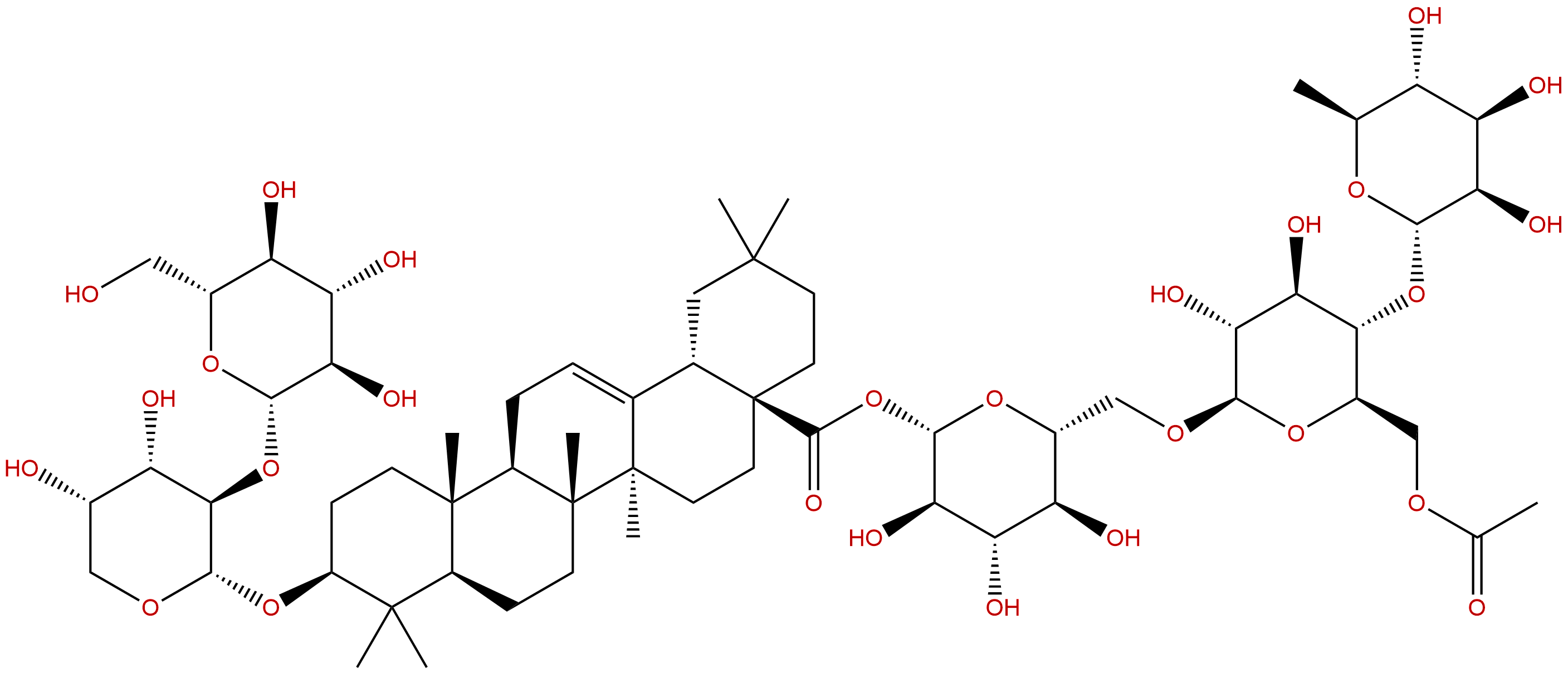


Product name: Acanthopanaxoside B
Synonym name: (-)-Acanthopanaxoside B
Catalogue No.: BP1853
Cas No.: 915792-03-9
Formula: C61H98O27
Mol Weight: 1263.43
Botanical Source:
Physical Description:
Type of Compound:
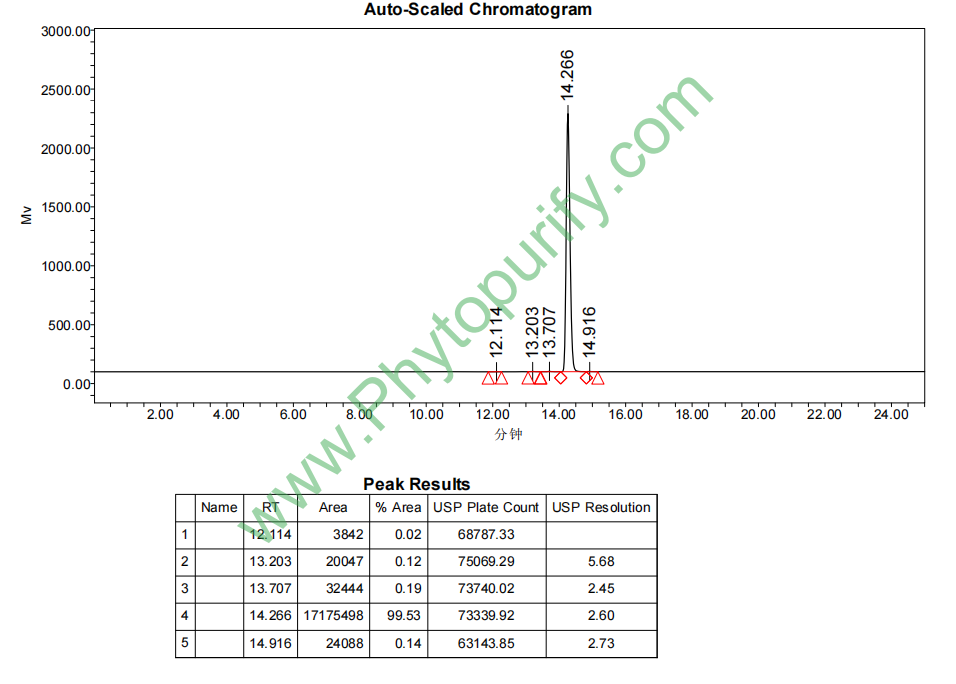
Purity: 95%~99%
Analysis Method: HPLC-DAD or/and HPLC-ELSD
Identification Method: Mass, NMR
Packing: Brown vial or HDPE plastic bottle
The product could be supplied from milligrams to grams. Inquire for bulk scale.
We provide solution to improve the water-solubility of compounds, thereby facilitating the variety of activity tests and clinic uses.
For Reference Standard and R&D, Not for Human Use Directly.
HPLC of Acanthopanaxoside B
Storage conditions:Short-term storage at 2~8℃, long-term storage at -20 ~ -80℃
418.8900
2.0793
2.0794
.2488
.5559
.1125
Low
70.6904
7.2811
Yes
No
No
No
No
No
0.0
Yes
No
No
Yes
Acanthopanaxoside B, The Chinese name is often referred to as Ciwujia saponin B, which is a natural triterpenoid saponin with complex structure and high molecular weight. Its CAS number is 915792-03-9, molecular formula is C61H98O27, and molecular weight is as high as 1263.43 g/mol. Although its Chinese name implies an association with Acanthopanax senticosus, existing data clearly shows that the compound is derived from plants in the Araliaceae family Hedera helix Obtained through separation. Ivy, as a climbing plant widely distributed in Eurasia, has a long history of application in traditional medicine and is commonly used to treat respiratory diseases and inflammation. In recent years, with the deepening of natural product chemistry and pharmacology research, various bioactive ingredients discovered from ivy have attracted widespread attention from researchers, and AcanthopaNaxoside B is one of them.
The current research focus is on its impact on Chronic Fatigue Syndrome (CFS)In terms of potential intervention effects. Chronic fatigue syndrome is a complex disease characterized by extreme fatigue that persists for at least 6 months and cannot be relieved through rest, often accompanied by cognitive impairment, pain, and autonomic dysfunction. The pathological and physiological mechanisms are not fully understood, but dysfunction of the hypothalamic pituitary adrenal axis, neuroendocrine disorders, immune system abnormalities, and imbalance of neurotrophic factors are considered key factors. The target information of AcanthopaNaxoside B precisely points to these key pathways, making it a highly valuable candidate molecule for research. This article will provide a systematic professional popularization of this compound from the aspects of its chemical structure, plant origin, pharmacological mechanism, medicinal evaluation, and research prospects.
AcanthopaNaxoside B belongs to Oleander type triterpenoid saponins The complex three-dimensional structure described by its SMILES string reveals that it is a highly glycosylated compound. The molecular skeleton is centered around triterpenoid glycosides, connecting multiple monosaccharide units (such as glucose, rhamnose, etc.) and an acetyl group to form a large sugar chain. This complex glycosylation modification not only significantly affects its water solubility, but is also closely related to its biological activity and target recognition specificity.
Analyze its physicochemical properties based on the provided pharmacological parameters:
- Molecular weight (MW):1263.43 g/mol, Far beyond the scope of conventional small molecule drugs (usually<500 Da).
- Lipid water partition coefficient (LogP/LogD)Approximately 2.08. This value indicates that the compound has a certain degree of lipophilicity, but considering its large molecular weight and polarity, its overall properties are more inclined towards amphiphilicity. LogP values between 2-3 are usually favorable for membrane permeation, but excessively large molecular sizes can become limiting factors.
- Topological Polarity Surface Area (TPSA)Up to 418.89 Å ². TPSA is an important parameter for predicting molecular membrane permeability, and compounds with TPSA>140 Å ² typically have poor ability to passively diffuse through biological membranes (such as intestinal absorption and blood-brain barrier). This value clearly indicates that AcanthopaNaxoside B has extremely low membrane permeability.
- Water solubility The value is 0.2488 (usually measured in mg/mL or log mol/L, which is not specified here but is relatively small). Considering its high TPSA and glycosylated structure, it is inferred that its solubility in water may be limited, but it may have good solubility in polar solvents.
- Blood-brain barrier permeability (BBB)Clearly labeled as' low '. This is completely consistent with the predictions of high MW and high TPSA, indicating that the compound is difficult to enter the central nervous system through passive diffusion.
These physicochemical properties determine the absorption, distribution, metabolism, and excretion (ADME) characteristics of Acanthopanoside B in the body, which fundamentally affect its potential as a drug.
What is the plant source of AcanthopaNaxoside B Araliaceae of Hedera helix L Ivy is a common evergreen woody vine found in Europe, Asia, and North Africa. In traditional medicine, ivy has a wide range of uses:
- Traditional European Medicine Ivy leaf extract is used to treat respiratory diseases such as cough, bronchitis, and asthma, mainly utilizing its expectorant and bronchospasm relieving effects. Its fruit has also been used as a laxative and emetic, but it is now rarely used due to its toxicity.
- Traditional Asian Medicine In some regions, ivy is also used to treat inflammatory diseases such as arthritis and gout, as well as as as an astringent for skin injuries.
Modern plant chemistry research has isolated and identified various active ingredients from ivy, mainly including triterpenoid saponins (such as ivy saponin C, ivy aglycone, etc.), flavonoids, phenolic acids, and polyacetylene compounds. Among them, triterpenoid saponins are considered to be the main material basis for their expectorant, anti-inflammatory, and antibacterial activities. As one of the structurally unique triterpenoid saponins, the discovery of AcanthopaNaxoside B has expanded people's understanding of the medicinal value of ivy, linking traditional applications with modern neuroendocrine regulation research.
The pharmacological activity research of Acanthopanoside B mainly focuses on its regulatory effect on chronic fatigue syndrome (CFS) related targets. The target network of its action involves multiple key links such as neuroendocrine, stress response, and neurotrophic:
NR3C1 (glucocorticoid receptor, GR):
HPA axis related genes (CRH, POMC, FKBP5):
BDNF (brain-derived neurotrophic factor):
Mechanism of Action Integration Hypothesis:
Based on the above targets, a scientific hypothesis can be proposed: AcanthopaNaxoside B may intervene in the complex pathological network of CFS through multi-target synergistic effects. It may first stabilize the initiation signal of the HPA axis by regulating the levels of CRH and POMC in the hypothalamus pituitary system; Next, at the cellular level, by acting on NR3C1 and FKBP5, the signal transduction efficiency of glucocorticoid receptors is enhanced, the glucocorticoid resistance status of peripheral tissues is improved, and immune inflammatory response and energy metabolism are regulated; At the same time, by increasing BDNF levels, it protects central nervous system function, alleviates fatigue and cognitive symptoms. This overall regulation of the neuroendocrine immune network is in line with the characteristics of traditional Chinese medicine's "multi-component, multi-target" approach, and also meets the treatment needs of CFS as a systemic disease.
Based on the provided pharmacological parameters, combined with classic Lipinski's Five Rules Objective evaluation of the potential of Acanthopanoside B as a drug using the Rule of Five (Ro5) and modern drug design concepts:
1. Compliance analysis of Lipinski's five rules:
The Lipinski rule is an empirical rule for evaluating the pharmacological properties of small molecule oral drugs. The situation of AcanthopaNaxoside B is as follows:
-Molecular weight>500 Da (actual 1263):not conform to。
-LogP>5 (actual 2.08):Comply with。
-The number of hydrogen bond donors is greater than 10 (according to structural inference, its sugar moiety contains a large number of hydroxyl groups, far exceeding 10):not conform to。
-The number of hydrogen bond acceptors is greater than 10 (according to the molecular formula, the number of O atoms is 27, far exceeding 10):not conform to。
-The number of rotatable keys is extremely high, far exceeding the recommended value.
Conclusion: AcanthopaNaxoside B seriously violates the three core clauses (MW, HBD, HBA) in Lipinski's rules, therefore Not possessing typical small molecule oral drug like properties It is classified as a "Beyond Rule of 5" (bRo5) compound.
2. Interpretation of key ADME/Tox parameters:
- Absorption and penetration The permeability (0.1125) and effective permeability coefficient (Peff: 0.5559) of Caco-2 are both very low, indicating poor oral absorption and weak intestinal permeability. This is directly related to its high MW and high TPSA.
- distribution The plasma protein binding rate (PPB) is about 70.69%, which is a moderately high level and can affect the concentration of free drugs. The BBB penetration is' low ', as mentioned earlier, limiting its direct effects on the central nervous system (unless acting on peripheral or areas with incomplete blood-brain barrier).
- Metabolism and toxicity The results of Ames test (0.0) and chromosome aberration test (none) were negative, indicating that it has no genetic toxicity. HERG inhibition is' no ', reducing the risk of causing QT interval prolongation in the heart. In serum biochemical indicators, it suggests that it may have an impact on alkaline phosphatase (Ser_LK) and alanine aminotransferase (Ser_LT) (marked as "Yes"), which suggests the need to pay attention to their potential liver effects and further experimental verification is required.
- Other Skin sensitization, respiratory sensitization, and phototoxicity are all negative, which is favorable information for its safety.
3. Comprehensive evaluation of drug potential:
AcanthopaNaxoside B as a Large molecule triterpenoid saponins The development path should not follow the traditional model of small molecule oral drugs. Its disadvantage is that its oral bioavailability is extremely low, making it difficult to cross biological barriers such as the intestine and BBB. The advantage lies in the clear target of action and high correlation with CFS, potential for multi-target synergistic mechanisms, and fewer preliminary toxicity signals.
Therefore, its possible development directions include:
- Prodrug modification Chemical modification of sugar or hydroxyl groups to improve their lipid solubility and membrane permeability, and enhance oral absorption.
- New drug delivery system Develop nano formulations (such as liposomes, polymer nanoparticles), microemulsions, or cyclodextrin inclusion complexes to enhance their solubility, stability, and intestinal lymphatic absorption, or achieve targeted delivery.
- Non oral administration route Consider injection administration (such as intravenous or intramuscular injection) to bypass the absorption barrier, but fully evaluate its safety and formulation feasibility for injection administration.
- As a lead compound Using its active aglycone or simplified structure as the core, optimize the structure and design derivatives that retain activity but have smaller molecular weight and better drug like properties.
Research status:
At present, there is relatively limited publicly available research data on AcanthopaNaxoside B. The existing information mainly focuses on the identification of its plant origin, the analysis of its chemical structure, and the prediction of target networks based on bioinformatics or high-throughput screening. There is a lack of systematic and in-depth experimental research reports on its specific mode of action (activation, antagonism, regulation of expression), intensity of action (IC50/EC50), and anti fatigue and anti CFS pharmacological validation in cell and animal models for NR3C1, HPA axis related genes, and BDNF targets. Its detailed pharmacokinetic behavior and toxicological characteristics in vivo are still a blank field.
Application prospects and future directions:
1. Deepening basic research The primary task is to conduct systematic in vitro and in vivo pharmacological research. It is necessary to verify its effects on improving fatigue behavior, regulating HPA axis function, reducing neuroinflammation, and protecting cognitive function in CFS animal models (such as chronic restraint stress models, virus induced models, etc.), and clarify the specific details and primary secondary relationships of its multi-target effects.
2. Structure Activity Relationship (SAR) Study It is crucial to analyze which specific sugar or glycoside groups in its large molecule are important for its biological activity. This helps simplify the structure and design more potent derivatives.
3. Exploration of Pharmaceutical Strategies As mentioned earlier, actively exploring advanced delivery technologies suitable for such highly polar saponins is the key to promoting their application. It is necessary to evaluate the impact of different formulation strategies on their bioavailability and tissue distribution.
4. Expansion of mechanism of action In addition to CFS, its ability to regulate the HPA axis and neurotrophic factors also suggests potential applications in areas such as depression, anxiety, and neurodegenerative diseases, which are worth exploring.
5. Preclinical development On the basis of clarifying the efficacy and preliminary safety, complete comprehensive preclinical pharmacokinetic and toxicological studies in accordance with Good Laboratory Practice (GLP) requirements, and provide a basis for its possible clinical research application (IND).
Conclusion:
AcanthopaNaxoside B is a natural triterpenoid saponin discovered from the traditional medicinal plant Ivy, with a unique chemical structure and clear targeting properties. It provides a new scientific perspective for us to understand the traditional medicinal value of ivy, and more importantly, it provides a valuable "probe" and lead compound for the development of innovative drugs for the difficult disease of chronic fatigue syndrome. Although its enormous molecular weight and poor drug like properties pose serious challenges to direct drug development, this does not mean the end of its development value. On the contrary, it represents a cutting-edge direction in the development of modern natural product drugs: to transform these complex and uniquely active "atypical" molecules into viable therapeutic drugs through interdisciplinary strategies (synthetic chemistry, pharmacy, biology). Future research needs to solidify its biological evidence while vigorously innovating delivery and modification strategies in order to truly unleash its therapeutic potential and benefit CFS patients.
