Introduction/Overview
Natural products, as an important source of drug discovery, play an irreplaceable role in the history of human disease treatment. Among them, alkaloid compounds have always been a hot topic in medicinal chemistry and pharmacology research due to their structural diversity and significant biological activity. Isoperepodine, an indole alkaloid isolated from traditional medicinal plants, has attracted much attention in recent years due to its unique and dual pharmacological mode of action - acting as a positive allosteric regulator of specific neurotransmitter receptors and possessing antibacterial activity. This compound not only provides a new molecular probe for understanding the pathophysiological mechanisms of neurological and psychiatric disorders, but also demonstrates a promising chemical backbone for the development of multi-target therapeutic drugs, especially for cognitive impairment diseases associated with infection risk. This article aims to systematically review the chemical properties, plant sources, pharmacological activities, mechanisms of action, medicinal properties, and clinical application prospects of crocetine E, in order to provide comprehensive academic references for the in-depth research and potential development of this compound.
Chemical structure and physicochemical properties
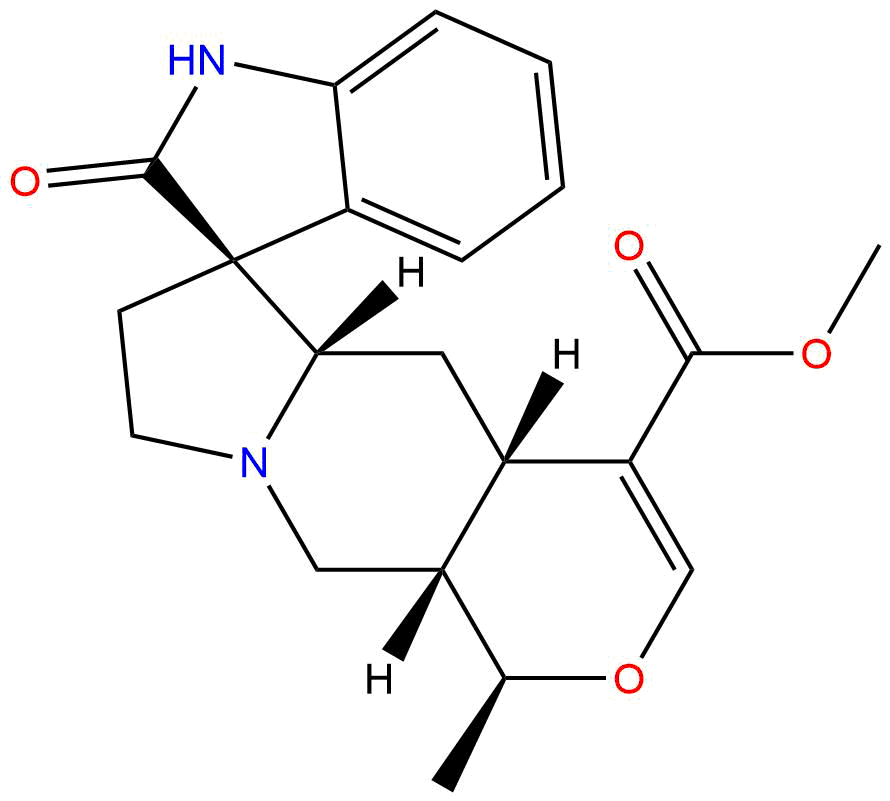
The chemical name of crocetine E is (19E) -4,17-dihydro-16- (hydroxymethyl) -19-methyl-10,22-dioxa-4-azatetracyclo [15.3.1.1 ³, ⁸. 1 ¹², ¹⁶] 22carbon-1 (21), 3,5,7,17,19-hexene-18-one, and its CAS registration number is 5171-37-9. Structurally, it is a complex tetracyclic indole alkaloid with the molecular formula C ₂₁ H ₂₄ N ₂ O ₄ and a molecular weight of 368.4330. Its core structure combines fragments of indoline and oxidized indole, and contains a unique oxygen-containing heterocyclic system. This complex polycyclic structure is the material basis for its biological activity.
In terms of physicochemical properties, the calculated value of the lipid water partition coefficient (LogP) of crocetine E is about 1.91, indicating that the compound has moderate lipophilicity, which is beneficial for its penetration of cell membranes, especially the blood-brain barrier. Its topological polar surface area (TPSA) is 67.87 Å ², which is relatively small and further supports its excellent membrane permeation potential. The theoretically calculated water solubility is about 0.59 mg/mL, which belongs to the category of slight solubility. This suggests that solubilization strategies may need to be considered in formulation development. Preliminary predictions of key pharmacological properties indicate that crocetine E has high blood-brain barrier permeability, which is highly consistent with the pharmacological effects of its central nervous system (CNS) targets. In addition, its hERG inhibition risk prediction is negative, and the Ames test prediction result is 0.0 (negative), indicating a low risk of cardiac toxicity and genetic toxicity, providing a favorable starting point for subsequent safety assessments.
Plant sources and extraction methods
Goutenine E mainly comes from plants in the Uncaria genus of the Rubiaceae family, especially Uncaria rhynchhophylla (Miq.) Miq. ex Havil And its related plants of the same genus, such as Uncaria macrophylla Wall Wait. Gouteng, as a traditional Chinese medicine, its hooked stems and branches are often used to treat symptoms such as headaches, dizziness, seizures, etc. Its sedative and antihypertensive effects have long been recorded. Gouteng alkaloid E is one of the active components of various indole alkaloids in Gouteng.
The extraction and separation of crocetine E from plant materials usually follow the conventional process of natural product chemistry. Firstly, the dried stems and branches of the hook vine are crushed and subjected to reflux extraction or ultrasound assisted extraction using appropriate solvents such as methanol, ethanol, or aqueous ethanol. After the crude extract is concentrated under reduced pressure, it is dissolved in acidic water (such as dilute hydrochloric acid), insoluble substances are filtered out, alkalization (such as ammonia water) is carried out to free the alkaloids, and then extracted with organic solvents (such as chloroform, dichloromethane, or ethyl acetate) to obtain the total alkaloid fraction. Further purification requires the use of various chromatographic techniques. Silica gel column chromatography is commonly used for preliminary separation, using solvent systems of different polarities (such as chloroform methanol gradient elution) for elution. The fraction containing crocetine E is further finely separated and purified by preparative thin layer chromatography (PTLC), reverse phase high performance liquid chromatography (RP-HPLC, commonly using C18 column with methanol water or acetonitrile water as mobile phase), or medium pressure liquid chromatography (MPLC). The final obtained compound needs to be structurally confirmed by nuclear magnetic resonance (NMR, including ¹ H-NMR, ¹ ³ C-NMR, 2D-NMR), mass spectrometry (MS), and comparison with literature data. Modern technologies such as high-speed countercurrent chromatography (HSCCC) are increasingly being applied for the efficient preparation and separation of such alkaloids due to their advantages of irreversible adsorption.
Pharmacological activity research
The pharmacological activity study of crocetine E revealed its multifaceted biological effects, mainly focusing on two fields: nervous system regulation and antibacterial.
1. Activities related to the nervous system:
The most significant feature of crocetine E is its use as Positive allosteric regulator The activity. Research has shown that it selectively enhances muscarinic acetylcholine receptor M1 subtype (M1 mAChR) and 5-hydroxytryptamine type 2 receptor (5-HT ₂ R, especially 5-HT ₂ A and 5-HT ₂ C subtypes). Functional experimental data shows that crocetine E can significantly enhance the effects of acetylcholine and 5-hydroxytryptamine (5-HT) on their respective receptors. The required concentrations (EC ₅₀) for a 50% increase in agonist response are 9.92 μ M and 14.5 μ M, respectively. This enhancing effect does not directly activate the receptor, but rather increases the affinity and/or efficacy of endogenous agonists to the receptor through conformational sites. M1 receptor is a key component of the central cholinergic system, closely related to learning, memory, and cognitive functions; The 5-HT ₂ A receptor is involved in perception, emotion regulation, and cognitive flexibility. Therefore, crocetine E exhibits the potential to improve cognitive function by dual regulating these two receptor systems closely related to cognitive impairment and mental illness. In some animal behavioral experiments, extracts of Uncaria baicalensis containing Uncaria alkaloid E showed anti anxiety, sedative, and neuroprotective effects, although detailed behavioral pharmacology data of its monomeric compounds still need to be further enriched.
2. Antibacterial activity:
In addition to central nervous system activity, crocetine E also exhibits selectivity Anti Gram positive bacterial activity The in vitro antibacterial experiment showed that its minimum inhibitory concentration (MIC) against the clinically common Staphylococcus aureus and the model strain Bacillus subtilis were 150 μ g/mL and 250 μ g/mL, respectively. In contrast, it has weaker or no significant activity against Gram negative bacteria. This antibacterial spectrum suggests that its mechanism of action may target the unique cellular structure or metabolic pathways of Gram positive bacteria, such as cell wall synthesis or membrane function. This "neuro antimicrobial" dual activity is unique in natural products, suggesting that it may have special value in the treatment of neurodegenerative diseases or cognitive impairments associated with bacterial infection risk (such as inhalation pneumonia risk in elderly bedridden patients).
3. Other potential activities:
Based on extensive research on the total extract of Gouteng and activity reports of its structural analogues, Gouteng alkaloid E may also have auxiliary neuroprotective activities such as antioxidant and anti-inflammatory effects. However, whether these effects are directly caused by its monomers and the specific potency strength still require clear experimental evidence to support.
Mechanism of action and molecular targets
The study on the mechanism of action of crocetine E mainly focuses on its characteristics as a positive allosteric modulator (PAM), and its antibacterial mechanism is also being preliminarily explored.
1. Positive allosteric regulation mechanism of M1 mAChR and 5-HT ₂ R:
Allosteric modulation is an important direction in current drug discovery. Compared with traditional ortho agonists/antagonists, PAM can more finely and physiologically regulate receptor function. Goutenine E acts on M1 and 5-HT ₂ receptors differently from the endogenous agonist binding site (ortho binding site)Conformational binding site Its mechanism of action is mainly reflected in:
* Enhance agonist affinity After binding to the receptor conformational site, crocetine E induces a conformational change in the receptor, resulting in a tighter binding of endogenous neurotransmitters (acetylcholine or 5-HT) to the positive binding site of the receptor, thereby reducing the dissociation constant (Kd) and producing stronger signal transduction at the same neurotransmitter concentration.
* Enhance receptor functional efficacy In addition to increasing affinity, it may also enhance the coupling efficiency between receptors and downstream G proteins, amplify intracellular signals generated by agonist binding (such as phospholipase C activation, IP v3 and DAG generation, intracellular calcium ion mobilization, etc.).
* High receptor subtype selectivity Its selectivity for M1 mAChR is higher than other subtypes of muscarinic receptors (such as M2-M5), and its selectivity for 5-HT ₂ A/2C is also more prominent. This selectivity may stem from its specific interaction with the conformational pocket of specific receptor subtypes, providing advantages for the development of highly selective drugs and potentially reducing side effects caused by acting on other subtypes (such as peripheral cholinergic side effects associated with M3 receptors).
2. Antibacterial mechanism:
At present, the exact antibacterial molecular targets of crocetine E are not fully understood. Given its specific activity against Gram positive bacteria, it is speculated that its mechanism may involve:
* Disrupting the integrity of the cell membrane The amphiphilic molecular structure may insert into bacterial cell membranes, interfering with membrane potential and permeability, leading to leakage of contents.
* Inhibit cell wall synthesis May interfere with key enzymes in the peptidoglycan synthesis pathway, such as transpeptidases or glycosyltransferases.
* Inhibit key enzyme functions As an alkaloid, it may competitively inhibit the enzyme system necessary for bacterial metabolism.
* Interaction with bacterial DNA/RNA However, this possibility is relatively small and requires experimental verification.
Clarifying its antibacterial targets is crucial for understanding its selectivity, optimizing its structure, and evaluating its synergistic effects with other antibiotics.
Evaluation of drug properties and pharmacokinetics
Based on computational predictions and preliminary in vitro data, crocetine E exhibits certain potential for drug development, but its comprehensive pharmacokinetic (PK) and pharmacodynamic (PD) characteristics still require systematic in vitro and in vivo studies to elucidate.
1. Prediction and preliminary study of absorption, distribution, metabolism, and excretion (ADME):
* absorb Moderate LogP values and small TPSA are beneficial for the passive diffusion process of oral absorption. But its water solubility is average, which may affect its dissolution rate in the gastrointestinal tract and become one of the limiting factors for oral bioavailability.
* distribution The most prominent feature is its High blood-brain barrier (BBB) permeability The prediction. This is a prerequisite for its pharmacological effects on the central nervous system. Its molecular weight is less than 400, LogP is in the ideal range (around 2-3), and it is a neutral or weakly alkaline molecule. These characteristics meet the derived criteria of the Rule of Five for brain penetrating compounds, supporting its ability to effectively enter the brain.
* Metabolism As an indole alkaloid, it is likely to be primarily metabolized through the liver cytochrome P450 (CYP) enzyme system. It is necessary to clarify its main metabolic enzyme subtypes (such as CYP3A4, CYP2D6, etc.) to assess potential drug drug interaction risks. Multiple possible metabolic sites in its structure, such as bonds and hydroxyl groups, suggest that it may undergo oxidation, reduction, or binding reactions.
* excretion The prototype drug and its metabolites may be mainly excreted through the kidneys or bile.
2. Preliminary safety evaluation:
Computational toxicology predictions provide positive signals:No hERG inhibition warning Reduced the risk of causing QT interval prolongation and apical torsion type ventricular tachycardia in the heart;Ames test predicts a negative result It suggests that it may not have direct genetic toxicity. However, these computational predictions must be ultimately confirmed through standardized in vitro experiments (such as hERG potassium channel inhibition experiments, bacterial recovery mutation experiments) and comprehensive in vivo toxicology studies (acute toxicity, subchronic toxicity, reproductive toxicity, etc.).
3. Challenges in drug development:
The main challenge may lie in its Moderate intensity in vitro activity(EC ₅₀ at the micromolar level). To enhance potency, a systematic approach may be necessary Research on Structure Modification and Structure Activity Relationship (SAR)For example, substituent optimization of specific positions in its molecular skeleton aims to enhance affinity and selectivity for M1 or 5-HT ₂ receptors, while improving their water solubility and metabolic stability. Its dual activity (neural regulation and antibacterial) is both unique and complex, requiring a balance between primary and secondary treatment goals in drug development.
Clinical application prospects and prospects
The unique dual pharmacological properties of crocetine E bring potential application prospects in multiple therapeutic fields, and also indicate the direction of future research.
1. Potential clinical application directions:
* Cognitive impairment related diseases As M1 mAChR PAM, crocetine E is expected to be used for the treatment of cognitive decline in diseases such as Alzheimer's disease (AD) and vascular dementia. Compared with existing direct acetylcholinesterase inhibitors, PAM may provide more physiological cholinergic enhancement, reduce peripheral side effects, and may have beneficial effects on other pathological processes in the disease progression, such as regulation through 5-HT ₂ receptors.
* Psychiatric and neurological disorders 5-HT ₂ A receptors are targets of many antipsychotics and hallucinogens. Goutenine E, as its PAM, may play a role in regulating the glutamatergic and dopaminergic systems, providing new ideas for the development of novel antipsychotic drugs (for schizophrenia), antidepressants, or anti anxiety drugs.
* Treatment for special populations with accompanying infections Its antibacterial activity, especially its inhibition of Staphylococcus aureus (including drug-resistant strains such as MRSA whose activity is yet to be validated), provides a potential treatment strategy of "killing two birds with one stone" for elderly dementia patients or post-stroke patients at risk of infection (such as bedsore infection, aspiration pneumonia). It can be explored as an adjuvant therapy drug to improve cognition while preventing or controlling local infections.
* Probe molecules for multi-target therapy strategies From the perspectives of systems biology and network pharmacology, crocetine E can serve as a tool drug for studying the interaction between M1 and 5-HT ₂ receptor signaling networks, helping to understand the mechanisms of complex brain diseases.
2. Future research prospects:
* In depth mechanism research It is necessary to use techniques such as molecular docking, site directed mutagenesis, and cryo electron microscopy to accurately analyze its binding mode with M1 and 5-HT ₂ receptor conformational sites. Meanwhile, clarify the exact molecular targets of its antibacterial properties.
* Preclinical development of the system Including synthesis process optimization, derivatization, and SAR research to improve potency and selectivity; Complete comprehensive in vivo PK/PD research and establish the relationship between exposure and effects; Conduct standardized pharmacological evaluations and validate their efficacy in animal models such as AD and schizophrenia; Conduct a security evaluation of the system.
* Exploration of dosage forms and combination therapy Develop suitable drug delivery systems (such as nano formulations and cyclodextrin inclusion complexes) to address their water solubility issues. Explore its synergistic effect with existing cognitive enhancement drugs or antibiotics.
* Balancing and optimizing dual activity In drug design, it may be necessary to decide whether to preserve and optimize its dual activity or develop it into a highly selective drug with a single target through structural modification, depending on the final clinical positioning.
Conclusion
Isoperepodine, as an indole alkaloid derived from the traditional Chinese medicine Hook Vine, has become a remarkable research object in the field of natural product pharmacology due to its dual activity as a selective positive allosteric regulator of M1 mAChR and 5-HT ₂ receptors, as well as anti Gram positive bacteria. It not only provides candidate molecules with new mechanisms of action for the treatment of neurological and psychiatric disorders, but its unique "neuro antimicrobial" dual properties also inspire new ideas for the development of multifunctional drugs for complex clinical conditions. Although it has demonstrated good blood-brain barrier permeability and preliminary safety prediction advantages in drug development, its in vitro activity intensity, comprehensive pharmacokinetic characteristics, and precise in vivo efficacy and safety still need to be further evaluated through systematic modern pharmaceutical and pharmacological research. In the future, through interdisciplinary collaboration, combined with structural biology, computational chemistry, medicinal chemistry, and pharmacology, we will explore and optimize crocetine E in depth. It is expected to transform it from an interesting natural active molecule into a new potential drug for treating cognitive impairment and related diseases, continuing and expanding the contribution of natural products to human health.