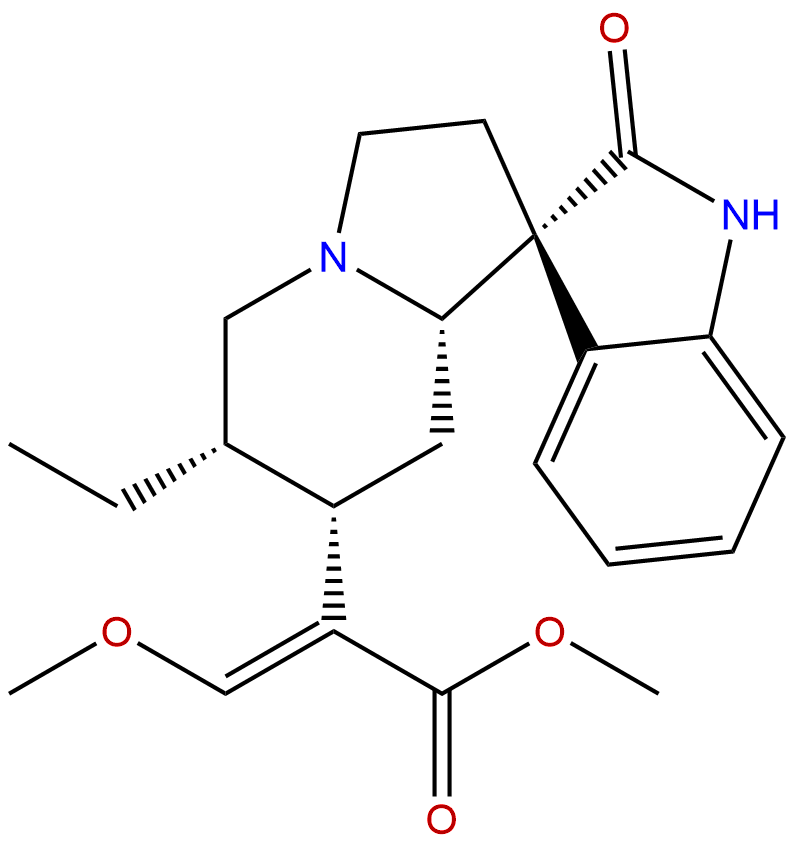


Product name: Corynoxine B
Synonym name:
Catalogue No.: BP3102
Cas No.: 17391-18-3
Formula: C22H28N2O4
Mol Weight: 384.476
Botanical Source:
Physical Description:
Type of Compound: Alkaloids
Purity: 95%~99%
Analysis Method: HPLC-DAD or/and HPLC-ELSD
Identification Method: Mass, NMR
Packing: Brown vial or HDPE plastic bottle
The product could be supplied from milligrams to grams. Inquire for bulk scale.
We provide solution to improve the water-solubility of compounds, thereby facilitating the variety of activity tests and clinic uses.
For Reference Standard and R&D, Not for Human Use Directly.
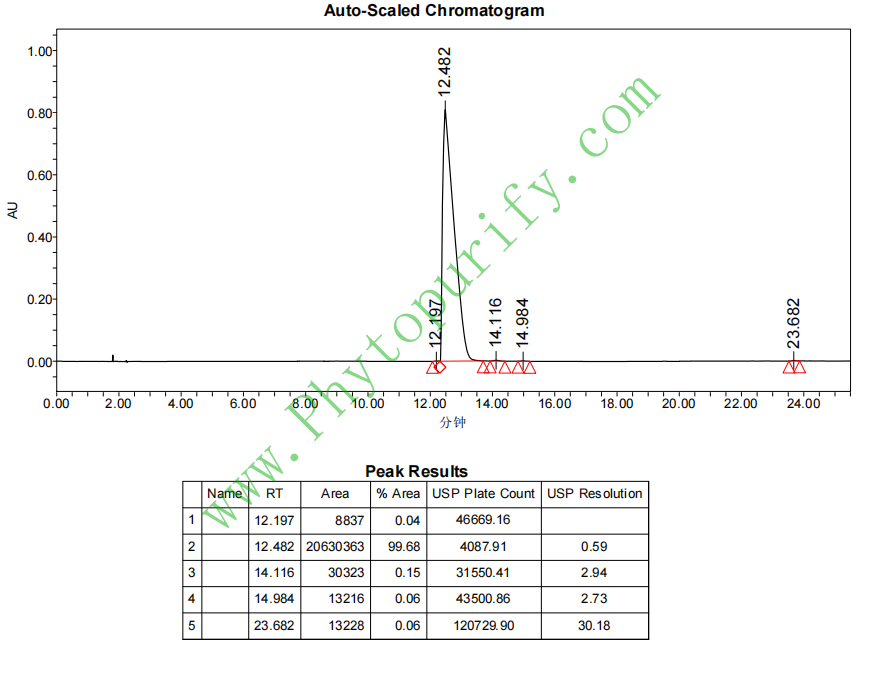
HPLC of Corynoxine B
Storage conditions:Short-term storage at 2~8℃, long-term storage at -20 ~ -80℃
67.8700
2.5082
2.1721
.4241
2.5249
6.4142
High
77.2957
4.6565
No
No
No
No
No
Yes
0.0
No
Yes
Yes
No
Neurodegenerative diseases such as Parkinson's disease (PD) and Alzheimer's disease (AD) have become major global public health challenges. The common pathological features of these diseases include abnormal aggregation of misfolded proteins (such as alpha synuclein in PD and beta amyloid protein in AD), mitochondrial dysfunction, oxidative stress, and crucial cellular autophagy dysfunction. Autophagy is a critical steady-state process for the degradation and recovery of damaged organelles and misfolded proteins within cells, and its dysfunction is considered one of the core links in the occurrence and development of neurodegenerative diseases. Therefore, the search for compounds that can safely and effectively regulate autophagy and specifically clear pathogenic protein aggregates is currently a hot topic and frontier in neuropharmacology research.
In the treasure trove of natural products, plants of the Gouteng genus have attracted much attention for their traditional applications in the treatment of central nervous system diseases. Corynoxin B, a tetrahydro β - carboline indole alkaloid isolated from Uncaria, has emerged in recent years due to its unique dual pharmacological activity - inducing autophagy and inhibiting α - syn aggregation. Research has shown that Konosin B not only improves autophagic flow disorders induced by environmental toxins such as manganese, but also promotes the clearance of alpha syn in PD animal models, demonstrating significant neuroprotective potential. In addition, its excellent blood-brain barrier permeability provides a key advantage as a candidate drug for the central nervous system. This article aims to provide a systematic review of the chemical properties, plant sources, pharmacological activities, molecular mechanisms of action, pharmacological properties, and application prospects of Konosin B in the treatment of neurodegenerative diseases, in order to provide comprehensive academic references for the in-depth research and future development of this compound.
Konosin B (CAS number: 17391-18-3) is a tetrahydro β - carboline monoterpenoid indole alkaloid. Its molecular formula is C22H28N2O4, with a molecular weight of 384.4760 g/mol. Its core structure consists of an indole ring fused with a pyridine ring to form a β - carboline skeleton, which is connected to a complex polycyclic monoterpene structural unit through an ethyl bridge. This structure contains multiple chiral centers, which determine its specific stereochemical configuration, which is crucial for its biological activity.
In terms of physicochemical properties, the calculated value of the lipid water partition coefficient (LogP) of Konosin B is about 2.51, indicating its moderate lipophilicity, which is beneficial for its penetration of cell membranes and the blood-brain barrier. Its topological polar surface area (TPSA) is 67.87 Å ², which is relatively low, further supporting its good membrane permeability. The predicted value of water solubility is about 0.4241 mg/mL, which belongs to the category of slight solubility. This suggests that solubilization strategies may need to be considered in formulation development. The key pharmacological parameters show that Konosin B has a high blood-brain barrier permeability potential, which is crucial for its central nervous system efficacy. In addition, preliminary in vitro safety assessments showed no significant hERG potassium channel inhibitory activity (hERG inhibition: no), suggesting a low potential risk of arrhythmia; The Ames test result is 0.0, indicating that there is no mutagenicity in this testing system, providing preliminary positive signals for its safety.
Konosin B mainly comes from plants in the genus Gouteng of the Rubiaceae family, among which Gouteng is the main source(Uncaria rhynchophylla Miq. ex Havil. is the main source. Gouteng is a traditional Chinese medicinal herb, and its hooked stem and branch (Gouteng) are often used in traditional Chinese medicine theory to calm the liver and eliminate wind, clear heat and calm the nerves. It is also commonly used to treat neurological disorders such as headaches, dizziness, seizures and convulsions. Corynoxin B and its isomer Corynoxin A often coexist in this plant and are one of its characteristic alkaloid components.
The extraction and separation of Konosin B from plant materials usually follows the following process: first, dry hooked vine stems are crushed and subjected to reflux extraction or ultrasound assisted extraction with appropriate organic solvents (such as methanol, ethanol, or aqueous ethanol). The crude extract was obtained by vacuum concentration of the extraction solution. Subsequently, the crude extract is dissolved in acidic water (such as dilute hydrochloric acid) to convert alkaloids into salts and dissolve them in water. Alkaloids are then released through alkalization (such as ammonia water) for preliminary enrichment. Further purification relies on various chromatographic techniques. Silica gel column chromatography is commonly used for preliminary separation, using solvent systems of different polarities (such as chloroform methanol gradient elution) for elution. Due to the very close polarity between Konosin B and structurally similar compounds (such as Konosin A), more efficient and refined separation methods are usually required, such as preparative high-performance liquid chromatography (HPLC), using a reverse phase C18 column and methanol water or acetonitrile water (often containing small amounts of buffer salts such as trifluoroacetic acid) as the mobile phase for separation. Modern technologies such as high-speed countercurrent chromatography (HSCCC) have also been applied to the preparation of structurally similar alkaloids due to their efficient separation ability. By using nuclear magnetic resonance (NMR), mass spectrometry (MS), and comparison with standard samples, the structure of the separated Konosin B can be confirmed.
Numerous in vitro and in vivo pharmacological studies have confirmed that Konosin B has multifaceted activities in neuroprotection, with its core revolving around autophagy regulation and anti protein pathological aggregation.
1. Autophagy induction and neuroprotective activity:
Konosin B has been identified as a natural autophagy inducer. In various cell models, such as SH-SY5Y human neuroblastoma cells and PC12 cells, Konosin B can dose dependently increase the accumulation of autophagy marker microtubule associated protein 1 light chain 3-II (LC3-II) and reduce the protein level of autophagy substrate p62/SQSTM1, indicating that it promotes complete autophagy flow. In the damage model induced by environmental toxins, the role of Konosin B is particularly prominent. For example, in the manganese (Mn) - induced PD cell model, manganese exposure leads to impaired fusion of autophagosomes and lysosomes, causing autophagic flow blockade and abnormal accumulation of alpha syn. Konosin B treatment can effectively reverse this process, restore autophagic flow, clear damaged mitochondria (mitochondrial autophagy), significantly improve cell viability, and alleviate manganese induced neurotoxicity.
2. Inhibition of alpha synuclein aggregation and clearance:
The abnormal aggregation of α - syn and the formation of Lewy bodies are the core pathological features of PD. Research has shown that Konosin B not only promotes the degradation of accumulated alpha syn in cells by enhancing autophagy, but also directly inhibits the formation of alpha syn fibrils. In the in vitro alpha syn aggregation experiment, Konosin B can delay the fibrosis process, reduce the production of toxic oligomers and mature fibers. In transgenic PD mouse models overexpressing human mutant α - syn (such as A53T), long-term administration of Konosin B can reduce the pathological aggregation of α - syn in the brain, improve the survival of dopaminergic neurons, and partially alleviate motor behavior defects (as demonstrated in baton and open field experiments).
3. Other potential pharmacological activities:
In addition to its outstanding activity against PD, based on the diversity of its targets, Konosin B may also have potential in other neurodegenerative disease models. For example, by regulating AD related targets such as APP processing and BACE1 activity, theoretically it may affect the generation of A β. Its effects on AMPK activation and STAT3 signaling also suggest that it may play a role in regulating cellular energy metabolism and neuroinflammation, which is a common pathological process in various neurodegenerative diseases. In addition, the potential impact on MAOA may involve metabolic regulation of monoamine neurotransmitters. These broad target associations provide the possibility for multi-target and multi pathway treatment of complex neurodegenerative diseases.
The neuroprotective effect of Konosin B involves a complex, multi-target regulatory network, whose core mechanism is to restore cellular autophagy homeostasis by regulating key signaling pathways and directly intervene in the toxicity of pathogenic proteins.
1. Core mechanism: AMPK/mTOR pathway dependent autophagy induction
Adenosine activated protein kinase (AMPK) is a central regulator of cellular energy and metabolism, and its activation can inhibit the activity of mammalian rapamycin target protein (mTOR), which is the main negative regulator of autophagy. Research has shown that Konosin B is an effective activator of AMPK. It activates AMPK (PRKAA1) directly or indirectly, thereby inhibiting the activity of mTORC1. The inhibition of mTORC1 released its inhibitory effect on the autophagy initiation complex ULK1, thereby initiating the formation of autophagosomes. This is the most critical upstream signaling pathway for the protective autophagy induced by Konosin B.
2. Key targets and interactions:
* BCL2(Bcl-2): Bcl-2 is an anti apoptotic protein that can also inhibit autophagy by binding to autophagy protein Beclin-1. Konosin B may induce phosphorylation of Bcl-2 by affecting AMPK or other kinases, thereby weakening its binding to Beclin-1 and releasing Beclin-1 to promote autophagosome nucleation.
* α-Synuclein(α-syn): The effect of Konosin B on α - syn is dual. One is to act as an autophagy inducer, accelerating the degradation of misfolded and aggregated alpha syn by enhancing macroautophagy and chaperone mediated autophagy (CMA) pathways. Secondly, at the molecular level, it may directly interact with alpha syn monomers or oligomers, altering their conformation and preventing their transformation into toxic fibrous structures.
* Other related targets:
* ABCA1: As a key protein involved in cholesterol reverse transport, its upregulation may help maintain the lipid homeostasis of neuronal cell membranes, indirectly affecting APP processing and alpha syn aggregation related to lipid rafts.
* STAT3: Signal transducer and activator of transcription factor 3 is involved in inflammation and cell survival signaling. The regulation of its activity by Konosin B may help alleviate neuroinflammation.
* TLR4: Inhibiting the Toll like receptor 4 signaling pathway may further contribute to its anti neuroinflammatory effects.
* MAOA and ESR2: The potential role of monoamine oxidase A may affect dopamine metabolism; The regulation of estrogen receptor beta may involve neuroendocrine protective mechanisms. These targets together form the molecular basis for the multidimensional neuroprotective effects of Konosin B.
3. Improve autophagy lysosome function:
Under pathological conditions such as manganese toxicity, lysosomal acidification and functional impairment are key factors in autophagic flow obstruction. There is evidence to suggest that Konosin B not only induces the formation of autophagosomes, but may also promote lysosome biosynthesis and acidification through pathways such as AMPK, restoring autophagosome lysosome fusion and substrate degradation ability, thereby completely breaking through autophagic flow and achieving effective clearance of toxic proteins.
Based on calculations and preliminary experimental data, Konosin B exhibits attractive pharmacological characteristics, but its comprehensive development still requires in-depth pharmacokinetic and toxicological studies.
1. Drug similarity analysis:
The molecular weight of Konosin B (384.5) conforms to the Rule of Five, the LogP value (~2.51) is within the ideal range (1-3), and the TPSA value (<90 Å ²) suggests that it has good oral absorption and membrane permeation potential. The most prominent advantage is its predictive ability High blood-brain barrier permeability This is one of its decisive advantages as a lead compound for central nervous system drugs. The preliminary in vitro safety warning (no hERG inhibition, Ames negative) provides a positive start for its further development.
2. Current status and challenges of pharmacokinetic (PK) research:
At present, there are relatively limited research reports on the pharmacokinetics of the Konosin B system, which is a blank area that urgently needs to be filled in its drug conversion process. Based on its structural characteristics, it can be inferred and analyzed as follows:
* Absorption: Moderate lipophilicity is beneficial for its gastrointestinal absorption, but the specific oral bioavailability needs to be determined through in vivo experiments.
* Distribution: High BBB permeability indicates that it can effectively distribute to brain tissue and reach the therapeutic target site. It is necessary to study its specific concentration, distribution area, and binding to the target in the brain.
* Metabolism: As an alkaloid containing indole and complex cyclic compounds, Konosin B is likely to be primarily metabolized through the liver cytochrome P450 (CYP) enzyme system. Identifying its main metabolic enzymes (such as CYP3A4, CYP2D6, etc.) and metabolites is crucial for evaluating potential drug drug interactions.
* Excretion: Its metabolites may be mainly excreted through the kidneys or bile.
* Challenge: Low water solubility may be a challenge in the development of formulations. The complexity of its stereochemistry may pose challenges for large-scale chemical synthesis or semi synthesis, affecting the cost and supply of active pharmaceutical ingredients. A comprehensive in vitro and in vivo toxicological evaluation is required, including long-term toxicity, reproductive toxicity, etc., to clarify its safety window.
Konosin B, as a natural small molecule with a unique dual action mechanism, has shown broad application prospects in the treatment of neurodegenerative diseases, especially Parkinson's disease, but also faces many challenges.
1. Therapeutic potential:
* Disease modification therapy for Parkinson's disease: The current drug therapy for PD (such as levodopa) mainly targets symptoms and cannot delay disease progression. Konosin B enhances autophagy to clear α - syn, directly targeting the core pathological process of PD and possessing Disease modification therapy The potential. It may be used in the early stages of disease to delay or prevent the progression of neurodegeneration.
* Combination therapy strategy: Konosin B can be used in combination with existing therapies. For example, when used in combination with levodopa, it may improve symptoms while providing neuroprotection and delaying the onset of motor complications; Combined with other autophagy regulators or alpha syn targeted therapies (such as immunotherapy), it may produce synergistic effects.
* Other protein aggregation diseases: Its autophagy induction and anti protein aggregation properties also make it of exploratory value in other neurodegenerative diseases such as Alzheimer's disease (targeting A β and Tau proteins) and Huntington's disease.
2. Future research directions and challenges:
* In depth mechanism research: Further clarification is needed on its direct interaction mode with key targets such as AMPK and α - syn (such as eutectic structure analysis), and exploration of its role in other pathological processes such as neuroinflammation and mitochondrial quality control.
* Comprehensive pharmacokinetic and toxicological evaluation: This is the core task of advancing its preclinical development. It is necessary to establish sensitive biological analysis methods to complete ADME (absorption, distribution, metabolism, excretion) and GLP toxicology studies in rodents and non rodents.
* Structural optimization and medicinal chemistry: Using it as a lead compound, reasonable structural modifications are carried out to improve water solubility, metabolic stability, target selectivity, and reduce potential toxicity, in order to obtain derivatives with better properties.
* Exploration of a new drug delivery system: Based on its water solubility and brain targeting, nano formulations (such as liposomes, polymer nanoparticles) or prodrug strategies can be studied to further improve its bioavailability and brain delivery efficiency.
* Biomarkers and Clinical Trial Design: Search for biomarkers that reflect their target engagement and biological effects, such as autophagy markers in cerebrospinal fluid and levels of alpha syn oligomers, to provide efficacy evaluation tools for future clinical trials.
Konosin B, a tetrahydro β - carboline alkaloid derived from the traditional Chinese medicine Gouteng, has become an attractive natural lead compound in the field of neurodegenerative disease drug development due to its unique dual pharmacological activities of inducing protective autophagy and inhibiting α - syn aggregation. Its mechanism of action involves the activation of the AMPK/mTOR core pathway, and through the regulation of multiple targets such as BCL2 and α - syn, it synergistically restores neuronal autophagy lysosome functional homeostasis, clears toxic proteins, and exerts neuroprotective effects. The excellent predictive blood-brain barrier permeability and preliminary good in vitro safety characteristics have laid a key foundation for the application of the central nervous system.
However, from lead compounds to clinical candidate drugs, Konosin B still faces many challenges, including the lack of systematic pharmacokinetic and toxicological data, optimization of drug properties such as water solubility and synthetic accessibility. Future research needs to focus on in-depth analysis of its molecular action details, complete comprehensive preclinical evaluations, and optimize with the help of medicinal chemistry and novel drug delivery technologies. In summary, Konosin B not only provides a new possible strategy for disease modification therapy of neurodegenerative diseases such as Parkinson's disease, but also demonstrates the modern drug development value of exploring multi-target and regulating endogenous protective mechanisms from traditional medicinal plants. With the continuous deepening of research, Konosin B and its derivatives are expected to contribute significantly to the fight against neurodegenerative diseases.
