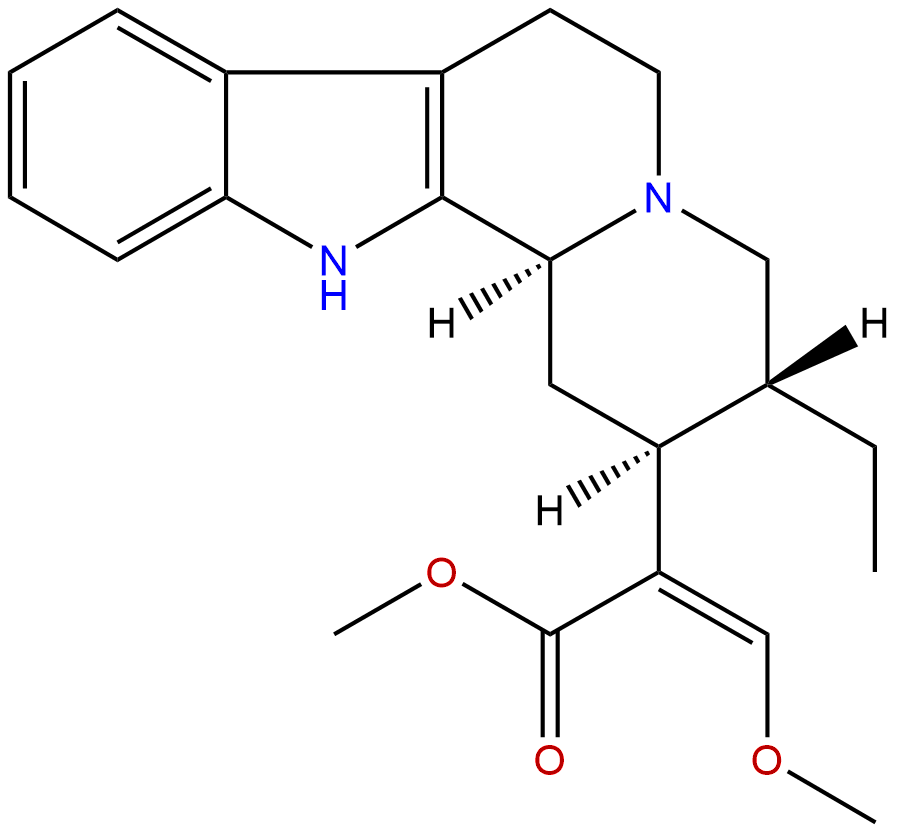


Product name: Hirsutine
Synonym name:
Catalogue No.: BP3185
Cas No.: 7729-23-9
Formula: C22H28N2O3
Mol Weight: 368.477
Botanical Source:
Physical Description: Powder
Type of Compound: Alkaloids
Purity: 95%~99%
Analysis Method: HPLC-DAD or/and HPLC-ELSD
Identification Method: Mass, NMR
Packing: Brown vial or HDPE plastic bottle
The product could be supplied from milligrams to grams. Inquire for bulk scale.
We provide solution to improve the water-solubility of compounds, thereby facilitating the variety of activity tests and clinic uses.
For Reference Standard and R&D, Not for Human Use Directly.
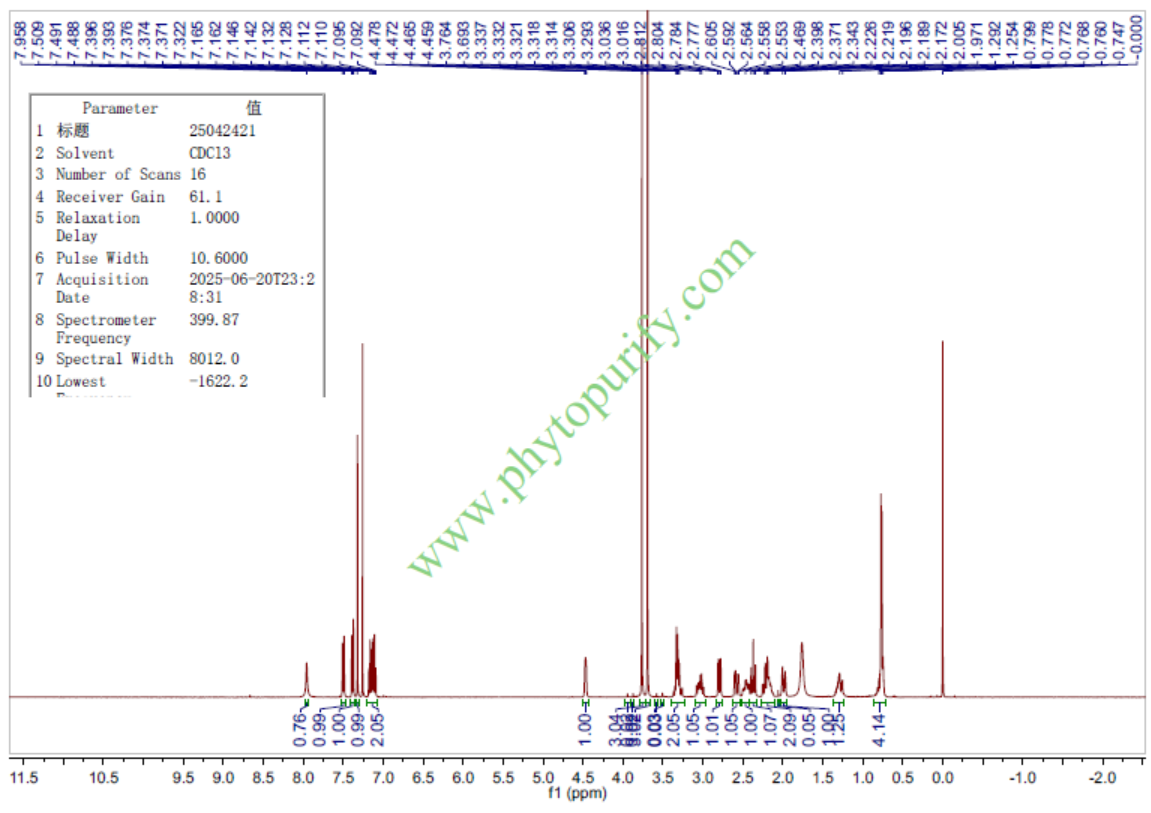
HNMR of Hirsutine
Storage conditions:Short-term storage at 2~8℃, long-term storage at -20 ~ -80℃
54.5600
3.4537
2.7418
.0563
2.6403
7.5323
High
84.4067
3.8586
No
No
No
Yes
No
No
0.0
No
No
Yes
Yes
Hirsutine, CAS number 7729-23-9, is a traditional medicinal plant derived from hirsutine Gambir Plant(Uncaria rhynchophylla)Separated from the middle Indole alkaloids Its molecular formula is C22H28N2O3 and its molecular weight is 368.4770 g/mol. As one of the characteristic active ingredients of plants in the Rubiaceae family and the Gouteng genus, Mao Gouteng alkaloid has long been used in traditional East Asian medicine, especially in traditional Chinese medicine and Japanese Hanfang. With its source plant Gouteng, it has been used to treat hypertension, seizures, headaches, and neurological related diseases.
Modern pharmacological research has revealed a wide range of biological activities of Polygonatum sibiricum alkaloids that far exceed traditional understanding. The existing description clearly states that it not only has significant anticancer activity Can it induce apoptosis of tumor cells, or is it an effective method Dengue virus inhibitor And it exhibits low cytotoxicity. In addition, the study also confirmed that it Cardiovascular protection(Antihypertensive, antiarrhythmic)vasodilation and neuroprotection Potential in various aspects. Its mechanism of action involves blocking L-type calcium ion channels, inhibiting intracellular calcium release, and regulating neuroinflammatory responses. In recent years, with the rise of the concept of multi-target drug discovery, berberine has become increasingly popular due to its regulatory effects on multiple key neurotransmitter receptors and transporters, such as SLC6A4, HTR2A, GABAA receptor subtypes, and CRHR1 Anti anxiety The field of treating mental and neurological disorders has demonstrated unique research value. This article will start from its chemical essence, systematically review its pharmacological mechanism, evaluate its pharmacological properties, and look forward to its future transformation prospects.
Mao Gouteng alkaloid belongs to the complex monoterpene indole alkaloid family, characterized by an indole or dihydroindole nucleus connected to a complex polycyclic system. Its SMILES string (CC [C @ H] 1CN2CC3c ([nH] c4ccc34) [C @ @ H] 2C [C @ @ H] 1/C (=C/OC) C (=O) OC) accurately describes its atomic connection sequence and key stereochemical configuration (represented by the "@" and "@ @" symbols). These chiral centers are crucial for their biological activity, determining their precise binding ability to specific target proteins.
According to the analysis of drug parameters, its molecular weight (MW) is 368.48 g/mol, which meets the requirement of "MW<500" in Lipinski's five rules. The lipid water partition coefficient (LogP) is 3.45, indicating that the compound has moderate lipophilicity, which is beneficial for its penetration of cell membranes, but the LogP value is slightly higher than the ideal range (usually recommended to be<5). The derived LogD (distribution coefficient at pH 7.4) is 2.74, further confirming its lipid solubility at physiological pH. The topological polar surface area (TPSA) is 54.56 Å ², which is much lower than the commonly believed membrane permeability threshold (~140 Å ²), indicating its good membrane permeation potential.
Specifically for biological systems, their water solubility is relatively low (0.0563 mg/mL), which may be one of the challenges that need to be overcome for oral administration. However, its Caco-2 cell permeability data (7.53 × 10 ⁻⁶ cm/s) and effective permeability coefficient (Peff: 2.64) both indicate that it has Good intestinal absorption characteristics The most crucial thing is that it The blood-brain barrier permeability (BBB permeability) is predicted to be "high"This is highly consistent with its reported activities in the central nervous system (CNS), such as anti anxiety and neuroprotection, indicating that it can effectively enter the brain and act on CNS targets. The plasma protein binding rate (PPB) is about 84.4%, which is moderately high and may affect its free drug concentration and efficacy.
Mao Gouteng alkaloid mainly comes from Gambir Plant(Uncaria rhynchophylla (Miq.) Miq. ex Havil.), Also known as "Golden Gouteng" or "Eagle Claw Wind", it is an evergreen woody vine plant of the Gouteng genus in the Rubiaceae family. The dried hooked stems and branches of Gouteng are a famous traditional Chinese medicinal herb, included in the Chinese Pharmacopoeia. They are cool in nature, sweet in taste, and belong to the liver and pericardium meridians Relieve wind and calm down, clear heat and calm the liver The efficacy.
In clinical Chinese medicine, Gouteng is commonly used for treatment Liver wind internal movement, seizures, headache and dizziness Waiting for symptoms. Classic prescriptions such as "Tianma Gouteng Yin" and "Gouteng San" all use Gouteng as their primary or secondary medicine, used to calm the liver and suppress yang, calm the wind and stop spasms. Gouteng and its compound are also widely used in Japanese traditional Chinese medicine to treat hypertension and neurological disorders. Although traditional applications do not explicitly refer to a single component, modern analysis has confirmed that indole alkaloids represented by hirsutein and its isomers (such as hirsutein) are the active ingredients of hirsutein Sedation, hypotension, anticonvulsant The main material basis of its function.
Traditional experience has provided valuable clues for modern research: the therapeutic effects of Gouteng on "calming shock" and "calming the liver" suggest that its active ingredients may act on the central nervous system and regulate neural excitability. This is consistent with modern research finding that berberine acts on targets such as GABA receptors and 5-HT receptors, resulting in anti anxiety and anti seizure effects. Therefore, the study of berberine is a successful example of exploring modern drug lead compounds from traditional herbs.
Mao Gouteng alkaloid has a wide range of pharmacological activities, and its multi-target action characteristics are particularly prominent. The existing data reveals its effects on at least five key targets, providing molecular level explanations for its various biological activities.
Core pharmacological activity:
1. anticancer activity Uncaria alkaloid can induce apoptosis of many kinds of cancer cells (such as breast cancer, liver cancer, lung cancer cells). The mechanism may involve activation of mitochondrial pathways, triggering of Caspase cascade reactions, and cell cycle arrest. Its activity as a dengue virus inhibitor also suggests that it may be achieved by interfering with the virus replication cycle or regulating host cell responses.
2. Cardiovascular protective effect Including anti hypertension, anti arrhythmia, and vasodilation. Mechanism research suggests that the alkaloid of hairy vine can Blocking L-type voltage dependent calcium channels (L-type Ca ² ⁺ channels)It can inhibit the influx of extracellular calcium and also suppress the release of calcium ions from intracellular calcium stores such as sarcoplasmic reticulum. This leads to a decrease in intracellular calcium concentration in vascular smooth muscle cells, resulting in vasodilation and a decrease in blood pressure. Its similar effect on cardiac ion channels helps stabilize myocardial electrical activity and combat arrhythmia.
3. Neuroprotective and anti anxiety effects This is a field that has received much attention in recent years regarding the production of berberine. In the activated microglial cell (immune cell in the brain) model, berberine can reduce the production of various neurotoxic factors (such as inflammatory factors and nitric oxide), thus exhibiting a protective effect in inflammation induced neurotoxicity models. its Anti anxiety (Anxiolytic) Activity is closely related to its regulation of multiple neurotransmitter systems.
Deep analysis of the mechanism of action based on target information:
- Acting on the GABAergic system (targets: GABRA1, GABRB2)GABAA receptors are the main inhibitory ion channel receptors in the brain, composed of different subunits (such as α 1, β 2). Mao Gouteng alkaloid may serve as Positive allosteric regulator Enhance the binding of GABA to receptors or increase chloride ion influx after GABA activation, thereby enhancing central inhibitory neurotransmission and producing sedative, anti anxiety, and anticonvulsant effects. This is the core modern interpretation of its traditional efficacy of "calming the wind and calming the shock".
- Acting on the 5-hydroxytryptamine (5-HT) system (targets: SLC6A4, HTR2A):
- SLC6A4 (Serotonin Transporter)Responsible for the reuptake of 5-HT in synaptic cleft, it is a target of classical antidepressants (SSRIs). If berberine has an inhibitory effect on it, it will increase the concentration of 5-HT in the synaptic cleft, producing antidepressant/anti anxiety effects.
- HTR2A (5-HT2A receptor)A G protein coupled receptor closely related to emotion, cognition, and perception regulation. Some anti anxiety and antipsychotic drugs act by antagonizing this receptor. The effect of berberine on this receptor may help regulate excessive 5-HT excitation and stabilize emotional circuits.
- Acting on the hypothalamic pituitary adrenal (HPA) axis (target: CRHR1)Corticotropin releasing hormone receptor 1 (CRHR1) is a key initiating factor of the HPA axis and is directly related to the pathophysiology of stress response, anxiety, and depression. CRHR1 antagonists are an important direction for the development of anti anxiety/antidepressant drugs. Mao Gouteng alkaloid acts on CRHR1, possibly by inhibiting excessive stress response pathways, thereby exerting anti anxiety effects.
Summary of Mechanism Association The anti anxiety activity of berberine is likely not through a single target, but through Multi target collaboration Implemented: It may simultaneously enhance GABAergic inhibition (GABRA1/B2), regulate 5-HT signaling balance (inhibit SLC6A4, regulate HTR2A), and inhibit the stress core pathway (antagonize CRHR1). This multi pronged approach may give it unique advantages in treating complex mental and neurological disorders, such as being more effective in treating refractory anxiety or comorbidities. Its neuroprotective effect is combined with the anti-inflammatory mechanism of inhibiting excessive activation of microglia, providing potential benefits for the treatment of neuroinflammation or neurodegenerative diseases associated with anxiety.
Based on the provided pharmacological parameters, we can systematically evaluate the potential of berberine as an oral drug lead compound, and refer to the widely used industry standard Lipinski's Five Rules(Rule of Five) and other supplementary standards.
Lipinski Five Rule Compliance:
Permeability and Distribution:
Metabolic and toxicity risks:
Conclusion of comprehensive drug evaluation Mao Gouteng alkaloid is a very attractive substance lead compound It conforms to the basic "drug like" rules of oral medication, especially possessing the valuable characteristic of being developed as a central nervous system drug - high BBB permeability. Its clear Multi target anti anxiety pharmacological activity Combined with good brain exposure ability, it constitutes its core development value. However, it The main obstacles to development lie in potential hERG cardiotoxicity and potential hepatotoxicity Future pharmaceutical chemistry work should focus on reducing LogP values, weakening hERG inhibition, and further clarifying and avoiding liver toxicity risks through structural modifications (such as introducing polar groups, adjusting side chains) while preserving its core pharmacological activity and BBB penetration. Its lower water solubility also needs to be considered at the formulation level.
At present, research on the alkaloid of hairy vine is mainly focused on Preclinical stage A large amount of research has focused on the discovery of its pharmacological activity and preliminary exploration of its mechanism of action. Its activities in anti-cancer, cardiovascular protection, neuroprotection, and antiviral have been widely validated in cell and animal models. Especially its multi-target anti anxiety mechanism provides new ideas and candidate molecules for the development of novel anti anxiety drugs.
Research status:
1. Deepening mechanism research Research is deepening from phenotype observation to target validation and signal pathway analysis. Using molecular docking, surface plasmon resonance and other techniques to directly verify the binding of berberine to GABAA receptors, CRHR1 and other targets, and using gene knockout or selective antagonists to confirm the contribution of specific targets in drug efficacy in animal models.
2. Study on Structure Activity Relationship (SAR)Previous studies have begun to explore the structural modifications of matrine and its analogues, in order to understand their pharmacophore characteristics while enhancing activity and reducing toxicity.
3. Preliminary evaluation of drug properties As described in this article, its basic ADMET (absorption, distribution, metabolism, excretion, toxicity) attributes are being systematically evaluated, and its advantages and risk points are gradually becoming clear.
Application prospects and future directions:
1. Development of novel multi-target anti anxiety/antidepressant drugs This is the most promising direction for the transformation of Mao Gouteng alkaloid. In response to the problems of slow onset, insufficient efficacy, and multiple side effects of existing single target drugs (such as SSRIs), the multi-target regulatory mechanism of berberine may provide a better treatment strategy. Future research needs to confirm its anti anxiety efficacy in large animal models and complete a systematic preclinical safety evaluation.
2. Treatment of neuroinflammatory related diseases Combining its neuroprotective and anti neuroinflammatory activities, berberine may be used in anxiety/depression comorbid neurodegenerative diseases (such as early Alzheimer's disease), post-stroke nerve repair, or viral encephalitis sequelae.
3. Pharmaceutical Chemistry Optimization Based on the existing drug efficacy analysis, the core task for the future is to conduct Reasonable structural optimization The key objectives are: ① Eliminate hERG inhibition Strategies such as reducing molecular rigidity, introducing acidic groups, and reducing hydrophobic fragments can be employed; ② Improve water solubility To improve the performance of the formulation; ③ Retain its activity towards key targets (such as GABAA receptor, CRHR1) and high BBB permeability in optimization It may lead to a series of analogs with different target preferences.
4. Exploration of Natural Product Combination Therapy As one of the main active ingredients of Houttuynia cordata, studying its synergistic effects with other Houttuynia cordata alkaloids (such as Houttuynia cordata alkaloids and isoHouttuynia cordata alkaloids), or its interactions with other medicinal ingredients in traditional formulas, can help explain the overall efficacy of traditional Chinese medicine formulas from a modern scientific perspective and develop innovative compound drugs based on natural products.
In summary, as a natural molecule derived from traditional medicine, berberine has become a highly valuable lead compound in the field of psychiatric and neurological disease drug development due to its unique multi-target mechanism of action and good brain distribution characteristics. Despite facing challenges such as cardiotoxicity, with the careful polishing of modern medicinal chemistry and pharmacology, it is expected to transform into a new weapon for treating anxiety and related diseases in the future, achieving a magnificent transformation from ancient herbs to modern drugs.
