Introduction/Overview
Natural products, as an important source of drug discovery, play an irreplaceable role in the long history of human struggle against diseases. Among the numerous natural molecules with biological activity, alkaloids derived from traditional medicinal plants have attracted much attention due to their structural diversity and significant pharmacological activity. Geissoschizine methyl ether (GM), as a monoterpenoid indole alkaloid, has emerged in the fields of neuropsychopharmacology and pain management in recent years, becoming a bridge connecting traditional medical wisdom with modern drug development.
Cistanche methyl ether (CAS number: 60314-89-8) was originally derived from plants of the genus Gouteng in the family Rubiaceae(Uncaria Separated and identified from hooked stem branches of species. Gouteng(Uncaria rhynchophylla)As a traditional Chinese medicine, it has a long history of medicinal use in China, Japan, and Southeast Asia. It is commonly used to treat conditions such as headaches, dizziness, hypertension, and seizures in children. Yokukansan, a famous prescription in Japanese traditional Chinese medicine, is composed of seven herbs: Gouteng, Atractylodes macrocephala, Poria cocos, Chuanxiong, Angelica sinensis, Bupleurum chinense, and Glycyrrhiza uralensis. It is widely used in clinical practice to treat neurological and psychiatric disorders, such as behavioral and psychological symptoms (BPSD), anxiety, insomnia, and agitation associated with Alzheimer's disease. Modern pharmacological research has revealed that selegiline methyl ether is one of the core components that exert psychoactive effects in Yigan San.
The most notable pharmacological property of selegiline methyl ether is its role as a partial agonist of the 5-hydroxytryptamine 1A receptor (5-HT1A receptor). 5-HT1A receptors are one of the most widely distributed subtypes of serotonin receptors in the central nervous system, playing critical roles in emotion regulation, anxiety control, pain perception, and cognitive function. This discovery not only provides a molecular level explanation for the clinical efficacy of Yigan San, but also reveals the enormous potential of cytarabine methyl ether in the treatment of mental disorders and pain syndromes. In addition, studies have shown that the analgesic effect of selegiline methyl ether involves multiple targets, including transient receptor potential vanillic acid subtype 1 (TRPV1), cannabinoid receptor 1 (CNR1), opioid receptors (OPRD1, OPRM1, OPRK1), and dopamine D2 receptor (DRD2), indicating the complexity of its mechanism of action and multi-target synergistic effects.
The purpose of this article is to comprehensively review the research progress of cytarabine methyl ether, covering its chemical structure and physicochemical properties, plant sources and extraction methods, pharmacological activity and mechanism of action, drug evaluation and pharmacokinetic characteristics, and to explore its prospects and challenges in clinical applications. By systematically reviewing existing research results, this article aims to provide scientific basis for the in-depth development and transformation application of this natural product.
Chemical structure and physicochemical properties
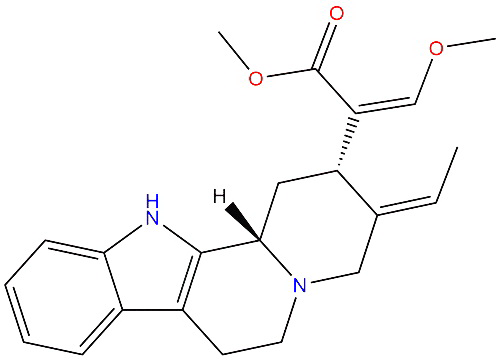
Cesare methyl ether belongs to the monoterpene indole alkaloid family, and its chemical structure is composed of an indole nucleus fused with a C9 or C10 unit derived from a secologanin. Specifically, its core skeleton is a corynantheine type structure with a four ring system consisting of an indole ring (A and B rings), a pyridine ring (C ring), and an oxygen-containing heterocyclic ring (D ring). The molecular formula of this compound is C22H26N2O3, with a molecular weight of 366.4610 g/mol. The key functional groups in its structure include an indole N-H group, a methoxy group (- OCH3), and an ester group (- COOCH3), which are crucial for its interaction with biological targets.
From the perspective of stereochemistry, there are multiple chiral centers in the methyl ether of cytarabine, and its absolute configuration has been determined. Naturally occurring GMs typically have specific stereoconfigurations, which determine their binding affinity and selectivity to targets such as 5-HT1A receptors. It is worth noting that the chemical structure of GM shares some structural similarities with alkaloids such as yohimbine and rauwolscine, suggesting that they may share certain pharmacological activity profiles.
In terms of physicochemical properties, cytarabine methyl ether exhibits typical alkaloid characteristics. Its lipid water partition coefficient (LogP) is 3.0969, indicating that the compound has a moderate degree of lipophilicity, which facilitates its penetration through biological membranes, especially the blood-brain barrier (BBB). In fact, the blood-brain barrier permeability of GM is evaluated as "high", which enables it to effectively enter the central nervous system and act on targets in the brain, such as 5-HT1A receptors and dopamine receptors. Its topological polar surface area (TPSA) is 54.5600 Å ², which is lower than the commonly assumed passive diffusion threshold (about 140 Å ²), further supporting its excellent central permeability.
However, GM has poor water solubility, with a water solubility value of only 0.0348 mg/mL. This characteristic may limit its absorption and bioavailability in the body, which is an obstacle that needs to be overcome in drug development. In addition, GM exhibits inhibitory activity on hERG (human Ether - à - go Related Gene) potassium ion channels, which is an important safety warning signal as hERG inhibition is associated with the risk of QT interval prolongation and fatal arrhythmias such as apical torsion ventricular tachycardia. The Ames test result was 0.0, indicating that the compound did not show mutagenicity in the bacterial recovery mutation test, providing some positive evidence for its safety. Overall, the physicochemical properties of cytarabine methyl ether exhibit a "double-edged sword" characteristic: good central permeability is the basis for its neuropharmaceutical activity, while poor water solubility and hERG inhibition risk are key issues that must be addressed in its drug development.
Plant sources and extraction methods
The main source of methyl ether for sewing seeds comes from the Rubiaceae family and the genus Gouteng(Uncaria)Plants. This genus of plants is widely distributed in tropical and subtropical regions of Asia, Africa, and South America, with over 60 species worldwide. The most widely used types in traditional medicine include hooked vine(Uncaria rhynchophylla)Large leaved hooked vine(Uncaria macrophylla)Mao Gouteng(Uncaria hirsuta)Hehua Gouteng(Uncaria sinensis)Wait. The dried hooked stems and branches of these plants are the authentic source of the traditional Chinese medicine "Gouteng". It is worth noting that the content of cytarabine methyl ether in Gouteng is usually low and belongs to trace alkaloid components. Its content is influenced by various factors such as plant variety, origin, harvest season, and processing methods. In addition, GM also exists in some other plants, such as certain madder plants (e.g Geissospermum Among the bark of the genus, but the hook vine is still the main source in current research.
The extraction and purification of cytarabine methyl ether from Houttuynia cordata usually follow the classic alkaloid extraction process, combined with modern chromatographic separation techniques. A typical extraction method includes the following steps:
-
Raw material pretreatment and crude extraction Crush the dried stems and branches of the hook vine into coarse powder, and soak or extract them using an acidic aqueous solution (such as 0.5% -1% hydrochloric acid or sulfuric acid) or an acidic alcohol solution (such as methanol or ethanol containing acid). Acidic conditions help to convert alkaloids present in salt form in plants into soluble salts, thereby improving extraction efficiency. After filtering the extract, adjust the pH to alkaline (pH 9-10) using alkaline reagents such as ammonia or sodium hydroxide to free the alkaloids.
-
Liquid-liquid extraction The extracted solution after alkalization is repeatedly extracted with organic solvents that are immiscible with water, such as chloroform, dichloromethane, or ethyl acetate. Alkaloids are easily soluble in organic phases, thus separating from water-soluble impurities such as sugars and tannins. Combine the organic phases, dry with anhydrous sodium sulfate, and concentrate under reduced pressure to obtain the crude extract of total alkaloids.
-
Preliminary separation and purification The crude extract of total alkaloids is complex in composition and contains various indole alkaloids with similar structures, such as rhynchophylline, isorhynchophylline, conynoxin, and cytarabine methyl ether. Initial separation is often performed using silica gel column chromatography, with gradient elution using solvent systems such as chloroform methanol or petroleum ether acetone. Collect GM rich fractions through thin layer chromatography (TLC) monitoring.
-
Efficient separation and purification To further obtain high-purity cytarabine methyl ether, more refined separation techniques are needed. High performance liquid chromatography (HPLC) is the most commonly used method, especially using a reverse phase C18 column with acetonitrile water or methanol water (often with a small amount of acid or buffer salt added) as the mobile phase for isocratic or gradient elution. Preparation HPLC can process a large amount of samples at once and obtain GM monomers with a purity of over 98%. In addition, high-speed counter current chromatography (HSCCC), as a liquid-liquid distribution chromatography technique, has been successfully applied to the separation of crochet alkaloids due to its advantages of irreversible adsorption and high sample recovery rate, especially suitable for separating compounds with similar polarities.
-
Structural Identification The purified compound was structurally confirmed by techniques such as nuclear magnetic resonance spectroscopy (NMR, including 1H-NMR, 13C-NMR, COSY, HSQC, HMBC, etc.), mass spectrometry (MS, especially high-resolution mass spectrometry HR-MS), as well as ultraviolet spectroscopy (UV) and infrared spectroscopy (IR). By comparing with the spectral data reported in the literature, the chemical structure of the compound was finally confirmed.
In recent years, with the promotion of green chemistry concepts, some new extraction techniques such as ultrasound assisted extraction (UAE), microwave-assisted extraction (MAE), and supercritical fluid extraction (SFE) have also been attempted for the extraction of alkaloids from Uncaria barbata, aiming to improve extraction efficiency, shorten time, and reduce the use of organic solvents. However, due to the low content of cytarabine methyl ether in plants, its large-scale, high-purity, and low-cost preparation process remains one of the bottlenecks restricting its in-depth research and development applications.
Pharmacological activity research
The pharmacological activity research of cytarabine methyl ether mainly focuses on its effects on the central nervous system and pain regulation. Its position as the core active ingredient of Yigan San and its discovery as a 5-HT1A receptor agonist have greatly promoted the deepening of related research.
Neuropsychiatric activity
The most notable pharmacological activity of GM is its regulatory effect on the central nervous system. Research has shown that GM can bind and activate 5-HT1A receptors with sub micromolar affinity (Ki value of about tens of nM), exerting partial agonist effects. This mechanism is believed to be the key to the improvement of behavioral and psychological symptoms (such as agitation, aggression, hallucinations) in Alzheimer's disease patients by Yigan San. In animal models, GM exhibits significant anti anxiety and anti depression like effects. For example, in the elevated cross maze and forced swimming experiments in mice, GM administration can increase open arm dwell time and reduce immobility time, with effects comparable to classical anti anxiety drugs diazepam and antidepressant fluoxetine, but with fewer side effects. In addition, GM can improve cognitive impairment induced by scopolamine or amyloid beta protein (A β), indicating its potential in the treatment of cognitive dysfunction.
Analgesic effect
Pain is one of the most common clinical symptoms, and existing analgesics (such as opioids and nonsteroidal anti-inflammatory drugs) have serious side effects such as addiction and gastrointestinal damage. Therefore, there is an urgent need to find new and safe analgesic drugs. Cesare methyl ether exhibits significant analgesic activity in various pain models.
- Neuropathic Pain In neuropathic pain models induced by chronic sciatic nerve compression injury (CCI) or spinal nerve ligation (SNL), oral or intraperitoneal injection of GM can dose dependently alleviate mechanical allodynia and thermal hyperalgesia. The analgesic effect can be partially reversed by the 5-HT1A receptor antagonist WAY-100635, indicating that 5-HT1A receptors are involved in this process.
- Inflammatory pain In inflammatory pain models induced by formalin or complete Freund's adjuvant (CFA), GM also exhibits analgesic effects and can inhibit spontaneous pain in the early and late stages of inflammation.
- Visceral pain GM also has inhibitory effects on acetic acid-induced writhing response and visceral pain induced by colorectal dilation.
It is worth noting that the analgesic mechanism of GM is not singular. In addition to 5-HT1A receptors, studies have also found that its analgesic effects involve multiple targets. For example, in the pain model induced by TRPV1 receptor agonist capsaicin, GM can effectively antagonize pain response, suggesting that it may act as a TRPV1 antagonist. In addition, the analgesic effect of GM partially depends on the endogenous cannabinoid system, as the cannabinoid receptor CB1 (CNR1) antagonist AM251 can attenuate its analgesic effect. Opioid receptors (especially μ - opioid receptor OPRM1 and δ - opioid receptor OPRD1) are also considered to be involved in the analgesic effect of GM, but GM itself has a low direct affinity for opioid receptors, and its effect may be achieved by activating endogenous opioid peptide release or interacting with other receptor pathways. The regulation of dopamine D2 receptor (DRD2) may also be related to its improvement in pain related emotional and motivational dimensions.
Other pharmacological activities
In addition to the main activities mentioned above, GM also exhibits some other pharmacological effects, such as anti-inflammatory, antioxidant, and neuroprotective effects. In vitro experiments have shown that GM can inhibit the release of pro-inflammatory cytokines (such as TNF - α, IL-1 β, NO) from microglia stimulated by lipopolysaccharide (LPS), and reduce the production of reactive oxygen species (ROS). These effects may be related to their potential application value in neurodegenerative diseases.
Mechanism of action and molecular targets
The pharmacological effects of cytarabine methyl ether are the result of multi-target and multi pathway synergistic effects. Its core mechanism is to act as a partial agonist of 5-HT1A receptors, but increasing evidence suggests that its complete pharmacological effect profile goes far beyond this.
5-HT1A receptor-mediated signaling pathway
The 5-HT1A receptor is a G protein coupled receptor (GPCR) that primarily couples with Gi/o proteins. After GM binds and activates the receptor, it inhibits adenylate cyclase (AC) activity, reduces intracellular cAMP levels, and regulates downstream protein kinase A (PKA) activity. Meanwhile, it can also activate the mitogen activated protein kinase (MAPK) pathway, such as ERK1/2. In the central nervous system, 5-HT1A receptors exist in two forms: presynaptic (as self receptors located on the soma/dendrites of 5-HTergic neurons in the raphe nucleus) and postsynaptic (mainly in the hippocampus, cortex, amygdala, and other regions). The excitatory effect of GM on presynaptic receptors can inhibit the synthesis and release of 5-HT, while the excitatory effect on postsynaptic receptors directly produces anti anxiety, anti depression, and analgesic effects. The characteristic of this partial agonist allows GM to exert therapeutic effects while avoiding the overstimulation and tolerance issues that may be caused by complete agonists.
Interaction with pain related targets
The analgesic mechanism of GM is complex, involving multiple molecular targets related to pain transmission and modulation:
-
TRPV1 and TRPA1 TRPV1 and TRPA1 are non selective cation channels expressed on primary sensory neurons, and are key molecules for sensing and transmitting harmful stimuli such as heat, acid, capsaicin, and irritant chemicals. Research has shown that GM can directly inhibit the activity of TRPV1 and TRPA1 channels, block calcium ion influx, thereby reducing the generation and transmission of pain signals. This explains the effectiveness of GM in pain models induced by capsaicin and mustard oil (TRPA1 agonist).
-
Cannabinoid receptor 1 (CNR1)CB1 receptors are widely distributed in the central and peripheral nervous systems and are an important component of the endocannabinoid system, playing a crucial role in pain suppression. The analgesic effect of GM can be blocked by CB1 receptor antagonists, suggesting that it may exert its effect by directly or indirectly activating CB1 receptors. There is a hypothesis that GM may act as an inhibitor of endogenous cannabinoid (such as anandamide) hydrolases, increasing the levels of endogenous cannabinoids and indirectly activating CB1 receptors.
-
Opioid receptors (OPRM1, OPRD1, OPRK1)Although the direct binding affinity of GM to opioid receptors is not high, pharmacological experiments strongly suggest that the opioid system is involved in its analgesic effect. Antagonists of both μ - opioid receptor (MOR) and δ - opioid receptor (DOR) can partially attenuate the analgesic effect of GM. Possible mechanisms include: GM activates 5-HT1A receptors to promote the release of endogenous opioid peptides (such as β - endorphins and enkephalins) in the hypothalamus or spinal cord, thereby activating opioid receptors; Or there may be cross talk between GM and opioid receptors through allosteric regulation or signaling pathways.
-
Dopamine D2 receptor (DRD2)The dopamine system plays an important role in the motivational and affective dimensions of pain, namely the aversive and unpleasant sensations caused by pain. The regulatory effect of GM on DRD2 may help improve comorbid symptoms such as depression, anxiety, and loss of pleasure often associated with chronic pain.
-
Cyclooxygenase (PTGS1/PTGS2)The inhibitory effect of GM on cyclooxygenase (COX-1 and COX-2) is relatively weak, which is consistent with its partial effects in inflammatory pain models, but not its main analgesic mechanism.
Integrated model of multi-target synergistic effect
Overall, the pharmacological effects of selegiline methyl ether do not rely on the strong activation of a single target, but are achieved through a synergistic mode of action with multiple targets and low affinity. This "network pharmacology" mechanism enables it to simultaneously act on pain transmission pathways (TRPV1/TRPA1), endogenous analgesic systems (5-HT1A, CB1, opioid receptors), and emotion regulation systems (5-HT1A, DRD2), thereby exerting analgesic and mood improving effects at multiple levels. This multi-target characteristic also explains why GM produces significant therapeutic effects while experiencing fewer serious side effects commonly seen in traditional single target drugs such as opioids.
Evaluation of drug properties and pharmacokinetics
To advance cytarabine methyl ether from a natural product candidate molecule to a clinical drug, a comprehensive evaluation of its drug lethality and pharmacokinetic (ADME) properties is required.
Drugability assessment
Preliminary evaluation based on the Lipinski Rule of Five shows that GM's molecular weight (366.46<500), LogP (3.10<5), number of hydrogen bond donors (1, indole N-H<5), and number of hydrogen bond acceptors (4, two carbonyl oxygen and two ether oxygen<10) all meet the requirements, indicating its good oral drug potential. However, poor water solubility (0.0348 mg/mL) is its main pharmaceutical defect. Low water solubility not only affects oral absorption, but may also lead to low bioavailability in vivo and increase the difficulty of formulation development. In addition, hERG inhibitory activity is a serious safety hazard. Although the Ames test result is negative, the risk of hERG inhibition needs to be fully valued and evaluated in the early stages of drug development. It may be necessary to reduce hERG activity through structural modifications, such as introducing polar groups or reducing lipophilicity, while maintaining or optimizing its activity towards the target.
Pharmacokinetic characteristics
At present, there is insufficient systematic research on the pharmacokinetics of cytarabine methyl ether in vivo, but some preliminary findings have been made:
- absorb Due to poor water solubility, the oral absorption of GM may not be complete, and its bioavailability may be low. Animal experiments have shown that after oral administration, the blood concentration peak time (Tmax) of GM is relatively short, indicating that it may have a certain degree of rapid absorption in the gastrointestinal tract, but absolute bioavailability data is still lacking. Its high LogP value facilitates passive diffusion through intestinal epithelial cells, but its low solubility limits the dissolution rate.
- distribution GM has high blood-brain barrier permeability, which is the key to its central nervous system activity. After intravenous injection, the concentration of GM in brain tissue can quickly reach a high level. Its distribution volume (Vd) may be large, indicating its widespread distribution in tissues.
- Metabolism As an alkaloid, GM is mainly metabolized in the liver through the cytochrome P450 (CYP) enzyme system. Preliminary research suggests that CYP3A4 and CYP2D6 may be involved in the oxidative metabolism of GM, producing hydroxylated or demethylated products. It is currently unclear whether these metabolites have pharmacological activity or toxicity. Metabolic stability is an important factor affecting its half-life in vivo.
- excretion GM and its metabolites are mainly excreted through bile and urine. Due to its moderate molecular weight and certain lipophilicity, there may be enterohepatic circulation, which prolongs its duration of action in the body.
Challenges and Strategies
In response to the challenges faced by GM drug development, future research directions include:
- Prodrug design Modify the polar groups of GM (such as indole N-H or ester groups) to prepare more water-soluble prodrugs, which can be released in vivo through enzymatic hydrolysis or chemical conversion to improve oral bioavailability.
- Development of new dosage forms Modern drug delivery systems such as liposomes, nanoparticles, and cyclodextrin inclusion complexes are used to improve the solubility and dissolution rate of GM, and achieve targeted delivery.
- structural optimization Under the premise of maintaining or enhancing 5-HT1A receptor agonistic activity, reasonable pharmacological modifications can be used to reduce hERG inhibitory activity and improve water solubility. For example, introducing polar side chains containing nitrogen or oxygen into molecules, or adjusting the position of methoxy groups.
- combination therapy Exploring the synergistic effects of GM with low-dose opioid drugs, nonsteroidal anti-inflammatory drugs, or antidepressants by utilizing its multi-target properties, in order to achieve the goal of enhancing efficacy and reducing toxicity.
Clinical application prospects and prospects
The unique pharmacological activity spectrum and multiple mechanisms of action of selegiline methyl ether have opened up broad prospects for its clinical application in multiple disease fields.
pain management
Given that GM exerts analgesic effects through multiple targets such as 5-HT1A, TRPV1, CB1, and opioid receptors, and animal experiments have shown significant analgesic effects with minimal side effects, GM is expected to be developed as a novel non opioid analgesic. Especially suitable for:
- chronic neuropathic pain: Such as diabetes peripheral neuropathy, post herpetic neuralgia, etc. These diseases have poor response to existing treatment, and are often accompanied by anxiety and depression.
- Inflammatory pain Such as arthritis, postoperative pain, etc.
- Visceral pain Abdominal pain related to irritable bowel syndrome (IBS).
Neuropsychiatric disorders
As the core active ingredient of Yigan San, GM has natural advantages in the treatment of neurological and psychiatric disorders.
- BPSD associated with Alzheimer's disease This is the most direct clinical translation direction for GM. Its anti anxiety, anti agitation, and cognitive improvement effects are expected to provide a safer and more effective treatment option for this challenging problem.
- Anxiety disorder and depression As a partial agonist of 5-HT1A receptor, GM has dual potential in anti anxiety and anti depression, and may have faster onset and fewer side effects.
- Drug addiction 5-HT1A receptors and DRD2 play important roles in the reward pathway, and GM may have potential value in treating opioid, cocaine, or alcohol addiction.
Future research directions
Despite the bright prospects, the translation from laboratory to clinical still faces many challenges. Future research should focus on the following aspects:
- In depth pharmacokinetic research Systematically elucidate the absorption, distribution, metabolism, and excretion characteristics of GM in various animal models and humans, particularly the identification and activity evaluation of its metabolites.
- toxicological evaluation In addition to the risk of hERG inhibition, comprehensive acute and chronic toxicity tests, including reproductive toxicity, developmental toxicity, and carcinogenicity assessments, are required to determine its safety window.
- Preclinical pharmacodynamic validation Further validate the efficacy of GM in complex animal models that are closer to human diseases, such as transgenic AD mouse models and chronic pain comorbidity depression models.
- Fine analysis of the mechanism of action Using advanced technologies such as gene knockout animals, optogenetics, and chemogenetics, elucidate the role of GM in specific brain regions and neuronal types, and clarify the synergistic or antagonistic relationships among its multiple targets.
- Research on Medicinal Chemistry and Pharmaceutical Formulation To address the issues of water solubility and hERG inhibition, a systematic structure-activity relationship (SAR) study will be conducted to search for better candidate compounds. Meanwhile, develop oral or injectable formulations suitable for clinical use.
Conclusion
Cesare methyl ether, a trace alkaloid derived from the traditional Chinese medicine Gouteng, has been identified through modern pharmacological studies as a partial agonist of 5-HT1A receptors and a multiple pain target modulator. It not only provides a molecular basis for understanding the therapeutic effect of the classic Chinese formula "Yigan San", but also provides valuable lead compounds for the development of new and safe analgesic and neuropsychiatric drugs with its unique multi-target mode of action. Despite challenges in drug formulation, particularly in terms of water solubility and hERG inhibition risk, these obstacles are expected to be overcome through prodrug design, new dosage form development, and rational structural optimization. The in-depth study of cytarabine methyl ether is not only an exploration of a natural product molecule, but also a vivid practice of integrating traditional medical wisdom with modern pharmaceutical science. With the continuous deepening of understanding of its pharmacological mechanism, pharmacokinetics, and toxicology, cytarabine methyl ether and its derivatives are expected to become important weapons for the treatment of chronic pain and neurological and psychiatric disorders in the future, bringing new hope to patients suffering from these diseases.