


Synonym name: Isorhyncophylline
Catalogue No.: BP0799
Cas No.: 6859-01-4
Formula: C22H28N2O4
Mol Weight: 384.476
Botanical Source: Alkaloid from Uncaria and Mitragyna spp. (Naucleaceae)
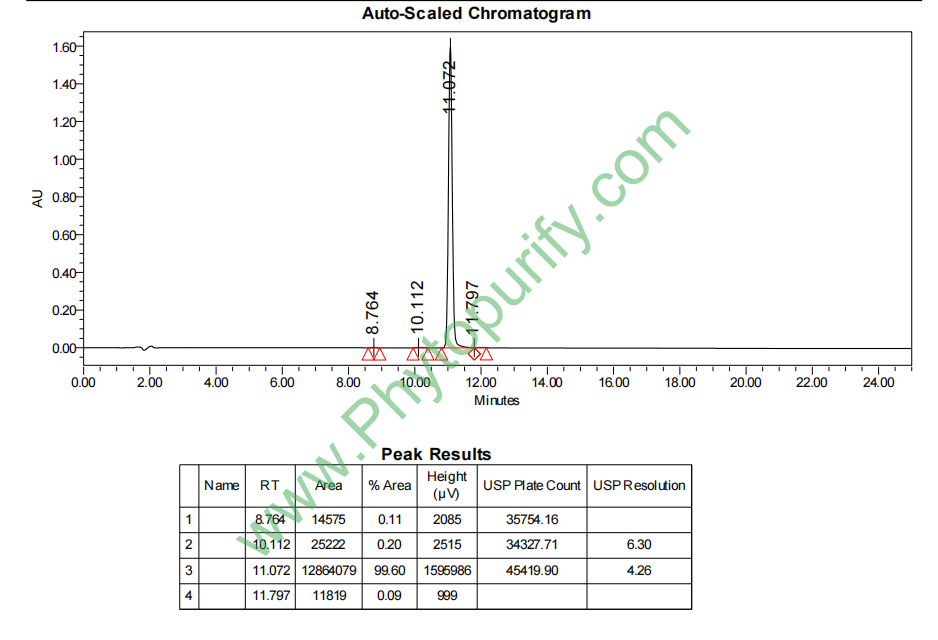
Purity: 95%~99%
Analysis Method: HPLC-DAD or/and HPLC-ELSD
Identification Method: Mass, NMR
Packing: Brown vial or HDPE plastic bottle
Can be supplied from milligrams to grams.
For Reference Standard and R&D, Not for Human Use Directly.
Inquire for bulk scale.
References:
Int J Mol Sci. 2017 May 19;18(5).
Isorhynchophylline, a Potent Plant Alkaloid, Induces Apoptotic and Anti-Metastatic Effects in Human Hepatocellular Carcinoma Cells through the Modulation of Diverse Cell Signaling Cascades.
Isorhynchophylline (Rhy) is an active pharmacological component of Uncaria rhynchophylla that has been reported previously to exert significant antihypertensive and neuroprotective effects. However, very little is known about its potential anti-cancer activities.
METHODS AND RESULTS:
This study was carried out to evaluate the anticancer effects of Rhy against various human carcinoma cell lines. We found that Rhy exhibited substantial cytotoxic effect against human hepatocellular carcinoma HepG2 cells when compared with other human carcinoma cell lines including those of lung, pancreas, prostate, head and neck, breast, multiple myeloma, brain and renal cell carcinoma. Rhy induced apoptosis as characterized by accumulation of cells in sub G1 phase; positive Annexin V binding; activation of caspase-8, -9, and -3; and cleavage of PARP (poly-ADP ribose polymerase). This effect of Rhy correlated with the down-regulation of various proteins that mediated cell proliferation, cell survival, metastasis, and angiogenesis. Moreover, cell proliferation, migration, and constitutive CXCR4 (C-X-C chemokine receptor type 4), MMP-9 (Matrix metallopeptidase-9), and MMP-2 expression were inhibited upon Rhy treatment. We further investigated the effect of Rhy on the oncogenic cell signaling cascades through phospho-kinase array profiling assay. Rhy was found to abrogate phospho-p38, ERK, JNK, CREB, c-Jun, Akt, and STAT3 signals, but interestingly enhanced phospho-p53 signal.
CONCLUSIONS:
Overall, our results indicate, for the first time, that Rhy could exert anticancer and anti-metastatic effects through regulation of multiple signaling cascades in hepatocellular carcinoma cells.
Evid Based Complement Alternat Med. 2013;2013:163057.
Isorhynchophylline Protects PC12 Cells Against Beta-Amyloid-Induced Apoptosis via PI3K/Akt Signaling Pathway.
The neurotoxicity of amyloid- β (A β ) has been implicated as a critical cause of Alzheimer's disease. Isorhynchophylline (IRN), an oxindole alkaloid isolated from Uncaria rhynchophylla, exerts neuroprotective effect against Aβ 25-35-induced neurotoxicity in vitro. However, the exact mechanism for its neuroprotective effect is not well understood.
METHODS AND RESULTS:
The present study aimed to investigate the molecular mechanisms underlying the protective action of IRN against Aβ 25-35-induced neurotoxicity in cultured rat pheochromocytoma (PC12) cells. These experimental findings unambiguously suggested that the protective effect of IRN against Aβ 25-35-induced apoptosis in PC12 cells was associated with the enhancement of p-CREB expression via PI3K/Akt/GSK-3 β signaling pathway.
Neurochem Res. 2017 Feb;42(2):678-85.
Antidepressant-Like Effect of Isorhynchophylline in Mice.
Isorhynchophylline (IRN), an oxindole alkaloid, has been identified as the main active ingredient responsible for the biological activities of Uncaria rhynchophylla (Miq) Miq ex Havil. (Rubiaceae). Previous studies in our laboratory have revealed that IRN possesses potent neuroprotective effects in different models of Alzheimer's disease. However, the antidepressant-like effects of IRN are remained unclear.
METHODS AND RESULTS:
The present study aims to evaluate the antidepressant-like effects of IRN. The antidepressant-like effects of IRN was determined by using animal models of depression including forced swimming and tail suspension tests. The acting mechanism was explored by determining the effect of IRN on the levels of monoamine neurotransmitters and the activities of monoamine oxidases. Intragastric administration of IRN at 10, 20 and 40 mg/kg for 7 days caused a significant reduction of immobility time in both forced swimming and tail suspension tests, while IRN did not stimulate locomotor activity in the open-field test. In addition, IRN treatment antagonized reserpine-induced ptosis and significantly enhanced the levels of monoamine neurotransmitters including norepinephrine (NE) and 5-hydroxytryptamine (5-HT), and the activity of monoamine oxidase A (MAO-A) in the hippocampus and frontal cortex of mice.
CONCLUSIONS:
These results suggest that the antidepressant-like effects of IRN are mediated, at least in part, by the inhibition of monoamine oxidases.
Planta Med. 2011 Sep;77(13):1477-81
Protective effects of isorhynchophylline on cardiac arrhythmias in rats and guinea pigs.
As one important constituent extracted from a traditional Chinese medicine, Uncaria Rhynchophylla Miq Jacks, Isorhynchophylline has been used to treat hypertension, epilepsy, headache, and other illnesses. Whether Isorhynchophylline protects hearts against cardiac arrhythmias is still incompletely investigated.
METHODS AND RESULTS:
This study was therefore aimed to examine the preventive effects of Isorhynchophylline on heart arrhythmias in guinea pigs and rats and then explore their electrophysiological mechanisms. In vivo, ouabain and calcium chloride were used to establish experimental arrhythmic models in guinea pigs and rats. In vitro, the whole-cell patch-lamp technique was used to study the effect of Isorhynchophylline on action potential duration and calcium channels in acutely isolated guinea pig and rat cardiomyocytes. The dose of ouabain required to induce cardiac arrhythmias was much larger in guinea pigs administered with Isorhynchophylline. Additionally, the onset time of cardiac arrhythmias induced by calcium chloride was prolonged, and the duration was shortened in rats pretreated with Isorhynchophylline. The further study showed that Isorhynchophylline could significantly decrease action potential duration and inhibit calcium currents in isolated guinea pig and rat cardiomyocytes in a dose-dependent manner.
CONCLUSIONS:
In summary, Isorhynchophylline played a remarkably preventive role in cardiac arrhythmias through the inhibition of calcium currents in rats and guinea pigs.
HPLC of Isorhynchophylline
Storage conditions:Short-term storage at 2~8℃, long-term storage at -20 ~ -80℃
67.8700
2.5116
2.1518
.4151
2.5557
6.4045
High
77.4057
4.6565
No
No
No
No
No
Yes
0.0
No
Yes
Yes
No
Natural products, as an important source of drug discovery, play an irreplaceable role in the history of human disease prevention and treatment. Gouteng(Uncaria rhynchophylla)As a traditional Chinese medicine, it has the effects of calming the wind, calming the nerves, clearing heat, and calming the liver. It is commonly used to treat hypertension, seizures, and neurological related diseases. The material basis of its pharmacological activity is mainly attributed to a series of structurally unique indole alkaloids, among which Isorhynchophylline is one of the most representative active ingredients. Isorhynchophylline (CAS number: 6859-01-4) is a tetraepoxyindole alkaloid. Modern pharmacological studies have gradually revealed that it not only has clear anti hypertensive and neuroprotective effects, but also has broad potential in multiple fields such as anti-cancer, anti-inflammatory, and analgesic effects. With the development of molecular biology and structural pharmacology, the complex network of action of isorhynchophylline is gradually being elucidated, involving multiple key targets from ion channels, neurotransmitter receptors to inflammatory signaling pathways. This article aims to systematically review the chemical properties, plant sources, pharmacological activities, molecular mechanisms of action, pharmacological characteristics, and clinical application prospects of isorhynchophylline, in order to provide comprehensive scientific references for the in-depth research and future drug development of this natural product.
The molecular formula of isorhynchophylline is C22H28N2O4, with a molecular weight of 384.4760. Its core structure belongs to tetracyclic monoterpene indole alkaloids, which are formed by the fusion of indole or oxidized indole nuclei with a complex polycyclic system. Its structural features include a rigid five ring skeleton, which contains a β - Capolin system and an oxygen bridge formed by ether bonds at C-3 and C-7 positions, forming a unique seven membered oxygen-containing heterocyclic ring (oxindole portion). The stereochemical configuration of C-3 and C-7 positions (usually cis) is crucial for their biological activity. This structure determines its lipophilicity and spatial conformation, which is the basis for its interaction with various biological targets.
From the analysis of physicochemical parameters related to drug properties, the lipid water partition coefficient (LogP) of isorhynchophylline is 2.5116, indicating its moderate lipophilicity, which is conducive to transmembrane transport and absorption. Its topological polar surface area (TPSA) is 67.8700 Å ², which is relatively low, consistent with its good membrane permeability. The water solubility value is 0.4151 mg/mL, which belongs to the category of slight solubility, indicating that solubilization strategies may need to be considered in formulation development. Of particular importance, its blood-brain barrier (BBB) permeability is predicted to be "high", which is highly consistent with its significant central nervous system pharmacological activity (such as neuroprotection and analgesia), indicating that it can effectively enter the central nervous system to exert its effects. In addition, key early safety indicators showed that the hERG channel inhibition risk was "no", and the Ames test result was 0.0 (negative), indicating a low risk of cardiac toxicity and genetic toxicity, providing a favorable preliminary safety basis for its further development.
The main source of isorhynchophylline is from plants in the family Rubiaceae, including rhynchophylline(Uncaria rhynchophylla Miq. ex Havil. is the main source. In addition, the same plant as the large leaved hooked vine(U. macrophylla)Mao Gouteng(U. hirsuta)It also contains this ingredient. In plants, isorhynchophylline often coexists with its diastereomer rhynchophylline, and there is a difference in their C-3 configuration, resulting in different biological activities.
The extraction and separation of isorhynchophylline usually follow the conventional process of natural product chemistry. Firstly, the dried stems and branches of Gouteng are crushed, and suitable solvents (such as methanol, ethanol, or acidic water) are used for reflux extraction or percolation extraction to obtain the crude extract of total alkaloids. Subsequently, utilizing the characteristics of alkaloids, preliminary enrichment was carried out through acid precipitation and alkaline precipitation method. Further purification relies on modern chromatographic techniques. The silica gel column chromatography method is commonly used, with gradient elution using chloroform methanol or dichloromethane methanol mixed solvents in different ratios, to preliminarily separate various alkaloid components based on polarity differences. Due to the close polarity of isorhynchophylline and structurally similar compounds such as rhynchophylline, separation is difficult and often requires the use of high-performance liquid chromatography (HPLC), especially preparative or semi preparative HPLC, using a reverse phase C18 column with methanol water or acetonitrile water (often with a small amount of buffer salts such as ammonium dihydrogen phosphate added to improve peak shape) as the mobile phase for fine separation and preparation. In recent years, liquid-liquid distribution chromatography techniques such as high-speed counter current chromatography (HSCCC) have also been successfully applied to the efficient separation of crochet alkaloids, as they do not require solid phase carriers, avoid irreversible adsorption, and have high recovery rates, making them particularly suitable for preparation separation.
A large number of in vitro and in vivo studies have confirmed that isorhynchophylline has multiple pharmacological activities, which form the basis of its multi-target therapeutic potential.
1. Activities related to the nervous system:
* Neuroprotective effect: This is one of the most noteworthy activities of isorhynchophylline. In various Alzheimer's disease (AD) cell and animal models, isorhynchophylline can significantly alleviate β - amyloid (A β) - induced neuronal apoptosis and improve cognitive dysfunction. Its mechanism involves inhibiting excessive phosphorylation of tau protein, reducing oxidative stress, and suppressing neuroinflammation. In the Parkinson's disease (PD) model, it can protect dopaminergic neurons from damage by neurotoxins such as MPTP/MPP+.
* Analgesic effect: Isocrocetine has shown clear analgesic effects in various pain models, such as acetic acid writhing, formalin induced pain, and neuropathic pain. Its analgesic effect is different from classical opioid drugs, and the risk of addiction may be lower. The mechanism of action involves regulating multiple pain related targets (see next chapter for details).
* Anti anxiety and sedation: Research has shown that it has certain anti anxiety and sedative activities, possibly by regulating the central monoamine neurotransmitter system (such as 5-HT).
2. Cardiovascular system activity:
* Antihypertensive: This is the core pharmacological basis of the traditional use of Gouteng. Isocrocetine can dose dependently reduce blood pressure in spontaneously hypertensive rats (SHR) and renal hypertensive animals. Its antihypertensive effect is mild and long-lasting, and its mechanism is related to vasodilation (involving endothelial dependent and non dependent pathways such as regulating calcium ion channels), inhibition of sympathetic nervous system activity, and possible diuretic effects.
* Antiarrhythmic and cardiac protection: Research has shown that it has an antagonistic effect on arrhythmias induced by aconitine, barium chloride, etc., and can alleviate myocardial ischemia-reperfusion injury.
3. Anti inflammatory and immune regulatory activity:
Isocrocetine has inhibitory effects on both acute and chronic inflammation models, such as carrageenan induced toe swelling and cotton ball granuloma in rats. It can inhibit the production of pro-inflammatory cytokines such as TNF - α, IL-1 β, IL-6, and downregulate the expression of inducible nitric oxide synthase (iNOS) and cyclooxygenase-2 (COX-2). Its anti-inflammatory effect is closely related to its neuroprotective and cardiovascular protective effects.
4. Antitumor activity:
Recent studies have found that isorhynchophylline can inhibit the proliferation and promote apoptosis of many tumor cell lines (such as lung cancer, liver cancer, breast cancer, glioma, leukemia cells). It can induce cell cycle arrest (often occurring in G0/G1 or G2/M phases), activate the caspase apoptotic pathway, regulate the Bcl-2/Bax ratio, and inhibit the migration and invasion of tumor cells. Its anti-cancer effect has the characteristics of multiple pathways and targets.
The multiple pharmacological activities of isorhynchophylline stem from its interactions with multiple key molecular targets in the organism, forming a complex regulatory network.
1. Pain related target network:
Its analgesic mechanism is particularly typical of multi-target characteristics. Research has shown that isorhynchophylline is Effective antagonists of transient receptor potential vanillic acid subtype 1 (TRPV1) and transient receptor potential anchor protein subtype 1 (TRPA1) channels These two channels are key molecules involved in the transmission of peripheral nociceptive sensations, including thermal pain and chemical pain. By blocking these channels, isorhynchophylline can inhibit the transmission of nociceptive signals. Meanwhile, it can activate Cannabinoid CB1 receptor (CNR1)Generate endogenous cannabinoid like analgesic and anti-inflammatory effects. It pairs Opioid receptor system(Especially the δ - and κ - subtypes, OPRD1/OPRK1) also have regulatory effects, but unlike strong agonists of the μ - opioid receptor (OPRM1), this may help reduce the risk of respiratory depression and addiction. In addition, isorhynchophylline can also inhibit Cyclooxygenase (COX-1/COX-2, also known as PTGS1/PTGS2) Reduce the activity of prostaglandins and other pain inducing substances; adjust Dopamine D2 receptor (DRD2) and 5-hydroxytryptamine transporter (SLC6A4)It affects the central monoamine system related to pain emotion and modulation.
2. Mechanisms related to neuroprotection:
* Inhibiting calcium overload: As a blocker of L-type and T-type voltage dependent calcium channels, it can reduce intracellular calcium overload in neurons, which is a common pathway for various nerve injuries.
* Regulating autophagy: It can activate autophagic flow regulated by the PI3K/Akt/mTOR signaling pathway, helping to clear abnormally aggregated proteins such as A β and α - synuclein.
* Anti apoptosis: Inhibiting mitochondrial apoptosis pathway by upregulating Bcl-2 and downregulating Bax.
* Anti inflammatory: In the central nervous system, by inhibiting excessive activation of microglia and downregulating the NF - κ B signaling pathway, neuroinflammation is reduced.
3. Cardiovascular targets:
Its antihypertensive effect is mainly related to Blocking voltage dependent calcium channels in vascular smooth muscle cells Reducing calcium influx is related to vasodilation. Meanwhile, it can promote the release of nitric oxide (NO) from vascular endothelium and enhance endothelial dependent vasodilation function.
4. Anti cancer pathway:
Involved in inducing endoplasmic reticulum stress, inhibiting survival signaling pathways such as Akt, ERK, STAT3, and regulating the activity of MAPK family (such as p38, JNK).
In summary, isorhynchophylline exerts a synergistic therapeutic effect by simultaneously acting on multiple target categories such as ion channels, G protein coupled receptors, enzymes, and transporters, demonstrating the typical advantage of multi-target action of natural products.
Although isorhynchophylline exhibits excellent pharmacological activity, its pharmacological properties still require systematic evaluation. As mentioned earlier, its good LogP, moderate TPSA, and predicted high BBB permeability provide a favorable physicochemical basis for its oral absorption and central action. The preliminary negative results of hERG and Ames also provide a green light for its safety development.
However, existing pharmacokinetic studies are still relatively limited and will be a key research area for future translation. Existing animal (rat) studies have shown that isorhynchophylline is absorbed quickly after oral administration, but its absolute bioavailability may not be high, which is related to its permeability and first pass effect in the intestine. It is widely distributed in the body and can quickly penetrate the blood-brain barrier to enter brain tissue, which directly corresponds to its neuropharmacological activity. Metabolic studies have shown that isorhynchophylline is mainly oxidized and metabolized in the liver through cytochrome P450 enzyme systems (such as CYP3A4), producing metabolites such as hydroxylation and demethylation. Its prototype drug and metabolites are mainly excreted through the kidneys and bile. It is worth noting that isorhynchophylline and rhynchophylline may undergo interconversion in vivo, which increases the complexity of their pharmacokinetic behavior.
The challenges faced include: ① Oral bioavailability needs to be improved Optimization may be required through formulation techniques such as solid dispersions, nanocrystals, liposomes, or structural modifications. ② Metabolism in the body is relatively fast, and the half-life may be short We need to explore long-acting drug delivery types. ③ The multi-target characteristic may bring synergistic therapeutic advantages, but it may also increase the unpredictability of off target effects and adverse reactions More refined target contribution analysis and safety evaluation are needed.
The multi-target and multifunctional properties of isorhynchophylline provide a unique approach for its application in the treatment of complex diseases.
1. Potential clinical application directions:
* Neurological disorders: As a neuroprotective agent, in Alzheimer's disease, Parkinson's disease, vascular dementia There is enormous potential in the prevention and treatment of neurodegenerative diseases. Its multi-target effects may be more effective in addressing the complex pathological network of diseases than single target drugs. Its non addictive analgesic properties make it chronic neuropathic pain(such as diabetes neuralgia, peripheral neuralgia caused by chemotherapy) has unique value in the treatment.
* Cardiovascular disease: can serve as Mild to moderate hypertension Supplementing with adjuvant therapy or first-line treatment, especially suitable for hypertensive patients with anxiety and insomnia.
* Inflammatory related diseases: can be used for Rheumatoid arthritis, neuroinflammation Adjuvant anti-inflammatory treatment for diseases.
* Tumor adjuvant therapy: May be used as a sensitizer for chemotherapy or radiotherapy, or to improve cancer-related pain and cachexia.
2. Future research prospects:
* In depth mechanism research: Using chemical biology methods such as affinity fishing and molecular probes to systematically discover and validate their direct targets, and drawing a more accurate "compound target pathway disease" interaction network diagram.
* Structural optimization and derivative development: Based on its core structure, reasonable structural modifications are carried out to improve activity, selectivity, metabolic stability, and oral bioavailability, and to develop more potent candidate drugs.
* Research on Advanced Delivery Systems: Develop targeted delivery systems for the central nervous system or tumor tissues (such as brain targeted nanoparticles, exosome drug carriers) to improve efficacy and reduce systemic side effects.
* Preclinical and clinical research advancement: Conduct GLP toxicology evaluations that comply with regulations and IND guided pharmacokinetic/pharmacodynamic studies, actively prepare for clinical trials, especially for neurodegenerative diseases and chronic pain.
* Interpretation of Modernization of Traditional Chinese Medicine: In depth exploration of the core contribution of isorhynchophylline in the traditional efficacy of "calming the liver and calming the wind" of rhynchophylline, as well as its synergistic effect with other rhynchophylline alkaloids, providing molecular basis for the modernization of traditional Chinese medicine formulas.
As a star molecule derived from the traditional Chinese medicine Hook Vine, the research process of Yi Gou Teng alkaloid is a successful example of the combination of modern natural medicinal chemistry and pharmacology. From its initial anti hypertensive activity to its expansion in multiple cutting-edge fields such as neuroprotection, analgesia, anti-inflammatory, and anti-cancer, its rich pharmacological activity and unique multi-target mechanism of action are becoming increasingly clear. Despite facing challenges such as pharmacokinetic optimization and accumulation of clinical translational evidence on the path towards mature drugs, its excellent physicochemical properties, preliminary good safety prediction, and potential for systemic regulation in dealing with complex diseases make it full of hope. In the future, through interdisciplinary collaboration and the integration of computational design, synthetic chemistry, systems pharmacology, and clinical medicine, isorhynchophylline is highly likely to transform from an excellent natural lead compound into a new type of drug for treating major public health issues such as neurological and psychiatric disorders, chronic pain, etc., continuing the glorious chapter of natural products in human health.
