


Synonym name:
Catalogue No.: BP0778
Cas No.: 51014-29-0
Formula: C22H26N2O4
Mol Weight: 382.46
Botanical Source: Alkaloid from Uncaria attenuata attenuata and Mitragyna rotundifolia (Naucleaceae)
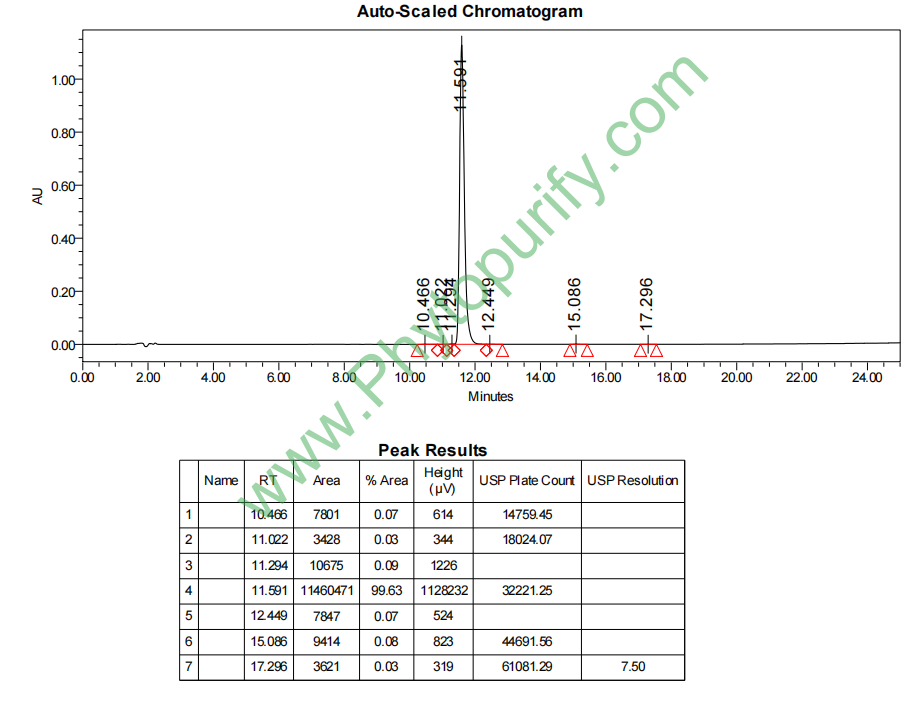
Purity: 95%~99%
Analysis Method: HPLC-DAD or/and HPLC-ELSD
Identification Method: Mass, NMR
Packing: Brown vial or HDPE plastic bottle
Can be supplied from milligrams to grams.
For Reference Standard and R&D, Not for Human Use Directly.
Inquire for bulk scale.
Description:
Isocorynoxeine, an isorhynchophylline-related alkaloid, exhibits a dose-dependent inhibition of 5-HT2A receptor-mediated current response with an IC50 of 72.4 μM. Isocorynoxeine shows the effects of lowering blood pressure, vasodilatation, and protection against ischemia-induced neuronal damage, it exhibits a significant neuroprotective effect against glutamate-induced HT22 cell death at the maximum concentration.
References:
Planta Med. 2015 Jan;81(1):46-55.
Isolation and identification of twelve metabolites of isocorynoxeine in rat urine and their neuroprotective activities in HT22 cell assay.
Isocorynoxeine, one of the major alkaloids from Uncaria Hook, shows the effects of lowering blood pressure, vasodilatation, and protection against ischemia-induced neuronal damage.
METHODS AND RESULTS:
In this paper, the metabolism of Isocorynoxeine was investigated in rats. Twelve metabolites and the parent drug were isolated by using solvent extraction and repeated chromatographic methods, and determined by spectroscopic methods including UV, MS, NMR, and CD experiments. Seven new compounds were identified as 11-hydroxyIsocorynoxeine, 5-oxoisocorynoxeinic acid-22-O-β-D-glucuronide, 10-hydroxyIsocorynoxeine, 17-O-demethyl-16,17-dihydro-5-oxoIsocorynoxeine, 5-oxoisocorynoxeinic acid, 21-hydroxy-5-oxoIsocorynoxeine, and oxireno[18, 19]-5-oxoIsocorynoxeine, together with six known compounds identified as Isocorynoxeine, 18,19-dehydrocorynoxinic acid, 18,19-dehydrocorynoxinic acid B, corynoxeine, Isocorynoxeine-N-oxide, and corynoxeine-N-oxide. Possible metabolic pathways of Isocorynoxeine are proposed. Furthermore, the activity assay for the parent drug and some of its metabolites showed that Isocorynoxeine exhibited a significant neuroprotective effect against glutamate-induced HT22 cell death at the maximum concentration. However, little or weak neuroprotective activities were observed for M-3, M-6, M-7, and M-10.
CONCLUSIONS:
Our present study is important to further understand their metabolic fate and disposition in humans.
HPLC of Isocorynoxeine
Storage conditions:Short-term storage at 2~8℃, long-term storage at -20 ~ -80℃
67.8700
2.0373
1.8966
.5956
2.7510
6.8172
High
71.7194
4.7855
No
Yes
No
Yes
Yes
Yes
0.0
No
Yes
Yes
Yes
Natural products, as an important source of drug discovery, play an irreplaceable role in the long history of human struggle against diseases. Especially alkaloids derived from traditional medicinal plants, due to their structural diversity and significant biological activity, have always been a hot topic in the development of new drugs. Gouteng(Uncaria rhynchophylla)As a traditional herb widely used in East Asia, it has the effects of clearing heat, calming the liver, calming the wind, and calming the nerves. It is commonly used to treat hypertension, headache, dizziness, and seizures. Modern pharmacological research has revealed that the main active ingredient of Gouteng is a class of indole alkaloids with a unique four ring skeleton. Among them, components such as Rhynchophylline and Isorhynchophylline have been widely studied and proven to have various pharmacological effects such as neuroprotection, anti hypertension, anti arrhythmia, and sedation.
Among the numerous alkaloid components in Gouteng, Isopyroxene, as an oxidized indole alkaloid highly correlated with the structure of Gouteng, has gradually attracted the attention of researchers in recent years. Although its content is relatively low in Gouteng, preliminary pharmacological activity screening has shown its unique biological effects. In particular, studies have found that isodehydrorhynchophylline can dose dependently inhibit the current response mediated by the 5-HT2A receptor, with a half maximal inhibitory concentration (IC50) of 72.4 μ M. 5-HT2A receptors are important G protein coupled receptors in the central nervous system, widely involved in emotion regulation, cognitive function, perceptual processing, and pain signal regulation. This discovery not only reveals the potential central nervous system activity of isodehydrorhynchophylline, but also provides important molecular pharmacology basis for its application in pain relief, mental illness and other fields.
In addition, based on computer-aided drug design and network pharmacology analysis, isodehydrorhynchophylline has been predicted to interact with multiple targets related to pain regulation, including transient receptor potential vanillic acid subtype 1 (TRPV1), cannabinoid receptor 1 (CNR1), delta opioid receptor (OPRD1), μ - opioid receptor (OPRM1), kappa opioid receptor (OPRK1), prostaglandin endoperoxide synthase 1/2 (PTGS1/PTGS2, i.e. COX-1/COX-2), transient receptor potential anchor protein subtype 1 (TRPA1), serotonin transporter (SLC6A4), and dopamine D2 receptor (DRD2). Wait. These targets cover multiple key links in the pain transmission pathway, from the activation of peripheral nociceptors (TRPV1, TRPA1), to the synthesis of inflammatory mediators (COX), and to pain modulation in the central nervous system (opioid receptors, cannabinoid receptors, dopamine receptors, 5-HT system), suggesting that isodehydrorhynchophylline may exert its pharmacological effects through the synergistic action of multiple targets and pathways.
This article aims to systematically review the research progress of isodehydrorhynchophylline, covering its chemical structure and physicochemical properties, plant sources and extraction methods, pharmacological activity, mechanism of action and molecular targets, pharmacological evaluation and pharmacokinetic characteristics. It also looks forward to its clinical application prospects, in order to provide comprehensive scientific basis for the in-depth development and utilization of this natural product.
Isopyroxene belongs to the monoterpenoid indole alkaloids, and its chemical structure has a typical oxidized indole skeleton. Structurally, it belongs to the same subclass as Rhynchophylline and Isorhynchophylline, with differences in the double bond configuration at positions C-19,20 and stereochemistry at positions C-3,7. Specifically, the molecular formula of isodehydrorhynchophylline is C22H26N2O4, with a relative molecular weight of 382.46. The core of its structure is a four ring system composed of an indole ring fused with a pyridine ring, with an ethyl side chain derived from a monoterpene unit and a methoxycarbonyl (- COOCH3) substituent. Compared with Corynoxene, isohydrorhynchophylline is a stereoisomer of its C-3 position, and this slight difference in configuration often leads to significant differences in its ability to bind to biological targets.
In terms of physicochemical properties, isodehydrorhynchophylline exhibits typical alkaloid characteristics. Its lipid water partition coefficient (LogP) is 2.0373, indicating that the compound has moderate lipophilicity, which facilitates its penetration through biological membranes, including the blood-brain barrier. In fact, the pharmacological parameters clearly indicate that it has a "high" blood-brain barrier penetration ability, which is crucial for drugs targeting central nervous system targets such as 5-HT2A receptors, opioid receptors, dopamine receptors, etc. Its topological polar surface area (TPSA) is 67.87 Å ², which is lower than the threshold for passive diffusion across the blood-brain barrier (approximately 90 Å ²), further supporting its good central nervous system permeability. In terms of water solubility, the calculated water solubility value of isodehydrorhynchophylline is 0.5956 mg/mL, which belongs to the category of slight solubility. This moderate water solubility combined with its good fat solubility provides favorable conditions for its absorption and distribution in the body. In addition, the compound structure contains multiple hydrogen bond donors (such as N-H on the indole ring) and hydrogen bond acceptors (such as carbonyl oxygen and ether oxygen), which are the basis for its key interactions with target proteins.
The main source of isodehydrorhynchophylline is from the Rubiaceae family and the genus Uncaria(Uncaria)Plants. There are over 60 species of this genus of plants worldwide, mainly distributed in tropical and subtropical regions, many of which are used as traditional medicines. In the Chinese Pharmacopoeia, the legal sources of Gouteng include Gouteng(Uncaria rhynchophylla)Large leaved hooked vine(Uncaria macrophylla)Mao Gouteng(Uncaria hirsuta)Hua Gouteng(Uncaria sinensis)And the stemless fruit hook vine(Uncaria sessilifructus). Isodehydrorhynchophylline is distributed in these species, but its content varies significantly depending on the species, place of origin, harvest season, and plant part. Usually, the hooked stems and branches of Gouteng (Gouteng medicinal herbs) are its main source, while the leaves and roots may also contain it.
Given that the content of isodehydrorhynchophylline in plants is relatively low and often coexists with structurally similar analogues such as rhynchophylline, isorhynchophylline, dehydrorhynchophylline, etc., efficient and specific methods are required for its extraction and purification. Traditional extraction methods typically include the following steps:
1. Raw material pretreatment After crushing the dried Hook Vine medicinal herbs, they are moistened with alkaline solutions (such as ammonia water and lime water) to allow the alkaloids to exist in the form of free bases, facilitating subsequent organic solvent extraction.
2. Solvent extraction Use organic solvents with moderate polarity, such as ethanol, methanol, or chloroform, for reflux extraction or percolation extraction. Ethanol is a commonly used extraction solvent in industry due to its good permeability and ability to dissolve alkaloids.
3. Acid extraction and alkali precipitation After concentrating the extract, dissolve it in dilute acid (such as hydrochloric acid or sulfuric acid) to make the alkaloids salt and transfer them to the aqueous phase, thereby separating them from lipophilic impurities. The aqueous phase is then adjusted to alkaline with alkaline solution (such as ammonia) to free the alkaloids again, and extracted with organic solvents (such as chloroform, ethyl acetate) to obtain the crude extract of total alkaloids.
In order to obtain high-purity isodehydrorhynchophylline monomers, further separation and purification are required on the basis of total alkaloids. Modern chromatographic technology is the main means:
- Column chromatography Silica gel column chromatography is the most commonly used method, which uses solvent systems such as chloroform methanol or petroleum ether acetone for gradient elution to achieve preliminary separation of isodehydrorhynchophylline and its homologues.
- Efficient counter current chromatography Using the difference in distribution coefficients of compounds in immiscible two-phase solvent systems for separation has the advantages of high sample recovery and less irreversible adsorption, making it particularly suitable for the separation of alkaloid components.
- Preparation type high-performance liquid chromatography For isomers with extremely similar structures, such as the separation of isodehydrorhynchophylline and dehydrorhynchophylline, preparative HPLC is an effective method for obtaining high-purity monomers. Usually, a C18 reverse phase column is used, with acetonitrile water or methanol water system (often with a small amount of acid or buffer salt added) as the mobile phase.
In recent years, some green and efficient extraction techniques have also been applied to the extraction of alkaloids from Houttuynia cordata, such as ultrasound assisted extraction, microwave-assisted extraction, and supercritical fluid extraction. These methods have shown advantages in improving extraction efficiency, shortening extraction time, and reducing the amount of organic solvents used.
The pharmacological activity research of isodehydrorhynchophylline is currently in its early stages, but existing research results have revealed its potential application value in multiple fields, especially in activities related to the central nervous system and pain regulation.
1. Inhibition of 5-HT2A receptors
This is currently the most clear pharmacological activity report on isodehydrorhynchophylline. Research has shown that isodehydrorhynchophylline can dose dependently inhibit 5-HT2A receptor-mediated electrokinetic responses, with an IC50 value of 72.4 μ M. 5-HT2A receptors are the main targets of various psychoactive substances (such as LSD) and hallucinogens, and also participate in regulating emotions, anxiety, sleep, and pain perception. The excessive activation of this receptor is associated with the pathogenesis of schizophrenia, depression, anxiety, and migraine. Therefore, isodehydrorhynchophylline, as an antagonist of 5-HT2A receptors, may have the potential to have antipsychotic, anti anxiety, or anti migraine effects. It is worth noting that its IC50 value is at the micromolar level, indicating moderate activity intensity, and further structure-activity relationship studies may be needed to optimize its activity.
2. Analgesic effect
Based on network pharmacology prediction, isodehydrorhynchophylline has potential interactions with multiple classic analgesic targets, suggesting its potential multi-target analgesic mechanism.
- Opioid receptor system The predicted targets include μ - opioid receptor (OPRM1), κ - opioid receptor (OPRK1), and δ - opioid receptor (OPRD1). Opioid receptors are the core of the endogenous analgesic system, and classic opioid analgesics such as morphine exert potent analgesic effects by exciting μ - opioid receptors. The mode of action (activation or antagonism) of isodehydrorhynchophylline on these receptors still needs experimental verification, but it suggests that it may be involved in central analgesia.
- Cannabinoid receptor The predicted target CNR1 (CB1 receptor) is an important component of the endocannabinoid system, widely expressed in the spinal cord and brain, and involved in the regulation of pain, emotion, and appetite. CB1 receptor agonists have good analgesic effects and no risk of addiction to opioid drugs.
- Transient receptor potential channel TRPV1 and TRPA1 are non selective cation channels located on peripheral sensory neurons, and are key molecules for sensing thermal, chemical, and mechanical stimuli. They play important roles in inflammatory pain and neuropathic pain. The regulatory effect of isodehydrorhynchophylline on these channels may provide a basis for its application in peripheral analgesia.
- Cyclooxygenase PTGS1 and PTGS2 (COX-1 and COX-2) are key enzymes involved in the metabolism of arachidonic acid into prostaglandins, which are important inflammatory and painful substances. Non steroidal anti-inflammatory drugs (such as aspirin and ibuprofen) exert their antipyretic, analgesic, and anti-inflammatory effects by inhibiting COX activity. The potential inhibitory effect of isodehydrorhynchophylline on COX suggests its potential anti-inflammatory and pain relieving activity.
- Monoamine energy system SLC6A4 (5-hydroxytryptamine transporter) and DRD2 (dopamine D2 receptor) are key proteins that regulate the levels of monoamine neurotransmitters (5-hydroxytryptamine and dopamine). The serotonin and dopamine systems play important roles in the descending inhibitory pathway of pain. For example, some antidepressants (such as selective serotonin reuptake inhibitors, SSRIs) increase the concentration of serotonin in the synaptic cleft by inhibiting SLC6A4, thereby producing analgesic effects, especially for chronic pain. The DRD2 receptor is also involved in the regulation of pain.
In summary, the analgesic potential of isodehydrorhynchophylline may stem from its comprehensive regulatory effects on opioids, cannabinoids, transient receptor potential channels, cyclooxygenase, and monoaminergic systems. This multi-target mode of action is expected to provide a more comprehensive and less side effect analgesic effect.
3. Other potential activities
Given its structural similarity with crocetine, isodehydrocrocetine may also possess some classic pharmacological activities of crocetine, such as:
- Hypotensive effect Both crocetine and isocrocetine have been proven to have vasodilatory and hypotensive effects, and their mechanisms involve blocking calcium ion channels and releasing nitric oxide. It is worth further studying whether isodehydrorhynchophylline has similar activity.
- Neuroprotective effect Hook vine alkaloids have shown neuroprotective effects in Alzheimer's and Parkinson's disease models, inhibiting β - amyloid protein aggregation, reducing oxidative stress, and neuroinflammation. Isodehydrorhynchophylline may also have similar potential.
The mechanism of action of isodehydrorhynchophylline is currently not fully elucidated, but based on existing experimental data and computer predictions, its possible molecular action network can be outlined.
1. 5-HT2A receptor antagonistic effect
This is currently the most clear molecular mechanism. Isodehydrorhynchophylline binds competitively or non competitively to the conformational or allosteric sites of 5-HT2A receptors, blocking the binding of endogenous ligand serotonin to the receptor and inhibiting the downstream Gq/11 protein signaling pathway, thereby inhibiting the activation of phospholipase C (PLC) and the production of inositol triphosphate (IP3) and diacylglycerol (DAG), ultimately inhibiting intracellular calcium ion release and protein kinase C (PKC) activation. This antagonistic effect may be the basis for its potential antipsychotic, anti anxiety, and anti migraine effects.
2. Multi target analgesia mechanism
Based on network pharmacology predictions, isodehydrorhynchophylline may exert analgesic effects through multiple mechanisms, including:
- Opioid receptor agonistic effects May act as partial or complete agonists on μ, κ, and δ opioid receptors, activate Gi/o proteins, inhibit adenylate cyclase (AC), reduce intracellular cAMP levels, and regulate calcium and potassium ion channels, thereby inhibiting the transmission of pain signals.
- Cannabinoid receptor agonistic effect Possible activation of CB1 receptors, also mediated by Gi/o proteins, inhibits the release of neurotransmitters such as glutamate, substance P, and calcitonin gene-related peptide, resulting in analgesic effects at the spinal cord and brain levels.
- TRP channel antagonistic effect As an antagonist of TRPV1 and TRPA1, it may directly block the influx of cations caused by harmful stimuli such as capsaicin, heat, acid (TRPV1) or mustard oil, cold stimulation, oxidative stress products (TRPA1), thereby inhibiting the excitation of peripheral nociceptors and reducing pain.
- COX enzyme inhibition It may alleviate inflammatory pain by inhibiting the activity of COX-1 and/or COX-2, reducing the synthesis of pain inducing substances such as prostaglandin E2.
- Monoamine energy system regulation Possible analgesic effects may be achieved by inhibiting SLC6A4 (5-hydroxytryptamine transporter), increasing the concentration of serotonin in the synaptic cleft, activating 5-HT receptors in the descending inhibitory pathway. Meanwhile, the regulation of DRD2 receptors may also be involved in the regulation of pain.
3. Structure performance relationship
The activity of isodehydrorhynchophylline is closely related to its unique stereochemical structure. Compared with crocetin, the conformational differences at C-3 and C-7 positions, as well as the double bonds at C-19,20 positions, may significantly affect its binding affinity and selectivity to different targets such as 5-HT2A receptors and opioid receptors. For example, the stereoconfiguration of the C-3 position may determine the degree of binding between the molecule and the receptor binding pocket. In the future, it is crucial to synthesize a series of analogues and systematically study the impact of these structural features on activity, in order to develop more efficient and selective derivatives.
The evaluation of drug properties is a crucial step in determining whether natural products can be transported from the laboratory to clinical practice. Based on the provided parameters, we can conduct a preliminary evaluation of the pharmacological properties of isodehydrorhynchophylline.
1. Five principles of generic drugs The molecular weight of isodehydrorhynchophylline is 382.46 (<500), the LogP is 2.0373 (<5), the number of hydrogen bond donors (from N-H and possible O-H) is 1-2 (<5), and the number of hydrogen bond acceptors (N and O atoms) is 6 (<10). It fully complies with Lipinski's "Five Principles of Generic Drugs", indicating its good potential as an oral medication.
2. Penetration of blood-brain barrier The parameter clearly displays "high" blood-brain barrier penetration. Combined with its moderate LogP and lower TPSA, this prediction is reasonable. This is a key advantage for drugs targeting central nervous system targets such as 5-HT2A receptors and opioid receptors. However, this also means that it may be more likely to cause central related side effects.
3. hERG inhibition risk The parameter displays "Yes", indicating that isodehydrorhynchophylline poses a risk of inhibiting hERG (human Ether - à - go Related Gene) potassium ion channels. HERG channel inhibition is one of the main causes of drug-induced QT interval prolongation and fatal arrhythmias, such as apical torsion ventricular tachycardia. This is a major warning signal for the pharmacological properties of the compound. In subsequent drug development, it is necessary to verify its hERG inhibitory activity through experiments and attempt to reduce this risk through structural modifications.
4. Genetic toxicity The Ames test result is 0.0, indicating that no mutagenicity was shown in the preliminary bacterial recovery mutation test, which is a positive signal indicating a low risk of genetic toxicity.
5. Pharmacokinetic characteristics (speculation)
- absorb Based on its moderate LogP and molecular weight, oral absorption may be better, but the specific bioavailability is unknown.
- distribution Due to its high lipid solubility and blood-brain barrier penetration, isodehydrorhynchophylline is widely distributed in the body, especially in the central nervous system where it may reach high concentrations. Its apparent distribution volume may be relatively large.
- Metabolism As an alkaloid, its metabolism mainly occurs in the liver, which may involve oxidation reactions (such as hydroxylation, N-demethylation) catalyzed by cytochrome P450 enzyme systems (such as CYP3A4, CYP2D6) and binding reactions of glucuronic acid or sulfuric acid. Its metabolites may still be active or toxic.
- excretion Metabolites are mainly excreted through the kidneys with urine, and may also be partially excreted through bile.
Summary Isodehydrorhynchophylline shows good performance in terms of drug like properties, blood-brain barrier penetration, and genetic toxicity, but its clear hERG inhibition risk is the main obstacle to its drug development. Future research should focus on weakening its affinity for hERG channels through structural modifications, such as introducing polar groups to reduce lipophilicity and alter charge distribution, while retaining or enhancing its activity against target proteins, such as 5-HT2A receptors and opioid receptors.
As a natural product with unique pharmacological activity, the clinical application prospects of isodehydrorhynchophylline mainly focus on the following fields:
1. Pain management
Given its multi-target analgesic potential, particularly its comprehensive effects on opioid receptors, cannabinoid receptors, TRP channels, and monoamine systems, isodehydrorhynchophylline or its derivatives are expected to be developed as a novel analgesic drug. Its advantages may lie in:
- Multi mechanism collaboration Simultaneously acting on multiple pain targets in the peripheral and central nervous systems, it may produce synergistic effects and achieve a more comprehensive analgesic effect.
- Reduce side effects Compared with traditional opioid drugs, its mechanism of action may avoid or alleviate serious side effects such as addiction, respiratory depression, constipation, etc. Compared to NSAIDs, it may reduce gastrointestinal and cardiovascular risks.
- Potential for chronic pain By regulating the serotonin and dopamine systems, it may be particularly effective for chronic pain states such as neuropathic pain and fibromyalgia.
2. Mental and neurological disorders
Based on its antagonistic effect on 5-HT2A receptors, isodehydrorhynchophylline has exploratory value in the following disease areas:
- Schizophrenia 5-HT2A receptor antagonists are important targets of many atypical antipsychotic drugs, such as clozapine and risperidone. Isodehydrorhynchophylline may have the potential to alleviate both positive and negative symptoms of psychosis.
- Anxiety disorder and depression 5-HT2A receptors are associated with anxiety and emotion regulation. Its antagonists may have anti anxiety effects. Meanwhile, its potential inhibitory effect on SLC6A4 may also endow it with antidepressant activity.
- migraine 5-HT2A receptors play a role in the pathogenesis of migraine, and some drugs for preventing migraine, such as metoclopramide, are 5-HT2A receptor antagonists.
3. Hypertension
Given its structural similarity with crocetine, isodehydrocrocetine may also have antihypertensive activity. If the hERG problem can be solved through structural modification, it may become a novel drug with both antihypertensive and central nervous system regulatory effects, especially suitable for hypertensive patients with anxiety or pain.
Outlook and Challenges
Despite the promising prospects, the development of isodehydrorhynchophylline still faces many challenges:
1. HERG toxicity This is the most urgent problem to be solved. It is necessary to study the structure-activity relationship of the system, design and synthesize a series of derivatives, and search for compounds with higher activity and lower hERG inhibition risk.
2. Activity optimization At present, the IC50 for 5-HT2A receptor is 72.4 μ M, with moderate activity intensity. It is necessary to improve its affinity for the target through structural optimization.
3. Target selectivity Its multi-target nature is both an advantage and a risk. It is necessary to clarify its specific mode of action (excitation/antagonism) and affinity at each target to ensure the specificity of its pharmacological effects and avoid off target effects.
4. Pharmacokinetic properties Detailed in vivo pharmacokinetic studies are required, including oral bioavailability, half-life, metabolic pathways, and excretion mode, to evaluate its suitability as an oral medication.
5. Resource supply The development of chemical synthesis or semi synthesis routes is key to achieving large-scale supply due to the low content of natural sources.
Isodehydrocrocetine, an oxidized indole alkaloid derived from the traditional Chinese medicine crocetin, is attracting researchers' attention for its unique pharmacological activity spectrum and clear molecular targets, especially 5-HT2A receptors. It is not only a modern scientific interpretation of the traditional efficacy of Gouteng, but also a lead compound with multi-target characteristics and great potential for development in the fields of pain relief and mental and neurological disorders. Its excellent drug like properties and central nervous system penetrability laid the foundation for its drug development, but the risk of hERG inhibition also sounded the alarm for its translational research. Future research should focus on overcoming its toxicity defects through medicinal chemical methods, while delving into its true interactions with multiple predicted targets such as opioids, cannabinoids, TRP channels, and systematically evaluating its in vivo efficacy and pharmacokinetic behavior. In depth research on isodehydrorhynchophylline not only helps to reveal the complex pharmacological substance basis of this traditional herb, but also has the potential to bring new therapeutic drugs based on natural product skeletons to humanity, especially in the fields of pain management and mental health, opening up new therapeutic pathways. The journey from natural products to innovative drugs, isodehydrorhynchophylline, has just begun, but its potential deserves more attention and investment from academia and industry.
