Introduction/Overview
As an important component of traditional Chinese medicine, plants of the Gouteng genus have long been used in clinical practice for their effects of calming the liver, dispelling wind, clearing heat, and calming the nerves. They are mainly used to treat hypertension, seizures, headaches, and dizziness. Modern pharmacological research has revealed that the pharmacological activity of Gouteng is mainly attributed to its rich content of various indole alkaloids. Dehydrohydrorhynchophylline, as one of the key active alkaloids, has attracted much attention since its isolation and identification due to its unique chemical structure and significant neural and cardiovascular system activity. This compound exhibits regulatory effects on the central and peripheral nervous systems by non competitively antagonizing nicotinic acetylcholine receptors, particularly in terms of its antihypertensive potential, which has attracted extensive research interest in the fields of pharmacology and medicinal chemistry. This article aims to provide a systematic review of the chemical properties, plant sources, pharmacological activities, mechanisms of action, pharmacological evaluation, and clinical application prospects of dehydrorhynchophylline, in order to provide comprehensive scientific references for the in-depth research and potential drug development of this natural product.
Chemical structure and physicochemical properties
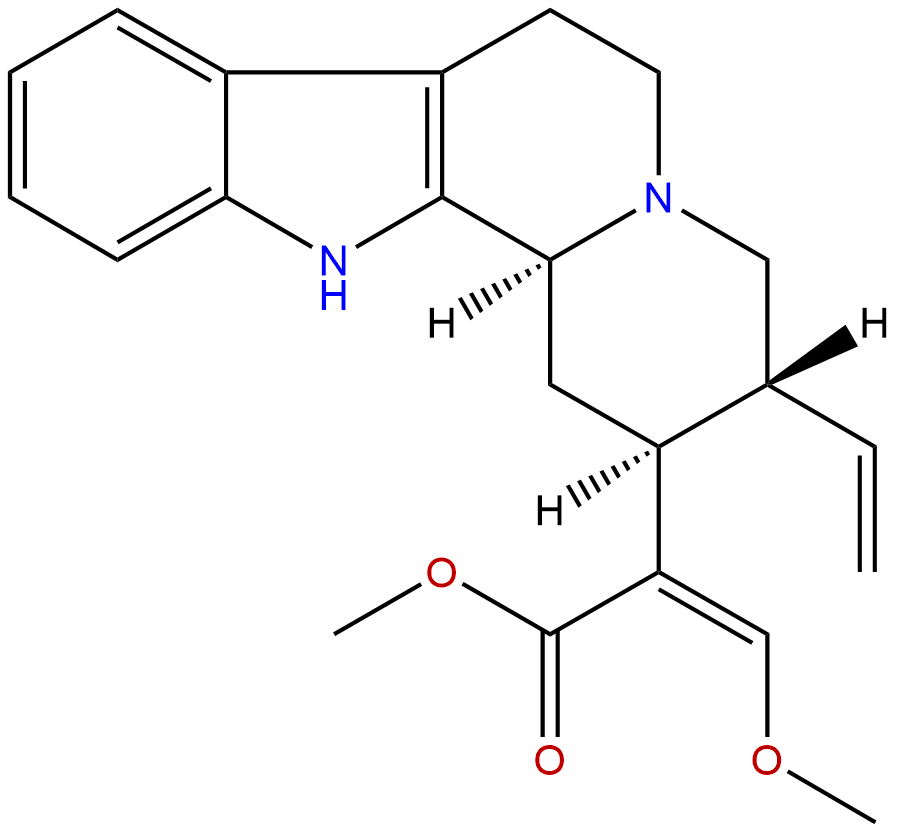
The chemical name of dehydrorhynchophylline is (19E) -19-ethylidene-18-oxocolyan-16-carboxylic acid methyl ester, and its CAS number is 35467-43-7. Structurally, it is a complex tetracyclic indole alkaloid belonging to the family of alkaloids in the class of yohimbine. Its core structure contains an indoline or indole ring system and has a key vinyl and ester functional group. This unique structure is the material basis for its biological activity.
According to the provided pharmacological parameters, its molecular weight is 366.4610 g/mol, indicating that it is a medium-sized organic molecule. The calculated lipid water partition coefficient LogP value is 2.9982, indicating that the compound has moderate lipophilicity, which is beneficial for its penetration of cell membranes, but may also affect its water solubility and in vivo distribution. Its topological polarity surface area value is 54.56 Å ², relatively small, which is consistent with its good membrane permeability prediction. However, its theoretical water solubility value is relatively low (0.0584 mg/mL), indicating poor solubility in water, which may be a challenge to overcome in its oral administration or formulation development. It is worth noting that the prediction shows a high blood-brain barrier permeability, which is highly correlated with its reported central nervous system activity (such as regulating dopamine release), but may also pose potential risks of central side effects. In addition, calculations suggest a risk of hERG potassium channel inhibition, which is associated with potential toxicity in inducing QT interval prolongation and arrhythmia in the heart, and is a safety issue that needs to be rigorously evaluated in drug development. The Ames test predicted a value of 0.0, indicating that it may not have direct genetic toxicity, but further experimental verification is needed.
Plant sources and extraction methods
The main source of dehydrogenated rhynchophylline comes from various plants in the genus rhynchophylline of the family Rubiaceae. Among them, the most common sources include Gambir Plant、Large leaved hooked vine、Hairy vine and Hua Gou Teng Wait. These plants are widely distributed in tropical and subtropical regions of Asia, including southern China, Japan, India, and other places. In traditional medicine, the hooked stems and branches of these plants are used as medicinal herbs called "hooked vines".
Extracting dehydrogenated crocetine from plant materials usually follows the conventional process of natural product chemistry. Firstly, the dried Hook Vine herb is crushed and subjected to leaching or reflux extraction using a suitable solvent (such as methanol, ethanol, or acidified alcohol water solution) to dissolve the alkaloid components. Subsequently, enrichment and purification were carried out using the characteristics of alkaloids. Common methods include: 1)Solvent Extraction Method Dissolve the crude extract in dilute acidic water to dissolve the alkaloids into salts, remove fat soluble impurities with organic solvents (such as chloroform, ethyl acetate), alkalize the aqueous phase to free the alkaloids, and then back extract with organic solvents. 2)Column chromatography: is a key step in obtaining high-purity monomers. Silica gel, alumina, or reverse phase silica gel (such as C18) are commonly used as stationary phases, and gradient elution is performed using organic solvent mixtures of different polarities (such as petroleum ether ethyl acetate, chloroform methanol, etc.). Collect fractions containing the target compound through thin-layer chromatography monitoring. 3)Modern Separation Technology High performance liquid chromatography, especially preparative HPLC, has become the most effective method for separating structurally similar crocetin alkaloids (such as dehydrocrocetine and its isomer crocetine), which can quickly and efficiently obtain high-purity samples.
The optimization of extraction processes, such as solvent selection, extraction temperature and time, and the use of modern technologies such as ultrasound assisted or microwave-assisted extraction, aims to improve the yield and purity of target alkaloids, laying the foundation for subsequent pharmacological research and quality analysis.
Pharmacological activity research
Dehydrohydrorhynchophylline exhibits various pharmacological activities, among which the most prominent is its regulatory effect on the cardiovascular and nervous systems.
-
Antihypertensive effect This is the pharmacological activity of dehydrocrocetine that has received the most attention. A large number of in vivo experiments have shown that both spontaneously hypertensive rats and renal hypertensive rat models can produce dose-dependent antihypertensive effects by intravenous injection or oral administration of dehydrorhynchophylline. Its antihypertensive effect is characterized by a relatively gentle onset and a longer duration. In addition to lowering blood pressure, research has also found that it can alleviate left ventricular hypertrophy associated with hypertension, demonstrating certain target organ protection potential.
-
Central nervous system activity:
- Sedation and anticonvulsant Dehydrohydroquercetin can significantly reduce the spontaneous activity of experimental animals, enhance the hypnotic effect of pentobarbital sodium, and have a protective effect on convulsive models induced by pentylenetetrazol and maximal electroconvulsive shock, indicating its central inhibitory and anticonvulsant properties.
- neuroprotection Some studies suggest that the total alkaloids and monomers of Uncaria barbata (including dehydroberberine) may have protective effects against glutamate induced neuronal excitability damage, β - amyloid toxicity, etc., but their specific neuroprotective mechanisms and effects still need to be further explored.
-
Other activities There are also studies reporting that dehydrorhynchophylline has certain anti platelet aggregation, anti-inflammatory, and mild analgesic effects, but the intensity and mechanism of these activities are relatively less studied, which is a secondary aspect of its pharmacological effects.
Mechanism of action and molecular targets
The pharmacological effects of dehydrorhynchophylline, especially its anti hypertensive effect, involve a complex regulatory network of multiple targets and pathways, which is consistent with its characteristics as a natural product.
-
Antagonistic effect on nicotinic acetylcholine receptors As mentioned earlier, dehydrorhynchophylline is a non competitive nicotinic acetylcholine receptor antagonist. It inhibits the release of neurotransmitters such as dopamine and norepinephrine induced by nicotine by binding to the ion channel pore or conformational site of the receptor, blocking ion influx. This effect may be involved in its sedative effect in the central nervous system, while in the peripheral sympathetic ganglia, it may contribute to blood pressure reduction by inhibiting post ganglionic neuron excitation, reducing catecholamine release, causing vasodilation and slowing heart rate.
-
Key molecular targets related to anti hypertension According to the provided target information, the action of dehydrocrocetin may involve a wide range of factors, including the renin angiotensin aldosterone system, adrenergic system, endothelial function, and ion channels.
- Angiotensin system: May be influenced by Angiotensin-converting enzyme、Angiotensin II receptor type 1 or renin The activity intervenes in this powerful boost system.
- Adrenergic system: Yes Alpha 1A adrenergic receptor andβ 1-/β 2-adrenergic receptors The regulation of blood pressure may directly lead to vascular smooth muscle relaxation (blocking alpha 1A receptors) and cardiac inhibition (blocking beta 1 receptors), which is a classic pathway for lowering blood pressure.
- Endothelial function and nitric oxide system Possible through upward adjustment Endothelial nitric oxide synthase Promote the expression or activity of nitric oxide, a vasodilator, and its production; Simultaneously, it may inhibit potent vasoconstrictor peptides Endothelin-1 The function.
- ion channel: Yes L-type voltage-gated calcium channel The potential inhibitory effect can reduce calcium ion influx, leading to vascular smooth muscle relaxation and weakened myocardial contractility. However, for HERG potassium channel Inhibition (indicated by pharmacological parameters) is an unfavorable side effect target that can cause delayed cardiac repolarization.
- Electrolyte transport: With Sodium chloride cotransporter protein The potential interaction may affect the reabsorption of sodium by the kidneys, producing effects similar to thiazide diuretics.
It should be pointed out that the above target associations are mostly based on computational predictions or indirect pharmacological experiments. Whether dehydrorhynchophylline binds directly and with high affinity to these target proteins, its specific interaction mode and potency still need to be confirmed by a large number of biophysical and biochemical studies such as molecular docking, surface plasmon resonance, and radioactive ligand binding experiments. The overall antihypertensive effect is likely the result of the synergistic effect of multiple targets mentioned above.
Evaluation of drug properties and pharmacokinetics
Based on computational data and limited experimental research, a preliminary evaluation of the pharmacological properties of dehydrorhynchophylline is conducted
- Absorption and distribution Moderate LogP values and small TPSA indicate good membrane permeability and oral absorption potential. A higher blood-brain barrier permeability prediction is consistent with central nervous system activity, but it also implies the need to pay attention to central nervous system side effects.
- Metabolism and excretion As an indole alkaloid, it is likely to be metabolized through the liver cytochrome P450 enzyme system (such as CYP3A4, CYP2D6, etc.). There is a lack of systematic pharmacokinetic research data on its specific metabolites, main metabolic pathways, and excretion modes (bile or kidney) both in vitro and in vivo. This is a key information gap that must be filled as it moves towards drug development.
- Security risk:
- cardiotoxicity: Calculation prompts HERG inhibition It is the biggest red alert. Any candidate drug with clinical development potential must be rigorously validated through experiments (such as patch clamp technology) to assess its impact on hERG channels and evaluate its risk of causing QT interval prolongation in the heart.
- Genotoxicity A negative Ames test prediction is a positive signal, but a standard combination of in vitro and in vivo genotoxicity tests is still needed to confirm.
- Other toxicities Systematic acute toxicity, subchronic toxicity, and reproductive toxicity studies are needed to comprehensively evaluate their safety window.
Overall, dehydrorhynchophylline exhibits certain pharmacological properties, but its poor water solubility, potential significant cardiac toxicity, and unclear pharmacokinetic characteristics are the main obstacles to its transition from an active natural product to a candidate drug.
Clinical application prospects and prospects
The clinical application prospects of dehydrorhynchophylline mainly revolve around its anti hypertensive and central sedative effects, but it faces many challenges and opportunities on the road.
-
Potential application directions:
- Lead compounds of novel antihypertensive drugs Given its multi-target nature, if structural modification can be used to preserve or enhance antihypertensive efficacy while eliminating or reducing cardiac toxicity such as hERG inhibition, it is expected to develop new drugs suitable for specific hypertensive populations (such as those with anxiety and sympathetic nervous system excitation).
- Adjuvant therapy for central nervous system diseases Its sedative and anticonvulsant activity suggests that it may have value in the adjuvant treatment of anxiety disorders, insomnia, or certain types of epilepsy, but its efficacy needs to be precisely balanced against the side effects caused by excessive central inhibition (such as drowsiness and cognitive impact).
- Quality markers of traditional Chinese medicine Gouteng As one of the characteristic active ingredients of Gouteng, the content of dehydrogenated Gouteng alkaloid can be used as an important chemical indicator to evaluate the quality of Gouteng medicinal materials and their formulations.
-
challenges faced:
- Toxicity issue The toxicity of hERG is the primary and essential bottleneck issue that must be addressed.
- Water solubility and formulation Low water solubility limits its route of administration and bioavailability, requiring the development of suitable drug delivery systems such as nanocrystals, liposomes, cyclodextrin inclusion complexes, or prodrug strategies.
- Fuzzy mechanism of action Its exact main target and signaling pathway network have not been fully elucidated, which is not conducive to targeted optimization design and precise clinical positioning.
- Lack of systematic preclinical and clinical data At present, research mainly focuses on pharmacodynamics, with almost no comprehensive pharmacokinetic, toxicological, and clinical trial data available.
-
Future research directions:
- Reasonable drug design based on structure Using computer-aided drug design technology, analyze its binding mode with key targets (such as ADRA1A, NOS3) and toxic targets (hERG), guide structural optimization, and aim to "enhance efficacy and avoid toxicity".
- In depth study on the mechanism of action Using chemical biology methods such as affinity fishing and proteomics to identify its direct target of action; Using gene knockout/knock in animal models to validate the role of specific targets in mediating their efficacy and toxicity.
- Application of Modern Formulation Technology Actively explore new nano formulations or eutectic technologies to improve their solubility and bioavailability.
- Conduct a systematic preclinical evaluation According to the standards for innovative drug development, complete the complete evaluation chain from efficacy, pharmacokinetics to safety, laying a solid foundation for possible clinical translation.
Conclusion
As a characteristic indole alkaloid of plants in the genus Gouteng, dehydroberberine has become a bridge connecting traditional Chinese medicine wisdom with modern pharmacological research due to its unique chemical structure and clear dopamine release inhibition and antihypertensive activity. The existing research has preliminarily outlined the outline of its multi-target effects, especially its potential in cardiovascular regulation. However, its inherent pharmacological defects, especially potential cardiac toxicity, as well as unclear in vivo processes and precise mechanisms of action, constitute the main barriers to its conversion into drugs. Future research should focus on using interdisciplinary approaches to deeply analyze the functional toxic substance basis at the molecular level, and applying modern pharmaceutical chemistry and formulation strategies for optimization and transformation. Only in this way can we fully tap into the therapeutic value of this natural molecule, promote its transition from laboratory research to potential clinical applications, and provide new possible options for the treatment of diseases such as hypertension.