


Product Name: Ginkgolic Acid C13:0
Synonym name: 6-Tridecylsalicylic acid; Ginkgolic Acid C13-0
Catalogue No.: BP0643
Cas No.: 20261-38-5
Formula: C20H32O3
Mol Weight: 320.473
Botanical Source:
Purity: 95%~99%
Analysis Method: HPLC-DAD or/and HPLC-ELSD
Identification Method: Mass, NMR
Packing: Brown vial or HDPE plastic bottle
Can be supplied from milligrams to grams.
For Reference Standard and R&D, Not for Human Use Directly.
Inquire for bulk scale.
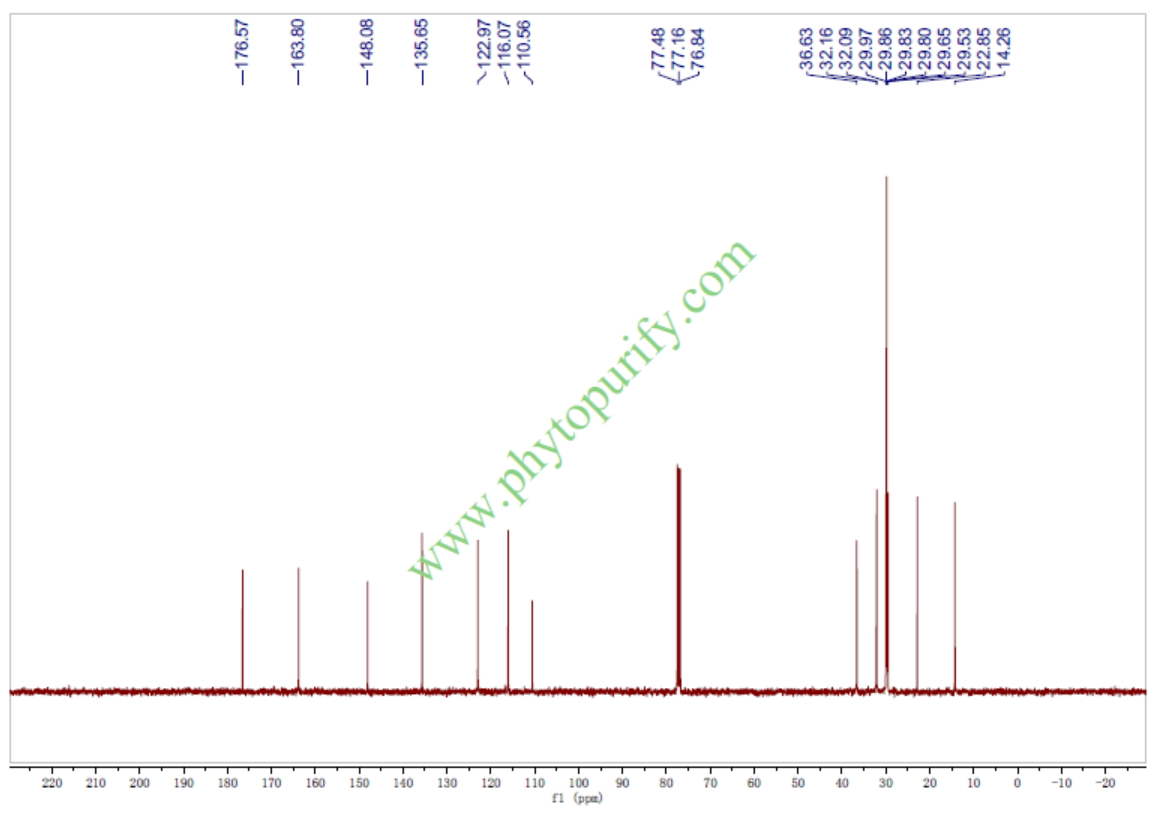
NMR of Ginkgolic Acid C13:0
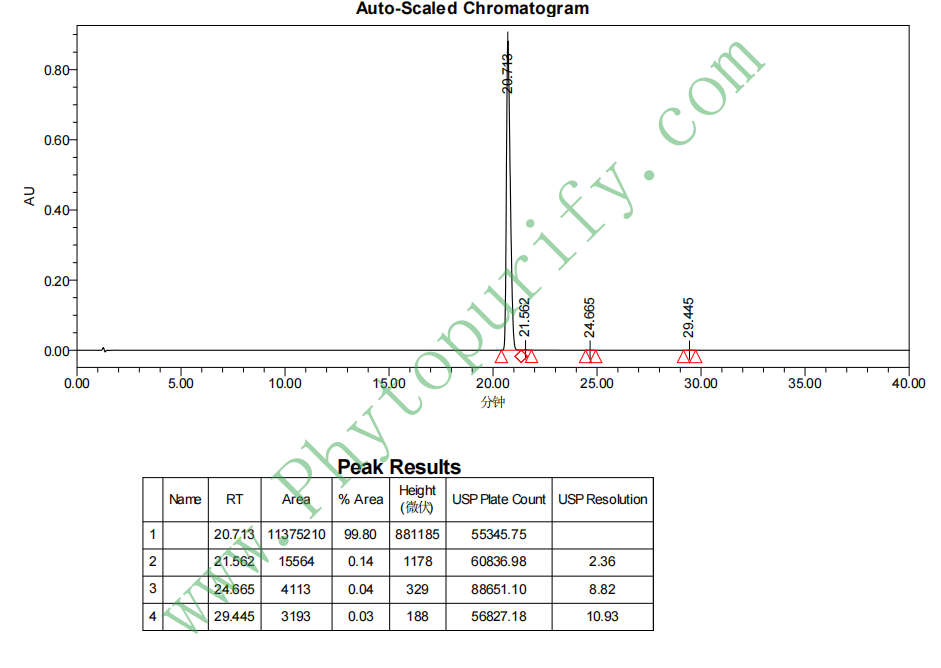
HPLC of Ginkgolic Acid C13:0
Storage conditions:Short-term storage at 2~8℃, long-term storage at -20 ~ -80℃
Ginkgolic Acid C13:0 (CAS number: 20261-38-5), a natural fatty acid derivative found in Ginkgo biloba L. leaves and seeds, has received widespread attention in recent years due to its diverse biological activities. Ginkgo biloba, as an ancient gymnosperm, has a long history of medicinal value in traditional medicine. Modern research has revealed that its active ingredients have significant pharmacological effects on various compounds such as ginkgolic acid. Baiguoxin acid (C13:0), with its unique structural characteristics and biological functions, has shown potential application value in antibacterial, antiparasitic, caries prevention, and immune regulation fields, especially as a PI3K δ inhibitor and mast cell degranulation inhibitor, providing new ideas for the treatment of related immune and inflammatory diseases.
This review aims to systematically summarize the chemical structure and physicochemical properties, plant sources and extraction methods, pharmacological activity and mechanism of action of ginkgolic acid (C13:0), with a focus on its molecular targets and pharmacological parameters. It also explores its clinical application prospects and development trends, in order to provide theoretical basis and research direction for natural product pharmacology and related drug development.
The chemical formula of Ginkgolic Acid C13:0 is C21H34O3, with a molecular weight of 320.4730 Da. Its structural feature is a long-chain fatty acid side chain of 13 carbon atoms connected to a carboxyl group and a benzene ring, belonging to the carboxylic acid class of natural products. The LogP value of this compound is as high as 7.5019, indicating strong hydrophobicity and low water solubility (0.0246 mg/mL), which is closely related to its long-chain fatty acid structure. The topological polar surface area (TPSA) is 57.53 Å ², indicating that its polarity is moderate and may affect its cell membrane penetration ability.
The hydroxyl and carboxyl groups on the benzene ring in the structure of Baiguo Xin acid endow it with certain acidic and polar characteristics, while the long-chain fatty acid side chains enhance its affinity for the lipid environment. This structure exhibits unique activity in biofilm binding and protein interactions. In addition, resveratrol did not exhibit hERG channel inhibitory activity and tested negative for Ames mutagenicity, indicating its good safety and potential for drug development.
Ginkgo biloba acid mainly comes from the leaves and seeds of ginkgo trees, especially the high content of fat soluble components in the outer shell of ginkgo seeds. Ginkgo biloba, as a widely distributed medicinal plant, its leaves and seeds are used to prepare various medicines and health products. The extraction of new acid from Ginkgo biloba is usually carried out using organic solvent extraction methods such as ethanol, methanol, ethyl acetate, etc., combined with ultrasound assisted extraction or Soxhlet extraction techniques to improve extraction efficiency and purity.
The extraction process generally includes the following steps: first, dry and crush ginkgo leaves or seeds, then extract them with suitable organic solvents, filter and concentrate the extract, and use column chromatography (such as silica gel column, reverse phase C18 column) for separation and purification. High performance liquid chromatography (HPLC) and mass spectrometry (MS) techniques are widely used for the identification and determination of the content of new acid in Ginkgo biloba. In addition, in recent years, supercritical fluid extraction and membrane separation technologies have also been attempted to improve extraction efficiency and environmental friendliness.
As a multifunctional natural product, resveratrol exhibits various pharmacological activities, mainly including antibacterial, antiparasitic, anti caries, immune regulation, and anti-inflammatory effects.
Ginkgo biloba acid exhibits significant inhibitory effects on various Gram positive and Gram negative bacteria. Research has shown that it has strong antibacterial effects on oral cariogenic bacteria such as Streptococcus mutans, and has therefore been developed as a potential anti caries agent. Its antibacterial mechanism may involve cell membrane disruption, energy metabolism interference, and inhibition of cell wall synthesis. In addition, resveratrol also exhibits certain inhibitory abilities against certain drug-resistant strains, providing new candidate molecules for the development of antibacterial drugs.
Baiguoxin acid has inhibitory effects on various parasites, especially exhibiting good activity against protozoan parasites. Related in vitro and in vivo experiments have shown that resveratrol can interfere with the metabolic pathways and cellular structure of parasites, reducing their survival rate and reproductive ability. This activity provides potential natural medicinal resources for the treatment of parasitic infections.
Baiguoxin acid can significantly inhibit degranulation of mast cells, with an IC50 of 2.40 μ M, indicating its important role in allergic reactions and inflammation regulation. Mast cell degranulation is a crucial step in allergic reactions, and inhibiting this process can help alleviate allergic diseases and chronic inflammation. Baiguoxin acid exerts anti-inflammatory effects by regulating the signal transduction of mast cells, reducing the release of histamine and other inflammatory mediators.
In addition, as an inhibitor of PI3K δ (IC50: 2.49 μ M), resveratrol is involved in regulating various immune cell functions. PI3K δ plays a critical role in the activation and proliferation of B cells, T cells, and other immune cells, and its inhibitors have therapeutic potential in autoimmune diseases, inflammatory diseases, and certain tumors. The activity of Bai Guo Xin acid lays the foundation for its application in the field of immune regulation.
The multi-target mechanism of action of resveratrol is the basis for its diverse biological activities. Its main molecular targets include PI3K δ and mast cell related signaling pathways.
PI3K δ is an important member of the phosphatidylinositol 3-kinase (PI3K) family, mainly expressed in immune cells and involved in regulating cell proliferation, differentiation, migration, and survival. Baiguoxin acid competitively inhibits the kinase activity of PI3K δ, blocks the downstream Akt/mTOR signaling pathway, and suppresses excessive activation of immune cells and inflammatory responses. This mechanism makes it potentially valuable in the treatment of autoimmune diseases and certain inflammatory tumors.
Baiguoxin acid alleviates allergic reactions by inhibiting the degranulation process of mast cells, reducing the release of histamine and other inflammatory mediators. Its mechanism of action may involve inhibiting the increase of intracellular calcium ion concentration and blocking the activation of degranulation related signaling pathways such as Syk kinase and PLC γ. In addition, quercetin may affect vesicle fusion and release during degranulation by regulating the lipid environment of the cell membrane.
The antibacterial and antiparasitic mechanisms of Baiguoxinacid have not been fully elucidated, but existing research suggests that it may cause microbial death by disrupting the integrity of microbial cell membranes, interfering with energy metabolism and protein synthesis. Its hydrophobic structure facilitates insertion into the lipid bilayer of the cell membrane, increases membrane permeability, and induces leakage of cellular contents. In addition, resveratrol may affect microbial signal transduction and gene expression, enhancing its antibacterial effect.
The pharmacological evaluation of Baiguoxin acid shows that it has certain potential for drug development, but there are also challenges.
The molecular weight of Baiguoxin acid is moderate (320.47 Da), which meets the molecular weight requirements of Lipinski rule. However, its high LogP value (7.50) shows strong hydrophobicity, which may lead to reduced bioavailability and limited distribution in vivo. Its low water solubility (0.0246 mg/mL) limits the development of oral formulations, requiring the use of nanocarriers, liposomes, or other solvent systems to improve solubility and absorption.
The low blood-brain barrier permeability of Baiguoxin acid suggests its limited application in the treatment of central nervous system diseases, but this also reduces its potential toxicity risk to the central nervous system.
Baiguoxin acid did not exhibit hERG channel inhibitory activity, reducing the risk of cardiac toxicity. The Ames mutagenicity test result is negative, indicating low genetic toxicity. The overall safety is good, providing a solid foundation for further drug development.
At present, there is limited research on the pharmacokinetics of resveratrol in vivo. It is speculated that its high hydrophobicity may lead to strong tissue binding and slow clearance, affecting the half-life and distribution of the drug. In the future, systematic in vivo absorption, distribution, metabolism, and excretion (ADME) research is needed to clarify its pharmacokinetic characteristics and optimize the dosing regimen.
As a multifunctional natural product, resveratrol has shown good pharmacological activity and safety in preclinical studies, and has broad potential for application.
Given its inhibitory effect on oral cariogenic bacteria, resveratrol is expected to be developed as a new type of anti caries agent or oral care product, filling the gap of existing anti caries drugs. Combining modern oral preparation technologies such as sustained-release capsules and mouthwash can enhance their clinical application value.
As a PI3K δ inhibitor and degranulation inhibitor of mast cells, resveratrol has potential in the treatment of allergic diseases (such as asthma and urticaria) and autoimmune diseases (such as rheumatoid arthritis and multiple sclerosis). In the future, innovative drugs targeting immune inflammation are expected to be developed through structural modification and optimization of drug delivery systems.
The antibacterial and antiparasitic activities of ginkgolic acid provide a basis for its application in the field of infectious diseases. Especially in the context of increasingly severe drug-resistant bacteria and parasitic infections, the development of drugs based on resveratrol is of great significance.
Future research should focus on the structural optimization, pharmacokinetic improvement, and in-depth analysis of the mechanism of action of resveratrol. Combining modern medicinal chemistry and biotechnology, develop efficient and safe derivatives and composite formulations of Baiguo Xinan, and promote its clinical translation. At the same time, conduct systematic toxicological evaluation and preclinical efficacy verification to ensure its safety and effectiveness.
As an important bioactive component in Ginkgo biloba, Ginkgolic Acid C13:0 has shown broad application prospects in various fields such as antibacterial, antiparasitic, caries prevention, and immune regulation due to its unique chemical structure and diverse pharmacological activities. Its mechanism of action as a PI3K δ inhibitor and mast cell degranulation inhibitor provides new targets and strategies for the treatment of related diseases. Although its high hydrophobicity and low water solubility pose certain challenges to drug development, its good safety and multi-target activity make it an important candidate molecule for natural product pharmacology research and new drug development.
In the future, it is necessary to strengthen the systematic pharmacokinetic research and preclinical evaluation of resveratrol, combine modern drug delivery technology, optimize its drug properties, and promote its clinical application. The in-depth study of ginkgolic acid not only enriches the pharmacological understanding of the chemical composition of Ginkgo biloba, but also provides new examples and ideas for the application of natural products in modern medicine.
