Introduction/Overview
Diabetes is a global chronic metabolic disease, its incidence rate continues to rise, has become a serious public health challenge. Although the current mainstream hypoglycemic drugs can effectively control blood sugar, long-term use often accompanies side effects such as weight gain, low blood sugar risk, and cardiovascular events, prompting researchers to continuously explore safer and multi-target treatment strategies from natural products. Soyasaponin Be methyl ester (CAS No. 117210-13-6), as an oleanane type triterpenoid saponin derivative isolated from traditional edible plant soybean, has attracted much attention in recent years due to its significant potential in anti diabetes. Its unique chemical structure endows it with multiple biological activities such as regulating glucose and lipid metabolism and improving insulin resistance. This article aims to systematically review the chemical properties, plant sources, pharmacological activities, molecular mechanisms of action, and medicinal properties of soybean saponin Be methyl ester, in order to provide scientific basis for the deep development and clinical application of this natural product.
Chemical structure and physicochemical properties
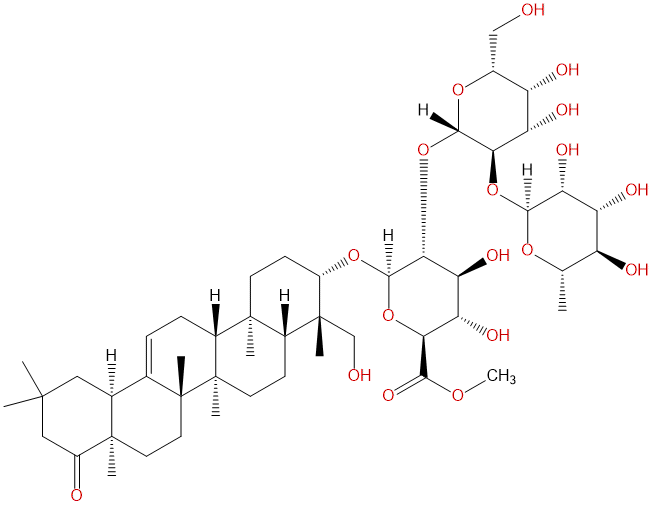
The chemical structure of soybean saponin Be methyl ester belongs to the oleanane type pentacyclic triterpenoid saponin. Its parent nucleus is oleanolic acid, which is connected to a three sugar chain consisting of glucuronic acid, galactose, and arabinose through a glycosidic bond at position C-3. Its key feature is that the carboxyl group at C-22 is methylated, which significantly affects its polarity and biological activity. Its molecular formula is C ₄₈ H ₇₈ O ₁₉, and its molecular weight is 955.1450.
From the analysis of physical and chemical properties, this compound exhibits typical saponin like characteristics. Its calculated lipid water partition coefficient (LogP) is 2.5876, indicating that it has a certain degree of lipophilicity, but not highly hydrophobic. Its topological polar surface area (TPSA) is as high as 280.82 Å ², which is mainly attributed to the abundant hydroxyl and sugar structures in the molecule, leading to its high polarity. The theoretical water solubility value is 0.0685 mg/mL, which belongs to the category of slightly soluble to poorly soluble. This suggests that in the development of formulations, it may be necessary to improve their solubility through techniques such as salt formation, cyclodextrin inclusion, or nanomaterialization. Preliminary drug risk assessment shows that its ability to cross the blood-brain barrier is low, indicating a lower risk of central nervous system related side effects; There is no inhibitory activity on hERG potassium channels, indicating a lower risk of inducing QT interval prolongation in the heart; The Ames test result was negative (0.0), indicating no mutagenicity in this testing system, providing preliminary positive signals for its safety.
Plant sources and extraction methods
Soybean saponin Be methyl ester mainly comes from leguminous plant soybean(Glycine max (L.) Merr. seeds and their processing by-products. Soybean saponins mainly exist in bound (bound to proteins, polysaccharides, etc.) and free forms in soybeans, distributed in cotyledons and hypocotyls, with the hypocotyl being particularly abundant. Different soybean varieties, planting environments, and processing techniques (such as fermentation and germination) can significantly affect the composition and content of their saponins.
Its extraction and separation usually follow the classic process of natural product chemistry. Firstly, polar solvents such as methanol, ethanol, or aqueous ethanol are used to extract defatted soybean meal through leaching or ultrasound assisted extraction, resulting in crude total saponin extract. Subsequently, enrichment and purification were carried out using macroporous adsorption resin (such as D101, AB-8) column chromatography, and gradient elution was performed using ethanol water solutions of different concentrations. After obtaining the saponin enrichment site, further fine separation is required using normal or reverse phase silica gel column chromatography, high performance liquid chromatography (HPLC), and preparative liquid chromatography (pre HPLC). Due to the fact that soybean saponin Be is a methylated derivative of saponin Be, it may naturally exist during the extraction process or be produced by esterification reactions of saponin Be during extraction or separation processes containing methanol. Therefore, strict control of conditions is required in the process to ensure the uniformity of the product. Modern technologies such as high-speed countercurrent chromatography (HSCCC) have also been applied to the preparation of such saponins due to their high efficiency and avoidance of irreversible adsorption.
Pharmacological activity research
A large number of in vitro and in vivo pharmacological studies have confirmed that soybean saponin Be methyl ester has a wide range of anti diabetes and related metabolic disorders.
1. Lowering blood sugar and improving glucose tolerance: In the model of type 2 diabetes rats induced by streptozotocin (STZ) or high-fat diet combined with STZ, intragastric administration of soybean saponin Be methyl ester can reduce fasting blood glucose and postprandial blood glucose levels in a dose-dependent manner, and significantly improve the area under the oral glucose tolerance (OGTT) curve. Its effect is comparable to the classic drug metformin.
2. Improve insulin resistance and promote insulin secretion: The compound can enhance the sensitivity of diabetes model animals to insulin, which is shown by the improvement of insulin tolerance test (ITT). In cell models of insulin resistance, such as palmitic acid-induced HepG2 liver cells or C2C12 myotubes, it significantly enhances the glucose uptake ability of cells. In addition, some studies suggest that it may have a protective effect on pancreatic beta cells and can stimulate insulin secretion at certain concentrations.
3. Regulating lipid metabolism: With the hypoglycemic effect, soybean saponin Be methyl ester can also effectively regulate the lipid profile of diabetes animals, reduce the levels of total cholesterol (TC), triglyceride (TG) and low-density lipoprotein cholesterol (LDL-C) in serum, increase the beneficial high-density lipoprotein cholesterol (HDL-C), and reduce liver steatosis.
4. Antioxidant and anti-inflammatory effects: Oxidative stress and chronic low-grade inflammation are the core links of insulin resistance and complications of diabetes. The compound can increase the activities of superoxide dismutase (SOD) and glutathione peroxidase (GSH Px) in liver, kidney and other tissues of diabetes animals, and reduce the content of malondialdehyde (MDA). Meanwhile, it can inhibit the expression of pro-inflammatory factors such as tumor necrosis factor - α (TNF - α) and interleukin-6 (IL-6) in serum and tissues.
5. Potential benefits for complications of diabetes: Preliminary studies have shown that its antioxidant and anti-inflammatory properties may have a certain alleviating effect on diabetes nephropathy (reducing proteinuria, improving glomerular pathological changes) and diabetes peripheral neuropathy, but the specific mechanism needs further exploration.
Mechanism of action and molecular targets
The anti diabetes effect of soybean saponin Be methyl ester is not achieved through a single way, but involves a complex multi target network regulation. Its core mechanism is related to improving insulin signaling pathway, regulating energy metabolism and glucose transport.
1. Activate the AMPK signaling pathway: AMP activated protein kinase (AMPK) is a core sensor for cellular energy metabolism. Research has shown that soybean saponin Be methyl ester can directly or indirectly activate AMPK (target PRKAA1/AMPK). The activation of AMPK produces a series of downstream effects: in the liver, it inhibits the expression of key gluconeogenic enzymes such as phosphoenolpyruvate carboxykinase PEPCK and glucose-6-phosphatase G6Pase, reducing hepatic glucose output; In muscle and adipose tissue, it promotes the translocation of glucose transporter 4 (GLUT4, encoded by the SLC2A4 gene) to the cell membrane, increasing glucose uptake in peripheral tissues; At the same time, it also promotes fatty acid oxidation and improves lipid metabolism.
2. Enhance insulin PI3K/Akt signaling pathway: After insulin binds to its receptor, it activates phosphatidylinositol 3-kinase (PI3K, whose regulatory subunit is PIK3R1) through insulin receptor substrate 1 (IRS1), thereby activating the key serine/threonine kinase Akt (i.e. protein kinase B, PKB, target AKT1). The activation of Akt is a core step in insulin promoting glucose uptake and synthesis metabolism. Research has found that soybean saponin Be methyl ester can upregulate the tyrosine phosphorylation level of IRS1 in insulin resistant cells, promote the phosphorylation activation of PI3K and Akt, and restore damaged insulin signaling.
3. Regulating nuclear receptors and enzymes related to glucose and lipid metabolism:
* Peroxisome proliferator activated receptor gamma (PPARG): As a key nuclear receptor regulating adipocyte differentiation and glucose and lipid metabolism, this compound may act as a regulator of PPARG to improve systemic insulin sensitivity.
* Glucokinase (GCK): In liver and pancreatic beta cells, it may affect glucose perception and metabolism by regulating GCK activity.
* Sodium glucose cotransporter 2 (SGLT2): Some studies speculate that it may have mild SGLT2 inhibitory activity, reducing renal reabsorption of glucose and promoting urinary glucose excretion, but this effect may be weaker.
* Dipeptidyl peptidase-4 (DPP4): May have an inhibitory effect on DPP4 activity, thereby prolonging the activity of endogenous glucagon like peptide-1 (GLP-1), promoting insulin secretion, and inhibiting glucagon release.
4. Antioxidant and anti-inflammatory pathways: While activating the AMPK and Akt pathways, it can also inhibit the activation of inflammatory signaling pathways such as nuclear factor kappa B (NF - κ B), reducing the production of inflammatory factors; And by activating the nuclear factor E2 related factor 2 (Nrf2) pathway, the expression of downstream antioxidant enzymes is upregulated, synergistically alleviating the pathological basis of insulin resistance.
To sum up, soybean saponin Be methyl ester exerts its anti diabetes effect from multiple aspects, such as increasing insulin sensitivity, promoting glucose utilization, inhibiting hepatic glycogenesis, regulating lipid metabolism, and reducing oxidative stress and inflammation, through the synergistic effect of "multiple targets and multiple pathways".
Evaluation of drug properties and pharmacokinetics
Although soybean saponin Be methyl ester has shown great potential in pharmacological activity, its drug like and pharmacokinetic properties are key to its successful conversion into drugs.
Drug analysis: As mentioned earlier, its molecular weight is close to 1000 and its TPSA value is high, which is in line with the typical characteristics of saponin compounds, but also indicates that its oral bioavailability may face challenges. High polarity results in poor transmembrane permeability, which is the main limiting step for oral absorption. The LogP value is moderate, but the large polar surface area dominates its hydrophilicity. The characteristic of slight solubility requires pharmaceutical intervention. However, its good preliminary safety characteristics (no hERG inhibition, no genotoxicity) are a favorable factor.
Pharmacokinetic study (based on speculation of similar saponins): At present, there is limited public data on the PK study of soybean saponin Be methyl ester system, but reasonable speculation can be made by referring to other studies on soybean saponins.
* Absorption: After oral administration, intact saponin molecules are poorly absorbed in the gastrointestinal tract. They may be partially hydrolyzed by gut microbiota in the colon, removing some glycosides and generating aglycones or secondary glycosides. These metabolites have increased lipid solubility and may be absorbed through passive diffusion. Therefore, its oral bioavailability may be low and vary greatly among individuals.
* Distribution: Due to its high polarity and possible high plasma protein binding rate (saponins often bind to albumin), its distribution volume may be small and mainly distributed in the blood and extracellular fluid, making it difficult to enter the central nervous system.
* Metabolism: Liver metabolism may be its main elimination pathway, involving phase I (such as hydroxylation) and phase II (such as glucuronic acid binding, sulfation) reactions. The metabolism of gut microbiota is crucial.
* Excretion: The prototype and its metabolites may be mainly excreted through bile into feces, and partially excreted through the kidneys with urine.
In future development, in order to improve its bioavailability, the following strategies may need to be explored: 1) structural modification, preparation of prodrugs or higher activity analogues; 2) Adopting advanced drug delivery systems such as liposomes, nanoemulsions, self microemulsions, phospholipid complexes, etc; 3) Explore non oral routes of administration (such as injection, but be aware of the potential risk of hemolysis of saponins).
Clinical application prospects and prospects
Soybean saponin Be methyl ester, as a natural active ingredient derived from food, has broad clinical application prospects, but the road ahead is long.
Potential application directions:
1. Prevention and auxiliary treatment of diabetes and its early stage: It can be used as functional food additive or health food for early intervention of high-risk groups of diabetes (such as obesity, metabolic syndrome patients). As a prescription drug or herbal medicine, when used in combination with existing hypoglycemic drugs (such as metformin, SGLT2 inhibitors, etc.), it may produce a synergistic effect, reducing the dosage and side effects of a single drug.
2. Prevention and treatment of complications of diabetes: Based on its antioxidant and anti-inflammatory properties, we developed adjuvant drugs for the prevention and treatment of diabetes nephropathy, neuropathy and angiopathy.
3. Comprehensive management of metabolic syndrome: It has the functions of regulating sugar, lipid, and improving insulin resistance, making it very suitable for treating metabolic syndrome, a multi-component disease.
Challenges and future research directions:
1. In depth study of the mechanism of action: It is necessary to use techniques such as molecular docking, surface plasmon resonance (SPR), and gene knockout/knockdown to clarify the direct interaction mode and precise binding sites with key targets such as AMPK and PPARG.
2. Preclinical development of the system: A complete set of preclinical studies that meet the requirements for new drug application must be completed, including standardized pharmacological evaluations (more animal models), comprehensive pharmacokinetic studies (ADME), and rigorous toxicological evaluations (acute toxicity, chronic toxicity, reproductive toxicity, etc.).
3. Formulation technology research and development: How to significantly improve its oral bioavailability through pharmaceutical methods is the technical core that determines the success or failure of its development.
4. Clinical research validation: Ultimately, rigorous Phase I, II, and III clinical trials need to be designed to validate its safety, efficacy, and optimal medication regimen in humans.
5. Resources and Costs: Obtaining high-purity monomers in large quantities from soybeans is costly and requires the development of efficient and environmentally friendly extraction, separation, or chemical/biosynthetic processes.
Conclusion
Soybean saponin Be methyl ester is a natural compound with definite anti diabetes activity, which was excavated from the traditional food source plant soybean. It exhibits comprehensive benefits in improving glucose and lipid metabolism, alleviating insulin resistance and oxidative stress by activating AMPK, enhancing PI3K/Akt insulin signaling, regulating PPARG and other multi-target synergistic effects. Although its large molecular polarity and potentially low oral bioavailability are the main bottlenecks in drug conversion, its multi-target mechanism of action and good preliminary safety characteristics endow it with unique development value. With the continuous progress of natural product chemistry, pharmacology and pharmaceutical technology, through in-depth mechanism exploration, reasonable structure optimization and innovative delivery system development, soybean saponin Be methyl ester is expected to occupy a place in the future drug system for the prevention and treatment of diabetes and its complications, and become a model connecting traditional dietotherapy and modern precision medicine.