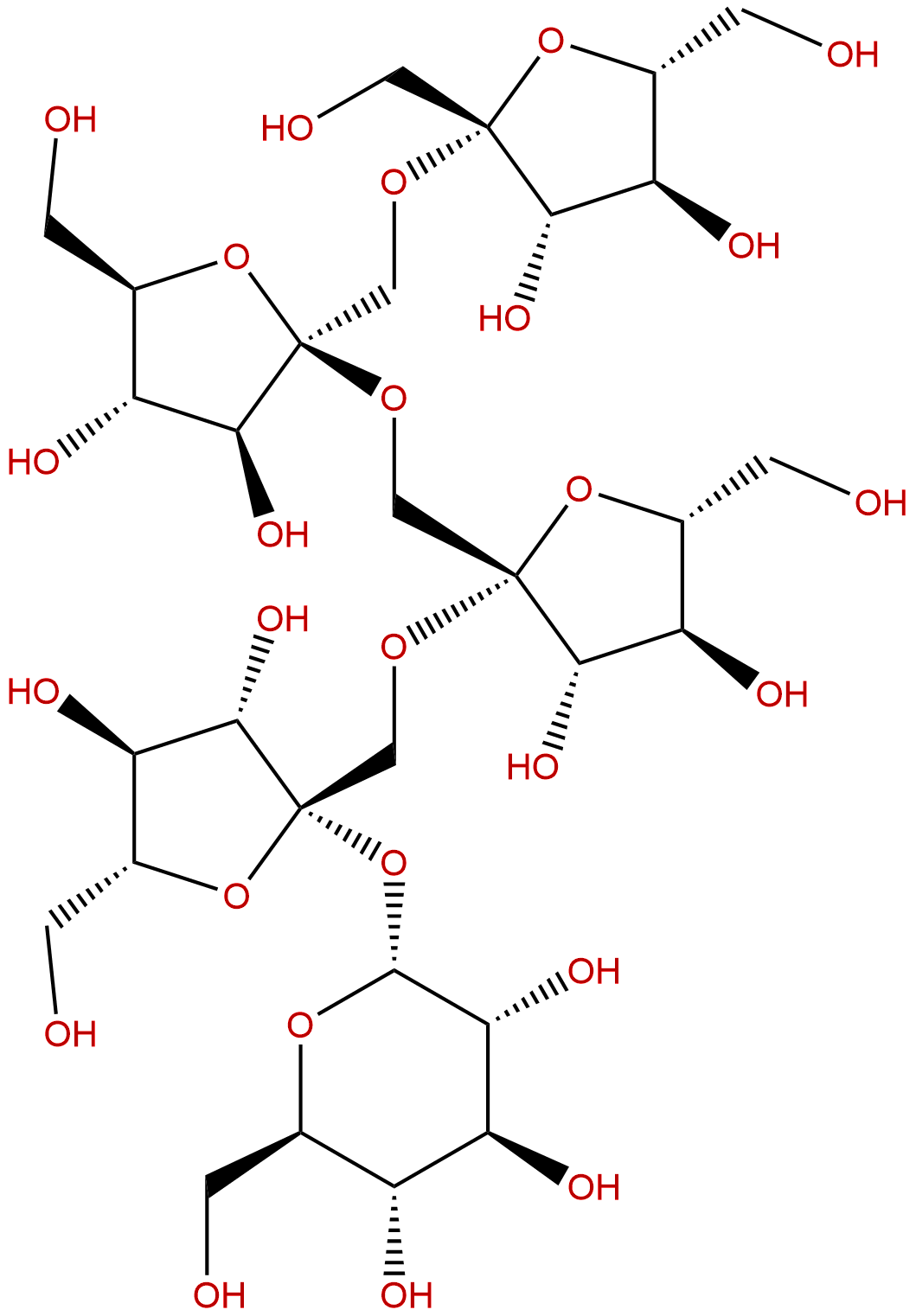


Product name: 1F-Fructofuranosylnystose
Synonym name: FRUCTOSYLNYSTOSE; 1,1,1-Kestopentaose
Catalogue No.: BP3715
Cas No.: 59432-60-9
Formula: C30H52O26
Mol Weight: 828.72
Botanical Source:
Physical Description:
Type of Compound:
Purity: 95%~99%
Analysis Method: HPLC-DAD or/and HPLC-ELSD
Identification Method: Mass, NMR
Packing: Brown vial or HDPE plastic bottle
The product could be supplied from milligrams to grams. Inquire for bulk scale.
We provide solution to improve the water-solubility of compounds, thereby facilitating the variety of activity tests and clinic uses.
For Reference Standard and R&D, Not for Human Use Directly.
Description:
Reference standards.
References:
Front Plant Sci. 2015 Jun 9;6:395.
Fructans and other water soluble carbohydrates in vegetative organs and fruits of different Musa spp. accessions.
The water soluble carbohydrates (WSC) glucose, fructose, and sucrose are well-known to the great public, but fructans represent another type of WSC that deserves more attention given their prebiotic and immunomodulatory properties in the food context. Although the occurrence of inulin-type fructo-oligosaccharides (FOS) was proposed in the fruit of some banana accessions, little or no information is available neither on the exact identity of the fructan species, nor on the fructan content in different parts of banana plants and among a broader array of banana cultivars.
METHODS AND RESULTS:
Here, we investigated the WSC composition in leaves, pulp of ripe fruits and rhizomes from mature banana plants of 11 accessions (I to XI), including both cultivated varieties and wild Musa species. High performance anion exchange chromatography with integrated pulsed amperometric detection (HPAEC-IPAD) showed the presence of 1-kestotriose [GF2], inulobiose [F2], inulotriose [F3], 6-kestotriose and 6G-kestotriose (neokestose) fructan species in the pulp of mature fruits of different accessions, but the absence of 1,1-nystose and 1,1,1-Kestopentaose and higher degree of polymerization (DP) inulin-type fructans. This fructan fingerprint points at the presence of one or more invertases that are able to use fructose and sucrose as alternative acceptor substrates. Quantification of glucose, fructose, sucrose and 1-kestotriose and principal component analysis (PCA) identified related banana groups, based on their specific WSC profiles.
CONCLUSIONS:
These data provide new insights in the biochemical diversity of wild and cultivated bananas, and shed light on potential roles that fructans may fulfill across species, during plant development and adaptation to changing environments. Furthermore, the promiscuous behavior of banana fruit invertases (sucrose and fructose as acceptor substrates besides water) provides a new avenue to boost future work on structure-function relationships on these enzymes, potentially leading to the development of genuine banana fructosyltransferases that are able to increase fructan content in banana fruits.
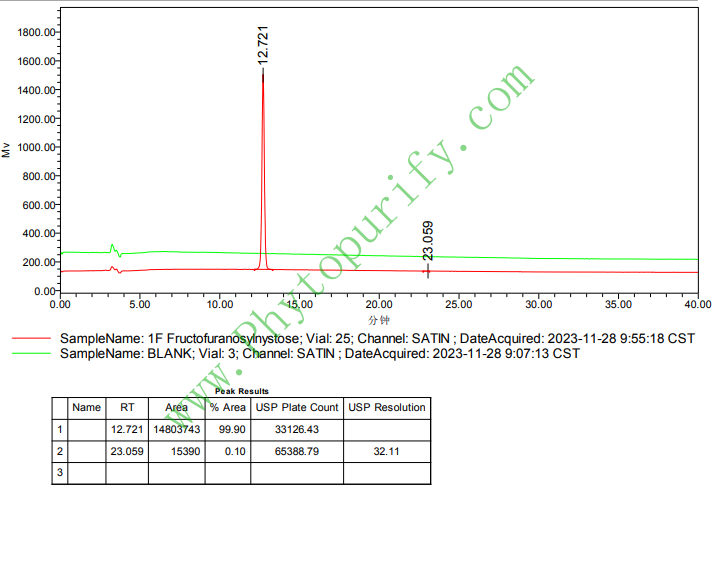
HPLC of 1F-Fructofuranosylnystose
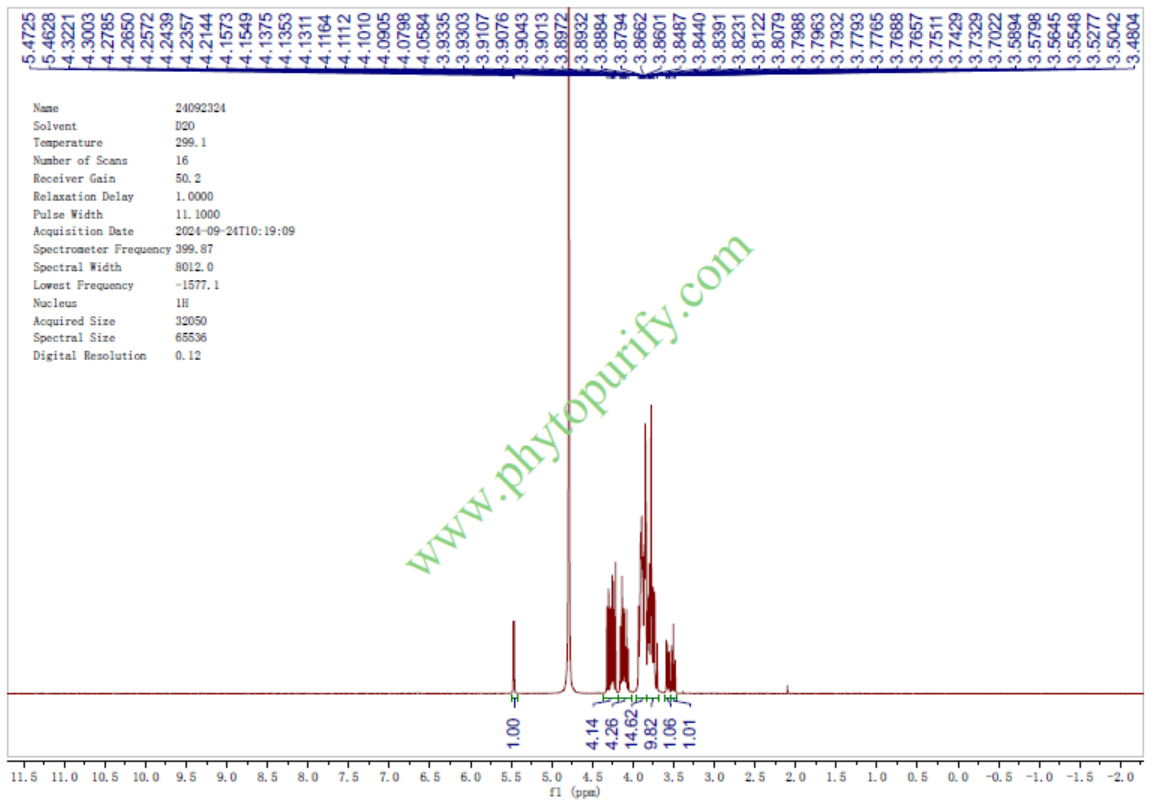
HNMR of 1F-Fructofuranosylnystose
Storage conditions:Short-term storage at 2~8℃, long-term storage at -20 ~ -80℃
426.9800
-4.1472
-4.1472
45.0968
.4201
.1729
Low
17.1692
6.1139
Yes
No
No
No
Yes
No
0.9
Yes
Yes
Yes
Yes
Today, with the continuous development of human health and nutrition science, the balance and homeostasis of intestinal microbiota have become the core link in maintaining body health and preventing various chronic diseases. Fructooligosaccharides (FOS), as a recognized and extensively studied type of prebiotic, have been widely used in the field of functional foods and dietary supplements due to their ability to selectively stimulate the growth and activity of beneficial gut microbiota such as bifidobacteria and lactobacilli, thereby exerting multiple health benefits such as regulating gut function, enhancing immunity, and improving metabolism. In the complex oligofructose family, fructofuranosylnystose, as a highly polymerized functional oligosaccharide, has gradually attracted attention from the academic community in recent years.
Fructose pentasaccharides, also known as 1F fructooligosaccharides, are members of the oligofructose series with a degree of polymerization (DP) of 5. It is composed of one molecule of sucrose (glucose fructose) connected to three molecules of fructose through β - (2 → 1) glycosidic bonds, and its structure can be regarded as an extension product of 1-kestose (GF ₂) and nytose (GF ∝). Compared to FOS components with lower aggregation degree, such as cane fruit trisaccharide and cane fruit tetrasaccharide, cane fruit pentasaccharide may have a slower fermentation rate in the intestine and can reach the distal colon area for microbial utilization, thereby exerting a probiotic effect in a wider range of intestinal areas. This characteristic makes it have unique potential advantages in regulating intestinal microbiota, improving intestinal barrier function, and immune regulation.
At present, cane fruit pentose is mainly synthesized by enzymatic method or extracted and purified from natural plants such as taro, onion, garlic, etc. With the in-depth study of its physicochemical properties, biological activity, and mechanism of action, cane fruit pentose, as a new and efficient prebiotic ingredient, has increasingly broad application prospects in the fields of food, medicine, and health products. This article will provide a systematic review of the research progress of cane five sugar from the aspects of chemical structure and physicochemical properties, plant sources and extraction methods, pharmacological activity research, mechanism of action and molecular targets, drug evaluation and pharmacokinetics, and clinical application prospects, in order to provide theoretical basis for the in-depth development and utilization of this compound.
The chemical name of cane five sugar (CAS number: 59432-60-9) is 1F fructooligosaccharides, belonging to the oligofructose subclass of the fructan family. Its molecular formula is C ∝₀ H ₅₂ O ₂₆, and its molecular weight is 828.72 g/mol. Structurally, cane pentose consists of a sucrose unit (α - D-glucopyranosyl - (1 → 2) - β - D-fructofuron glycoside) as its core, which is connected to three additional β - D-fructofuron units via β - (2 → 1) glycosidic bonds at the 1-position hydroxyl of its fructose residue. Therefore, its complete structure can be represented as: α - D-Glcp - (1 → 2) - [β - D-Fruf - (2 → 1)] ∝ - β - D-Fruf, or abbreviated as GF ₄, where G represents glucose, F represents fructose, and subscript 4 represents the total number of fructose units (including fructose in sucrose).
This linear structure, connected by β - (2 → 1) glycosidic bonds, determines the chemical properties of sugarcane pentose. Unlike polysaccharides such as linear starch or cellulose that are linked by alpha glycosidic bonds, beta - (2 → 1) glycosidic bonds have high resistance to human digestive enzymes (such as salivary amylase, pancreatic amylase, and small intestine brush border enzyme), allowing them to pass through the upper gastrointestinal tract intact and be hydrolyzed and utilized by specific intestinal microbial enzymes (such as beta fructofuranosidase) upon reaching the large intestine.
Sucrose pentasaccharides are white or off white crystalline powders, odorless or slightly sweet, with a sweetness level of about 30% -40% of sucrose. One of its most significant physicochemical properties is its extremely high hydrophilicity and water solubility. According to the pharmacological parameters, the water solubility of sugarcane pentose is 45.0968 mg/mL, which is closely related to the large amount of exposed hydroxyl groups (- OH) in its molecular structure. High water solubility makes it easy to disperse and dissolve in food and beverage systems, providing convenience for its application in functional foods.
Its oil-water partition coefficient (LogP) is -4.1472, which is an extremely low negative value, indicating that cane five sugar has strong hydrophilicity and is almost insoluble in lipids or organic solvents. This characteristic determines its absorption and distribution pattern in the body: due to the inability to penetrate the lipid bilayer of the cell membrane, cane fruit pentose is difficult to be absorbed by small intestinal epithelial cells through passive diffusion, thus ensuring its characteristics as a "colon targeted" probiotic.
The Topological Polar Surface Area (TPSA) is 426.98 Å ², much higher than the commonly assumed threshold of 140 Å ² for oral medications. The high TPSA value further confirms its extremely low membrane permeability and oral bioavailability, indicating that it mainly exists in the intestinal lumen in its prototype form in vivo, rather than entering the systemic circulation. In addition, its blood-brain barrier (BBB) penetration ability was evaluated as' low ', which is consistent with its high hydrophilicity and high molecular weight characteristics, meaning it will not have a direct impact on the central nervous system.
In terms of stability, sugarcane pentose is relatively stable under acidic conditions (such as gastric acid) and high temperatures, but may undergo partial hydrolysis under strong acid or prolonged high temperature treatment, producing oligofructose or monosaccharides with lower polymerization degree. It has strong moisture absorption, and attention should be paid to moisture prevention during storage.
Sugarcane pentose does not exist independently in nature, but as a part of a mixture of oligofructose, it is widely present in various plants, especially in those that store fructooligosaccharides as the main carbohydrate, with higher levels. Common plant sources rich in oligofructose (including cane pentose) include:
It is worth noting that the composition and content of oligofructose in plants are influenced by various factors such as variety, growth stage, harvest season, storage conditions, and processing methods. Generally speaking, taro and chicory are the preferred industrial raw materials for extracting cane pentose and other oligofructose due to their high yield and rich content of fructooligosaccharides.
Obtaining high-purity cane five sugars from plant raw materials usually involves multiple steps such as extraction, separation, and purification.
Raw material pretreatment and extraction Fresh or dried plant raw materials (such as potato tubers) are washed, sliced, dried, and crushed, and then subjected to hot water extraction. Usually, multiple extractions are carried out using water as a solvent at 60-80 ℃ to fully dissolve oligofructose. The extraction solution is centrifuged or filtered to remove insoluble residues, resulting in a crude extract.
Decolorization and desalination The crude extract contains impurities such as pigments, proteins, and inorganic salts. Activated carbon is usually used for decolorization treatment, and then protein, amino acid, and inorganic salts are removed through ion exchange resin (cation and anion exchange resin) to obtain a relatively pure mixture of oligofructose.
Separation and Purification This is a key step in obtaining high-purity cane five sugar. Due to the presence of components with different degrees of polymerization in the mixture of oligofructose, such as sucrose, sucrose trisaccharide, sucrose tetrasaccharide, sucrose pentasaccharide, and higher degree of polymerization fructooligosaccharides, efficient separation techniques are required for classification.
Concentration and drying: The collected purified solution of fructose pentasaccharide is concentrated under reduced pressure, and the final product is obtained through spray drying or freeze drying.
In addition, enzymatic synthesis is also an important pathway for obtaining sugarcane pentose. By utilizing microbial enzymes with fructosyltransferase activity (such as β - fructofuronidase from Aspergillus niger or Arthrobacter sp.), sucrose can be used as the substrate to efficiently synthesize low molecular weight fructose mixtures with controllable polymerization degree through fructosyltransferation reaction, among which cane pentose is one of the main products. Enzymatic synthesis has the advantages of mild reaction conditions, high product specificity, and ease of large-scale production, and has become the mainstream technology for industrial production of oligofructose.
As a typical prebiotic, the pharmacological activity of cane fruit pentose is mainly reflected in its regulation of the host's intestinal microbiota and the systemic health effects it triggers.
The definition of prebiotics is "a substrate that is not digested by the host but can be selectively utilized by gut microbiota to provide health benefits to the host. Sugarcane pentasaccharides fully meet this definition. Numerous in vitro fermentation experiments, animal models, and human clinical trials have confirmed that cane sugar can significantly promote the proliferation of beneficial bacteria in the gut, especially Bifidobacterium and Lactobacillus. This selective stimulating effect is called the "bifid factor effect".
Research has shown that compared to FOS with lower polymerization degree (such as cane trisaccharide), cane pentose has a slower fermentation rate in the intestine. This means that it can reach the distal end of the colon (descending colon and sigmoid colon) more completely, where it is utilized by specific bacterial communities. This' remote delivery 'feature is crucial for maintaining the health of the entire colon, as many colon diseases such as ulcerative colitis and colon cancer are more common in the distal colon. By promoting the growth of beneficial bacteria in the distal colon, cane fruit pentose helps to inhibit the overgrowth of potential pathogenic bacteria such as Clostridium and certain species of Bacteroides, thereby optimizing the gut microbiota structure and maintaining microbial balance.
The intestinal barrier is the first line of defense that prevents harmful substances (such as pathogens, endotoxins, antigens) from entering the circulation of the body. Sucrose can indirectly enhance intestinal barrier function by regulating gut microbiota. Its role is mainly reflected in the following aspects:
The intestine is the largest immune organ in the human body. The immune regulatory effect of cane five sugar is mainly achieved through two pathways: one is through the direct action of microbial metabolites (SCFAs) on immune cells; The second is to indirectly affect the development and function of the immune system by regulating the composition of the microbiota.
By regulating the gut microbiota and its metabolites, cane sugar also exhibits a positive impact on host metabolic health.
The core mechanism by which cane sugar exerts its biological effects is not directly on host cells, but through indirect pathways such as the "microbiota gut brain axis" or the "microbiota metabolism immune axis". The chain of action can be summarized as follows:Sucrose (substrate) → Gut microbiota (selective utilization) → Metabolites of microbiota (mainly SCFAs) → Host cell receptors/signaling pathways (targets) → Physiological effects。
G protein coupled receptor (GPR41/43)This is the most classic receptor for SCFAs (acetic acid, propionic acid, butyric acid). GPR41 and GPR43 are widely expressed on the surface of intestinal epithelial cells, intestinal endocrine cells, adipocytes, and immune cells.
Toll like receptors (TLR2/TLR4)The gut microbiota and its components (such as lipoteichoic acid and lipopolysaccharides LPS) are natural ligands for TLRs.
Histone deacetylase (HDAC) inhibition Butyric acid is a known HDAC inhibitor. By inhibiting HDAC, butyric acid can alter the structure of chromatin and promote the expression of specific genes such as anti-inflammatory genes Foxp3, MUC2, etc. This is an important mechanism by which SCFAs exert epigenetic regulation.
Intestinal barrier related proteins:
Cytokines and antimicrobial peptides:
Sugarcane five sugars are first used as "fuel" for selective fermentation and utilization by beneficial bacteria such as bifidobacteria in the intestine. The fermentation process mainly produces SCFAs such as acetic acid, propionic acid, and butyric acid. These SCFAs subsequently exert their effects through the following pathways:
1. As a signaling molecule Activate GPR41/43 receptors on intestinal epithelial cells and immune cells, regulate hormone secretion and immune response.
2. As an energy substrate Butyric acid is the main energy source for colonic epithelial cells, maintaining their health and function.
3. As an epigenetic regulator Inhibit HDAC and regulate gene expression.
4. Reduce intestinal pH value Inhibit the growth of harmful bacteria and promote mineral absorption.
At the same time, the proliferation of beneficial bacteria (such as bifidobacteria) itself directly or indirectly enhances the intestinal barrier, regulates immunity, and improves metabolism through competitive rejection, production of antibacterial substances, and modulation of TLR signaling.
From the perspective of the "medicinal properties" of traditional small molecule drugs, cane fruit pentose does not conform to typical oral drug characteristics. Its molecular weight (828.72 Da) is much higher than the requirement of molecular weight<500 Da in Lipinski's Rule of Five. Its extremely high polarity (LogP=-4.1472, TPSA=426.98 Å ²) and extremely low water solubility (although high in absolute value, relative to lipid solubility) determine that it is almost impossible to penetrate biological membranes through passive diffusion. Therefore, its oral bioavailability is extremely low and it cannot be used as a candidate molecule for systemic action drugs.
However, from the perspective of "prebiotics" or "gut targeted bioactive substances", these "unfavorable" pharmacological parameters are precisely the key advantages for their function:
* Not absorbed by the upper gastrointestinal tract Ensure that it can fully reach the colon and act on the target (gut microbiota).
* High water solubility Easy to apply in food and beverages, and easily dispersed in intestinal fluids, in full contact with the microbiota.
* Low hERG inhibition risk The parameter display shows no risk of hERG inhibition, indicating that it has no effect on cardiac ion channels and high safety.
* Ames test results The Ames test result is 0.9, which is generally considered negative if it is less than 2, indicating no significant mutagenicity and low risk of genetic toxicity.
Therefore, the "medicinal properties" of cane five sugar should be understood as "suitability as a functional food ingredient or nutritional medicine". It is safe, non-toxic, non mutagenic, and has clear intestinal targeting, making it an ideal candidate for prebiotics.
The pharmacokinetic processes (absorption, distribution, metabolism, excretion, ADME) of cane five sugars in vivo are highly consistent with their physicochemical properties.
Absorption After oral administration, due to the lack of corresponding hydrolytic enzymes (such as alpha glucosidase and sucrase), cane pentose is almost not digested and absorbed in the small intestine. Its large molecules and high hydrophilicity prevent it from entering the bloodstream through cellular pathways or cross cellular pathways. Therefore, its oral absorption rate is extremely low (usually<1%), and the vast majority enters the colon in its original form.
Distribution Due to its non absorption, cane sugar is mainly distributed in the gastrointestinal tract lumen. Its blood-brain barrier penetration ability is low and it will not enter the central nervous system. The prototype drug is almost undetectable in plasma.
Metabolism The metabolism of cane five sugars mainly occurs in the colon. The specific microorganisms in the colon (mainly Bifidobacterium, Lactobacillus, Bacteroidetes, etc.) secrete β - fructosyltransferase (or fructooligosaccharides), which can hydrolyze β - (2 → 1) glycosidic bonds and gradually degrade them into fructose, glucose, and intermediate products (such as cane tetrasaccharides, cane trisaccharides, sucrose). These monosaccharides are then utilized by the microbial community itself, producing metabolites such as SCFAs (acetic acid, propionic acid, butyric acid), lactic acid, and gases (hydrogen, carbon dioxide, methane) through glycolysis. These metabolites, especially SCFAs, are the true effector molecules for the physiological activity of cane five sugars. In SCFAs, acetic acid and propionic acid can be absorbed by colonic epithelial cells, enter the portal vein circulation, and metabolize in the liver; Butyric acid is mainly consumed as energy by colonic epithelial cells.
Excretion A small amount of cane pentose that has not been fermented and utilized by gut microbiota, as well as unabsorbed SCFAs, will eventually be excreted with feces. Due to the high fermentation efficiency of the microbial community, the amount of original cane fruit pentose excreted in the feces of healthy individuals is extremely low.
Summary The pharmacokinetic characteristics of cane five sugar can be summarized as "not absorbed by the upper gastrointestinal tract, targeted metabolism by colonic microbiota". Its metabolites (SCFAs) are the key bridge connecting its intake with host physiological effects.
Based on its clear prebiotic effects, good safety, and regulatory effects on the intestinal barrier and immune system, sugarcane pentose has shown broad application prospects in clinical and health industries.
This is the most direct and mature application field of cane five sugar. As a member of the oligofructose family with high polymerization degree, cane five sugar has unique advantages in developing new generation prebiotic products due to its slow fermentation rate and strong distal colon targeting.
* Intestinal health products Can be used as an auxiliary nutritional support to improve constipation, diarrhea, irritable bowel syndrome (IBS), and inflammatory bowel disease (IBD). Its role in promoting the growth of bifidobacteria and enhancing barrier function can help alleviate bloating and abdominal pain symptoms in IBS patients, and may be beneficial for maintaining relief of mild to moderate ulcerative colitis.
* Immune support products Develop formula foods that enhance mucosal and systemic immune function for immunocompromised populations such as the elderly, infants, and those under high stress.
* Metabolic health products Used for developing functional foods that assist in controlling blood sugar, blood lipids, and weight. Its characteristics of low calorie, high satiety and improving insulin sensitivity make it an ideal food ingredient for people with diabetes and obesity.
* Infant formula food Simulating the prebiotic function of oligosaccharides (HMOs) in breast milk, promoting the colonization of bifidobacteria in infants' intestines, enhancing immunity, and preventing allergies and infections. Due to its relatively simple structure and high safety, cane five sugar has been widely used in infant formula milk powder.
With the deepening of research, the potential therapeutic value of sugarcane pentose is being explored.
* Non alcoholic fatty liver disease (NAFLD)By improving gut microbiota, reducing endotoxin translocation, and alleviating systemic low-grade inflammation, cane fruit pentose may have a positive effect on the prevention and treatment of NAFLD.
* allergic diseases Early supplementation of prebiotics may help prevent or alleviate allergic diseases such as food allergies, eczema, and asthma by regulating Th1/Th2 immune balance and promoting Treg cell differentiation.
* Neuropsychiatric disorders Regulating gut microbiota through the gut brain axis may affect brain function. Preliminary research suggests that prebiotics may have potential benefits in improving certain symptoms of anxiety, depression, and autism spectrum disorder (ASD), and cane sugar, as one of them, deserves further investigation.
* Enhance vaccine efficacy By regulating intestinal immunity, prebiotics may serve as vaccine adjuvants to enhance the immune response of oral or mucosal vaccines.
Despite its broad prospects, the research and application of sugarcane pentose still face some challenges:
1. Individualized differences The composition of gut microbiota varies from person to person, and there may be significant differences in the response of individuals to cane sugar. In the future, precise prebiotic intervention strategies based on individual gut microbiota characteristics are needed.
2. Dose-response relationship More high-quality human clinical trials are needed to determine the optimal dosage of cane sugar for optimal effects in different populations and health states. Excessive intake may cause gastrointestinal discomfort such as bloating and flatulence.
3. Synergistic effect with other components Explore the synergistic effects of cane five sugar with other prebiotics (such as inulin, galactooligosaccharides), probiotics (synbiotics), or prebiotics (such as SCFAs), and develop more efficient multi-component intervention plans.
4. Production process optimization Develop more efficient and cost-effective purification technologies to obtain high-purity and highly stable cane five sugar products, meeting the growing market demand.
As an important member of the oligofructose family with a polymerization degree of 5, cane pentose is endowed with excellent physicochemical properties and biological functions due to its unique chemical structure - linear β - (2 → 1) fructooligosaccharides chain. Its high water solubility, low permeability, and resistance to human digestive enzymes make it an ideal colon targeted prebiotic. By selectively promoting the proliferation of beneficial bacteria in the gut, especially bifidobacteria, and using short chain fatty acids (SCFAs) produced through microbial fermentation as key signaling molecules, cane five sugar plays a positive role in regulating gut microbiota balance, enhancing gut barrier function, regulating host immune response, and improving glucose and lipid metabolism at multiple levels.
Its mechanism of action involves GPR41/43, TLR2/4, HDAC inhibition, as well as the regulation of barrier proteins such as MUC2, OCLN, ZO1, CLDN1, forming a complex and precise "microbiota metabolism host" interaction network. From the perspective of medicinal properties, although cane fruit pentose does not meet the standards of traditional small molecule drugs, it has extremely high application value as a safe, non-toxic, and non mutagenic functional food ingredient. Its unique pharmacokinetic characteristics - non absorption in the upper gastrointestinal tract and targeted metabolism by colonic microbiota - are the cornerstone of its probiotic effects.
Looking ahead to the future, with the continuous deepening of understanding of the relationship between gut microbiota and health, as well as the popularization of precision nutrition concepts, cane fruit pentose, as a new type of probiotic with remote colon targeting advantages, has enormous potential for application in functional foods, dietary supplements, and even adjuvant therapy. Future research should focus on elucidating its individualized effects in different populations, optimizing production processes, exploring synergies with other bioactive substances, and conducting more high-quality clinical studies to fully exploit and utilize the contribution of this natural product to human health. The research on cane five sugars not only enriches our understanding of the oligofructose family, but also provides new ideas and tools for developing health intervention strategies based on gut microbiota regulation.
