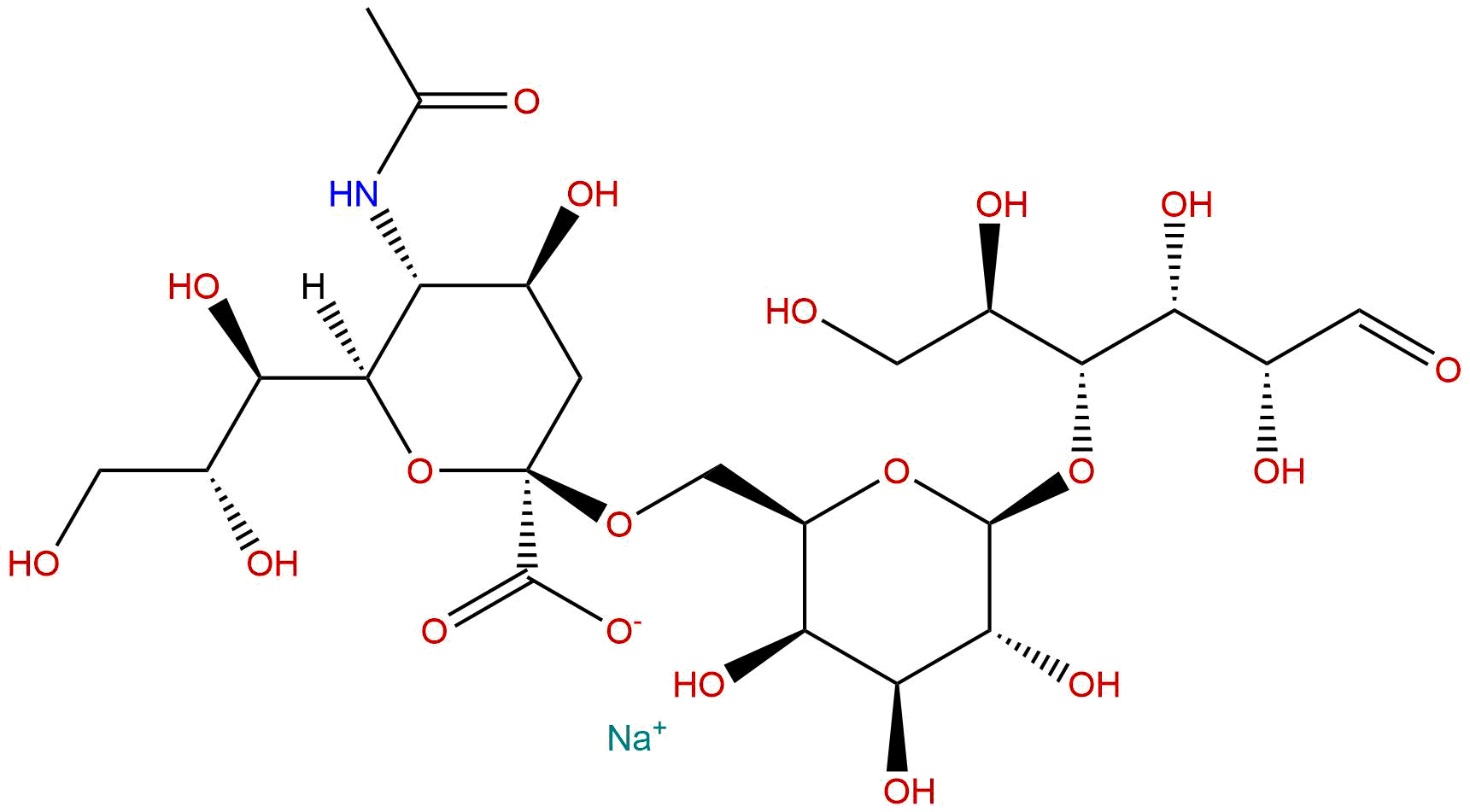


Product name:6'-Sialyllactose Sodium Salt
Synonym name: 6'SL
Catalogue No.: BP5163
Cas No.: 157574-76-0
Formula: C23H38NNaO19
Mol Weight: 655.535
Botanical Source:
Type of Compound:
Purity: 95%~99%
Analysis Method: HPLC-DAD or/and HPLC-ELSD
Identification Method: Mass, NMR
Packing: Brown vial or HDPE plastic bottle
Storage: Store in a well closed container, protected from air and light. Put into refrigerate or freeze for long term storage.
Whenever possible, you should prepare and use solutions on the same day. However, if you need to make up stock solutions in advance, we recommend that you store the solution as aliquots in tightly sealed vials at -20℃. Generally, these will be useable for up to two weeks.
The product could be supplied from milligrams to grams
Inquire for bulk scale.
For Reference Standard and R&D, Not for Human Use Directly.
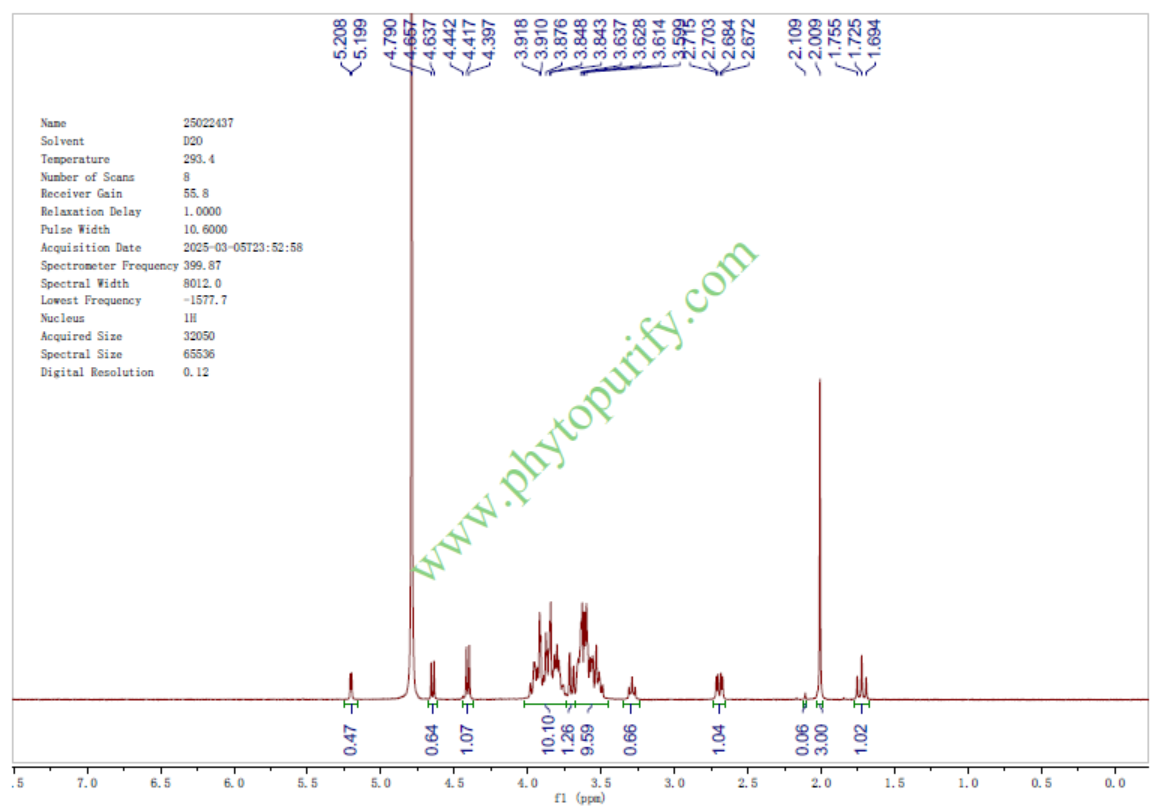
HNMR of 6'-Sialyllactose Sodium Salt
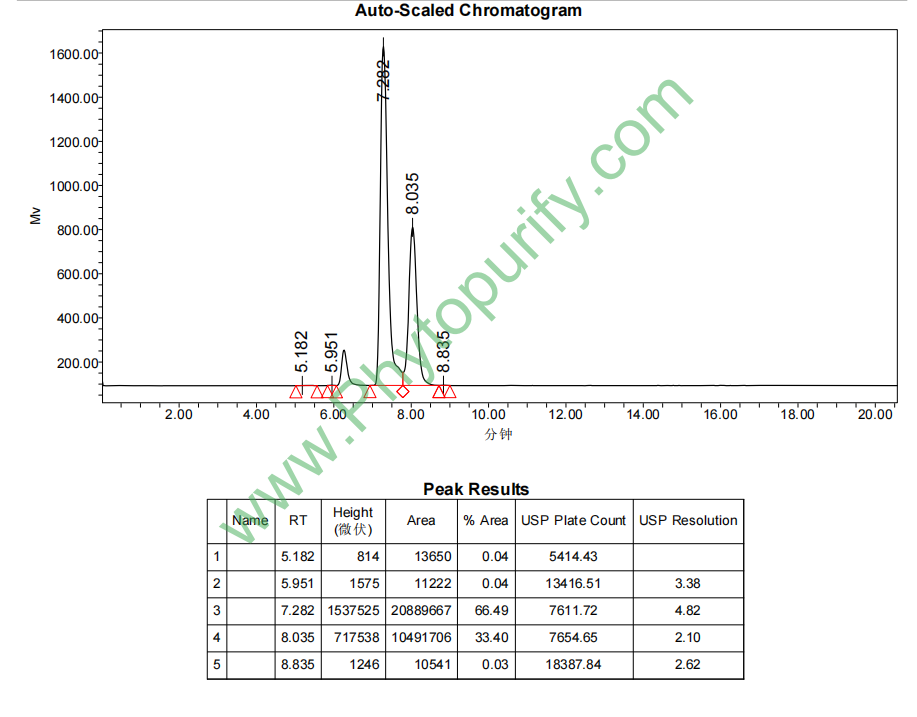
HPLC of 6'-Sialyllactose Sodium Salt
Storage conditions:Short-term storage at 2~8℃, long-term storage at -20 ~ -80℃
342.9200
-3.7189
-5.0661
116.9744
.4071
.0768
Low
30.5247
5.7474
Yes
No
No
No
No
No
0.0
Yes
Yes
Yes
Yes
Natural products, as an important source of drug discovery, have long played an indispensable role in maintaining human health and treating diseases. Among numerous naturally occurring bioactive molecules, human milk oligosaccharides (HMOs) have received widespread attention from the scientific community in recent years due to their unique structural diversity, rich biological functions, and profound impact on the gut microbiota and immune system development of infants and young children. 6 '- Siallylactose Sodium Salt (6' - SL) is one of the most abundant and extensively studied members of HMOs. It is an acidic oligosaccharide composed of sialic acid (N-acetylneuraminic acid, Neu5Ac) linked to lactose residues via α 2,6-glycosidic bonds. Its chemical nature determines that it is not only a nutrient, but also a signaling molecule with multiple biological activities.
6 '- SL is abundant in breast milk, especially in colostrum, and is the main source of exogenous sialic acid for infants and young children. Salivary acid, as an important component of gangliosides and glycoproteins, is crucial for brain development, cognitive function, and immune regulation. However, the functionality of 6 '- SL goes far beyond that. More and more studies have revealed that 6 '- SL exhibits significant activity in regulating gut microbiota composition, maintaining intestinal barrier integrity, modulating immune response, anti-inflammatory, antiviral, and potential neuroprotective effects. Its mechanism of action involves multiple key signaling pathways, such as AMPK, TLR4/NF - κ B, NOTCH, etc., making it a potential candidate molecule for treating various diseases such as inflammatory bowel disease, neurodegenerative diseases, allergic rhinitis, neonatal enteritis, and even respiratory viral infections.
With the advancement of synthetic biology and biomanufacturing technology, 6 '- SL has been able to achieve large-scale production, providing a material basis for its transformation from basic research to clinical applications. However, as a highly polar and high molecular weight oligosaccharide, its low oral bioavailability and complex metabolic pathways remain challenges for its drug development. This article aims to systematically review the chemical structure, physicochemical properties, pharmacological activity, mechanism of action, pharmacological evaluation, and clinical application prospects of 6 '- SL, in order to provide comprehensive academic references for the in-depth research and development of this natural product.
The chemical structure of 6 '- sialic acid lactose sodium salt consists of three core monosaccharide units: one molecule of D-glucose, one molecule of D-galactose, and one molecule of N-acetylneuraminic acid (sialic acid). The precise chemical linkage is Gal (β 1-4) Glc (i.e. lactose backbone), while sialic acid is linked to the C-6 hydroxyl group of the galactose residue through an α 2,6-glycosidic bond. The sodium salt form refers to the combination of carboxyl groups on sialic acid with sodium ions to form a stable sodium salt, which improves its water solubility and stability. Its chemical name is N-acetylneuraminic acid - α 2,6-lactose sodium salt, and its CAS number is 157574-76-0.
From the perspective of physical and chemical properties, 6 '- SL is a white to off white powder with strong hydrophilicity. Its molecular weight is 633.55 Da and the lipid water partition coefficient (LogP) is -3.7189, indicating that it is almost insoluble in lipids and highly soluble in water (with a water solubility score of 116.97). This high polarity and low fat solubility make it difficult for it to passively diffuse through biological membranes, especially the blood-brain barrier (BBB), whose BBB penetration ability is evaluated as "low". The topologically polar surface area (TPSA) is as high as 342.92 Å ², further confirming its strong polarity and macromolecular characteristics, which are usually related to poor oral absorption and mainly rely on intestinal transporters or cell bypass pathways for absorption. In addition, 6 '- SL carries a negative charge under physiological pH conditions (due to the carboxyl dissociation of sialic acid), which is crucial for its interaction with proteins, viruses, or cellular receptors. In the early assessment of safety, the Ames test result was 0.0, indicating no significant mutagenicity; The hERG inhibition test was also negative, indicating a low risk of cardiac toxicity.
Strictly speaking, 6 '- sialic acid lactose is not derived from plants, but naturally exists in mammalian milk, especially human breast milk. It is one of the most abundant acidic HMOs in breast milk, with a concentration of 1-2 g/L in colostrum and maintained at 0.3-0.5 g/L in mature milk. The milk of other mammals such as cows, sheep, and goats also contains 6 '- SL, but at a much lower concentration than human milk. Therefore, the traditional "plant source" is not applicable here, and its source should be more accurately defined as "animal milk source" or "biosynthetic source".
In history, the acquisition of 6 '- SL mainly relied on direct separation and purification from breast milk or cow's milk. However, due to the limited source of raw materials, low content and complex purification process (involving multi-step operations such as ultrafiltration, ion exchange chromatography, activated carbon adsorption, gel filtration, etc.), the output is extremely low and the cost is high, which cannot meet the needs of scientific research and industry. In recent years, with the development of metabolic engineering and synthetic biology, microbial fermentation has become the mainstream technology for producing 6 '- SL. By detecting Escherichia coli(E. coli)Or brewing yeast(Saccharomyces cerevisiae)By introducing sialic acid synthesis pathway, CMP sialic acid transporter and α 2,6-sialic acid transferase gene into engineering strains such as Lactose, and optimizing fermentation conditions (such as carbon source, nitrogen source, inducer, etc.), 6 '- SL can be efficiently synthesized with lactose as substrate. The fermentation broth can finally obtain high-purity 6' - SL sodium salt products through downstream processes such as cell separation, decolorization, desalination, concentration, spray drying, etc. In addition, enzymatic synthesis (using recombinant sialyltransferase in vitro catalysis) is also an important supplementary method, especially suitable for preparing derivatives with specific structures.
6 '- SL exhibits significant anti-inflammatory activity in inflammatory bowel disease (IBD) and neonatal enteritis (NEC) models. In a mouse colitis model induced by dextran sulfate sodium (DSS), oral administration of 6 '- SL significantly reduced weight loss, disease activity index (DAI) score, colon shortening, and histopathological damage. Its mechanism is related to the inhibition of the production of pro-inflammatory cytokines such as TNF - α, IL-6, IL-1 β, while upregulating the expression of anti-inflammatory factor IL-10. In the NEC model of neonatal rats, 6 '- SL can reduce the incidence of intestinal necrosis, protect the intestinal epithelial barrier function, and reduce bacterial translocation. Its effect is closely related to the inhibition of excessive activation of the TLR4/NF - κ B signaling pathway. In addition, 6 '- SL can promote the secretion of MUC2 mucin by intestinal goblet cells and enhance the defense function of the mucus layer.
6 '- SL has inhibitory effects on various respiratory viruses. Its antiviral mechanism is mainly based on simulating the sialic acid receptors on the surface of host cells, competitively binding to viral hemagglutinin (HA) or neuraminidase (NA), thereby blocking virus adsorption and invasion of host cells. Research has shown that 6 '- SL can inhibit the replication of influenza A viruses (H1N1, H3N2) and reduce virus induced inflammatory cytokine storms. In the respiratory syncytial virus (RSV) infection model, 6 '- SL also showed inhibitory effects on virus replication and reduced airway inflammation. In addition, preliminary studies on SARS-CoV-2 suggest that 6 '- SL may interfere with the interaction between the virus and ACE2 receptors by binding to spike proteins, although its efficacy still needs further validation.
Salivary acid is a key component of gangliosides and glycoproteins in the brain, and is crucial for synaptic plasticity and neurotransmitter transmission. 6 '- SL, as the main source of exogenous sialic acid, is considered to have neuroprotective potential. In Alzheimer's disease (AD) related studies, 6 '- SL can inhibit BACE1 activity, reduce the production of A β - amyloid protein, and regulate APP metabolism. Meanwhile, it can also improve mitochondrial function, reduce oxidative stress and neuroinflammation by activating the AMPK signaling pathway. In addition, 6 '- SL can upregulate ABCA1 expression, promote cholesterol efflux, and help maintain neuronal membrane fluidity. In animal behavior experiments, supplementing with 6 '- SL can improve cognitive function and spatial memory ability in elderly mice.
6 '- SL has a regulatory effect on allergic diseases such as allergic rhinitis (AR). In the OVA induced AR mouse model, intranasal or oral administration of 6 '- SL significantly reduced allergic symptoms such as sneezing and nasal scratching, lowered serum OVA specific IgE levels, and inhibited the production of Th2 cytokines (IL-4, IL-5, IL-13). Its mechanism involves inhibiting the activation of NF - κ B and MAPK signaling pathways (such as MAPK1, MAPK8), as well as regulating the maturation and function of dendritic cells (DCs), inducing immune tolerance. In addition, 6 '- SL can directly act on mast cells, inhibiting their degranulation and histamine release, thereby alleviating allergic symptoms.
The pharmacological activity of 6 '- SL is not achieved through a single target, but through a multi target, multi pathway network to exert comprehensive effects. Based on existing research, its core mechanism of action can be summarized as follows:
TLR4 is one of the key targets of 6 '- SL. In intestinal inflammation and NEC, 6 '- SL can directly bind to TLR4/MD2 complex, competitively inhibiting the binding of endogenous ligands such as LPS to TLR4, thereby blocking downstream MyD88 dependent and TRIF dependent signaling transduction, inhibiting the activation of NF - κ B (RELA, NFKB1) and MAPK (MAPK1, MAPK8), and ultimately reducing the release of pro-inflammatory factors (TNF, IL6, CXCL8). In addition, 6 '- SL can regulate the activity of TLR7 and RIG-I like receptor (DDX58), playing a dual role in antiviral immunity.
AMPK (PRKAA1) is a core sensor for cellular energy metabolism. 6 '- SL has been shown to activate AMPK, especially in nerve cells and intestinal epithelial cells. Activation of AMPK can promote autophagy, improve mitochondrial biosynthesis, inhibit mTOR signaling, thereby reducing A β accumulation, alleviating endoplasmic reticulum stress and oxidative damage. In addition, the activation of AMPK also participates in regulating intestinal barrier function, enhancing intestinal epithelial integrity by upregulating the expression of tight junction proteins such as ZO-1 and Occludin.
BCL2 family proteins play a crucial role in regulating cell apoptosis. 6 '- SL can protect neurons and intestinal epithelial cells from inflammation or oxidative stress-induced apoptosis by upregulating the anti apoptotic protein BCL2 while inhibiting the activity of pro apoptotic proteins BAX and Caspase-3. In the AD model, 6 '- SL can also reduce A β production and promote the non amyloid protein processing pathway of APP by inhibiting BACE1 and gamma secretase activity.
The NOTCH1 signaling pathway is crucial for the maintenance and differentiation of intestinal stem cells. 6 '- SL can regulate NOTCH1 signaling, promote the differentiation of intestinal stem cells into secretory cells (such as goblet cells and Paneth cells), thereby enhancing intestinal barrier and antibacterial defense. In addition, the regulation of IDO1 by 6 '- SL is also worth paying attention to. IDO1 is a key enzyme in tryptophan metabolism, and its activity affects immune tolerance and inflammatory response. 6 '- SL may alleviate immune dysregulation in inflammatory bowel disease by inhibiting excessive activation of IDO1, restoring tryptophan metabolism balance.
In allergic rhinitis, 6 '- SL can inhibit the overactivation of histamine receptor HRH1 and cholinergic receptor CHRM3, reduce nasal mucosal vasodilation and glandular secretion. Meanwhile, it can also regulate MAOA activity and affect the metabolism of monoamine neurotransmitters such as serotonin and dopamine, which may be related to its role in improving cognition and emotions.
Although 6 '- SL exhibits a wide range of pharmacological activities in vitro and in vivo models, its pharmacological development faces significant challenges, mainly due to its unfavorable pharmacokinetic (PK) properties.
absorb The high molecular weight (633.55 Da), extremely high polarity (LogP-3.72), and large TPSA of 6 '- SL make it difficult for it to passively diffuse through the intestinal epithelial cell membrane. After oral administration, most of the 6 '- SL is not absorbed by the small intestine, but directly enters the colon and is fermented and utilized by the intestinal microbiota. A small amount of absorption may be mediated through cellular pathways or specific transporters (such as SGLT1, GLUT2), but the absorption rate is usually less than 5%. Therefore, the oral bioavailability of 6 '- SL is extremely low, which limits its systemic exposure.
distribution Due to its high polarity, 6 '- SL is mainly in a free state in the blood and has a low binding rate with plasma proteins. Its distribution volume is small, mainly limited to extracellular fluid. The most crucial thing is that its blood-brain barrier penetration ability is extremely low, which poses a huge obstacle to its application in central nervous system diseases such as AD. However, when administered locally in the intestine (such as IBD, NEC) or nasal cavity (such as allergic rhinitis), its local concentration can reach a high level, thus exerting a direct effect.
Metabolism 6 '- SL is not significantly metabolized by the host enzyme system in vivo. After oral administration, the unabsorbed portion is gradually degraded in the colon by sialidase and glycosidase produced by intestinal microorganisms such as Bifidobacterium and Bacteroidetes, releasing free sialic acid, galactose, and glucose. These monosaccharides can be absorbed or further metabolized by the host. Therefore, the metabolism of 6 '- SL mainly depends on the gut microbiota, and individual differences in microbiota may lead to differences in its metabolite profile and biological effects.
excretion The small amount of 6 '- SL absorbed into the bloodstream is not easily reabsorbed by the renal tubules due to its high polarity, and is mainly excreted through urine as a prototype. Fecal excretion is its main clearance pathway.
safety evaluation Ames test negative, hERG inhibition negative, preliminary genetic toxicity and cardiac toxicity risk low. Multiple animal toxicology studies have shown that 6 '- SL still has good tolerability at higher doses (such as 2 g/kg/day), and no significant adverse reactions have been observed. As a naturally occurring component in breast milk, its safety foundation is relatively good. However, for specific populations (such as patients with severe renal insufficiency), high-dose supplementation may lead to sialic acid accumulation and should be carefully evaluated.
Based on its unique multi-target mechanism of action and good safety, 6 '- SL has shown broad clinical application prospects in multiple disease fields.
1. Infant nutrition and intestinal health As a core component of HMOs, 6 '- SL has been widely used in high-end infant formula to simulate the prebiotic effects and immune regulatory functions of breast milk. In the future, the development of enteral nutrition preparations rich in 6 '- SL or directly used as drug adjuvant therapy for premature infants or high-risk newborns with NEC has important clinical value.
2. Inflammatory bowel disease (IBD)Given the high concentration exposure of 6 '- SL in the intestinal tract and its significant anti-inflammatory and barrier protective effects, it has great potential to be developed as an oral or rectal treatment for IBD (especially mild to moderate ulcerative colitis). Its mechanism of action is different from existing biologics such as anti TNF - α antibodies, which may provide new options for patients who are intolerant or have failed existing treatments.
3. Respiratory virus infection 6 '- SL, as a broad-spectrum virus adsorption inhibitor, is effective against influenza virus RSV、 Coronavirus and other viruses have inhibitory effects. It can be developed into nasal spray or oral spray for the prevention or early treatment of respiratory viral infection, especially during the influenza season or epidemic outbreak, with the advantages of rapid response and high safety. However, its antiviral efficacy is relatively weak and may require combination with other antiviral drugs or increased affinity through structural modifications.
4. Neurodegenerative diseases Although low blood-brain barrier penetration is the main obstacle, strategies such as nanocarriers, nasal administration, or prodrug design are expected to improve the bioavailability of 6 '- SL in the central nervous system. In addition, the regulatory effect of 6 '- SL on gut microbiota (gut brain axis) may indirectly affect the progression of neurodegenerative diseases. Therefore, using it as a dietary supplement or adjuvant therapy to delay cognitive decline is still worth exploring.
5. Allergic diseases The immune regulation and anti allergic properties of 6 '- SL make it valuable for the prevention and treatment of diseases such as allergic rhinitis and food allergies. Local administration (such as nasal spray) or oral probiotic preparations can be considered.
Future research directions:
- Structural modification and drug delivery Develop 6 '- SL lipophilic prodrugs, nanoliposomes, or polymer micelles to enhance oral absorption and brain targeting capabilities.
- Combination therapy strategy Explore the synergistic effects of 6 '- SL with probiotics (especially bifidobacteria that can utilize HMOs), anti-inflammatory drugs, and antiviral drugs.
- Precision Medicine Applications Develop personalized 6 '- SL supplementation plans based on individual gut microbiota composition to achieve maximum benefits.
- Clinical translational research Conduct high-quality, multicenter clinical trials to validate its effectiveness and safety in indications such as IBD, NEC, and respiratory infections.
As a natural functional oligosaccharide derived from breast milk, the biological function of 6 '- sialyllactulose sodium salt has far exceeded the traditional prebiotic category. From regulating intestinal microbiota and maintaining intestinal barrier, to anti-inflammatory, antiviral, neuroprotective, and immune regulation, 6 '- SL exhibits pleiotropic pharmacological activity by acting on multiple key targets and signaling pathways such as AMPK, TLR4, NOTCH, BCL2, NF - κ B. Although its extremely low oral bioavailability and blood-brain barrier penetration constitute the main bottlenecks in drug development, these obstacles are expected to be gradually overcome through advanced drug delivery technologies and local administration strategies.
As researchers in the field of natural product pharmacology, we should recognize that the unique value of 6 '- SL lies not only in its therapeutic potential as a single compound, but also in how it represents a complex class of bioactive molecules in breast milk that synergistically maintain host health through a multi-target network. In the future, with the in-depth analysis of its mechanism of action, the maturity of synthetic biological technology and the advancement of clinical transformation research, 6 '- SL is expected to upgrade from a "nutritional supplement" to a "multi-functional drug precursor" for intestinal, immune, neurological and infectious diseases, making greater contributions to human health.
