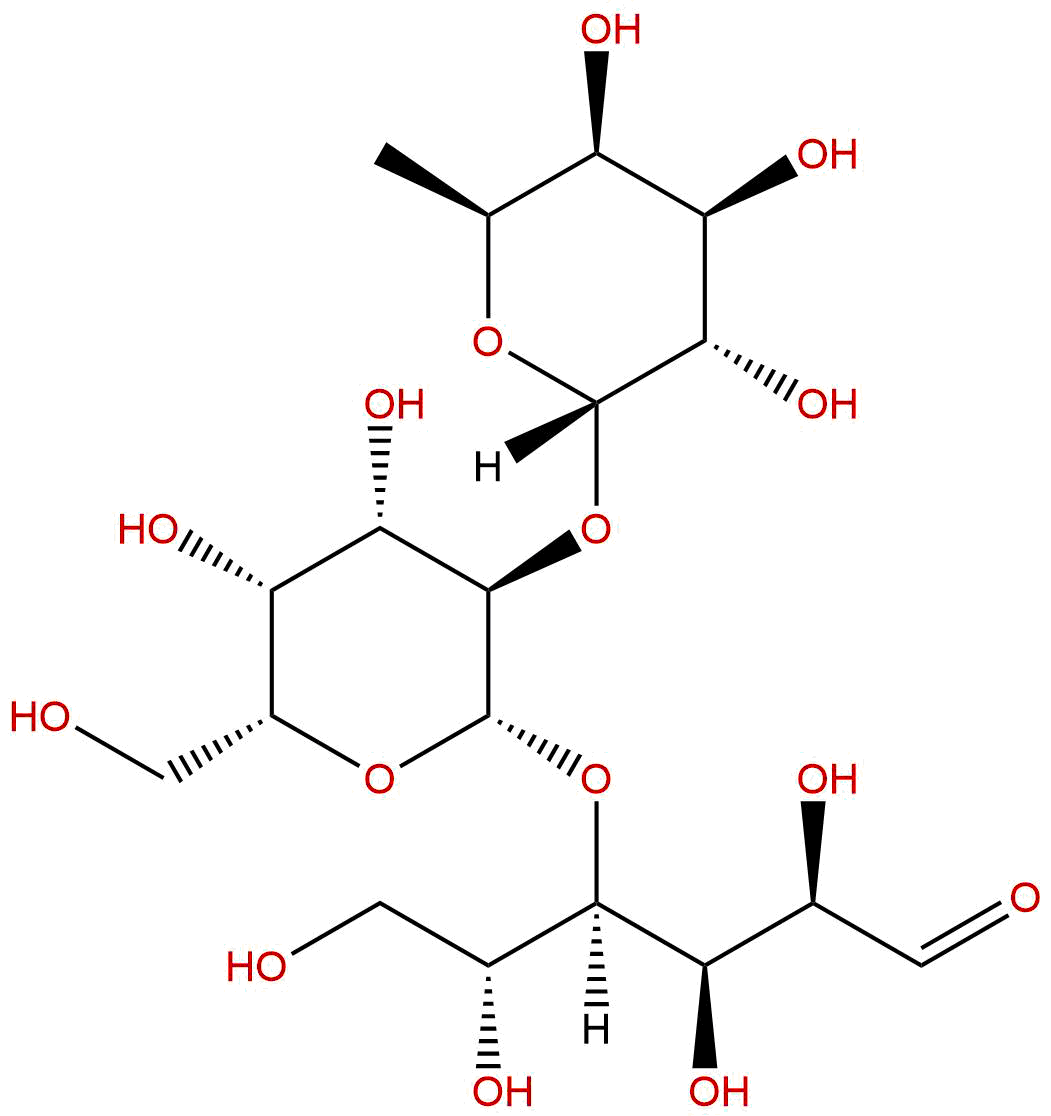


Product name: 2'-Fucosyllactose
Synonym name: 2'FL;2'-FL HMOs;2'-O-Fucosyllactose
Catalogue No.: BP5160
Cas No.: 41263-94-9
Formula: C18H32O15
Mol Weight: 488.439
Botanical Source:
Type of Compound:
Purity: 95%~99%
Analysis Method: HPLC-DAD or/and HPLC-ELSD
Identification Method: Mass, NMR
Packing: Brown vial or HDPE plastic bottle
Storage: Store in a well closed container, protected from air and light. Put into refrigerate or freeze for long term storage.
Whenever possible, you should prepare and use solutions on the same day. However, if you need to make up stock solutions in advance, we recommend that you store the solution as aliquots in tightly sealed vials at -20℃. Generally, these will be useable for up to two weeks.
The product could be supplied from milligrams to grams
Inquire for bulk scale.
For Reference Standard and R&D, Not for Human Use Directly.
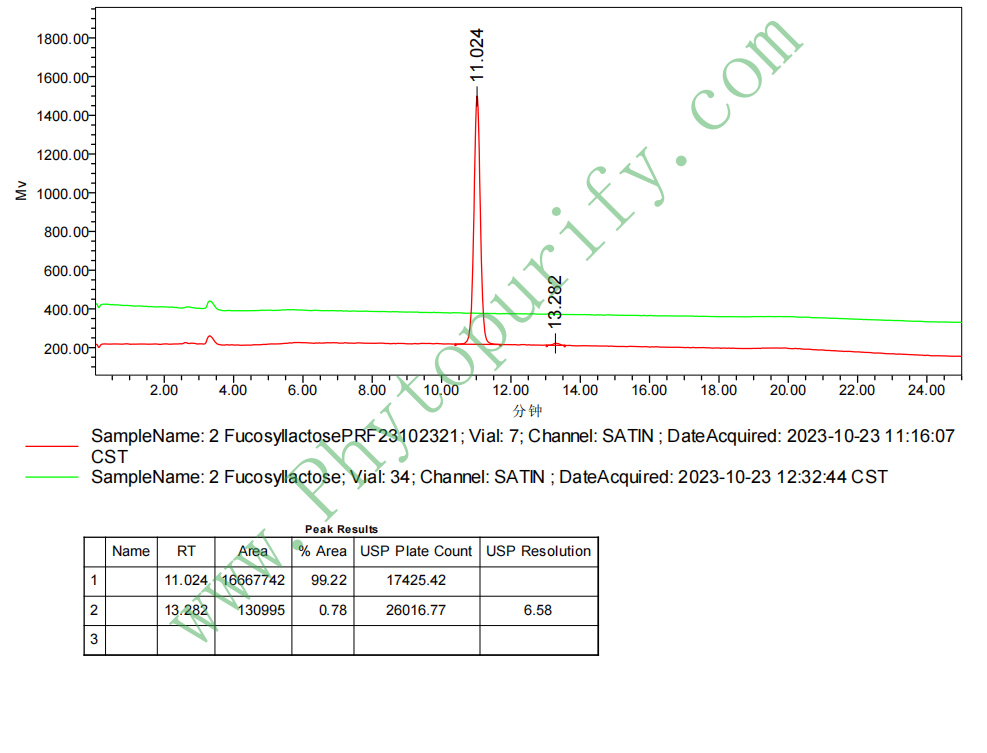
HPLC of 2'-Fucosyllactose
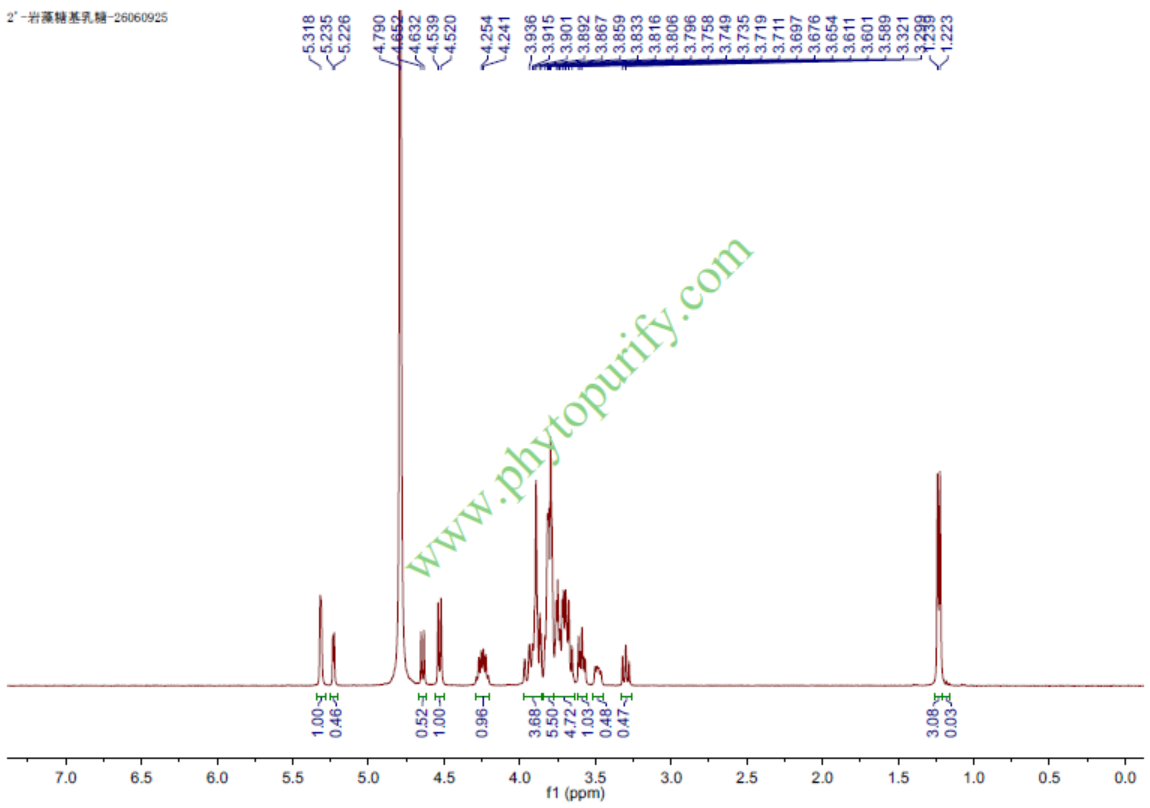
HNMR of 2'-Fucosyllactose
Storage conditions:Short-term storage at 2~8℃, long-term storage at -20 ~ -80℃
2 '- Fucosyllactose (2' - FL) is a naturally occurring oligosaccharide and one of the most abundant components in the Human Milk Oligosaccharides (HMOs) family. Since its first identification at the end of the 20th century, 2 '- FL has gradually become a research hotspot in the fields of natural product pharmacology and nutritional science due to its unique biological functions and wide application potential. 2 '- FL is mainly present in breast milk, especially abundant in the breast milk of premature and full-term infants, indicating its important role in neonatal immune regulation, intestinal microbiota balance, and neural development. With the advancement of biosynthetic technology, the industrial production of 2 '- FL has gradually been realized, promoting its application in the development of infant formula, functional foods, and drugs.
This article aims to systematically review the chemical structure and physicochemical properties, natural sources and extraction methods, pharmacological activity and mechanism of action, pharmacological evaluation, pharmacokinetic characteristics, and clinical application prospects of 2 '- fucosyllactose. It is expected to provide comprehensive reference materials for researchers in related fields and promote in-depth research and application of 2' - FL in natural product pharmacology and clinical translation.
The molecular formula of 2 '- fucosyl lactose is C24H42O21, with a molecular weight of 488.4390 Da. Its structure consists of a lactose molecule (galactose glucose disaccharide) connected to a fucose residue through an alpha-1,2 glycosidic bond. Specifically, fucoidan is connected to the 2 'hydroxyl group of the galactose unit of lactose through an alpha-1,2 bond, forming a unique trisaccharide structure.
In terms of physical and chemical properties, 2 '- FL exhibits a high degree of hydrophilicity with a LogP value of -2.8992, indicating its extremely low hydrophobicity and high solubility in water (with a water solubility of approximately 191.8925 mg/mL), which is closely related to its multi hydroxyl structure. Its topological polar surface area (TPSA) is as high as 256.29 Å ², reflecting its strong polarity and hydrogen bond donor/acceptor ability. Due to its large molecular weight and strong polarity, the blood-brain barrier permeability of 2 '- FL is low, which limits its direct action in the central nervous system. Pharmacological safety evaluation shows that 2 '- FL does not have hERG channel inhibitory activity, and the Ames mutagenicity test result is 0, indicating that its genetic toxicity risk is extremely low and has a good safety basis.
Although 2 '- FL mainly exists as a human milk oligosaccharide in breast milk, it is not directly derived from plants. Traditionally, 2 '- FL is not extracted from plants, but obtained through biosynthetic techniques. Early research relied on isolation and purification from breast milk, but due to limited content and high cost, it was difficult to meet industrial demand.
Modern production mainly relies on microbial fermentation technology, especially the metabolic engineering modification of genetically engineered Escherichia coli and yeast. By introducing genes related to fucose synthesis (such as GDP fucose synthase, fucose transferase, etc.), efficient biosynthesis of 2 '- FL can be achieved. The fermentation product undergoes purification steps such as membrane filtration and chromatographic separation to obtain high-purity 2 '- FL product.
In addition, chemical synthesis methods have also been reported, but they have not been widely applied due to their complex steps, low yield, and high cost. Future optimization strategies based on synthetic biology are expected to further improve the production efficiency and economy of 2 '- FL.
2 '- fucosyl lactose, as a representative component of human milk oligosaccharides, exhibits various biological activities, covering fields such as immune regulation, anti infection, intestinal health maintenance, and neural development promotion.
Numerous in vitro and animal experiments have shown that 2 '- FL can regulate immune system function. It enhances host anti-inflammatory response and reduces the risk of excessive immune activation by promoting the proliferation of regulatory T cells (Tregs), regulating the activity of macrophages and dendritic cells. In addition, 2 '- FL can induce the expression of anti-inflammatory cytokines (such as IL-10), inhibit the release of pro-inflammatory cytokines (such as TNF - α, IL-6), and regulate immune homeostasis.
2 '- FL has significant resistance to pathogenic microorganisms. Its structure simulates the sugar chains on the surface of host cells and can serve as a competitive binding agent for pathogens (such as rotavirus, Escherichia coli, Streptococcus pneumoniae, etc.), blocking pathogen adhesion and invasion, thereby reducing the risk of infection. Research has shown that 2 '- FL has inhibitory effects on respiratory and intestinal pathogens, demonstrating broad-spectrum anti infective potential.
2 '- FL, as a prebiotic, promotes the growth of beneficial bacteria such as bifidobacteria, improves the structure of intestinal microbiota, and enhances intestinal barrier function. It regulates the intestinal environment, reduces the colonization of harmful bacteria, lowers intestinal inflammatory reactions, and maintains intestinal homeostasis. In animal models, 2 '- FL supplementation significantly improved intestinal permeability and alleviated symptoms of inflammatory bowel disease.
Although 2 '- FL has low blood-brain barrier permeability, studies have found that it affects neural development by regulating the gut brain axis. 2 '- FL can promote the expression of nerve growth factors, enhance neuronal synaptic plasticity, and improve cognitive function and behavioral performance. Clinical studies on supplementing 2 '- FL in infants and young children have also shown positive effects on cognitive development.
The multiple biological effects of 2 '- FL stem from its interactions with various molecular targets, mainly including the following aspects:
The fucose residues in the 2 '- FL structure mimic the host cell surface fucose chains and can bind to pathogen surface specific binding proteins (such as rotavirus VP8 * protein and Streptococcus pneumoniae surface adhesion protein), blocking pathogen adhesion and preventing infection.
2 '- FL regulates the function of dendritic cells and macrophages by binding to C-type lectin receptors (such as DC-SIGN) on the surface of immune cells, promoting the regulation of anti-inflammatory signaling pathways (such as NF - κ B, MAPK), and inducing immune tolerance.
2 '- FL promotes the expression of tight junction proteins (such as Occludin and Claudin-1) in intestinal epithelial cells, enhancing intestinal barrier integrity. It reduces the release of inflammatory mediators and alleviates intestinal inflammation by regulating Toll like receptor (TLR) signaling.
2 '- FL indirectly affects central nervous system function, promotes neural development, and enhances cognitive function by regulating the gut microbiota and its metabolites, such as short chain fatty acids.
The pharmacological evaluation of 2 '- FL shows that it has good safety and biocompatibility. Its high molecular weight and strong polarity result in limited oral absorption, and its low blood-brain barrier permeability limits its systemic distribution and direct action on the central nervous system.
Pharmacokinetic studies have shown that oral administration of 2 '- FL mainly exerts its effects in the intestine, with some being utilized by gut microbiota and a small amount being absorbed into the bloodstream through the intestine before being excreted through the kidneys. Its half-life is short and there is no significant risk of accumulation. 2 '- FL does not inhibit hERG ion channels and has no mutagenicity, demonstrating a good safety basis.
At present, 2 '- FL is mainly used as a dietary supplement and functional food ingredient, and there is no clear systematic drug development case. In the future, through structural modification or delivery system optimization, it is expected to expand its pharmacokinetic performance and enhance its clinical application potential.
2 '- fucosylated lactose, as a representative of human milk oligosaccharides, has received widespread attention in the field of infant nutrition. As an additive in formula milk powder, it can simulate the naturally occurring bioactive ingredients in breast milk, promote immune development, intestinal health, and cognitive function improvement in infants and young children, and has significant clinical application value.
In addition, the potential of 2 '- FL in the field of adult health is gradually emerging. Research has shown that 2 '- FL may help prevent respiratory infections, improve intestinal inflammatory diseases such as inflammatory bowel disease and irritable bowel syndrome, and regulate immune function. It has good safety and is suitable for long-term supplementation.
In the future, precision drug development based on 2 '- FL will focus on the following directions:
With the deepening of biotechnology and clinical research, 2 '- FL is expected to become an important star in the field of natural product pharmacology, promoting the transformation of natural products into modern drugs.
2 '- fucosyl lactose, as a structurally unique and functionally diverse human milk oligosaccharide, exhibits rich pharmacological activity and good safety. Its mechanism of action in immune regulation, anti infection, intestinal health, and neural development has gradually become clear, becoming a model for natural product pharmacology research. Although it is currently mainly used in the field of nutritional supplementation, with the maturity of production processes and the deepening of pharmacological research, the potential of 2 '- FL in disease prevention and treatment is becoming increasingly prominent.
Future research should further focus on the precise identification of its molecular targets, optimization and improvement of pharmacokinetics, and systematic evaluation of clinical efficacy, promoting the transformation of 2 '- FL from functional food ingredients to innovative drugs. Through interdisciplinary collaboration, 2 '- FL is expected to play a greater role in natural product pharmacology and clinical medicine, benefiting human health.
