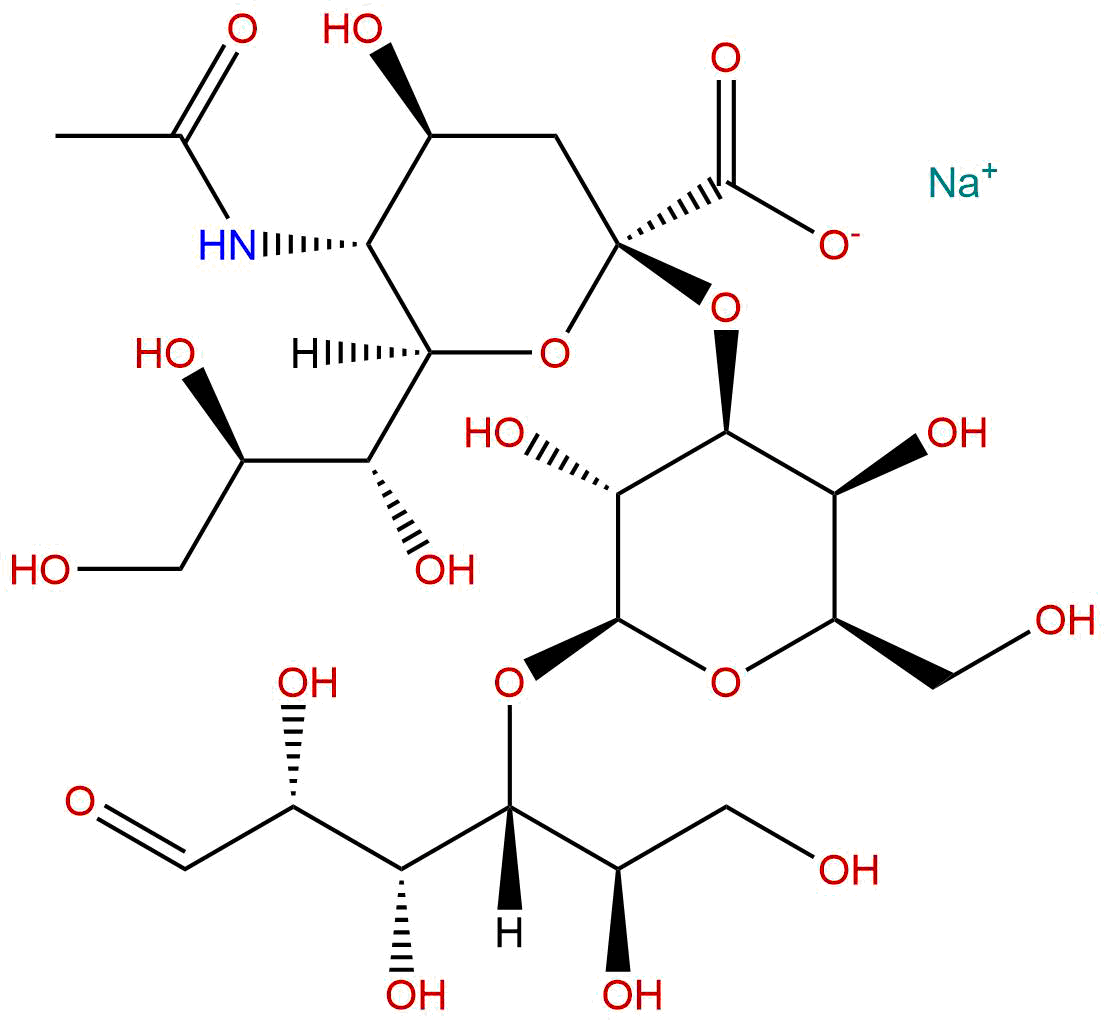


Product name: 3'-Sialyllactose Sodium Salt
Synonym name: 3'SL
Catalogue No.: BP5162
Cas No.: 128596-80-5
Formula: C23H38NNaO19
Mol Weight: 655.535
Botanical Source:
Type of Compound:
Purity: 95%~99%
Analysis Method: HPLC-DAD or/and HPLC-ELSD
Identification Method: Mass, NMR
Packing: Brown vial or HDPE plastic bottle
Storage: Store in a well closed container, protected from air and light. Put into refrigerate or freeze for long term storage.
Whenever possible, you should prepare and use solutions on the same day. However, if you need to make up stock solutions in advance, we recommend that you store the solution as aliquots in tightly sealed vials at -20℃. Generally, these will be useable for up to two weeks.
The product could be supplied from milligrams to grams
Inquire for bulk scale.
For Reference Standard and R&D, Not for Human Use Directly.
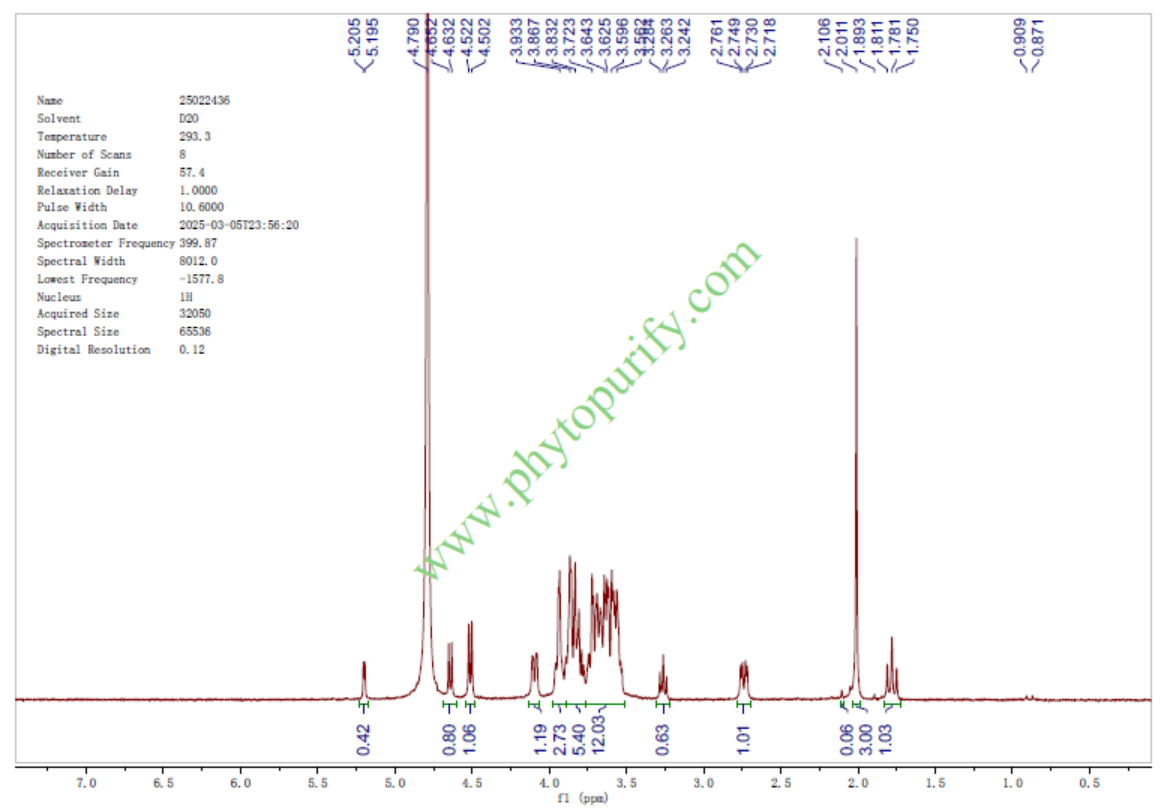
HNMR of 3'-Sialyllactose Sodium Salt
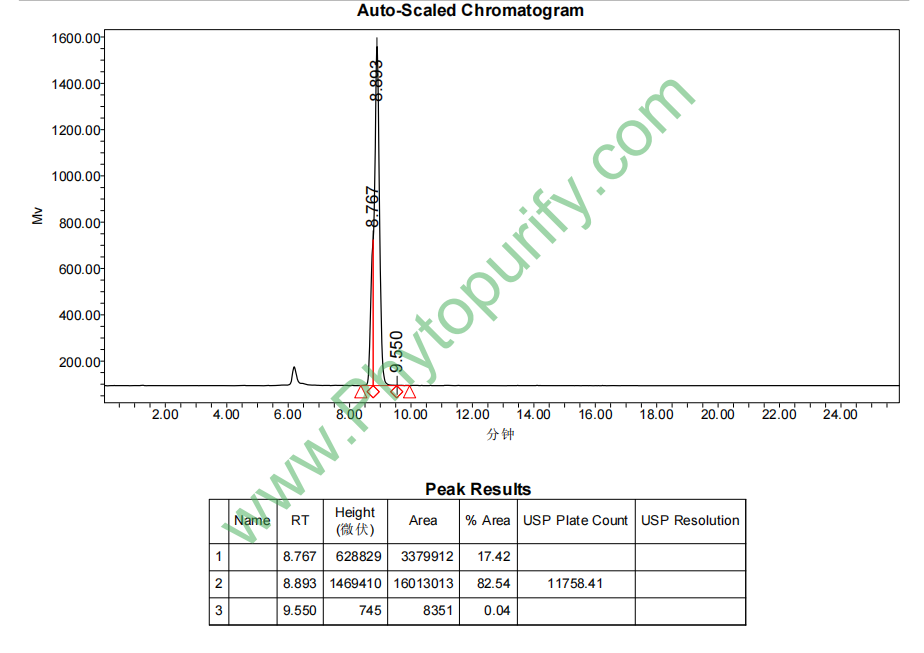
HPLC of 3'-Sialyllactose Sodium Salt
Storage conditions:Short-term storage at 2~8℃, long-term storage at -20 ~ -80℃
342.9200
-3.7713
-5.1273
131.7079
.4055
.0592
Low
29.7250
5.7570
Yes
No
No
No
No
No
0.0
Yes
Yes
Yes
Yes
3 '- Siallylactose Sodium Salt (CAS number: 128596-80-5) is a naturally occurring sialic acid derived oligosaccharide and an important member of Human Milk Oligosaccharides (HMOs). As a rich functional component in breast milk, 3 '- sialyllactulose plays a key role in neonatal immune regulation, intestinal microbiota balance, and neural development. In recent years, with the rapid development of natural product pharmacology and functional food fields, 3 '- sialic acid lactose sodium salt has gradually become a hot research and application topic due to its unique biological activity and good safety.
The purpose of this review is to systematically summarize the chemical structure and physicochemical properties, sources and extraction methods, pharmacological activity and mechanism of action, pharmacological evaluation and pharmacokinetic characteristics of 3 '- sialic acid lactose sodium salt, and explore its potential application prospects in clinical and functional food development, providing theoretical basis and reference for subsequent basic and clinical research.
3 '- Sodium sialyllactulose is an oligosaccharide derivative formed by sialic acid (N-acetylneuraminic acid, Neu5Ac) linked to lactose (Gal β 1-4Glc) via an α 2-3 glycosidic bond. Its molecular formula is C26H43NO22Na, with a molecular weight of 633.5530. Structurally, the carboxyl group of sialic acid exists in the form of sodium salt, enhancing its water solubility and stability.
In terms of physical and chemical properties, 3 '- sialic acid lactose sodium salt exhibits extremely high polarity, with a LogP value of -3.7713, indicating its strong hydrophilicity. Its topological polar surface area (TPSA) is 342.9200 Å ², further reflecting the abundant polar groups on the molecular surface, which facilitate multi-point binding with biomolecules such as proteins and receptors. The water solubility reaches 131.7079 mg/mL, making it suitable for the development of formulations in aqueous systems. The low permeability of the blood-brain barrier suggests limited direct action in the central nervous system, but this also reduces the potential risk of central toxicity. The negative result of hERG channel inhibition experiment indicates a low risk of cardiac toxicity. The Ames test result is 0.0, indicating no mutagenicity and high safety.
In summary, the physicochemical properties of 3 '- sialyllactulose sodium salt provide a solid foundation for its biological activity and drug development.
3 '- Sodium sialyllactulose is mainly present in the milk of mammals, especially in human milk where it is abundant. Its natural sources mainly include:
breast milk As an important component of human milk oligosaccharides, 3 '- sialyllactulose has a high content in colostrum and mature milk, and is one of the representatives of functional oligosaccharides in human milk.
Animal milk Mammalian milk such as cow's milk and goat's milk also contain small amounts of 3 '- sialic acid lactose, but the content is much lower than that of human milk.
Microbial Fermentation In recent years, the technology of synthesizing 3 '- sialic acid lactose by genetically engineered microorganisms has gradually matured, and fermentation production through genetically modified Escherichia coli or yeast has become an important way for industrial preparation.
chemical synthesis Chemical or enzymatic synthesis methods based on sialic acid and lactose have also been developed, but the cost is high and the scale application is limited.
The extraction and purification process mainly includes:
Milk pretreatment Remove fat and protein by centrifugation to obtain whey.
Membrane filtration technology Separation of oligosaccharides using ultrafiltration and nanofiltration.
Chromatographic purification High purity 3 '- sialic lactose was obtained by multi-step purification using ion exchange chromatography and gel filtration chromatography.
Drying treatment: spray drying or freeze drying to prepare stable powder products.
Modern extraction processes emphasize efficiency, greenness, and low cost, and microbial fermentation combined with membrane separation technology has become the mainstream trend.
3 '- Sodium sialyllactulose, as a functional oligosaccharide, has various pharmacological activities, covering fields such as immune regulation, anti-inflammatory, anti infection, neuroprotection, and intestinal health.
Multiple in vitro and animal experiments have shown that 3 '- sialic acid lactose can regulate immune cell function, promote macrophage phagocytic activity, enhance natural killer cell (NK) activity, regulate T cell subpopulation balance, promote the secretion of anti-inflammatory cytokines (such as IL-10), inhibit the expression of pro-inflammatory cytokines (such as TNF - α, IL-6), thereby achieving the maintenance of immune homeostasis.
3 '- sialic acid lactose competitively blocks the binding sites of pathogenic microorganisms (such as influenza virus and intestinal pathogens) by simulating the structure of sialic acid receptors on the cell surface, reducing pathogen adhesion and invasion. In vitro studies have shown that it has inhibitory effects on influenza virus H1N1 and rotavirus, reducing infection rates.
In the inflammatory model, 3 '- sodium sialyllactulose can significantly reduce the release of inflammatory mediators and alleviate tissue damage. Its anti-inflammatory effect is closely related to regulating the NF - κ B signaling pathway and inhibiting the expression of inflammation related enzymes (such as COX-2).
3 '- sialyllactulose, as a key factor in neural development, contributes to the differentiation of brain neurons and synaptic formation. Animal experiments have shown that its supplementation can improve cognitive dysfunction, promote nerve regeneration, and has potential neuroprotective effects.
3 '- Salivary lactulose can serve as a prebiotic, selectively promoting the growth of beneficial bacteria such as bifidobacteria and lactobacilli, and regulating the balance of intestinal microbiota. Its metabolites, short chain fatty acids, help maintain intestinal barrier function and alleviate intestinal inflammation.
The biological activity of 3 '- sialic acid lactose sodium salt depends on its structural specificity and interactions with multiple molecular targets, mainly involving the following mechanisms:
3 '- Salivary lactulose has a structure similar to sialic acid residues on the cell surface, which can bind to adhesion proteins such as hemagglutinin on the surface of pathogens, block the binding of pathogens to host cells, and prevent the spread of infection.
3 '- sialic acid lactose regulates immune cell activity and inhibits excessive inflammatory response by binding to sialic acid binding proteins (such as Siglecs, sialic acid binding immunoglobulin like lectins) on the surface of immune cells.
3 '- Salivary lactulose can regulate multiple cellular signaling pathways, including NF - κ B, MAPK, and JAK/STAT, inhibit the expression of pro-inflammatory factors, promote the production of anti-inflammatory factors, and maintain immune homeostasis.
By promoting surface sugar chain modification and nerve growth factor (NGF) signaling, 3 '- sialic acid promotes neuronal differentiation, synapse formation, and neural network remodeling.
As a prebiotic, 3 '- sialic acid lactose is specifically utilized by gut probiotics, promoting the proliferation of beneficial bacteria, inhibiting the growth of pathogens, and improving the gut environment.
3 '- Sodium sialyllactulose has good pharmacological parameters:
molecular weight 633.5530, belonging to medium molecular weight oligosaccharides, suitable for oral absorption.
LogP-3.7713, extremely hydrophilic, limits its lipophilic absorption, but suitable for the development of water-soluble formulations.
TPSA 342.9200, with a relatively large polar surface area, affects membrane permeability and leads to low blood-brain barrier permeability.
Water solubility:131.7079 mg/mL, High water solubility is beneficial for the dissolution and absorption of oral preparations.
Blood-brain barrier permeability Low, indicating limited direct effects on the central nervous system, but also reducing the risk of central toxicity.
Cardiac toxicity risk HERG inhibition negative, with high safety.
Genotoxicity Ames test negative, indicating no risk of mutagenicity.
In terms of pharmacokinetics, 3 '- sialic acid lactose sodium salt is mainly utilized by probiotics in the intestine after oral administration, and partially absorbed by intestinal epithelial cells, with low systemic bioavailability. Its metabolites are mainly short chain fatty acids and other low molecular weight metabolites. The kidneys are the main excretion pathway with a short half-life. Due to its stable molecular structure and slow degradation rate in vivo, it is suitable for long-term supplementation.
In summary, 3 '- sodium sialyllactulose has good safety and potential for development as a functional food, nutritional supplement, and adjuvant therapy drug.
As an important representative of human milk oligosaccharides, 3 '- sodium sialyllactulose has broad clinical application potential
Breast milk is rich in 3 '- sialyllactulose, which directly participates in the development of the newborn's immune and nervous systems. As an additive in infant formula milk powder, it can simulate the function of breast milk, promote healthy growth of infants, and reduce the risk of infection and allergies.
For immunocompromised and susceptible populations, 3 '- sialic acid lactose sodium salt can be used as an immunomodulatory agent and anti infective adjuvant to reduce infection rates and alleviate inflammatory reactions.
Given its neuroprotective and cognitive function promoting effects, 3 '- sodium sialyllactulose has potential application value in areas such as cognitive impairment and neurodegenerative diseases (such as Alzheimer's disease), and more clinical validation is needed in the future.
By regulating the gut microbiota, 3 '- sialic acid lactose sodium salt is expected to be used as an adjuvant therapy for intestinal diseases such as inflammatory bowel disease and irritable bowel syndrome, improving intestinal barrier function.
With the increasing demand for natural and healthy products from consumers, 3 '- sodium sialyllactulose, as a natural functional ingredient, has broad market prospects for developing high-end nutritional supplements, functional beverages, and health products.
Future research should focus on systematic evaluation of its clinical efficacy, dose optimization, innovative administration routes, and long-term safety monitoring, promoting its transition from laboratory to clinical application.
As a natural product with unique structure and diverse functions, 3 '- sialic acid lactose sodium salt has demonstrated broad pharmacological research value and clinical application potential due to its excellent physicochemical properties and rich biological activity. Its mechanism of action in immune regulation, anti infection, neuroprotection, and intestinal health is becoming increasingly clear, and drug evaluation shows good safety and appropriate pharmacokinetic characteristics.
With the advancement of extraction and synthesis technologies, the large-scale production and application of 3 '- sialic acid lactose sodium salt will become more feasible. In the future, through interdisciplinary research and clinical trials, 3 '- sodium sialyllactulose is expected to become a new generation of natural functional drugs and nutritional supplements, contributing new strength to human health.
