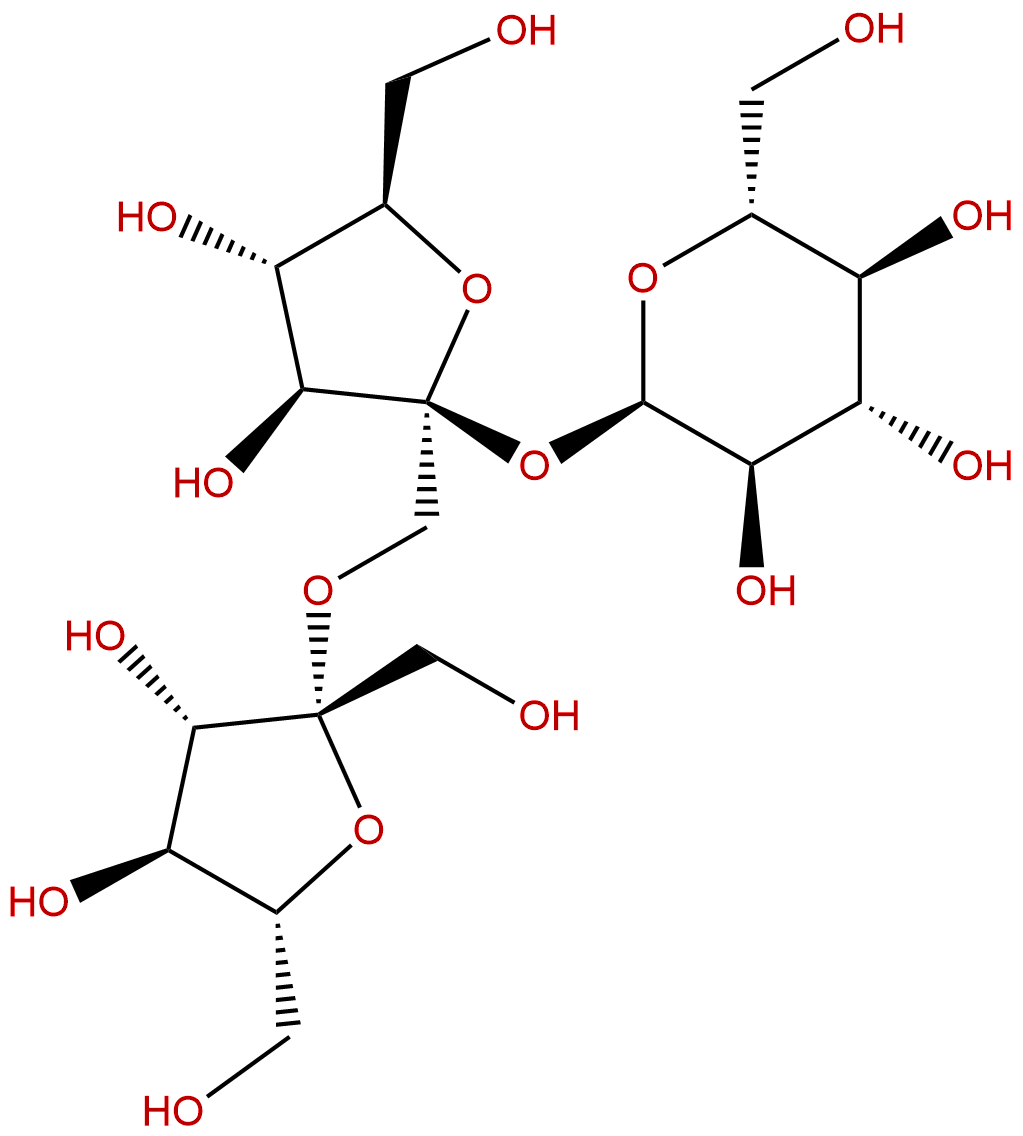


Product name: 1-Kestose
Synonym name: 1-kestotriose
Catalogue No.: BP3714
Cas No.: 470-69-9
Formula: C18H32O16
Mol Weight: 504.438
Botanical Source:
Physical Description:
Type of Compound:
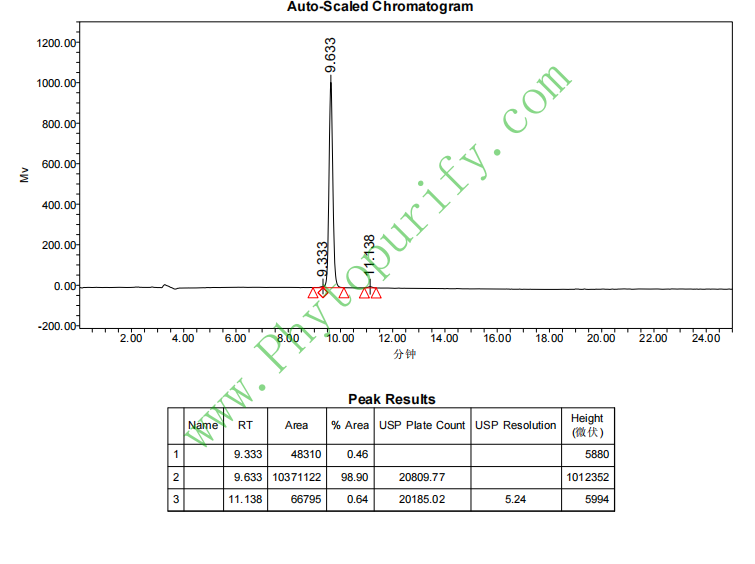
Purity: 95%~99%
Analysis Method: HPLC-DAD or/and HPLC-ELSD
Identification Method: Mass, NMR
Packing: Brown vial or HDPE plastic bottle
The product could be supplied from milligrams to grams. Inquire for bulk scale.
We provide solution to improve the water-solubility of compounds, thereby facilitating the variety of activity tests and clinic uses.
For Reference Standard and R&D, Not for Human Use Directly.
HPLC of 1-Kestose
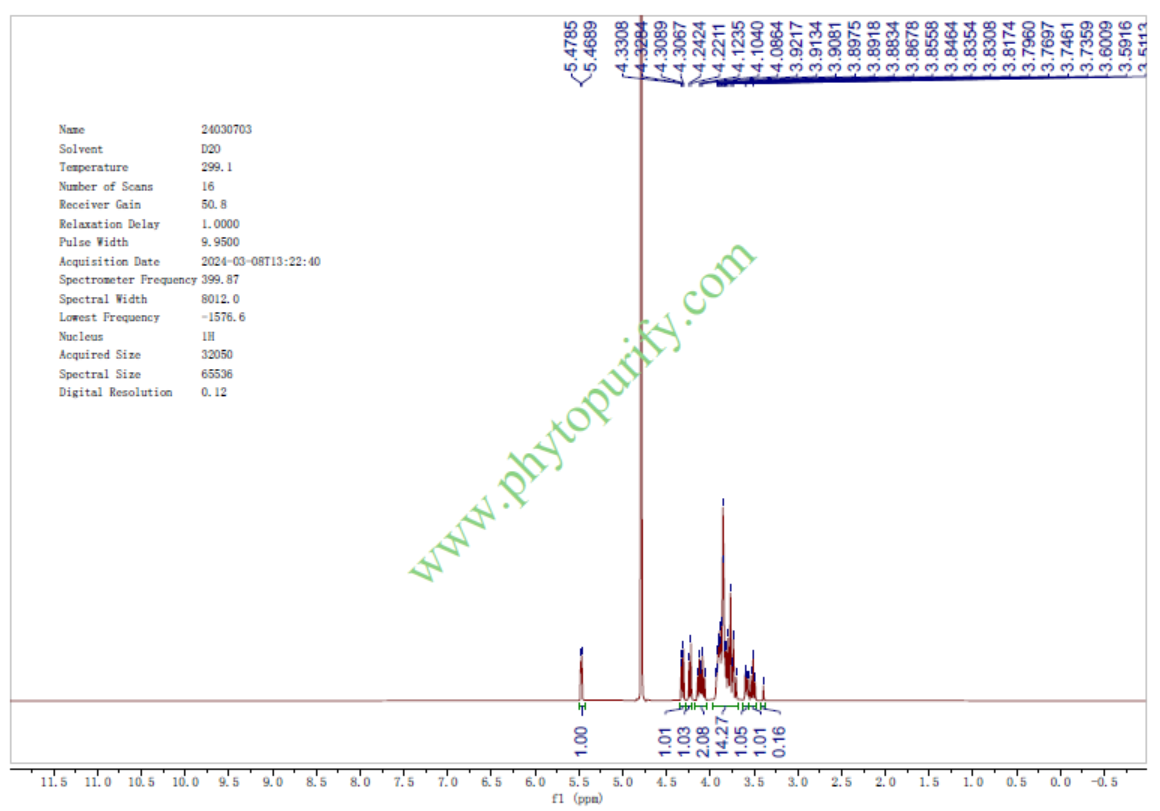
HNMR of 1-Kestose
Storage conditions:Short-term storage at 2~8℃, long-term storage at -20 ~ -80℃
268.6800
-3.2081
-3.2070
79.3076
.4023
.1940
Low
15.3032
5.2122
Yes
No
No
No
Yes
No
0.0
Yes
Yes
Yes
Yes
In the contemporary era of flourishing research on the human microbiome, the complex interaction between gut microbiota and host health has become one of the most cutting-edge topics of concern in the biomedical field. The imbalance of gut microbiota has been confirmed to be closely related to metabolic diseases, inflammatory bowel diseases, allergic diseases, and even neurodegenerative diseases, making dietary intervention a new strategy for disease prevention and treatment by regulating gut microbiota structure. In this context, fructooligosaccharides (FOS) have been widely studied as a recognized prebiotic ingredient due to their ability to selectively stimulate the proliferation of beneficial gut microbiota. Among them, 1-Kestose, as the simplest member of the oligofructose family, has gradually emerged from the traditional concept of prebiotics in recent years due to its unique biological activity and clear molecular target mechanism, becoming a new hotspot in natural product pharmacology research.
Sucrose trisaccharide, chemically known as O - β - D-fructofuranyl - (2 → 1) - β - D-fructofuranyl - α - D-glucopyranose, is a trisaccharide composed of one glucose molecule and two fructose molecules connected by a β (2 → 1) glycosidic bond. As the smallest functional unit of oligofructose, 1-Kestose not only retains the typical prebiotic properties of FOS substances, but also exhibits high selectivity and long-lasting effects on specific intestinal symbiotic bacteria - Faecalibacterium prausnitzii and Bifidobacterium. This characteristic gives it unique pharmacological advantages in regulating intestinal immunity, maintaining intestinal barrier integrity, and anti-inflammatory regulation.
From the perspective of natural product chemistry, 1-Kestose is widely present in various edible plants, especially in the tubers and rhizomes of Asteraceae plants such as chicory, burdock, onion, garlic, etc. Its safety has been validated in long-term traditional dietary practices, and modern toxicological evaluations have confirmed that it has no genetic toxicity, no cardiotoxicity risk, and extremely low blood-brain barrier permeability. These characteristics lay a solid foundation for its development as a functional food ingredient or drug lead compound.
This article will systematically review the research progress of 1-Kestose from multiple dimensions such as chemical structure, plant origin, pharmacological activity, molecular mechanism, drug evaluation, and clinical application prospects, aiming to provide comprehensive academic references for the in-depth development and transformation of this natural product.
The chemical formula of 1-Kestose is C18H32O16, with a molecular weight of 504.4380 g/mol. Its structural core consists of three monosaccharide units: a terminal α - D-glucopyranosyl group (Glc) and two β - D-fructofuranyl groups (Fru), which are connected by β (2 → 1) glycosidic bonds. The specific sequence is Glc α (1 → 2) β Fru β (1 → 2) β Fru. This structural feature distinguishes it from other oligofructose isomers, such as 6-Kestose (where the fructose group is connected by a β (2 → 6) bond) and Neokestose (where the fructose group is connected to the 6th hydroxyl group of glucose).
From a conformational perspective, the fructooligosaccharides ring in 1-Kestose adopts a five membered ring conformation, while the pyranose glucose ring adopts a six membered ring chair conformation. The presence of intramolecular hydrogen bonding networks allows 1-Kestose to exhibit certain conformational flexibility in aqueous solutions, but the configuration of β (2 → 1) glycosidic bonds determines its resistance to hydrolysis by mammalian digestive enzymes, which is the structural basis for its function as a prebiotic.
The physicochemical properties of 1-Kestose show typical hydrophilic small molecule characteristics. Its lipid water partition coefficient (LogP) is -3.2081, indicating that the compound has strong hydrophilicity and is almost insoluble in the lipid environment. The topologically polar surface area (TPSA) is as high as 268.6800 Å ², much higher than the typical threshold for oral drugs (140 Å ²), which is closely related to the presence of a large number of hydroxyl groups in its molecules. The water solubility parameter is 79.3076 mg/mL, which belongs to highly water-soluble compounds. This characteristic allows it to quickly dissolve in the gastrointestinal environment and effectively reach the colon.
In terms of thermal stability, 1-Kestose may undergo glycosidic bond hydrolysis under acidic conditions (pH 2-4) and high temperatures (>100 ° C), but is relatively stable under neutral to weakly alkaline conditions. This property suggests that pH and temperature control need to be considered in food processing and oral formulation development.
The structural identification of 1-Kestose typically relies on nuclear magnetic resonance spectroscopy (NMR) and mass spectrometry (MS) techniques. In the H-NMR spectrum, the proton signal at the glucose end group appears at δ 5.40-5.45 ppm (J=3.8 Hz, alpha configuration), while the carbon signals at the fructose end group appear in the δ 104.0-105.0 ppm and δ 103.0-104.0 ppm regions in the C-NMR spectrum. In mass spectrometry analysis, the [M+Na] ⁺ ion peak (m/z 527.2) and the [M-H] ⁻ ion peak (m/z 503.2) are commonly used identification criteria. In addition, High Performance Anion Exchange Chromatography Pulse Amperometry Detection (HPAEC-PAD) is a standard method for quantitative analysis of 1-Kestose content.
1-Kestose is widely distributed in higher plants in nature, especially in the Asteraceae and Liliaceae families. Its biosynthetic pathway involves sucrose: Sucrose 1-fructosyltransferase (1-SST) catalyzes the fructosyl transfer reaction between sucrose molecules, followed by further extension of the fructose chain by fructosyltransferase (FFT). Therefore, 1-Kestose is often accumulated as an intermediate volume in the biosynthesis of fructooligosaccharides in plant storage organs.
The main sources of plants include:
- Cichorium intybus The content of fructooligosaccharides in its rhizomes can reach 15-20% of dry weight, with 1-Kestose accounting for 5-10% of the total oligofructose.
- Burdock (Arctium lappa)The rhizome is rich in inulin type fructooligosaccharides, with 1-Kestose being one of its main oligosaccharides.
- Onion (Allium cepa)The content of 1-Kestose in bulbs is about 0.5-1.5% of fresh weight, and it is an important source of intake in daily diet.
- Garlic (Allium sativum)Containing various oligofructose, 1-Kestose is one of its main components.
- Asparagus officinalis The tender stem contains a certain amount of 1-Kestose.
- Banana (Musa acuminata)The content of 1-Kestose changes significantly during the fruit ripening process, with higher levels in immature bananas.
In addition, certain microorganisms such as Aspergillus niger and yeast strains can also synthesize 1-Kestose through fructosyltransferase catalysis, providing a biotechnological pathway for industrial production.
The extraction of 1-Kestose usually follows the technical route of "hot water extraction ethanol precipitation chromatographic separation". The specific process includes:
(1) Raw material pretreatment Fresh or dried plant materials are crushed and extracted with hot water (60-80 ° C) for 1-2 hours, with a typical solid-liquid ratio of 1:10 to 1:20. The extraction solution is centrifuged or filtered to remove residue.
(2) Decolorization and deproteinization Activated carbon adsorption removes pigments, while trichloroacetic acid or ammonium sulfate precipitation removes protein impurities.
(3) Alcohol precipitation classification Add 2-4 times the volume of ethanol to the concentrated extract, let it stand at low temperature to precipitate high molecular weight fructooligosaccharides, and enrich the oligofructose component in the supernatant.
(4) Chromatographic purification: Use activated carbon diatomite column chromatography, ion exchange chromatography or gel filtration chromatography for further separation. Efficient preparative liquid chromatography (HPLC) using amino bonded silica gel columns or sugar analysis columns, with acetonitrile water as the mobile phase, can obtain 1-Kestose with a purity of>95%.
(5) Enzymatic synthesis Using fructosyltransferase (such as β - fructosyltransferase from Aspergillus niger) as a substrate for enzymatic synthesis with sucrose under mild reaction conditions (pH 5.5-6.0, 50-55 ° C), the 1-Kestose content in the product can reach 30-50%, and then purified by chromatography.
In recent years, membrane separation technologies (nanofiltration, ultrafiltration) and simulated moving bed chromatography (SMB) have been applied to the large-scale production of 1-Kestose, significantly improving separation efficiency and product purity.
1-Kestose, as the smallest oligofructose unit, exhibits unique structural dependence in its prebiotic effects. In vitro fermentation experiments have shown that 1-Kestose can be efficiently utilized by Bifidobacterium and Faecalibacterium prausnitzii, but its growth promoting effect on potential pathogenic bacteria such as Escherichia coli and Clostridium perfringens is extremely limited. This selectivity arises from the fact that the β (2 → 1) glycosidic bond structure of 1-Kestose precisely matches the substrate specificity of β - fructosidase expressed by Bifidobacterium and Clostridium perfringens.
It is worth noting that the growth promoting effect of 1-Kestose on Clostridium perfringens is particularly prominent. Clostridium pratense is one of the butyric acid producing bacteria with the highest abundance in the intestinal tract of healthy adults, and its decline is closely related to Crohn's disease, ulcerative colitis, type 2 diabetes and other diseases. Research has found that 1-Kestose can increase the in vitro growth of Clostridium perfringens by 3-5 times and promote its butyric acid production by 2-3 times at concentrations of 0.5-2.0% (w/v). This effect is significantly superior to long-chain inulin and other oligofructose mixtures, suggesting that 1-Kestose may exert intestinal protection by specifically regulating the metabolic pathway of Clostridium perfringens.
The anti-inflammatory activity of 1-Kestose has been validated in various experimental models. In a mouse colitis model induced by dextran sulfate sodium (DSS), oral administration of 1-Kestose (200 mg/kg/d) significantly reduced weight loss, colon shortening, and histopathological damage, while also lowering the expression levels of pro-inflammatory cytokines TNF - α, IL-6, and IL-1 β in colon tissue. Mechanism studies have shown that the anti-inflammatory effect of 1-Kestose is closely related to its promotion of the proliferation of Clostridium perfringens and the production of butyric acid. As a histone deacetylase (HDAC) inhibitor, butyric acid can inhibit the NF - κ B signaling pathway, thereby downregulating the inflammatory response.
In an allergic airway inflammation model, intervention with 1-Kestose can reduce the number of eosinophils and levels of IL-4, IL-5, and IL-13 in bronchoalveolar lavage fluid, while increasing the proportion of regulatory T cells (Tregs). This immunomodulatory effect is partially dependent on the production of short chain fatty acids (SCFAs) mediated by gut microbiota, particularly the mechanism by which butyric acid promotes Treg cell differentiation through GPR43 receptors.
The integrity of the intestinal barrier is crucial for maintaining intestinal homeostasis. 1-Kestose has been shown to enhance intestinal epithelial barrier function. In the Caco-2 cell monolayer model, 1-Kestose pretreatment can alleviate TNF - α - induced decrease in transepithelial electrical resistance (TEER) and increase in fluorescein sodium permeability. In vivo experiments have shown that 1-Kestose can upregulate the expression levels of tight junction proteins ZO-1, Occludin, and Claudin-1 in colon tissue, while promoting the secretion of mucin MUC2, thereby enhancing the physical and chemical barrier functions of the intestine.
The metabolic regulatory effect of 1-Kestose is mainly reflected in improving glucose and lipid metabolism. In a diet induced obese mouse model, supplementation with 1-Kestose (5% w/w feed) can reduce fasting blood glucose, improve insulin sensitivity, and reduce liver fat deposition. These effects are related to changes in the structure of the gut microbiota, particularly the increase in abundance of Bifidobacterium and Clostridium perfringens, as well as the resulting decrease in gut permeability and lipopolysaccharides (LPS) entering the bloodstream, thereby alleviating metabolic endotoxemia.
The biological function of 1-Kestose is mainly achieved through its use as a prebiotic substrate to regulate intestinal microbiota metabolism. The core mechanism can be summarized as the three-level signal transduction of "microbiota metabolite host":
(1) Selective microbiota proliferation 1-Kestose is utilized by beneficial bacteria such as Bifidobacterium and Clostridium perfringens, and hydrolyzed into fructose and glucose through β - fructosidase, entering the bacterial glycolysis and pentose phosphate pathways, promoting an increase in bacterial biomass.
(2) Short chain fatty acid production The main end products of microbial metabolism of 1-Kestose are acetic acid, propionic acid, and butyric acid. Among them, butyric acid is the main energy source for colonic epithelial cells and also serves as a signaling molecule to regulate host gene expression.
(3) Activation of host signaling pathway Butyric acid exerts regulatory effects through the following pathways:
- HDAC inhibition Butyric acid inhibits histone deacetylase activity, promotes Foxp3 gene expression, and induces Treg cell differentiation.
- GPR43/GPR41 activation Butyric acid and acetic acid act as ligands for G protein coupled receptors GPR43 (FFAR2) and GPR41 (FFAR3), activating downstream signaling pathways and regulating inflammatory responses and energy metabolism.
- Intestinal barrier enhancement Butyric acid promotes tight junction protein expression and enhances intestinal barrier function through the AMPK signaling pathway.
There is still controversy over whether 1-Kestose has a molecular target that directly acts on host cells, apart from the indirect mechanism mediated by the microbiota. Existing evidence suggests that 1-Kestose may directly regulate host cell function through the following pathways:
(1) TLR4/TLR2 signaling regulation 1-Kestose can competitively inhibit the binding of LPS to TLR4, thereby reducing LPS induced inflammatory response. Meanwhile, it may promote the repair and proliferation of intestinal epithelial cells through the TLR2 signaling pathway.
(2) Regulation of MUC2 expression 1-Kestose can directly stimulate intestinal goblet cells to secrete MUC2, which may be achieved by activating the EGFR signaling pathway or regulating the transcription factor KLF4.
(3) IL-22 induction 1-Kestose can promote the production of IL-22 by lymphocytes in the intestinal lamina propria. IL-22 enhances the expression of antimicrobial peptides and mucins in epithelial cells through the STAT3 signaling pathway, maintaining intestinal barrier function.
Based on existing research, the key molecular target network for the action of 1-Kestose includes:
- pattern recognition receptor:TLR4、TLR2
- Barrier functional protein:MUC2、OCLN(Occludin)、ZO-1(TJP1)、CLDN1(Claudin-1)
- cytokine:IL-22
- Metabolic receptors:GPR43(FFAR2)、GPR41(FFAR3)
- Microbial community markers BIFIDO (Bifidobacterium genus) Faecalibacterium prausnitzii
This multi-target network suggests that 1-Kestose may exert overall regulatory effects through the "microbiota immune barrier" axis, rather than a single molecular mechanism.
From the perspective of medicinal chemistry, the pharmacokinetic parameters of 1-Kestose exhibit the following characteristics:
(1) Drug Evaluation According to Lipinski's Five Rules, the molecular weight of 1-Kestose (504.44 Da) is slightly higher than the threshold of 500 Da, the LogP (-3.21) is much lower than 5, and the number of hydrogen bond donors (12 hydroxyl groups) and acceptors (16 oxygen atoms) exceeds the upper limit of the rules. These parameters indicate that 1-Kestose does not meet the drug like standards of traditional oral medications, as its high polarity and large molecular weight limit its ability to passively diffuse through biofilms.
(2) Absorption characteristics The oral bioavailability of 1-Kestose is extremely low, mainly because it is not hydrolyzed by digestive enzymes in the gastrointestinal tract and its hydrophilicity makes it difficult to penetrate the intestinal epithelial cell membrane. After oral administration, about 90% of 1-Kestose reaches the colon in its original form and is fermented and utilized by the gut microbiota. This characteristic makes it an ideal colon targeted prebiotic.
(3) Safety evaluation:
- Genotoxicity The Ames test result is negative (0.0), indicating that 1-Kestose has no mutagenicity.
- cardiotoxicity The hERG inhibition test is negative, indicating no risk of QT interval prolongation.
- Blood-brain barrier permeability Low permeability, extremely low risk of exposure to the central nervous system.
- acute toxicity Oral LD50>5000 mg/kg in rats is classified as practically non-toxic.
(4) Stability 1-Kestose partially hydrolyzes in acidic gastric juice (pH 1-3), but remains relatively stable in the neutral environment of the small intestine. The colonic microbiota can efficiently metabolize 1-Kestose with a half-life of approximately 2-4 hours.
Due to the fact that 1-Kestose is mainly metabolized by the colonic microbiota, its traditional pharmacokinetic parameters (such as Cmax, t1/2, AUC) are difficult to determine through plasma concentration. The current understanding of its internal fate is mainly based on the following research:
(1) Absorption and distribution After oral administration of 1-Kestose labeled with ¹⁴ C, approximately 2-5% of the radioactivity appears in the urine, indicating that only a very small amount is absorbed into the systemic circulation. The absorbed portion may enter the lymphatic system through cellular pathways or uptake by M cells.
(2) Metabolism The metabolism of 1-Kestose is completely dependent on the gut microbiota. Bifidobacterium and Clostridium perfringens hydrolyze it into monosaccharides through β - fructosidase, followed by glycolysis to produce SCFAs. About 95% of SCFAs are absorbed by colonic epithelial cells, with butyric acid primarily serving as an energy substrate, while acetic acid and propionic acid enter the portal venous circulation.
(3) Excretion Unfermented 1-Kestose is excreted with feces, accounting for approximately 5-10% of the oral dose.
Given the physicochemical properties of 1-Kestose, its formulation development needs to consider the following strategies:
- enteric coating Protect 1-Kestose from gastric acid degradation and improve colonic delivery efficiency.
- sustained-release preparation Extend the release time of 1-Kestose in the colon and maintain sustained prebiotic effects.
- Heshengyuan preparation Combined with live probiotic preparations of Bifidobacterium or Clostridium perfringens to enhance colonization and metabolic efficiency.
The therapeutic potential of 1-Kestose in inflammatory bowel disease (IBD) and irritable bowel syndrome (IBS) has received attention. Preclinical studies have shown that 1-Kestose can significantly improve the disease activity index of DSS colitis model mice and restore gut microbiota diversity. Preliminary clinical trials (NCT03214289) have shown that daily supplementation of 5g 1-Kestose for 8 weeks in patients with ulcerative colitis resulted in a 2.3-fold increase in the abundance of Clostridium perfringens in feces and a clinical remission rate of 45% (compared to 20% in the control group). These results suggest that 1-Kestose may serve as an adjuvant therapy for IBD.
The effect of 1-Kestose on improving glucose and lipid metabolism has been confirmed in multiple animal experiments. In the preliminary clinical study of type 2 diabetes patients, daily supplementation of 8g 1-Kestose can reduce fasting blood glucose (-0.8 mmol/L) and glycosylated hemoglobin (-0.3%), and improve insulin resistance index (HOMA-IR). The mechanism may involve an increase in GLP-1 secretion mediated by gut microbiota and a decrease in LPS uptake into the bloodstream.
The immunomodulatory role of 1-Kestose in food allergies and atopic dermatitis is currently being explored. Animal experiments have shown that 1-Kestose can inhibit allergic diarrhea induced by ovalbumin and reduce serum IgE levels. It provides a new approach for immunotherapy of food allergies by promoting Treg cell differentiation and inducing oral tolerance.
The rise of the concept of "gut brain axis" has expanded the application scope of 1-Kestose. Research has shown that 1-Kestose can alleviate depression like behavior induced by chronic stress in mice and increase the expression of brain-derived neurotrophic factor (BDNF) in the hippocampus. This effect is related to the regulation of gut microbiota and the inhibition of neuroinflammation mediated by SCFAs, suggesting the potential application value of 1-Kestose in depression and anxiety disorders.
Although 1-Kestose exhibits various pharmacological activities, its clinical translation still faces the following challenges:
(1) Dose-response relationship The differences in gut microbiota among different disease states and individuals lead to significant variations in the effective dose of 1-Kestose, requiring large-scale dose exploration studies.
(2) Microbial dependency The efficacy of 1-Kestose is highly dependent on the presence of sufficient abundance of Bifidobacterium and Clostridium perfringens in the individual's gut. For patients with severe dysbiosis, combined microbiota transplantation or probiotic supplementation may be necessary.
(3) Long term safety Although short-term safety is good, the long-term (>1 year) effects of supplementing 1-Kestose on gut microbiota ecology and host metabolism still need to be systematically evaluated.
(4) Formulation innovation Developing an intelligent delivery system targeting the colon to improve the stability and microbial utilization efficiency of 1-Kestose is a key focus of future formulation research.
1-Kestose, as the simplest member of the oligofructose family, has demonstrated unique academic value and translational potential in the field of natural product pharmacology due to its unique probiotic selectivity, clear molecular target network, and excellent safety characteristics. From a chemical structure perspective, its β (2 → 1) glycosidic bond configuration determines its resistance to digestion and microbial community selectivity; From the perspective of pharmacological activity, it regulates the proliferation of Clostridium perfringens and Bifidobacterium bifidum, thereby affecting the production of SCFAs, intestinal barrier function, and immune homeostasis, forming a multi-level regulatory network of "microbiota metabolism immunity"; From the perspective of drug development, although its high hydrophilicity and low bioavailability limit the development of traditional oral drugs, it precisely conforms to the design concept of colon targeted prebiotics.
Currently, research on 1-Kestose is at a critical stage of transitioning from basic discoveries to clinical translation. With the advancement of gut microbiome, metabolomics, and systems pharmacology techniques, our understanding of the mechanism of action of 1-Kestose will continue to deepen. In the future, precise nutritional intervention strategies based on 1-Kestose, development of synbiotics, and exploration of their application in extraintestinal diseases such as metabolic syndrome and neurological and psychiatric disorders will become important research directions in this field. It can be foreseen that this naturally occurring minimal oligofructose molecule will play an increasingly important role in precision medicine and functional food fields.
