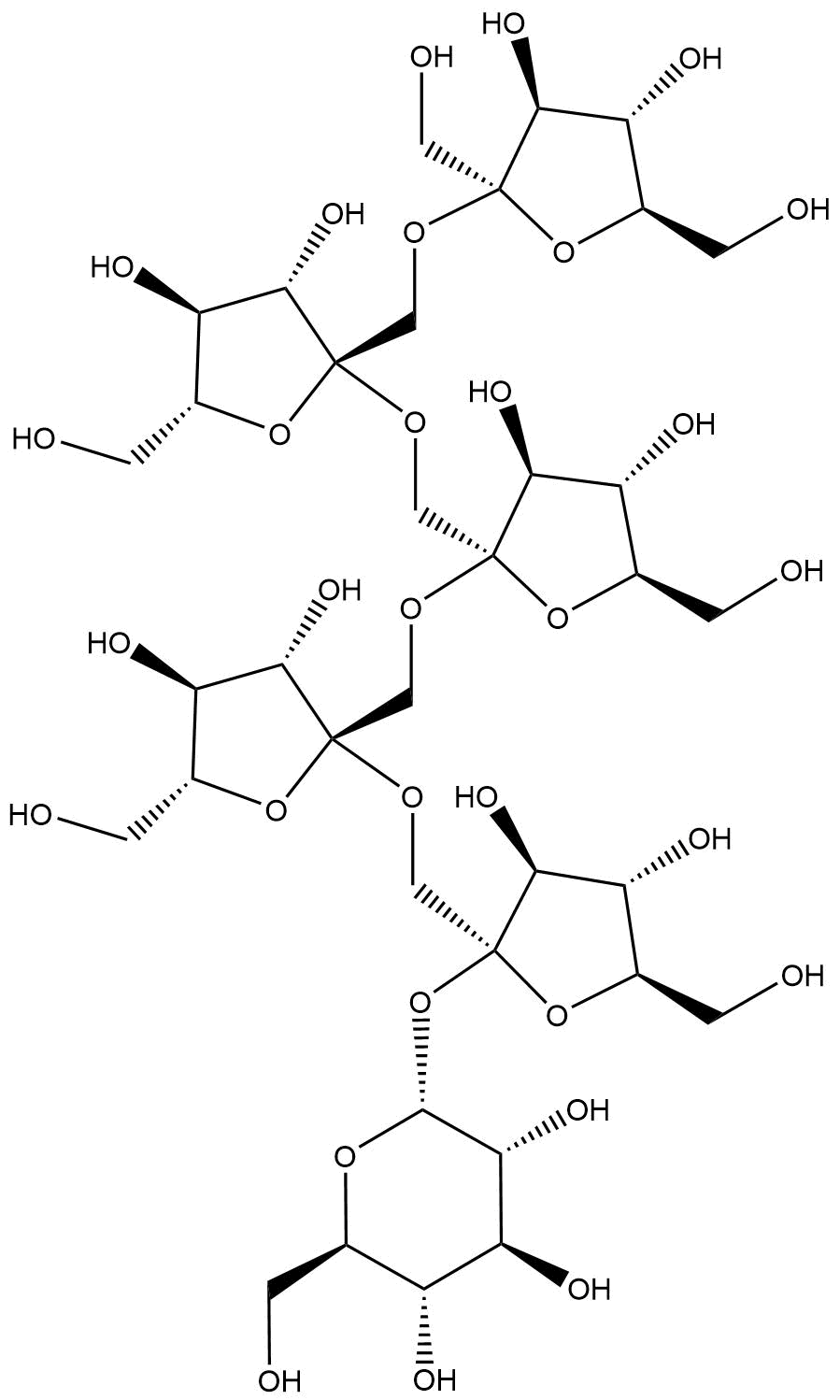


Product name: 1,1,1,1-Kestohexose
Synonym name: Fructo-oligosaccharide DP6 / GF5;1,1,1,1-Kestohexaose; 1-(Fructofuranosyl)2 nystose
Catalogue No.: BP4063
Cas No.: 62512-19-0
Formula: C36H62O31
Mol Weight: 990.861
Botanical Source:
Physical Description: White powder
Type of Compound: Oligose
Purity: 95%~99%
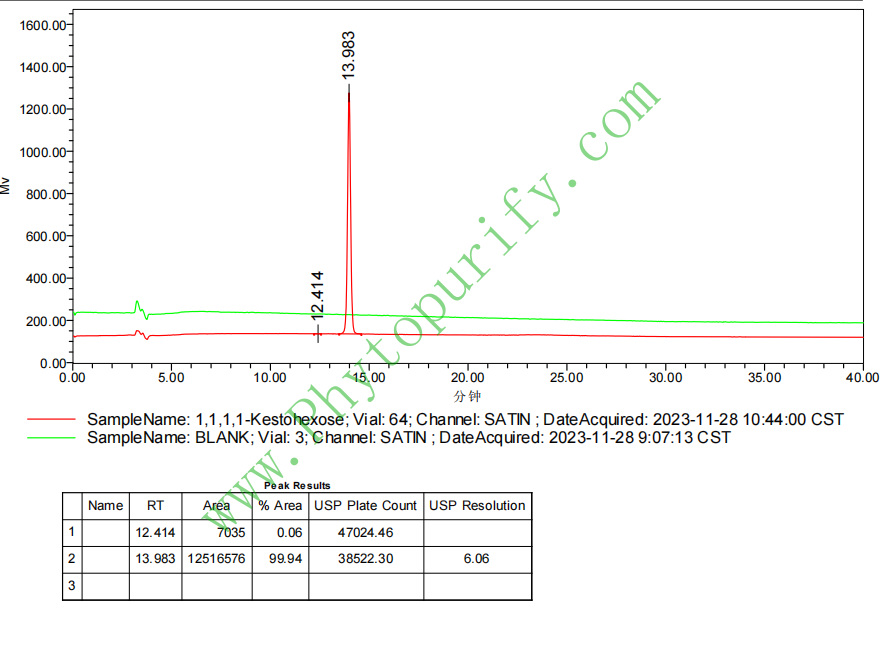
Analysis Method: HPLC-DAD or/and HPLC-ELSD
Identification Method: Mass, NMR
Packing: Brown vial or HDPE plastic bottle
Storage: Store in a well closed container, protected from air and light. Put into refrigerate or freeze for long term storage.
Whenever possible, you should prepare and use solutions on the same day. However, if you need to make up stock solutions in advance, we recommend that you store the solution as aliquots in tightly sealed vials at -20℃. Generally, these will be useable for up to two weeks.
The product could be supplied from milligrams to grams
Inquire for bulk scale.
For Reference Standard and R&D, Not for Human Use Directly.
HPLC of 1,1,1,1-Kestohexose
Storage conditions:Short-term storage at 2~8℃, long-term storage at -20 ~ -80℃
With the continuous improvement of people's awareness of health management and disease prevention, prebiotics, as important natural products for regulating intestinal microbiota, have received widespread attention. Sugarcane hexaose (1,1,1-1-Kestohexose, CAS number: 62512-19-0) is an emerging polysaccharide natural compound that has become a hot topic in current natural product pharmacology research due to its unique structure and significant biological activity. Sucrose has good water solubility and low fat solubility, with a large molecular weight, exhibiting excellent prebiotic functions. It can promote the recovery of intestinal barrier function and maintain immune homeostasis by regulating intestinal microbiota and related immune signaling pathways. This article aims to systematically review the chemical structure and physicochemical properties, plant sources and extraction methods, pharmacological activity and mechanism of action, pharmacological evaluation and pharmacokinetic characteristics of sugarcane hexose, and to prospect its clinical application potential, providing theoretical basis for subsequent basic and clinical research.
Sucrose is a highly water-soluble polysaccharide compound with a complex molecular formula and a molecular weight of 990.8610. Its chemical structure is formed by connecting multiple fructose units through specific glycosidic bonds, and it contains abundant hydroxyl groups, giving it strong hydrophilicity. Its LogP value is -4.4756, indicating that sucrose is highly soluble in water but difficult to dissolve in lipid environments. The top Polar Surface Area (TPSA) is as high as 506.1300, reflecting its abundant polar groups on the molecular surface, further supporting its strong water solubility. The water solubility index is 37.9777, which is suitable for exhibiting biological activity in aqueous solutions. The low blood-brain barrier permeability of sugarcane hexasaccharides suggests that their effects are mainly limited to the gastrointestinal system. The negative result of hERG channel inhibition experiment indicates a low risk of cardiac toxicity. The Ames test score is 0.9, indicating a low risk of genotoxicity and good safety characteristics.
Sugarcane hexasaccharide mainly exists in sugarcane (Saccharum officinarum) and its related sucrose by-products, especially in Sugar cane juice and bagasse. The traditional extraction method includes a combination of water extraction and alcohol precipitation. Taking advantage of its high water solubility, crude polysaccharide solution is obtained by hot water extraction, and then low molecular impurities are removed by ethanol precipitation to obtain relatively pure sugarcane hexose. The introduction of modern extraction techniques such as ultrasound assisted extraction (UAE), microwave-assisted extraction (MAE), and membrane separation technology has significantly improved extraction efficiency and purity, while maximizing its biological activity. During the extraction process, temperature and pH values need to be controlled to avoid degradation of polysaccharide structures and loss of activity. The purification step usually uses column chromatography technology, such as gel filtration and ion exchange column, to further separate polysaccharide components with different molecular weights to ensure the consistency and stability of the product.
The pharmacological activity of sugarcane hexose mainly focuses on its probiotic function, which can selectively promote the growth of beneficial gut microbiota such as Bifidobacterium spp. and improve gut microbiota balance. Multiple in vitro and animal experiments have shown that sucrose can regulate the composition of gut microbiota, increase the production of short chain fatty acids (SCFAs) such as acetic acid, propionic acid, and butyric acid, thereby exerting anti-inflammatory, immune regulatory, and intestinal barrier repair effects.
In the inflammatory bowel disease (IBD) model, sucrose significantly reduces the expression of pro-inflammatory factors such as tumor necrosis factor - α (TNF - α) and interleukin-6 (IL-6), while increasing the level of anti-inflammatory factor IL-22 to alleviate intestinal mucosal damage. Its regulation of intestinal tight junction proteins (such as OCTN, ZO1, CLDN1) helps restore the integrity of the intestinal barrier and prevent the infiltration of pathogens and toxins. In addition, sugarcane hexasaccharides also show the potential to regulate the function of intestinal immune cells and enhance the body's defense against intestinal pathogenic microorganisms.
The prebiotic mechanism of sugarcane hexose is mainly achieved through multiple signaling pathways. Its molecular targets include:
The synergistic effect of these targets has constructed a multi-level network for the regulation of intestinal microenvironment and immune function by sucrose, providing a molecular basis for its prebiotic and potential therapeutic effects.
The pharmacological parameters of sugarcane hexose show that it has good safety and biocompatibility. Its low LogP and high TPSA values indicate that it is difficult to pass through lipid membranes, limiting its systemic absorption and meeting the pharmacological requirements of prebiotics primarily acting on the intestine. Low blood-brain barrier penetration reduces the risk of central nervous system side effects. The negative inhibition of hERG channel and low mutagenicity of Ames test further ensure its cardiac and genetic safety.
In terms of pharmacokinetics, sucrose hexaose is not degraded by digestive enzymes in the gastrointestinal tract and can reach the colon for fermentation and utilization by gut microbiota, producing short chain fatty acids. Its absorption and metabolism mainly rely on intestinal microbiota metabolism, and the concentration in the systemic circulation is extremely low, reducing potential systemic toxicity. Further pharmacokinetic studies are needed in the future to clarify its metabolic pathways and excretion characteristics under different physiological states.
Based on the significant role of sucrose in regulating gut microbiota, repairing intestinal barriers, and regulating immune responses, its potential for application in various intestinal related diseases is enormous. Especially in diseases such as inflammatory bowel disease, irritable bowel syndrome, metabolic syndrome, and immune dysfunction, sugarcane fructose can be used as a safe and effective prebiotic supplement.
Future clinical research should focus on dose optimization, administration routes, and long-term safety evaluation. At the same time, combining modern omics technology, we will deeply analyze its impact mechanism on intestinal microbiota and host metabolism. In addition, the synergistic application of sugarcane hexose and probiotics, as well as the combination therapy strategy with other functional foods or drugs, also provide broad space for its clinical translation.
With the development of precision medicine and personalized nutrition, sugarcane hexaose is expected to become an important natural medicinal ingredient for regulating intestinal health and preventing related diseases, promoting innovation and progress in the field of prebiotics.
Sucrose, as a natural polysaccharide with unique structure and significant biological activity, exhibits excellent prebiotic functions and a wide range of pharmacological effects. It regulates the intestinal microbiota and immune environment through multiple targets and pathways, promotes intestinal barrier repair, and has good safety and potential as a drug. Although there is currently insufficient systematic research on its pharmacokinetics and clinical efficacy, its application prospects in the prevention and treatment of intestinal diseases are very broad. In the future, it is necessary to strengthen basic and clinical research, promote the transition of sugarcane hexose from laboratory to clinical use, and inject new vitality into the pharmacology of natural products and the development of functional foods.
