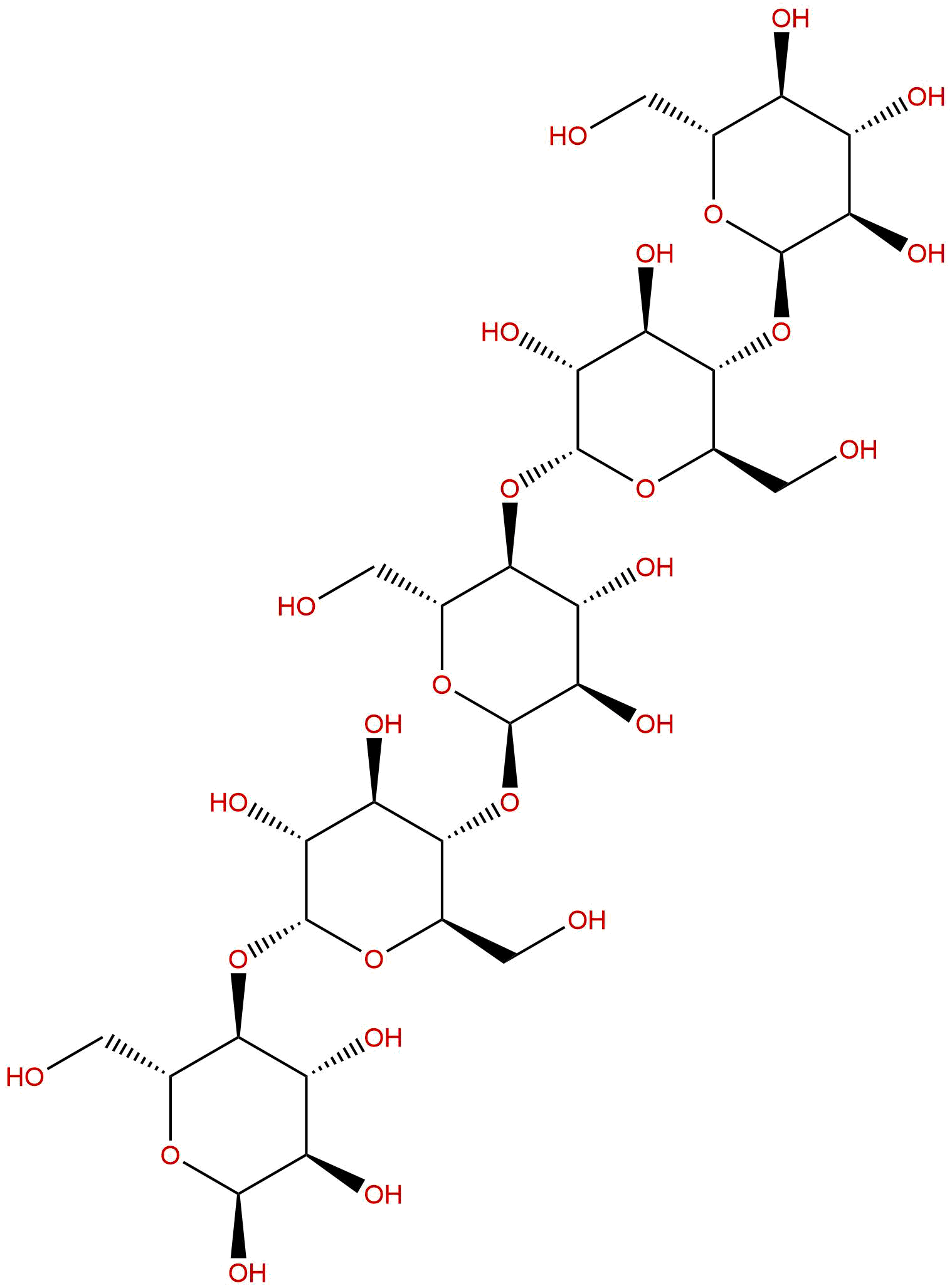


Product name: Maltopentaose
Synonym name: Amylopentaose
Catalogue No.: BP4014
Cas No.: 34620-76-3
Formula: C30H52O26
Mol Weight: 828.72
Botanical Source:
Physical Description:
Type of Compound: Oligose
Purity: 95%~99%
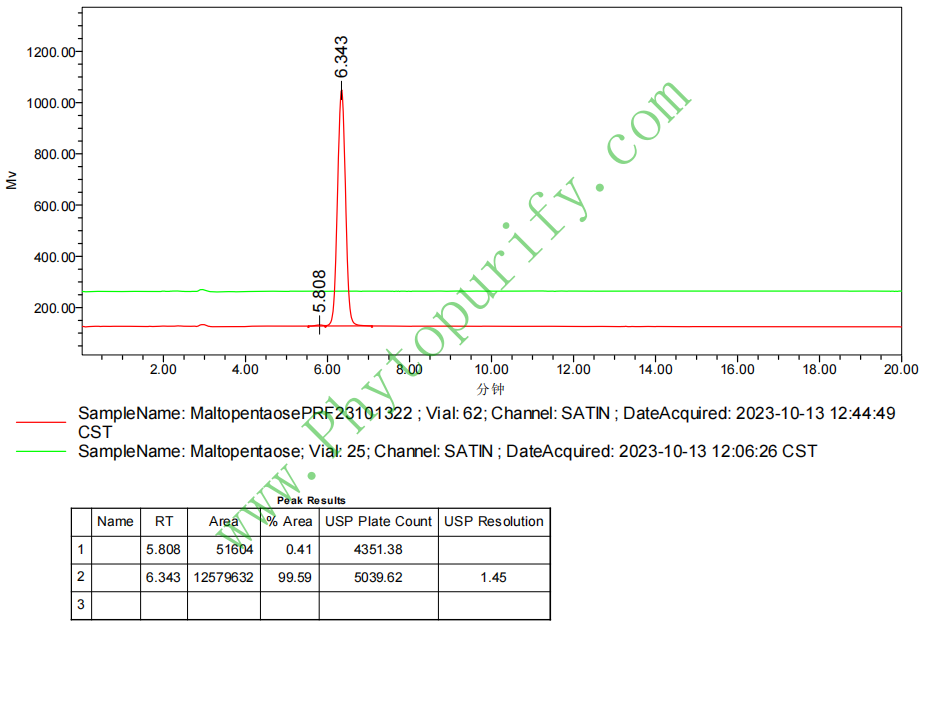
Analysis Method: HPLC-DAD or/and HPLC-ELSD
Identification Method: Mass, NMR
Packing: Brown vial or HDPE plastic bottle
Storage: Store in a well closed container, protected from air and light. Put into refrigerate or freeze for long term storage.
Whenever possible, you should prepare and use solutions on the same day. However, if you need to make up stock solutions in advance, we recommend that you store the solution as aliquots in tightly sealed vials at -20℃. Generally, these will be useable for up to two weeks.
The product could be supplied from milligrams to grams
Inquire for bulk scale.
For Reference Standard and R&D, Not for Human Use Directly.
HPLC of Maltopentaose
Storage conditions:Short-term storage at 2~8℃, long-term storage at -20 ~ -80℃
426.9800
-4.1271
-4.1271
79.6327
.4282
.1462
Low
13.5971
5.4333
Yes
No
No
No
No
No
0.0
Yes
Yes
Yes
Yes
Maltentaose (CAS number: 34620-76-3) is an oligosaccharide formed by connecting five glucose units through an alpha-1,4-glycoside bond, and is the shortest oligosaccharide fragment in maltodextrin. As a substrate of α - amylase, maltooligosaccharides play an important role in starch metabolism and related enzymatic research. In recent years, with the in-depth research on the function of prebiotics and the regulation mechanism of intestinal microbiota, the biological activity of maltooligosaccharides as a functional oligosaccharide has gradually attracted attention. Its potential role in regulating intestinal barrier function, immune response, and microbial community structure endows it with application prospects as a prebiotic. In addition, maltose pentasaccharides have been used to study protein glycation and phosphorylation modifications, as well as kinetic analysis of pancreatic alpha amylase inhibitors, demonstrating their diverse application value in pharmacology and biochemistry.
This article will systematically review the chemical structure and physicochemical properties, plant sources and extraction methods, pharmacological activity and mechanism of action, pharmacological evaluation and pharmacokinetic characteristics of maltose, and explore its clinical application prospects and future development directions, aiming to provide theoretical basis and reference for natural product pharmacology and functional oligosaccharide research.
Maltose pentose is an oligosaccharide composed of five glucose units linearly connected by α -1,4-glycosidic bonds, with a chemical formula of C30H52O26 and a molecular weight of 828.72 Da. Its structural feature is composed of a reducing glucose end and a non reducing end, with multiple hydroxyl groups, endowing it with high hydrophilicity and polarity. In terms of physicochemical properties, the LogP value of maltooligosaccharides is -4.1271, indicating its strong hydrophilicity and difficulty in passing through lipid membranes, resulting in extremely low blood-brain barrier permeability. The extremely high polar surface area (TPSA) of 426.98 Å ² further indicates its good water solubility (solubility of approximately 79.63 mg/mL), making it suitable for biological applications in aqueous solution systems.
Maltose pentose has high chemical stability, but it is prone to hydrolysis under acidic conditions, producing shorter chain maltooligosaccharides and glucose. As a substrate of alpha amylase, it can be specifically recognized and hydrolyzed by the enzyme, releasing products such as maltotriose and maltotriose, thus playing an important role in amylase kinetics research. In addition, the multiple hydroxyl sites of maltooligosaccharides enable them to participate in protein glycosylation and phosphorylation modifications, making them a powerful tool for studying glycoprotein structure and function.
Maltose pentasaccharides mainly exist in starch degradation products, especially the oligosaccharide component of maltodextrin. Maltodextrin is usually prepared by partial hydrolysis of starch and has a wide range of sources, including starchy plants such as corn, wheat, potatoes, and rice. In industry, the preparation of maltooligosaccharides relies on the enzymatic hydrolysis process of starch, using specific α - amylase and glucose amylase to synergistically control the hydrolysis time and conditions, and obtain a mixture of oligosaccharides mainly composed of maltooligosaccharides.
The extraction process generally includes the following steps:
Raw material pretreatment Select plant materials with high starch content for cleaning, crushing, and pulping treatment to facilitate enzymatic hydrolysis reactions.
Enzymatic hydrolysis reaction Under suitable pH and temperature conditions, partial hydrolysis is carried out by adding alpha amylase, followed by further degradation by adding glucose amylase, and the reaction time is controlled to obtain the target oligosaccharides.
Separation and purification Separation and purification of maltose pentasaccharides through membrane filtration, ion exchange, and column chromatography techniques to remove monosaccharides, disaccharides, and other impurities.
Drying and packaging Purified maltose pentose is made into powder or solution for easy storage and application.
In recent years, with the development of separation technology, high-performance liquid chromatography (HPLC) and mass spectrometry have been widely used for qualitative and quantitative analysis of maltose, ensuring its purity and quality stability.
Malt pentose, as a functional oligosaccharide, has various pharmacological activities, especially outstanding in the fields of prebiotics, enzymatic research, and protein modification.
Maltose pentose can selectively promote the growth of beneficial gut microbiota such as Bifidobacterium spp. and lactobacilli, and regulate the balance of gut microbiota. Its prebiotic function is mainly reflected in:
Promote the proliferation of beneficial bacteria Malt pentose, as a carbon source for specific gut bacteria, promotes their metabolic activity and quantity increase.
Regulating intestinal immunity By activating intestinal innate immune receptors such as Toll like receptor 4 (TLR4) and TLR2, intestinal barrier function and immune response are enhanced.
Improve intestinal barrier integrity Maltose pentose upregulates the expression of tight junction proteins such as Occludin (OCLN), Zonula occludin-1 (ZO-1), and Claudin-1 (CLDN1), enhances the barrier function between intestinal epithelial cells, and reduces abnormal expression of inflammatory factors such as IL-22.
Activate short chain fatty acid receptors Regulating intestinal metabolism and immune homeostasis through signaling pathways mediated by G protein coupled receptors GPR41 and GPR43.
Maltose pentose, as a substrate for alpha amylase, is widely used in enzyme kinetics and inhibitor screening research. For example, studies have shown that maltose serves as a substrate in the kinetic analysis of the inhibitory effect of dehydrodieugenol B on pancreatic alpha amylase, revealing the mechanism of action and binding characteristics of the inhibitor.
In addition, maltose pentose also plays an important role in saccharification and phosphorylation modification research. By reacting with alpha lactalbumin, the glycosylation and phosphorylation processes of oligosaccharides were studied, revealing the regulatory mechanism of oligosaccharides in protein modification and providing a theoretical basis for the development of functional foods and drugs.
The biological function of maltose pentasaccharides depends on their interactions with various molecular targets, mainly involving intestinal immune regulation and microbial ecological balance.
Maltose pentose can activate TLR4 and TLR2 on the surface of intestinal epithelial cells and immune cells, induce downstream signaling pathways such as NF - κ B and MAPK activation, promote the expression of anti-inflammatory factors and barrier proteins, and enhance intestinal immune defense capabilities.
Maltose pentose promotes the secretion of MUC2, the main component of the intestinal mucus layer, strengthens the physical barrier, and upregulates the expression of tight junction proteins OCTN, ZO-1, and CLDN1, maintaining tight junctions between intestinal epithelial cells and preventing the invasion of harmful substances and pathogens.
IL-22, as an important cytokine in intestinal immune regulation, participates in epithelial cell repair and antibacterial defense. Maltose pentose promotes intestinal barrier repair and immune homeostasis by regulating the expression of IL-22.
Short chain fatty acids (SCFAs) produced by maltose metabolism activate GPR41 and GPR43, regulate intestinal hormone secretion, energy metabolism, and immune response, and participate in the dynamic balance of intestinal microbiota.
Malt pentose, as a high-quality carbon source for bifidobacteria, promotes its growth and metabolic activity, enhances the competitive advantage of beneficial gut microbiota, and inhibits the colonization of pathogenic bacteria.
The pharmacological parameters of maltooligosaccharides show that they have certain advantages and limitations as natural oligosaccharides.
Molecular weight and polarity The molecular weight is 828.72 Da, belonging to the medium molecular weight range. Its extremely high polarity (TPSA 426.98) and negative LogP value (-4.1271) indicate that it is highly soluble in water, but difficult to penetrate lipid membranes. The low permeability of the blood-brain barrier limits its application in the central nervous system.
safety The hERG channel inhibition experiment showed a negative result, indicating a low risk of cardiac toxicity. The Ames mutagenicity test showed 0, indicating no mutagenicity and high safety.
pharmacokinetics Due to its high hydrophilicity and large molecular structure, maltooligosaccharides mainly exert their effects in the intestine after oral administration, with limited absorption and difficulty in entering the systemic circulation. Its metabolism mainly relies on the fermentation of intestinal microbiota, producing metabolites such as short chain fatty acids, and exerting physiological functions.
Stability Relatively stable in the gastrointestinal environment, it can resist the degradation of gastric acid and digestive enzymes, ensuring its arrival in the colon and exerting prebiotic effects.
In summary, maltose pentasaccharides are suitable as functional oligosaccharides targeting the gut for regulating gut microbiota and immune function, but there are certain limitations in the development of systemic drugs.
With the deepening of research on intestinal health and systemic immune regulation, maltooligosaccharides, as a safe and efficient prebiotic, have broad clinical application prospects.
Maltose pentose is expected to be used as an adjuvant therapy for inflammatory bowel disease (IBD), irritable bowel syndrome (IBS), and intestinal infections by regulating gut microbiota and enhancing intestinal barrier function, reducing inflammatory reactions and promoting intestinal repair.
By activating GPR41/GPR43 signaling pathway, maltopenose may participate in the regulation of energy metabolism and immune homeostasis, which has potential prevention and treatment value for metabolic diseases such as obesity and diabetes.
As a natural oligosaccharide, maltose pentose can be developed as a functional food ingredient to promote intestinal health, enhance immunity, and be suitable for nutritional supplementation in the elderly, children, and immunocompromised populations.
In enzymatic and protein modification research, maltose serves as a substrate and modifier to promote the screening and mechanism research of related drug targets, and facilitate the development of new drugs.
In the future, combining molecular biology and microecology techniques, in-depth analysis of the mechanism of action of maltose, optimization of its structure and function, and development of more targeted and effective derivatives will be the research focus. In addition, the conduct of clinical trials will provide more solid evidence support for its safety and effectiveness.
Malt pentose, as an important natural oligosaccharide, has excellent physicochemical properties and diverse biological functions, especially showing unique advantages in prebiotic and enzymatic research. It demonstrates broad application potential by regulating intestinal microbiota, enhancing barrier function, and immune regulation. Despite its absorption and distribution limitations in systemic drug development, maltose pentose has significant clinical application value as a functional component targeting the gut.
Future research should focus on molecular level analysis, structural optimization, and clinical validation of its mechanism of action, promoting the in-depth application of maltooligosaccharides in natural product pharmacology and functional food fields, and providing new natural intervention methods for human health.
