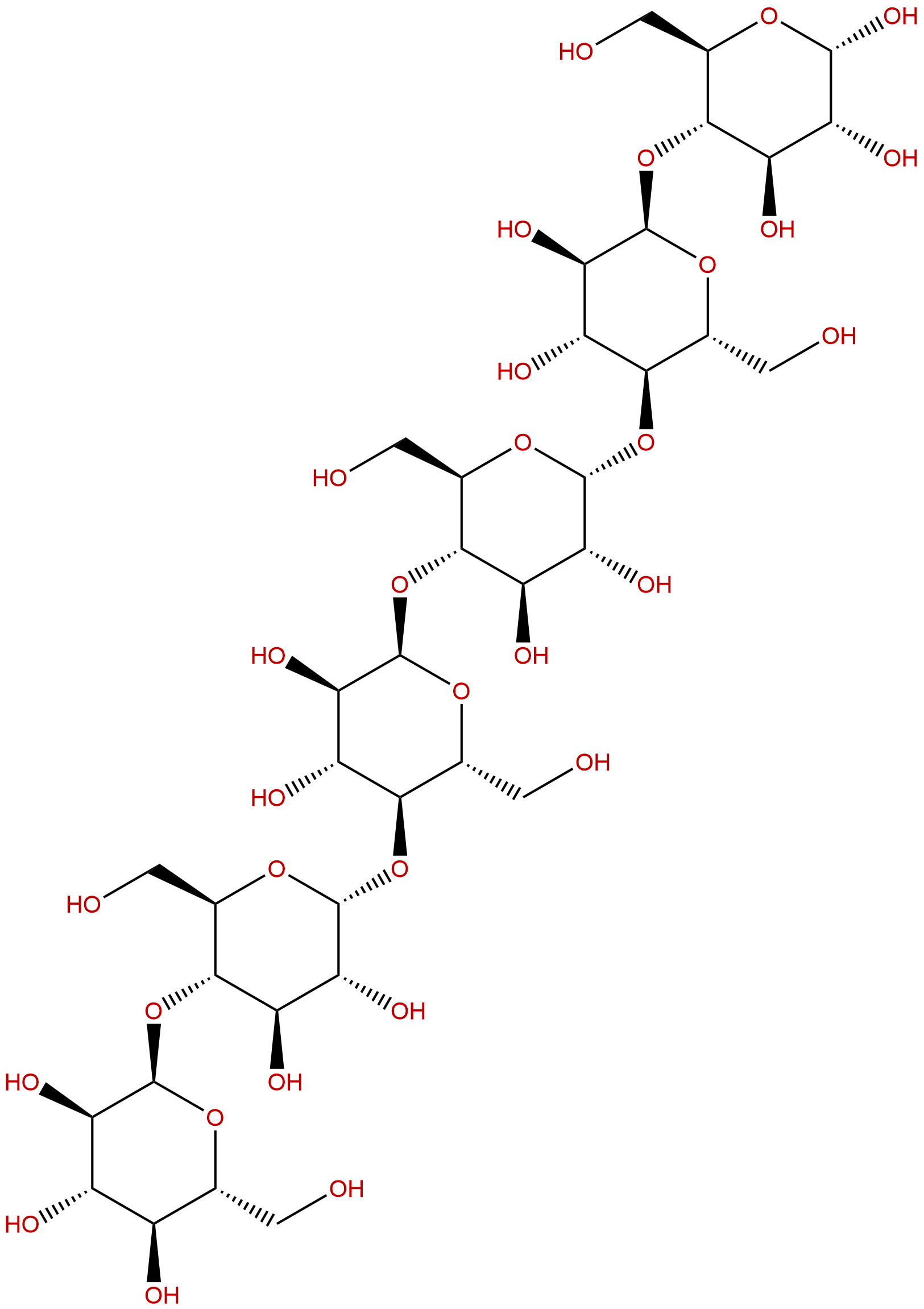


Product name: Maltohexaose
Synonym name:
Catalogue No.: BP3713
Cas No.: 34620-77-4
Formula: C36H62O31
Mol Weight: 990.861
Botanical Source:
Physical Description:
Type of Compound:
Purity: 95%~99%
Analysis Method: HPLC-DAD or/and HPLC-ELSD
Identification Method: Mass, NMR
Packing: Brown vial or HDPE plastic bottle
The product could be supplied from milligrams to grams. Inquire for bulk scale.
We provide solution to improve the water-solubility of compounds, thereby facilitating the variety of activity tests and clinic uses.
For Reference Standard and R&D, Not for Human Use Directly.
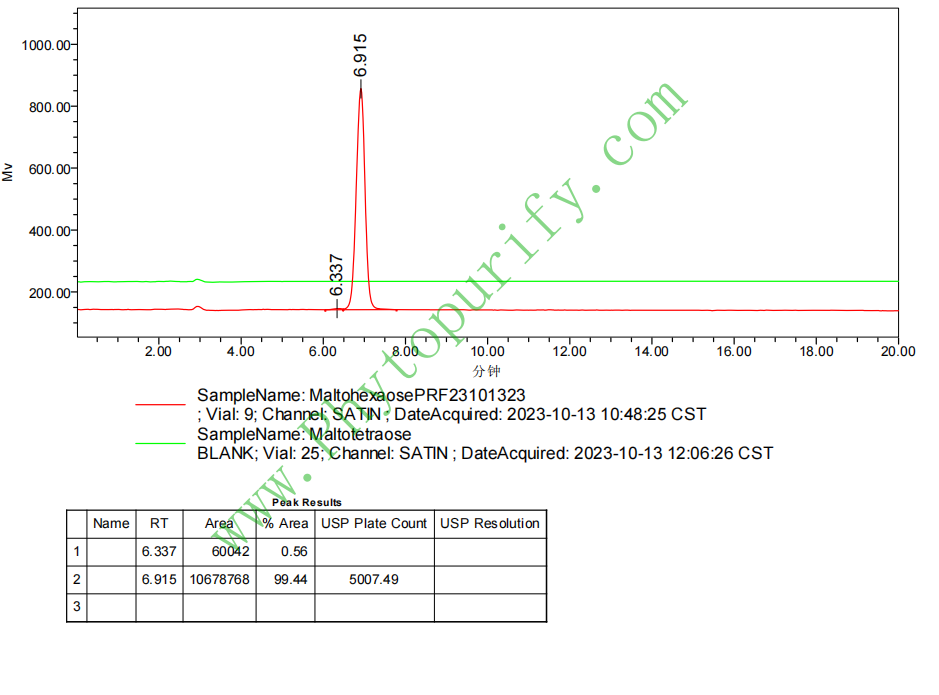
HPLC of Maltohexaose
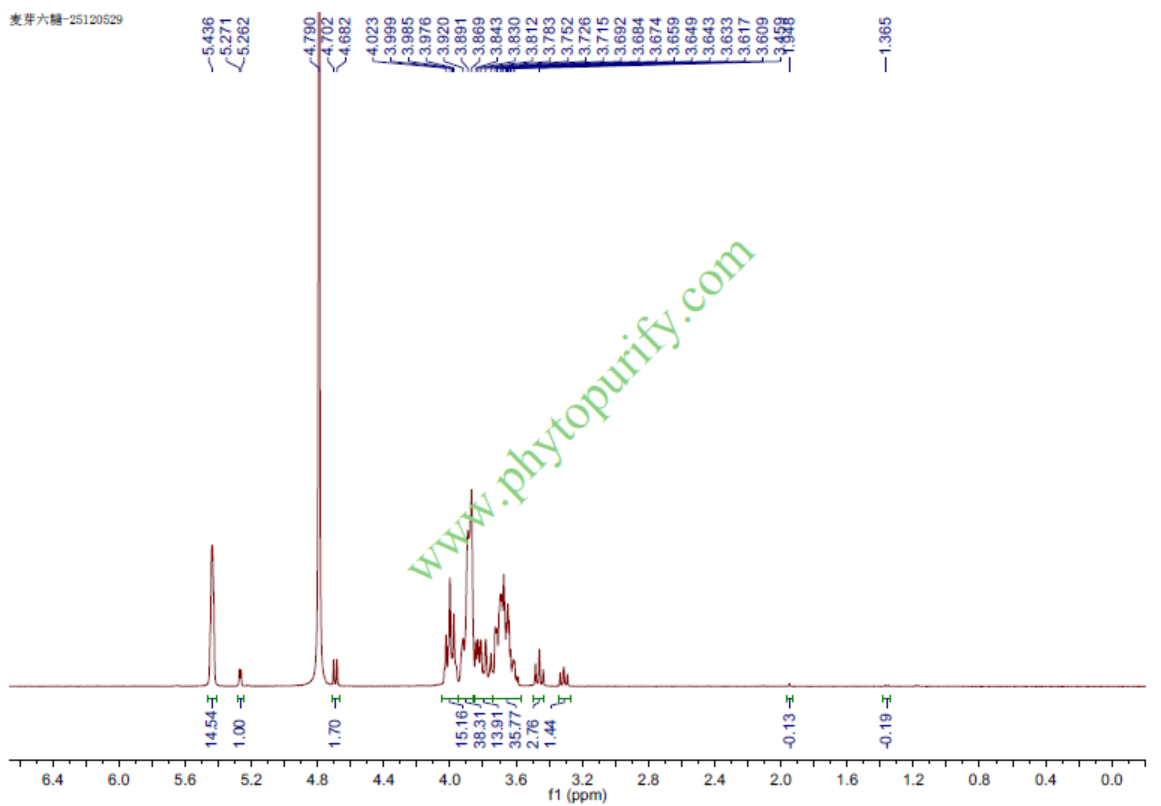
HNMR of Maltohexaose
Storage conditions:Short-term storage at 2~8℃, long-term storage at -20 ~ -80℃
506.1300
-4.4717
-4.4717
67.8898
.4330
.1443
Low
13.7570
5.8113
Yes
No
No
No
No
No
0.0
Yes
Yes
Yes
Yes
In the interdisciplinary field of natural product chemistry and pharmacology, oligosaccharides, as an important class of bioactive molecules, are increasingly receiving attention from researchers. Compared with polysaccharides with complex structures, oligosaccharides have clear chemical structures, relatively low molecular weights, and good water solubility, which gives them unique advantages in elucidating structure-activity relationships, mechanisms of action, and drug efficacy evaluation. Maltohexaose, also known as straight chain hexose, is an oligosaccharide composed of six D-glucopyranose units linearly connected by alpha-1,4-glycoside bonds. As a characteristic product of amylase hydrolysis, maltose is not only an important raw material in the food industry, but also an emerging hotspot in the pharmacological research of natural products due to its potential biological activity, especially its regulatory effect on intestinal microbiota and inhibitory effect on the proliferation of certain tumor cells.
The biological significance of maltose is rooted in its unique chemical structure. As a fragment of amylose, it can be utilized by the gut microbiota to exert prebiotic functions. The concept of prebiotics was first proposed by Gibson and Roberfroid in 1995, referring to non digestible food ingredients that can selectively stimulate the growth and/or activity of one or a few beneficial bacteria (such as bifidobacteria and lactobacilli) in the gut, thereby having a beneficial effect on host health. Malt six sugar, due to its molecular size and structural characteristics, is not hydrolyzed by human digestive enzymes when passing through the upper gastrointestinal tract and can fully reach the colon, becoming a fermentation substrate for intestinal microorganisms. Recent studies have further revealed that maltose and its metabolites (such as short chain fatty acids, SCFAs) can regulate intestinal barrier function, immune response, and energy metabolism by interacting with specific receptors on the host cell surface (such as Toll like receptors TLR2, TLR4, and G protein coupled receptors GPR41, GPR43), demonstrating complex pharmacological activities beyond traditional prebiotics.
In addition, preliminary in vitro studies have shown that maltose has inhibitory effects on the proliferation of mouse mastocytoma P-815 cell line, suggesting its potential anti-tumor activity. This discovery opens up new directions for the application of maltose, although its specific mechanism remains to be further explored. From the perspective of medicinal properties, maltose has extremely low oral bioavailability (LogP of -4.4717, with a high water solubility of 67.8898), which determines that its pharmacological effects are mainly limited to local intestinal absorption rather than systemic absorption. This "intestinal targeting" characteristic, although limiting its application in systemic diseases, precisely makes it an ideal candidate molecule for treating intestinal related diseases such as inflammatory bowel disease, irritable bowel syndrome, colorectal cancer prevention, etc. Its low blood-brain barrier permeability, no risk of hERG inhibition, and negative Ames test results also preliminarily indicate its good safety.
This article aims to systematically review the chemical structure and physicochemical properties, natural sources and preparation methods, pharmacological activity, mechanism of action, pharmacological evaluation, and clinical application prospects of maltose hexasaccharides, in order to provide comprehensive academic references for the in-depth research and development of this natural oligosaccharide.
The chemical structure of maltose is the foundation of all its biological functions. From a chemical perspective, maltose hexaose belongs to linear oligosaccharides, and its structural unit is D-glucopyranose. Six glucose units are sequentially connected by alpha-1,4-glycoside bonds, forming a straight chain without branches. This connection method determines that its molecular conformation tends to form a left-handed helix, similar to the local structure of amylose. Its molecular formula is C ∝₆ H ₆ ₂ O ∝₁, with an accurate molecular weight of 990.8610 g/mol. At the reducing end, the C1 position of the first glucose unit is a hemiacetal hydroxyl group, which has reducing properties; The non reducing end is the C4 hydroxyl group of the fourth glucose unit. The presence of this reducing end enables maltose to undergo characteristic reactions of reducing sugars such as silver mirror reaction and Ficin reaction, but its reducing ability is weaker compared to monosaccharides.
In terms of physicochemical properties, maltose hexasaccharides exhibit typical oligosaccharide characteristics. Its most notable characteristics are extremely high hydrophilicity and extremely low lipophilicity. The calculated LogP value is -4.4717, indicating that it is almost insoluble in organic solvents and highly soluble in water (with a water solubility parameter of 67.8898). This extreme amphiphilic distribution determines that it is difficult for it to cross the phospholipid bilayer of the biological membrane after oral administration, thereby limiting its absorption by intestinal epithelial cells through passive diffusion. Its topological polar surface area (TPSA) is as high as 506.1300 Å ², further confirming its strong polarity and high hydrogen bond donor/acceptor ability, which is also the fundamental reason why it cannot penetrate the blood-brain barrier (blood-brain barrier permeability evaluation is "low").
From a physical perspective, maltose is usually a white or off white amorphous powder with hygroscopicity. Its aqueous solution is neutral or slightly acidic, with a right-handed rotation. Under acidic conditions or the action of specific enzymes such as alpha glucosidase and glucoamylase, maltose can be hydrolyzed into smaller sugar units, ultimately producing glucose. Under alkaline conditions, it is relatively stable, but degradation or Maillard reaction may occur under prolonged heating or strong alkaline environment. Its melting point and thermal stability data vary depending on the crystal morphology and moisture content, but generally speaking, it is stable under conventional food processing and storage conditions.
It is worth noting that the chemical structure of maltose is closely related to maltodextrin, maltose, cyclodextrin, etc., but there are also essential differences. Compared with maltose (disaccharide) and maltotriose (trisaccharide), maltose has a higher degree of polymerization and a larger molecular weight, resulting in lower osmotic pressure and different fermentation characteristics. Compared with cyclodextrin, maltose is an open chain structure and does not have the hydrophobic cavity unique to cyclic molecules, therefore it does not have the ability to encapsulate the guest. Compared with maltodextrin with higher polymerization degree, maltose has a single molecular weight distribution and clear chemical structure, which gives it unique advantages as a standard, research tool, and drug development.
Malt six sugar is not a natural product that exists independently in large quantities in nature, but rather appears as an intermediate product in the process of starch degradation. Therefore, its "source" mainly refers to the preparation of starch rich plant materials through biological or chemical methods. Common plant sources include corn, potatoes, cassava, wheat, rice, etc. The starch in these raw materials (including amylose and amylopectin) is the starting material for the production of maltose.
The preparation methods of maltose can be mainly divided into two categories: enzymatic method and chemical method. Among them, enzymatic method has become the mainstream method in industrial production and laboratory research due to its high efficiency, specificity, mild conditions, and environmental friendliness.
Enzymatic production It simulates the process of human or microbial digestion of starch, using specific amylase to perform controlled hydrolysis of starch. The key is to choose enzymes that can specifically produce maltose, rather than enzymes that produce maltose or glucose. At present, the enzymes used for producing maltose mainly include:
1. α-amylase Alpha amylase from certain sources (such as specific variants of Bacillus licheniformis or Bacillus amyloliquefaciens) can produce a hydrolysate primarily composed of maltose under specific conditions (such as controlling reaction time, temperature, and pH). These enzymes usually randomly hydrolyze alpha-1,4-glycoside bonds through endocytosis, and by precisely controlling the degree of reaction, the reaction can be terminated when the product accumulates to maltose.
2. Malt six sugar generating enzyme This is a type of enzyme with transglycosylation activity that can polymerize small molecule substrates such as maltose or maltotriose to produce maltose hexaose. The discovery of such enzymes provides a more direct pathway for the preparation of high-purity maltose.
3. Prulanase and Isoamylase These are debranching enzymes that specifically hydrolyze the alpha-1,6-glycosidic bonds in amylopectin. When preparing maltose, branched starch is usually treated with debranching enzyme to obtain linear amylose chains, and then controlled hydrolysis is carried out with alpha amylase to improve the yield of maltose.
The typical enzymatic production process is as follows: Firstly, starch raw materials are mixed with water to form a slurry, which is then subjected to gelatinization (heating to break the starch particles) and liquefaction (preliminary degradation using high-temperature resistant alpha amylase) steps to obtain a dextrin solution. Then, under suitable temperature and pH conditions, specific maltose synthase or controlled alpha amylase is added for saccharification reaction. After the reaction is complete, the enzyme is inactivated by heating and insoluble substances are removed by filtration. The obtained saccharification solution contains maltose hexaose, maltooligosaccharides of other polymerization degrees, and a small amount of glucose. Finally, it is necessary to obtain high-purity maltose through separation and purification steps.
Separation and purification It is a key factor in determining the purity and cost of the final product. Common methods include:
1. Activated carbon column chromatography Separation is achieved by utilizing the differences in adsorption capacity of oligosaccharides with different degrees of polymerization on activated carbon. Usually, gradient ethanol solution is used for elution, and maltose is eluted at a specific ethanol concentration.
2. Gel filtration chromatography Based on the principle of molecular sieves, separation is carried out according to the size of the molecular weight. The molecular weight of maltohexaose is between other oligosaccharides, and effective separation can be achieved by selecting appropriate gel media (such as Bio Gel P-2 or Sephadex G-15).
3. High performance liquid chromatography (HPLC)In particular, HPLC using amino or sugar analysis columns can efficiently and high-resolution separate maltooligosaccharides with different degrees of polymerization, which is the main method for preparing high-purity standards in the laboratory.
4. membrane separation technology Like nanofiltration and ultrafiltration, they can be separated by molecular weight. By selecting membranes with different cut-off molecular weights, specific molecular weight ranges of maltooligosaccharides can be enriched. This method has the advantages of large processing capacity, continuous operation, and low energy consumption, making it suitable for industrial production.
Chemical method The production of maltose typically involves acid hydrolysis of starch. By controlling the concentration, temperature, and time of acid, starch can be partially hydrolyzed. However, acid hydrolysis lacks the specificity of enzymatic methods, resulting in complex products, low yield of maltose, and the production of unwanted by-products and colored substances. Therefore, its current applications are limited and mainly used for basic research or as a supplement to enzymatic methods.
The pharmacological activity research of maltose hexasaccharides mainly focuses on two fields: one is the regulatory effect of probiotics on intestinal health, and the other is the inhibitory effect on the proliferation of specific tumor cells. In addition, its potential activities such as anti-inflammatory and immune regulation are gradually being revealed.
1. Probiotic activity
This is the most core and extensively studied pharmacological activity of maltose. As an indigestible oligosaccharide, maltose can resist the degradation of enzymes in the human digestive tract (oral cavity, stomach, small intestine) and reach the large intestine intact. In the colon, it is fermented and utilized as a carbon source by the gut microbiota, especially beneficial bacteria such as Bifidobacterium and Lactobacillus. Multiple in vitro fermentation experiments and animal model studies have confirmed that supplementing maltose can significantly increase the number of bifidobacteria and lactobacilli in the intestine, while inhibiting the growth of potential pathogenic bacteria such as Clostridium perfringens and Escherichia coli. The ability to selectively stimulate the proliferation of beneficial bacteria is the gold standard for evaluating their prebiotic activity. Its effect is closely related to the degree of polymerization. Maltose hexaose, due to its moderate chain length, usually exhibits better prebiotic effects than maltose (low degree of polymerization, easily utilized by other bacteria) and maltodextrin (high degree of polymerization, slow fermentation rate).
2. Antitumor activity
An important study has found that maltose can inhibit the proliferation of mast cell tumor cells in P-815 mice. P-815 cells are a commonly used in vitro screening model for evaluating the anti-tumor potential of compounds. Although there are relatively limited reports on the anti-tumor activity of maltose hexasaccharides, mainly at the cellular level in vitro, this discovery has important implications. Its possible mechanisms of action include inducing cell apoptosis, interfering with the cell cycle, or affecting signal transduction by regulating cell surface glycocalyx structure. It is worth noting that the anti-tumor activity of maltose may have a synergistic effect with its probiotic activity. For example, by regulating the gut microbiota, short chain fatty acids (such as butyric acid) produced by maltose have been shown to induce apoptosis in colorectal cancer cells and inhibit histone deacetylase (HDAC) activity. Therefore, the potential preventive and therapeutic effects of maltose on colorectal cancer deserve further in-depth research.
3. Intestinal barrier function and immune regulation
The probiotic activity of maltose is directly associated with its protective effect on intestinal barrier function. Animal studies have shown that supplementing maltose can upregulate tight junction proteins (such as Occludin, OCLN) in the intestine; Claudin-1, CLDN1; The expression of Zonula Occludens-1 (ZO1) enhances the mechanical barrier function of intestinal epithelial cells, reduces intestinal permeability, and prevents bacterial and endotoxin translocation. At the same time, it can also promote the secretion of mucins (such as MUC2) by goblet cells and strengthen chemical barriers. In terms of immune regulation, maltose can regulate the immune response of gut associated lymphoid tissue (GALT). It can induce intestinal epithelial cells and immune cells to secrete interleukin-2 (IL-22), a cytokine that plays a key role in maintaining intestinal barrier integrity and antimicrobial defense. In addition, by regulating the microbiota, maltose can also affect the Th1/Th2 immune balance and exert anti-inflammatory effects, which has been preliminarily validated in animal models of inflammatory bowel diseases such as ulcerative colitis and Crohn's disease.
4. Metabolic regulation
The main short chain fatty acids produced by maltose fermentation include acetic acid, propionic acid, and butyric acid. These SCFAs are not only the main energy source for colonic epithelial cells, but also act as signaling molecules to regulate host energy metabolism, appetite, and insulin sensitivity by activating G protein coupled receptors such as GPR41 and GPR43. For example, activation of GPR43 can promote the secretion of glucagon like peptide-1 (GLP-1), thereby improving blood glucose control. Therefore, maltohexaose may play an active role in preventing and improving metabolic syndrome (such as obesity, type 2 diabetes) through SCFAs GPRs axis.
The pharmacological effects of maltose are not derived from its direct binding to specific targets after absorption into the bloodstream, but mainly through two indirect but highly integrated pathways: one is through regulating the composition and metabolism of the gut microbiota, and the other is through the interaction of its metabolites (mainly SCFAs) with receptors on host cells. This "indirect action" mode is the core feature that distinguishes it from traditional small molecule drugs.
1. Mechanisms mediated by microbial communities
Malt six sugar, as a prebiotic, primarily targets the gut microbiota. It selectively promotes the growth of beneficial bacteria such as bifidobacteria and lactobacilli. The growth of these microbial communities will bring a series of downstream effects:
* Competitive exclusion Beneficial bacteria inhibit the colonization and overgrowth of pathogenic bacteria by competing with potential pathogenic bacteria for nutrients and adhesion sites on the intestinal epithelium.
* Metabolic product changes Beneficial bacteria ferment maltose to produce a large amount of SCFAs, reducing intestinal pH. The acidic environment further inhibits non acid resistant pathogenic bacteria such as Salmonella and Escherichia coli, and promotes the absorption of minerals such as calcium, magnesium, and iron.
* Generate bioactive substances Some bifidobacteria and lactobacilli can produce beneficial metabolites such as bacteriocins, vitamins (such as B vitamins, vitamin K), and conjugated linoleic acid, which directly or indirectly affect host health.
2. Mechanisms mediated by host receptors
The indirect effect of maltose hexasaccharides is mainly achieved through the binding of their fermentation products SCFAs to receptors on host cells. In addition, maltose itself or other molecules produced by microbial metabolism may also directly interact with certain pattern recognition receptors (PRRs).
* G protein coupled receptors (GPRs)SCFAs (especially acetic acid, propionic acid, and butyric acid) are natural ligands for GPR41 (FFAR3) and GPR43 (FFAR2). These receptors are widely expressed in intestinal endocrine cells, adipocytes, immune cells, and intestinal epithelial cells. The activation of GPR43 can promote the secretion of GLP-1 and PYY by intestinal L cells, thereby regulating appetite and blood sugar. The activation of GPR41 is related to energy metabolism and regulation of the sympathetic nervous system. In addition, GPR43 also plays a key role in regulating inflammatory responses, and its activation can inhibit certain inflammatory signaling pathways.
* Toll like receptors (TLRs)TLR2 and TLR4 are key receptors for recognizing microbial associated molecular patterns (MAMPs). Although maltose itself may not be a direct potent agonist of TLR, it can indirectly regulate TLR signaling by altering microbial composition. For example, the increased beneficial bacteria may produce more analogs of lipoteichoic acid (LTA, TLR2 ligand) or lipopolysaccharides (LPS, TLR4 ligand), thereby fine-tuning TLR signaling. More importantly, SCFAs (especially butyric acid) can regulate gene expression downstream of the TLR signaling pathway by inhibiting histone deacetylase (HDAC), thereby exerting anti-inflammatory effects. For example, butyric acid can inhibit the overactivation of TLR4 signaling pathway in LPS induced macrophages.
* Nuclear receptor SCFAs can also act as signaling molecules to affect the activity of nuclear receptors. For example, butyric acid is an inhibitor of HDAC, which can alter chromatin structure by increasing the acetylation level of histones, thereby regulating the expression of a range of genes, including those related to cell cycle, apoptosis, and inflammation. This is considered one of the core mechanisms by which butyric acid induces tumor cell apoptosis and exerts anti-inflammatory effects.
3. Molecular regulation of intestinal barrier function
Maltose hexaose ultimately regulates intestinal barrier function through the aforementioned mechanism. SCFAs (especially butyric acid) can directly provide energy to colon epithelial cells, promoting their proliferation and repair. Meanwhile, SCFAs upregulate the expression of genes encoding tight junction proteins (OCLN, ZO1, CLDN1) and mucin (MUC2) by activating GPRs and inhibiting HDACs. The increased production of IL-22 further enhances the antibacterial defense and repair ability of epithelial cells. These molecular level changes work together to strengthen the physical, chemical, and immune defenses of the intestinal barrier.
In summary, the mechanism of action of maltose is a multi-target, multi-level network. Its core target is not a single protein, but the entire gut microbiota. By feeding beneficial bacteria, maltose indirectly regulates multiple signaling pathways in the host, ultimately achieving comprehensive regulation of intestinal health, immunity, and metabolism.
Developing maltose as a candidate drug, its unique physicochemical properties determine that its pharmacological characteristics are completely different from traditional small molecule drugs. Based on the provided pharmacological parameters, we can conduct the following systematic evaluation.
1. Absorption, distribution, metabolism, and excretion (ADME)
* absorb The LogP of maltose hexaose is -4.4717, with a high water solubility of 67.8898 and a TPSA of 506.13. These parameters collectively determine that it is almost not absorbed by gastrointestinal epithelial cells through passive diffusion after oral administration. Its absorption fraction is extremely low, and its oral bioavailability is close to zero. This is the basis for its local action as a prebiotic, but it also means that it cannot be administered orally to treat systemic diseases through systemic circulation.
* distribution Due to poor absorption, oral maltose is mainly distributed in the gastrointestinal tract cavity. Its blood-brain barrier permeability is evaluated as "low", and even if a small amount enters the bloodstream, it is difficult to penetrate the blood-brain barrier and enter the central nervous system. Its distribution volume (Vd) is expected to be very small.
* Metabolism Maltose hexaose is not effectively hydrolyzed by alpha glucosidase (such as maltase isomaltase complex) in the human small intestine because the enzyme mainly acts on disaccharides and trisaccharides connected by alpha-1,4-glycoside bonds. Therefore, it can fully reach the colon. In the colon, its main metabolic pathway is fermentation by the gut microbiota, producing SCFAs (acetic acid, propionic acid, butyric acid) and gases (hydrogen, carbon dioxide, methane). The host's own enzyme system hardly participates in its metabolism.
* excretion A small amount of unfermented maltose will be excreted with feces. Due to minimal absorption, the pathway of excretion through the kidneys can be ignored.
2. Safety evaluation
* HERG inhibition HERG (human Ether - à - go Related Gene) potassium ion channel is one of the most important targets for drug cardiotoxicity. The risk assessment of hERG inhibition by maltose hexaose is' no ', indicating that its risk of causing QT interval prolongation and fatal arrhythmias (such as apical torsion ventricular tachycardia) is extremely low. This is consistent with its characteristic of not being absorbed and unable to directly interact with hERG channels on myocardial cells.
* Ames test Ames test is a standard in vitro method for detecting mutagenicity of compounds. The Ames test result of maltose hexaose was 0.0, indicating that it did not show mutagenicity in bacterial reverse mutation testing and had a low risk of genetic toxicity.
* Other security considerations As a naturally occurring oligosaccharide, maltose is generally considered safe (GRAS). The main potential adverse reactions are related to high-dose intake, including bloating, bloating, and diarrhea, which are caused by the rapid fermentation of gas in the colon. For patients with short bowel syndrome or severe intestinal dysfunction, caution should be exercised when using it.
3. Summary of drug properties
The medicinal properties of maltose hexaose exhibit typical "double-edged sword" characteristics. Its extremely low bioavailability and excellent safety (no hERG inhibition, no Ames positivity) make it an ideal candidate molecule for the development of intestinal local acting drugs. It is not suitable for development as an oral systemic drug, but it is very suitable for development as:
* Probiotic preparations As a functional food or dietary supplement, used to improve intestinal health.
* Gastrointestinal disease treatment drugs Used for the treatment or adjuvant therapy of inflammatory bowel disease (IBD), irritable bowel syndrome (IBS), antibiotic associated diarrhea, chemoprevention of colorectal cancer, etc.
* Drug carrier or excipient Due to its good water solubility and safety, it can be used as a carrier or excipient for oral drug delivery systems.
However, its medicinal properties also face challenges. For example, how to precisely control its fermentation rate and location in the colon to achieve optimal efficacy and minimal side effects? How to develop suitable formulations (such as enteric coated capsules, sustained-release formulations) to protect their stability in the upper gastrointestinal tract? In addition, strict quality control standards for drugs, such as purity and polymerization degree distribution, also need to be established.
Based on the unique pharmacological activity and good safety of maltose, its clinical application prospects are broad, mainly concentrated in the following areas:
1. Functional foods and dietary supplements
This is the most direct and mature application direction of maltose six sugar. As an efficient prebiotic, it can be added to various foods and beverages, such as yogurt, milk powder, cereal bars, beverages, baked goods, etc., to promote intestinal health. Compared with traditional fructooligosaccharides (FOS) and galactooligosaccharides (GOS), maltose has better thermal and acid stability, and stronger processing adaptability. Its moderate sweetness and low osmotic pressure also give it an advantage in taste. In the future, personalized prebiotic formulas targeting different populations such as infants, elderly people, and athletes will be an important development direction.
2. Adjuvant treatment for inflammatory bowel disease (IBD)
Ulcerative colitis and Crohn's disease are typical chronic intestinal inflammatory diseases. Maltose hexaose has potential therapeutic effects on IBD in multiple aspects by regulating the microbiota, enhancing intestinal barrier function, promoting IL-22 secretion, and producing anti-inflammatory SCFAs (especially butyric acid). Animal model studies have shown positive effects. In the future, high-quality randomized controlled clinical trials are needed to validate its efficacy in inducing and maintaining remission in IBD patients, and to explore its synergistic effects with existing drugs such as mesalazine and biologics.
3. Chemical prevention of colorectal cancer
The anti-tumor activity of maltose (inhibiting P-815 cells) and its mechanism of inhibiting HDAC and inducing cancer cell apoptosis by producing butyric acid make it a candidate molecule for chemoprevention of colorectal cancer. Long term intake of maltose may improve the intestinal microenvironment and reduce the risk of colorectal cancer. For postoperative patients with colorectal cancer, supplementing maltose may help restore gut microbiota balance and reduce the risk of recurrence. Research in this field is still in its early stages and requires more preclinical and clinical evidence to support it.
4. Management of metabolic syndrome
The SCFAs GPRs axis regulates the secretion of GLP-1 and PYY. Maltose may help to improve blood sugar control and appetite regulation, thus playing a role in the management of obesity and type 2 diabetes. In addition, its characteristics of improving intestinal barrier function and reducing endotoxemia also help alleviate chronic low-grade inflammation, which is one of the core pathological features of metabolic syndrome.
5. Future research directions
* Mechanism digging deep Further research is needed on the interaction between maltose and specific members of the microbiota, as well as the specific contributions of different SCFAs in regulating host immunity and metabolism. Using multi omics techniques such as metagenomics, metabolomics, and transcriptomics, systematically depict the molecular network of its functions.
* Structural modification Chemical or enzymatic modifications (such as sulfation, acetylation, introduction of other sugar groups) of maltose may result in derivatives with stronger or completely new biological activity. For example, sulfated maltose may have anticoagulant or antiviral activity.
* Formulation development Develop delivery systems targeting the colon, such as pH sensitive or time-dependent enteric coated capsules, to ensure efficient and stable delivery of maltose to specific parts of the colon, improve efficacy, and reduce side effects.
* clinical translation Promote translational research from laboratory to clinical settings. Design rigorous clinical trials to validate its efficacy and safety in diseases such as IBD, IBS, and metabolic syndrome. Explore its application in special populations such as premature infants and the elderly.
* Synergistic effect with other components Study the synergistic effects of maltose six sugar in combination with other prebiotics (such as inulin), probiotics (synbiotics), or prebiotics (such as butyric acid), and develop more efficient intestinal health intervention strategies.
Malt six sugar, a seemingly simple linear oligosaccharide, is showing remarkable potential in the field of natural product pharmacology due to its unique biological characteristics. It is not a traditional "medicine", but more like a "microecological regulator" that indirectly and profoundly affects the health of the host by finely regulating the gut microbiota, the "invisible organ". From a chemical structure perspective, its clear α -1,4-glycosidic bond connection and moderate degree of polymerization determine its unique advantages as a prebiotic. From the pharmacological activity perspective, it can not only selectively promote the proliferation of beneficial bacteria, but also exert multiple effects such as anti-inflammatory, barrier enhancing, immune regulation, and even anti-tumor through the interaction of its metabolites SCFAs with host targets such as GPRs and HDACs.
The pharmacological evaluation of maltose hexaose reveals its enormous potential as a local acting drug in the intestine. Its extremely low bioavailability and excellent safety (no hERG inhibition, no mutagenicity) make it an ideal candidate for developing functional foods and treating intestinal diseases. However, we must also be aware that current research on maltose, especially its anti-tumor activity and efficacy in complex disease models, is still mainly based on in vitro and animal experiments, and there is still a considerable distance to clinical application. The complexity of its mechanism of action, the differences in gut microbiota among individuals, and how to achieve precise drug delivery are all challenges that need to be overcome in future research.
Looking ahead to the future, with the continuous deepening of understanding of the interaction mechanism between the gut microbiome and the host, as well as advances in biotechnology and formulation processes, maltose and its derivatives are expected to play an important role in various fields such as functional foods, treatment of intestinal diseases, management of metabolic diseases, and even tumor prevention. It represents a new type of therapeutic strategy centered on regulating microecology, opening up a new path for human health. The in-depth study of maltose is not only an exploration of a specific compound, but also a modern scientific interpretation of the ancient wisdom of "gut health, whole body health".
