| Catalog No | Package | Original Price | Price | Inventory | Quantity | Operating |
|---|---|---|---|---|---|---|
| BP3245-100mg | 100mg | $30.00 | Sign in |
|


Product name: Maltol
Synonym name:
Catalogue No.: BP3245
Cas No.: 118-71-8
Formula: C6H6O3
Mol Weight: 126.111
Botanical Source:
Physical Description: Powder
Type of Compound: Flavonoids
Purity: 95%~99%
Analysis Method: HPLC-DAD or/and HPLC-ELSD
Identification Method: Mass, NMR
Packing: Brown vial or HDPE plastic bottle
The product could be supplied from milligrams to grams. Inquire for bulk scale.
We provide solution to improve the water-solubility of compounds, thereby facilitating the variety of activity tests and clinic uses.
For Reference Standard and R&D, Not for Human Use Directly.
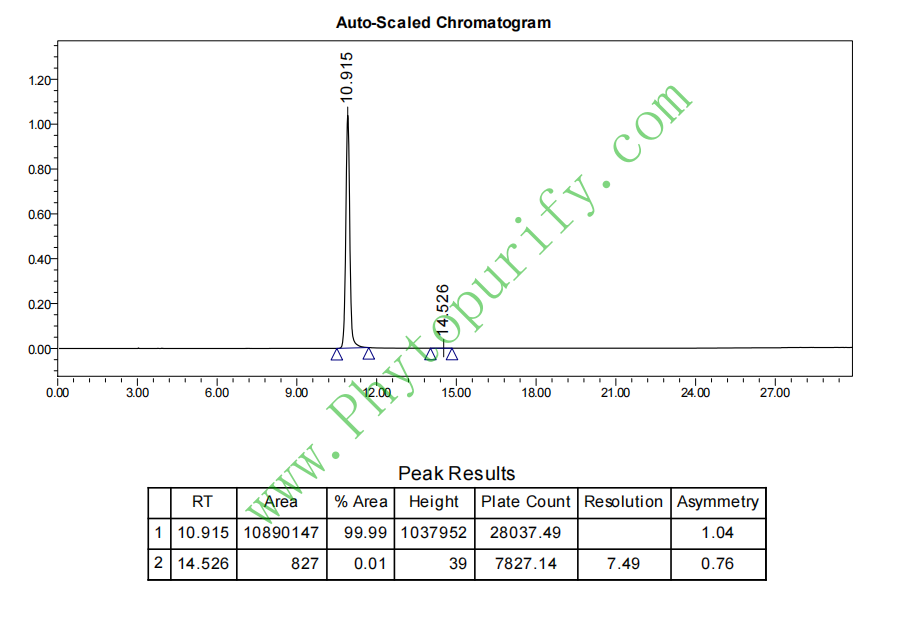
HPLC of Maltol
Storage conditions:Short-term storage at 2~8℃, long-term storage at -20 ~ -80℃
50.4400
.3281
.2816
15.3781
3.9278
16.3861
Low
15.5698
2.7064
No
Yes
No
No
Yes
Yes
0.6
Yes
No
Yes
Yes
Maltol, also known as 3-hydroxy-2-methyl-4-pyranone, is an aromatic organic compound widely found in nature. Its CAS number is 118-71-8, molecular formula is C6H6O3, and molecular weight is 126.11 g/mol. As a natural product, maltol was initially recognized for its unique caramel aroma and sweetness, and has long been used in the food industry as a safe food flavor enhancer and preservative. However, with the deepening of modern pharmacological research, the role of maltol has far exceeded the scope of "seasoning". Studies have found that it has significant antioxidant, neuroprotective, liver protective and other biological activities, especially by reducing oxidative stress and inhibiting apoptosis to enhance neural function, showing the potential to prevent diabetes peripheral neuropathy and other diseases. In addition, as a metal ion chelating agent, it also has application value in catalysis, cosmetics, and medical fields. This article will systematically review the plant sources, pharmacological mechanisms, pharmacological evaluation, and future application prospects of maltol from its chemical essence, providing a scientific perspective for the deep development and utilization of this multifunctional natural product.
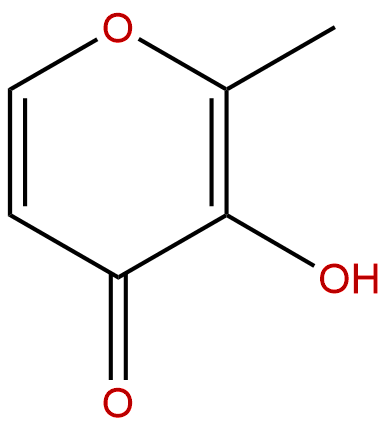
The chemical structure of maltol belongs to derivatives of γ - pyranone, and its SMILES is represented asCc1occc(=O)c1OThe structure consists of an oxygen-containing hexagonal pyran ring with a methyl group (- CH3) at position 2, a hydroxyl group (- OH) at position 3, and a carbonyl group (C=O) at position 4. The coexistence of α, β - unsaturated ketones and enol hydroxyl groups in this system is the structural basis for its weak acidity, chelating metal ion ability, and antioxidant activity.
From the analysis of the provided pharmacological parameters, its physicochemical properties exhibit typical small molecule and hydrophilic characteristics:
- Molecular weight (MW):126.11 g/mol, Far below the upper limit of 500 Da for conventional drugs, it belongs to small molecule compounds.
- Lipid water partition coefficient (LogP/LogD)The LogP is 0.3281 and LogD is 0.2816, indicating that the compound has a relatively balanced hydrophilicity and lipophilicity under physiological pH conditions, with a slight hydrophilic tendency. This is related to the polar groups such as hydroxyl and carbonyl in its structure.
- Topological Polarity Surface Area (TPSA)50.44 Å ² reflects the surface area of polar atoms (O) in the molecule, which is moderate and usually associated with good membrane permeability.
- Water solubility:15.38 mg/mL, This indicates that it has good water solubility, which is beneficial for the development of formulations and absorption distribution in vivo.
- Membrane permeability The permeability of Caco-2 cells is 16.39 × 10 ⁻⁶ cm/s, which is a relatively high value, indicating its good intestinal absorption potential. However, its blood brain barrier (BBB) penetrability is marked as "low", which may limit its direct therapeutic effect on central nervous system diseases, but its effect on peripheral nervous system (such as diabetes peripheral neuropathy) may not be limited.
- Plasma protein binding rate (PPB)15.57% indicates that it mainly exists in free form in the blood, which is beneficial for its bioavailability and efficacy.
These physicochemical properties collectively describe maltol as a small molecule with good solubility and certain membrane permeability, laying the foundation for its biological activity.
The naming of maltol directly reveals its earliest discovered source - malt. It naturally exists in Hordeum vulgare In malt and roasted malt products. In addition, it also exists in larch bark, roasted grains, coffee, cocoa, and some roasted nuts. During food processing, especially the Maillard reaction (a reaction between amino acids and reducing sugars) and the caramelization of sugars, maltol is also produced, which explains why foods such as toasted bread and roasted coffee beans are rich in this pleasant aroma component.
In traditional applications, maltol is mainly utilized for its flavor characteristics. Due to its ability to enhance the rich caramel, fruity, and sweet flavors of food, and its ability to significantly improve taste with extremely low dosage, it has been approved globally as a safe food additive (flavor enhancer) for use. In addition to the food industry, its mild aroma and antioxidant properties also make it used in cosmetics and essence fragrance industry. However, its medicinal history is not as long and clear as its edible history. Although maltol is not recorded as an independent medicinal herb in traditional medicine, ingredients rich in maltol (such as barley) are often used in traditional dietary therapy for clearing heat, harmonizing the stomach, and promoting diuresis. Modern pharmacological research has rediscovered the potential medicinal value of maltol from these naturally occurring active ingredients, bringing it from the "kitchen" to the "pharmacy".
The core pharmacological activity of maltol revolves around its powerful antioxidant The development of abilities leads to various effects such as neuroprotection and liver protection. Its mechanism of action involves the regulation of multiple key biological targets.
The target information provided by the database clearly indicates the molecular hub at which maltol exerts its effects:
Integration of mechanism of action Maltol exerts protective effects through multiple targets and pathways. On the one hand, it serves as a direct free radical scavenger and metal chelating agent, providing exogenous antioxidant support; On the other hand, it enhances the cell's self-defense ability by regulating the activity of endogenous antioxidant/detoxifying enzymes such as SOD1, CAT, GSTP1, etc. Meanwhile, by inhibiting the activity of ROS producing enzymes such as CYP2E1, oxidative stress can be alleviated from the source. This comprehensive effect of "opening up resources and reducing expenditure" enables it to effectively fight against oxidative stress under pathological conditions such as diabetes and alcoholism, and protect sensitive tissues such as nerves and liver.
The inclusion of "safety" as a related disease in the database reflects a comprehensive assessment of the biological effects of maltol. Its "safety" has a dual meaning: on the one hand, as a food additive widely used for a long time, its daily ingestion safety has been fully verified; On the other hand, in the development of drugs, the potential effects of their pharmacological activity (especially at high doses), such as inhibition of metabolic enzymes, need to be included in the evaluation system of "drug safety". The in-depth study of its targets, such as CYP450 enzymes, is aimed at gaining a more precise understanding of its therapeutic efficacy and potential interactions, ensuring the safety margin of its application.
Based on the provided pharmacological parameters and combined with classical methods Lipinski's Five Rules The Rule of Five evaluation can preliminarily determine the potential of maltol as a drug lead compound.
Lipinski's Five Rules Compliance Status:
1. Molecular weight<500 Da:Comply with(126.11)。
2. LogP < 5:Comply with(0.33)。
3. The number of hydrogen bond donors (HBDs) is less than 5:Comply with(1- OH).
4. The number of hydrogen bond acceptors (HBAs) is less than 10:Comply with(3 O atoms).
Maltol fully complies with Lipinski's five rules, indicating its good oral absorption potential.
Analysis of other key pharmacological parameters:
- Absorption and distribution Good water solubility (15.38 mg/mL) and high Caco-2 permeability (16.39) support its effective absorption after oral administration. A low plasma protein binding rate (15.57%) means a high concentration of free drugs in the blood, which is beneficial for the efficacy of the drug. but BBB penetration is low It is a clear limitation that suggests it may not be suitable for direct treatment of central nervous system diseases, but it is still effective for peripheral lesions.
- Metabolism and toxicity:
- Ames test A value of 0.6 (usually>1.0 indicates an increased risk of mutagenicity) suggests a low risk of genetic toxicity, but it needs to be comprehensively judged in conjunction with other experiments.
- chromosome aberration Marked as' present ', this is a potential genetic toxicity signal that requires caution and is a key safety issue that must be thoroughly evaluated in drug development.
- HERG inhibition No "indicates that it may not prolong the QT interval of the heart and has a lower cardiovascular risk.
- Skin sensitization (Skid_Sens)Yes "indicates that local medication or high concentrations may cause allergic reactions.
- Phototoxicity (Photo_tox)Yes, this is consistent with the characteristics of many aromatic ketone compounds and requires special attention when developing topical formulations.
- Serum biochemical indicators The impact of serum alkaline phosphatase (ALK), aspartate aminotransferase (AST), and alanine aminotransferase (ALT) is marked as "yes", indicating that biochemical changes related to liver or bone may be observed in animal experiments, and further clarification of their hepatotoxicity or physiological effects is needed in conjunction with histopathology.
Comprehensive Assessment Maltol is present in Pharmaceutical chemical properties Excellent performance: small molecule, conforms to the "five rules", good solubility, and good absorption. Its core advantage lies in its clear antioxidant/neuroprotective pharmacological activity and safety background for long-term consumption. However, it The main challenge in developing drugs is safety Especially potential chromosomal aberrations, phototoxicity, and skin sensitization. These toxic signals may be related to their chemical structure (α, β - unsaturated ketones), which is both their active center and may undergo irreversible Michael addition reactions with biomolecules, leading to toxicity. Therefore, future drug development may require Structural modification While retaining its core pharmacological activity (such as antioxidant chelating ability), reducing its reactivity improves its safety.
Research status At present, the research on maltol is in the transition stage from "food additives" to "medicinal lead compounds". A large number of preclinical studies (in vitro cell and animal models) have fully confirmed its significant effects in neuroprotection (against DPN, retinopathy), liver protection (against alcoholic liver injury), and preliminarily elucidated its core mechanism of exerting antioxidant effects by regulating multiple targets such as SOD1, CAT, CYP2E1, etc. However, research still mainly focuses on pharmacological validation. There is a relative lack of research on the pharmacokinetics, long-term toxicology, and formulation development and clinical translation for specific indications of its system. Its known potential toxicity, such as chromosomal aberrations, is a hurdle that must be overcome to advance its clinical research.
Application Prospects:
1. As a lead compound for structural optimization This is the most promising direction. Pharmaceutical chemists can use it as a template to synthesize a series of derivatives by modifying the pyranone ring, methyl group, or hydroxyl group. The goal is to screen for stronger activity, especially Improved BBB penetration To treat central nervous system diseases (such as Alzheimer's disease, Parkinson's disease), and Significant reduction in genetic toxicity and phototoxicity Candidate drugs.
2. Developed as a therapeutic drug for peripheral nervous system diseases Given its clear anti DPN activity and low BBB penetration, its development for therapeutic purposes should be given priority consideration Diabetes peripheral neuropathy For external use (such as cream, gel) or oral medicine. Its antioxidant and anti-inflammatory properties are directly targeted for this indication.
3. Functional food and health supplement additives: Using its recognized safe eating history and antioxidant properties, it can be added as a functional ingredient to specific medical nutrition or health care products for people with chronic diseases (such as diabetes and fatty liver), playing a role in assisting in regulating oxidative stress.
4. As a drug excipient or component of metal chelation therapy Its metal chelating ability can be used to develop adjunctive agents that reduce aluminum and iron overload in the body, or as regulators of certain metal dependent pathological processes.
In short, maltol is a bridging molecule that connects natural flavors with modern pharmacology. It has emerged from the dining table with remarkable therapeutic potential in the fields of neuropharmacology and liver pharmacology, thanks to its unique chemical structure and multi-target antioxidant mechanism. Although directly converting it into a drug faces safety challenges, it is undoubtedly an excellent lead compound that provides a valuable starting point for the development of novel antioxidant stress therapy drugs. Future research needs to focus on overcoming its toxicity shortcomings through rational drug design while deepening understanding of the mechanism, in order to truly release the medicinal value of this natural molecule and benefit human health.
