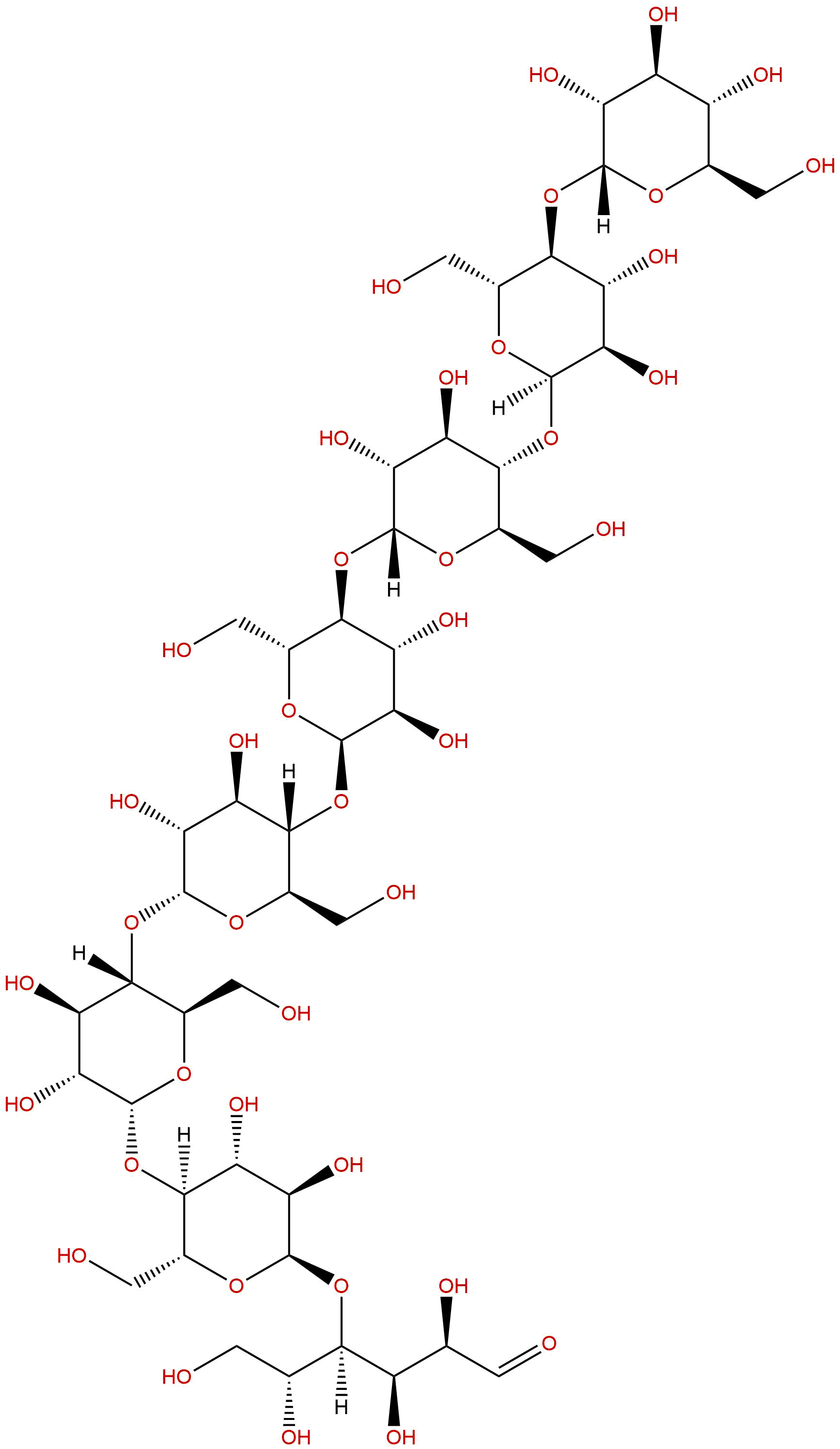


Product name: Maltooctaose
Synonym name:
Catalogue No.: BP4784
Cas No.: 66567-45-1
Formula: C48H82O41
Mol Weight: 1315.14
Botanical Source: Hordeum vulgare L.
Type of Compound: Oligoses
Purity: 95%~99%
Analysis Method: HPLC-DAD or/and HPLC-ELSD
Identification Method: Mass, NMR
Packing: Brown vial or HDPE plastic bottle
Storage: Store in a well closed container, protected from air and light. Put into refrigerate or freeze for long term storage.
Whenever possible, you should prepare and use solutions on the same day. However, if you need to make up stock solutions in advance, we recommend that you store the solution as aliquots in tightly sealed vials at -20℃. Generally, these will be useable for up to two weeks.
The product could be supplied from milligrams to grams
Inquire for bulk scale.
For Reference Standard and R&D, Not for Human Use Directly.
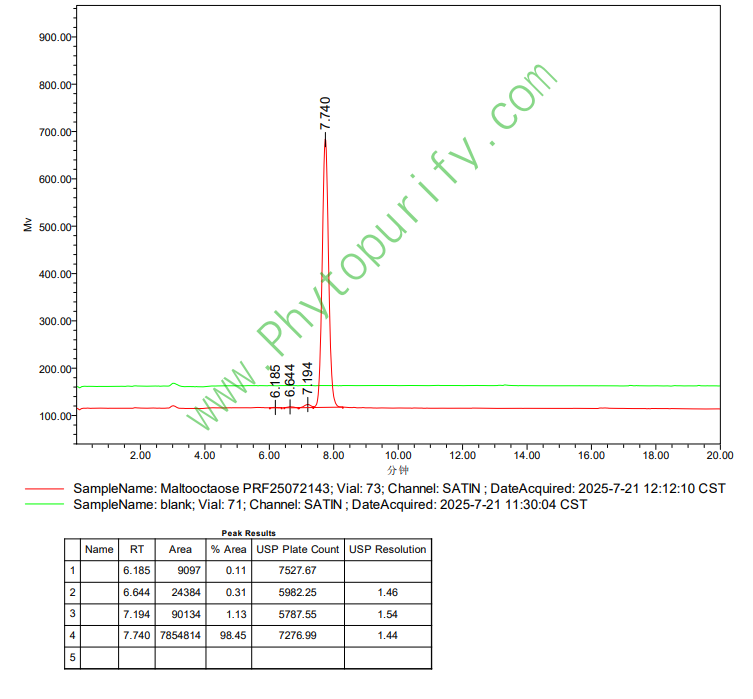
HPLC of Maltooctaose
Storage conditions:Short-term storage at 2~8℃, long-term storage at -20 ~ -80℃
672.2700
-5.0416
-5.0416
84.3264
.4379
.1032
Low
14.9300
6.9757
Yes
No
No
No
No
No
0.0
Yes
Yes
Yes
Yes
Malt oligosaccharides, as products of incomplete starch hydrolysis or enzymatic synthesis, are a linear oligosaccharide family composed of glucose units linked by alpha-1,4 glycosidic bonds. Among them, maltooligosaccharides (CAS: 66567-45-1), as a specific degree of polymerization (DP8) maltooligosaccharides, are gradually entering the field of biomedical and pharmacological researchers from their traditional role as raw materials in the food industry due to their unique chain length and physicochemical properties. Traditionally, maltooligosaccharides have been mainly used as prebiotics, food stabilizers, and energy supplements. However, with the deepening of sugar biology and functional oligosaccharide research, specific chain length maltooligosaccharides have been found to have biological activities beyond nutritional functions, such as immune regulation, gut microbiota regulation, anti-inflammatory effects, and potential as drug delivery carriers.
The unique feature of maltoctaose lies in its "medium chain length" molecular structure. Compared to short chain oligosaccharides such as maltotriose and tetrasaccharide, its molecular weight is larger (about 1315 Da) and its spatial structure is more complex; Compared to polysaccharides such as starch, it has good water solubility and a clear chemical structure. This structural characteristic enables it to interact with biomolecules (such as proteins, receptors) in specific ways, potentially mediating a series of intricate biological effects. In recent years, the use of thermophilic archaea (such as Pyrococcus furiosus)The specific synthesis of high-temperature stable enzymes from the source provides a reliable technical pathway for obtaining high-purity and structurally uniform maltoctasaccharides, greatly promoting their basic and applied research.
This article aims to systematically review the chemical properties, sources, and preparation methods of maltoctaose, with a focus on reviewing its latest research progress in the field of pharmacology. It delves into its potential mechanisms of action and molecular targets, and objectively evaluates and prospects its pharmacological properties, pharmacokinetic characteristics, and future clinical application prospects, in order to provide academic references for the deep development of this natural product in the field of biomedicine.
Malt octaose is a homologous oligosaccharide composed of eight D-glucopyranose units linearly connected by α -1,4-glycosidic bonds. Its chemical structure can be expressed as: alpha-D-Glcp - (1 → 4) - alpha-D-Glcp - (1 → 4) - alpha-D-Glcp - (1 → 4) - alpha-D-Glcp - (1 → 4) - alpha-D-Glcp - (1 → 4) - alpha-D-Glcp - (1 → 4) - alpha-D-Glcp - (1 → 4) - D-Glcp. This linear, non branched sugar chain structure gives it a certain spiral conformation tendency in aqueous solution, and the presence of its terminal reducing glucose unit also provides reaction sites for further chemical modifications such as reductive amination and glycosylation.
Its nuclear psychochemical properties are as follows:
1. Molecular weight and solubility The molecular weight is 1315.1430 Da. The molecular surface is rich in hydrophilic hydroxyl groups, and the theoretical polar surface area (TPSA) is as high as 672.27 Å ², which determines its strong hydrophilic properties. Both computational and experimental data indicate that it has excellent water solubility (approximately 84.3 mg/mL), with a LogP value of -5.04, making it a typical high hydrophilic and low fat soluble compound.
2. Spectral and chromatographic characteristics Accurate identification and purity analysis can be performed through high-performance anion exchange chromatography pulsed amperometry detection (HPAEC-PAD), high-performance liquid chromatography (HPLC), and mass spectrometry (MS). Its nuclear magnetic resonance hydrogen spectrum (¹ H NMR) can clearly display the characteristic signals of α -1,4-glycosidic bond connections (such as the anomeric hydrogen proton signal around δ 5.4 ppm), as well as subtle differences in protons on glucose units at different positions.
3. Stability As oligosaccharides, glycosidic bonds may undergo hydrolysis under acidic conditions, especially at high temperatures. But relatively stable under neutral or weakly alkaline conditions. It originates from the synthesis method of thermophilic enzymes, which also suggests that its products may have better stability than conventional hydrolysis products at higher temperatures.
These physical and chemical properties are the material basis for all of its biological activities and potential applications. The high water solubility and low fat solubility directly affect its in vivo distribution and pharmacokinetic behavior, while a clear chemical structure is a prerequisite for its specific interaction with biological targets.
Strictly speaking, maltoctasaccharides are not directly or abundantly present in any specific plant. In nature, starch is a high polymer of glucose, and its incomplete degradation product is a complex mixture containing maltose to maltooligosaccharides of different degrees of polymerization. The content of maltoctasaccharides is usually low and difficult to separate and purify. Therefore, currently obtaining high-purity maltoctasaccharides mainly relies on Enzymatic synthesis Instead of traditional plant extraction.
Traditional sources and limitations In theory, maltoctasaccharides can be produced through limited enzymatic hydrolysis of starch (derived from corn, potatoes, cassava, etc.) using alpha amylase, beta amylase, or glucose amylase. However, this method typically produces a mixture of maltooligosaccharides with different chain lengths, and the steps for separating and purifying maltoctasaccharides with a single degree of polymerization are cumbersome, low in yield, and expensive, making it difficult to meet the high requirements for compound purity and uniformity in pharmacological research.
Modern enzymatic synthesis (taking PFTA as an example)Currently, the mainstream method for obtaining structurally homogeneous maltoctasaccharides is to use enzymes with specific chain length preferences for catalytic synthesis. The PFTA mentioned in the article(Pyrococcus furiosus The source enzyme is a typical representative. Thermophilic archaea Pyrococcus furiosus It can produce a special malto oligosaccharides based trehalose synthase or related starch processing enzymes. These enzymes are stable at high temperatures and have precise catalytic properties. They can efficiently and specifically synthesize or convert specific chain lengths of maltooligosaccharides, including maltoctasaccharides, using maltooligosaccharides or starch as substrates. By optimizing the reaction conditions (such as substrate concentration, temperature, pH, time), and combining chromatographic separation technologies (such as gel filtration chromatography, preparative HPLC), we can obtain even more grams of maltodextrose standard with purity higher than 95%. This enzymatic synthesis pathway has the advantages of clear product definition, strong controllability, and easy scalability, which is the core technical guarantee for promoting the basic and applied research of maltoctaose.
Although pharmacological research on maltoctaose is still in its infancy and far from being as in-depth as small molecule drugs, existing studies have revealed its potential value in multiple dimensions of biological activity, mainly focusing on intestinal health, immune regulation, and as a functional carrier.
Probiotics and intestinal microbiota regulation activity This is the fundamental activity of maltose octaose that has received the most attention. As a non digestible oligosaccharide that is not easily hydrolyzed by upper gastrointestinal enzymes, maltoctaose can fully reach the colon and be selectively utilized by intestinal symbiotic microorganisms (especially beneficial bacteria such as Bifidobacterium and Lactobacillus) to promote their proliferation. Research has shown that specific chain length maltooligosaccharides (such as DP8) may have higher selectivity towards certain strains than common prebiotics (such as oligofructose). By regulating the structure of the microbiota, maltoctasaccharides indirectly affect the production of short chain fatty acids (SCFAs, such as butyric acid and propionic acid), thereby improving intestinal barrier function, inhibiting pathogen colonization, and alleviating intestinal inflammation. Animal models have shown that maltoctaose supplementation can improve the disease activity index and alleviate histopathological damage in DSS (dextran sulfate sodium) - induced colitis mice.
Immune regulation and anti-inflammatory activity Based on its ability to regulate gut microbiota, maltoctaose can produce systemic immune regulatory effects. Increased SCFAs, especially butyric acid, have been shown to be important immune regulatory molecules that can regulate the differentiation and function of regulatory T cells (Tregs) and suppress excessive inflammatory responses. In addition, in vitro studies have shown that maltulose itself may directly or indirectly affect the maturation and cytokine secretion profile of immune cells through pattern recognition receptors (such as Toll like receptors, TLRs) or specific lectin receptors on the surface of dendritic cells, tending to induce immune tolerance or moderate Th1/Th2 balance rather than strong pro-inflammatory responses.
As a delivery and protective carrier for drugs/functional factors By utilizing the molecular structural characteristics of maltoctaose, it can be developed as a functional carrier. For example, its linear spiral cavity can form inclusion complexes with certain hydrophobic small molecules, enhancing their water solubility and stability. More importantly, maltoctaose can serve as a substrate or backbone for "glycosylation" modification, connecting targeting groups, fluorescent probes, or therapeutic molecules through chemical or enzymatic methods to construct oligosaccharide based drug conjugates. Its excellent biocompatibility and potential intestinal targeting (enzymatic hydrolysis by gut microbiota) give it unique advantages in the design of oral colon targeted delivery systems.
Other potential activities Preliminary studies also suggest that maltoctasaccharides may affect the bioavailability of minerals (such as promoting calcium absorption) and may have beneficial effects on blood glucose homeostasis by regulating enzymes or signaling pathways related to sugar metabolism, but these activities require more direct evidence to support.
The biological effects of maltose octasaccharides are mainly mediated through direct and indirect pathways, and their molecular targets are also divided into two categories: microbial targets and host targets.
Indirect mechanism: Targeting gut microbiota as the core target
Direct mechanism: interaction with host biomolecules
At present, research on the direct molecular targets of maltoctaose is still very limited, and most of its pharmacological activities are still attributed to indirect effects produced by regulating the microbiota. In the future, more chemical and biological methods such as sugar chips, surface plasmon resonance, molecular docking and simulation are needed to explore whether there are high affinity direct host targets.
Based on its physicochemical properties and preliminary biological data, a preliminary evaluation of the pharmacological properties of maltoctaose can be conducted.
Analysis of drug properties parameters:
Pharmacokinetic characteristics The expected oral pharmacokinetic characteristics of maltoctaose are as follows: the peak time (Tmax) may reflect the time it reaches the colon and is initially metabolized; The blood drug concentration is extremely low, and the prototype drug may not be detectable; Its pharmacokinetic (PD) curve is separated from its pharmacokinetic (PK) curve, and its efficacy lags behind and lasts for a long time, mainly depending on its sustained changes in microbial community structure and the sustained production of SCFAs. At present, there is a lack of systematic human PK research data.
In summary, maltoctaose is not suitable for development as a systemic drug that requires high systemic exposure in the traditional sense. The best development path is as follows:Locally effective intestinal function regulators(such as formula foods for special medical purposes, prebiotic drugs)Carrier for oral colon targeted delivery system or The skeleton of sugar probes for diagnosis。
Malt eight sugar has broad application prospects in the field of medicine and health, but precise positioning and deep development based on its characteristics are needed.
Direct application field:
As a derivative application of platform technology:
Challenges and Prospects:
In the future, maltoctaose is expected to develop from a simple sugar molecule into a multifunctional platform molecule that connects nutrition, microbiology, immunology, and drug delivery, playing an important role in the fields of "microecological pharmaceuticals" and "precision nutrition interventions".
Malt eight sugar, as a natural maltooligosaccharide with a clear structure and specific source, is breaking through the traditional food ingredient category and entering the hall of pharmacological research with its unique chemical properties and emerging biological activities. Current research indicates that it mainly exerts core pharmacological effects such as prebiotics, immune regulation, and anti-inflammatory effects through indirect pathways of reshaping the gut microbiota and producing beneficial metabolites (such as SCFAs). Its good water solubility, biocompatibility, and predictable low toxicity lay the foundation for its safety, while its extremely low oral bioavailability clarifies its development positioning as a local (intestinal) acting drug.
Although there are still gaps in direct molecular target identification, deep mechanism of action analysis, and high-level clinical evidence, the maturity of enzymatic synthesis technology provides material guarantees for high-quality research. Looking ahead to the future, maltoctaose is not only expected to be directly developed as a microecological regulator for gastrointestinal and metabolic disease management, but also has the potential to become an intelligent glycosylation platform for constructing colon targeted delivery systems and developing microbiota responsive diagnostic probes. With the deep integration of glycobiology and synthetic biology, the exploration of maltoctasaccharides and even the entire functional oligosaccharide family will undoubtedly open up a new field full of opportunities for the development of natural product pharmacology and new therapeutic strategies.
