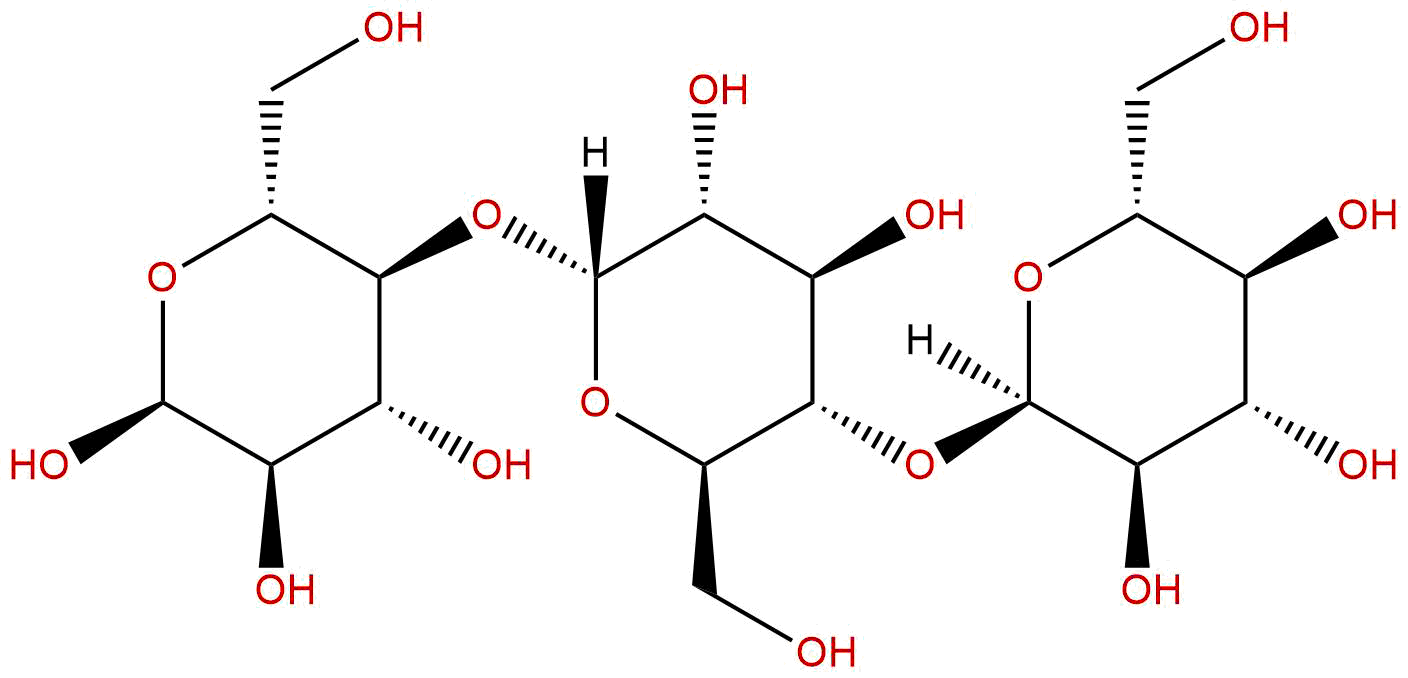


Product name: Maltotriose
Synonym name: Amylotriose; D-Maltotriose;Triomaltose
Catalogue No.: BP4788
Cas No.: 1109-28-0
Formula: C18H32O16
Mol Weight: 504.438
Botanical Source:
Type of Compound: Oligose
Purity: 95%~99%
Analysis Method: HPLC-DAD or/and HPLC-ELSD
Identification Method: Mass, NMR
Packing: Brown vial or HDPE plastic bottle
Storage: Store in a well closed container, protected from air and light. Put into refrigerate or freeze for long term storage.
Whenever possible, you should prepare and use solutions on the same day. However, if you need to make up stock solutions in advance, we recommend that you store the solution as aliquots in tightly sealed vials at -20℃. Generally, these will be useable for up to two weeks.
The product could be supplied from milligrams to grams
Inquire for bulk scale.
For Reference Standard and R&D, Not for Human Use Directly.
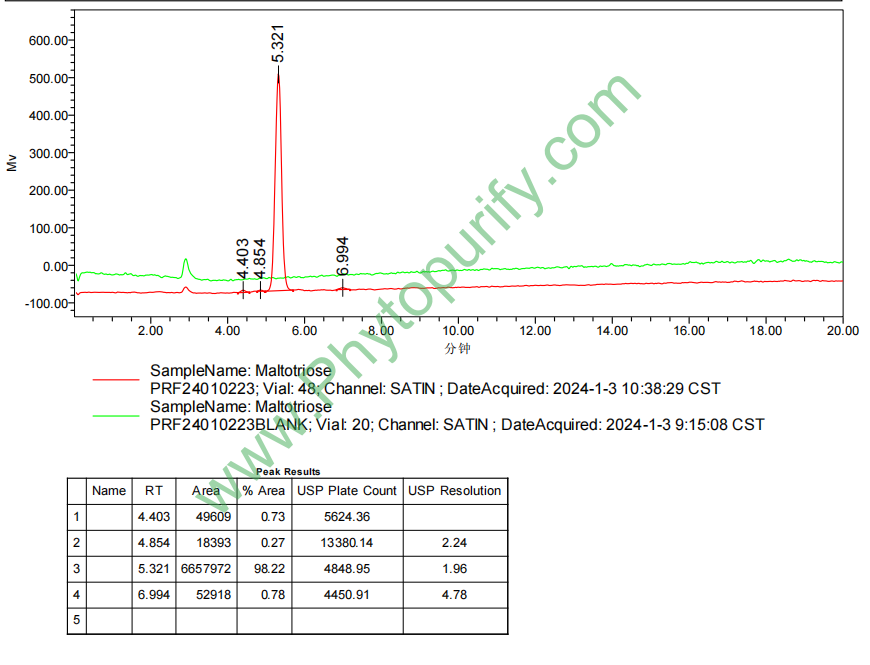
HPLC of Maltotriose
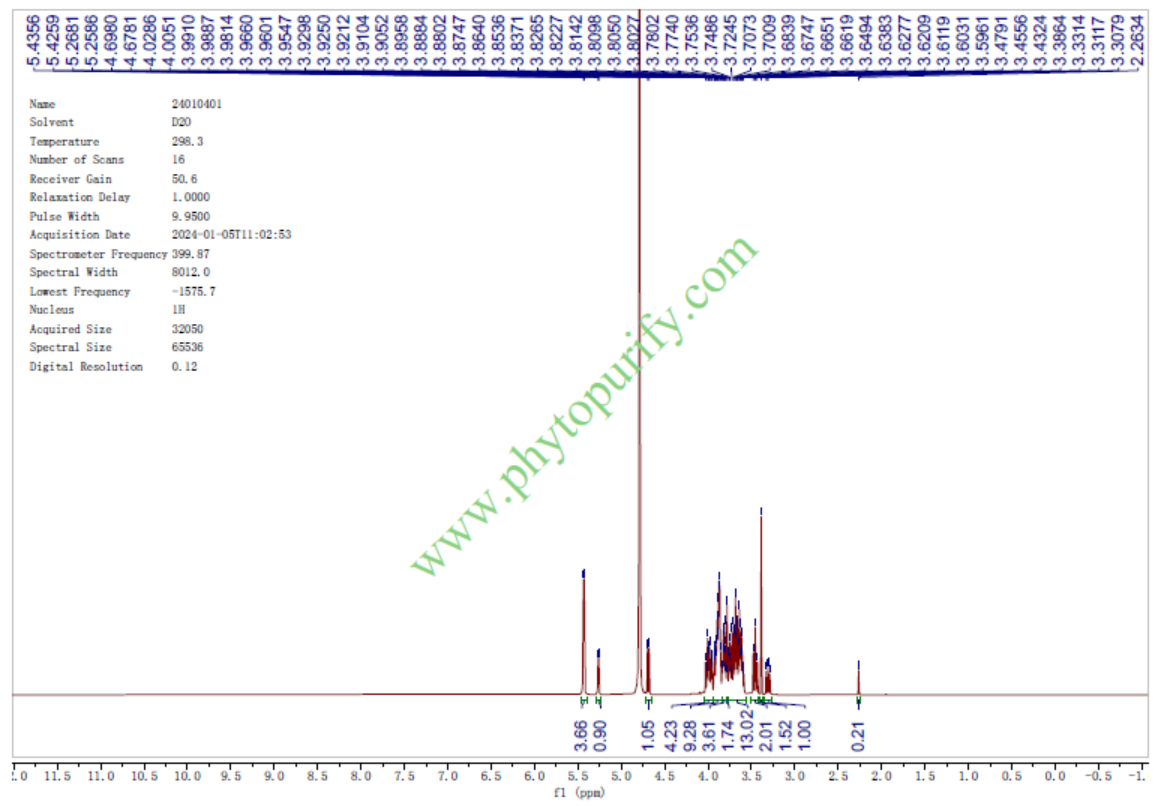
HNMR of Maltotriose
Storage conditions:Short-term storage at 2~8℃, long-term storage at -20 ~ -80℃
268.6800
-3.2031
-3.2031
132.7899
.3942
.1700
Low
12.3175
4.7405
Yes
No
No
No
No
No
0.0
Yes
Yes
Yes
Yes
Maltotriose (CAS number: 1109-28-0) is a maltooligosaccharide composed of three glucose units connected by an alpha-1,4 glycosidic bond. For a long time, it has been mainly regarded as an enzymatic hydrolysis product of starch and glycogen, and is recognized as a sweetener or functional ingredient in the food industry. In the field of basic biology, maltotriose is well-known as a specific inducer of E. coli maltose operon and is a classic model molecule for studying gene regulation in prokaryotes. However, in recent years, with the deepening of research on glycobiology and drug delivery systems, the biological significance of maltotriose has far exceeded its traditional role as a "metabolic substrate" or "inducer". Studies have found that its unique oligosaccharide structure makes it a potential biocompatible carrier, especially in improving the water solubility and targeting of insoluble drugs, such as enhancing the efficacy of photosensitizers in photodynamic therapy for pancreatic cancer. More notably, the regulatory role of maltotriose and its related metabolites on the gut microbiota is gradually being revealed. They interact with specific pattern recognition receptors (such as TLR2, TLR4, NOD2) on intestinal epithelial cells and immune cells to regulate downstream signaling pathways (such as NF - κ B), affecting the expression of antimicrobial peptides, mucins, and the balance of inflammatory factors, thus playing a potential role in maintaining intestinal barrier homeostasis and regulating gut microbiota. This article aims to systematically review the chemical properties, pharmacological activities, mechanisms of action, and drug properties of maltotriose, and comprehensively evaluate its potential for transformation from a basic biochemical molecule to a biologically active substance and drug delivery carrier with clinical application prospects.
The molecular formula of maltotriose is C ₁₈ H ∝₂ O ₁₆, with a molecular weight of 504.4380 Da. Its core chemical structure is a linear straight chain, consisting of three D-glucopyranose residues connected by α - (1 → 4) glycosidic bonds. This structure determines a series of key physicochemical properties.
Firstly, maltotriose molecules are rich in hydroxyl groups (- OH), making them highly hydrophilic. The calculated topological polar surface area (TPSA) is as high as 268.68 Å ², and the octanol water partition coefficient (LogP) is -3.2031. The theoretical prediction shows excellent water solubility, with a calculated value of approximately 132.79 mg/mL. These data indicate that maltotriose has high solubility in aqueous environments and is difficult to penetrate the lipid bilayer, which is consistent with its extremely low blood-brain barrier permeability prediction. Its aqueous solution has stable properties and no reducing end (if it is in the form of a completely non reducing sugar, but often contains a reducing end in the preparation), but it can undergo hydrolysis under strong acid or specific glycosidase action.
As an oligosaccharide, maltotriose has a moderate molecular size, retaining some of the hydrophilic properties of monosaccharides while possessing a certain spatial structure and molecular recognition ability. The hydroxyl network on its surface can form extensive hydrogen bonds with other molecules, which is the chemical basis for its ability to serve as a drug carrier and improve the water solubility of loaded drugs. At the same time, its structure can be recognized and degraded by alpha glucosidase secreted by certain specific bacteria in the intestine, such as Bifidobacterium and Lactobacillus, which is also one of the material foundations for regulating the gut microbiota. Preliminary safety assessment shows that the Ames test result is negative (0.0), indicating no mutagenicity; There is no inhibitory effect on hERG potassium channels, indicating a low risk of cardiac toxicity. These physicochemical and safety properties provide a favorable starting point for its biomedical applications.
Maltotriose does not exist in large quantities in free form in nature, but mainly as enzymatic or acid hydrolysis products of large molecular polysaccharides such as starch and glycogen. Therefore, its "plant source" is essentially a plant resource rich in starch.
Main source:
1. Grains: Barley, rice, corn, wheat, etc. are the main sources of starch and the basic raw materials for industrial production of maltotriose. Among them, sprouted barley (malt) is rich in alpha - and beta amylase, boundary dextrinase, etc., and is an important system for the traditional production of maltose oligosaccharides (including maltotriose).
2. Potatoes and tubers: Potatoes, cassava, sweet potatoes, etc. also contain a large amount of starch.
3. Microbial synthesis: Some microorganisms (such as strains of Bacillus and Pseudomonas) can secrete highly specific maltotriose producing enzymes (such as maltotriose amylase), which can efficiently produce maltotriose directly from starch as a substrate. This is currently a research hotspot in biological preparation.
Extraction and preparation methods:
The preparation of maltotriose mainly relies on directed enzymatic hydrolysis of starch, and separation and purification are key.
1. Enzymatic hydrolysis:
* Traditional malt enzyme method: Using the enzyme system of malt itself (alpha amylase, beta amylase, debranching enzyme, etc.) to hydrolyze starch slurry, a mixed syrup containing glucose, maltose, maltotriose, and higher degree of polymerization oligosaccharides is produced. The product composition of this method is complex.
* Specialized enzyme method: The use of recombinant or purified specific enzymes, such as maltotriose amylase (which can hydrolyze starch chains to produce maltotriose), pullulanase (debranching enzyme), and β - amylase, can significantly improve the yield and purity of maltotriose. This is currently the mainstream direction for industrial production of high-purity maltotriose.
2. Separation and purification technology:
The enzymatic hydrolysis solution has complex components and requires multiple purification steps to obtain high-purity maltotriose.
* Activated carbon chromatography/ion exchange chromatography: Preliminary removal of pigments, ions, and some impurities.
* Simulated moving bed chromatography: This is the most effective and economical industrial continuous separation technology for separating sugar homologues (such as maltose, maltotriose, maltotriose), which utilizes the difference in distribution coefficients between different oligosaccharides in the stationary and mobile phases to achieve efficient separation.
* Membrane separation technology: Ultrafiltration and nanofiltration can be used for desalination, concentration, and preliminary classification.
* Crystallization method: High purity maltotriose solution can crystallize and precipitate under specific conditions to obtain pure crystalline products.
3. Analysis and identification:
During the preparation process, high-performance liquid chromatography (HPLC, usually using amino or carbon columns) and thin layer chromatography (TLC) are used to monitor the composition of the product, and the final structure is confirmed by mass spectrometry (MS) and nuclear magnetic resonance (NMR).
In recent years, research has broken through the traditional understanding that maltotriose is only used as a nutritional matrix, revealing its pharmacological activities in two dimensions: drug delivery and intestinal health regulation.
1. As an efficient drug delivery carrier:
The oligosaccharide structure of maltotriose makes it an excellent building block for drug delivery systems (DDS). Its pharmacological activity is reflected in "increasing efficiency" rather than direct killing.
* Enhance water solubility: Many highly effective drugs, such as chemotherapy drugs and photosensitizers, have poor water solubility due to their strong hydrophobicity, which limits their formulation development and in vivo application. Maltotriose can be loaded onto these drugs through chemical coupling (such as forming ester and amide bonds) or physical encapsulation (supramolecular assembly based on hydrogen bonding and hydrophobic interactions). Its hydrophilic shell can significantly improve the overall water solubility of the complex. For example, studies have shown that the dispersibility of maltotriose modified photosensitizers in water is greatly improved, creating conditions for intravenous administration.
* Improve targeting: Some tumor cells (such as pancreatic cancer cells) overexpress glucose transporters (GLUTs) on the surface to meet their vigorous glycolysis needs (Warburg effect). Maltotriose, as a glucose oligomer, may be recognized and internalized by these highly expressed GLUTs, thereby achieving tumor targeted drug delivery. In the study of photodynamic therapy (PDT) for pancreatic cancer, compared with free photosensitizer, maltotriose photosensitizer conjugate significantly increased its accumulation at tumor site, and reduced its non-specific distribution in normal tissues (such as skin), thus improving the anti-tumor efficacy and alleviating the side effects of phototoxicity.
2. Regulating gut microbiota and maintaining intestinal barrier:
This is the most promising research direction for maltotriose as a bioactive molecule. Its function is not direct sterilization, but indirectly achieved through "prebiotic" like effects and immune regulation.
* Probiotic like effects: Maltotriose can be selectively utilized by some beneficial bacteria (such as certain strains of Bifidobacterium and Lactobacillus) to promote their proliferation, while inhibiting the growth of potential pathogenic bacteria and optimizing the structure of the gut microbiota. A healthy microbiota metabolizes short chain fatty acids (SCFAs), lowers intestinal pH, further inhibits harmful bacteria, and provides energy for intestinal epithelial cells.
* Enhance intestinal barrier function: Research has shown that maltotriose or its metabolites can upregulate the expression of mucin (such as MUC2) in intestinal epithelial cells, thicken the mucus layer, and physically isolate bacteria from the epithelium. At the same time, it can stimulate Paneth cells and epithelial cells to produce defense factors (such as DEFB1), enhancing chemical barriers.
* Anti inflammatory and immune regulation: In experimental colitis models, maltotriose intervention showed a reduction in inflammatory damage. Its mechanism is related to regulating intestinal immune balance, such as promoting the expression of anti-inflammatory factor IL-10 and inhibiting excessive pro-inflammatory responses.
The multiple pharmacological activities of maltotriose stem from its interactions with various proteins and pathways in biological systems. Its mechanism of action mainly revolves around the network Receptor recognition and Energy metabolism induction Two main lines unfold.
Core mechanism of action and targets:
As a pattern molecule recognized by innate immune receptors:
Maltotriose, as a microbial associated molecular pattern (MAMP) or dietary signaling molecule, can be recognized by pattern recognition receptors (PRRs) on the surface of intestinal immune cells and epithelial cells.
Regulating cellular energy metabolism and barrier function:
Directly regulating protective gene expression:
In addition to receptor and metabolic induction, maltotriose or its downstream signals may directly regulate the transcription of specific genes.
Mechanism network integration:
After maltotriose enters the intestine, its direct action (possibly as a ligand) and indirect action (by altering the metabolic profile of the microbiota) are intertwined. On the one hand, it is utilized by beneficial bacteria to produce SCFAs, activate the AMPK and PPAR γ pathways of intestinal epithelial cells, enhance barriers, and inhibit inflammation; On the other hand, the signals generated by its own or microbial changes are sensed by the TLR/NOD2 receptors of the immune system, which finely regulate pathways such as NF - κ B, balancing defense and tolerance. Ultimately, by upregulating effector molecules such as MUC2, DEFB1, IL-10, etc., the stability of the intestinal environment is jointly maintained.
Based on its physical and chemical properties and safety data, maltotriose has distinct medicinal characteristics, both advantages and challenges.
Pharmaceutical advantages:
1. High security: As an oligomer of glucose, it is essentially a food source component with excellent biocompatibility. Ames negative and no hERG inhibition indicate a low risk of genetic toxicity and acute cardiac toxicity. Expected oral acute toxicity is very low.
2. Excellent water solubility: The extremely high water solubility (>100 mg/mL) makes it easy to make various oral or injectable formulations without the need for complex solubilization techniques.
3. Good stability: Chemical properties are stable at physiological pH and temperature, and are not easily decomposed on their own.
4. Mature preparation process: The enzymatic production and SMB chromatographic purification technology derived from starch have become quite mature, enabling large-scale production with high purity and low cost, meeting the demand for medicinal raw materials.
Challenges in drug development and pharmacokinetic characteristics:
1. Oral absorption and systemic exposure: Maltotriose has a molecular weight exceeding 500 Da and strong hydrophilicity (LogP-3.2), with extremely poor passive transmembrane absorption. After oral administration, most of them enter the intestine directly. In the human digestive tract, due to the lack of efficient α - glucosidase that hydrolyzes maltotriose (which mainly exists in the brush border of the small intestine and has high activity towards maltose but weak activity towards maltotriose), only a small amount is hydrolyzed into glucose for absorption. Therefore, its oral bioavailability is expected to be very low, and the concentration of the prototype drug in the systemic circulation is extremely low. This actually makes it serve as Drugs or prebiotics that act locally on the intestine Avoiding systemic side effects is an advantage.
2. Distribution: Even with trace absorption, due to its high hydrophilicity and large TPSA, it is difficult to penetrate the blood-brain barrier, has a small distribution volume, and is mainly limited to extracellular fluid.
3. Metabolism and excretion: The main metabolic sites of maltotriose are colon Maltotriose that has not been absorbed by the upper gastrointestinal tract reaches the colon and becomes a substrate for the gut microbiota, which is hydrolyzed into short chain fatty acids, gases, etc. by enzymes secreted by specific bacteria. The prototype drug and its complete glucose unit are almost not reabsorbed by the kidneys. If they enter the circulation, they will be quickly excreted from the urine as the prototype through the kidneys.
4. Pharmacodynamics as a carrier: When maltotriose is used as a drug carrier (such as coupled with photosensitizers), its pharmacokinetic behavior will undergo fundamental changes, mainly depending on the properties of the connected drug. The molecular weight, lipophilicity, and targeting of the conjugate will be altered. For example, maltotriose photosensitizer conjugates may enter tumor cells through GLUT mediated endocytosis, and their in vivo distribution, metabolism, and clearance pathways will be completely different from those of free photosensitizers and free maltotriose, requiring case studies.
Summary: Maltotriose itself is not a typical candidate molecule for systemic action drugs, but its excellent safety, water solubility, and intestinal local activity make it very suitable for development as Oral intestinal microbiota regulator or Local drug delivery carrier system The evaluation of its medicinal properties must be closely integrated with its specific application scenarios.
The clinical application prospects of maltotriose can be clearly divided into two main directions: as Core functional components of therapeutic preparations And as Key components of innovative drug delivery systems。
1. Microecological regulation therapy for intestinal related diseases:
* Inflammatory bowel disease (IBD): Based on its multiple mechanisms of regulating microbiota, enhancing barriers, and anti-inflammatory effects, maltotriose can be used as a dietary supplement or pharmaceutical excipient for the adjuvant treatment of ulcerative colitis and Crohn's disease. Its combination with existing anti-inflammatory drugs may produce synergistic effects, reducing drug dosage and side effects.
* Irritable bowel syndrome (IBS): Maltotriose may alleviate symptoms of IBS subtypes associated with dysbiosis, such as IBS-D and IBS-C, by stabilizing the microbiota and regulating intestinal motility and sensory function.
* Antibiotic associated diarrhea and Clostridium difficile infection: Used after antibiotic treatment, it helps to quickly restore the damaged gut microbiota, inhibit the colonization of pathogenic bacteria, and prevent or assist in the treatment of diarrhea.
* Intestinal axis intervention for metabolic diseases: Intestinal flora is closely related to obesity and diabetes. Maltotriose, as a prebiotic, may provide a new nutritional intervention strategy for the management of metabolic diseases by improving microbiota structure, increasing SCFAs production, and regulating systemic low-grade inflammation.
2. Intelligent delivery vehicles in tumor targeted therapy:
* Photodynamic/photothermal treatment of solid tumors such as pancreatic cancer: This is currently the most direct application direction of research. By utilizing the active glucose metabolism of tumor cells, the construction of maltotriose modified photosensitizers or photothermal agents can achieve specific drug enrichment at the tumor site, improving the efficacy and safety of PDT/PTT. At present, great potential has been demonstrated through in vitro and animal experiments, and it urgently needs to be promoted to preclinical translational research.
* Targeted delivery of chemotherapy drugs: Coupling or assembling maltotriose with hydrophobic chemotherapy drugs (such as paclitaxel, SN-38, etc.) into nanoparticles is expected to improve drug solubility and utilize GLUT mediated targeting to reduce systemic toxicity and increase treatment index.
* Diagnostic imaging agent carrier: Similarly, it can be used to deliver fluorescent probes or magnetic resonance contrast agents for precise imaging diagnosis of tumors.
Future prospects and challenges:
1. Deep analysis of mechanism: It is necessary to clarify whether maltotriose acts directly as a signaling molecule on host cell receptors or indirectly through microbial metabolites. More detailed mechanism research is needed using sterile animals, receptor knockout models, etc.
2. Structural optimization and derivatization: Chemical modification of maltotriose (such as introducing specific functional groups) may enhance its affinity with specific receptors or improve its metabolic stability (resistance to upper gastrointestinal hydrolysis), thereby developing a more active and targeted new generation of prebiotics or carriers.
3. Clinical translational studies: At present, most of the active research is still at the stage of cell and animal models. Rigorous clinical trials need to be designed to verify the exact efficacy and dose-response of maltotriose in regulating human intestinal health.
4. Development of drug coupling technology: How to achieve efficient and controllable coupling of maltotriose with different drug molecules, while ensuring the stability of the conjugate in vivo and effective release at the target, is the core technical challenge faced by drug delivery applications.
5. Regulations and Classification: As prebiotics or carriers, their regulatory pathways are different. It is necessary to clarify the different development strategies and regulatory requirements for it as a "food ingredient," "health food ingredient," or "drug.
Maltotriose, once regarded as a common oligosaccharide in basic biochemical metabolism, is shining with new brilliance in the fields of natural product pharmacology and drug development due to its unique chemical structure and emerging biological activity. It crossed over from Microbial gene inducer to Intestinal microbiota regulator And then come again Tumor targeted drug carrier The multiple roles of natural small molecule compounds demonstrate their multifunctional potential. Its mechanism of action involves multiple key signaling pathways such as AMPK, TLR/NF - κ B, PPAR γ, etc. By regulating effector molecules such as MUC2, DEFB1, IL-10, it plays a networked regulatory role in maintaining intestinal homeostasis. The excellent physicochemical properties (high water solubility, high safety) have laid a solid foundation for its drug development, while its unique intestinal local effects and potential tumor targeting ability indicate differentiated clinical application directions. Although there are still challenges in terms of deep mechanisms of action, structural optimization, and clinical validation, maltotriose undoubtedly provides us with an excellent example of discovering lead compounds from natural products that combine carrier function and biological regulatory activity. With the cross fusion of sugar science, microbiology, and nanomedicine, maltotriose and its derivatives are expected to open up new paths in the fields of disease prevention, treatment, and diagnosis in the future, achieving a leap from the "dining table" to the "pharmacy".
