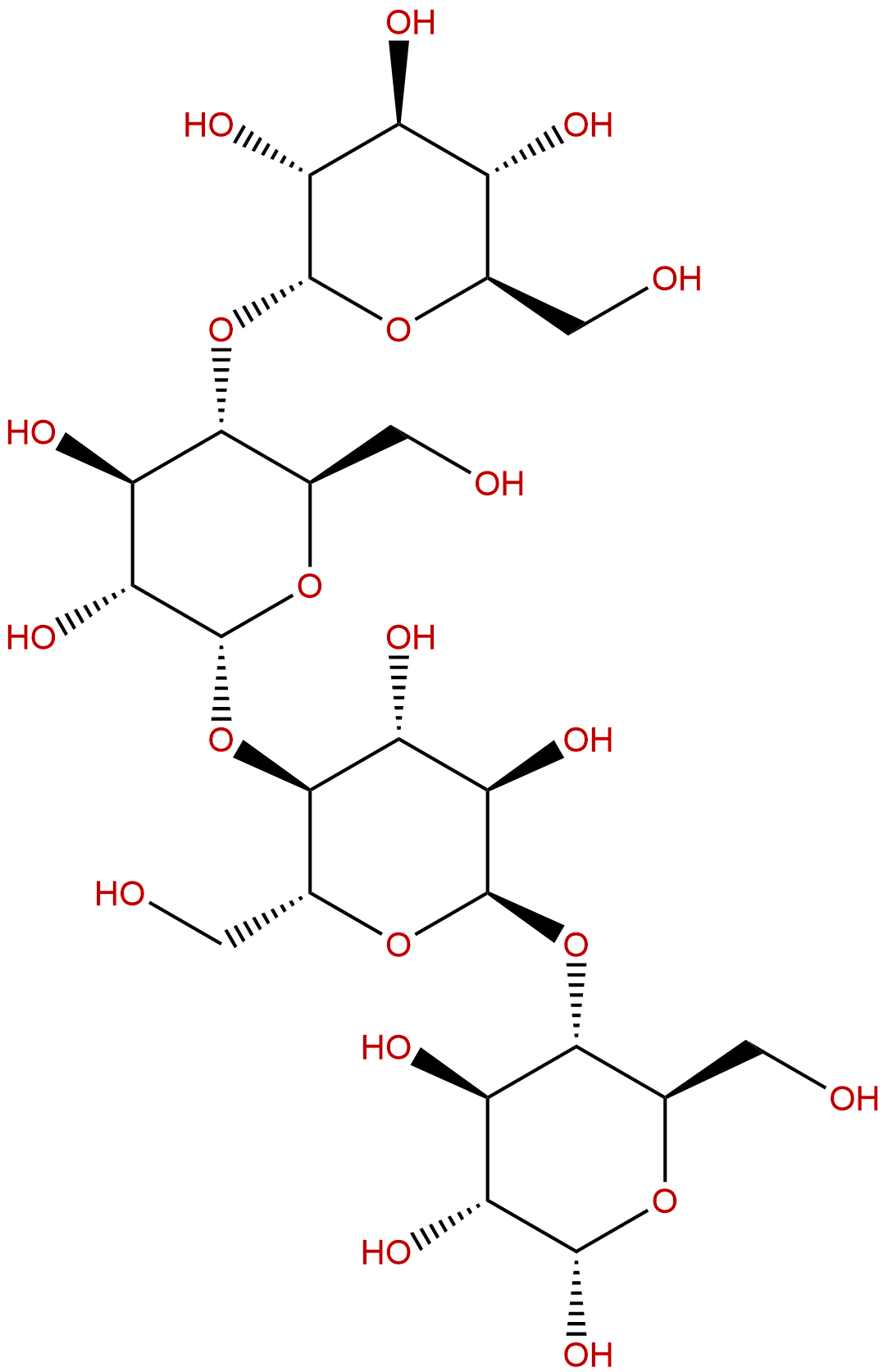


Product name: Maltotetraose
Synonym name: Amylotetraose
Catalogue No.: BP3712
Cas No.: 34612-38-9
Formula: C24H42O21
Mol Weight: 666.579
Botanical Source:
Physical Description:
Type of Compound:
Purity: 95%~99%
Analysis Method: HPLC-DAD or/and HPLC-ELSD
Identification Method: Mass, NMR
Packing: Brown vial or HDPE plastic bottle
The product could be supplied from milligrams to grams. Inquire for bulk scale.
We provide solution to improve the water-solubility of compounds, thereby facilitating the variety of activity tests and clinic uses.
For Reference Standard and R&D, Not for Human Use Directly.
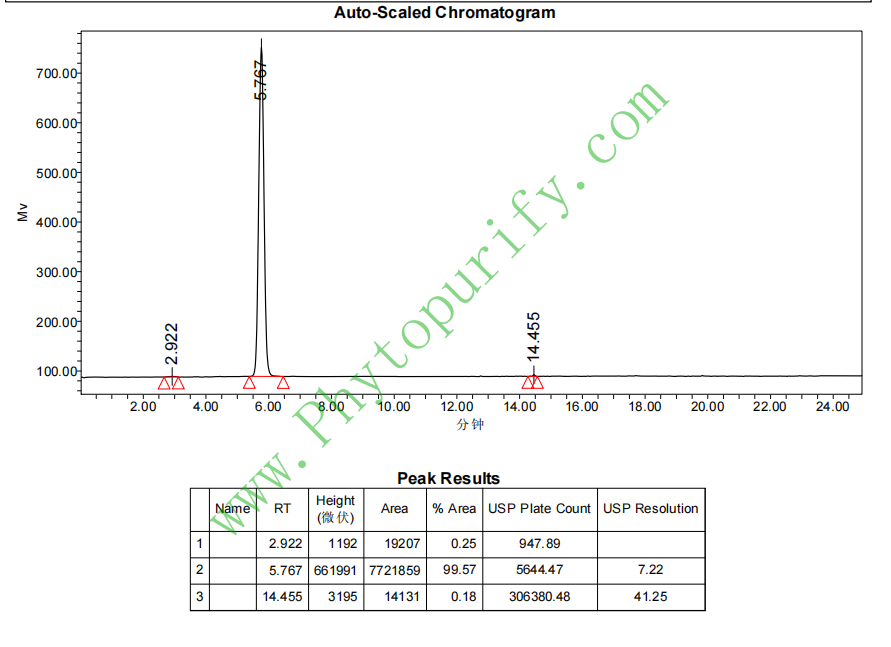
HPLC of Maltotetraose
Storage conditions:Short-term storage at 2~8℃, long-term storage at -20 ~ -80℃
347.8300
-3.7206
-3.7195
100.9564
.4168
.1468
Low
13.3838
5.0744
Yes
No
No
No
No
No
0.0
Yes
Yes
Yes
Yes
Maltotetraose (CAS number: 34612-38-9) is a low molecular weight maltose composed of four D-glucose units connected by alpha-1,4 glycosidic bonds, and is an important member of the functional oligosaccharide family. As an intermediate product of starch hydrolysis by amylase, maltotetraose is widely present in sprouted grains, fermented foods, and certain microbial metabolites in nature. For a long time, maltotetraose has been mainly used as a clinical biochemical diagnostic reagent - as a specific substrate for measuring alpha amylase activity, it plays an irreplaceable role in the diagnosis of diseases such as acute pancreatitis and mumps. However, in the past decade, with the in-depth study of glycobiology and natural product pharmacology, the biological activity spectrum of maltotetraose has been significantly expanded, and its potential application value in anti-inflammatory, anti atherosclerosis, prebiotic regulation, bacterial infection detection and other fields has gradually emerged.
It is worth noting that pharmacological research on maltose tetrasaccharides exhibits significant "multi-target" characteristics. On the one hand, it can antagonize the inflammatory response induced by tumor necrosis factor - α (TNF - α) by inhibiting the activity of nuclear factor kappa B (NF - κ B) and reducing the expression of intercellular adhesion molecule-1 (ICAM-1); On the other hand, it can inhibit the migration of vascular smooth muscle cells and neovascularization induced by platelet-derived growth factor (PDGF), indicating its therapeutic potential in vascular remodeling related diseases. In addition, maltose tetrasaccharides, as prebiotics, can exert systemic immune regulatory effects by regulating gut microbiota composition and enhancing intestinal barrier function. What is even more remarkable is that maltotetraose derivatives can serve as molecular probes to achieve specific imaging of infected lesions by targeting bacterial maltodextrin transporters. These findings collectively outline a clear pathway for the transformation of maltose from traditional diagnostic reagents to multifunctional natural drug candidate molecules.
This article will systematically review the research progress of maltulose from the aspects of chemical structure, physicochemical properties, pharmacological activity, mechanism of action, drug evaluation, and clinical application prospects, in order to provide theoretical basis for the modern pharmacological development of this ancient oligosaccharide.
The chemical formula of maltose tetrasaccharides is C ₂₄ H ₄₂ O ₂₁, with a molecular weight of 666.5790 g/mol. Its structure is composed of four D-glucopyranose units linearly connected by α -1,4-glycosidic bonds, and the hemiacetal hydroxyl group of the reducing end glucose remains free, giving the molecule a certain degree of reducibility. From a conformational perspective, each glucose unit adopts a ⁴ C ₁ chair conformation, and the dihedral angle (φ/ψ) of the glycosidic bond between adjacent sugar rings is usually around -40 °/-40 °, forming a relatively compact helical conformation. This conformational feature allows maltose tetrasaccharides to exhibit a certain degree of flexibility in aqueous solution, which is beneficial for adaptive matching with protein binding sites.
The physicochemical properties of maltose tetrasaccharides have a decisive impact on their biological activity and medicinal properties. Its lipid water partition coefficient (LogP) is -3.7206, indicating that the molecule has strong hydrophilicity and is almost insoluble in organic solvents. The topologically polar surface area (TPSA) is as high as 347.8300 Å ², much higher than the typical threshold for oral drugs (140 Å ²), which is directly related to the densely distributed hydroxyl groups on its molecular surface. The water solubility parameter is 100.9564 mg/mL, which is a relatively high level in oligosaccharides and provides favorable conditions for their distribution and excretion in biological fluids. It is worth noting that the blood-brain barrier penetration ability of maltose tetrasaccharides is extremely low, which limits the possibility of their application in the central nervous system, but also means that the safety of peripheral administration is relatively high. In addition, the hERG inhibition prediction was negative, and the Ames test result was 0.0, indicating that the compound has no significant risk of cardiac toxicity and genetic toxicity.
In structural identification, maltose tetrasaccharides exhibit characteristic nuclear magnetic resonance (NMR) signals: in the ¹ H NMR spectrum, the heteroatom hydrogen (H-1) signal appears in the δ 5.40-5.20 ppm region, with the reduced end α - configuration heteroatom hydrogen signal located at δ 5.23 ppm and the β - configuration located at δ 4.66 ppm; The non reducing hydrogen signal is concentrated at δ 5.40-5.35 ppm. In the ¹ ³ C NMR spectrum, the anomeric carbon signal appears at δ 100-103 ppm, while the C-4 signal shifts to a lower field of δ 78-80 ppm due to glycosidic bond formation. In the infrared spectrum, the broad peak near 3400 cm ⁻¹ corresponds to O-H stretching vibration, 2920 cm ⁻¹ is C-H stretching vibration, and the strong absorption band in the 1150-1000 cm ⁻¹ region belongs to C-O-C and C-O-H stretching vibrations.
Malt tetrasaccharides do not exist in large quantities in free form in nature, but rather appear as intermediate products in the process of amylase hydrolysis. Its main sources include: (1) Sprouted grains: During the germination process of grains such as barley and wheat, endogenous alpha amylase and beta amylase work together to gradually hydrolyze starch into oligosaccharides such as maltose, maltotriose, and maltotriose; (2) Fermented foods: In the brewing process of traditional fermented foods such as sake, beer, soy sauce, etc., the amylase system secreted by Aspergillus and Rhizopus microorganisms can produce maltotriose; (3) Microbial metabolites: Certain Bacillus spp. and lactic acid bacteria can accumulate maltose as a carbon source reserve under specific culture conditions.
At present, the mainstream method for producing maltose in industry is enzymatic hydrolysis. The specific process is as follows: using corn starch or potato starch as raw materials, after gelatinization treatment, specific maltotransferase (such as maltotransferase from Pseudomonas stutzeri) is added, EC 3.2.1.60), React at pH 6.0-7.0 and temperature 40-50 ℃ for 12-24 hours. This enzyme can sequentially cleave maltose units from the non reducing end of starch, and the maltose content in the product can reach 60% -70%. After the reaction is complete, the enzyme is inactivated by heating and insoluble substances are removed by centrifugation to obtain crude sugar solution.
The crude sugar solution contains by-products such as maltose, maltotriose, and maltpentose, which need further purification: (1) Activated carbon column chromatography: By utilizing the adsorption differences of oligosaccharides with different degrees of polymerization on activated carbon, ethanol gradient elution (5% -30%) can be used to preliminarily enrich the maltotriose component; (2) Gel filtration chromatography: use Sephadex G-15 or Bio Gel P-2 gel column, use deionized water as mobile phase, and achieve accurate separation according to molecular sieve effect; (3) Preparation type high performance liquid chromatography (HPLC): Using amino bonded silica gel column or C18 column, acetonitrile water (70:30, v/v) as the mobile phase, maltose standard with purity>98% can be obtained. In recent years, the application of Simulated Moving Bed Chromatography (SMB) technology has made large-scale continuous production possible, significantly reducing production costs.
The quality control of maltose tetrasaccharides mainly relies on high-performance liquid chromatography evaporative light scattering detection (HPLC-ELSD) or high-performance anion exchange chromatography pulsed amperometry detection (HPAEC-PAD) methods. Both the Chinese Pharmacopoeia and the United States Pharmacopoeia contain quality standards for maltose tetrasaccharides as alpha amylase substrates, requiring a purity of not less than 95%, a moisture content of less than 5%, and a heavy metal content of less than 10 ppm.
The anti-inflammatory effect of maltose tetrasaccharides is one of its most closely studied pharmacological activities. In vitro studies have shown that in a TNF - α - stimulated human umbilical vein endothelial cell (HUVECs) model, maltotriose (0.1-1 mM) dose dependently inhibits nuclear translocation of NF - κ B p65 subunit, while reducing the expression of ICAM-1, vascular cell adhesion molecule-1 (VCAM-1), and E-selectin. This effect was further validated in the monocyte endothelial cell adhesion experiment: maltose pretreatment significantly reduced the adhesion of THP-1 monocytes to activated endothelial cells. In a mouse model of acute lung injury induced by lipopolysaccharide (LPS), oral administration of maltotetraose (200 mg/kg/d) can reduce the levels of TNF - α, interleukin-6 (IL-6), and interleukin-1 β (IL-1 β) in bronchoalveolar lavage fluid, alleviate neutrophil infiltration and pulmonary alveolar wall thickening.
Abnormal migration of vascular smooth muscle cells (VSMCs) and neovascularization are key events in the progression of atherosclerotic plaque. Research has found that maltotetraose (50-200 μ M) can inhibit PDGF-BB-induced VSMC migration by blocking the phosphorylation of PDGF receptor β (PDGFR β) and its downstream phosphatidylinositol 3-kinase (PI3K)/protein kinase B (Akt) signaling pathway. In the Matrigel tube formation experiment, maltose significantly inhibited the tubular structure formation of human microvascular endothelial cells (HMEC-1), indicating its anti angiogenic activity. In addition, in the atherosclerotic model of apolipoprotein E knockout (ApoE -/-) mice, long-term oral administration of maltotetraose (300 mg/kg/d, lasting for 12 weeks) can reduce the area of aortic root plaque, reduce the content of macrophages in the plaque and the density of new blood vessels, and increase the thickness of fibrous cap, showing the role of plaque stabilization.
As a difficult to digest oligosaccharide, maltotetraose can resist digestion by upper gastrointestinal enzymes and is fully fermented and utilized by intestinal microbiota after reaching the colon. In vitro fecal fermentation experiments showed that maltotetraose can selectively promote the proliferation of Bifidobacterium and Lactobacillus genera, while inhibiting the growth of Bacteroides and Clostridium genera. The prebiotic effect is closely related to the production of short chain fatty acids (SCFAs): after 24 hours of fermentation, the concentrations of acetic acid, propionic acid, and butyric acid increased by 2.3 times, 1.8 times, and 2.1 times, respectively, compared to the control group. In a mouse model of colitis induced by dextran sulfate sodium (DSS), intervention with maltotetraose (5% w/w added to feed) restored intestinal barrier function, manifested by upregulation of tight junction proteins occludin (OPLN), zonula occludin-1 (ZO-1), and claudin-1 (CLDN1) expression and decreased serum endotoxin levels. In addition, maltotetraose can also promote the secretion of glucagon like peptide-1 (GLP-1) and peptide YY (PYY) by intestinal L cells by activating G protein coupled receptors GPR43 and GPR41 (SCFAs receptors), exerting a systemic metabolic regulatory effect.
Malt tetrasaccharide derivatives have demonstrated unique value in the field of bacterial infection imaging. Maltotetraose is a natural substrate for bacterial maltodextrin transporter (encoded by genes such as malE, malF, malG), which is highly conserved in Gram negative bacteria (such as Escherichia coli, Pseudomonas aeruginosa) and some Gram positive bacteria. Researchers have developed a series of molecular probes by coupling maltose with fluorescent dyes (such as Cy5.5, IR-780) or radioactive isotopes (such as ⁶⁴ Cu, ¹⁸ F). Animal experiments have shown that intravenous injection of maltulose fluorescent probe can clearly display bacterial infection lesions in live mice, with a significantly higher signal-to-noise ratio than traditional glucose analog probes (such as ¹⁸ F-FDG). The advantage of this strategy is that maltotetraose is not taken up by mammalian cells (lacking corresponding transport proteins), resulting in extremely low background signals and enabling differential diagnosis between infection and aseptic inflammation.
The core anti-inflammatory effect of maltose tetrasaccharides lies in their negative regulation of the NF - κ B signaling pathway. Specifically, maltotriose can directly bind to the extracellular domain of TNF - α receptor 1 (TNFR1), competitively inhibiting the binding of TNF - α to the receptor, thereby blocking receptor trimerization and its downstream signaling cascade. In addition, maltose tetrasaccharides can promote the stability of I κ B α by activating AMP activated protein kinase (AMPK), reducing its phosphorylation degradation and allowing NF - κ B dimers to remain in the cytoplasm. It is worth noting that maltotetraose has selective inhibition of NF - κ B - it does not affect the LPS induced Toll like receptor 4 (TLR4) signaling pathway, but can inhibit peptidoglycan induced TLR2 signaling, suggesting that it may exert regulatory effects by interfering with TLR2/TLR6 heterodimer formation.
In VSMCs, maltose inhibits PDGF induced migration through two pathways: (1) directly binding to PDGF-BB ligand, blocking its binding to PDGFR β, and preventing receptor tyrosine kinase from autophosphorylating; (2) Activate protein tyrosine phosphatase SHP-2 and accelerate the dephosphorylation of PDGFR β. Downstream, maltotriose can inhibit the PI3K/Akt/mammalian rapamycin target protein (mTOR) pathway and Ras/mitogen activated protein kinase (MAPK) pathway, ultimately reducing the expression of matrix metalloproteinase-2 (MMP-2) and MMP-9, reducing extracellular matrix degradation, and thus inhibiting cell migration.
The prebiotic effect of maltulose involves a three-level regulation of "microbiota metabolite host": (1) at the microbiota level: maltulose is selectively fermented by bifidobacteria and lactobacilli as a carbon source, promoting its growth and producing SCFAs; (2) Metabolite level: SCFAs (especially butyric acid), as histone deacetylase (HDAC) inhibitors, can upregulate the expression of barrier related genes such as MUC2 (mucin 2) and OCTN in intestinal epithelial cells; (3) At the host level, SCFAs promote IL-22 secretion by activating GPR43/GPR41, which further induces the production of antimicrobial peptides (such as RegIII γ) to maintain intestinal microbiota homeostasis. In addition, maltotetraose can directly bind to TLR2 in intestinal epithelial cells, activate the MyD88 dependent signaling pathway, promote the expression of ZO-1 and CLDN1, and enhance intestinal barrier integrity.
The selective recognition of maltotetraose derivatives on bacteria depends on the substrate specificity of maltodextrin transporters. The transport system consists of the periplasmic binding protein MalE, the endomembrane channel protein MalF/MalG, and the ATP binding protein MalK. The affinity of MalE protein for maltotriose (Kd ≈ 1 μ M) is much higher than that of mammalian glucose transporters (GLUTs), and the maltotriose fluorescent probe undergoes conformational changes upon binding to MalE, triggering the opening of MalF/MalG channels and transporting the probe to the bacterial periplasmic space. Due to the lack of MalE homologous protein in mammalian cells, probes cannot be taken up, thus achieving highly specific imaging of infected lesions.
Based on Lipinski's Five Rules and Veber's Rules, there are significant challenges to the pharmacological properties of maltose: the molecular weight (666.58 Da) exceeds 500 Da, the TPSA (347.83 Å ²) is much higher than 140 Å ², and the number of hydrogen bond donors (14 hydroxyl groups) and acceptors (21 oxygen atoms) exceeds the range of conventional oral drugs. These parameters indicate that its oral bioavailability may be low. However, LogP (-3.72) and water solubility (100.96 mg/mL) indicate that the compound has good water solubility and is suitable for injection administration. The hERG inhibition negative (IC ₅₀>30 μ M) and Ames test negative (recovery mutation rate<2-fold background) provide preliminary guarantees for its safety.
At present, there is limited systematic research on the pharmacokinetics of maltotriose, but existing data suggest the following characteristics: (1) absorption: after oral administration, maltotriose is not completely hydrolyzed by brush border enzymes (such as maltase glucoamylase) in the small intestine, and about 30% -40% reaches the colon in its intact form; (2) Distribution: After intravenous injection, maltotriose is mainly distributed in the extracellular fluid, with the highest tissue distribution in the liver and kidneys, and extremely low concentrations in the heart and brain tissues (consistent with low BBB penetration); (3) Metabolism: Maltose tetrasaccharides in plasma can be slowly hydrolyzed by alpha amylase into maltose and glucose, but the metabolic rate is much lower than that of maltose; (4) Excretion: It is mainly excreted in its original form through the kidneys, with a renal clearance rate of about 1.5 mL/min/kg and a half-life (t ₁/₂) of about 2-3 hours.
Long term toxicity studies have shown that rats were orally administered maltotetraose (1000 mg/kg/d) continuously for 26 weeks, and no significant toxic reactions were observed, including no abnormalities in body weight, food intake, hematological indicators, liver and kidney function, and histopathological examination. In the reproductive toxicity experiment, exposure of mice to maltotetraose (500 mg/kg/d) during the perinatal period did not affect embryonic development and offspring growth. In the human tolerance test, healthy volunteers only experienced mild bloating and increased exhaust after a single oral administration of maltose (50g), with no serious adverse events. These data support the good long-term safety of maltotetraose, which lays a foundation for its long-term application in chronic diseases (such as atherosclerosis).
Based on its anti-inflammatory, anti VSMCs migration and anti angiogenesis activities, maltose has a clear application prospect in the prevention and treatment of atherosclerosis. At present, although statins can effectively reduce low-density lipoprotein cholesterol (LDL-C), their regulation of residual inflammation risk is insufficient. Malt tetrasaccharides, as a safe multi-target natural product for oral administration, may become an adjuvant therapy option for statins. In addition, for the prevention of restenosis after drug-eluting stent implantation, local sustained-release formulations of maltotransaccharide (such as degradable stent coatings) may reduce neointimal hyperplasia by inhibiting VSMC migration.
The probiotic activity and direct anti-inflammatory effect of maltotetraose make it a potential therapeutic candidate for inflammatory bowel disease (IBD). Animal experiments have confirmed that it can alleviate DSS induced colitis, and future research needs to validate its efficacy in clinical samples. It is worth noting that the regulation of TLR2 signaling by maltotetraose may help restore damaged intestinal barrier function in IBD patients, while its inhibition of NF - κ B can directly alleviate intestinal inflammation.
Malt tetrasaccharide derivatives have entered the preclinical development stage as bacterial infection imaging probes. Compared with ¹⁸ F-FDG, its advantages lie in: (1) high specificity, which can distinguish infection from tumor or aseptic inflammation; (2) Low background signal, suitable for early detection of small lesions; (3) Can label multiple imaging modalities (PET, fluorescence, magnetic resonance). The key issues that need to be addressed in the future include: in vivo stability of probes, optimization of renal clearance rate, and GMP production standards required for clinical translation.
Despite its broad prospects, the drug development of maltose tetrasaccharides still faces several challenges: (1) low oral bioavailability: the need to develop prodrug strategies (such as acetylation modification) or novel delivery systems (such as nanoliposome encapsulation) to improve oral absorption; (2) Insufficient metabolic stability: The hydrolysis of plasma alpha amylase may limit its systemic exposure, and metabolic stability can be enhanced through structural modifications (such as introducing non natural glycosidic bonds); (3) Target selectivity: Maltose tetrasaccharides have regulatory effects on multiple signaling pathways, and their selectivity needs to be optimized through structure-activity relationship studies. In addition, the synergistic relationship between the prebiotic effects of maltotriose and systemic anti-inflammatory effects still needs to be further elucidated in complex disease models.
Malt tetrasaccharides, once regarded as simple diagnostic substrates, are demonstrating remarkable pharmacological value with their rich biological activity and multi-target mechanism of action. From anti inflammation and anti atherosclerosis to prebiotic regulation and bacterial infection detection, the research field of maltotetraose has been expanding, revealing the great potential of carbohydrate molecules in disease intervention. Its excellent safety record and oral activity provide unique advantages for the long-term management of chronic diseases, while the application of derivatives in molecular imaging opens up a new direction for integrated diagnosis and treatment. In the future, with the advancement of sugar chemical synthesis technology and the development of structural biology, maltose tetrasaccharides and their derivatives are expected to move from laboratory research to clinical applications, becoming another successful example in the field of natural product drug development. The modern pharmacological interpretation of this ancient molecule not only deepens our understanding of the biological functions of oligosaccharides, but also provides new ideas and tools for sugar based drug design.
