| Catalog No | Package | Original Price | Price | Inventory | Quantity | Operating |
|---|---|---|---|---|---|---|
| BP3224-5mg | 5mg | $360.00 | Sign in |
|


Storage conditions:Short-term storage at 2~8℃, long-term storage at -20 ~ -80℃
86.9900
5.0434
4.9621
.1042
4.5777
21.3866
Low
91.0778
3.8390
No
No
Yes
No
Yes
No
0.0
Yes
No
Yes
No
Natural products, as an important source of drug discovery and development, play an indispensable role in the long history of human struggle against diseases. The deepening of research in plant chemistry and pharmacology has enabled the isolation and identification of numerous natural small molecules with unique biological activities, and demonstrated enormous therapeutic potential. Among them, it originates from the traditional medicinal plant Sophora flavescens(Sophora flavescens The isopentenyl flavonoids of Ait. have attracted much attention due to their structural diversity and significant pharmacological activity. Kushenol A, also known as Leachianone E, is a shining pearl among these compounds.
Sophora flavescens A was initially isolated from the roots of the leguminous plant Sophora flavescens, and its chemical structure belongs to a typical isopentenyl flavonoid. Flavonoids are widely present in nature and have various biological activities such as antioxidant, anti-inflammatory, anti-tumor, antibacterial, etc. And Sophora flavescens A, due to its unique isopentenyl substitution mode, endows it with specific biological functions beyond ordinary flavonoids. Early research revealed that Sophora flavescens A is an efficient non competitive tyrosinase inhibitor that can effectively block the key step of melanin production. This discovery has made it stand out in the fields of skin whitening and anti-aging cosmetics. However, its pharmacological activity goes far beyond that. Subsequent studies further confirmed that sophora flavescens neol A also inhibited α - glucosidase and β - amylase, suggesting its potential value in the management of diabetes and its complications. What is even more remarkable is that in recent years, breakthroughs have been made in the research on the anti-tumor activity of Sophora flavescens A, especially for prostate cancer, revealing its complex mechanism of action by regulating multiple key signaling pathways and molecular targets (such as BCL2, STAT3, MMP2, etc.).
This article aims to provide a systematic professional review of Sophora flavescens alcohol A. We will start from its chemical structure and physicochemical properties, sort out its plant origin and extraction methods, deeply explore its various pharmacological activities, and focus on analyzing its mechanism of action and molecular targets in diseases such as prostate cancer. Meanwhile, based on its pharmacological parameters and pharmacokinetic characteristics, the clinical application prospects and future research directions are discussed. Through comprehensive and in-depth literature integration and analysis, this article aims to provide a solid theoretical foundation and scientific basis for further research and development of Sophora flavescens alcohol A.
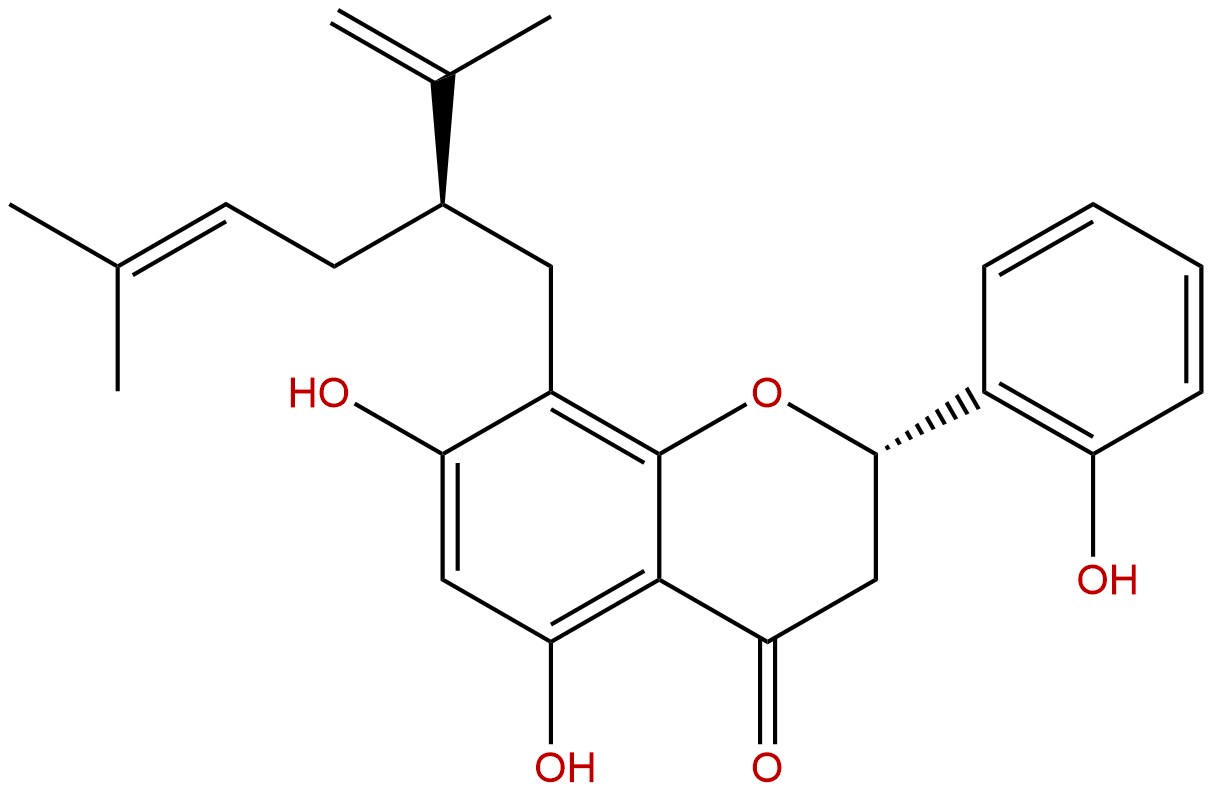
The chemical structure of Sophora flavescens alcohol A is the material basis for its diverse biological activities. From a chemical classification perspective, it belongs to prenylated flavonoids, more specifically, it is an isopentenyl dihydroflavonoid or isopentenyl flavanone. Its core skeleton is 2-phenylchroman-4-one (i.e. flavanone), and it is connected to an isopentenyl (3,3-dimethylallyl) side chain on the A or B ring. According to reported literature, the complete chemical name of Sophora flavescens A is usually (2S) -2- (2,4-dihydroxyphenyl) -5,7-dihydroxy-8- (3-methyl-2-buten-1-yl) -2,3-dihydro-4H-1-benzopyran-4-one. Its molecular formula is C ₂₅ H ₂₈ O ₆, and its relative molecular mass is 408.4940 g/mol.
The molecular structure contains multiple phenolic hydroxyl groups (- OH), which endow it with strong antioxidant capacity. These hydroxyl groups are not only active sites for chelating metal ions and scavenging free radicals, but also key functional groups for their interactions with biological targets such as tyrosinase and alpha glucosidase. The introduction of isopentenyl side chains significantly increases the lipophilicity of the molecule, which helps it bind to the hydrophobic pockets of cell membranes or proteins, thereby affecting its bioavailability and target selectivity.
In terms of physicochemical properties, according to the calculated or experimentally determined pharmacological parameters, Sophora flavescens A exhibits the following characteristics:
- Lipid water partition coefficient (LogP): 5.0434. A high value indicates that it has strong lipophilicity and is easy to penetrate biological membranes, but it may also lead to poor water solubility.
- Topological Polarity Surface Area (TPSA): 86.9900 Å ². TPSA is an important parameter for predicting drug oral absorption and blood-brain barrier penetration ability. Generally, molecules with TPSA less than 140 Å ² have good oral absorption potential, while molecules with TPSA less than 90 Å ² are more likely to penetrate the blood-brain barrier. The TPSA of Sophora flavescens A is 86.99 Å ², which theoretically has certain oral absorption and central nervous system penetration potential. However, subsequent ADME (absorption, distribution, metabolism, excretion) studies have shown that its blood-brain barrier penetration ability is relatively low, which may be related to other factors such as molecular weight, number of hydrogen bond donors/acceptors, and efflux transporters.
- Water solubility:0.1042 mg/mL。 This value is relatively low and belongs to insoluble compounds. This may be one of the main bottlenecks limiting its oral bioavailability and clinical application.
- HERG inhibition: No. Inhibition of hERG (human ether - à - go related gene) potassium channels is one of the main causes of drug induced cardiac toxicity. Sophora flavescens A does not inhibit hERG channels, indicating a low risk of cardiac toxicity, which is a favorable safety feature.
- Ames test: 0.0. The Ames test is used to detect the mutagenicity of compounds. The Ames test result of Sophora flavescens A is negative, indicating that it has no significant genetic toxicity.
In summary, Sophora flavescens A is a natural product with a typical isopentenyl flavonoid structure. It has a moderate molecular weight, strong lipophilicity, and poor water solubility, but has good preliminary safety (no hERG inhibition and positive Ames test). These physicochemical properties provide important references for its subsequent pharmacological activity research and formulation design.
The main plant source of Sophora flavescens A is Sophora flavescens, a plant of the Sophora genus in the legume family(Sophora flavescens Ait.)。 Sophora flavescens is a perennial herb or sub shrub widely distributed in East Asian countries such as China, Japan, and South Korea. Its dry roots are derived from the traditional Chinese medicine "Sophora flavescens", which has the effects of clearing heat and dampness, killing insects, and diuresis. It is commonly used to treat diseases such as dysentery, jaundice, eczema, and skin itching. Modern plant chemistry research has shown that Sophora flavescens roots are rich in various bioactive components, including alkaloids (such as matrine, oxymatrine) and flavonoids (such as sophora flavescens ketone, isosophora flavescens ketone, sophora flavescens alcohol A, B, C, etc.). Among them, isopentenyl flavonoids are one of the characteristic components of Sophora flavescens, and Sophora flavescens alcohol A is a representative of them.
In addition to Sophora flavescens, Sophora flavescens A may also be present in other plants of the same genus, such as the Vietnamese locust tree(Sophora tonkinensis)Or some leguminous plants, but Sophora flavescens roots are still the main source at present.
The extraction and separation of Sophora flavescens alcohol A usually follow the classic process of natural product chemistry, which mainly includes the following steps:
It is worth noting that due to the relatively low content of Sophora flavescens A in plants and its coexistence with various structurally similar isopentenyl flavonoids, its separation and purification process is challenging and requires precise optimization of chromatographic conditions. In recent years, with the development of new separation technologies such as high-speed countercurrent chromatography (HSCCC), new possibilities have been provided for the efficient and large-scale preparation of Sophora flavescens alcohol A.
The pharmacological activity research of Sophora flavescens A has expanded from its initial enzyme inhibitory activity to multiple fields such as anti-tumor, antioxidant, anti-inflammatory, etc., demonstrating multifunctional biological effects.
This is the earliest discovered and most well-known pharmacological activity of Sophora flavescens alcohol A. Tyrosinase is a key rate limiting enzyme in the biosynthesis of melanin, catalyzing the hydroxylation of L-tyrosine to L-dopa (L-DOPA), which is further oxidized to dopaquinone, ultimately producing melanin. Research has shown that Sophora flavescens A is a non competitive tyrosinase inhibitor with an inhibition constant Ki value of 0.4 μ M and a half maximal inhibitory concentration IC50 value of 1.1 μ M. This means that it does not compete with the active site of the substrate L-tyrosine enzyme, but rather binds to the enzyme substrate complex or other sites of the enzyme, thereby reducing the catalytic efficiency of the enzyme. This efficient inhibitory effect makes it an ideal candidate compound for developing new skin whitening agents. Compared with traditional tyrosinase inhibitors such as arbutin or Kojic acid, Sophora flavescens A has stronger activity, and its non competitive inhibition mechanism may bring different characteristics of action and lower cytotoxicity.
As a type of polyphenolic compound, Sophora flavescens A exhibits significant antioxidant activity. The multiple phenolic hydroxyl groups in its molecular structure can effectively scavenge free radicals (such as DPPH free radicals, ABTS cationic free radicals), chelate transition metal ions (such as Fe ² ⁺, Cu ² ⁺), thereby inhibiting lipid peroxidation and oxidative stress reactions. This antioxidant activity is an important foundation for its ability to exert anti-aging effects on the skin and protect cells from oxidative damage. In the field of cosmetics, the synergistic effect of antioxidant activity and tyrosinase inhibitory activity gives it a dual advantage in anti-aging and whitening products.
Sophora flavescens alcohol A has inhibitory effects on alpha glucosidase and beta amylase. Alpha glucosidase is located at the brush border of the small intestine and is responsible for breaking down oligosaccharides into monosaccharides, thereby affecting postprandial blood glucose levels. Inhibition of this enzyme is one of the important strategies for the treatment of type 2 diabetes. Research has found that Sophora flavescens alcohol A has an IC50 value of 45 μ M and a Ki value of 6.8 μ M for alpha glucosidase. Meanwhile, it also has an inhibitory effect on β - amylase. This indicates that sophora flavescens neol A may play a potential role in the prevention and treatment of diabetes and its complications by delaying the digestion and absorption of carbohydrates and effectively controlling the peak blood sugar after meals.
In recent years, the anti-tumor activity of Sophora flavescens A, especially in the study of prostate cancer, has become a new research hotspot. Multiple in vitro and in vivo experiments have confirmed that Sophora flavescens A can inhibit the proliferation, induce apoptosis, inhibit cell migration, and invasion of various prostate cancer cells. Its mechanism of action involves multiple signaling pathways and molecular targets, including:
- Inducing apoptosis By downregulating the expression of anti apoptotic protein BCL2 and upregulating the expression of pro apoptotic protein Bax, activating the Caspase cascade reaction, prostate cancer cell apoptosis is induced.
- Inhibition of STAT3 signaling pathway STAT3 (Signal Transduction and Transcription Activation Factor 3) is an important oncogenic transcription factor that is continuously activated in many cancers. Sophora flavescens A can inhibit the phosphorylation of STAT3, thereby blocking the expression of downstream target genes such as Cyclin D1, Survivor, VEGF, and inhibiting tumor cell proliferation and angiogenesis.
- Inhibition of TLR4 signaling pathway TLR4 (Toll like receptor 4) is closely related to inflammation and tumorigenesis. Sophora flavescens A may inhibit the activity of TLR4, downregulate its mediated inflammatory signaling, and thus suppress the pro cancer inflammatory response in the tumor microenvironment.
- Regulating MMP2 activity Matrix metalloproteinase-2 (MMP2) is a key enzyme that degrades the extracellular matrix and is closely related to tumor invasion and metastasis. Sophora flavescens A can inhibit the expression and activity of MMP2, thereby suppressing the migration and invasion ability of prostate cancer cells.
- Other targets The study also suggests that Sophora flavescens A may exert multi pathway and multi-target anti-tumor effects by affecting targets such as PTPN1 (protein tyrosine phosphatase 1B), ESR2 (estrogen receptor β), ABCB1 (P-glycoprotein), PRKCA (protein kinase C α), MAPT (microtubule associated protein Tau), and NFE2L2 (nuclear factor E2 related factor 2).
The pharmacological activity of Sophora flavescens A is not derived from a single mechanism, but is regulated through a network that acts on multiple molecular targets and signaling pathways. Understanding its mechanism of action is crucial for evaluating its therapeutic potential and developing clinical applications.
In prostate cancer, the mechanism of action of Sophora flavescens A is more complex, involving the cross regulation of multiple oncogenic and anticancer signaling pathways.
The evaluation of drug properties and pharmacokinetic studies are essential steps in promoting natural products from laboratory research to clinical applications. Based on existing physicochemical properties and preliminary research, analyze the pharmacological properties of Sophora flavescens alcohol A.
At present, there are relatively limited systematic studies on the pharmacokinetics of Sophora flavescens A in vivo. However, based on its physicochemical properties and research on similar compounds, it can be inferred that:
- absorb Due to poor water solubility and strong lipophilicity, its oral absorption may be poor and its bioavailability may be low. Drugs may be mainly absorbed through passive diffusion in the intestine, but are susceptible to the influence of efflux transporters such as P-glycoprotein.
- distribution A high LogP value suggests that it has a large distribution volume and may be widely distributed in tissues, especially those rich in fat. Its blood-brain barrier penetration ability was evaluated as' low ', which may be due to its high molecular weight or limitations by efflux transporters.
- Metabolism As a flavonoid compound, Sophora flavescens A is expected to be mainly metabolized in the liver through phase II metabolism (such as glucuronidation and sulfation), and may also undergo phase I metabolism (such as oxidation and reduction). Its metabolites may still have biological activity.
- excretion Metabolites are mainly excreted through bile and urine.
Kushen Xinchun A, with its unique chemical structure and various pharmacological activities, has shown broad application prospects, especially in the following fields with huge development potential.
This is the closest application direction of Sophora flavescens alcohol A to industrialization. Its efficient and non competitive tyrosinase inhibitory activity, combined with its antioxidant capacity, makes it an ideal active ingredient for developing new generation whitening, spot lightening, and anti-aging cosmetics. Compared with existing whitening agents, its mechanism of action is unique and may have better safety and efficacy. The future research and development focus will be on:
- Formula optimization: Solve the problem of poor water solubility, develop stable oil in water lotion, liposome or nano lotion and other formulations to ensure effective transdermal absorption of active ingredients.
- safety evaluation Conduct strict skin irritation and sensitization tests to ensure its safe use in cosmetics.
- Efficacy Verification Conduct human clinical trials to verify its whitening, brightening skin tone, and improving wrinkles effects.
The dual inhibitory effect of Sophora flavescens alcohol A on alpha glucosidase and beta amylase makes it a potential natural alpha glucosidase inhibitor. Compared to existing synthetic drugs such as acarbose, it is naturally derived and may have better tolerance and fewer side effects. Future research can focus on:
- In vivo pharmacodynamics: The hypoglycemic effect, especially the ability to control postprandial blood glucose, was verified by animal models (such as db/db mice and STZ induced diabetes rats).
- combination therapy Explore its synergistic effect with other hypoglycemic drugs such as metformin and DPP-4 inhibitors.
- Formulation development Develop oral sustained-release or controlled release formulations to overcome their drawbacks of poor water solubility and low bioavailability.
Sophora flavescens A exhibits great potential as an anti-tumor lead compound or adjuvant therapy drug by inhibiting the proliferation, inducing apoptosis, and suppressing invasion and metastasis of prostate cancer through multiple targets and pathways. Future research directions include:
- In depth mechanism research Using omics techniques such as transcriptomics and proteomics to comprehensively reveal the molecular network of its function, clarify its key targets and signaling pathways.
- In vivo anti-tumor activity Establish a prostate cancer xenograft tumor model (CDX or PDX model) and systematically evaluate its in vivo anti-tumor efficacy and toxicity when used alone or in combination with chemotherapy drugs (such as docetaxel).
- structural optimization Based on its parent nucleus structure, chemical modifications are carried out to synthesize a series of derivatives in order to obtain candidate drugs with stronger activity, higher selectivity, and better pharmacokinetic properties. For example, by introducing water-soluble groups to improve its solubility, or by modifying the isopentenyl side chain to enhance its affinity for specific targets.
- Overcoming drug resistance Study its inhibitory effect on ABCB1 (P-glycoprotein) and explore its potential to reverse chemotherapy drug resistance in prostate cancer.
Given its antioxidant and anti-inflammatory activities, Sophora flavescens A also has potential application value in neurodegenerative diseases (such as Alzheimer's disease, Parkinson's disease), cardiovascular diseases, liver injury and other oxidative stress and inflammation related diseases, and is worth further exploration.
Sophora flavescens A, an isopentenyl flavonoid derived from the traditional Chinese medicine Sophora flavescens, is moving from behind the scenes to the forefront with its unique chemical structure and rich biological activity, becoming a new star in the field of natural product pharmacology research. From being initially identified as an efficient and non competitive tyrosinase inhibitor, it has now demonstrated the ability of multi target and multi pathway regulation in the field of anti diabetes and anti-tumor (especially prostate cancer). Its research history vividly explains the great value of natural products as drug lead compounds.
This article provides a systematic review of the chemistry, botany, pharmacology, mechanism of action, and pharmacological characteristics of Sophora flavescens alcohol A. Its highly effective enzyme inhibitory activity, significant antioxidant capacity and potential to inhibit prostate cancer by regulating key targets such as BCL2, STAT3, MMP2 have laid a solid scientific foundation for its application in cosmetics, diabetes and tumor treatment. However, its poor water solubility, low oral bioavailability, and lack of pharmacokinetic and toxicological data remain key obstacles to its clinical translation.
Looking ahead to the future, research on Sophora flavescens A should focus on the following directions: firstly, optimizing its structure through medicinal chemical methods, or utilizing advanced drug delivery systems to break through its solubility and bioavailability limitations; The second is to use modern molecular biology and omics technologies to deeply elucidate its complex mechanism of action network, clarify its key targets and signaling pathways; The third is to conduct systematic in vivo pharmacological and toxicological evaluations to provide reliable basis for its entry into clinical trials. We have reason to believe that with the continuous deepening of research, Sophora flavescens A and its derivatives are expected to play an important role in the prevention and treatment of skin health, metabolic diseases, and malignant tumors, and contribute to the cause of human health.
Batch can search by a CAS number,one per line
