Sophora flavescens I: Research progress on multi-target natural active molecules derived from Sophora flavescens
1. Overview
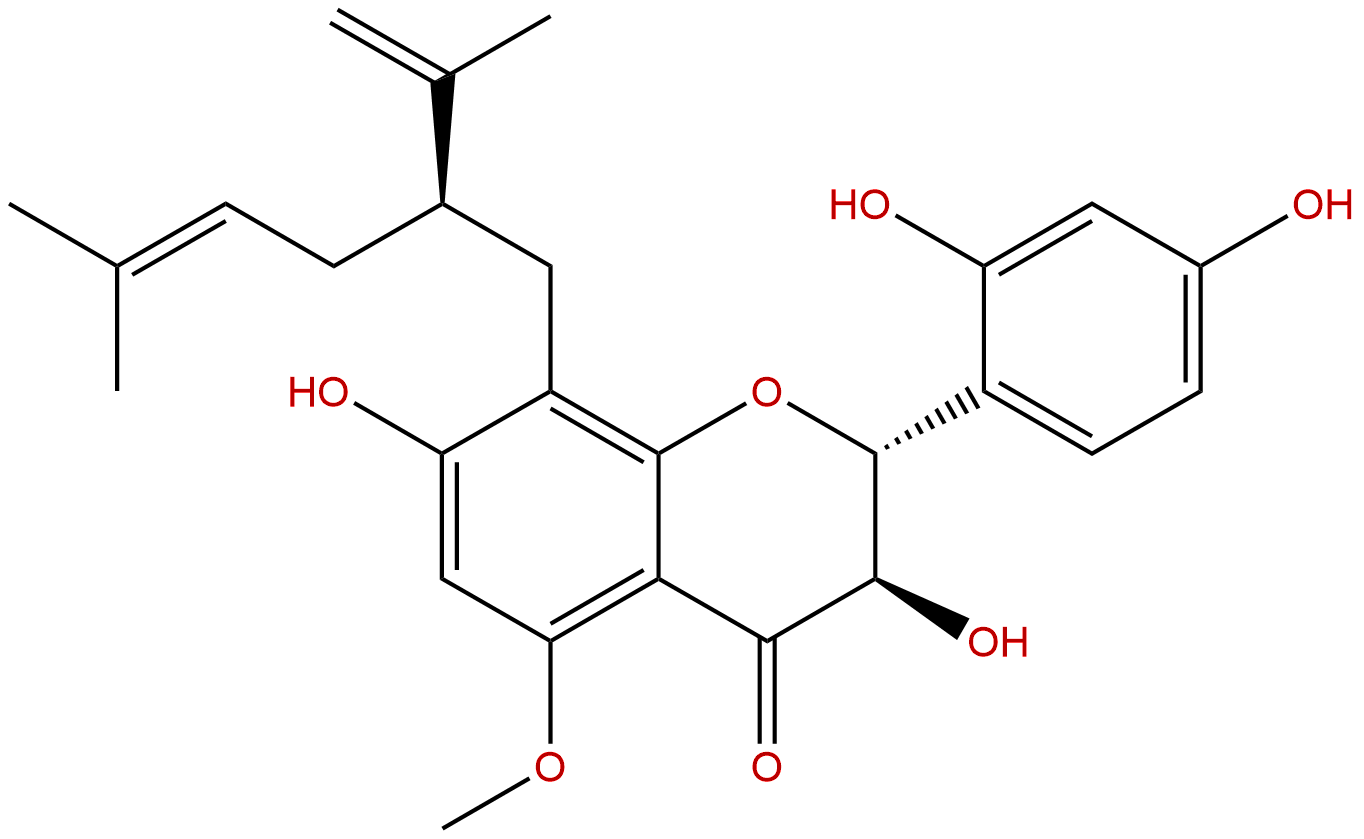
Kushenol I (CAS number: 99119-69-4) is a traditional medicinal plant derived from Sophora flavescens(Sophora flavescens)Natural products extracted from the roots. Its molecular formula is C26H30O7, with a molecular weight of 454.5190 g/mol, and it belongs to the class of isopentenyl flavonoids. As an important member of a series of bioactive flavonoids in Sophora flavescens, Sophora flavescens I has received continuous attention from natural product chemistry and pharmacology researchers due to its unique chemical structure and extensive pharmacological activities since its isolation and identification.
Existing studies have shown that matrinol I is not only a regulator of γ - aminobutyric acid type A receptor (GABAA receptor), but also has inhibitory activity on sodium glucose cotransporter 2 (SGLT2), suggesting its potential value in the treatment of nervous system diseases and diabetes. In addition, the compound is effective against the plant pathogenic fungus cucumber smut fungus(Cladosporium cucumerinum)It has activity and demonstrates its antibacterial potential. In recent years, with the deepening of research, its anti-inflammatory activity, especially the target regulatory effect related to the inflammasome pathway, has become a new research hotspot. This article will provide a systematic professional popularization of Sophora flavescens I from the aspects of its chemical structure, plant origin, pharmacological mechanism, medicinal evaluation, and research prospects.
2. Chemical structure and physicochemical properties
The chemical structure of Sophora flavescens I is the material basis for its biological activity. The SMILES string is: C=C (C)C@HCc1c(O)cc(OC)c2c1OC@HC@@H C2=O。 From this description, it can be seen that Sophora flavescens I is a structurally complex flavonoid compound, with a core skeleton of flavanone and connected with isopentenyl side chains. The molecule contains multiple chiral centers (represented by the @ symbol), indicating that it has a specific stereoconfiguration, which is crucial for its precise recognition and binding to biological targets. The phenolic hydroxyl (- OH) and methoxy (- OCH3) groups in the molecule are important pharmacophores involved in hydrogen bonding and hydrophobic interactions.
According to the analysis of drug parameters, its molecular weight (MW) is 454.52 g/mol, slightly higher than the recommended upper limit of 500 Da in Lipinski's Rule of Five, but still within an acceptable range. The topological polar surface area (TPSA) is 116.45 Å ², which reflects the area of polar atoms (such as O, N) in the molecule. Typically, TPSA<140 Å ² is beneficial for good membrane permeability, and the TPSA value of Sophora flavescens I is in a favorable range. The lipid water partition coefficient (LogP) is 3.70, indicating that the compound has moderate lipophilicity and is beneficial for penetrating cell membranes. However, LogP>5 may lead to low solubility and metabolic problems. The LogP value of Sophora flavescens I is ideal. The water solubility parameter is 0.2395 (usually measured in mg/mL or mol/L, indicating low solubility), which is consistent with a higher LogP value.
Overall, the physicochemical properties of Sophora flavescens I basically conform to the basic characteristics of drug like molecules: moderate molecular weight and lipophilicity, favorable polar surface area for membrane permeation. Its lower solubility may be one of the challenges that need to be overcome in future formulation development.
3. Plant sources and traditional applications
The plant source of Sophora flavescens I is single and clear, namely Fabaceae plant Sophora flavescens(Sophora flavescens Dry roots of Ait. Sophora flavescens, also known as Sophora flavescens or Sophora japonica, has a long history of medicinal use in China. It was first recorded in the "Shennong Bencao Jing" and is classified as a medium grade herb. It is cold in nature, bitter in taste, and has the functions of clearing heat and dampness, killing insects, and diuresis, as well as regulating the heart, liver, stomach, large intestine, and bladder meridians.
In traditional Chinese medicine practice, Sophora flavescens is commonly used to treat conditions such as damp heat diarrhea, rectal bleeding, jaundice, leukorrhea, yin swelling and itching, eczema, wet sores, skin itching, scabies and leprosy. Its application forms are diverse, including oral administration (decoction) and external application (decoction, washing with water or grinding and applying). Modern pharmacological research has confirmed that the various pharmacological effects of Sophora flavescens, such as anti-inflammatory, antibacterial, antiviral, anti-tumor, antiarrhythmic, and immunomodulatory effects, are closely related to its rich alkaloids (such as matrine, oxymatrine) and flavonoids (such as sophorone I, sophorone, etc.).
As one of the representative components of Sophora flavescens flavonoids, the isolation and structural identification of Sophora flavescens I is a result of modern natural product chemistry research. It links the efficacy of traditional Chinese medicine with modern molecular entities, providing a material basis for explaining the modern scientific content of traditional Chinese medicine effects such as "clearing heat and drying dampness" in Sophora flavescens. For example, its antifungal activity may partially explain the traditional use of Sophora flavescens in treating psoriasis, while its anti-inflammatory activity corresponds to its "clearing heat" effect.
4. Pharmacological activity and mechanism of action
The pharmacological activities of Sophora flavescens I are diverse, and its mechanism of action is being studied from a single target to multiple targets and pathway regulation.
4.1 GABAA receptor regulation and SGLT2 inhibition
Early research has found that Sophora flavescens I is a GABAA receptor modulator. GABAA receptors are the main inhibitory neurotransmitter receptors in the central nervous system, and regulating their function can be used to treat diseases such as anxiety, insomnia, and epilepsy. Meanwhile, it can also inhibit the sodium glucose cotransporter 2 (SGLT2). SGLT2 is a key protein responsible for glucose reabsorption in the proximal tubules of the kidney, and its inhibitor is a novel oral hypoglycemic drug that has been launched in recent years. The activity of Sophora flavescens I suggests that it may have hypoglycemic potential, providing clues for the search for SGLT2 inhibitors from natural products.
4.2 Anti inflammatory effect and regulation of inflammasome pathway
In recent years, research has focused on its significant anti-inflammatory effects. The target information provided by the database clearly points to the NLRP3 inflammasome pathway. Inflammatory inflammasome is a multi protein complex within cells that is activated upon sensing pathogen associated molecular patterns (PAMPs) or damage associated molecular patterns (DAMPs), thereby mediating the activation of caspase-1 and promoting the maturation and secretion of pro-inflammatory cytokines such as interleukin-1 β (IL-1 β) and interleukin-18 (IL-18). The excessive activation of this pathway is closely related to various chronic inflammatory diseases.
The targets of Sophora flavescens I include:
- CASP1(Caspase-1)The key effector protease activated by inflammasome is responsible for cleaving pro-IL-1 β and pro-IL-18 into mature forms with biological activity.
- IL1B(IL-1β) and IL18(IL-18)Powerful pro-inflammatory cytokines play a central role in the inflammatory response.
- NLRP3 It is the most widely studied inflammasome sensor protein.
- ASC(Apoptosis-associated speck-like protein containing a CARD)Adapter protein connecting NLRP3 and Caspase-1.
Matrine I can act on multiple key nodes in this pathway (NLRP3, ASC, CASP1, IL1B, IL18), indicating that it may exert anti-inflammatory effects by inhibiting the assembly or activation of NLRP3 inflammasomes, thereby reducing the activation of Caspase-1 and ultimately downregulating the maturation and release of IL-1 β and IL-18.
4.3 Association with Related Diseases (IBD)
This mechanism is highly consistent with the pathological process of inflammatory bowel disease (IBD), including ulcerative colitis and Crohn's disease, which is related to Sophora flavescens I. In IBD, abnormal activation of the intestinal mucosal immune system and dysregulation of the NLRP3 inflammasome pathway are considered key factors leading to chronic and excessive inflammatory responses in the intestine. IL-1 β and IL-18 are significantly upregulated in the intestinal tissue of IBD patients, driving tissue damage. Therefore, matrine I, which can inhibit this pathway with multiple targets, theoretically has the potential to treat IBD. This provides modern pharmacological evidence for explaining the traditional use of Sophora flavescens in the treatment of "damp heat diarrhea" (symptoms similar to IBD).
4.4 Other Activities
In addition, its inhibitory activity against plant pathogenic fungi also suggests that it may have broad-spectrum antimicrobial potential, which is worth further exploration.
5. Evaluation of drug properties
Based on the provided pharmacological parameters and in combination with Lipinski's Five Rules (Ro5) and other standards, a preliminary assessment of the pharmacological potential of Sophora flavescens I can be conducted
-
Lipinski Five Rule Compliance:
- Molecular weight (MW)454.52 (<500, compliant)
- Lipid water partition coefficient (LogP)3.70 (<5, compliant)
- Hydrogen bond donor (HBD)According to the structural formula, there are approximately 4 (phenolic hydroxyl groups) (<5, consistent)
- Hydrogen bond acceptor (HBA)According to the structural formula, approximately 7 (<10, compliant)
- Conclusion Matrine I basically conforms to Lipinski's five rules, indicating that it has good oral absorption potential.
-
Absorption and distribution:
- Caco-2 permeability 4.19 (higher value, usually indicating good intestinal permeability).
- Effective permeability coefficient (Peff)1.44, further supporting its moderate to good intestinal absorption capacity.
- Blood-brain barrier (BBB) penetrability Annotated as' low '. This seems to contradict its activity as a GABAA receptor modulator (central target), which may indicate that its peripheral effects are more predominant or require increased central exposure through other pathways such as formulation techniques.
- Plasma protein binding rate (PPB)88.84%, belonging to a relatively high level. High protein binding can affect the concentration of free drugs, potentially weakening their efficacy but also prolonging their half-life.
-
Metabolism and toxicity:
- Ames test The result is 0.0, usually interpreted as negative, indicating no mutagenicity in this experimental system and good safety.
- Chromosomal Aberration Marked as' present ', this is a signal that requires high vigilance, indicating that the compound may have genetic toxicity risks and is a major obstacle in drug development.
- HERG inhibition Marked as' No ', it means that the risk of inducing QT interval prolongation in the heart is low, which is beneficial for cardiovascular safety.
- Respiratory sensitization (Resp_Sens)Marked as' Yes', indicating a potential risk of respiratory allergic reactions.
- Serum biochemical indicators Has an impact on alkaline phosphatase (Ser_LK), gamma glutamyltransferase (Ser_GGT), and aspartate aminotransferase (Ser_ST) ("Yes"), indicating potential hepatotoxicity or interference with liver function indicators, while alanine aminotransferase (Ser_LT) is "No", and the results need to be interpreted comprehensively.
Comprehensive Assessment Matrine I has shown good potential in oral absorption, and its multi-target anti-inflammatory mechanism is also attractive. However, it Potential chromosomal aberration activity (genetic toxicity) It is the most critical negative factor hindering its direct path towards drug development. In addition, high plasma protein binding rates, potential liver marker effects, and respiratory sensitization also need to be carefully evaluated in preclinical studies. Therefore, Sophora flavescens I is currently more suitable as lead compound Optimizing its structure while preserving its core pharmacological activity and striving to eliminate or reduce its genetic toxicity and other toxicity risks is a key direction for future research.
6. Research Status and Application Prospects
At present, research on Sophora flavescens I is still in the preclinical stage, mainly focusing on activity screening, preliminary exploration of its mechanism of action, and a small amount of structural modification. The discovery of its multi-target inhibition of NLRP3 inflammasome pathway provides a new candidate molecule for the treatment of IBD, gout, atherosclerosis, Alzheimer's disease and other diseases related to the over activation of inflammasome.
The application prospects are mainly reflected in the following aspects:
- As a lead compound for structural optimization This is the most realistic conversion path. Pharmaceutical chemists can use it as a template to modify its structure through semi synthetic or total synthetic methods. For example, modifying functional groups that may cause toxicity (aimed at eliminating chromosomal aberration activity), optimizing solubility and pharmacokinetic properties (such as reducing protein binding rate, regulating LogP), and even enhancing their selectivity and efficacy towards specific targets.
- Thoroughly elucidate its anti-inflammatory mechanism It is necessary to use techniques such as gene knockout, molecular docking, and co crystallization to accurately elucidate how it interacts with NLRP3, ASC, or Caspase-1, whether it is directly bound and inhibited or regulated by upstream signaling? This helps to design better next-generation inhibitors.
- Expand the field of disease treatment In addition to IBD, its efficacy should be further validated in animal models of NLRP3 related diseases, such as gouty arthritis, non-alcoholic steatohepatitis NASH, and neuroinflammation models.
- Exploring the potential of combination therapy Given its multi-target nature, evaluating its potential in combination with existing anti-inflammatory drugs (such as 5-aminosalicylic acid, biologics) for the treatment of IBD and other diseases may result in synergistic effects, reducing their respective dosages and side effects.
- Develop external preparations Considering its antifungal and anti-inflammatory activities, as well as concerns about toxicity when administered systemically, prioritizing the development of topical ointments and lotions for the treatment of fungal infections, eczema, or dermatitis on the skin may be a faster conversion pathway.
In summary, Sophora flavescens I is a natural product derived from traditional Chinese medicine, with rich pharmacological activity and clear mechanism of action. Despite facing severe challenges such as genetic toxicity on its path to drug development, it is undoubtedly a valuable "molecular probe" and "lead compound", providing an important starting point and pathway for the development of novel anti-inflammatory drugs, especially multi-target modulators targeting the NLRP3 inflammasome pathway. Future research requires close collaboration among multiple disciplines such as chemistry, pharmacology, and toxicology to translate its potential into true clinical value.