Introduction/Overview
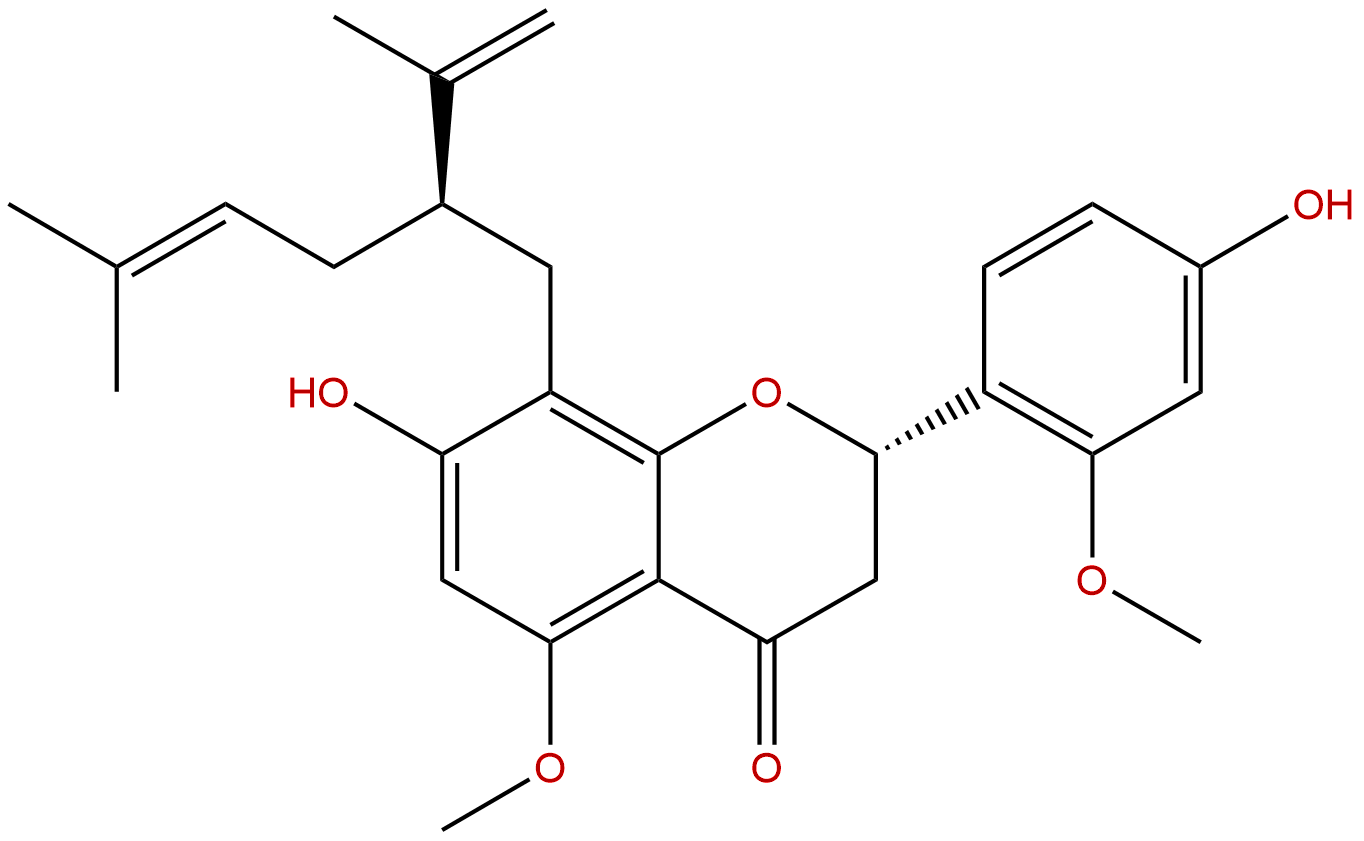
Natural products have always been an important treasure trove for innovative drug discovery, among which flavanone compounds have attracted much attention due to their wide range of biological activities. 2 '- O-methylkurarinone (CAS number: 270249-38-2), as a derivative of dimethoxyflavanone isolated from the traditional Chinese medicine Sophora flavescens Ait., has gradually entered the field of pharmacological researchers in recent years. This compound is a structural analogue of (2S) - (-) - kurarinone, characterized in that the hydroxyl group at the 2 '- position is replaced by a methoxy group. Preliminary studies have shown that 2 '- O-methylsophorone exhibits significant cytotoxicity towards human myeloid leukemia HL-60 cells, indicating its potential anti-tumor application value. With the deepening of modern separation and identification techniques and molecular biology research, attention to this compound has shifted from initial chemical identification to exploring its systematic pharmacological activity, mechanism of action, and drug formation. This article aims to systematically review the chemical properties, plant sources, pharmacological activities, mechanisms of action, pharmacological evaluation, and clinical application prospects of 2 '- O-methylsophorone, in order to provide comprehensive scientific references for the deep development and utilization of this natural product.
Chemical structure and physicochemical properties
The chemical name of 2 '- O-methylsophorone is (2S) -2' - methoxysophorone, with a molecular formula of C26H28O6 and a molecular weight of 452.5470 g/mol. Structurally, it belongs to the class of flavanone compounds, specifically dimethoxyflavanones, whose basic skeleton is dihydroflavones. Its core structural features include: (1) a chiral center with (2S) absolute configuration; (2) There are methoxy and hydroxyl groups attached to the 2 'and 4' positions of the flavanone core, respectively, forming a substitution pattern of "dimethoxy" and "dihydroxy"; (3) The only difference between it and the lead compound (2S) - (-) - matrine is that the substituent at the 2 'position has changed from hydroxyl to methoxy. This subtle structural modification may significantly affect its physicochemical properties, biological activity, and metabolic stability.
Based on the calculated parameters related to drug properties, a preliminary evaluation of its physicochemical properties can be conducted. The lipid water partition coefficient (LogP) of this compound is 5.0105, indicating its strong lipophilicity, which facilitates its penetration into cell membranes, but may also lead to poor water solubility. Its topological polar surface area (TPSA) is 85.22 Å ², which is at a moderate level. The calculated water solubility value is relatively low (about 0.0759 mg/mL), which confirms its lipophilic properties. This may be one of the key challenges that need to be overcome in the development of its formulation. In the preliminary toxicity prediction, the Ames test result was negative (0.0), indicating that it may not have direct genetic toxicity; Meanwhile, it is predicted that it has no significant inhibitory effect on hERG potassium channels, reducing the potential risk of causing QT interval prolongation in the heart. In addition, its blood-brain barrier permeability prediction is "low", indicating that the compound mainly acts on the peripheral system and is not easily able to enter the central nervous system. This may reduce the risk of central side effects for the development of drugs targeting peripheral diseases. These physicochemical and preliminary toxicity parameters provide basic data for subsequent pharmacological research and drug optimization.
Plant sources and extraction methods
2 '- O-methylsophorone is mainly derived from the dried roots of the leguminous plant Sophora flavescens Ait. As a traditional Chinese medicinal herb, Sophora flavescens has the effects of clearing heat and dampness, killing insects, and diuresis. Its chemical composition is complex, mainly including alkaloids (such as matrine and oxymatrine) and flavonoids (such as sophorone and sophora flavonoids). 2 '- O-methylsophorone is one of the relatively low content secondary metabolites of flavanones.
The separation and extraction of 2 '- O-methylsophorone from plant materials usually follow the conventional process of natural product chemistry. Firstly, it is necessary to dry and crush the roots of Sophora flavescens for pretreatment. The extraction method often uses organic solvent extraction, with commonly used solvents including methanol, ethanol, or ethanol water mixed solutions in different proportions. Soxhlet extraction or ultrasound assisted extraction is used to improve efficiency. After obtaining the crude extract, it needs to undergo systematic separation and purification steps. The solvent partitioning method (such as sequential extraction with petroleum ether, ethyl acetate, and n-butanol) is commonly used for preliminary fractionation of crude extracts, and the flavanone components are mostly enriched in the ethyl acetate fraction.
Further purification relies on various chromatographic techniques. Silica gel column chromatography is commonly used for preliminary separation, using solvent systems of different polarities (such as petroleum ether ethyl acetate or chloroform methanol gradient elution) for elution. Then, fine separation and purification were carried out by combining reversed-phase silica gel column chromatography (such as ODS, using methanol water as mobile phase), dextran gel column chromatography (such as Sephadex LH-20), and high-performance liquid chromatography (HPLC, preparative or semi preparative). The final obtained compound needs to be structurally identified through modern spectroscopic techniques, including nuclear magnetic resonance (NMR, such as ¹ H-NMR, ¹ ³ C-NMR, 2D-NMR), mass spectrometry (MS, such as ESI-MS, HR-ESI-MS), ultraviolet spectroscopy (UV), and optical rotation determination, to confirm its identity as 2 '- O-methylsophorone. With the development of synthetic biology, it is also possible to achieve heterologous biosynthesis of the compound in microbial or plant cell systems by analyzing its biosynthetic pathway in the future, providing a new pathway for large-scale acquisition.
Pharmacological activity research
At present, the pharmacological activity research of 2 '- O-methylsophorone is still in its early stages, but existing in vitro studies have revealed its potential for further exploration in the fields of anti-tumor and anti-inflammatory effects.
1. Antitumor activity
This is currently the most clearly reported pharmacological activity of the compound. Research has shown that 2 '- O-methylsophorone has significant cytotoxicity against human myeloid leukemia HL-60 cells. Its function may not be limited to inducing cell apoptosis, but may also involve mechanisms such as inhibiting cell proliferation and blocking the cell cycle. Since its parent nuclear compound matrine has been reported to have inhibitory effects on many cancer cell lines (such as breast cancer MCF-7, liver cancer HepG2, lung cancer A549, etc.), it is speculated that 2 '- O-methylmatrine may also have a broad spectrum anti-tumor potential, but it needs to be verified in more types of tumor cell models and animal models in vivo. The substitution of methoxy groups in the structure may alter its cellular uptake efficiency or affinity for intracellular targets, thereby affecting its anti-tumor efficacy and selectivity.
2. Anti inflammatory and immune regulatory activity
Flavonoids generally have anti-inflammatory properties. Although there are few reports on direct anti-inflammatory studies of 2 '- O-methylsophorone, considering that sophora flavescens is commonly used in traditional medicine to treat inflammatory diseases, and its analog sophorone has been proven to reduce the production of pro-inflammatory factors such as TNF - α, IL-6, IL-1 β by inhibiting inflammatory signaling pathways such as NF - κ B and MAPK, 2' - O-methylsophorone is likely to have similar anti-inflammatory potential. Future research can explore its effects on the function of immune cells such as macrophages and lymphocytes, as well as its intervention effects on animal models of acute or chronic inflammation.
3. Other potential activities
Based on the commonality of flavanone compounds, 2 '- O-methylsophorone may also have antioxidant, antibacterial, antiviral, neuroprotective and other activities. For example, the phenolic hydroxyl groups in its structure may give it the ability to scavenge free radicals. But these potential activities still need to be experimentally confirmed.
At present, pharmacological research data on this compound is still very limited, lacking systematic dose-response relationship studies, in vivo pharmacological evaluations, and studies on its combined effects with other drugs. Expanding its activity screening range and conducting in-depth in vitro and in vivo efficacy verification are key to clarifying its medicinal value.
Mechanism of action and molecular targets
The specific mechanism of action and molecular targets of 2 '- O-methylsophorone are not fully understood, but reasonable speculation can be made based on the study of its structural analogues sophorone and related flavanone compounds.
1. Inducing tumor cell apoptosis and cycle arrest
Matrine can induce cell apoptosis through mitochondrial pathway (endogenous pathway) and death receptor pathway (exogenous pathway). The specific mechanism may include upregulation of pro apoptotic proteins (such as Bax, Bid) and downregulation of anti apoptotic proteins (such as Bcl-2, Bcl xL), leading to a decrease in mitochondrial membrane potential, release of cytochrome C, and activation of the caspase cascade reaction. 2 '- O-methylsophorone may share this mechanism. In addition, it has been reported that matrine can block the cell cycle in G0/G1 or G2/M phases, which is related to the regulation of the expression of cyclins (such as Cyclin D1, Cyclin B1) and cyclin dependent kinases (CDKs) and their inhibitors (such as p21, p27). The introduction of 2 '- methoxy group may affect its interaction with related signaling proteins.
2. Inhibit key signaling pathways
Flavonoids are commonly used in key signaling pathways related to tumors and inflammation
* NF - κ B pathway This is the core pathway that regulates inflammatory response and cell survival. Matrine can inhibit the activity of I κ B kinase (IKK), prevent the phosphorylation and degradation of I κ B α, and thus suppress NF - κ B nuclear translocation and downstream gene transcription. 2 '- O-methylsophorone is likely to also have NF - κ B inhibitory activity.
* MAPK pathway Including branches such as ERK, JNK, p38, etc. This pathway is involved in cell proliferation, differentiation, and stress response. Partial flavanones can regulate the phosphorylation level of the MAPK pathway.
* PI3K/Akt pathway This is an important pathway for cell survival and growth. Inhibiting Akt phosphorylation can promote apoptosis and enhance chemotherapy sensitivity.
3. Regulating epigenetic modifications
In recent years, research has found that some natural products can exert anti-tumor effects by affecting histone modifications or DNA methylation. It is worth exploring whether flavanone compounds have such effects.
4. Potential direct molecular targets
In addition to signaling pathways, some flavanones have been identified to directly bind to specific protein targets. For example, some flavanones are topoisomerase inhibitors or microtubule polymerization inhibitors. Whether 2 '- O-methylsophorone has similar direct targets requires screening and validation through techniques such as molecular docking, surface plasmon resonance (SPR), drug affinity reaction target stability (DARTS), or cell thermal shift analysis (CETSA).
Clarifying its precise molecular targets and action network is the foundation for developing it into targeted therapeutic drugs.
Evaluation of drug properties and pharmacokinetics
Although 2 '- O-methylsophorone has shown preliminary biological activity, its development into a drug still depends on the systematic pharmacological evaluation and pharmacokinetic properties. At present, there is almost no research on the in vivo pharmacokinetics of this compound. The following is a preliminary analysis based on its computational parameters and the five principles of drug similarity, and points out the key directions for future research.
1. Prediction and challenges of absorption, distribution, metabolism, and excretion (ADME) characteristics
* absorb A higher LogP value (5.01) suggests that its oral absorption may be better (in accordance with Lipinski's rule), but extremely low water solubility may be the main limiting factor for its oral bioavailability, which may result in limited dissolution rate. Formulation strategies, such as making nanocrystals, solid dispersions, liposomes, or cyclodextrin inclusion complexes, are crucial for improving their solubility and absorption.
* distribution The predicted blood-brain barrier permeability is low, indicating that it is mainly distributed in peripheral tissues and organs. Its binding rate to plasma proteins is unknown, but lipophilic compounds typically have a higher binding rate to plasma proteins, which can affect their free drug concentration and efficacy.
* Metabolism Flavonoids mainly undergo phase II metabolism in the body, such as glucuronidation and sulfation, and may also be catalyzed by cytochrome P450 enzymes (CYP450) for oxidative metabolism. The methoxy group at the 2 '- position may enhance its stability in metabolism (especially in II binding reactions) to some extent compared to the hydroxyl group, which requires experimental verification. It is important to clarify the main metabolic enzymes, metabolites, and whether they have enzyme inhibition or induction effects in order to evaluate the risk of drug interactions.
* excretion It is speculated that its metabolites are mainly excreted through bile and kidneys.
2. Preliminary safety assessment
The calculation prediction shows that there is no risk of hERG inhibition and Ames test mutagenicity, which is a positive signal. However, comprehensive safety evaluation requires in vitro cytotoxicity screening (on normal cell lines), acute toxicity experiments, long-term toxicity experiments, and toxicology studies targeting specific organs such as liver and kidney. The parent compound, sophorone, may exhibit certain hepatotoxicity at high doses, therefore the toxicity characteristics of 2 '- O-methylsophorone need to be independently evaluated.
3. Optimization strategy for drug properties
If its activity is confirmed but its medicinal properties are poor, the following strategies can be considered:
* Prodrug design Introducing hydrolyzable functional groups at phenolic hydroxyl and other sites to produce prodrugs for improving water solubility and bioavailability, and releasing the original drug in vivo.
* Structural modification Modify other parts of the molecule while maintaining the pharmacophore to optimize LogP, solubility, and metabolic stability.
* New delivery system Developing targeted delivery systems using nanotechnology to enhance drug accumulation at tumor sites and reduce systemic exposure and toxicity.
At present, there is an urgent need to conduct systematic in vitro ADME experiments (such as Caco-2 cell permeability, liver microsomal metabolic stability, plasma stability, etc.) and in vivo pharmacokinetic studies (conducted in mouse or rat models) to obtain their true pharmacokinetic parameters (such as Tmax, Cmax, AUC, t1/2, CL, etc.), providing data support for subsequent development.
Clinical application prospects and prospects
2 '- O-methylsophorone, as a natural small molecule compound with anti-tumor potential, its clinical application prospects depend on the results of subsequent in-depth research, while also facing challenges and opportunities.
Potential application directions:
1. Antitumor therapy This is the most direct application direction. It can be used as a candidate drug, alone or in combination with traditional chemotherapy drugs and targeted drugs, for the treatment of leukemia, solid tumors, etc. The combination therapy may produce a synergistic effect, reducing the dosage and side effects of chemotherapy drugs.
2. Anti inflammatory treatment If its anti-inflammatory mechanism is confirmed, it may be used to treat chronic inflammatory diseases such as rheumatoid arthritis, inflammatory bowel disease, etc.
3. Adjuvant therapy or health supplements Given its natural origin and potential antioxidant and immunomodulatory effects, it may be developed as an adjuvant therapy drug or functional food ingredient while ensuring safety.
Challenges faced:
1. Insufficient research depth Currently, the vast majority of research remains at the cellular level in vitro, lacking in vivo pharmacological validation, with unclear mechanisms of action and unknown targets.
2. Drug bottleneck The main obstacles on its new drug development path are poor water solubility, unknown metabolic characteristics, and potential toxicity that have not been evaluated.
3. Resources and Synthesis Extracting low content from plants and complex chemical synthesis routes can result in high costs, requiring the development of economically feasible large-scale preparation methods.
4. Intellectual Property and Market Competition It is necessary to build a patent protection network around its pharmaceutical applications, derivatives, preparation methods, etc., and stand out among numerous natural products.
Future prospects:
1. Deepen basic research Using omics techniques (transcriptomics, proteomics, metabolomics) combined with bioinformatics analysis to systematically elucidate their targets and networks of action; Using gene editing technology to validate key targets.
2. Strengthen conversion research Establish relevant animal disease models (such as tumor transplantation models, inflammation models), and complete preclinical pharmacological and safety evaluations.
3. Interdisciplinary cross development Collaborate with experts in pharmaceutical chemistry, pharmacy, and pharmacokinetics to optimize its structure or innovate its formulation, comprehensively enhancing its drug properties.
4. Exploring new therapeutic paradigms Studying its role in emerging anti-tumor mechanisms such as tumor immune microenvironment regulation, cell pyroptosis, and ferroptosis may reveal its new application value.
Conclusion
2 '- O-Methyl Ketone is a structurally novel dimethoxyflavanone compound isolated from the traditional Chinese medicine Sophora flavescens. Existing research has preliminarily revealed its cytotoxicity towards human leukemia cells, demonstrating its potential as an anti-tumor lead compound. The subtle differences in chemical structure between it and its analog sophorone may lead to unique physicochemical properties and biological activity. However, the current understanding of this compound is still very limited, and its broad pharmacological activity spectrum, precise molecular mechanism of action, systematic pharmacokinetic behavior, and in vivo safety all need to be further explored. Future research needs to integrate multidisciplinary technologies and methods, advancing from multiple levels such as target discovery, efficacy validation, and drug efficacy optimization, to evaluate its true clinical translational value. As a member of the natural product treasure trove, in-depth research on 2 '- O-methylsophorone may not only provide new candidate molecules for the treatment of tumors and other diseases, but also help to interpret the material basis of traditional Sophora flavescens medicinal effects from a modern scientific perspective, and promote the modern development and utilization of traditional Chinese medicine resources.