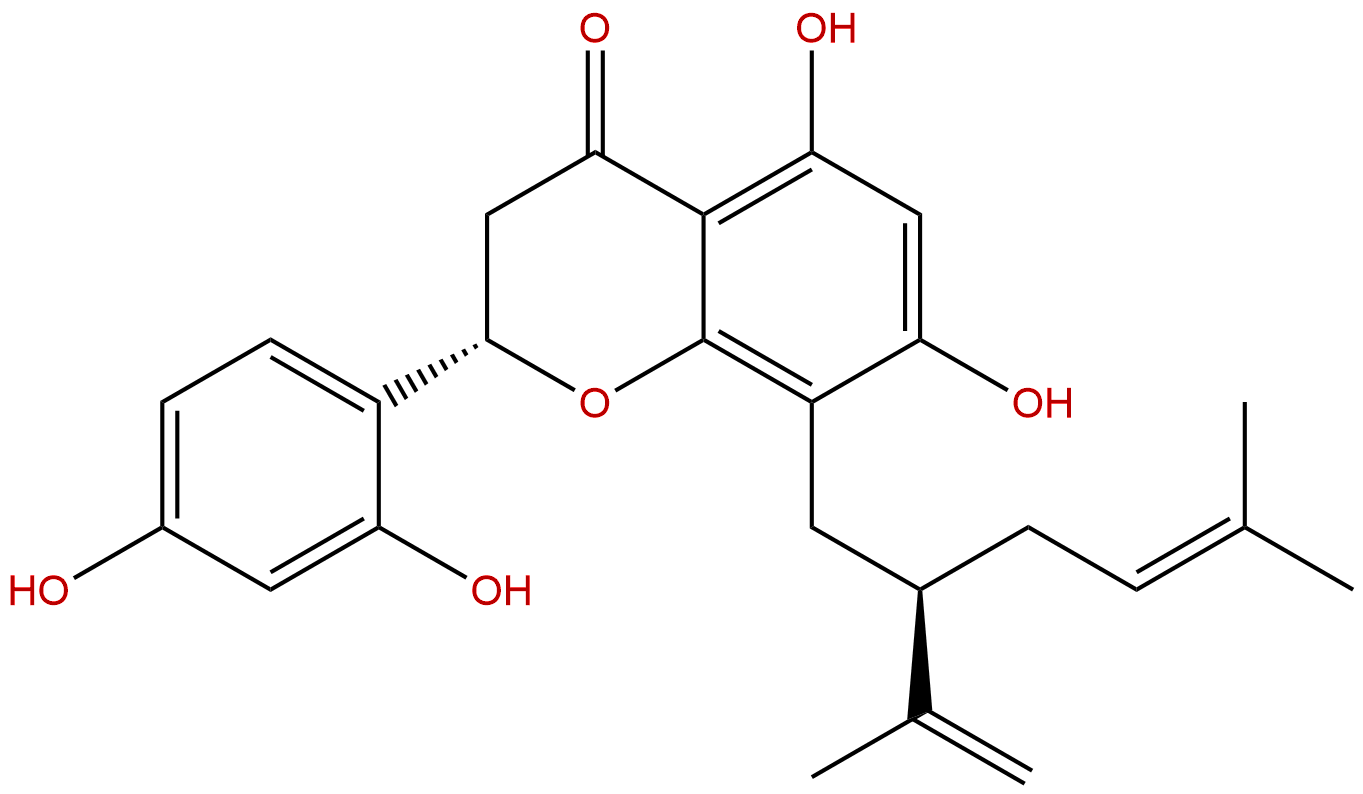


Synonym name: 2',4',5,7-Tetrahydroxy-6-lavandulylflavanone; Norkurarinone; Sophoraflavanone G
Catalogue No.: BP0835
Cas No.: 97938-30-2
Formula: C25H28O6
Mol Weight: 424.493
Botanical Source: Sophora angustifolia and Sophora flavescens
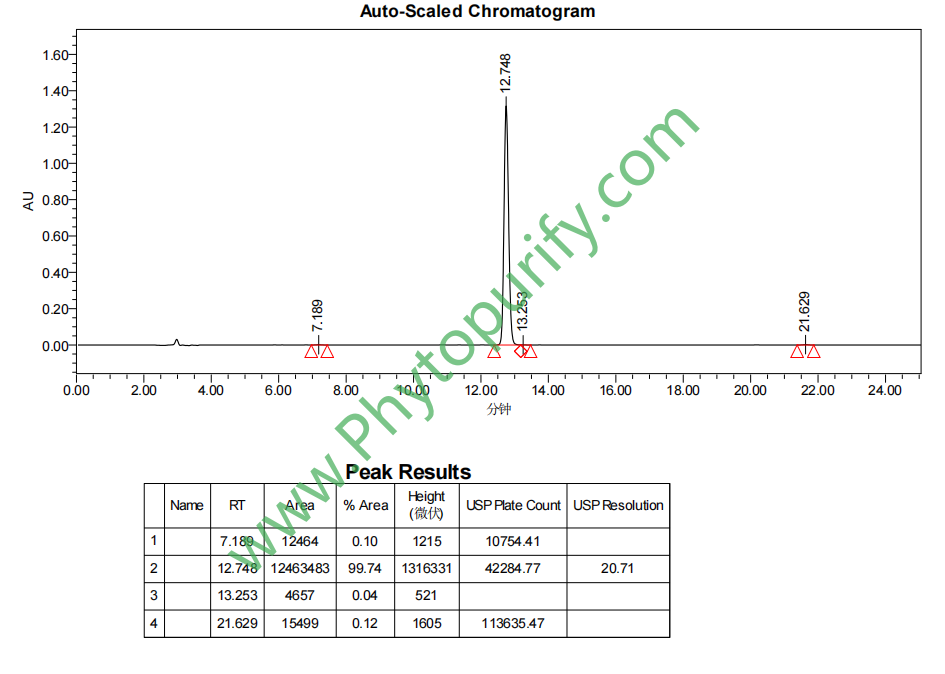
Purity: 95%~99%
Analysis Method: HPLC-DAD or/and HPLC-ELSD
Identification Method: Mass, NMR
Packing: Brown vial or HDPE plastic bottle
Can be supplied from milligrams to grams.
For Reference Standard and R&D, Not for Human Use Directly.
Inquire for bulk scale.
Storage conditions:Short-term storage at 2~8℃, long-term storage at -20 ~ -80℃
107.2200
4.6584
4.5387
.1631
2.9862
13.2306
Low
90.9045
3.9558
No
No
Yes
No
Yes
No
0.0
Yes
No
Yes
No
Natural products, as an important treasure trove for drug discovery and development, play an irreplaceable role in the long history of human fight against diseases. Flavonoids, as a major class of secondary metabolites with broad biological activities, have attracted much attention due to their diverse chemical structures and significant pharmacological effects. Kushenol F, CAS number 97938-30-2, is a structurally unique tetrahydroxyflavanone compound. It originated from the traditional Chinese medicine Sophora flavescens(Sophora flavescens It was isolated from Ait. and subsequently found in other plants of the Sophora genus. This compound is chemically classified as Sophora flavanone G, with its core skeleton being naringin. However, there is an additional hydroxyl substitution at the 2 'position, especially at the 8 position where a lavender based ((2R) -5-methyl-2- (prop-1-en-2-yl) hex-4-en-1-yl) side chain with a chiral center is attached. This structural feature makes it stand out among many flavonoids and closely related to its unique biological activity.
Preliminary modern pharmacological research has revealed that Sophora flavescens F exhibits various biological activities, including antioxidant, antibacterial, and antimalarial effects. What is particularly noteworthy is that in recent years, its potential in the field of anti-tumor has been continuously explored, showing inhibitory effects on proliferation and pro apoptotic effects on various tumor cell lines. Its potential molecular targets involve multiple key pathways such as apoptosis regulation (such as MCL1, BCL2), signal transduction (such as STAT3, MAPK1), extracellular matrix degradation (MMP2), DNA metabolism (TOP1, TOP2A), and hormone metabolism (ESR1, CYP19A1), suggesting that it may have a multi-target, multi pathway synergistic anti-tumor mechanism. This article aims to systematically review the chemical properties, plant sources, pharmacological activities, mechanisms of action, and medicinal properties of Sophora flavescens F, in order to provide comprehensive scientific references for the in-depth research and potential drug development of this natural product.
The chemical name of Sophora flavescens F is (2S) -2,3-dihydro-5,7-dihydroxy-2- (4-hydroxyphenyl) -8- [(2R) -5-methyl-2- (1-methylvinyl) -4-hexen-1-yl] -4H-1-benzopyran-4-one, with a molecular formula of C25H28O6 and a molecular weight of 424.4930 Da.
1. Core skeleton and stereochemistry:
Its basic skeleton is (2S) - flavan-4-one, which is a dihydroflavonoid structure. The A-ring is a 5,7-dihydroxy substituted resorcinol type structure, which is a typical feature of many flavonoids with antioxidant activity. The B ring is a 4 '- hydroxyphenyl ring (4-hydroxyphenyl), which is consistent with classical naringin. The most significant structural feature of it is the chiral carbon atom with an S configuration at the 2nd position of the C ring, and a complex isoprene derived side chain - (2R) - lavender group - connected at the 8th position of the A ring. The side chain itself also has a chiral center (2R) and contains two unsaturated bonds (one double bond and one isopropenyl group), endowing the molecule with significant hydrophobicity and spatial volume. The additional hydroxyl substitution at the 2 'position further enhances the polarity and potential hydrogen bonding ability of the molecule.
2. Preliminary parameters of physical and chemical properties and drug properties:
Based on its chemical structure, Sophora flavescens F exhibits typical hydrophobic natural product characteristics. Its calculated lipid water partition coefficient (LogP) is 4.6584, indicating strong lipophilicity, mainly attributed to the large lavender based side chains. The topological polar surface area (TPSA) is 107.22 Å ², reflecting the moderate polarity brought by its multiple hydroxyl groups. Theoretical low water solubility (approximately 0.1631 mg/L) suggests that its absorption in the gastrointestinal tract may follow the diffusion mechanism of lipophilic substances, but solubilization strategies may need to be considered in formulation development.
Preliminary drug risk assessment shows that its blood-brain barrier permeability is predicted to be "low", which is consistent with the situation of most compounds with high polarity or molecular weight exceeding 400. This suggests that its direct effect on central nervous system related diseases may be limited, but it may also reduce the risk of central nervous system side effects. Importantly, the preliminary computer prediction model suggests no significant risk of hERG potassium channel inhibition (predicted as' no '), which reduces potential toxicity concerns regarding its induction of cardiac QT interval prolongation. In addition, the Ames test predicted a value of 0.0, suggesting that there may be no direct genetic toxicity risk, providing preliminary positive signals for subsequent safety evaluations.
Sophora flavescens F mainly comes from plants of the Sophora genus in the legume family, among which the traditional Chinese medicine Sophora flavescens is used(Sophora flavescens)The most famous. The dried roots of Sophora flavescens are commonly used in traditional Chinese medicine for clearing heat and dampness, killing insects and diuresis. Modern research has confirmed that they are rich in various alkaloids and flavonoids, among which Sophora flavescens F is one of the important flavonoids. In addition, in plants of the same genus such as Sophora tonkinensis The presence of this component has also been detected in species such as Vietnamese locust.
1. Extraction process:
The extraction of Sophora flavescens F from plant materials is usually carried out using organic solvent extraction method. The common process is as follows:
- Raw material pretreatment: Dry and crush the roots of Sophora flavescens, sieve to obtain a uniform powder.
- Solvent extraction: The most commonly used solvents are methanol, ethanol, or high concentration ethanol aqueous solutions (such as 70-95%). Cold soaking method, reflux extraction method, or more efficient ultrasound assisted extraction and microwave-assisted extraction can be used to shorten the time and improve the yield. Due to the hydrophobicity of Sophora flavescens F, using a certain proportion of chloroform methanol mixed solvent for stepwise extraction can sometimes be more effective in enriching such isopentenated flavonoids.
- Concentration and Coarse Separation: After the extraction solution is concentrated under reduced pressure and the solvent is recovered, a paste is obtained. The extract is often suspended in water and subjected to liquid-liquid extraction using organic solvents such as petroleum ether and ethyl acetate. Kushanol F is mainly enriched in the ethyl acetate fraction due to its equipolarity.
- Separation and purification: The ethyl acetate fraction was further separated and purified using various chromatographic techniques. Silica gel column chromatography is commonly used, with different ratios of petroleum ether ethyl acetate or chloroform methanol gradient elution. Subsequently, the final purification was carried out in combination with reverse phase chromatography (such as ODS C18 column, eluted with methanol water system), dextran gel chromatography (Sephadex LH-20) and high performance liquid chromatography (HPLC, semi preparation or preparation) to obtain high-purity matrinol F monomer. Structural identification is accomplished through techniques such as nuclear magnetic resonance (NMR, including 1H, 13C, 2D-NMR), mass spectrometry (MS), and circular dichroism (CD), particularly for determining the absolute configuration of C-2 and side chain C-2 '.
A large number of in vitro and partially in vivo studies have confirmed that Sophora flavescens F has a wide range of biological activities, among which anti-tumor activity is currently the focus of research.
1. Antitumor activity:
Matrine F showed significant proliferation inhibition and cytotoxicity effects on a variety of human tumor cell lines, including but not limited to breast cancer (such as MCF-7, MDA-MB-231), liver cancer (HepG2, SMMC-7721), lung cancer (A549), colon cancer (HCT-116, SW480) and leukemia (HL-60) cells. The strength of its action usually shows concentration and time dependence. Research on its mechanism of action has shown that it can induce tumor cell cycle arrest (such as G2/M phase arrest) and cell apoptosis. For example, in breast cancer cells, matrinol F can significantly reduce mitochondrial membrane potential, activate caspase cascade reaction, and up regulate the expression of pro apoptotic protein Bax, while down regulate the expression of anti apoptotic proteins Bcl-2 and Mcl-1, thus starting mitochondrial apoptosis.
2. Antibacterial and antiparasitic activity:
Early studies have shown that matrine F has inhibitory effects on certain Gram positive bacteria (such as Staphylococcus aureus) and fungi (such as Candida albicans). Its isopentenyl side chain is believed to enhance its interaction with microbial cell membranes and disrupt membrane integrity. In addition, the compound also exhibits certain antimalarial activity and has inhibitory effects on both chloroquine sensitive and resistant malaria parasite strains. Its mechanism may be related to interference with the metabolism or membrane structure of malaria parasites.
3. Antioxidant activity:
The 5,7-dihydroxy structure on its A ring is an effective free radical scavenging group. Matrine F exhibits moderate to strong antioxidant activity in various in vitro antioxidant models, such as DPPH free radical, ABTS free radical scavenging experiments, and iron ion reduction assays. This antioxidant property may be related to its anti-inflammatory, anti-aging, and adjuvant anti-tumor (reducing oxidative stress) effects.
4. Other activities:
Limited research also suggests that Sophora flavescens F may have anti-inflammatory and anti angiogenic activities, which are often intertwined with its anti-tumor effects.
The anti-tumor effect of Sophora flavescens F involves a complex regulatory network of multiple targets and pathways, and its unique chemical structure enables it to interact with multiple key proteins.
1. Inducing apoptosis and targeting anti apoptotic proteins:
- MCL1 and BCL2: Matrine F can directly or indirectly downregulate the expression of myeloid leukemia sequence 1 (MCL1) and B-cell lymphoma 2 (BCL2). These two proteins are important anti apoptotic members, and their downregulation disrupts the balance between pro apoptotic proteins such as Bax and Bak, leading to increased mitochondrial outer membrane permeability and release of cytochrome C, thereby initiating the intrinsic apoptotic pathway.
- STAT3: Signal transducer and activator of transcription factor 3 (STAT3) is a key oncogenic transcription factor that is continuously activated in various tumors. Research has shown that Sophora flavescens F can inhibit the phosphorylation (activated form) of STAT3, block its nuclear translocation and the transcription of downstream target genes (such as Survivor, Cyclin D1), thereby inhibiting cell proliferation, promoting apoptosis, and enhancing chemotherapy sensitivity.
2. Inhibit tumor invasion and metastasis:
- MMP2: Matrix metalloproteinase-2 (MMP2) is a key enzyme that degrades extracellular matrix type IV collagen and is closely related to tumor invasion and metastasis. Matrine F has been shown to inhibit the expression and enzyme activity of MMP2, which may be achieved by inhibiting its upstream regulatory factors such as NF - κ B or AP-1, thereby weakening the migration and invasion ability of tumor cells.
- HIF1A: Hypoxia inducible factor 1 alpha (HIF1A) is stable in the hypoxic microenvironment of tumors, driving angiogenesis (VEGF expression) and metabolic reprogramming. Matrine F may inhibit tumor adaptation and distant metastasis potential by interfering with the stability or transcriptional activity of HIF1A.
3. Interference with DNA metabolism and cell cycle:
- TOP1 and TOP2A: Topoisomerase I (TOP1) and II α (TOP2A) are key enzymes that regulate DNA topology and are targets of many chemotherapy drugs. Matrine F may act as a topoisomerase toxin, stabilizing enzyme DNA to cleave complexes, causing DNA double strand breaks, triggering DNA damage reactions, and cell death.
- MAPK1: Mitogen activated protein kinase 1 (MAPK1, ERK2) is a core signaling molecule that regulates cell proliferation, differentiation, and survival. Matrine F may inhibit abnormal activation of the ERK pathway by affecting upstream receptor signaling or direct interactions, leading to dysregulation of cell cycle protein expression and triggering cell cycle arrest.
4. Regulating hormone related pathways:
- ESR1 and CYP19A1: In hormone dependent tumors (such as estrogen receptor positive breast cancer), matrinol F shows a potential dual role. On the one hand, it may act as a regulator of estrogen receptor alpha (ESR1), interfering with estrogen signaling. On the other hand, it may inhibit the activity of aromatase (CYP19A1), which is the rate limiting enzyme for the conversion of androgens to estrogens. Inhibiting its activity can reduce local estrogen levels in tumors, thereby inhibiting tumor growth.
These targets do not exist in isolation, but form an interconnected network. For example, the inhibition of STAT3 may simultaneously affect the expression of MCL1 and the transcription of MMP2; And DNA damage (caused by TOP inhibition) can activate stress signaling pathways such as MAPK. The multi-target properties of Sophora flavescens F may enable it to synergistically attack tumor cells and may help overcome the resistance that single target drugs are prone to develop.
Although Sophora flavescens F exhibits good biological activity in vitro, its potential as a drug candidate molecule still requires systematic pharmacological evaluation.
1. Analysis of drug properties:
According to the "Five Rules" preliminary judgment, its molecular weight (424.5) is slightly higher than conventional (<500), LogP (4.66) is relatively high, and the number of hydrogen bond donors (3 OH) and acceptors (6) is still acceptable. Its larger molecular weight and hydrophobicity may affect its oral bioavailability. The higher TPSA (>100 Å ²) and multiple hydrogen bonding sites also suggest potential membrane permeability challenges.
2. Pharmacokinetic prediction and challenges:
- Absorption: Strong lipophilicity facilitates its passive diffusion through the small intestinal epithelial cell membrane, but low water solubility may become the rate limiting step for oral absorption, leading to poor dissolution. The formulation strategy (such as making nanocrystals, solid dispersions, liposomes, or encapsulating with cyclodextrin) may be the key to improving its oral absorption.
- Distribution: The predicted blood-brain barrier permeability is low, mainly distributed in peripheral tissues and organs. Its binding rate with plasma proteins (such as albumin) may be high, which can affect its free drug concentration and distribution volume.
- Metabolism: As a flavonoid compound, Sophora flavescens F is likely to undergo extensive phase I and phase II metabolism in the body. Phase I metabolism may involve the oxidation of phenolic hydroxyl or isopentenyl side chains by cytochrome P450 enzymes (such as CYP3A4, CYP2C9); Phase II metabolism mainly combines with glucuronic acid or sulfuric acid to generate more polar metabolites, which are excreted through bile or urine. The multiple phenolic hydroxyl groups in its structure are the main sites for II binding reactions, which may lead to significant first pass effects and reduced oral bioavailability.
- Excretion: Expected to be mainly excreted in the form of metabolites through bile and kidneys.
- Toxicity: Preliminary computer predictions did not indicate risks of cardiac toxicity and genetic toxicity, but this requires rigorous experimental validation. As a natural product, it still requires systematic acute toxicity, long-term toxicity, and special toxicity studies.
At present, there are few reports on the in vivo pharmacokinetics of the Sophora flavescens F system, which is a key blank area for its development. In the future, it is necessary to establish sensitive and specific biological analysis methods (such as LC-MS/MS) to further study their ADME (absorption, distribution, metabolism, excretion) characteristics in animal models such as rats and dogs.
Kushanol F, as a natural lead compound with multi-target anti-tumor activity, has broad clinical application prospects, but also faces many challenges.
1. Development strategy:
- Direct drug development: On the basis of fully optimizing its pharmacokinetic properties (such as improving water solubility and metabolic stability through structural modifications) and completing preclinical safety evaluations, it can be developed into a novel anti-tumor drug. Its multi-target properties are particularly suitable for the treatment of complex and highly heterogeneous solid tumors, or in combination with existing chemotherapy and targeted drugs to enhance efficacy and overcome drug resistance.
- Optimization of lead compounds: Using it as the parent nucleus for structural modification is a more feasible strategy. For example, retaining its key pharmacophores (such as A-ring dihydroxy and B-ring hydroxyl) and modifying the hydrophobic lavender side chain to balance lipid solubility and water solubility; Or improve its solubility and bioavailability by preparing prodrugs, salt formation, and other methods.
- Modernization of Traditional Chinese Medicine and Combination Medication: Kushen alcohol F is one of the main active ingredients of Sophora flavescens. In depth research on its role and synergistic effects with other components in compound traditional Chinese medicine can help promote the modernization and internationalization of Sophora flavescens and related compounds in tumor adjuvant therapy.
2. Potential application directions:
- Solid tumor treatment: Based on its effect on STAT3, MMP2, HIF1A and other targets, it has potential in the treatment of breast cancer, liver cancer, colorectal cancer and other invasive and metastatic solid tumors.
- Auxiliary sensitizer: Its ability to induce apoptosis and inhibit resistance related proteins (such as MCL1) may make it an adjuvant drug for reversing tumor chemotherapy resistance or enhancing radiotherapy efficacy.
- Chemical preventive agents: Its antioxidant and anti-inflammatory properties, combined with low toxicity prediction, make it potential to be developed as a chemopreventive agent for high-risk populations.
3. Challenges and future research directions:
- Systematic pharmacokinetic and toxicological studies: This is currently the most urgent gap that requires resources to be invested in.
- Deep analysis of the mechanism of action: It is necessary to use chemical biology methods (such as affinity fishing, molecular probes) to clarify its direct target and draw a more accurate signal network map.
- Pharmacodynamic validation in vivo: It is necessary to validate its anti-tumor efficacy in more and more clinically relevant animal models, such as human tumor xenograft models and transgenic models.
- Synthetic Biology Acquisition: Given the limited and unstable yield of plant extracts, exploring the use of total synthesis or synthetic biology methods (such as microbial heterologous synthesis) to achieve large-scale and sustainable production is the foundation for ensuring subsequent research and development.
Kushanol F is a natural tetrahydroxyflavanone derivative with novel structure and diverse biological activities. The core pharmacological value lies in the synergistic anti-tumor effect of multiple pathways by targeting key cancer proteins such as MCL1, STAT3, MMP2, TOP, etc. Although its strong hydrophobicity and potential metabolic instability pose obstacles to its path towards drug development, they also provide clear optimization directions for pharmaceutical chemists. With the in-depth elucidation of its mechanism of action, breakthroughs in pharmacokinetic bottlenecks, and rational modification based on structure, Sophora flavescens F is expected to develop from a potential natural lead compound into a novel anti-tumor drug candidate with clinical application value, or provide an important structural template for the development of new small molecule inhibitors targeting related targets. The continuous research on Sophora flavescens F is not only an exploration of a specific compound, but also a deep exploration of the medicinal value of special natural product resources such as isopentenated flavonoids, reflecting the enormous potential of discovering modern innovative drugs from the treasure trove of traditional Chinese medicine.
