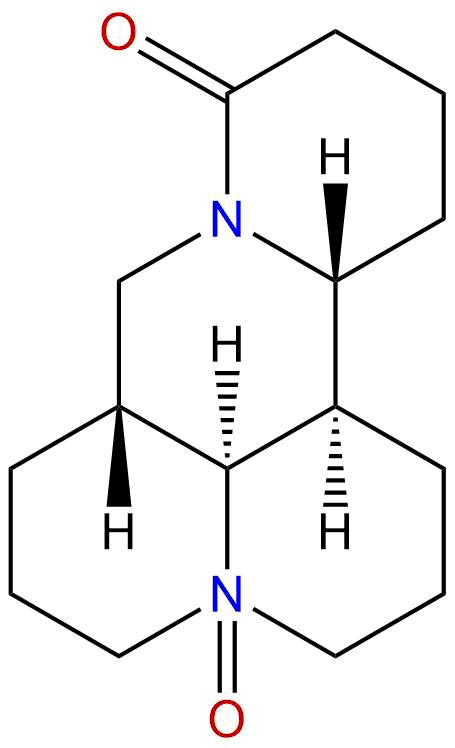


Product name: N-Oxysophoridine
Synonym name: Sophoridine N-oxide;Sophoridine oxide
Catalogue No.: BP4755
Cas No.: 54809-74-4
Formula: C15H24N2O2
Mol Weight: 264.369
Botanical Source:
Type of Compound: Alkaloids
Purity: 95%~99%
Analysis Method: HPLC-DAD or/and HPLC-ELSD
Identification Method: Mass, NMR
Packing: Brown vial or HDPE plastic bottle
Storage: Store in a well closed container, protected from air and light. Put into refrigerate or freeze for long term storage.
Whenever possible, you should prepare and use solutions on the same day. However, if you need to make up stock solutions in advance, we recommend that you store the solution as aliquots in tightly sealed vials at -20℃. Generally, these will be useable for up to two weeks.
The product could be supplied from milligrams to grams
Inquire for bulk scale.
For Reference Standard and R&D, Not for Human Use Directly.
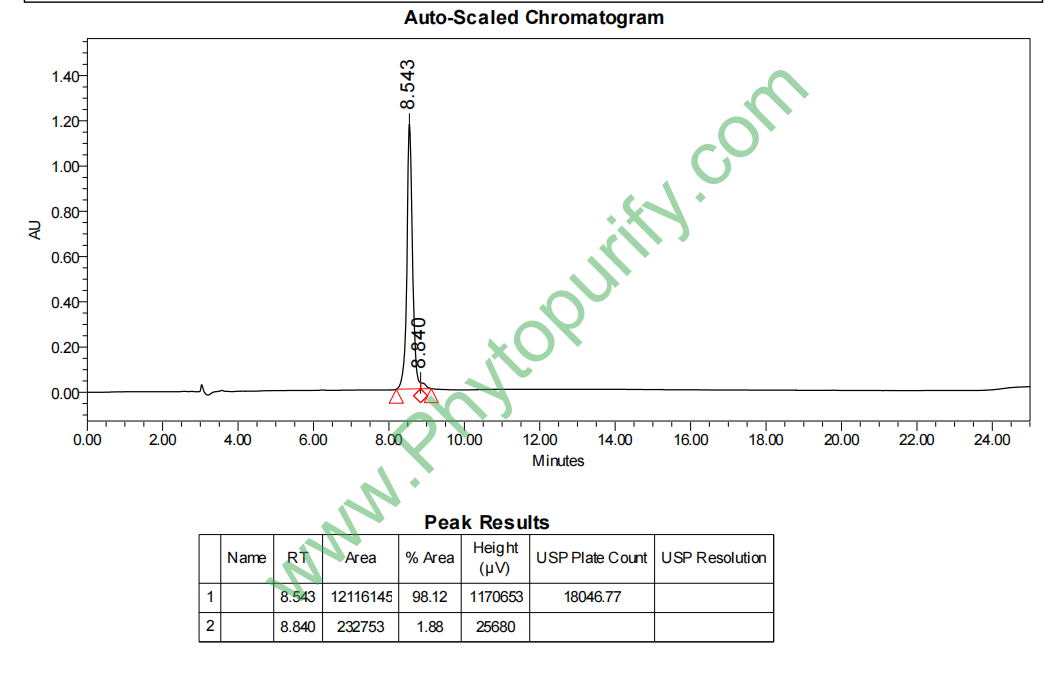
HPLC of N-Oxysophoridine
Storage conditions:Short-term storage at 2~8℃, long-term storage at -20 ~ -80℃
43.3700
.0514
.0514
198.2762
3.8001
4.5846
High
46.6527
4.6360
No
No
Yes
No
Yes
No
0.9
Yes
No
Yes
Yes
Natural products, as an important source of drug discovery, play an irreplaceable role in the long history of human fight against diseases. China has abundant medicinal plant resources, including Sophora flavescens(Sophora flavescens Ait. and its related plants, as traditional Chinese medicine, have a long history of application in clearing heat and detoxifying, drying dampness and killing insects. The main active ingredients of Sophora flavescens include alkaloids, flavonoids, etc. Among them, Oxymatrine and N-Oxysophoridine, as representative quinolone alkaloids, have attracted widespread attention from scholars at home and abroad in recent years.
N-Oxysophoridine (CAS number: 54809-74-4) is an N-oxide derivative of Sophoridine, belonging to the tetracyclic quinolone alkaloids. Compared with oxymatrine, oxysophocarpine has a unique stereochemistry in its structure, which endows it with a unique pharmacological activity spectrum. In recent years, with the deepening of research on the anti-inflammatory activity of natural products, oxysophoridine has shown significant biological activity in multiple fields such as anti-inflammatory, analgesic, and anti-tumor effects. Especially, its multi-target regulation of inflammatory signaling pathways makes it a potential candidate molecule for the treatment of inflammation related diseases.
This article will provide a systematic review of the research progress of oxysophocarpine from multiple dimensions, including chemical structure and physicochemical properties, plant sources and extraction methods, pharmacological activity research, mechanism of action and molecular targets, drug evaluation and pharmacokinetics, clinical application prospects and prospects, in order to provide reference for the in-depth development and utilization of this natural product.
The molecular formula of oxysophoridine is C ₁₅ H ₂₄ N ₂ O ₂, with a molecular weight of 264.3690, and its core skeleton is a tetracyclic quinoline structure. From a chemical structure perspective, oxysophocarpine belongs to the derivative of matrine alkaloids. Its parent nucleus is composed of two fused quinidine rings, forming a rigid four ring system. Compared with sophoridine, oxidized sophoridine introduces an oxygen atom at the N-1 position, forming an N → O coordination bond. This structural modification significantly changes the electronic distribution and spatial configuration of the molecule.
The stereochemical characteristics of oxidized sophocarpine are particularly noteworthy. There are multiple chiral centers in its molecule, including positions C-5, C-6, C-7, C-11, etc. The configuration of these chiral centers determines the way the molecule interacts with biological targets. Compared with oxymatrine, oxysophocarpine has a different configuration at the C-6 position, and this subtle structural difference leads to significant differences in pharmacological activity between the two. Specifically, the C-6 position of oxysophoridine is in the S configuration, while oxymatrine is in the R configuration. This difference makes oxysophoridine exhibit stronger selectivity in anti-inflammatory activity.
The physicochemical properties of oxysophocarpine determine its potential as a drug candidate. Its lipophilic water partition coefficient (LogP) is 0.0514, indicating that the compound has moderate lipophilicity, which can maintain a certain solubility in the aqueous phase and cross the biofilm barrier. The topological polar surface area (TPSA) is 43.37 Å ², which is lower than the commonly recognized oral drug absorption threshold (140 Å ²), indicating its good oral absorption potential.
Water solubility is an important parameter for evaluating drug properties. The water solubility value of oxidized sophocarpine is 198.28 mg/L, which belongs to a moderately soluble compound. This characteristic enables it to maintain an effective blood drug concentration in the body while avoiding bioavailability issues caused by low solubility. It is worth noting that the N → O structure of oxysophoridine endows it with a certain polarity, allowing it to maintain a good solubility state under physiological pH conditions.
In terms of stability, oxysophocarpine is relatively stable under acidic conditions, but ring opening reactions may occur in strongly alkaline environments. In addition, the compound is sensitive to light and heat, and appropriate protective measures need to be taken during storage and formulation. These physical and chemical properties provide important basis for subsequent formulation development and administration route design.
Oxysophocarpine mainly comes from Fabaceae, a genus of Sophora in the legume family(Sophora)Plants, including Sophora flavescens(Sophora flavescens Ait. and Shan Dou Gen(Sophora tonkinensis Gagnep. is the main source. In addition, the white thorn flower(Sophora viciifolia Hance)、 Vietnamese locust tree(Sophora tonkinensis)Plants also contain a certain amount of oxymatrine.
As a traditional Chinese medicinal herb, Sophora flavescens has the richest alkaloid content in its roots and stems. Research has shown that the total alkaloid content in Sophora flavescens roots can reach 2% -4%, among which the content of oxysophocarpine varies depending on the place of origin, harvesting season, and processing method. Generally speaking, the content of oxysophocarpine in Sophora flavescens roots harvested in autumn is relatively high, which may be related to the accumulation of secondary metabolites in the later stages of plant growth.
It is worth noting that oxysophocarpine does not exist in a single form in plants, but coexists with alkaloids such as sophocarpine, oxymatrine, and matrine. There is a interconversion relationship between these alkaloids, for example, sophocarpine can be converted into oxidized sophocarpine in plants through the action of oxidase. Therefore, in the extraction process, it is necessary to comprehensively consider the mutual influence of these alkaloids.
The traditional method for extracting sophocarpine mainly relies on solvent extraction and acid-base treatment. Common extraction solvents include organic solvents such as ethanol, methanol, and chloroform. Among them, ethanol extraction method is widely used due to its safety and economy. The specific operation process is as follows: after crushing the dried Sophora flavescens roots, extract them with 70% -80% ethanol reflux, concentrate the extract, dissolve it in acidic water, extract it with organic solvents, and finally obtain the total alkaloids through alkalization treatment.
With the development of separation technology, modern extraction methods have made significant progress in improving extraction efficiency and purity. Supercritical fluid extraction (SFE) technology utilizes CO ₂ as an extractant to achieve selective extraction of target compounds under mild conditions, avoiding the problem of residual organic solvents. Research has shown that using supercritical CO ₂ extraction technology, under conditions of pressure of 30 MPa and temperature of 50 ℃, the extraction rate of oxidized sophocarpine can reach more than 1.5 times that of traditional methods.
Ultrasonic assisted extraction (UAE) and microwave-assisted extraction (MAE) techniques have also been applied to the extraction of sophocarpine oxide. The cavitation effect of ultrasound can damage plant cell walls and promote the release of active ingredients; The heating effect of microwaves can accelerate molecular motion and improve mass transfer efficiency. The application of these technologies has shortened the extraction time from traditional hours to less than 30 minutes, while reducing the amount of solvent used.
In terms of separation and purification, column chromatography technology is the key to obtaining high-purity oxidized sophocarpine. Common stationary phases include silica gel, alumina, and macroporous adsorption resins. Among them, macroporous adsorption resins are highly favored due to their high adsorption capacity and good selectivity. By gradient elution, oxidized sophocarpine can be effectively separated from other alkaloids. In recent years, the application of high-speed countercurrent chromatography (HSCCC) and preparative high-performance liquid chromatography (Prep HPLC) has further improved separation efficiency and purity, resulting in a purity of over 98% for oxysophoridine.
Inflammation is the body's defense response to harmful stimuli, but excessive or sustained inflammation can lead to tissue damage and the occurrence of various diseases. The research on the anti-inflammatory effect of oxysophocarpine is the most in-depth, and its anti-inflammatory activity has been validated in various in vitro and in vivo models.
At the cellular level, oxysophoridine can significantly inhibit the release of pro-inflammatory cytokines in macrophages stimulated by lipopolysaccharide (LPS). Research has shown that treatment with oxysophocarpine can reduce the mRNA expression levels and protein secretion of tumor necrosis factor - α (TNF - α), interleukin-6 (IL-6), and interleukin-1 β (IL-1 β). In addition, oxysophoridine can also inhibit the production of nitric oxide (NO) and prostaglandin E ₂ (PGE ₂), which is closely related to the downregulation of inducible nitric oxide synthase (NOS2) and cyclooxygenase-2 (PTGS2) expression.
In animal models, oxysophocarpine has shown therapeutic effects on various inflammatory diseases. In the carrageenan induced rat paw swelling model, oral administration of oxysophoridine can significantly reduce the degree of paw swelling, and its effect is comparable to the positive control drug indomethacin. In a rat arthritis model induced by complete Freund's adjuvant (CFA), oxysophoridine can reduce joint swelling, lower inflammation scores, and inhibit synovial tissue proliferation and vascular opacities formation.
It is worth noting that oxysophoridine also exhibits a regulatory effect on neuroinflammation. In the activation model of microglia, oxysophocarpine can inhibit LPS induced release of pro-inflammatory cytokines and promote the expression of anti-inflammatory cytokine IL-10. This discovery suggests that oxysophocarpine may have potential value in the treatment of neurodegenerative diseases.
Pain is one of the main symptoms of inflammation, and the analgesic activity of oxysophocarpine is closely related to its anti-inflammatory effect. In both the hot plate experiment and the acetic acid writhing experiment, oxysophoridine showed dose-dependent analgesic effects. Unlike opioid analgesics, the analgesic effect of oxysophocarpine is not antagonized by naloxone, indicating that its analgesic mechanism does not involve opioid receptors.
Further research has found that the analgesic effect of oxysophoridine is related to the regulation of transient receptor potential (TRP) channels. TRPV1 and TRPA1 are important ion channels involved in pain signal transduction. Oxysophocarpine can inhibit the activation of these channels, thereby reducing the transmission of nociceptive signals. In addition, oxysophocarpine can indirectly alleviate pain responses by inhibiting the production of inflammatory mediators.
In recent years, the anti-tumor activity of oxysophocarpine has attracted widespread attention. In vitro experiments have shown that oxysophoridine can inhibit the proliferation of many tumor cell lines, including HepG2, A549, breast cancer (MCF-7) and colon cancer (HT-29) cells. Its anti-tumor mechanism involves multiple aspects: inducing cell cycle arrest, promoting apoptosis, inhibiting migration and invasion, etc.
In terms of cell cycle regulation, oxysophoridine can block tumor cells in the G0/G1 phase, which is related to the downregulation of the expression of cyclin D1 and cyclin dependent kinase 4 (CDK4). In terms of apoptosis induction, oxysophoridine activates the mitochondrial pathway, promotes the release of cytochrome c, and subsequently activates caspase-9 and caspase-3, ultimately leading to cell apoptosis.
It is worth noting that oxysophoridine has low toxicity to normal cells and exhibits a certain degree of selectivity. This characteristic gives it good safety in tumor treatment. In addition, oxysophoridine can enhance the sensitivity of chemotherapy drugs and exhibit synergistic effects when used in combination with drugs such as cisplatin and doxorubicin.
In addition to the aforementioned activities, oxysophoridine also exhibits various pharmacological effects such as antiviral, hepatoprotective, and anti fibrotic effects. In terms of antiviral activity, oxysophoridine has an inhibitory effect on the replication of hepatitis B virus (HBV) and can reduce the secretion of HBsAg and HBeAg. In terms of liver protection, oxysophoridine can alleviate liver damage induced by carbon tetrachloride (CCl ₄), reduce serum transaminase levels, and inhibit the activation of hepatic stellate cells, thereby exerting anti fibrotic effects.
The anti-inflammatory effect of oxysophocarpine involves the regulation of multiple signaling pathways, among which the nuclear factor kappa B (NF - κ B) pathway is one of the most critical targets. NF - κ B is the core transcription factor of inflammatory response, regulating the expression of various pro-inflammatory factors. Research has shown that oxysophocarpine can inhibit the activity of I κ B kinase (IKBKB), prevent the phosphorylation and degradation of I κ B α, and thus inhibit the nuclear translocation and transcriptional activity of NF - κ B. Specifically, oxysophocarpine inhibits the phosphorylation of RELA (p65) subunit, reduces its binding ability to DNA, and ultimately downregulates the expression of target genes such as TNF - α, IL-6, NOS2, and PTGS1.
The signal transduction and transcription activator 3 (STAT3) pathway is also an important target for the oxidation of sophocarpine. STAT3 plays a crucial role in both inflammation and tumors, and its sustained activation is closely related to the occurrence and development of various diseases. Oxysophocarpine can inhibit the tyrosine phosphorylation of STAT3, prevent its dimerization and nuclear translocation, thereby suppressing the transcription of downstream target genes. This mechanism explains the dual effects of oxysophoridine in anti-inflammatory and anti-tumor aspects.
Inflammatory bodies are an important component of the innate immune system, among which NLRP3 inflammasome plays a crucial role in various inflammatory diseases. Research has shown that oxysophocarpine can inhibit the assembly and activation of NLRP3 inflammasomes, reduce the activation of caspase-1 (CASP1), and decrease the maturation of IL-1 β. This effect is related to the inhibition of reactive oxygen species (ROS) production by oxymatrine, as ROS is an important signaling molecule for NLRP3 inflammasome activation.
TRPV1 and TRPA1 are important ion channels involved in pain and inflammatory responses. Oxysophocarpine can directly interact with these channels and inhibit their activation. Molecular docking studies have shown that oxysophocarpine can bind to the ligand binding site of TRPV1 channel, blocking the binding of agonists such as capsaicin. In addition, oxysophocarpine can inhibit the opening of TRPA1 channels, reduce calcium ion influx, and thus alleviate the transmission of pain signals.
The pharmacological effects of oxysophocarpine are not mediated by a single target, but are regulated through a multi-target network. System pharmacology analysis shows that oxysophocarpine can simultaneously act on multiple targets such as IL-6, STAT3, CASP1, TRPV1, RELA, PTGS1, TNF, TRPA1, IKBKB, and NOS2, forming a complex regulatory network. This multi-target mode of action gives oxysophocarpine an advantage in the treatment of complex diseases, as it can simultaneously intervene in multiple pathological processes, improve treatment efficacy, and reduce the occurrence of drug resistance.
The evaluation of drug properties based on the structural characteristics of compounds is an important step in drug development. The molecular weight of oxysophocarpine is 264.37, which meets the requirement of Lipinski's five rules for molecular weight less than 500. Its LogP value is 0.0514, indicating moderate lipophilicity and favorable oral absorption. The TPSA is 43.37 Å ², below the threshold of 140 Å ², indicating good intestinal permeability.
In terms of safety prediction, the hERG inhibition prediction result was negative, indicating a low risk of cardiac toxicity caused by oxysophoridine. The Ames test predicted a value of 0.9, indicating a low risk of genetic toxicity. These data indicate that oxysophocarpine has good safety characteristics, laying the foundation for its further drug development.
Pharmacokinetic studies are crucial for evaluating the in vivo processes of drugs. Research has shown that oxysophocarpine can be rapidly absorbed after oral administration, with a peak blood concentration time of approximately 1-2 hours. Its absolute bioavailability is about 30% -40%, which is a moderate level among natural products.
Oxysophocarpine is widely distributed in the body and can penetrate the blood-brain barrier to enter the central nervous system. This characteristic is consistent with its prediction of high blood-brain barrier permeability, providing a pharmacokinetic basis for its application in neuroinflammation and neurodegenerative diseases. In terms of metabolism, oxysophoridine is mainly metabolized in the liver, and the enzymes involved in metabolism include the cytochrome P450 enzyme system (CYP450). The main metabolic pathways include N-oxidation, hydroxylation, and glucuronic acid binding reactions.
In terms of excretion, oxysophocarpine is mainly excreted through the kidneys in its original form and as a metabolite. Its half-life is about 4-6 hours, which suggests the need for multiple administrations to maintain effective blood drug concentration. It is worth noting that the protein binding rate of oxysophoridine is relatively low (about 20% -30%), which means that the concentration of free drug is high, which is conducive to exerting pharmacological effects.
Researchers have developed various formulations to improve the bioavailability and therapeutic efficacy of oxysophocarpine based on its pharmacokinetic characteristics. New drug delivery systems such as liposomes, nanoparticles, and cyclodextrin inclusion complexes have been applied in the research of oxysophoridine formulations. These formulations can enhance the solubility and stability of drugs, prolong their circulation time in the body, and achieve targeted delivery.
Based on the significant anti-inflammatory activity and good safety characteristics of oxysophoridine, its application prospects in the treatment of inflammatory diseases are broad. Rheumatoid arthritis, inflammatory bowel disease, asthma and other chronic inflammatory diseases are potential therapeutic areas for oxysophocarpine. Compared with traditional anti-inflammatory drugs, the multi-target mode of action of oxysophoridine may bring better therapeutic effects and lower side effects.
Of particular note is that the regulatory effect of oxysophoridine on neuroinflammation provides the possibility for its application in neurodegenerative diseases such as Alzheimer's disease and Parkinson's disease. The occurrence and development of these diseases are closely related to chronic neuroinflammation, and existing treatment methods are limited. The ability of oxysophocarpine to penetrate the blood-brain barrier makes it an ideal candidate drug for treating central nervous system inflammation.
The anti-tumor activity of oxysophoridine and its synergistic effect with chemotherapy drugs make it valuable for application in adjuvant therapy of tumors. As a chemotherapy sensitizer, oxysophoridine can enhance the sensitivity of tumor cells to chemotherapy drugs, reduce the dosage of chemotherapy drugs used, and thus alleviate toxic side effects. In addition, the regulatory effect of oxysophoridine on the tumor microenvironment, such as inhibiting the production of inflammation related pro tumor factors, may help to suppress tumor progression and metastasis.
Although oxysophocarpine has shown good safety, its potential adverse reactions still need to be monitored during clinical translation. Long term administration may have an impact on liver and kidney function, and a comprehensive toxicological evaluation system needs to be established. In addition, the interaction between oxidized sophocarpine and other drugs also needs to be further studied, especially in combination with CYP450 enzyme substrate drugs.
Future research directions include: improving the activity and selectivity of oxysophoridine through structural modification; Develop targeted delivery systems to improve therapeutic efficacy and reduce systemic exposure; Conduct systematic preclinical toxicology studies to evaluate the safety of long-term medication; And explore the potential application of oxysophocarpine in more disease fields.
Oxysophocarpine, as a representative alkaloid component in Sophora flavescens, has shown significant research value in the field of natural product drug development due to its unique chemical structure and multi-target pharmacological activity. The extensive pharmacological activities of oxysophoridine, ranging from anti-inflammatory and analgesic to anti-tumor, provide new ideas for the treatment of various diseases. It reflects the multi-target and multi pathway nature of natural products by regulating multiple signaling pathways such as NF - κ B, STAT3, inflammasomes, and TRP channels.
The evaluation results of drug properties show that oxysophoridine has good drug like and safety characteristics, and has the potential for further development. However, there are still many challenges from laboratory research to clinical application, including optimizing pharmacokinetic properties, developing formulation technologies, and verifying clinical efficacy and safety. With the continuous development of modern medicinal chemistry, pharmacology, and pharmaceutical technology, oxysophoridine is expected to become a new drug candidate for the treatment of inflammation related diseases, contributing to human health.
Natural products are an important source of drug discovery, and the research process of oxidized sophocarpine once again proves this viewpoint. In the future, through interdisciplinary collaboration, we will delve into the pharmacological activities of oxysophocarpine and its derivatives, elucidate their mechanisms of action, optimize their pharmacokinetic properties, and ultimately drive this natural product from the laboratory to clinical practice, realizing its value as an innovative drug.
