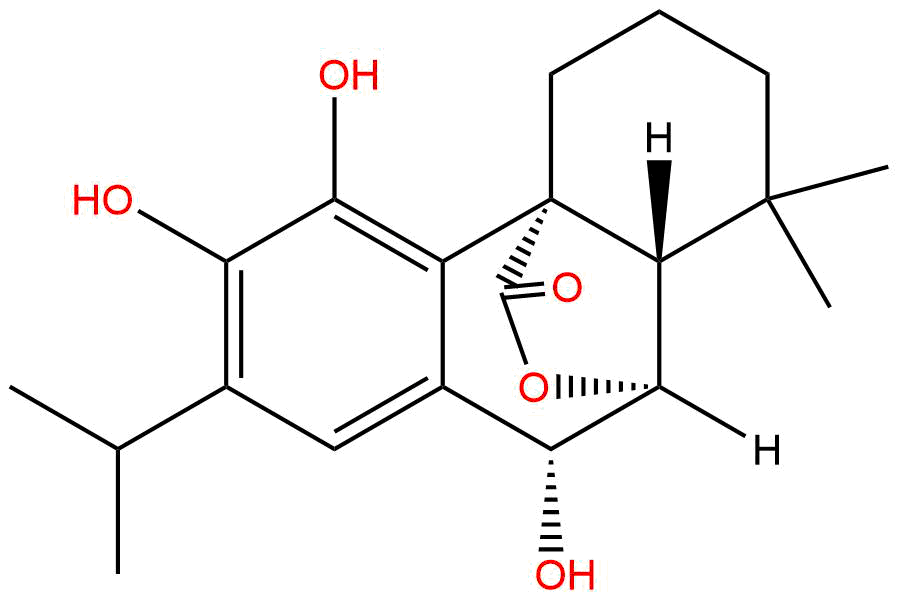


Product name: Epirosmanol
Synonym name:
Catalogue No.: BP4530
Cas No.: 93380-12-2
Formula: C20H26O5
Mol Weight: 346.423
Botanical Source: Rosmarinus officinalis
Type of Compound: Phenylpropanoids
Purity: 95%~99%
Analysis Method: HPLC-DAD or/and HPLC-ELSD
Identification Method: Mass, NMR
Packing: Brown vial or HDPE plastic bottle
Storage: Store in a well closed container, protected from air and light. Put into refrigerate or freeze for long term storage.
Whenever possible, you should prepare and use solutions on the same day. However, if you need to make up stock solutions in advance, we recommend that you store the solution as aliquots in tightly sealed vials at -20℃. Generally, these will be useable for up to two weeks.
The product could be supplied from milligrams to grams
Inquire for bulk scale.
For Reference Standard and R&D, Not for Human Use Directly.
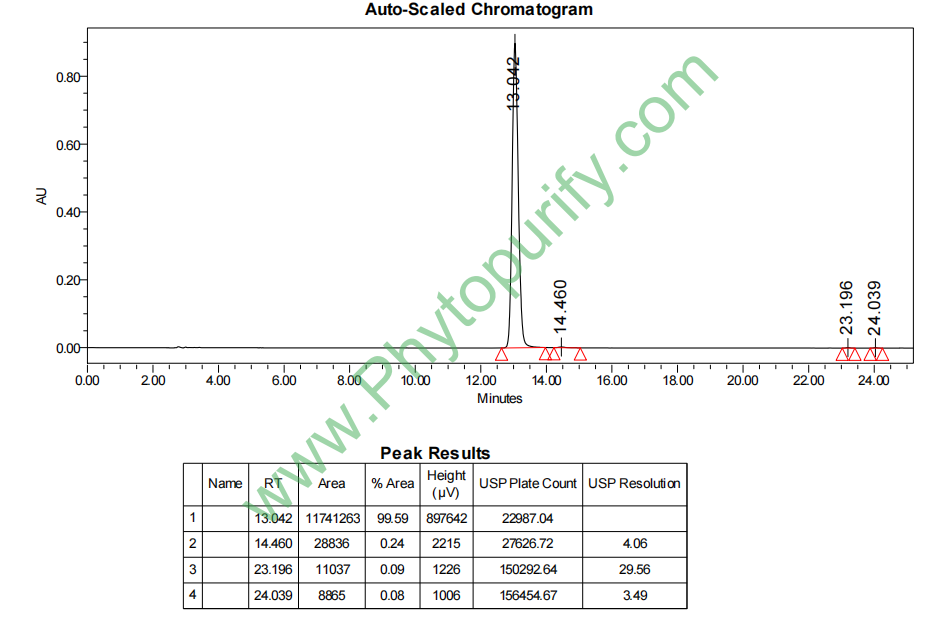
HPLC of Epirosmanol
Storage conditions:Short-term storage at 2~8℃, long-term storage at -20 ~ -80℃
86.9900
3.5392
3.5360
.0686
3.4300
8.2236
Low
88.1454
5.0484
No
No
No
No
Yes
No
0.0
Yes
No
No
No
In the field of natural product chemistry and pharmacology research, diterpenes derived from medicinal plants have attracted much attention due to their structural diversity and wide range of biological activities. Salvia plants, as important medicinal resources in traditional medicine, are rich in various diterpenoid compounds with antioxidant, anti-inflammatory, and anti-tumor activities. Epirosmarinol, as a natural diterpenoid lactone isolated from Salvia miltiorrhiza, has gradually become one of the hotspots in natural product pharmacology research since its discovery due to its significant antioxidant activity and potential pharmacological effects such as anti-tumor and inhibition of melanin production. Its CAS number is 93380-12-2.
Oxidative stress is a common pathological basis for various chronic diseases, such as cancer, neurodegenerative diseases, cardiovascular diseases, and skin photoaging. Excessive accumulation of reactive oxygen species (ROS) in the body can attack biomolecules, disrupt cellular homeostasis, and activate a series of pro-inflammatory and pro apoptotic signaling pathways. Therefore, the search for efficient and low toxicity natural antioxidants to intervene in oxidative stress-related diseases has important scientific significance and clinical application value. Rosmarinol showed excellent ability in vitro antioxidant experiments such as scavenging DPPH free radicals, suggesting that it may exert protective effects by directly scavenging free radicals or activating endogenous antioxidant defense systems. In addition, its activity in inhibiting melanin synthesis in melanoma cells provides clues for its application in skin pigmentary diseases and cosmetics.
This article aims to provide a systematic review of the chemical structure, plant origin, pharmacological activity, mechanism of action, medicinal properties, and clinical application prospects of rosmarinol, in order to provide comprehensive scientific references for the in-depth research and development of this compound.
Rosmarinol is a diterpenoid lactone compound with a molecular formula of C20H26O5 and a molecular weight of 346.4230. Structurally, it belongs to the derivatives of abietane diterpenes, with a core skeleton consisting of three hexagonal rings (A, B, C) and one pentagonal lactone ring (D). The naming of its "Epi -" usually refers to the stereoconfiguration of a chiral center (such as the C-7 hydroxyl group) in its structure that is different from its diastereomer Rosmanol. The subtle differences in stereochemistry often have a significant impact on its biological activity, interactions with target proteins, and physicochemical properties.
In terms of physicochemical properties, the lipid water partition coefficient (LogP) of rosmarinol is 3.5392, indicating that the compound has moderate lipophilic properties, which facilitate its penetration of cell membranes but may also affect its solubility and distribution in aqueous media. Its topological polar surface area (TPSA) is 86.99 Å ², which is relatively moderate. The water solubility value is relatively low, about 0.0686 mg/mL, indicating that it may be necessary to consider using solubilizers or designing them as prodrugs in the formulation development process to improve their bioavailability. These basic physicochemical parameters are the basis for its subsequent pharmacokinetic behavior and drug efficacy evaluation.
Rosmarinol is mainly isolated from various plants of the Salvia genus in the Lamiaceae family. Among them, rosemary (Salvia rosmarinus, formerly known as Rosmarinus officinalis) is one of its most famous sources, and the compound name is derived from it. In addition, it is often detected in other Salvia species such as Salvia miltiorrhiza and Salvia officinalis. These plants are often used in traditional medicine to treat inflammation, infections, and improve memory, and some of their effects may be related to the diterpenoid components they contain.
The extraction of rosmarinol from plant materials is usually carried out using organic solvent extraction method. The common process includes crushing dried plant leaves or whole plants, first degreasing them with petroleum ether or n-hexane to remove strong lipophilic impurities such as chlorophyll and wax. Subsequently, medium polarity solvents such as ethyl acetate, acetone, or methanol are used for repeated leaching or heating reflux extraction. Ethyl acetate is a commonly used extraction solvent due to its good selectivity for diterpenoid components.
After concentration, the crude extract needs to be separated and purified through a series of chromatographic techniques. Silica gel column chromatography is commonly used for preliminary separation, with different ratios of petroleum ether ethyl acetate or chloroform methanol gradient elution. The stream rich in target components is further purified by preparative thin layer chromatography (PTLC), reverse phase high performance liquid chromatography (RP-HPLC) or gel chromatography (such as Sephadex LH-20), and finally the high-purity epirosmarin monomer is obtained. Structural identification involves the comprehensive use of nuclear magnetic resonance (NMR, including 1H-NMR, 13C-NMR, 2D-NMR), mass spectrometry (MS), and optical rotation measurement techniques.
A large number of in vitro and a small amount of in vivo studies have shown that rosmarinol has various pharmacological activities, with its core centered around antioxidant activity and extending to fields such as anti-tumor and skin protection.
1. Antioxidant activity
This is the most widely studied property of rosmarinol. In a cell-free system, it exhibits strong free radical scavenging ability. The classic 1,1-diphenyl-2-trinitrophenylhydrazine (DPPH) radical scavenging experiment is direct evidence of its direct antioxidant capacity. Its activity is attributed to its phenolic hydroxyl structure, which can neutralize free radicals by providing hydrogen atoms or electrons. In addition, in cell models, it can effectively reduce intracellular ROS levels induced by hydrogen peroxide (H2O2), ultraviolet radiation, or other oxidative stressors, protecting cells from oxidative damage.
2. Antitumor activity
Research has shown that rosmarinol has growth inhibitory and pro apoptotic effects on various tumor cell lines. Its anti-tumor mechanism is multifaceted: on the one hand, through its antioxidant effect, it indirectly regulates the redox balance in the tumor microenvironment, affecting the proliferation signal of tumor cells; On the other hand, it can directly induce tumor cell cycle arrest (such as G1 phase or G2/M phase) and activate mitochondrial dependent apoptotic pathways. Of particular note is that research suggests that it not only inhibits the proliferation of melanoma cells, but also specifically suppresses the activity of tyrosinase (TYR), thereby reducing the biosynthesis of melanin. This provides a basis for its application in the treatment of melanoma or as a skin whitening agent.
3. Skin protective effect
In addition to inhibiting melanin production, the antioxidant activity of rosmarinol is of great significance in skin pharmacology. Ultraviolet (UV) radiation is the main environmental factor for skin photoaging and skin cancer, and its mechanism is closely related to the generation of ROS. Rosmarinol can protect skin fibroblasts from UV induced oxidative damage, reduce lipid peroxidation and DNA damage. Meanwhile, studies have shown that it can downregulate the expression of matrix metalloproteinases (such as MMP-1, MMP-3), which are key enzymes in degrading collagen in the dermis of the skin. Overexpression of these enzymes is the main cause of skin wrinkles and sagging. Therefore, rosmarinol has the potential to prevent and treat skin photoaging.
4. Other potential activities
Based on its correlation with antioxidant and anti-inflammatory properties, there have been preliminary research reports on the neuroprotective (anti oxidative stress-related neurodegenerative diseases) and cardiovascular protective (prevention of low-density lipoprotein oxidation) effects of rosmarinol, but further in vivo experimental verification is needed.
The pharmacological effects of rosmarinol are not achieved through a single target, but through the synergistic action of multiple targets and pathways, with the core being the regulation of cellular redox homeostasis.
1. Direct antioxidant and enzyme regulation
As a phenolic compound, the phenolic hydroxyl group in its molecule is a direct electron donor, which can quench DPPH, superoxide anions, hydroxyl radicals, etc. In addition, it can enhance the overall antioxidant defense ability of cells by upregulating the expression and activity of endogenous antioxidant enzyme systems. The key targets include:
- Superoxide dismutase (SOD1, SOD2)Catalytic conversion of superoxide anions into H2O2.
- Catalase (CAT) and Glutathione peroxidase 1 (GPX1)Responsible for removing H2O2 to prevent its conversion into more toxic hydroxyl radicals.
- Heme oxygenase-1 (HMOX1)An important stress-induced enzyme with antioxidant, anti-inflammatory, and anti apoptotic effects.
2. Activate the Nrf2/ARE signaling pathway
This is the core molecular mechanism by which rosmarinol exerts indirect antioxidant and cell protective effects. Nuclear factor E2 related factor 2 (Nrf2, encoded by NFE2L2 gene) is a key transcription factor that regulates antioxidant response elements (ARE). In the resting state, Nrf2 binds to Keap1 protein and is degraded by ubiquitination. Rosmarinol may dissociate Nrf2 from Keap1 by modifying cysteine residues on Keap1, leading to translocation to the nucleus. In the nucleus, Nrf2 binds to ARE and initiates the transcription of a series of downstream phase II detoxifying enzymes and antioxidant proteins (such as HMOX1, NQO1, GST, GPX, etc.). The activation of this pathway is a key adaptive response of cells to chemical and oxidative stress.
3. Inhibit targets related to melanin synthesis
For its whitening and anti melanoma activity,Tyrosinase (TYR) It directly acts on the target. Rosmarinol may inhibit the activity of TYR through competitive or non competitive means, thereby blocking the key step of melanin synthesis from tyrosine to dopa, and then to dopa quinone.
4. Inhibit extracellular matrix degradation
In the skin photoaging model, rosmarinol can significantly inhibit UV induced aging Matrix metalloproteinase-1 (MMP-1) and MMP-3 The expression. The mechanism may involve inhibiting the activity of pro-inflammatory transcription factors such as activator protein-1 (AP-1) and nuclear factor kappa B (NF - κ B), which are regulated by intracellular ROS levels.
In summary, the mechanism network of action of rosmarinol is centered around antioxidant activity. Upstream, it enhances cellular defense by directly clearing free radicals and activating the Nrf2 pathway, while downstream, it achieves specific pharmacological effects such as anti-tumor and skin protection by regulating specific targets such as TYR and MMPs.
Based on the provided pharmacological parameters, a preliminary analysis of the class of properties of rosmarinol can be conducted
- Molecular weight (346.42)Compliant with Lipinski's "Five Rules" (<500 Da), beneficial for oral absorption.
- Fat solubility (LogP=3.54)Moderate, indicating good membrane permeability, but poor water solubility (0.0686 mg/mL), which may be the main limiting factor for its oral bioavailability. High lipid solubility may result in a larger distribution volume in the body, but the absorption process may be limited by the dissolution rate.
- Polar surface area (TPSA=86.99 Å ²)A common limit below 140 Å ² is beneficial for cell infiltration.
- Blood-brain barrier (BBB) permeability A prediction of 'low' indicates that it is not easily accessible to the central nervous system. This may be advantageous for applications primarily targeting peripheral diseases such as skin and tumors, as it can reduce potential central nervous system side effects; But if used to treat central nervous system diseases, structural modifications are required to enhance BBB penetration ability.
- Preliminary safety warning:HERG inhibition A prediction of 'no' is a positive signal indicating a lower potential risk of causing QT interval prolongation in the heart.Ames test The predicted value is 0.0, indicating that its mutagenic risk may be low, but it needs to be confirmed through actual experiments.
At present, pharmacokinetic studies on the rosmarinol system, including absorption, distribution, metabolism, and excretion, are relatively scarce in public literature, which is a key bottleneck for its progress towards drug development. Based on its physicochemical properties, it can be inferred that after oral administration, its absorption may be limited and unstable due to low water solubility; In the body, it may be mainly metabolized by the liver cytochrome P450 enzyme system, undergoing reactions such as hydroxylation, demethylation, glucuronidation, or sulfation; The excretion pathways of its metabolites and prototype drug are not yet clear. Future research requires the use of technologies such as liquid chromatography-mass spectrometry (LC-MS/MS) to investigate in detail the absolute bioavailability, tissue distribution, half-life, and major excretion pathways in animal models (rats, mice). In addition, pharmaceutical research is also crucial, and developing formulations such as nanoemulsions, liposomes, cyclodextrin inclusion complexes, or solid dispersions is a necessary strategy to improve their water solubility and bioavailability.
The multi-target pharmacological activity of rosmarinol has brought potential application prospects in multiple fields, but its transformation still faces challenges.
1. Potential application areas
- Dermatology drugs and functional cosmetics This is the direction closest to commercialization. Based on its powerful antioxidant activity, inhibiting MMPs and TYR activity, epirosmarin can be used as an active ingredient to develop products such as cream and essence for anti skin photoaging (anti wrinkle), whitening and spot lightening, and repairing UV damage. Its natural origin attributes are also more in line with the current market trend of "pure beauty".
- Antitumor adjuvant therapy As a naturally occurring compound, its combination with chemotherapy or radiotherapy may play an adjuvant therapeutic role by reducing oxidative stress, sensitizing tumor cells, or protecting normal cells, especially in the prevention and treatment of melanoma. But strict preclinical and clinical trials are needed to verify its safety and effectiveness.
- Preventive healthcare products: As a dietary supplement or health food ingredient, it is used to prevent chronic diseases related to oxidative stress, such as atherosclerosis, diabetes complications, etc. This requires a thorough evaluation of its long-term safety.
2. Challenges faced and future research directions
- Blank space in systematic pharmacokinetics and toxicology research This is currently the biggest weakness. A comprehensive preclinical ADME/T study must be conducted to clarify its in vivo fate and safety parameters, providing a basis for clinical trial design.
- Deep exploration of the mechanism of action The existing mechanism research still mostly stays at the phenotype and pathway level, and more in-depth research is needed to clarify the exact interaction mode (eutectic structure, molecular docking verification, etc.) between it and key targets (such as Keap1, TYR).
- Structural optimization and derivative development Using it as a lead compound, structural modification is carried out through semi synthetic methods to improve its water solubility, bioavailability, targeting (such as tumor targeting) or efficacy, while reducing potential toxicity.
- Development of a suitable delivery system Developing advanced drug delivery systems (such as nanotechnology and transdermal drug delivery systems) to address its poor water solubility is key to improving its efficacy and application scope.
- Lack of clinical trial evidence All potential applications ultimately require the support of human clinical trial data to demonstrate their real-world effectiveness and safety.
Rosmarinol, as a natural diterpenoid lactone derived from Salvia plants, exhibits remarkable multidimensional pharmacological potential in anti-tumor, skin photoprotection, and inhibition of melanin production due to its excellent antioxidant activity. The study of its mechanism of action reveals a multi-target action network centered on Nrf2 pathway activation, which synergistically inhibits specific targets such as TYR and MMPs, reflecting the complexity advantage of natural product action mechanisms. Although it exhibits certain drug like characteristics in terms of drug properties (such as appropriate molecular weight, LogP), its low water solubility and blood-brain barrier penetration, as well as blank systematic pharmacokinetic data, constitute the main obstacles to its conversion to drugs.
Future research should focus on filling the gap in ADME/T research and optimizing and modifying it using modern medicinal chemistry and pharmacology methods. At the same time, deepen its molecular mechanism research and explore its potential applications in new indications such as neurodegenerative diseases. The research process of rosmarinol is a microcosm of its transition from a traditional medicinal plant active ingredient to a potential modern drug. With the continuous deepening of interdisciplinary research, it is expected to achieve a leap from laboratory to clinical in fields such as skin health and tumor adjuvant therapy, providing important scientific basis and candidate molecules for the development of new therapeutic drugs or functional products based on natural products.
