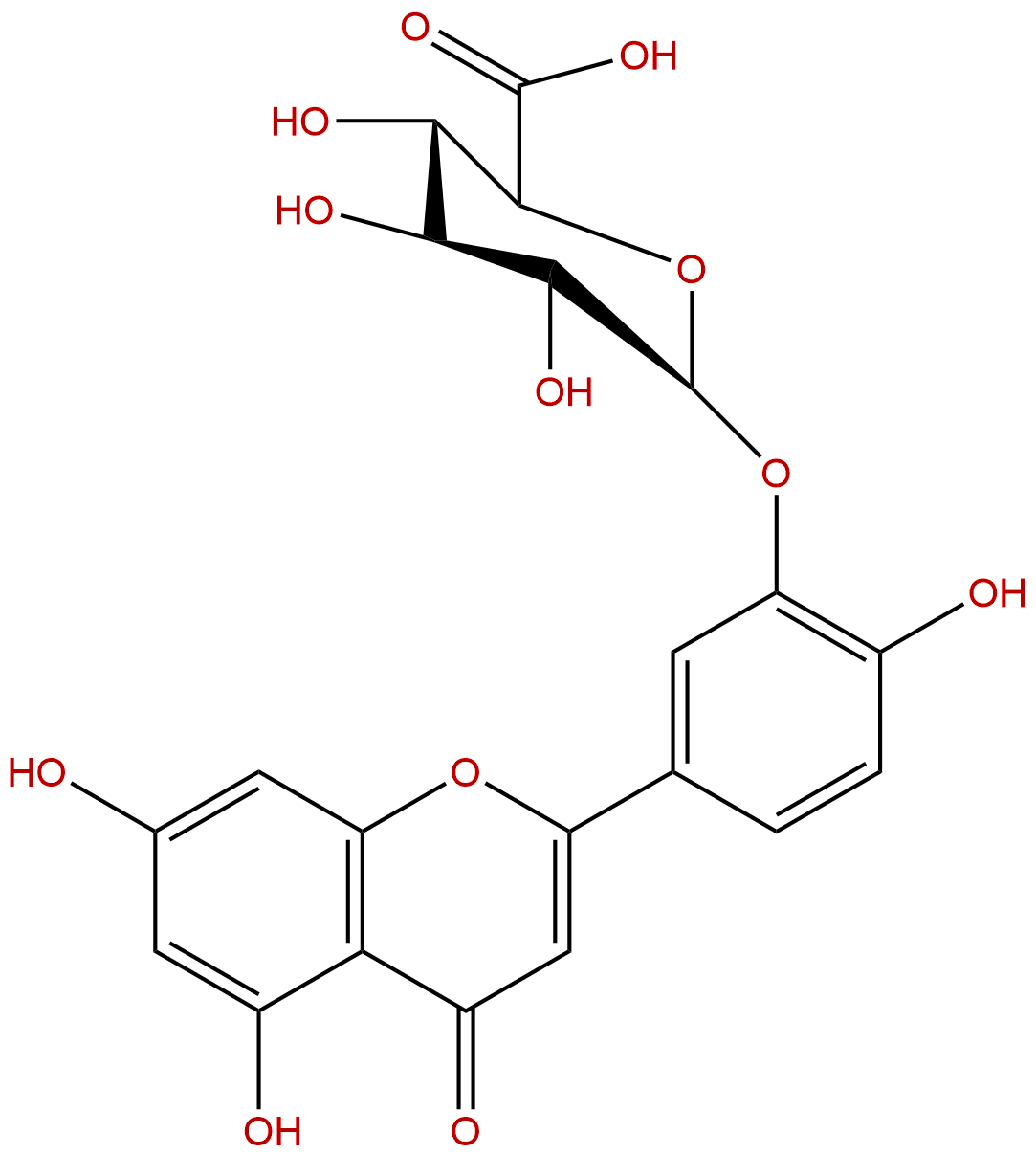


Product name: Luteolin-3'-D-glucuronide
Synonym name: Luteolin-3'-O-beta-D-glucuronide
Catalogue No.: BP1718
Cas No.: 53527-42-7
Formula: C21H18O12
Mol Weight: 462.363
Botanical Source: Rosmarinus officinalis
Physical Description:
Type of Compound: Flavonoids
Purity: 95%~99%
Analysis Method: HPLC-DAD or/and HPLC-ELSD
Identification Method: Mass, NMR
Packing: Brown vial or HDPE plastic bottle
The product could be supplied from milligrams to grams. Inquire for bulk scale.
We provide solution to improve the water-solubility of compounds, thereby facilitating the variety of activity tests and clinic uses.
For Reference Standard and R&D, Not for Human Use Directly.
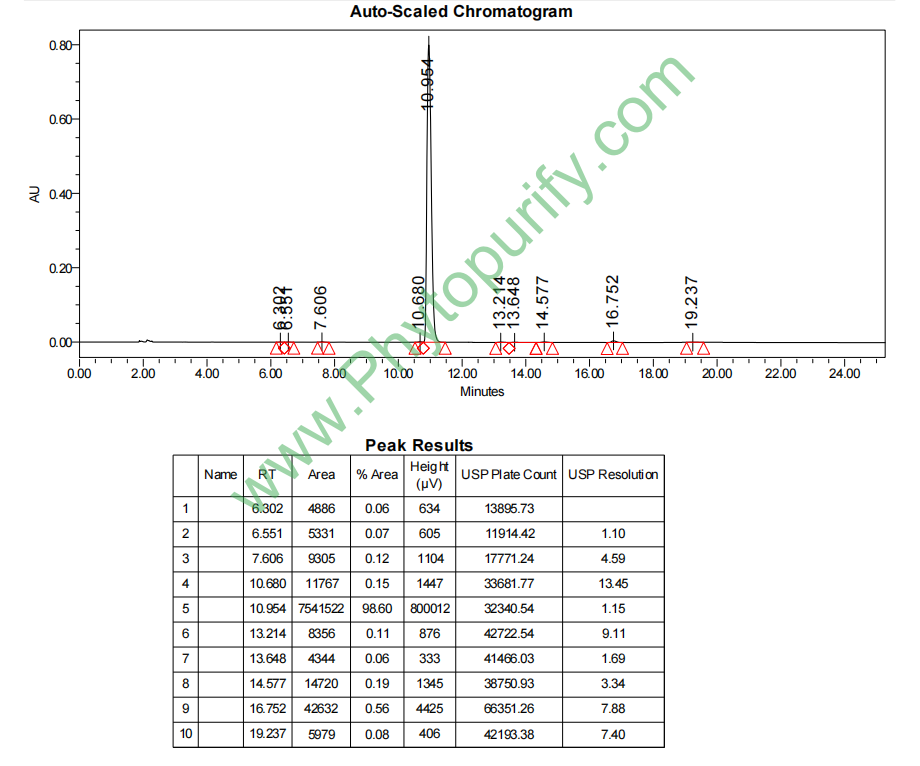
HPLC of Luteolin-3'-D-glucuronide
Storage conditions:Short-term storage at 2~8℃, long-term storage at -20 ~ -80℃
207.3500
.1329
-1.9730
1.5323
.5688
.1228
Low
85.6796
4.0012
Yes
No
No
No
Yes
No
0.6
Yes
No
Yes
No
Flavonoids, as one of the most widely distributed plant secondary metabolites in nature, have long been an important source of drug research and functional food development due to their diverse chemical structures and extensive biological activities. Luteolin, as a typical tetrahydroxyflavone, has been extensively studied for its anti-inflammatory, antioxidant, anti-tumor, neuroprotective and other pharmacological effects. However, luteolin often exists in the form of glycosides in nature, and these glycosidic modifications not only affect its solubility and stability, but also may significantly alter its bioavailability, tissue distribution, and pharmacological activity. Luteolin-3 '- D-glucuronide (L3'G), as a key glucuronic acid complex produced during the in vivo and in vitro metabolism of luteolin, has gradually shifted from a simple "metabolite" role to a research object with independent biological activity in recent years. Its CAS number is 53527-42-7, which is an O-glucuronide formed by the glycosidic bond between luteolin and β - D-glucuronic acid at the 3 '- hydroxyl position. This article aims to systematically review the chemical properties, plant sources, pharmacological activities, mechanisms of action, medicinal properties, and application prospects of L3'g, in order to provide comprehensive scientific references for the in-depth research and development of this natural product.
The molecular formula of luteolin-3 '- glucuronide is C21H18O13, with a molecular weight of 462.3630. Its core structure is luteolin, which is 5,7,3 ', 4' - tetrahydroxyflavone. Unlike the prototype luteolin, L3'G is linked to a β - D-glucuronic acid residue at the 3 '- hydroxyl position of the B ring via an O-glycosidic bond. This structural modification has brought significant changes in physical and chemical properties.
Firstly, the introduction of glucuronic acid greatly enhances the hydrophilicity of the molecule. The calculated lipid water partition coefficient (LogP) is 0.1329, indicating its highly hydrophilic properties, which is much lower than the LogP value of the coumarin prototype (about 2.5-3.0). Consistent with this, its topological polar surface area (TPSA) is as high as 207.35 Å ², further confirming its strong polarity characteristics. The theoretically calculated water solubility is 1.5323, which belongs to the solubility range. This indicates that it has good solubility in aqueous media, which is beneficial for the development of formulations and their distribution in vivo.
From the spectroscopic characteristics, the UV visible spectrum of L3'G shows absorption in the typical absorption regions of flavonoids (around 250-280 nm and 330-380 nm), but due to the conjugation effect of glucuronic acid groups, its absorption peak may undergo a slight red shift compared to luteolin. In mass spectrometry analysis, the peak m/z 461 of [M-H] ⁻ is often observed, as well as characteristic fragment ions produced under collision induced dissociation, such as the loss of glucuronic acid groups (-176 Da) resulting in the production of luteolin glycoside ions (m/z 285). Nuclear magnetic resonance hydrogen and carbon spectra can clearly distinguish the signals between glycosides and glycosides, especially the coupling constant of the end proton (H-1 ") of the glycosyl group can be used to determine the configuration of the glycosidic bond (β - configuration).
L3'G is not widely present in all plants, and its distribution is closely related to the activity of luteolin and its glycosyltransferases, especially UDP glucuronosyltransferase (UGT). It is not only an inherent component in various medicinal plants, but also one of the main products of luteolin after liver and intestinal metabolism in mammals (including humans).
In the plant kingdom, L3'G has been reported to exist in various Asteraceae plants, such as chamomile(Matricaria chamomilla)And Edelweiss(Leontopodium spp.), These plants are traditionally used for anti-inflammatory and soothing purposes. In addition, in some lip shaped plants (such as rosemary Rosmarinus officinalis)Occasionally detected in leguminous plants as well. It is worth noting that the content of L3'G is usually low and is easily influenced by plant variety, growth environment, harvest season, and location.
From the perspective of biosynthetic pathways, L3'G in plants is mainly generated by the glycosylation reaction of luteolin at the 3 '- OH position, catalyzed by specific UGT enzymes, using UDP glucuronic acid as the sugar donor. This process is an important strategy for plants to modify, store, and transport flavonoid glycosides.
In terms of extraction and separation, due to the strong polarity of L3'G, solvent systems with medium to high polarity are often used. The classic extraction process includes: first, using methanol, ethanol, or methanol water mixed solvents to perform ultrasound assisted extraction or hot reflux extraction on dried plant materials. After vacuum concentration, the crude extract obtained was subjected to liquid-liquid distribution using petroleum ether and ethyl acetate to remove lipids and moderately polar impurities. L3'g was mainly retained in the aqueous phase or water n-butanol phase. Further purification depends on column chromatography technology. Reverse silica gel (such as C18), dextran gel (Sephadex LH-20) or polyamide are often used as stationary phases, and methanol water or acetonitrile water (containing a small amount of formic acid or acetic acid to inhibit dissociation) are used as mobile phases for gradient elution. High performance liquid chromatography (HPLC), especially preparative HPLC, is the ultimate key step in obtaining high-purity L3'g monomers. Its identification requires a comprehensive analysis combining UV spectroscopy, mass spectrometry, and nuclear magnetic resonance spectroscopy.
In recent years, research has shown that L3'g is not an inactive metabolic excretion, but exhibits multidimensional pharmacological activity that is both similar and unique to its aglycone luteolin.
1. Anti inflammatory and immune regulatory activity: The anti-inflammatory effect of L3'g is particularly prominent. In the lipopolysaccharide (LPS) - induced macrophage (such as RAW264.7) inflammation model, L3'g can dose dependently inhibit the production of nitric oxide (NO), prostaglandin E2 (PGE2), and key pro-inflammatory cytokines such as tumor necrosis factor - α (TNF - α), interleukin-6 (IL-6), and IL-1 β. Its anti-inflammatory efficacy is comparable or even superior to that of magnolol in some models, which may be attributed to its improved solubility and increased cellular uptake efficiency. In animal models, L3'G has also shown good improvement effects on inflammatory diseases such as acute lung injury, colitis, and arthritis.
2. Antioxidant and neuroprotective activities: L3'G retains the antioxidant pharmacophores of the B-ring ortho dihydroxy group (3 ', 4' - OH, although modified at the 3 'position) and the A-ring 5,7-dihydroxy group of luteolin. Research has shown that it has good ability to scavenge DPPH, ABTS ⁺ free radicals, and can inhibit lipid peroxidation. In terms of neuroprotection, L3'G can alleviate neuronal cell damage induced by β - amyloid or glutamate, reduce the accumulation of reactive oxygen species (ROS), and inhibit cell apoptosis. Although its ability to cross the blood-brain barrier is limited, it may have a regulatory effect on neuroinflammation caused by peripheral inflammation.
3. Cardiovascular protective activity: L3'g exhibits protective potential for the cardiovascular system. Research has shown that it can improve endothelial function, promote the activation of nitric oxide synthase (eNOS), and thus dilate blood vessels. In the myocardial ischemia/reperfusion injury model, L3'g pretreatment can reduce myocardial infarction area, and its mechanism may be related to the inhibition of inflammatory response and oxidative stress. In addition, it can also inhibit the abnormal proliferation of vascular smooth muscle cells.
4. Antitumor activity: Although its activity may be weaker than luteolin aglycone, L3'G still inhibits the growth of many tumor cell lines (such as liver cancer, breast cancer and colon cancer cells). Its function is not limited to direct cytotoxicity, but also involves inducing cell cycle arrest (such as G2/M phase), promoting apoptosis, and inhibiting cell invasion and migration. It is worth noting that L3'g, as the main circulating form of luteolin in the body, its anti-tumor contribution cannot be ignored.
5. Metabolic regulation and liver protective activity: L3'g shows positive effects in metabolic disease models. It can improve insulin resistance and regulate glucose metabolism. In the non-alcoholic fatty liver disease (NAFLD) model, L3'g can alleviate liver lipid accumulation, ballooning, and inflammatory infiltration, and its hepatoprotective effect is related to regulating key signaling pathways of lipid metabolism.
The pharmacological effects of L3'g are the result of multi-target and multi pathway synergy, and its molecular mechanism research has made certain progress.
1. Regulating key signaling pathways:
* NF - κ B pathway: This is the core mechanism by which L3'g exerts anti-inflammatory effects. L3'G can inhibit LPS induced degradation of I κ B α protein, prevent nuclear translocation of NF - κ B p65 subunit, and downregulate gene expression of a series of pro-inflammatory mediators downstream.
* MAPK pathway: L3'G can inhibit the phosphorylation activation of p38, JNK, and ERK1/2 caused by inflammatory stimuli, and the inhibition of this pathway is closely related to its anti-inflammatory and anti apoptotic effects.
* Nrf2/ARE pathway: In terms of antioxidant stress, L3'G can promote the transfer of nuclear factor E2 related factor 2 (Nrf2) from the cytoplasm to the nucleus, activate antioxidant response elements (ARE), and thereby upregulate the expression of phase II detoxifying enzymes such as heme oxygenase-1 (HO-1) and quinone oxidoreductase 1 (NQO1), as well as antioxidant proteins.
* PI3K/Akt pathway: This pathway is involved in cell survival, proliferation, and metabolism. L3'g can play a role in neuroprotection, cardiovascular protection, and insulin sensitization by regulating PI3K/Akt signaling.
2. Regulating enzyme activity and receptor interaction:
* Cyclooxygenase-2 (COX-2) and inducible nitric oxide synthase (iNOS): L3'G can inhibit the expression of COX-2 and iNOS at the transcriptional and translational levels, thereby reducing the excessive production of PGE2 and NO.
* Cytokines and chemokines: Through the regulation of upstream signaling pathways, L3'G extensively inhibits the production of TNF - α, IL-6, IL-1 β, monocyte chemoattractant protein-1 (MCP-1), and other proteins.
* Direct interaction with specific receptors: Some studies speculate that, similar to other flavonoid glycosides, L3'g may interact with certain receptors or transporters on the cell membrane through its glycosyl portion, affecting its cellular uptake and initial signaling events, but more direct evidence is needed in this regard.
3. Epigenetic regulation: The latest research suggests that flavonoids may exert long-term effects by regulating histone modifications or microRNA expression. Whether L3'g has similar epigenetic regulatory abilities is a new direction worth exploring.
Preliminary analysis of the pharmacological parameters of L3'g can evaluate its potential and challenges as a drug lead compound.
Absorption, distribution, metabolism, excretion (ADME):
* Absorption: As a highly polar glucuronide, L3'g has poor passive transmembrane absorption in the small intestine. But its absorption may depend on specific transporters in the intestine (such as the sodium dependent glucose transporter SGLT1 like transporter or the organic anion transporter peptide OATP), and the β - glucuronidase of the gut microbiota may partially hydrolyze it into luteolin for reabsorption (enterohepatic circulation).
* Distribution: The calculation predicts that its blood-brain barrier (BBB) permeability is "low", which is consistent with the characteristics of most polar glycoside compounds, limiting its direct therapeutic effect on central nervous system diseases, but may be beneficial for reducing central side effects. Its tissue distribution may lean towards organs with abundant blood flow or specific transporters such as the kidneys and liver.
* Metabolism: L3'G itself is one of the end products of the I phase (oxidation) and II phase (binding) metabolism of luteolin, which is relatively stable. But it may still undergo secondary binding reactions such as sulfation and methylation, or dissociate aglycones through β - glucuronidase in tissues (such as inflammatory sites).
* Excretion: As a glucuronic acid conjugate, L3'g is mainly excreted through the kidneys via urine, and bile excretion is also an important pathway.
Preliminary safety assessment:
* HERG inhibition: The predicted data shows that its' no 'inhibition of hERG potassium channels suggests a lower risk of potential cardiac toxicity (causing long QT syndrome), which is a favorable safety feature.
* Genetic toxicity: The Ames test (prediction) value is 0.6, which is generally considered to indicate a low risk of mutagenicity if it is less than 1.0, but it needs to be verified through experiments.
Challenges and strategies for drug development:
The main challenge is that its oral bioavailability may be low (strong first pass effect, limited intestinal absorption), and BBB penetration may be poor. Future formulation strategies could consider: 1) developing prodrugs, such as esterification modifications to enhance lipid solubility and absorption, and hydrolyzing them into active forms in vivo; 2) Encapsulation using nano drug delivery systems (such as liposomes, polymer nanoparticles) to enhance their stability, promote intestinal lymphatic absorption, or achieve targeted delivery; 3) Explore its feasibility as an injectable drug for acute inflammation or local treatment.
The diverse biological activities of L3'g depict broad prospects for its application in multiple disease fields.
As an anti-inflammatory drug: For diseases related to chronic low-grade inflammation, such as Rheumatoid arthritis, inflammatory bowel disease (IBD), chronic obstructive pulmonary disease (COPD), and asthma, L3'g can be developed as a natural inflammation regulator. Its multi-target mechanism of action may have advantages over single target inhibitors.
2. As an adjuvant therapy for metabolic diseases: In Type 2 diabetes, non-alcoholic fatty liver disease (NAFLD) and atherosclerosis In the prevention and treatment of L3'g, it can exert comprehensive benefits through anti-inflammatory, antioxidant, and metabolic pathway regulation, or serve as a supplement to existing drugs.
3. As a functional food and health product ingredient: Due to its natural origin and relatively good safety, plant extracts or purified monomers rich in L3'g can be used to develop health foods or dietary supplements with anti fatigue, immune enhancement, and cardiovascular protection functions.
4. As a prodrug or biomarker of magnolol: Given that L3'g is the main form of luteolin in the body, in-depth study of its pharmacological effects can help to more accurately evaluate the true in vivo effects of herbs or foods containing luteolin. Meanwhile, its plasma concentration can serve as a biomarker for the intake or metabolism of luteolin.
Future research should focus on: 1) using gene knockout/knock in animal or organoid models to further elucidate their precise molecular targets and signaling networks; 2) Conduct systematic preclinical pharmacokinetic and toxicological studies to clarify their safety window; 3) Explore advanced drug delivery technologies to overcome their bioavailability bottlenecks; 4) Conduct derivatization research based on the L3'g core structure to optimize its activity and pharmacokinetic properties.
Osmolin-3 '- glucuronide, a neglected metabolite, is increasingly demonstrating its unique value as an active molecule. Its excellent hydrophilicity, clear anti-inflammatory and antioxidant activity, multi pathway mechanism of action, and preliminary prediction of good cardiac safety form a solid foundation for its further development. Although there are challenges in oral absorption and central distribution, modern pharmaceutical and medicinal chemistry methods provide possible solutions for this. The in-depth study of L3'g not only expands our understanding of the "glycosidic activity" of flavonoids, but also provides promising lead compounds for the development of new anti-inflammatory, antioxidant, and metabolic regulating drugs. With the continuous deepening of research, this naturally derived active molecule is expected to realize its potential value in the pharmaceutical and health industries, benefiting human health.
