


Product name: Artemisic acid
Synonym name: 4,11(13)-Cadinadien-12-oic acid; 4,11(13)-Amorphadien-12-oic acid; Arteannuic acid; Artemisinic acid
Catalogue No.: BP0196
Cas No.: 80286-58-4
Formula: C15H22O2
Mol Weight: 234.339
Botanical Source: Artemisia annua
Physical Description: Powder
Type of Compound: Sesquiterpenoids
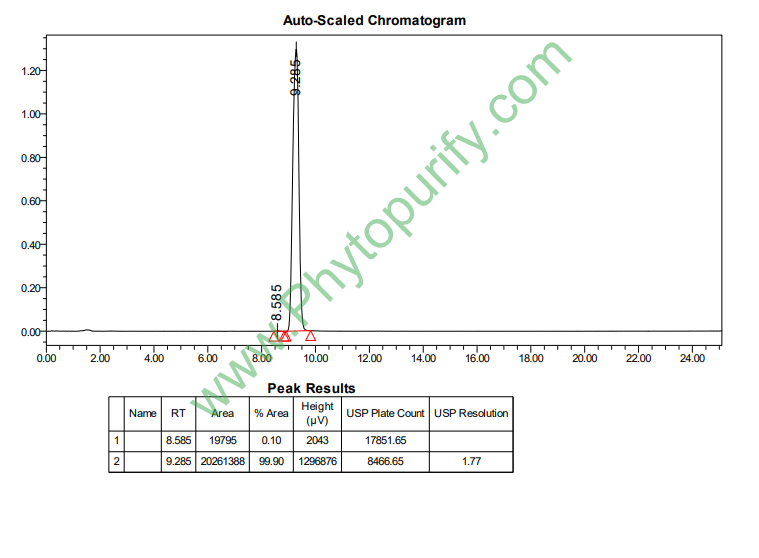
Purity: 95%~99%
Analysis Method: HPLC-DAD or/and HPLC-ELSD
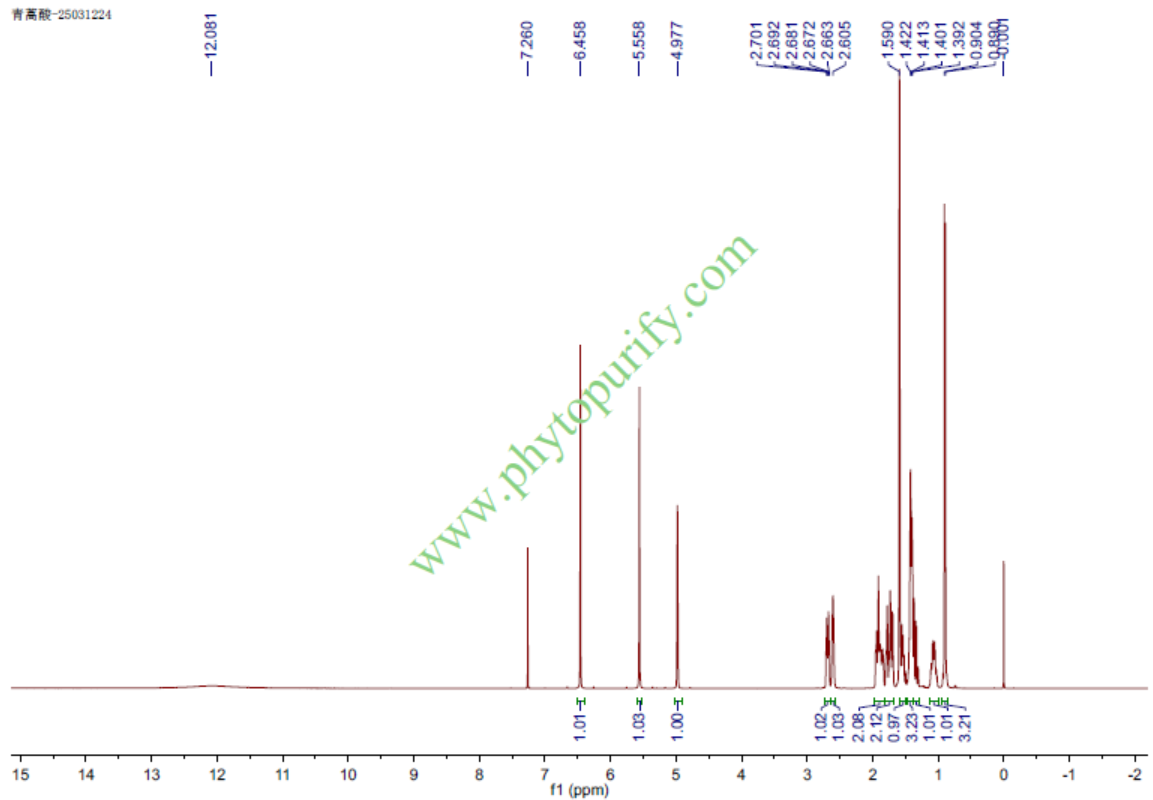
Identification Method: Mass, NMR
Packing: Brown vial or HDPE plastic bottle
Storage: Store in a well closed container, protected from air and light. Put into refrigerate or freeze for long term storage.
Whenever possible, you should prepare and use solutions on the same day. However, if you need to make up stock solutions in advance, we recommend that you store the solution as aliquots in tightly sealed vials at -20℃. Generally, these will be useable for up to two weeks.
The product could be supplied from milligrams to grams, up to kilograms
Inquire for bulk scale.
Descriptions:
Artemisinic acid, is the immediate precursor of the semi-synthesis artemisinin, could be a cost-effective, environmentally friendly, high-quality and reliable source of artemisinin;and artemisinin is highly effective against multi-drug-resistant Plasmodium spp. [1]
Artemisinic acid was studied as a novel elicitor to enhance the yield of terpenoid indole alkaloids, artemisinic acid can up-regulate the transcriptions of tryptophan decarboxylase, geraniol 10-hydroxylase, tabersonine 16-hydroxylase and deacetoxyvindoline 4-hydroxylase.[2]
Artemisinic acid is a regulator of adipocyte differentiation and C/EBP δ expression, it can inhibit adipogenic differentiation of hAMSCs by occurs primarily through reduced expression of δ, which is mediated by the inhibition of and suggest that artemisinic acid may be used as a complementary treatment option for associated with metabolic syndrome.[3]
References:
[1] Ro DK; Paradise EM, Ouellet M; Fisher KJ, Newman KL, et al . Nature, 2006, 440(440):940-3.
[2] Liu J, Zhu J, Tang L, et al. World J Microb Biot, 2013, 30(1):175-80.
[3] Lee J, Kim M, Lee J, et al. J Cell Biochem, 2012, 113(7):2488-99.
[4] Sun J C, Zeng J L, Zhao B, et al. Nat Prod Res Develop, 2010, 22(5):845-6.
HPLC of Artemisic acid
HNMR of Artemisic acid
Storage conditions:Short-term storage at 2~8℃, long-term storage at -20 ~ -80℃
37.3000
3.0000
2.8000
Low
No
No
No
Unknown
No
Unknown
No
Artemisia acid, as one of the important precursors of artemisinin and its derivatives, has attracted widespread attention in the field of natural product pharmacology in recent years. Artemisinic acid is a sesquiterpene monocarboxylic acid mainly isolated from the traditional Chinese medicine plant Artemisia annua L. As a key metabolite and synthetic intermediate of artemisinin, artemisic acid not only occupies a core position in the development of anti malaria drugs, but also exhibits various potential pharmacological activities, including anti malaria, anti-tumor, antibacterial, antipyretic, and anti fat generation effects. With the increasing incidence of metabolic diseases such as non-alcoholic fatty liver disease (NAFLD), the regulatory role of artemisinin on related targets provides new possibilities for its clinical application.
This article provides a systematic review of the chemical structure and physicochemical properties, plant sources and extraction methods, pharmacological activity and mechanism of action, pharmacological evaluation and pharmacokinetic characteristics of artemisic acid. Combining current research progress, it explores its clinical application prospects and future development directions, aiming to provide scientific basis and theoretical support for the drug development and clinical translation of artemisic acid.
The chemical structure of artemisic acid is a monocarboxylic acid derivative of prop-2-enoic acid, which is substituted at position 2 by 4,7-dimethyl-1,2,3,4,4a, 5,6,8a-octahydronaphthalen-1-yl and has a (1S, 4R, 4aS, 8aR) diastereomer configuration. Its molecular formula is C15H22O2 and its molecular weight is 234.34. Structurally, it belongs to the sesquiterpene class of carbon bicyclic compounds, containing an octahydronaphthalene skeleton and a carboxylic acid functional group. The overall molecule exhibits moderate hydrophobicity, with a LogP value of approximately 3.0, indicating moderate lipophilicity that facilitates membrane penetration.
The polar surface area (TPSA) of artemisic acid is 37.3 Å ², with 3 hydrogen bond acceptors, indicating good molecular polarity balance, which facilitates its binding to biomolecule targets. Its blood-brain barrier permeability is low, indicating limited distribution of artemisinin in the central nervous system, which may reduce the risk of central neurotoxicity. The risks of hepatotoxicity and hERG channel inhibition are both low, demonstrating good safety potential.
In terms of physical and chemical properties, artemisic acid is a colorless to light yellow crystalline solid with good stability and high chemical purity. Its carboxylic acid group endows the molecule with a certain acidity, making it easy to form salt and ester derivatives, providing convenience for drug modification and dosage form design.
Artemisinic acid mainly comes from Artemisia annua L., a traditional Chinese medicinal herb widely distributed in China and other parts of Asia. Artemisia annua contains abundant sesquiterpene lactones, among which artemisinin and its precursor compounds such as artemisic acid are its main active ingredients.
The extraction of artemisic acid is usually carried out by organic solvent extraction combined with chromatographic separation. Common extraction processes include:
In recent years, with the development of green chemistry and efficient separation technology, supercritical fluid extraction, molecular imprinting technology, and membrane separation technology have also been attempted to be applied to the extraction and purification of artemisic acid, significantly improving yield and purity and reducing production costs.
Artemisia annua acid, as a precursor and metabolite of artemisinin, exhibits various significant pharmacological activities, covering multiple fields such as anti malaria, anti-tumor, antibacterial, antipyretic, and metabolic regulation.
Artemisia annua acid exhibits certain antimalarial activity through its sesquiterpene skeleton structure. Research has shown that artemisic acid and its derivatives can inhibit the growth of Plasmodium spp. and interfere with their metabolic processes in red blood cells. Although artemisic acid has less anti malarial activity than artemisinin, it is of great significance in drug production as a precursor for artemisinin synthesis.
Artemisia annua acid exhibits inhibitory effects on various tumor cell lines. In vitro experiments have shown that artemisic acid can induce apoptosis of tumor cells, block the cell cycle, and inhibit tumor cell proliferation. Its mechanism of action involves the generation of reactive oxygen species (ROS), mitochondrial dysfunction, and regulation of signaling pathways. Some studies have also found that artemisic acid can enhance the sensitivity of chemotherapy drugs and has potential synergistic anti-cancer effects.
Artemisia annua acid has a certain inhibitory effect on both Gram positive and Gram negative bacteria, especially showing potential antibacterial effects on drug-resistant strains. Its antibacterial mechanism may be related to cell membrane disruption, protein synthesis inhibition, and metabolic interference, providing ideas for the development of new antibacterial drugs.
In traditional Chinese medicine, artemisia annua is used for fever symptoms, and artemisic acid, as one of its active ingredients, has shown antipyretic effects. Animal experiments have shown that artemisic acid can regulate the temperature control center, inhibit the release of inflammatory mediators, and alleviate fever symptoms.
In recent years, research on artemisic acid in the field of metabolic diseases has gradually increased. It can inhibit the differentiation of adipocytes and lipid accumulation, regulate the expression of genes related to fat metabolism, and exhibit anti adipogenic effects, especially showing protective effects in non-alcoholic fatty liver disease (NAFLD) models.
The multiple pharmacological activities of artemisinin stem from its regulation of multiple molecular targets, particularly in the field of metabolic diseases. The key targets of artemisinin for non-alcoholic fatty liver disease include:
The synergistic regulation of these targets constitutes the pharmacological basis of artemisinin's multi-target and multi pathway effects, reflecting its potential in the treatment of complex diseases.
Artemisia annua acid exhibits ideal characteristics in terms of medicinal properties. Its molecular weight is 234.34, which meets the drug affinity requirements of Lipinski rule. A LogP value of 3.0 indicates moderate lipid solubility, which is beneficial for oral absorption and cell membrane penetration. The TPSA is 37.3 Å ² and the number of hydrogen bond acceptors is 3, both of which contribute to improving bioavailability.
The low permeability of the blood-brain barrier reduces the risk of central nervous system side effects. The low risk of hepatotoxicity and hERG channel inhibition further supports its safety. The Ames mutagenicity test data is still lacking and further supplementation is needed to comprehensively evaluate genetic toxicity.
Pharmacokinetic studies have shown that artemisic acid is well absorbed after oral administration, with a moderate plasma half-life, and is mainly metabolized and excreted through the liver. Its metabolic pathways involve hydroxylation, carboxylation, and binding reactions, with stable and low toxicity metabolites. Artemisinin can be converted into artemisinin and other active metabolites in the body, exerting pharmacological effects.
At present, the pharmacokinetic data of artemisic acid is still limited, and there is an urgent need for systematic in vitro and in vivo research, including in-depth exploration of bioavailability, tissue distribution, metabolic kinetics, and excretion characteristics, to provide a basis for clinical medication.
As an important precursor and metabolite of artemisinin, artemisic acid has multi-target and multi mechanism pharmacological properties, providing broad prospects for its clinical application. Its potential in the field of anti malaria has been fully recognized, and research in anti-tumor, antibacterial, and metabolic diseases is gradually deepening.
Especially in the treatment of non-alcoholic fatty liver disease (NAFLD), artemisic acid exhibits significant protective effects by regulating lipid metabolism, anti-inflammatory, and antioxidant pathways. Given the lack of effective and specific drugs for NAFLD, artemisic acid is expected to become a novel therapeutic candidate.
In addition, the low toxicity and good pharmacological properties of artemisic acid make it suitable for further drug development. In the future, its efficacy and pharmacokinetic characteristics can be optimized through structural modification, and oral or injectable formulations can be developed. At the same time, by combining advanced drug delivery technologies such as nanocarriers, its bioavailability and targeting can be improved.
Preclinical studies should focus on evaluating the safety, effective dosage, and long-term effects of artemisinin, and conducting multi center, multi-stage clinical trials to verify its efficacy and safety. Combining modern pharmacology and molecular biology techniques to deeply analyze its mechanism of action will lay a solid foundation for the clinical translation of artemisic acid.
Artemisia annua acid, as a sesquiterpene precursor of artemisinin, has become an important object of natural product pharmacology research due to its unique chemical structure and diverse pharmacological activities. It has shown broad application potential in the fields of anti malaria, anti-tumor, antibacterial, and metabolic diseases, especially in the treatment of non-alcoholic fatty liver disease, showing significant advantages.
In the future, with the advancement of extraction and purification technology and in-depth analysis of pharmacological mechanisms, artemisic acid is expected to achieve translational applications from laboratory to clinical through structural optimization and dosage form innovation. The pharmacokinetics and safety evaluation of the system will further support its drug development process. In summary, artemisic acid is not only an important synthetic intermediate for artemisinin based drugs, but also a natural drug candidate molecule with a multi-target mechanism of action, which deserves continuous attention and in-depth research in the fields of natural product pharmacology and new drug development.
