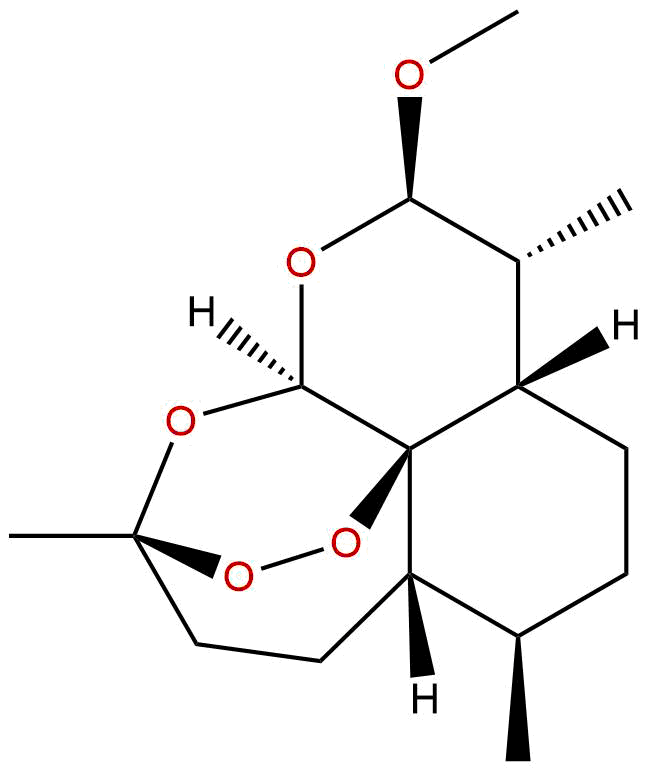


Product name: α-Artemether
Synonym name: Artemether Related Compound B; α-Dihydroartemisinin methyl ether;(+)-α-Artemether
Catalogue No.: BP5350
Cas No.: 71939-51-0
Formula: C16H26O5
Mol Weight: 298.379
Botanical Source: Artemisia annua L.
Type of Compound:
Purity: 95%~99%
Analysis Method: HPLC-DAD or/and HPLC-ELSD
Identification Method: Mass, NMR
Packing: Brown vial or HDPE plastic bottle
Storage: Store in a well closed container, protected from air and light. Put into refrigerate or freeze for long term storage.
Whenever possible, you should prepare and use solutions on the same day. However, if you need to make up stock solutions in advance, we recommend that you store the solution as aliquots in tightly sealed vials at -20℃. Generally, these will be useable for up to two weeks.
The product could be supplied from milligrams to grams
Inquire for bulk scale.
For Reference Standard and R&D, Not for Human Use Directly.
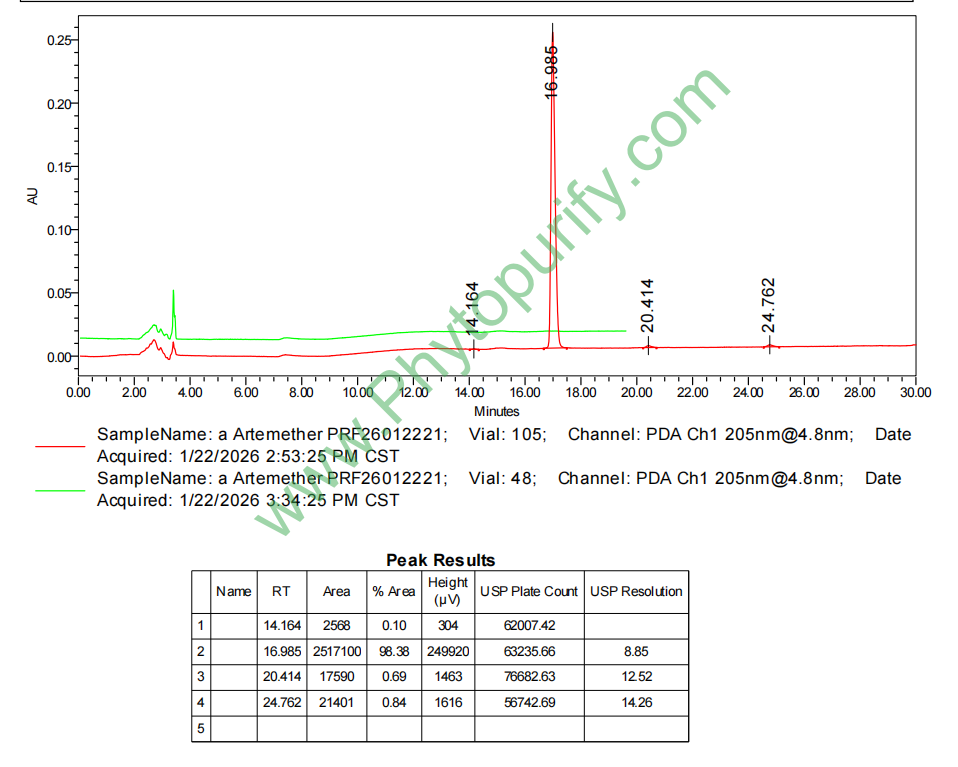
HPLC of α-Artemether
Storage conditions:Short-term storage at 2~8℃, long-term storage at -20 ~ -80℃
46.1500
2.8697
2.8698
.0197
4.4532
16.8743
High
63.6003
5.7335
No
No
Yes
No
Yes
No
1.5
Yes
No
No
No
Malaria, as a type of malaria caused by malaria parasites(Plasmodium Parasitic diseases caused by spp. and transmitted through female mosquitoes have long been a major challenge in the global public health field. According to the latest report from the World Health Organization (WHO), despite significant progress in global malaria prevention and control over the past two decades, there are still over 200 million new cases each year, resulting in hundreds of thousands of deaths, with children under the age of five in Africa bearing the heaviest burden of the disease. The widespread emergence and rapid spread of resistance of malaria parasites to traditional antimalarial drugs such as chloroquine and sulfadoxine pyrimethamine is one of the core reasons for the severe situation of malaria prevention and control. In this context, artemisinin combination therapy (ACT) with artemisinin and its derivatives as the core components has become the current treatment for uncomplicated malignant malaria(P. falciparum The frontline solution of Malaria.
Alpha artemether, as one of the most important semi synthetic derivatives of artemisinin, has played an indispensable role in the global anti malaria field since its first synthesis by Chinese scientists in the 1970s. Compared with the parent compound artemisinin, α - artemether significantly improves its lipid solubility and pharmacokinetic properties through structural modification, thereby enhancing its antimalarial activity and broadening its administration routes. Especially its fixed dose combination formulation with lumefantrine (Coartem) ®/ Riamet ®), It has been recommended by WHO as one of the preferred drugs for treating uncomplicated malignant malaria, saving millions of lives worldwide. However, in recent years, the emergence of artemisinin resistance in the Greater Mekong Subregion of Southeast Asia (mainly due to mutations in the Plasmodium K13 gene) and the resulting increase in ACT treatment failure rates pose a serious threat to the long-term effectiveness of alpha artemether. Therefore, a deep understanding of the chemical nature, pharmacological mechanisms, drug properties, and resistance challenges of alpha artemether is of great scientific significance and clinical value for optimizing existing treatment plans and developing new generations of antimalarial drugs. This article will provide a systematic professional review of alpha artemether from multiple dimensions, including chemical structure, pharmacological activity, molecular targets, drug evaluation, and clinical application prospects.
The chemical essence of α - artemether is a product of directed modification based on the molecular structure of artemisinin. Artemisinin is a sesquiterpene lactone compound containing a peroxide bridge (- O-O -), and its unique 1,2,4-trioxane structure is the core pharmacophore of its antimalarial activity. In order to overcome the disadvantages of poor water solubility, low oral bioavailability, and short half-life of artemisinin, researchers successfully synthesized artemether by reducing the carbonyl group of dihydroartemisinin (DHA) and introducing a methoxy group (- OCH ∝) at its C-10 position. Due to the introduction of a chiral center at the C-10 position, artemether exists in two enantiomers, α and β. Among them, α - artemether (CAS number: 71939-51-0) has become the main medicinal form due to its higher melting point and better crystal stability.
From a chemical structure perspective, the molecular formula of α - artemether is C ₁₆ H ₂₆ O ₅, with a molecular weight of 298.38. Its core skeleton retains the peroxide bridge bond (C-O-O-C) and lactone ring of artemisinin, but the carbonyl group at C-10 is reduced to an aldehyde structure and connected to a methoxy group. This structural modification has brought significant changes in theoretical properties. Firstly, the lipid solubility of α - artemether (LogP=2.87) is significantly higher than that of artemisinin (LogP ≈ 2.5), making it easier to penetrate biological membranes, including the red blood cell membrane and parasitic vesicle membrane of malaria parasites. Secondly, its water solubility (0.0197 mg/mL) is extremely low, which determines that it is not suitable for intravenous administration, but is suitable for making oily injections (such as intramuscular injections) or oral preparations. In addition, the molecular polar surface area (TPSA) of α - artemether is 46.15 Å ², much lower than the typical threshold for oral drugs (about 140 Å ²), indicating its good intestinal permeability. It is worth noting that its blood-brain barrier penetration ability has been evaluated as "high", which has potential advantages in the treatment of cerebral malaria, but may also bring risks of central nervous system related toxic side effects.
In terms of stability, α - artemether is sensitive to acids, bases, and heat. The peroxide bridge bond is easily broken under acidic conditions (such as gastric acid), leading to loss of activity. This explains why oral administration of alpha artemether needs to be taken with food (especially fatty foods) to increase absorption, or protected through formulation techniques (such as solid dispersions). Its crystal morphology is usually white or off white crystalline powder, with a melting point between 86-90 ℃. It is easy to decompose under light, so it needs to be stored in a dark and sealed manner.
Alpha artemether is not a compound directly present in natural plants, but is derived from natural artemisinin as a precursor through chemical semi synthetic methods. Therefore, its "plant source" essentially refers to the source of its precursor - artemisinin. Artemisinin is mainly derived from the Artemisia annua plant in the Asteraceae family(Artemisia annua L. Extract the above ground part of the object. Artemisia annua is an annual herbaceous plant widely distributed in China, Vietnam, East Africa and other regions. The content of artemisinin in Artemisia annua is greatly affected by variety, origin, harvest period, and environmental factors, usually fluctuating between 0.01% and 1.5%. In order to increase artemisinin production, Chinese scientists have cultivated high artemisinin content varieties of Artemisia annua (such as "Luhao 1") through hybrid breeding and genetic engineering, stabilizing artemisinin content at over 1%.
The classic extraction method of artemisinin is mainly based on solvent extraction. Due to the thermal instability of artemisinin, traditional heating reflux extraction can easily lead to its decomposition. Therefore, in industry, organic solvent extraction methods are often used at low or room temperature. Common solvents include petroleum ether, n-hexane, ethyl acetate, or low boiling point alcohols such as ethanol. The specific process usually involves crushing dried Artemisia annua leaves, soaking or percolating them in non-polar or moderately polar solvents at room temperature, filtering and concentrating the extract under reduced pressure to obtain crude artemisinin extract. Subsequently, high-purity artemisinin crystals are obtained through column chromatography (such as silica gel column) or recrystallization techniques (commonly used solvents are ethanol or methanol) for purification.
After obtaining purified artemisinin, the synthetic route of α - artemether has become quite mature. The classic synthesis method includes two steps: the first step is to use reducing agents such as sodium borohydride (NaBH ₄) to selectively reduce the lactone carbonyl group in artemisinin molecules to hydroxyl groups at low temperatures, obtaining dihydroartemisinin (DHA). In the second step, DHA undergoes an aldol reaction with anhydrous methanol in the presence of an acidic catalyst (such as boron trifluoride ether) to produce artemether. This reaction produces two different isomers, alpha and beta. By controlling the reaction temperature, solvent polarity, and catalyst dosage, the alpha/beta ratio can be regulated. Finally, by utilizing the low solubility of α - artemether in specific solvents such as ethanol, high-purity α - artemether products were obtained through fractional crystallization. In recent years, with the promotion of green chemistry concepts, researchers have also been exploring the use of new technologies such as biocatalysis (such as immobilized enzymes) or continuous flow microreactors to achieve more efficient and environmentally friendly synthesis of alpha artemether.
The pharmacological activity core of α - artemether is reflected in its strong and rapid anti malaria effect. Its anti malarial activity spectrum is broad, including malignant malaria parasites(P. falciparum)Plasmodium vivax(P. vivax)Three day malaria parasite(P. malariae)And Plasmodium ovale(P. ovale)All malaria parasite species that infect humans, including, have bactericidal effects. Especially for the red phase asexual bodies of Plasmodium falciparum, α - artemether exhibits a half maximal inhibitory concentration at the nanomolar level (IC ₅₀ is usually in the range of 1-10 nM), and its activity intensity is about 3-5 times that of artemisinin. Part of the reason for this high activity is attributed to its higher lipid solubility, which allows it to more effectively enter infected red blood cells and parasitic vesicles of malaria parasites.
The pharmacological effects of α - artemether have the following significant characteristics:
1. Rapid onset of action After oral or injection, α - artemether can significantly reduce the density of malaria parasites in the blood within a very short period of time (usually within 30 minutes). This characteristic gives it an irreplaceable advantage in the treatment of severe malaria, especially cerebral malaria, as it can quickly control the condition and reduce mortality rates.
2. Stage specificity of action Alpha artemether mainly acts on the endosomal and trophecomal stages of malaria parasites, with a particularly prominent killing effect on early endosomes. This rapid clearance of early stages effectively prevents malaria parasites from developing into more mature and pathogenic stages.
3. Broad spectrum killing effect In addition to being effective against asexual bodies, alpha artemether also has a certain killing effect on the gametophytes (sexual bodies) of Plasmodium falciparum, especially in the early stages. This helps to reduce the ability of malaria parasites to spread from patients to mosquito vectors, and has a certain population blocking effect.
4. Cross resistance Although there is complete cross resistance between alpha artemether and artemisinin based drugs such as artemisinin and dihydroartemisinin, there is no cross resistance between alpha artemether and traditional antimalarial drugs such as chloroquine, quinine, ethambutol, etc. This makes alpha artemether still effective against multidrug-resistant malaria parasite strains.
In addition to its antimalarial effects, recent studies have also revealed other potential pharmacological activities of alpha artemether. For example, in the field of oncology, many in vitro and in vivo studies have shown that α - artemether has cytotoxicity to a variety of cancer cells (such as breast cancer, lung cancer, colorectal cancer, leukemia, etc.). The mechanism may be related to the production of iron dependent reactive oxygen species (ROS), induction of cell apoptosis and autophagy, inhibition of angiogenesis, and regulation of the immune microenvironment. In addition, α - artemether has been reported to have anti-inflammatory, anti fibrotic, anti schistosomiasis, and antiviral activities (such as against cytomegalovirus). However, most of these studies on non antimalarial indications are still in the preclinical stage, and their effectiveness and safety still need to be validated through large-scale clinical trials.
The anti malarial mechanism of α - artemether, like all artemisinin drugs, lies in its unique peroxide bridge bond. Despite decades of research, the precise molecular targets remain controversial, but the hypotheses of "multi-target" or "non-specific targets" have gradually become mainstream. The currently widely accepted mechanism models are "iron dependent activation" and "alkylation damage".
1. Iron dependent activation
When α - artemether enters red blood cells infected with malaria parasites, the parasites release a large amount of free heme and ferrous ions (Fe ² ⁺) during the process of digesting host hemoglobin. These high concentrations of free iron are key to the activation of artemisinin based drugs. The Fenton like reaction occurs between Fe ² ⁺ and the peroxide bridge bond of α - artemether, leading to the homolysis of the peroxide bridge bond and the generation of highly active oxygen radicals (such as carbon radicals and oxygen radicals). These free radicals have extremely strong electrophilicity and are the direct executors of subsequent damage effects.
2. Alkylation and protein damage
The generated active free radicals can covalently bind (alkylate) with various biomolecules inside malaria parasite cells, leading to their loss of function. Early studies suggested that the sarcoplasmic/endoplasmic reticulum calcium ATPase (PfATP6, SERCA) of malaria parasites is a specific target of artemisinin. However, subsequent studies have raised doubts about this, as the inhibition of PfATP6 by artemisinin requires extremely high drug concentrations and does not match the in vivo pharmacological data. In recent years, through advanced technologies such as chemical proteomics (such as click chemistry combined with mass spectrometry), scientists have discovered that artemisinin based drugs (including alpha artemether) have a wide target spectrum and can alkylate hundreds of malaria parasite proteins. These modified proteins involve multiple key biological processes, including:
- Hemoglobin metabolism related proteins Enzymes such as cysteine proteases and aspartic proteases are responsible for degrading hemoglobin. Alkylation can inhibit their activity, leading to blocked nutrient uptake by malaria parasites.
- Protein synthesis and folding related proteins Alkylation can interfere with the normal synthesis and folding of proteins such as elongation factor 1 alpha (EF-1 α) and heat shock proteins (Hsp70/Hsp90), leading to endoplasmic reticulum stress.
- Redox balance related proteins Alkylation of enzymes such as thioredoxin reductase (TrxR) and glutathione S-transferase (GST) can disrupt the antioxidant defense system of malaria parasites and exacerbate oxidative damage.
- Mitochondrial function related proteins Alkylation of cytochrome C oxidase subunits can inhibit mitochondrial respiratory chain, leading to energy metabolism disorders.
3. Key molecular targets and drug resistance
Although there are many targets, mutations in certain proteins are closely related to the development of artemisinin resistance. In the list you provided,PfK13(Kelch 13) It is currently recognized as the most relevant molecular marker for partial resistance to artemisinin. The PfK13 protein is a key regulatory factor in the endoplasmic reticulum stress response of malaria parasites. When the PfK13 gene undergoes mutations (such as C580Y, R539T, I543T, etc.), the malaria parasite can enter a "dormant" state (circular stagnation) after being attacked by alpha artemether, thus avoiding the rapid killing effect of drugs. This mechanism is not achieved by changing the drug target, but by enhancing the parasite's tolerance to oxidative stress, resulting in a decrease in drug clearance rate (i.e. prolonged parasite clearance half-life). Other targets such as PfCRT(Chloroquine resistance transporter) and PfMDR1 The mutation of multidrug resistance protein 1, although mainly related to resistance to traditional drugs such as chloroquine, can also indirectly regulate sensitivity to artemisinin based drugs by altering the distribution of drugs in parasitic vesicles or affecting the physiological state of malaria parasites.PfATP6 Mutations in certain regions have also been reported to be associated with reduced sensitivity to artemisinin, but their clinical significance is not as clear as PfK13.PFDHFR(Dihydrofolate reductase) and PFCYT The series of proteins are mainly related to resistance to folic acid drugs, and have a weaker association with the direct mechanism of action of artemisinin.
In summary, the mechanism of action of α - artemether is a "multi pronged" oxidative damage mode, which uses iron dependent activation to generate highly active free radicals that indiscriminately attack multiple key life processes of malaria parasites. This multi-target mechanism is the basis for the high efficiency and low risk of developing complete resistance to artemisinin based drugs, but the PfK13 mutation mediated "dormancy" strategy is a clever evasion of this mechanism, posing the biggest challenge to current antimalarial treatment.
The success of α - artemether lies not only in its strong pharmacological activity, but also in its excellent medicinal properties. From the perspective of medicinal chemistry, its molecular weight (298.38 Da) meets the requirement of molecular weight less than 500 in the Lipinski Five Rules; The LogP value (2.87) is within the ideal range of lipid water partition coefficients (2-4), balancing membrane permeability and water solubility; The TPSA (46.15 Å ²) is much lower than 140 Å ², indicating its good oral absorption potential. However, its extremely low water solubility (0.0197 mg/mL) is a significant shortcoming, which directly affects the bioavailability of its oral formulation. The Ames test result you provided is 1.5, which is usually interpreted as having a slight genetic toxicity risk under specific conditions, but this result is controversial and no clear evidence of carcinogenicity has been observed in clinical use. The hERG inhibition assessment is' no ', indicating a low risk of cardiac toxicity.
In terms of pharmacokinetics (PK), α - artemether exhibits typical artemisinin like drug characteristics:
- absorb Oral absorption is rapid, but the bioavailability is low and varies greatly among individuals, and is significantly affected by food (especially fat). When taken with high-fat meals, its bioavailability can be increased several times. After intramuscular injection of oil, absorption is slow and long-lasting, providing a longer duration of action.
- distribution Due to its high lipid solubility and blood-brain barrier penetration, alpha artemether is widely distributed in the body, especially at high concentrations in red blood cells, liver, lungs, and brain. Its apparent distribution volume (Vd) is relatively large. The plasma protein binding rate is about 95%.
- Metabolism Alpha artemether is mainly metabolized in the body through the liver cytochrome P450 enzyme system (mainly CYP3A4 and CYP2B6). Its metabolic pathway mainly includes O-demethylation, generating the active metabolite dihydroartemisinin (DHA). DHA itself also has strong antimalarial activity, so alpha artemether can be considered as a prodrug, and its in vivo antimalarial effect is the result of the joint contribution of the original drug and active metabolites. In addition, α - artemether can also be metabolized through hydrolysis and oxidation pathways.
- excretion Alpha artemether and its metabolites are mainly excreted through bile and feces, with only a small amount (about 1-2%) excreted in its original form through urine. Its half-life (t ₁/₂) is relatively short, about 1-3 hours after oral administration. After intramuscular injection, absorption is slow, and the apparent half-life can be extended to 4-10 hours. This short half-life is a common characteristic of artemisinin based drugs and the fundamental reason why they must be combined with long-acting drugs to form ACT.
The PK/PD (pharmacokinetics/pharmacodynamics) relationship study of α - artemether shows that its antimalarial effect mainly depends on the time when the drug concentration exceeds the minimum inhibitory concentration (MIC), rather than the peak concentration. Therefore, in order to ensure efficacy and prevent the development of drug resistance, clinical dosing regimens (such as twice daily for three consecutive days) aim to maintain sufficient blood drug concentrations to cover the entire life cycle of malaria parasites.
The clinical application of α - artemether has been quite mature, mainly focusing on the following aspects:
1. Frontline treatment of uncomplicated malignant malaria Coartem compound tablets of α - artemether phenylfluorenone ®) As a representative, this program is one of the recommended ACT by WHO and is widely used worldwide. Its therapeutic effect is definite, with good tolerability and a cure rate usually above 95%.
2. Initial treatment for severe malaria In areas where intravenous injection of artemether is not available, intramuscular injection of alpha artemether is an effective alternative for treating severe malaria, including cerebral malaria. It takes effect quickly and can rapidly reduce parasitic infections.
3. Treatment of Plasmodium vivax Alpha artemether phenylfluorenone is equally effective against Plasmodium vivax, but it needs to be used in combination with piperaquine to clear dormant particles (hypnozoites) in the liver and prevent recurrence.
Outlook and Challenges:
Currently, the biggest challenge facing alpha artemether is the spread of partial resistance to artemisinin. The emergence and spread of PfK13 mutant strain in Southeast Asia have led to an increase in the failure rate of ACT treatment. What is even more worrying is that there are indications that drug resistance may be spreading to the African continent. The strategies to address this challenge include:
- Optimize combination therapy Develop new and more effective ACT partner drugs. For example, combining alpha artemether with new generation long-acting drugs such as amodiaquine and piperaquine, or drugs with novel mechanisms of action such as pyrimidinones and spiroindolones.
- Extend the treatment course or adjust the dosage For areas with prevalent drug resistance, consider extending the standard three-day course of treatment to five or seven days, or increasing the dosage appropriately, to ensure complete eradication of malaria parasites.
- Developing new artemisinin derivatives Search for novel peroxide drugs that are equally effective against PfK13 mutant strains. For example, fully synthetic peroxides (such as OZ439/Artefenomel) have a longer half-life and are expected to achieve single dose cure.
- Exploring non antimalarial indications Given its potential anti-tumor and anti-inflammatory activities, the application of α - artemether in cancer treatment, autoimmune diseases, and other fields deserves further research. However, it is necessary to address issues such as poor water solubility, short half-life, and potential neurotoxicity. Through new drug delivery systems such as nano formulations, liposomes, and polymer micelles, it is expected to improve their drug properties and expand their therapeutic window.
Alpha artemether, as a core member of the artemisinin family, is a perfect combination of natural product chemical modification and drug development. It successfully overcomes some of the deficiencies of the parent compound by introducing a simple methoxy group, resulting in stronger activity, better pharmacokinetic properties, and ultimately becoming a "weapon" in the global anti malaria campaign. Its unique iron dependent multi-target mechanism not only explains its high efficiency and low toxicity, but also provides profound insights for the design of anti infective drugs. However, in the face of the ruthless evolution of malaria parasite resistance, the future of alpha artemether is not without worries. At present, we are at a critical crossroads: on the one hand, we need to continue optimizing the existing ACT scheme to delay the further spread of drug resistance; On the other hand, it is necessary to increase basic research efforts, deeply understand the molecular basis of drug resistance, and actively explore new generation antimalarial drugs. The story of alpha artemether is far from over. It is not only a monument in the fight against malaria over the past few decades, but also the starting point of future drug innovation journeys.
