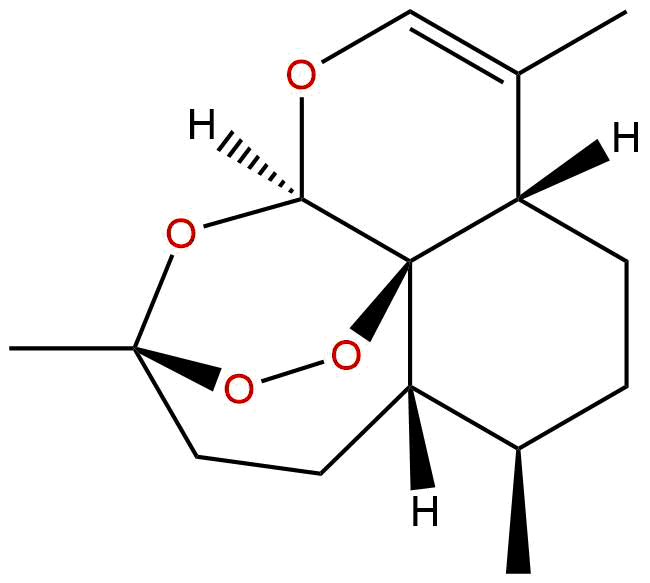


Product name: Anhydrodihydroartemisinin
Synonym name: Dehydration dihydroartemisinin;9,10-Anhydro-10-deoxoartemisinin
Catalogue No.: BP5351
Cas No.: 82596-30-3
Formula: C15H22O4
Mol Weight: 266.337
Botanical Source: Artemisia annua L.
Type of Compound:
Purity: 95%~99%
Analysis Method: HPLC-DAD or/and HPLC-ELSD
Identification Method: Mass, NMR
Packing: Brown vial or HDPE plastic bottle
Storage: Store in a well closed container, protected from air and light. Put into refrigerate or freeze for long term storage.
Whenever possible, you should prepare and use solutions on the same day. However, if you need to make up stock solutions in advance, we recommend that you store the solution as aliquots in tightly sealed vials at -20℃. Generally, these will be useable for up to two weeks.
The product could be supplied from milligrams to grams
Inquire for bulk scale.
For Reference Standard and R&D, Not for Human Use Directly.
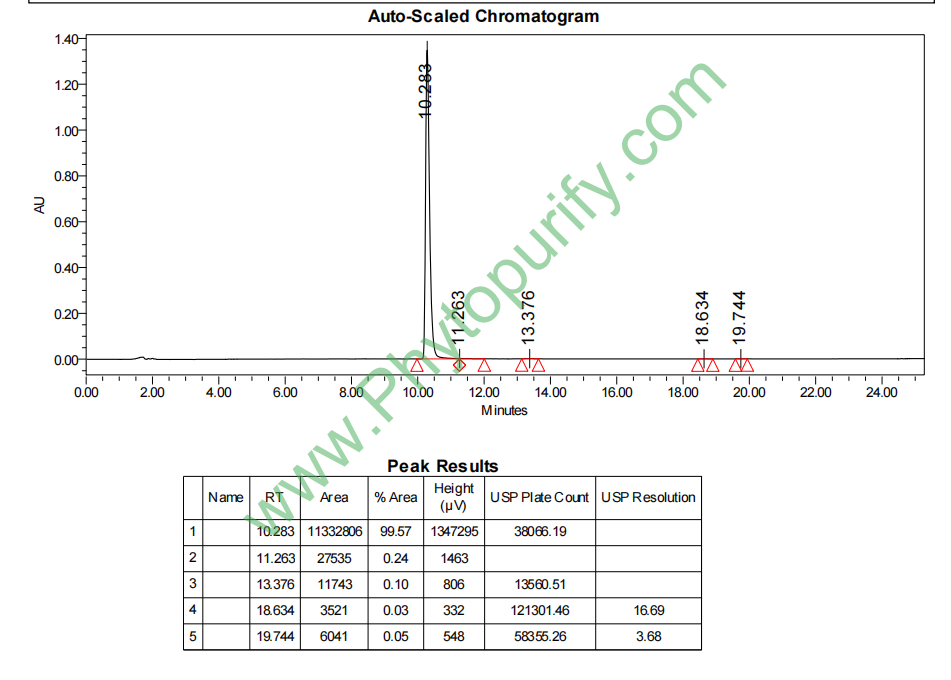
HPLC of Anhydrodihydroartemisinin
Storage conditions:Short-term storage at 2~8℃, long-term storage at -20 ~ -80℃
36.9200
3.1106
3.1106
.0141
5.2356
13.8553
High
71.8140
5.8898
No
No
Yes
No
Yes
No
1.5
Yes
No
Yes
Yes
Malaria, as a type of malaria caused by malaria parasites(Plasmodium Parasitic diseases caused by spp. and transmitted through female mosquitoes have long been a major challenge in the global public health field. According to the latest report from the World Health Organization (WHO), despite significant progress in malaria prevention and control over the past two decades, there are still approximately 249 million cases of malaria in 2022, resulting in over 600000 deaths, with children under the age of five accounting for the vast majority of deaths in Africa. The difficulty in preventing and controlling malaria is not only due to the lack of medical resources in poverty-stricken areas, but also due to the continuous spread and intensification of resistance of malaria parasites to traditional antimalarial drugs such as chloroquine and sulfadoxine pyrimethamine. This severe situation has forced the scientific community to constantly seek novel structures and unique mechanisms of action for anti malaria lead compounds.
In the history of antimalarial drug development, the discovery of artemisinin is undoubtedly a milestone. This is from Artemisia annua(Artemisia annua L. The sesquiterpene lactone peroxide extracted from the compound has saved millions of lives due to its rapid and potent anti malarial activity, especially its excellent efficacy against cerebral malaria and drug-resistant malaria parasites. Professor Tu Youyou was therefore awarded the 2015 Nobel Prize in Physiology or Medicine. However, with the widespread use of artemisinin and its derivatives (such as dihydroartemisinin, artemether, and artemether) worldwide, the phenomenon of decreased sensitivity of malaria parasites to artemisinin based drugs - known as "partial resistance to artemisinin" - has been confirmed in multiple Southeast Asian countries and is showing a trend of spreading to Africa. This resistance is mainly manifested by prolonged clearance time of malaria parasites, and its molecular mechanism is closely related to the K13 (Kelch 13) gene mutation of malaria parasites. Therefore, delving into the structural derivatives of artemisinin compounds, exploring their structure-activity relationships, and searching for new molecules that may circumvent existing resistance mechanisms have become cutting-edge hotspots in the research of antimalarial drugs.
Dehydrated dihydroartemisinin (ADHA) is an important artemisinin derivative that has received attention in this context. As a dehydration product of dihydroartemisinin (DHA), ADHA loses one water molecule in its structure, forming a unique ene ether structure. Although it is not the most naturally abundant artemisinin component, ADHA often appears as a degradation product or secondary component in the extraction, separation, purification, and drug metabolism processes of artemisinin. In recent years, with the in-depth study of the metabolites and activity mechanisms of artemisinin based compounds, the biological activity of ADHA, especially its anti malaria potential and its differentiated targets from existing artemisinin based drugs, has gradually aroused the interest of researchers. This article aims to systematically review the chemical structure, physicochemical properties, sources, pharmacological activities, mechanisms of action, pharmacological characteristics, and clinical application prospects of dehydrated dihydroartemisinin, in order to provide comprehensive scientific basis for the subsequent research and development of this compound.
The chemical name of dehydrated dihydroartemisinin is (3R, 5aS, 6R, 8aS, 9R, 12S, 12aR) -3,6,9-trimethyl-3,12-epoxy-12H-pyrano [4,3-j] -1,2-benzodioxolane-10 (3H) - one, and its CAS registration number is 82596-30-3. Structurally, ADHA is a dehydrated derivative of dihydroartemisinin (DHA). DHA is the main active metabolite of artemisinin in vitro and in vivo, and its C-10 position is a hemiacetal hydroxyl group (- OH). When the hydroxyl group undergoes intramolecular dehydration reaction with the hydrogen atom at position C-9, a double bond (C=C) is formed between C-9 and C-10 in ADHA, thus constructing an enol ether structural fragment. This structural change makes the molecular skeleton of ADHA more rigid compared to DHA, and it loses the important polar group of hemiacetal hydroxyl.
In terms of molecular formula and molecular weight, the molecular formula of ADHA is C ₁₅ H ₂₂ O ₄, with a molecular weight of 266.3370 g/mol, which is 18.01 less than DHA (molecular weight 284.35 g/mol) (i.e. one molecule of water). Its core structure still retains the iconic 1,2,4-trioxahexane (peroxide bridge) ring system of the artemisinin family, which is considered a key pharmacophore necessary for its antimalarial activity. The absolute configuration of ADHA is determined by multiple chiral centers (3R, 5aS, 6R, 8aS, 9R, 12S, 12aR), and its three-dimensional spatial structure is crucial for its interaction with biological targets.
The physicochemical properties are the basis for determining the drug properties and in vivo behavior of compounds. The lipid water partition coefficient (LogP) of ADHA is 3.1106, indicating that it has strong lipid solubility, which helps it penetrate biological membranes, including parasitic vesicle membranes and red blood cell membranes of malaria parasites. Its topological polar surface area (TPSA) is 36.92 Å ², far below the recommended upper limit of 140 Å ² for oral medications, indicating its good membrane permeability. However, the water solubility of ADHA is extremely poor, with a calculated water solubility value of only 0.0141 mg/mL, which is consistent with its highly hydrophobic terpenoid skeleton and lack of ionizable functional groups. The extremely low water solubility is a common challenge faced by artemisinin compounds and a key factor affecting their oral bioavailability and formulation development. In addition, the blood-brain barrier (BBB) penetration ability of ADHA has been evaluated as "high", which is of great significance for the treatment of cerebral malaria (i.e. malaria parasite infection of brain microvessels), as drugs need to effectively cross the blood-brain barrier to reach the lesion site. In terms of early safety assessment, hERG (human ether - à - go related gene) inhibition was predicted as' no ', indicating a low risk of causing QT interval prolongation and arrhythmia in the heart; The Ames test result is 1.5, which usually suggests that the compound may have weak positive or uncertain mutagenicity in bacterial reverse mutation assays, which requires further detailed genetic toxicity studies to confirm.
Dehydrated dihydroartemisinin is not Artemisia annua(Artemisia annua L. The main natural secondary metabolites in. In plants, the biosynthetic pathway of artemisinin involves the cyclization of farnesyl pyrophosphate (FPP) to form dihydroartemisinic acid, which is then converted to artemisinin through photooxidation and a series of enzymatic reactions. Dihydroartemisinin (DHA), as a reduction product of artemisinin, is usually present in extremely low amounts in plants. ADHA, as a dehydration product of DHA, is almost non-existent in fresh plant materials and its sources mainly come from the following pathways:
Given the extremely low natural content of ADHA in plants, its acquisition mainly relies on chemical synthesis. The typical synthesis route is as follows: starting from dihydroartemisinin (DHA), dissolve it in anhydrous dichloromethane or toluene, add a catalytic amount of strong acid (such as p-toluenesulfonic acid, boron trifluoride ether), and stir the reaction at room temperature or under slight heating conditions. The reaction process can be monitored by thin layer chromatography (TLC). After the reaction is complete, the pure ADHA in white crystalline form can be obtained by neutralization, washing, drying, concentration, and purification through silica gel column chromatography (commonly using petroleum ether/ethyl acetate system as eluent) or recrystallization. This synthesis method is easy to operate, cost-effective, and suitable for laboratory scale preparation.
The core pharmacological activity research of dehydrated dihydroartemisinin mainly focuses on its anti malarial effect. At the same time, as a member of the artemisinin family, its potential anti-tumor, anti-inflammatory and other activities have also been preliminarily explored.
Antimalarial activity Multiple in vitro studies have shown that ADHA exhibits significant bactericidal activity against various strains of malaria parasites, including chloroquine sensitive strains (such as 3D7) and drug-resistant strains (such as Dd2, W2). Its half maximal inhibitory concentration (IC ₅₀) is usually in the nanomolar range (e.g. 1-20 nM), which is comparable to or slightly lower than the activity of DHA. Importantly, ADHA also maintained strong activity against artemisinin partially resistant malaria strains carrying K13 mutations, indicating that its mechanism of action may differ from the parent compound DHA, or its unique structure allows it to bind more effectively to targets in resistant strains. Oral or injection of ADHA in an in vivo animal model for the treatment of Plasmodium bergii infection(P. berghei)Or Plasmodium yoelii(P. yoelii)The mice also showed good therapeutic effects, effectively reducing protozoanemia and prolonging mouse survival. However, its in vivo activity is usually weaker than DHA, which may be attributed to its poorer water solubility and different pharmacokinetic characteristics.
Antitumor activity The anti-tumor activity of artemisinin and its derivatives has been a research hotspot in recent years. Preliminary studies found that ADHA also showed certain cytotoxicity to a variety of human cancer cell lines (such as leukemia HL-60, breast cancer MCF-7, liver cancer HepG2, etc.). Its mechanism of action is believed to be similar to artemisinin, that is, through its peroxide bridge structure, it undergoes lysis under the action of high concentrations of iron ions in cells (tumor cells usually have higher uptake and storage of iron than normal cells), producing a large amount of reactive oxygen species (ROS), thereby inducing tumor cell apoptosis and autophagy. However, the anti-tumor activity of ADHA is generally weaker than that of DHA or artemether, and there is a lack of systematic in vivo anti-tumor pharmacological studies.
Other activities There are sporadic reports suggesting that ADHA may have anti-inflammatory, anti fibrotic, or immunomodulatory activities, but these studies are still in a very preliminary stage and lack in-depth mechanism exploration and repetitive verification. Overall, the pharmacological activity research of ADHA still focuses on anti malaria, and its potential in other disease fields needs further exploration.
The exact anti malaria mechanism of artemisinin based drugs has always been a core scientific issue in the field of malaria research. Although the chemical activation mechanism of "iron dependent peroxide bridge cleavage generating free radicals" has been widely accepted, the specific molecular targets are still controversial. For dehydrated dihydroartemisinin, its mechanism of action may share similarities with classical artemisinin drugs, as well as unique target characteristics.
Common mechanism: activation and alkylation of peroxide bridges The 1,2,4-trioxycyclohexane ring in ADHA molecule is an absolutely essential structure for its anti malarial activity. When malaria parasites invade red blood cells, they will digest a large amount of host hemoglobin, releasing high concentrations of free heme and ferrous ions (Fe ² ⁺). After entering the malaria parasite, ADHA undergoes reductive cleavage of its peroxide bridge under the catalysis of Fe ² ⁺, generating highly active carbon centered radicals and oxygen centered radicals. These free radicals have extremely strong electrophilicity and can rapidly undergo covalent alkylation reactions with various proteins, lipids, and nucleic acids in the malaria parasite, leading to the inactivation of these biomolecules and ultimately killing the malaria parasite.
Differentiated molecular targets The target list you provided (PFCRT, PFMDR1, PFDHFR, PFK13, PFATP6, PFCYTBC, PFPK, PFCYT, PFCYTb, PfATG8) covers multiple key physiological processes of malaria parasites. Among them, PFCRT (chloroquine resistance transporter) and PFMDR1 (multidrug resistance protein 1) are associated with drug efflux and resistance; PFDHFR (dihydrofolate reductase) is a target of anti folate drugs; PFK13 (Kelch 13 protein) is a key biomarker of artemisinin resistance; PFATP6 (sarcoplasmic reticulum/endoplasmic reticulum calcium ATPase) has been proposed as one of the targets of artemisinin; PFCYTb (cytochrome b) is a component of mitochondrial electron transport chain complex III; PfATG8 (autophagy related protein 8) is involved in the autophagy process of malaria parasites.
Research has shown that ADHA may interact with certain proteins in these targets through its unique ene ether structure, which is different from DHA. For example:
* Activity of PFK13 mutant strain ADHA remains active against drug-resistant strains carrying K13 mutations, suggesting that it may not be dependent on the normal function of K13 protein, or its alkylation site may be different from DHA, thus avoiding the resistance mechanism mediated by K13 mutations.
* The impact on mitochondrial function Some studies suggest that ADHA may be more inclined to target the mitochondria of malaria parasites, interfering with the mitochondrial electron transport chain by inhibiting PFCYTb (cytochrome b), leading to membrane potential loss and energy depletion. This mode of action differs from some classic artemisinin based drugs, which mainly target heme and endoplasmic reticulum.
* Interference with autophagy pathway PfATG8 is a key protein involved in autophagosome formation. ADHA may interfere with the autophagy process of malaria parasites under stress by alkylating PfATG8 or its interacting proteins, thereby accelerating their death.
It should be emphasized that current research on ADHA specific molecular targets is still insufficient, and most conclusions come from indirect evidence or comparative studies with DHA. In the future, it is necessary to use chemical proteomics (such as activity-based proteomics analysis, ABPP), gene knockout/knock in, and molecular docking simulations to systematically identify the direct covalent binding proteins of ADHA in malaria parasites, in order to elucidate its precise anti malarial molecular mechanism.
Drug efficacy evaluation is a key bridge connecting lead compounds with clinical candidate drugs. Based on the parameters you provided, we conducted a comprehensive analysis of the pharmacological properties of ADHA.
Physical and chemical properties and drug like properties The molecular weight of ADHA (266.34 Da) conforms to the Lipinski five rule (<500 Da), LogP (3.11) is also within the ideal range (<5), and TPSA (36.92 Å ²) is extremely low, indicating its excellent membrane permeability. However, its water solubility (0.0141 mg/mL) is extremely poor, belonging to typical BCS (Biopharmaceutical Classification System) Class II or IV drugs (low solubility). Low water solubility is one of the main obstacles in the development of oral drugs, which can lead to incomplete oral absorption and significant variability, as well as significant food effects. Therefore, the development of ADHA formulations requires the use of solubilization techniques, such as solid dispersions, lipid nanoparticles, cyclodextrin inclusion complexes, or prodrug design.
Pharmacokinetic (PK) characteristics Currently, there are relatively few public reports on detailed PK data of ADHA, such as absorption, distribution, metabolism, and excretion in rats, dogs, or humans. Based on its structural characteristics and limited literature, it is speculated that:
* absorb Oral absorption may be poor and irregular, with lower bioavailability than DHA. Its high LogP value is beneficial for passive diffusion, but its low solubility limits the dissolution rate and becomes the rate limiting step for absorption.
* distribution High lipid solubility and low TPSA may result in a larger distribution volume and extensive penetration of tissues, including the blood-brain barrier (BBB), which is advantageous for the treatment of cerebral malaria.
* Metabolism The metabolic pathways of ADHA may include the reduction and ring opening of peroxide bridges (non enzymatic or enzymatic), O-demethylation, and oxidation of vinyl ether double bonds. Liver cytochrome P450 enzymes (such as CYP3A4, CYP2B6) may be involved in their metabolism. Compared with DHA, ADHA lacks hemiacetal hydroxyl groups and cannot undergo II binding metabolism directly through glucuronosyltransferase (UGT), so its metabolic clearance pathway may be different.
* excretion Metabolites are mainly excreted through bile and urine.
safety assessment A negative risk of hERG inhibition is a positive signal, indicating a lower risk of cardiac toxicity. But the Ames test result is 1.5, indicating a potential genetic toxicity risk. This requires high attention. More comprehensive genetic toxicity testing must be conducted, including in vitro micronucleus test, chromosome aberration test, and in vivo bone marrow micronucleus test, to clarify its mutagenicity. In addition, standard toxicological evaluations such as acute toxicity, subchronic toxicity, and reproductive and developmental toxicity are also required.
Comparison with clinical drugs Compared with DHA already on the market, the advantage of ADHA lies in its potential activity against K13 resistant strains and possibly different target profiles. But its disadvantages are equally evident: poorer water solubility, possibly lower oral bioavailability, and the presence of genetic toxicity signals. Therefore, the development prospects of ADHA as an oral medication may be limited. However, as a unique chemical framework, it provides important insights for designing novel antimalarial drugs. For example, ADHA can be used as a lead to introduce hydrophilic groups (such as amino acids, phosphate esters, polyethylene glycol chains) at its C-10 position to synthesize a series of ADHA derivatives with better water solubility, in order to obtain candidate molecules with both high activity and excellent PK properties.
Although dehydrated dihydroartemisinin may not be directly used as a clinical drug, its unique chemical and biological properties endow it with various application prospects.
Optimization platform for antimalarial lead compounds The core value of ADHA lies in its potential as a lead compound. Its molecular skeleton provides multiple sites for chemical modification, especially the C-10 ether structure. Through classical organic synthesis or click chemistry, various substituents can be introduced at the C-10 position to construct a structurally diverse library of ADHA derivatives. These derivatives are expected to overcome the shortcomings of poor water solubility and potential genetic toxicity of ADHA, while retaining or enhancing its activity against drug-resistant malaria parasites. Future research directions should focus on: a) systematic structure-activity relationship (SAR) studies to clarify the impact of C-10 substituents on activity, water solubility, metabolic stability, and safety; b) Develop ADHA hybrid molecules with dual mechanisms of action (such as coupling with quinoline and anti folate drug fragments).
Molecular probe for studying artemisinin resistance mechanism The activity of ADHA against K13 mutant strains makes it an ideal tool for studying artemisinin resistance mechanisms. By using ADHA as a chemical probe and combining it with quantitative chemical proteomics techniques, the differences in covalent binding protein profiles between sensitive and resistant strains can be compared. This helps identify key targets or pathways associated with K13 mutations that truly mediate artemisinin resistance, providing new intervention strategies for overcoming resistance.
Potential components of antimalarial combination therapy Given that ADHA may have targets different from DHA (such as mitochondria), it may produce synergistic effects when combined with DHA or other antimalarial drugs (such as pyronaridine and mefloquine). This combination therapy strategy based on different targets is an effective means of delaying the development of drug resistance. In the future, systematic in vitro and in vivo combination drug research is needed to find the optimal ADHA compatibility scheme.
Exploration in anti-tumor and other fields Although ADHA has weaker anti-tumor activity than DHA, its unique metabolic stability and tissue distribution characteristics may make it valuable for certain types of tumors, such as brain tumors, due to its high BBB penetration. In addition, its anti-inflammatory and anti fibrotic activities are also worth verifying in appropriate disease models.
Dehydrated dihydroartemisinin, as a structurally unique and long neglected member of the artemisinin family, is being re evaluated for its scientific value as global attention to artemisinin resistance issues continues to grow. This article systematically reviews the chemical structure, physicochemical properties, sources, pharmacological activities, mechanisms of action, drug properties, and potential applications of ADHA. Research has shown that ADHA inherits the core peroxide bridged pharmacophore of artemisinin and exhibits biological characteristics that differ from the parent DHA due to its ene ether structure, particularly its activity against K13 resistant strains, suggesting its potential to circumvent existing resistance mechanisms.
However, ADHA itself also has significant drawbacks, such as poor water solubility and potential genetic toxicity, which greatly limits its potential for direct drug development. Therefore, the future research focus should not be on promoting the clinical application of ADHA itself, but on using it as a valuable lead compound skeleton to develop a series of ADHA derivatives with better water solubility, higher safety, and stronger anti drug resistance activity through systematic drug chemical modification. Meanwhile, utilizing ADHA as a molecular probe to elucidate the anti malarial and resistance mechanisms of artemisinin based drugs will provide a solid theoretical foundation for designing the next generation of anti malarial drugs. In the current era of malaria drug resistance, the rediscovery and re creation of "old molecules" such as dehydrated dihydroartemisinin may be one of the keys to opening a new era of anti malaria.
