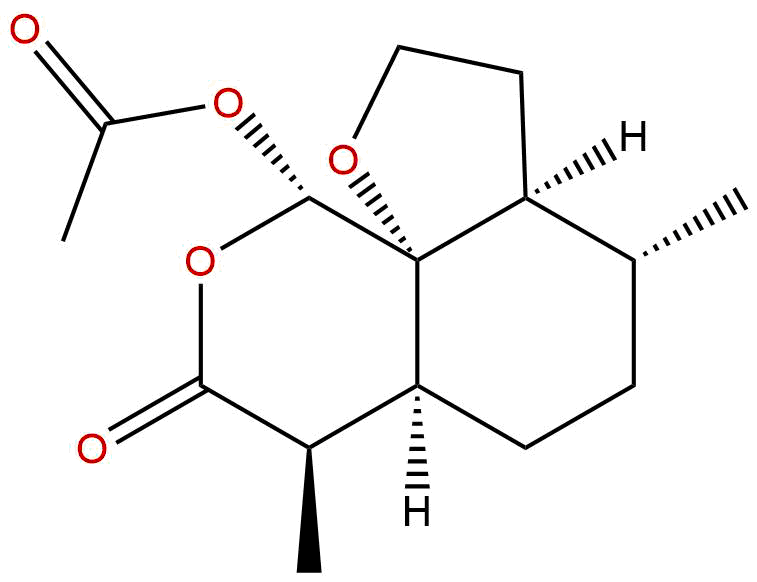


Product name: Artemisinin G
Synonym name:
Catalogue No.: BP5355
Cas No.: 98379-74-9
Formula: C15H22O5
Mol Weight: 282.336
Botanical Source: Artemisia annua L.
Type of Compound:
Purity: 95%~99%
Analysis Method: HPLC-DAD or/and HPLC-ELSD
Identification Method: Mass, NMR
Packing: Brown vial or HDPE plastic bottle
Storage: Store in a well closed container, protected from air and light. Put into refrigerate or freeze for long term storage.
Whenever possible, you should prepare and use solutions on the same day. However, if you need to make up stock solutions in advance, we recommend that you store the solution as aliquots in tightly sealed vials at -20℃. Generally, these will be useable for up to two weeks.
The product could be supplied from milligrams to grams
Inquire for bulk scale.
For Reference Standard and R&D, Not for Human Use Directly.
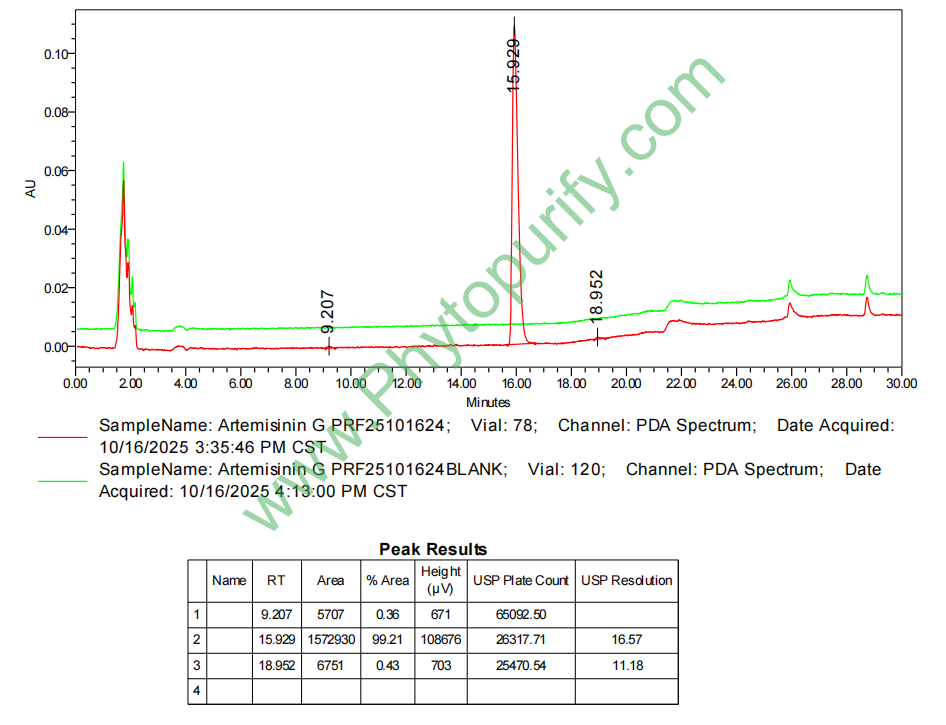
HPLC of Artemisinin G
Storage conditions:Short-term storage at 2~8℃, long-term storage at -20 ~ -80℃
61.8300
1.8878
1.8877
.4741
4.2932
15.0361
High
55.6230
4.9194
Yes
No
No
No
Yes
No
0.6
Yes
No
Yes
Yes
The milestone discovery of artemisinin and its derivatives as antimalarial drugs has made an indelible contribution to global malaria prevention and control. From Professor Tu Youyou's team to Huanghuahao(Artemisia annua L. Since the successful isolation of artemisinin, this sesquiterpene lactone compound and its family members have become a hot topic in natural product chemistry and pharmacology research. Artemisinin G (CAS number: 98379-74-9), as an important member of the artemisinin family, was initially discovered in screening for anti malaria activity. However, its unique chemical structure and extensive biological activity make its research value far beyond the scope of anti malaria.
The discovery of artemisinin G can be traced back to the 1980s, when researchers used chromatographic techniques to isolate a series of structurally similar sesquiterpene lactones from the aboveground parts of Artemisia annua during the systematic isolation of anti malarial active ingredients. Among them, artemisinin G. Compared with artemisinin, artemisinin G has differences in the stereoisomeric configuration of peroxide bridges and side chain substituents, and these subtle structural changes endow it with unique pharmacological properties. In recent years, with the continuous deepening of research on artemisinin compounds, the potential application value of artemisinin G in anti-tumor, neuroprotective and other fields has gradually been revealed, especially its regulatory effect on the AKT signaling pathway, providing new ideas for the development of new anti-tumor drugs and neurodegenerative disease treatment drugs.
This article will systematically review the research progress of artemisinin G from the aspects of chemical structure and physicochemical properties, plant sources and extraction methods, pharmacological activity research, mechanism of action and molecular targets, drug evaluation and pharmacokinetics, clinical application prospects and prospects, in order to provide reference for the in-depth research and development of this natural product.
The chemical structure of artemisinin G belongs to the sesquiterpene lactone class of compounds. Its core skeleton is composed of a sesquiterpene nucleus with 15 carbon atoms and contains a characteristic peroxide bridge bond (- O-O -). This structural unit is considered a key pharmacophore for its anti malaria activity. Compared with artemisinin, artemisinin G has different substituent patterns at positions C-10 and C-13, manifested in the configuration of the lactone ring and the functional groups on the side chain. This structural difference leads to unique characteristics of artemisinin G in molecular polarity and spatial conformation, which in turn affects its interaction mode with biological targets.
From the perspective of physical and chemical properties, the molecular weight of artemisinin G is 282.3360 g/mol, which belongs to the category of small molecule natural products. Its lipid water partition coefficient (LogP) is 1.8878, indicating that the compound has moderate lipophilicity and can achieve a good balance between the lipid bilayer and the aqueous environment. This moderate lipid solubility is beneficial for drug molecules to cross cell membranes while maintaining a certain degree of water solubility for distribution in body fluids. The topological polar surface area (TPSA) is 61.8300 Å ², which is lower than the commonly believed oral drug absorption threshold (140 Å ²), indicating that artemisinin G has good oral absorption potential. The water solubility parameter is 0.4741 mg/mL. Although the water solubility is relatively limited, combined with its moderate LogP value, the overall solubility characteristics meet the basic requirements of small molecule drugs.
It is worth noting that the blood-brain barrier penetration of artemisinin G has been evaluated as "high", which is of great significance for the treatment of central nervous system diseases. High blood-brain barrier penetration means that artemisinin G can effectively enter brain tissue, providing a pharmacokinetic basis for neuroprotective effects. In addition, the hERG inhibition assessment result is' no ', indicating that the compound has a low potential risk in terms of cardiac safety and will not significantly prolong the QT interval. The Ames test result is 0.6, indicating that artemisinin G exhibits a low risk of mutagenicity in standard genotoxicity testing, providing a safety guarantee for its further drug development.
The chemical stability of artemisinin G is influenced by various factors, including temperature, pH value, light, and redox environment. The peroxide bridge bond is relatively stable under acidic conditions, but it is prone to cleavage in strongly alkaline environments, resulting in loss of activity. Therefore, in the design and storage process of drug formulations, it is necessary to fully consider their chemical stability characteristics and select appropriate excipients and storage conditions.
Artemisinin G mainly comes from the Artemisia annua plant in the Asteraceae family(Artemisia annua L.), This plant has been used in traditional Chinese medicine for over a thousand years, mainly for the treatment of febrile diseases. Artemisia annua is an annual herbaceous plant widely distributed in Asian countries such as China, Vietnam, India, as well as parts of Eastern Europe and Africa. The content of artemisinin G in Artemisia annua is relatively low, usually 0.01% -0.05% of dry weight, much lower than the content of artemisinin (0.1% -1.0%). This low content feature poses high requirements for the extraction and purification process.
From the perspective of plant chemical taxonomy, artemisinin G belongs to the artemisinin class sesquiterpenoid lactones, and its biosynthetic pathway is closely related to artemisinin. In Artemisia annua, artemisinin compounds are mainly synthesized through the mevalonate pathway (MVA pathway) and the methylerythritol phosphate pathway (MEP pathway), and are ultimately formed through steps such as cyclization, oxidation, and peroxidation of farnesyl pyrophosphate (FPP). The accumulation of artemisinin G is influenced by various factors, including plant growth stage, light intensity, temperature, soil nutrients, and genetic factors. Research has shown that the content of artemisinin compounds in Artemisia annua reaches its peak during the early stages of flowering, and harvesting at this time can yield higher levels of target components.
The traditional method for extracting artemisinin G is mainly based on organic solvent extraction technology. Common extraction solvents include n-hexane, petroleum ether, ethyl acetate, ethanol, etc. Among them, low polarity solvents have better selectivity for artemisinin compounds. The typical extraction process is to crush the dried aboveground parts of Artemisia annua, extract them using n-hexane or petroleum ether at room temperature or heating conditions, and concentrate the extract to obtain the crude extract. Subsequently, separation and purification were performed using silica gel column chromatography, alumina column chromatography, or preparative high-performance liquid chromatography (pre HPLC). In silica gel column chromatography, a gradient elution system of n-hexane ethyl acetate or n-hexane acetone is commonly used, and artemisinin G is enriched in the medium polarity fraction. Further purification can be achieved by using reverse phase high performance liquid chromatography (RP-HPLC) with acetonitrile water or methanol water as the mobile phase to obtain high-purity artemisinin G.
In recent years, researchers have developed various new extraction techniques to improve extraction efficiency and reduce costs. Supercritical fluid extraction (SC-CO ₂) technology utilizes the high diffusivity and low viscosity characteristics of carbon dioxide in a supercritical state to efficiently extract artemisinin like components from Artemisia annua, while avoiding the problem of residual organic solvents. Microwave assisted extraction (MAE) and ultrasound assisted extraction (UAE) techniques significantly shorten the extraction time by disrupting the structure of plant cell walls, accelerating the dissolution of target components. In addition, new separation methods such as molecular imprinting technology (MIT) and high-speed countercurrent chromatography (HSCCC) have also shown potential applications in the purification of artemisinin G.
It is worth noting that due to the extremely low content of artemisinin G in plants, large-scale production faces challenges. Improving the content of artemisinin G in Artemisia annua through plant tissue culture, hairy root culture, and genetic engineering methods, or using synthetic biology methods to heterogeneously synthesize artemisinin G in microbial hosts such as yeast and Escherichia coli, has become an important research direction to solve the problem of raw material supply.
As a member of the artemisinin family, artemisinin G's anti malaria activity is the starting point of research. In vitro anti malaria experiments have shown that artemisinin G exhibits significant inhibitory activity against both chloroquine sensitive strains (such as 3D7 strain) and chloroquine resistant strains (such as Dd2 strain), with a half maximal inhibitory concentration (IC ₅₀) at the nanomolar level. Compared with artemisinin, artemisinin G has slightly lower antimalarial activity, but its activity against drug-resistant strains remains good, suggesting that its mechanism of action may be different from traditional antimalarial drugs.
The anti malarial mechanism of artemisinin G is similar to that of artemisinin, mainly relying on the activation of peroxide bridges in malaria parasites. When malaria parasites parasitize in red blood cells, they take up a large amount of hemoglobin and degrade it to produce free hemoglobin (heme). The divalent iron ion (Fe ² ⁺) in hemoglobin can reduce the peroxide bridge bond of artemisinin G, generating highly active carbon and oxygen radicals. These free radicals can undergo alkylation reactions with various proteins and lipids of malaria parasites, disrupting their membrane structure and metabolic functions, ultimately leading to malaria parasite death. In addition, artemisinin G can also inhibit the calcium ion ATPase (PfATP6) of malaria parasites, interfere with calcium ion homeostasis, and further exacerbate malaria parasite death.
In recent years, the anti-tumor activity of artemisinin G has become a research hotspot. Several in vitro experiments have shown that artemisinin G can inhibit the proliferation of many cancer cell lines, including breast cancer cells (MCF-7, MDA MB-231), lung cancer cells (A549, H1299), liver cancer cells (HepG2, Huh7), colorectal cancer cells (HCT116, SW480) and glioma cells (U87MG, U251). Artemisinin G typically has an IC ₅₀ value in the micromolar range (1-20 μ M) for cancer cells, and has relatively low toxicity to normal cells, demonstrating a certain degree of selectivity.
The anti-tumor mechanism of artemisinin G involves multiple aspects. Firstly, artemisinin G can inhibit the migration and invasion ability of cancer cells. The scratch test and Transwell test results showed that the migration distance and number of invasive cells of cancer cells were significantly reduced after treatment with artemisinin G. Secondly, artemisinin G can inhibit the tumor occurrence and metastasis ability of cancer cells. In the soft agar colony formation experiment, artemisinin G significantly reduced the colony formation efficiency of cancer cells; In the in vivo metastasis model, the number and size of lung metastases in mice treated with artemisinin G were significantly reduced.
Of particular note is the regulatory effect of artemisinin G on the AKT signaling pathway. AKT (protein kinase B) is a core molecule in the PI3K/AKT/mTOR signaling pathway, playing a critical role in cell proliferation, survival, metabolism, and migration. Research has shown that artemisinin G can reduce the level of phosphorylated AKT (pAKT) in a dose-dependent manner, thereby inhibiting the activity of the AKT signaling pathway. This mechanism of action is closely related to the anti-tumor activity of artemisinin G, as abnormal activation of the AKT pathway is a common feature of multiple cancers. By inhibiting AKT signaling, artemisinin G can downregulate the activity of downstream effector molecules such as mTOR, GSK-3 β, FOXO, etc., thereby inducing cancer cell apoptosis, inhibiting cell cycle progression, and reducing angiogenesis.
The neuroprotective effect of artemisinin G is another important pharmacological activity. Research has found that artemisinin G can protect neurons from oxidative stress, glutamate excitotoxicity, and beta amyloid (A β) - induced damage. In vitro cultured neuronal models, artemisinin G pretreatment can significantly reduce reactive oxygen species (ROS) levels, maintain mitochondrial membrane potential, and reduce neuronal apoptosis.
The neuroprotective mechanism of artemisinin G may be related to the following aspects: firstly, artemisinin G can activate the Nrf2/ARE signaling pathway, upregulate the expression of antioxidant enzymes such as superoxide dismutase (SOD), glutathione peroxidase (GPx), and heme oxygenase-1 (HO-1), and enhance the antioxidant defense ability of cells. Secondly, artemisinin G can inhibit neuroinflammatory responses, reduce the activation of microglia and astrocytes, and decrease the release of pro-inflammatory cytokines such as TNF - α, IL-1 β, and IL-6. Thirdly, artemisinin G can regulate autophagy, promote the clearance of abnormal protein aggregates, and alleviate neurodegenerative diseases.
In addition, artemisinin G's high penetration through the blood-brain barrier gives it a unique advantage in treating central nervous system diseases. Artemisinin G has shown certain therapeutic effects in animal models such as Alzheimer's disease, Parkinson's disease, and cerebral ischemia-reperfusion injury, providing a new candidate molecule for the development of neurodegenerative disease treatment drugs.
The pharmacological mechanism of artemisinin G involves multiple molecular targets and signaling pathways, exhibiting the characteristics of multiple targets and pathways. A deep understanding of its mechanism of action is of great significance for optimizing drug design and expanding clinical applications.
In terms of anti malaria, research on the targets of artemisinin G mainly focuses on specific proteins of malaria parasites. PfATP6 (Plasmodium calcium ATPase) is considered one of the main targets of artemisinin compounds. Artemisinin G can bind to PfATP6, inhibit its calcium ion transport activity, cause an increase in intracellular calcium ion concentration in malaria parasites, and trigger apoptosis like cell death. In addition, artemisinin G can undergo alkylation reactions with various proteins of malaria parasites, including PfCRT (chloroquine resistance transporter), PfMDR1 (multidrug resistance protein 1), PfDHFR (dihydrofolate reductase), PfK13 (Kelch protein 13), etc. The alkylation modification of these proteins can interfere with the metabolism, transport, and stress response processes of malaria parasites, ultimately leading to their death.
It is worth noting that PfK13 is a key molecular marker for artemisinin resistance. The mutation of PfK13 gene is closely related to the reduced sensitivity of malaria parasites to artemisinin based drugs. Research has shown that artemisinin G maintains good activity against PfK13 mutant strains, suggesting that it may exert its effects through mechanisms or binding sites different from artemisinin, providing a new strategy for overcoming artemisinin resistance.
In terms of anti-tumor effects, the AKT signaling pathway is the core target of artemisinin G. Artemisinin G can directly or indirectly inhibit the phosphorylation activation of AKT, thereby blocking the transmission of the PI3K/AKT/mTOR signaling pathway. The specific mechanism may include: Artemisinin G induces oxidative stress, activates PTEN (phosphatase and tensin homolog) activity, PTEN can dephosphorylate PIP3, inhibit PI3K activity, and thereby reduce AKT phosphorylation; Artemisinin G can also interact with the PH domain of AKT, interfering with the recruitment and activation of AKT to the cell membrane.
In addition to the AKT pathway, artemisinin G can also affect other signaling pathways. For example, artemisinin G can activate the p38 MAPK and JNK stress signaling pathways, inducing cancer cell apoptosis; Can inhibit the Wnt/β - catenin signaling pathway, reduce the stemness and metastatic ability of cancer cells; It can regulate the NF - κ B signaling pathway and inhibit the occurrence and development of inflammation related tumors. In addition, artemisinin G can induce ferroptosis, an iron dependent non apoptotic form of cell death, by promoting lipid peroxidation and glutathione depletion.
In terms of neuroprotection, artemisinin G targets multiple pathways including oxidative stress, inflammation, and autophagy. The Nrf2/ARE signaling pathway is a key target for artemisinin G to exert antioxidant effects. Artemisinin G can promote the release of Nrf2 from Keap1, causing it to translocate into the nucleus and bind to antioxidant response elements (ARE), initiating the transcription of downstream antioxidant enzyme genes. In addition, artemisinin G can inhibit the TLR4/MyD88/NF - κ B signaling pathway and reduce neuroinflammatory responses; It can activate the AMPK signaling pathway, promote autophagy and mitochondrial biosynthesis, and maintain neuronal energy metabolism homeostasis.
In recent years, researchers have also found that artemisinin G can interact with various intracellular proteins, including heat shock proteins (HSP90, HSP70), components of the ubiquitin proteasome system, and cell cycle regulatory proteins (Cyclin D1, CDK4). These interactions may collectively participate in the pleiotropic pharmacological effects of artemisinin G. In addition, artemisinin G can regulate epigenetic modifications such as histone acetylation and DNA methylation, affecting gene expression profiles.
The pharmacological parameters of artemisinin G provide important references for its drug development. The molecular weight of 282.3360 g/mol is within the typical range of small molecule drugs (<500 Da), which is beneficial for oral absorption and cell membrane penetration. The LogP value of 1.8878 is within the ideal range (1-3), indicating that the compound has moderate lipophilicity, which can ensure good membrane penetration without causing poor water solubility and rapid metabolic clearance due to excessive lipophilicity. The TPSA value of 61.8300 Å ² is lower than the threshold for oral drug absorption (140 Å ²), indicating its good potential for oral bioavailability.
Although the water solubility parameter of 0.4741 mg/mL is relatively low, combined with its moderate LogP value, the overall solubility characteristics can be improved through formulation techniques such as solid dispersions, nano formulations, liposomes, etc. The high penetration of the blood-brain barrier is its unique advantage, providing the possibility for the treatment of central nervous system diseases. The negative results of hERG inhibition reduced the risk of cardiac toxicity, while the negative results of Ames test indicated a lower risk of genetic toxicity. These safety features lay the foundation for the further development of artemisinin G.
The pharmacokinetic studies of artemisinin G are not yet sufficient, but based on the pharmacokinetic characteristics of its structurally similar compounds artemisinin and dihydroartemisinin, it can be inferred that artemisinin G may have the following characteristics:
In terms of absorption, the oral absorption of artemisinin G may be affected by first pass effects. Artemisinin compounds are easily metabolized by cytochrome P450 enzymes (mainly CYP2B6 and CYP3A4) in the liver, resulting in low oral bioavailability. Research has shown that the oral bioavailability of artemisinin is about 30%, while dihydroartemisinin is about 40%. The structural differences of artemisinin G may lead to differences in its metabolic stability compared to artemisinin, and further pharmacokinetic experiments are needed for verification.
In terms of distribution, artemisinin G's high blood-brain barrier penetration allows it to effectively distribute to the central nervous system. In addition, artemisinin compounds are highly distributed in red blood cells, which is closely related to their anti malaria effects. The distribution volume of artemisinin G may be large, indicating that it can be widely distributed in tissues throughout the body.
In terms of metabolism, the peroxide bridge bond of artemisinin G may be reduced and cleaved in the body, producing metabolites such as deoxyartemisinin G. In addition, the hydroxyl and carboxyl groups of artemisinin G may undergo glucuronidation and sulfation binding reactions, promoting its excretion. CYP450 enzyme mediated oxidative metabolism is also one of the main metabolic pathways of artemisinin G.
In terms of excretion, artemisinin G and its metabolites are mainly excreted through bile and urine. Artemisinin compounds typically have a short half-life (1-3 hours) and require frequent administration to maintain effective blood drug concentrations. Extending the half-life through structural modification or formulation techniques is an important direction for improving the clinical application value of artemisinin G.
The drug interaction risk of artemisinin G needs attention. Due to the fact that artemisinin compounds are mainly metabolized by CYP2B6 and CYP3A4, their combination with inducers (such as rifampicin and carbamazepine) or inhibitors (such as ketoconazole and clarithromycin) of these enzymes may affect the blood concentration and efficacy of artemisinin G. In addition, artemisinin G has a weak inhibitory effect on CYP450 enzyme, and the risk of drug interactions is relatively low.
In terms of safety, artemisinin G has low acute toxicity, and the oral LDX value in mice is usually greater than 1000 mg/kg. In long-term toxicity studies, artemisinin based compounds may cause mild liver and kidney dysfunction and hematological changes, but overall safety is good. The neurotoxic risk of artemisinin G requires special attention, as high blood-brain barrier penetration may lead to adverse reactions in the central nervous system, but existing research has not found significant neurotoxic signals.
Artemisinin G, as a member of the artemisinin family, has potential application value in the field of anti malaria. Given the emergence and spread of artemisinin resistance worldwide, developing new antimalarial drugs has become an urgent task. Artemisinin G maintains good activity against artemisinin resistant strains, making it a candidate drug for overcoming resistance. In addition, the combination therapy of artemisinin G with other antimalarial drugs (such as pyronaridine and mefloquine) is worth exploring to improve efficacy and delay the development of drug resistance through synergistic effects.
However, the low content and high extraction cost of artemisinin G in plants limit its large-scale production. The key to solving the problem of raw material supply is to heterogeneously synthesize artemisinin G in microorganisms through synthetic biology methods or develop efficient chemical synthesis routes. In addition, the oral bioavailability of artemisinin G is low, and its pharmacokinetic properties need to be improved through structural modification or formulation techniques.
The anti-tumor activity of artemisinin G provides broad prospects for its application in the field of tumor therapy. Compared with traditional chemotherapy drugs, artemisinin G has advantages such as high selectivity, low toxicity and side effects, and multi-target effects. In particular, its inhibition of AKT signaling pathway provides a new strategy for the treatment of tumors with abnormal AKT activation (such as breast cancer, prostate cancer, glioma, etc.).
The combination application of artemisinin G with existing anti-tumor drugs is an important research direction. Research has shown that artemisinin G can enhance the anti-tumor activity of chemotherapy drugs such as cisplatin, paclitaxel, and doxorubicin, while reducing their toxic side effects. In addition, the combination of artemisinin G with targeted drugs such as PI3K inhibitors and mTOR inhibitors may produce synergistic effects and improve therapeutic efficacy.
The development of artemisinin G nanoparticles is an important way to improve its anti-tumor efficacy. By encapsulating artemisinin G in carriers such as liposomes, polymer nanoparticles, mesoporous silica nanoparticles, etc., its water solubility can be improved, circulation time can be extended, and tumor targeted delivery can be achieved. Especially by utilizing the characteristics of the tumor microenvironment, such as low pH, high ROS, and high iron ion concentration, responsive nano formulations can be designed to achieve intelligent release of artemisinin G at the tumor site, improve therapeutic efficacy, and reduce systemic toxicity.
The neuroprotective effect of artemisinin G provides the possibility for its application in the treatment of neurodegenerative diseases. Currently, there is a lack of effective treatment options for neurodegenerative diseases such as Alzheimer's disease, Parkinson's disease, and Huntington's disease. Artemisinin G's multi-target mechanism of action (antioxidant, anti-inflammatory, and autophagy regulation) makes it a potential candidate drug.
The high blood-brain barrier penetration of artemisinin G is an important advantage of its neuroprotective application. However, the treatment of neurodegenerative diseases usually requires long-term medication, and the long-term safety of artemisinin G needs further evaluation. In addition, the distribution and metabolic characteristics of artemisinin G in brain tissue need to be further studied to optimize the dosing regimen.
In addition to the above-mentioned fields, artemisinin G has also shown potential application value in the treatment of other diseases. For example, the anti-inflammatory activity of artemisinin G makes it possible to treat autoimmune diseases such as rheumatoid arthritis and inflammatory bowel disease; The anti angiogenic activity of artemisinin G makes it possible for the treatment of vascular proliferative diseases such as age-related macular degeneration; The immunomodulatory activity of artemisinin G makes it possible for the treatment of allergic diseases and transplant rejection reactions.
Although artemisinin G has multiple pharmacological activities and good drug properties, its clinical translation still faces many challenges. Firstly, artemisinin G has extremely low content in plants and is difficult to produce on a large scale. Therefore, it is necessary to solve the problem of raw material supply through synthetic biology or chemical synthesis. Secondly, the pharmacokinetic properties of artemisinin G need to be further optimized, especially to improve oral bioavailability and prolong half-life. Thirdly, although the multi-target mechanism of action of artemisinin G is beneficial for exerting multiple pharmacological effects, it also increases the risk of toxic side effects, and its safety needs to be comprehensively evaluated.
In the future, research on artemisinin G should focus on the following aspects: firstly, to further elucidate its mechanism of action, especially the molecular details of its interaction with the AKT signaling pathway; The second is to develop efficient and low-cost synthesis methods to solve the problem of raw material supply; The third is to optimize its pharmacokinetic properties through structural modification and formulation technology; Fourthly, conduct systematic preclinical toxicology studies to evaluate their long-term safety; The fifth is to explore the combination therapy of artemisinin G with other drugs to improve treatment efficacy.
Artemisinin G, as an important member of the artemisinin family, has shown broad application prospects in various fields such as anti-tumor and neuroprotection, from its initial discovery as an anti malaria active ingredient. Its research process reflects the typical path of natural product drug development. Artemisinin G's unique chemical structure, multi-target pharmacological mechanism of action, good pharmacological parameters, and high blood-brain barrier penetration make it an important natural product lead compound with significant development value.
However, research on artemisinin G is still in its early stages, and there is still a long way to go from laboratory discovery to clinical application. In the future, collaborative efforts from multidisciplinary researchers such as chemistry, biology, pharmacology, and pharmacy are needed to overcome challenges in raw material supply, pharmacokinetic optimization, safety evaluation, and promote the clinical translation of artemisinin G. We have reason to believe that with the continuous deepening of research, artemisinin G is expected to become a new drug for treating malaria, tumors, and neurodegenerative diseases, making new contributions to human health.
