Introduction/Overview
The milestone discovery of artemisinin and its derivatives as antimalarial drugs has made an indelible contribution to global health. From Professor Tu Youyou and her team's research on Artemisia annua(Artemisia annua L. Since the successful isolation of artemisinin from artemisinin, the chemical modification and structure-activity relationship of its peroxide bridge structure (1,2,4-trioxahexane) have become a hot topic in the fields of natural product chemistry and medicinal chemistry. Among numerous artemisinin analogues, 9-epi-ArteMisinin (CAS number: 113472-97-2) has attracted much attention due to its unique stereochemical structure. As a differential isomer of artemisinin at the C-9 position, 9-epiartemisinin not only reveals the subtle relationship between artemisinin molecular configuration and biological activity, but also expands the potential applications of this type of compound in anti malaria, anti-tumor, and anti-inflammatory fields. This article aims to systematically review the research status of 9-artemisinin, and conduct in-depth discussions on its chemical structure, plant origin, pharmacological activity, mechanism of action, drug properties, and clinical application prospects, in order to provide theoretical basis for the further development and utilization of this compound.
Chemical structure and physicochemical properties
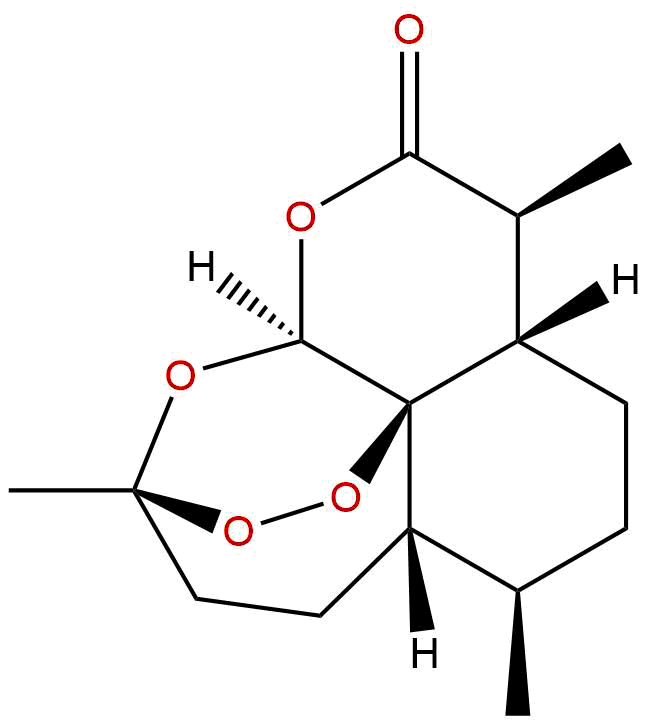
The core skeleton of 9-artemisinin is the same as artemisinin, both belonging to sesquiterpene lactones. Its molecular formula is C ₁₅ H ₂₂ O ₅, and its molecular weight is 282.3360. The key difference between the two lies in the configuration of the C-9 chiral center: in artemisinin, the methyl group at the C-9 position is in the alpha configuration (i.e. located below the ring plane), while in 9-epiartemisinin, the methyl group is transformed into the beta configuration (located above the ring plane). This seemingly small stereochemical change has a profound impact on the overall conformation, polarity distribution, and interaction with biological targets of the molecule.
From the perspective of physical and chemical properties, 9-artemisinin exhibits typical lipophilic characteristics. Its oil-water partition coefficient (LogP) is 2.5576, indicating that the solubility of the compound in a lipid environment is better than that in an aqueous environment, which is consistent with its good membrane permeability and high blood-brain barrier penetration ability (blood-brain barrier penetration evaluation is "high"). Its topological polar surface area (TPSA) is 53.9900 Å ², which is within the acceptable range for oral medication (usually TPSA<140 Å ²), indicating its potential for oral absorption. However, its low water solubility (0.0653 mg/mL) has to some extent limited the development of its formulation and the improvement of its bioavailability. In addition, 9-artemisinin is relatively stable thermodynamically, but its peroxide bridge structure makes it sensitive to reducing environments such as ferrous ions, reduced glutathione, etc. This characteristic is the chemical basis for its anti malaria and anti-tumor activities. It is worth noting that the Ames test result was 0.9, indicating that the compound did not exhibit significant genetic toxicity under the test conditions, while the hERG inhibition evaluation was "no", indicating a low risk of cardiac toxicity. These provide favorable safety prerequisites for its subsequent drug development.
Plant sources and extraction methods
9-Artemisinin is not the main component of artemisinin commonly found in nature, but exists as a trace companion of artemisinin in Artemisia annua(Artemisia annua L. In (). Artemisia annua, as the main natural source of artemisinin, contains abundant sesquiterpenes in its aboveground parts, especially in leaves and flower buds. However, the content of 9-artemisinin in plants is usually extremely low, often only one thousandth to one percent of the artemisinin content, which poses a huge challenge for its isolation and purification.
From the perspective of extraction methods, traditional organic solvent extraction methods (such as using petroleum ether, ether, or chloroform) are still the main means of obtaining crude extracts of Artemisia annua. Due to the high similarity in polarity between 9-artemisinin and artemisinin, conventional silica gel column chromatography is difficult to achieve effective separation of the two. In recent years, high-performance liquid chromatography (HPLC) technology, especially the reverse phase C18 column combined with gradient elution program, has become the standard method for separating 9-artemisinin. For example, using an acetonitrile water system (volume ratio of 60:40 to 70:30) as the mobile phase can achieve precise collection of target compounds at UV detection wavelengths of 210 nm or 254 nm. In addition, supercritical fluid extraction (SFE) technology has also been attempted to enrich trace artemisinin components in Artemisia annua due to its green and efficient characteristics. However, further optimization is needed for the selective extraction of 9-artemisinin.
It is worth noting that due to the limitations of natural sources, chemical synthesis and biosynthetic pathways have become important supplements for obtaining 9-artemisinin. In terms of chemical synthesis, starting from artemisinin, the C-9 configuration can be reversed through selective isomerization reactions (such as strong base treatment or photochemical induction) to prepare 9-epiartemisinin. However, this reaction is often accompanied by the generation of by-products, resulting in low yields. In recent years, with the development of synthetic biology, it is expected to achieve efficient directed synthesis of 9-artemisinin by engineering the sesquiterpene synthase and cytochrome P450 enzyme system in Artemisia annua or heterologous hosts (such as yeast and Escherichia coli), but this is still in the laboratory research stage.
Pharmacological activity research
Antimalarial activity
As a differential isomer of artemisinin, the antimalarial activity of 9-epiartemisinin is the first area of concern for researchers. Multiple in vitro experiments have shown that 9-artemisinin has an effect on Plasmodium falciparum(Plasmodium falciparum)Both chloroquine sensitive and resistant strains exhibit certain inhibitory activity, but their half maximal inhibitory concentration (IC ₅₀) is usually one order of magnitude higher than artemisinin. For example, for the malignant malaria parasite 3D7 strain, the IC ₅₀ of artemisinin is about 10-20 nM, while the IC ₅₀ of 9-epiartemisinin is in the range of 100-200 nM. This difference in activity is directly attributed to the change in the C-9 methyl configuration: the β - methyl configuration may interfere with the effective coordination between the peroxide bridge and heme iron ions, or affect the binding mode of the molecule to specific target proteins in the malaria parasite (such as PfATP6, PfPI3K, etc.). However, 9-artemisinin still retains the unique ability of artemisinin based compounds to rapidly kill early-stage malaria parasites, and there is no cross resistance with artemisinin, which provides the possibility for it to be used as a candidate drug or combination drug component for malaria.
Antitumor activity
In recent years, the anti-tumor activity of 9-artemisinin has gradually become a research hotspot. Similar to artemisinin, 9-epiartemisinin has a proliferation inhibitory effect on many tumor cell lines (such as breast cancer MCF-7, lung cancer A549, liver cancer HepG2, colon cancer HT-29, etc.). It is worth noting that in some tumor cell lines, the activity of 9-artemisinin is even better than artemisinin. For example, in human leukemia HL-60 cells, the IC ₅₀ of 9-artemisinin induced apoptosis is approximately 5 μ M, while artemisinin is 15 μ M. This phenomenon suggests that the change in C-9 configuration may endow 9-artemisinin with different molecular target spectra or signaling pathway regulation modes compared to artemisinin. In addition, 9-artemisinin has relatively low toxicity to normal cells and exhibits certain selectivity, providing a safety basis for its anti-tumor application.
Anti inflammatory and immune regulatory activity
In addition to its anti malaria and anti-tumor activities, 9-epiartemisinin has also shown potential in anti-inflammatory and immune regulation. Research has shown that 9-artemisinin can significantly inhibit the production of nitric oxide (NO) and prostaglandin E ₂ (PGE ₂) in macrophages RAW264.7 induced by lipopolysaccharide (LPS), and downregulate the mRNA expression levels of pro-inflammatory cytokines such as TNF - α, IL-6, IL-1 β. The mechanism may be related to the inhibition of the activation of the nuclear factor kappa B (NF - κ B) signaling pathway. In addition, in animal models, 9-artemisinin showed a certain alleviating effect on collagen induced arthritis (CIA) and dextran sulfate sodium (DSS) - induced colitis, suggesting its potential value in the treatment of autoimmune diseases.
Other pharmacological activities
Preliminary studies have also found that 9-artemisinin has antiviral (such as inhibiting hepatitis B virus HBV replication), anti fibrotic (such as inhibiting hepatic stellate cell activation), and neuroprotective (such as reducing oxygen glucose deprivation/reoxygenation induced neuronal damage) activities. These findings, although still in the early stages, fully demonstrate the broad pharmacological spectrum of 9-artemisinin as a multi-target natural product.
Mechanism of action and molecular targets
The pharmacological mechanism of 9-artemisinin is closely related to the activation of its peroxide bridge structure. Similar to artemisinin, 9-epiartemisinin needs to be activated by a reducing environment (such as ferrous ions Fe ² ⁺, heme, or reduced coenzyme II) in vivo, leading to the breakage of peroxide bridges and the generation of highly active carbon or oxygen radicals. These free radicals then covalently bind with various biomolecules within the cell, triggering a series of biological effects.
In terms of anti malaria mechanism, when malaria parasites parasitize in red blood cells, they digest a large amount of hemoglobin and release free hemoglobin (containing Fe ² ⁺). After 9-artemisinin enters the malaria parasite, its peroxide bridge is reduced by heme Fe ² ⁺, generating alkyl radicals. These free radicals can alkylate various proteins of Plasmodium, including Translation Control Tumor Protein (TCTP), PfATP6 (a calcium ATPase), and Phosphatidylinositol-3-kinase (PfPI3K). However, compared with artemisinin, the binding affinity between 9-epiartemisinin and PfATP6 is significantly reduced, which may be the main reason for its weakened antimalarial activity. In addition, 9-artemisinin can also inhibit the heme detoxification pathway of malaria parasites, leading to the accumulation of toxic heme and accelerating parasite death.
In terms of anti-tumor mechanisms, tumor cells usually have a higher iron uptake rate and lower antioxidant defense ability, which makes them more sensitive to the oxidative stress induction of artemisinin compounds. After entering tumor cells, 9-artemisinin is also activated by intracellular Fe ² ⁺, producing free radicals that cause a decrease in mitochondrial membrane potential, release of cytochrome c, cascade activation of caspase, and ultimately induce cell apoptosis. In addition, 9-artemisinin can exert anti proliferative and anti metastatic effects by inhibiting cancer signaling pathways such as Wnt/β - catenin, PI3K/Akt/mTOR, and STAT3. It is worth noting that the effect of 9-epiartemisinin on the expression of ferritin and transferrin receptor (TfR1) may differ from that of artemisinin, providing molecular level clues to explain the differences in activity between the two.
In terms of anti-inflammatory mechanisms, 9-artemisinin mainly exerts anti-inflammatory effects by inhibiting the activation of NF - κ B and MAPK signaling pathways. Specifically, it can block the phosphorylation and degradation of I κ B α, thereby preventing the nuclear translocation of NF - κ B p65 subunit and reducing the transcription of pro-inflammatory genes. In addition, 9-artemisinin can activate the Nrf2/ARE antioxidant pathway, upregulate the expression of antioxidant enzymes such as heme oxygenase-1 (HO-1), and alleviate oxidative stress-induced inflammatory damage.
Evaluation of drug properties and pharmacokinetics
Drugability assessment
Based on the aforementioned physicochemical properties and safety data, 9-artemisinin exhibits certain potential for drug development. Its molecular weight (282.34 Da) conforms to Lipinski's "five rules" (MW<500), LogP (2.56) is within the ideal range (1-3), and TPSA (53.99 Å ²) is less than 140 Å ², indicating its good oral absorption and membrane permeability potential. In addition, Ames test negative and hERG inhibition negative results reduced the risk of genetic toxicity and cardiac toxicity. However, its poor water solubility (0.0653 mg/mL) is the main bottleneck restricting its medicinal properties. Through preparation techniques such as salt formation, prodrug preparation, liposomes, or nanocrystals, it is expected to improve its solubility and bioavailability.
pharmacokinetics
At present, the systematic pharmacokinetic research on 9-artemisinin is not sufficient, but it can be inferred based on the common characteristics of artemisinin compounds. After oral administration, 9-artemisinin is expected to be rapidly absorbed in the gastrointestinal tract, but the first pass effect is significant. Its high blood-brain barrier penetration ability suggests that the compound may reach effective concentrations in the central nervous system, providing a theoretical basis for the treatment of cerebral malaria or brain tumors. In terms of distribution in the body, 9-artemisinin may be widely distributed in organs with abundant blood flow such as the liver, kidneys, and lungs. The metabolic pathways mainly involve oxidative reactions mediated by the liver cytochrome P450 enzyme system (such as CYP2B6, CYP3A4), including the reduction and cleavage of peroxide bridges, hydrolysis of lactone rings, and hydroxylation. Its half-life may be relatively short (about 1-3 hours), similar to artemisinin. The main excretion pathways are bile and urine. It is worth noting that there may be differences in the metabolic profiles between 9-artemisinin and artemisinin. For example, changes in the C-9 methyl configuration may affect its affinity for CYP enzymes, leading to changes in metabolic rate and metabolite composition. This requires further metabolomics research to clarify.
Clinical application prospects and prospects
9-Epiartemisinin, as a differential isomer of artemisinin, although not as effective as the parent compound in antimalarial activity, its unique pharmacological spectrum and lower toxicity make it exhibit differential advantages in multiple disease fields.
In the field of anti malaria, 9-artemisinin can be used as a supplement to artemisinin based drugs, especially for malaria strains that have developed resistance to artemisinin. Considering its lack of cross resistance with artemisinin, including it in combination therapy (such as with piperaquine, pyronaridine, etc.) may delay or overcome the development of resistance. In addition, its high blood-brain barrier penetration ability gives it potential advantages in the treatment of cerebral malaria.
In the field of anti-tumor, 9-epiartemisinin is more active than artemisinin in some tumor cell lines (such as leukemia and breast cancer) and less toxic to normal cells, which provides an important basis for its use as an anti-tumor candidate drug. Future research should focus on: 1) improving its anti-tumor efficacy through structural modifications (such as introducing water-soluble groups, designing bifunctional prodrugs); 2) Using nano delivery systems (such as ferritin nanoparticles, liposomes) to achieve targeted delivery of tumors; 3) Explore its synergistic effects with chemotherapy drugs (such as cisplatin, doxorubicin) or targeted drugs (such as sorafenib).
In the field of anti-inflammatory and immune regulation, the dual regulatory effect of 9-artemisinin on NF - κ B and Nrf2 pathways makes it promising for the treatment of chronic inflammatory diseases (such as rheumatoid arthritis and inflammatory bowel disease) and autoimmune diseases. In addition, its neuroprotective effect suggests that it may be used to treat neurodegenerative diseases such as Alzheimer's disease and Parkinson's disease, but related research is still in its infancy.
Looking ahead to the future, research on 9-artemisinin should focus on the following aspects: 1) establishing efficient and green chemical or biological synthesis methods to solve the problem of limited sources; 2) Conduct systematic pharmacokinetic and toxicological studies to clarify their in vivo fate and safety boundaries; 3) By utilizing chemical biology techniques such as active probes and proteomics, we aim to uncover its molecular targets and functional networks in depth; 4) Promote preclinical research, especially animal model validation for specific indications. With the continuous deepening of the understanding of the structure-activity relationship of artemisinin compounds, 9-artemisinin is expected to emerge from the "shadow of artemisinin" and become a natural drug lead compound with unique value.
Conclusion
9-Epiartemisinin, as a unique isomer in the artemisinin family, vividly illustrates the classic proposition of "configuration determines activity" in natural product chemistry through its research process. Although its anti malarial activity is not as good as artemisinin, its differentiated activities in anti-tumor, anti-inflammatory, and immune regulation fields, as well as its good safety characteristics, make it a drug lead molecule worthy of further exploration. From chemical structure to pharmacological mechanism, from drug evaluation to clinical application prospects, the study of 9-artemisinin not only enriches the structure-activity relationship theory of artemisinin compounds, but also provides important insights for the development of a new generation of multi-target drugs based on natural products. In the future, with the advancement of synthetic methodologies, drug delivery systems, and chemical biology technologies, 9-artemisinin is expected to exert its unique value in the era of precision medicine and contribute new strength to human health.