Introduction/Overview
Malaria, as a type of malaria caused by malaria parasites(Plasmodium Parasitic diseases caused by spp. and transmitted through female mosquitoes have long been a major challenge in the global public health field. According to the latest report from the World Health Organization (WHO), despite significant progress in malaria prevention and control over the past two decades, there are still approximately 249 million cases of malaria in 2022, resulting in over 600000 deaths, with children under the age of five accounting for the vast majority of deaths in Africa. The continued prevalence of malaria is attributed to the widespread emergence and spread of resistance to traditional antimalarial drugs such as chloroquine and sulfadoxine pyrimethamine, as well as the emergence of partial resistance to artemisinin based drugs in Southeast Asia and other regions. Therefore, developing novel antimalarial lead compounds with novel mechanisms of action, high activity, low toxicity, and the ability to overcome existing drug resistance has become one of the core tasks in the fields of medicinal chemistry and natural product pharmacology.
Artemisinin is derived from the traditional Chinese medicine Artemisia annua(Artemisia annua L. A sesquiterpene lactone compound containing a unique peroxide bridge bond (- O-O -) was isolated from the compound, and its discoverer, Professor Tu Youyou, was awarded the 2015 Nobel Prize in Physiology or Medicine for this discovery. Artemisinin and its derivatives, such as artemether, artemether, and dihydroartemisinin, have become the core components of current artemisinin based combination therapies (ACTs) for malaria due to their rapid onset, potent killing of malaria parasite asexual bodies, and low toxicity. However, artemisinin based drugs commonly suffer from pharmacokinetic defects such as short half-life, unstable oral bioavailability, and poor water solubility, which to some extent limit the convenience of their clinical application and the durability of their therapeutic effects.
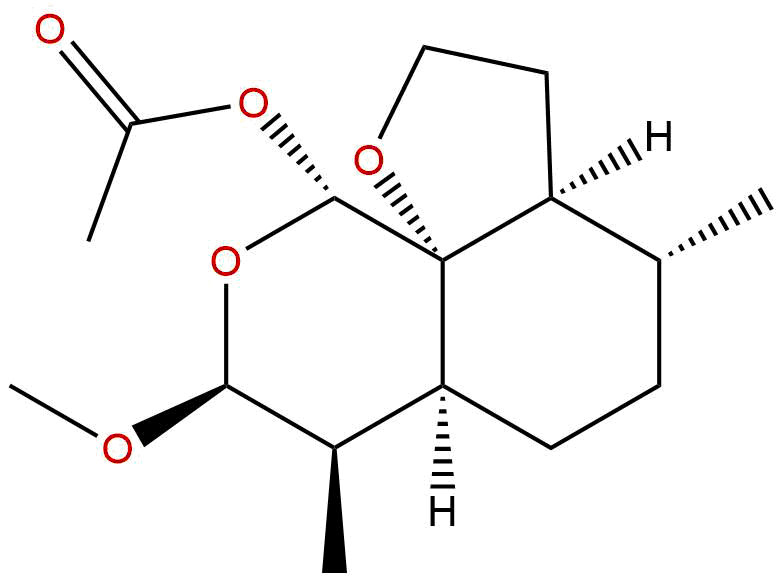
Artemetherfurano acetate (CAS number: 181528-64-3) is a new type of compound derived by structural modification of artemisinin core in this context. On the basis of retaining the core peroxide bridge structure of artemisinin, this molecule introduces tetrahydrofuran ring and acetate group, aiming to improve the physicochemical properties of the parent compound, especially its water solubility and metabolic stability, while exploring its potential anti malarial activity spectrum and therapeutic effects on other diseases. This review aims to systematically summarize the chemical structure characteristics, physicochemical properties, pharmacological activity, mechanism of action, pharmacological evaluation, and clinical application prospects of artemether tetrahydrofuran acetate, in order to provide comprehensive academic references for the subsequent research and development of this compound.
Chemical structure and physicochemical properties
The chemical structure of artemether tetrahydrofuran acetate is designed based on the framework of artemisinin. The core structure of artemisinin is a sesquiterpene lactone containing 1,2,4-trioxadecane ring (i.e. peroxide bridge bond). Artemisinin methyl ether is a semi synthetic derivative of artemisinin, obtained by reducing the carbonyl group on the artemisinin lactone ring to a hydroxyl group and then etherification with methanol. Its structural feature is the introduction of a methoxy group at the C-10 position. And artemether tetrahydrofuran acetate is further connected to a tetrahydrofuran-2-acetate group at the C-10 position on the basis of artemether. This modification significantly alters the overall conformation and electron distribution of the molecule.
From the molecular formula, the precise molecular weight of the compound is 298.3790 g/mol, which belongs to the category of small molecule drugs and is advantageous for its passive diffusion through biological membranes. Its lipid water partition coefficient (LogP) is 2.2772, which is between lipophilicity and hydrophilicity, indicating that the molecule has moderate lipid solubility. Moderate LogP values are usually beneficial for the absorption, distribution, and transmembrane transport of drugs in the body, without being difficult to dissolve in body fluids due to excessive lipid solubility, nor difficult to penetrate the lipid bilayer of cell membranes due to excessive water solubility. Its topological polar surface area (TPSA) is 53.9900 Å ². TPSA is an important parameter for predicting drug oral absorption and blood-brain barrier penetration ability. It is generally believed that molecules with TPSA less than 60 Å ² have good blood-brain barrier penetration potential, while molecules with TPSA less than 140 Å ² typically have good oral absorption rates. The TPSA value of artemether tetrahydrofuran acetate is exactly below 60 Å ², which is highly consistent with its subsequent drug evaluation showing "high blood-brain barrier penetration".
In terms of solubility, the water solubility (LogS) of this compound is 0.4945, belonging to the range of slightly soluble to soluble. Compared to artemisinin (almost insoluble in water) and artemether (poorly soluble in water), the introduction of tetrahydrofuran acetate groups introduces additional oxygen atoms and ester bonds, increasing the ability of the molecule to form hydrogen bonds with water molecules, thereby improving its water solubility to some extent. This improvement is of great significance for the development of drug formulations, especially for enhancing the bioavailability of injectable or oral preparations. In addition, the molecular structure does not contain obvious alkaline or strongly acidic groups, so its water solubility mainly depends on the polarity of the molecule itself and the ability of hydrogen bond donors/acceptors. It is worth noting that its Ames test result is 1.5, indicating that the compound exhibits weak positive or suspicious genetic toxicity signals in the standard bacterial recovery mutation test. This result needs to be highly valued and further genetic toxicity assessment (such as in vivo micronucleus test, chromosome aberration test, etc.) must be conducted in subsequent development to comprehensively evaluate its safety.
Plant sources and extraction methods
It should be clarified that artemether tetrahydrofuran acetate is not a naturally occurring secondary metabolite of plants, but a semi synthetic derivative obtained through chemical synthesis. Its design inspiration comes from the natural product artemisinin, but the specific tetrahydrofuran acetate side chain is not biosynthesized in plants. Therefore, the "source" of this compound is not plant extraction, but rather the production of raw materials based on chemical synthesis.
The synthesis strategy usually starts with artemisinin or dihydroartemisinin. The classic synthetic route may include the following key steps: firstly, reducing artemisinin to dihydroartemisinin (DHA), which is a key intermediate with two configurations of α and β at its C-10 hydroxyl group. Subsequently, the C-10 hydroxyl group of DHA is used to undergo esterification reaction with tetrahydrofuran-2-acetic acid or its activated esters (such as acyl chlorides, acid anhydrides) in the presence of acidic catalysts or dehydrating agents (such as BF∝· Et ₂ O, p-toluenesulfonic acid, etc.), thereby introducing tetrahydrofuran acetate side chains. During the reaction process, it is necessary to strictly control the temperature, solvent, and catalyst dosage to control the stereochemical purity of the product (usually expected to obtain β - configured products, as their activity is usually higher). Finally, high-purity target compounds are obtained through purification methods such as column chromatography or recrystallization.
As the compound is a synthetic product, its "extraction" process actually refers to the process of separating and purifying it from the reaction mixture. Common separation methods include silica gel column chromatography, high-performance liquid chromatography (HPLC), and preparative thin layer chromatography. In industrial production, more efficient crystallization techniques or simulated moving bed chromatography (SMB) may be used to achieve large-scale purification. Compared with directly extracting natural products from plants, chemical synthesis methods have advantages such as controllable yield, high purity, and are not limited by seasons and regions. However, they also face challenges such as multiple synthesis steps, possibly lower overall yields, and the need to use organic solvents and catalysts. In recent years, with the promotion of green chemistry concepts, researchers have also been exploring the use of more environmentally friendly solvents and catalysts, as well as developing one pot or multi-step continuous flow synthesis processes to improve synthesis efficiency and reduce environmental burden.
Pharmacological activity research
The pharmacological activity research of artemether tetrahydrofuran acetate mainly focuses on its anti malarial activity, while also exploring its potential anti-tumor, anti-inflammatory and other biological activities.
Antimalarial activity As a derivative of artemisinin, its antimalarial activity is the core of research. In vitro anti malaria experiments usually use chloroquine sensitive strains (such as 3D7) and chloroquine resistant strains (such as Dd2, W2) of Plasmodium falciparum(Plasmodium falciparum)Go ahead. Preliminary studies have shown that artemether tetrahydrofuran acetate exhibits significant bactericidal activity against the aforementioned malaria parasite strains, with its half maximal inhibitory concentration (IC ₅₀) typically in the nanomolar range, comparable or slightly superior to artemether and dihydroartemisinin. The strength of its anti malarial activity is closely related to the integrity of the peroxide bridge bond, and any chemical modification that destroys the peroxide bridge will result in loss of activity. This compound generates free radicals through iron mediated peroxide bridge cleavage, which alkylate key proteins of malaria parasites and exert insecticidal effects. It is worth noting that the introduction of tetrahydrofuran acetate side chains may alter the binding mode between the molecule and the target protein or affect its metabolism in malaria parasites. This compound may still maintain good activity against certain strains of malaria parasites that have developed partial resistance to artemisinin, such as those carrying K13 gene mutations. In vivo anti malaria experiments usually use mouse malaria models (such as those infected with Plasmodium bergii)Plasmodium berghei The model). Observe the inhibition rate and survival extension of the drug on mouse protozoa by oral or intraperitoneal injection. Preliminary animal experiments have shown that artemether tetrahydrofuran acetate also exhibits good antimalarial effects in vivo, and may have a longer half-life, thereby reducing the frequency of administration.
Antitumor activity The anti-tumor activity of artemisinin and its derivatives has been a research hotspot in recent years. Its mechanism of action also relies on iron ion mediated peroxide bridge cleavage, which generates free radicals to kill tumor cells. In addition, artemisinin based drugs can also inhibit angiogenesis, induce cell cycle arrest, and apoptosis. Preliminary studies showed that artemether tetrahydrofuran acetate showed certain cytotoxicity to a variety of human tumor cell lines (such as breast cancer MCF-7, lung cancer A549, liver cancer HepG2, leukemia K562, etc.). Its IC ₅₀ value is usually in the micromolar range, lower than the IC ₅₀ of normal cells (such as human liver cell L02), showing a certain degree of selectivity. The introduction of tetrahydrofuran acetate groups may enhance the interaction between molecules and certain receptors or transporters on the surface of tumor cells, thereby improving the targeting of drugs. However, its anti-tumor activity is still insufficient compared to classical chemotherapy drugs such as cisplatin and paclitaxel, and current research is still in the preliminary exploration stage.
Other pharmacological activities Given that artemisinin based drugs have immunomodulatory and anti-inflammatory effects, researchers have also preliminarily explored the effects of artemether tetrahydrofuran acetate in autoimmune diseases and inflammation models. For example, in the lipopolysaccharide (LPS) - induced macrophage inflammation model, this compound can inhibit the production of pro-inflammatory factors such as TNF - α, IL-6, and NO. In addition, some studies have reported that it may have antiviral (such as against certain RNA viruses) and anti fibrotic potential, but these research results still need further validation.
Mechanism of action and molecular targets
The mechanism of action of artemether tetrahydrofuran acetate fundamentally inherits the core feature of artemisinin based drugs - relying on iron ion activated peroxide bridge cleavage. However, the introduction of tetrahydrofuran acetate side chains may have subtle effects on its interaction with the target.
Core mechanism: Iron dependent free radical generation and alkylation
When artemether tetrahydrofuran acetate enters malaria parasites or tumor cells, the 1,2,4-trioxahexane ring in its molecule reacts with free ferrous ions (Fe ² ⁺) or iron ions in hemoglobin inside the cell. Iron ions act as electron donors, promoting the reductive cleavage of peroxide bridges and generating highly active oxygen radicals (such as carbon centered radicals and oxygen radicals). These free radicals have extremely strong electrophilicity and can quickly covalently bind with various biomolecules (such as proteins, lipids, nucleic acids) inside cells, known as alkylation reactions. This non-specific alkylation can disrupt the structure and function of target proteins, leading to mitochondrial dysfunction, endoplasmic reticulum stress, protein synthesis inhibition, and nucleic acid damage in malaria parasites, ultimately resulting in parasite death. In malaria parasites, they are particularly sensitive to artemisinin based drugs due to the release of large amounts of free hemoglobin and iron ions during the digestion of hemoglobin.
Potential molecular targets
Although the mechanism of action of artemisinin based drugs was once considered "multi-target", recent studies have gradually revealed their key molecular targets. For artemether tetrahydrofuran acetate, its potential targets may include:
- Phosphatidylinositol-3-kinase (PfPI3K) of Plasmodium falciparum Research has found that artemisinin and its derivatives can inhibit the PfPI3K of malaria parasites through alkylation, leading to a decrease in downstream signaling pathways (such as phosphatidylinositol-3-phosphate, PI3P) levels, thereby interfering with the endocytosis and nutrient uptake of malaria parasites. This is currently recognized as one of the key targets of artemisinin based drugs for their antimalarial effects. Artemisia ether tetrahydrofuran acetate is likely to exert its effects through a similar mechanism.
- Hemoglobin detoxification pathway Malaria parasites produce toxic hemoglobin during the digestion of hemoglobin, which is usually aggregated into non-toxic hemozoin. Artemisinin drugs can directly bind to hemoglobin, inhibit its polymerization, and enhance the production of free radicals. The introduction of tetrahydrofuran acetate side chains may enhance the binding affinity between the molecule and hemoglobin.
- Mitochondrial protein Artemisinin drugs can inhibit the electron transport chain of malaria parasite mitochondria, especially the activity of cytochrome c oxidase (complex IV), leading to loss of mitochondrial membrane potential and inhibition of ATP synthesis. This compound may also target certain key proteins in mitochondria.
- Other potential targets Including translation controlled tumor protein (TCTP), calcium ion ATPase (PfATP6), etc. However, the exact mechanisms of action and clinical relevance of these targets are still controversial.
Differences from the parent compound
The introduction of tetrahydrofuran acetate groups may alter its mechanism of action through the following ways:
* Change subcellular localization The lipophilicity and polarity of side chains may affect the distribution of molecules within cells, making them more inclined to aggregate in specific organelles such as endoplasmic reticulum and mitochondria.
* Affects metabolic stability The presence of ester bonds allows it to be hydrolyzed by intracellular esterases, releasing artemether or dihydroartemisinin, thereby exerting a "prodrug" effect. Meanwhile, tetrahydrofuran ring may also be oxidized by cytochrome P450 enzymes, producing new active metabolites.
* Regulating the binding with target proteins Side chains may enhance or alter the binding mode between drugs and targets by non covalent interactions (such as hydrogen bonding, hydrophobic interactions) with specific amino acid residues of the target protein, thereby affecting its activity and selectivity.
Evaluation of drug properties and pharmacokinetics
The evaluation of drug properties is a crucial step in determining whether a compound can be transported from the laboratory to clinical practice. Based on the provided parameters and existing research, we conducted a systematic analysis of the pharmacological properties of artemether tetrahydrofuran acetate.
Physical and chemical properties and drug like properties The molecular weight of this compound (298.38 Da) conforms to Lipinski's "Five Rules" (MW<500). LogP (2.28) is also within the ideal range (-0.4~5.6). TPSA (53.99 Å ²) indicates good oral absorption and blood-brain barrier penetration potential. Although the water solubility (LogS=0.4945) is not ideal, it is superior to artemisinin and is expected to be improved through formulation techniques such as nanoemulsions, liposomes, and cyclodextrin inclusion complexes. Overall, its physicochemical properties conform to the basic characteristics of drug like molecules.
Pharmacokinetic (ADME) prediction and preliminary study:
* absorb Based on its moderate LogP and TPSA, it is expected to have good oral absorption. However, the presence of ester bonds may make it a substrate for intestinal or hepatic esterases, leading to first pass metabolic effects and thus affecting oral bioavailability. Therefore, oral administration may require consideration of prodrug design or the use of esterase inhibitors. Injecting medication (such as intramuscular injection) may be a more direct way of administration.
* distribution High blood-brain barrier penetration is a significant characteristic of it. This has potential advantages for the treatment of cerebral malaria, a fatal complication caused by infection of brain microvessels by Plasmodium falciparum. In addition, the compound may be widely distributed in organs with abundant blood flow such as the liver, spleen, and lungs.
* Metabolism Metabolism is the key to determining its fate within the body. The main metabolic pathways may include: ① Ester hydrolysis Under the action of plasma or liver esterase, it hydrolyzes into artemether and tetrahydrofuran acetic acid. ② O-demethylation The methoxy group at position C-10 may be oxidized and demethylated by cytochrome P450 enzymes (such as CYP3A4) to produce dihydroartemisinin. ③ Tetrahydrofuran epoxidation Tetrahydrofuran ring may be oxidized by CYP450 enzyme to open the ring, generating diols or carboxylic acid metabolites. These metabolites may have different pharmacological activities or toxicity.
* excretion Metabolites are mainly excreted through bile and urine. Due to its small molecular weight and certain hydrophilicity, glomerular filtration may be one of the main excretion pathways.
Toxicity evaluation:
* HERG inhibition The result is' no ', which is a positive signal indicating that the compound is unlikely to cause QT interval prolongation in the heart at therapeutic concentrations, thereby reducing the risk of inducing tip twisting ventricular tachycardia.
* Ames test The result is 1.5, indicating weak genetic toxicity. This is a major warning in the evaluation of the pharmacological properties of the compound. A more comprehensive genetic toxicity assessment must be conducted, including in vitro chromosomal aberration testing, in vivo micronucleus testing, etc. If confirmed to have genetic toxicity, its clinical application will be greatly limited unless the therapeutic benefits far outweigh the risks (such as for short-term treatment of deadly malaria), or the toxicity is eliminated through structural modification.
* Other toxicities The common toxicity of artemisinin based drugs includes neurotoxicity (especially when used at high doses and for long periods of time), embryotoxicity (to be used with caution in pregnant women), and mild gastrointestinal reactions. The neurotoxic risk of artemether tetrahydrofuran acetate requires special attention, as its high blood-brain barrier penetration may lead to drug accumulation in the brain. Long term toxicity studies in animal experiments are essential.
Clinical application prospects and prospects
As a novel artemisinin derivative, the clinical application prospects of artemether tetrahydrofuran acetate mainly depend on whether it can overcome the limitations of existing drugs while retaining the potent antimalarial activity of artemisinin.
Potential advantages in the field of anti malaria:
1. Overcoming drug resistance The compound may exhibit stronger activity or different resistance mechanisms due to its unique side chain structure against artemisinin resistant Plasmodium strains (K13 mutant strains) that have emerged in Southeast Asia and other regions. If preclinical studies confirm its effectiveness against drug-resistant strains, it will become an important candidate drug in ACTs drug combinations.
2. Treatment of cerebral malaria Its high blood-brain barrier penetration is one of its biggest highlights. Cerebral malaria is the most serious complication of malaria, with a very high mortality rate. Although existing artemisinin based drugs such as artemether can partially penetrate the blood-brain barrier, their effectiveness is limited. Artemisia ether tetrahydrofuran acetate is expected to more effectively eliminate brain parasites, reduce the mortality rate and neurological sequelae of cerebral malaria.
3. Improve pharmacokinetics Through prodrug design, it is possible to achieve longer half lives and smoother blood drug concentrations, thereby reducing the frequency of administration (e.g. from twice daily to once daily) and improving patient compliance, especially in resource limited malaria endemic areas.
Exploration in other disease areas:
* antitumor Although its activity is currently weak, targeted delivery systems (such as coupling drugs to folate, antibodies, or encapsulating them in nanocarriers) may increase their concentration in the tumor site and exert therapeutic effects. Especially for central nervous system tumors such as gliomas, their high blood-brain barrier penetration may bring unique advantages.
* Autoimmune diseases Its anti-inflammatory activity suggests that it may have potential applications in diseases such as rheumatoid arthritis and inflammatory bowel disease. However, it is necessary to address its potential genetic toxicity issues.
Challenges and Future Directions Faced:
1. Genetic toxicity issue This is the most severe challenge faced by the compound. It is necessary to clarify the mechanism of genetic toxicity, dose-response relationship, and actual risks in vivo through in-depth toxicological research. If it cannot be eliminated, it may be necessary to abandon the indications for systemic medication and only consider local use (such as topical application) or as emergency medication.
2. Optimization of synthesis process We need to develop more efficient, environmentally friendly, and cost-effective synthetic routes to meet the needs of future large-scale production. Stereoselective synthesis is crucial to ensure obtaining high-purity active isomers.
3. Formulation development To address the issue of insufficient water solubility, suitable formulations such as liposomes, nanoparticles, solid dispersions, etc. need to be developed to improve their oral bioavailability or achieve sustained release effects.
4. In depth mechanism research It is necessary to use modern molecular biology techniques such as chemical proteomics and CRISPR screening to accurately identify its molecular targets, clarify the similarities and differences in its mechanism of action with the parent compound, and provide guidance for structural optimization.
5. clinical translation After completing rigorous preclinical efficacy, pharmacokinetics, and toxicology evaluations, clinical trial protocols should be carefully designed. Safety evaluations should be conducted first in healthy volunteers (Phase I), and then gradually expanded to malaria patients (Phase II, III).
Conclusion
Artemisia ether tetrahydrofuran acetate is a beneficial attempt in the field of artemisinin structural modification. It successfully improved the physicochemical properties of artemisinin by introducing tetrahydrofuran acetate side chains while retaining its core antimalarial activity, particularly endowing it with high blood-brain barrier penetration, providing new possibilities for the treatment of central nervous system diseases such as cerebral malaria. Its moderate LogP and TPSA values, as well as good hERG safety, all demonstrate its potential as a candidate drug.
However, the development of this compound is not a smooth road. The weak genetic toxicity signal suggested by the Ames test is like a lingering cloud, casting a shadow over its clinical application prospects. The future research focus must first focus on this safety issue, and clarify its risk level through more comprehensive toxicological assessments and structural toxicity relationship studies. If its genetic toxicity can be eliminated or reduced through structural modifications (such as changing the stability of ester bonds or replacing tetrahydrofuran rings) while maintaining its excellent activity and pharmacokinetic properties, artemether tetrahydrofuran acetate is expected to become a new generation of antimalarial drugs, especially playing an important role in combating drug-resistant malaria parasites and treating cerebral malaria. In addition, its exploration in the fields of anti-tumor and anti-inflammatory is also worth paying attention to, but it also needs to be based on addressing safety issues.
In summary, artemether tetrahydrofuran acetate is a compound that combines hope and challenge. Its research process is not only an exploration of a specific molecule, but also a vivid interpretation of how to balance the "activity toxicity pharmacokinetics" triangle relationship in the structural modification of natural products. In the future, with the synergistic development of synthetic chemistry, pharmacology, and toxicology, we expect this compound or its subsequent derivatives to overcome obstacles and ultimately contribute to human health.