Introduction/Overview
Malaria, as a type of malaria caused by malaria parasites(Plasmodium Parasitic infectious diseases caused by spp. and transmitted through female mosquitoes have long been a major challenge in the global public health field. According to the latest report from the World Health Organization (WHO), despite significant progress in malaria prevention and control worldwide over the past two decades, progress has stagnated in recent years and even rebounded in some regions. The continuous emergence and spread of drug-resistant malaria parasites, especially malignant malaria parasites that develop resistance to artemisinin based combination therapies (ACTs)(Plasmodium falciparum)The spread in the Greater Mekong Subregion of Southeast Asia has made the development of new, efficient, and unique antimalarial drugs an urgent scientific research task.
Artemisinin is derived from the traditional Chinese medicine Artemisia annua(Artemisia annua L. Professor Tu Youyou was awarded the 2015 Nobel Prize in Physiology or Medicine for the discovery of sesquiterpene lactone peroxides isolated from the plant. Artemisinin and its derivatives (such as dihydroartemisinin, artemether, artemether) are known for their rapid and potent ability to kill malaria parasite asexual bodies. However, artemisinin based drugs themselves have limitations such as poor water solubility, short half-life, unstable oral bioavailability, and susceptibility to drug resistance in monotherapy. To overcome these drawbacks, scientists have extensively chemically modified the core structure of artemisinin, the peroxide bridge (- O-O -), in order to obtain derivatives with better pharmacological properties.
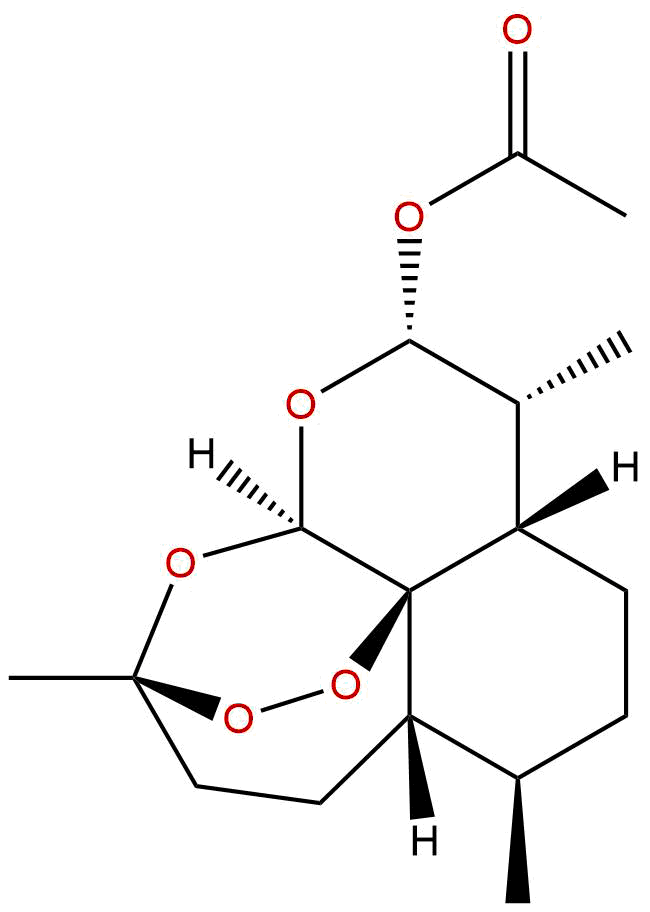
Acetyldihydroartemisinin (10 β - Dihydroartemisinin acetate, CAS number: 253774-90-2) is a semi synthetic artemisinin derivative designed and synthesized in this context. It is a product of acetylation modification on the C-10 hydroxyl group of dihydroartemisinin (DHA). This structural modification aims to alter the lipid water partition coefficient of the parent molecule, optimize its pharmacokinetic properties, and potentially affect its interaction mode with biological targets. Unlike artemether (a water-soluble prodrug) and artemether (a lipid soluble prodrug), acetyl dihydroartemisinin, as an ester derivative, has unique research value in terms of its in vivo metabolic behavior, antimalarial activity profile, and potential ability to overcome drug resistance. This article aims to provide a systematic review of the chemical structure, physicochemical properties, pharmacological activity, mechanism of action, drug properties, and clinical application prospects of acetyldihydroartemisinin, in order to provide reference for the subsequent development of antimalarial drugs.
Chemical structure and physicochemical properties
Acetyldihydroartemisinin is a structurally clear derivative of the artemisinin family. Its core skeleton retains the unique 1,2,4-trioxadecane ring (i.e. peroxide bridge structure) of artemisinin, which is an essential pharmacophore for its antimalarial activity. Compared with artemisinin, dihydroartemisinin reduces the lactone ring to a hemiacetal (- OH) structure at the C-10 position, while acetyl dihydroartemisinin further acetylates the hydroxyl group at the C-10 position to form acetate. The system name of this compound is (3R, 5aS, 6R, 8aS, 9R, 10S, 12R, 12aR) -10-acetoxy-3,6,9-trimethyl-3,12-epoxy-12H-pyrano [4,3-j] -1,2-benzodioxolane, with the molecular formula C ₁₇ H ₂₆ O ₆ and a molecular weight of 326.3890 g/mol.
From the perspective of physical and chemical properties, acetylation modification significantly changes the polarity and lipophilicity of the molecule. The calculated lipid water partition coefficient (LogP) is 2.7000, significantly higher than artemisinin (LogP about 2.0) and dihydroartemisinin (LogP about 1.8), indicating enhanced lipid solubility and easier penetration of biofilms. This characteristic may be beneficial for improving its oral absorption efficiency and ability to penetrate the red blood cell membrane and malaria parasite cell membrane. Its topological polar surface area (TPSA) is 63.2200 Å ², which is in a relatively balanced range, ensuring the potential for hydrogen bonding interactions with target proteins while not being difficult to cross membranes due to excessive polarity. The water solubility data (0.0601 mg/mL) indicates that its solubility in water is low and it belongs to poorly soluble drugs, which is consistent with high LogP values. Therefore, in the development of formulations, it may be necessary to use solubilization techniques such as liposomes, nanoemulsions, and solid dispersions to improve their bioavailability.
It is worth noting that the blood-brain barrier (BBB) penetration of this compound was evaluated as "high". This characteristic has a dual significance in antimalarial treatment. On the one hand, for the treatment of cerebral malaria caused by malignant malaria parasites (a serious complication with a high mortality rate), high BBB penetration helps drugs directly act on isolated malaria parasites in the brain microvasculature, improving treatment effectiveness. On the other hand, this may also increase the potential toxicity risk to the central nervous system, which requires special attention in preclinical safety evaluations. In addition, hERG inhibition was evaluated as' no ', indicating a low risk of causing prolonged cardiac QT interval and fatal arrhythmias, which is a favorable cardiac safety signal. The Ames test results (1.5) are usually interpreted as weakly positive or suspected mutagenicity, which requires comprehensive judgment based on in vivo genetic toxicity tests and is a potential risk point that needs to be treated with caution in drug development.
Plant sources and extraction methods
Acetyldihydroartemisinin is not a naturally occurring compound in plants, but a semi synthetic derivative. Therefore, its "source" is not directly obtained through plant extraction, but is synthesized from natural artemisinin through a two-step chemical reaction.
The first step is the reduction of artemisinin. From Artemisia annua(Artemisia annua L. Artemisinin extracted and purified from artemisinin is reduced to dihydroartemisinin under mild conditions (such as using sodium borohydride NaBH ₄ as a reducing agent). This reaction selectively reduces the lactone carbonyl group at the C-10 position, generating a pair of C-10 isomers (α and β), with the β - form (10 β - Dihydroartemisinin) typically having higher biological activity.
The second step is acetylation reaction. The purified 10 β - dihydroartemisinin can be reacted with acetic anhydride (Ac ₂ O) or acetyl chloride (CH3 COCl) in the presence of alkaline catalysts (such as pyridine or triethylamine) to introduce acetyl groups on the C-10 hydroxyl group, producing the target product 10 β - acetyl dihydroartemisinin. The reaction usually needs to be carried out under anhydrous conditions and low temperature (0-5 ° C) to avoid side reactions and improve yield. After the reaction is complete, high-purity acetyldihydroartemisinin can be obtained by purification methods such as column chromatography or recrystallization.
Therefore, the preparation of this compound relies on two key steps: firstly, a stable supply of high-quality and high-purity natural artemisinin, which relies on standardized cultivation (GAP) and efficient extraction processes (such as supercritical CO ₂ extraction, organic solvent cold soaking, etc.) of Artemisia annua; The second is an efficient, controllable, and environmentally friendly semi synthetic chemical process. From the perspective of pharmacoeconomics, due to the high extraction cost of artemisinin itself and the involvement of chemical reagents and purification processes in the synthesis steps, the production cost of acetyldihydroartemisinin may be higher than some simple artemisinin derivatives. However, its unique pharmacological advantages may make it cost-effective in specific therapeutic fields such as drug-resistant malaria or cerebral malaria.
Pharmacological activity research
The antimalarial activity of acetylated dihydroartemisinin is its core pharmacological action. Multiple in vitro and in vivo studies have confirmed that the compound exhibits potent killing activity against various strains of malaria parasites, including those resistant to traditional antimalarial drugs such as chloroquine and ethambutol.
In vitro antimalarial activity: Malignant malaria parasite cultured in vitro(P. falciparum)In the experiment, acetyldihydroartemisinin showed a half maximal inhibitory concentration (IC ₅₀) at the nanomolar level against both drug sensitive strains (such as 3D7) and resistant strains (such as Dd2, W2). Its activity is usually comparable to or slightly lower than the parent compound dihydroartemisinin, but significantly better than artemisinin. This potent activity is attributed to its stable peroxide bridge structure, which is reduced and cleaved by heme or ferrous ions (Fe ² ⁺) within the malaria parasite, producing highly reactive carbon free radicals that alkylate key proteins of the parasite, leading to its death. It is worth noting that for certain strains of insects with decreased sensitivity to artemether or artemether (such as those carrying the PfK13 mutation), acetyl dihydroartemisinin may exhibit cross resistance, but the degree of resistance may vary depending on the specific mutation site. Some studies have shown that the introduction of the C-10 ester group may alter the binding mode between drugs and targets to some extent, thereby providing some ability to evade certain resistance mechanisms, but this requires more experimental evidence to support.
In vivo antimalarial activity: In malaria models of rodents such as mice (usually using Plasmodium bergii)P. berghei Or Plasmodium yoelii P. yoelii)Acetyldihydroartemisinin can effectively reduce protozoa and prolong animal survival through oral or injection administration. Its in vivo activity is significantly influenced by the route of administration, dosage, and formulation form. Due to its high lipid solubility, it may have good absorption after oral administration, but the first pass effect (liver metabolism) may affect its bioavailability. Compared to artemether (water-soluble, intravenous), acetyl dihydroartemisinin is more suitable for development as an oral or intramuscular injection formulation. In treatment experiments, continuous administration for 3-7 days is usually required to achieve complete eradication (clearing all malaria parasites). Although a single administration can rapidly reduce protozoanism, the recurrence rate is high, which is consistent with the short half-life of artemisinin based drugs.
Other pharmacological activities: In addition to its antimalarial effects, artemisinin and its derivatives have also been found to have various pharmacological activities such as anti-tumor, anti-inflammatory, immune regulation, and antiviral (such as anti cytomegalovirus, hepatitis B virus). Preliminary studies on acetyldihydroartemisinin in these fields have also shown potential. For example, in a variety of tumor cell lines (such as breast cancer, lung cancer, leukemia cells), it can induce cell apoptosis, inhibit proliferation and migration, and its mechanism may be related to the production of reactive oxygen species (ROS), iron dependent cell death (Ferroptosis), and the regulation of NF - κ B and other signaling pathways. However, these non antimalarial activities typically require higher drug concentrations, and their in vivo efficacy and safety need to be further evaluated.
Mechanism of action and molecular targets
The anti malarial mechanism of acetyldihydroartemisinin is rooted in its unique peroxide bridge structure, but the specific molecular target network is much more complex than the "single target" model. The currently widely accepted viewpoint is the "multi-target" or "multimodal" mechanism of action.
Core mechanism: Iron mediated peroxide bridge cleavage and alkylation reaction
When malaria parasites invade red blood cells, they will digest a large amount of host hemoglobin, releasing free heme and ferrous ions (Fe ² ⁺). After entering the malaria parasite, acetyl dihydroartemisinin undergoes reduction and cleavage of its peroxide bridge under the catalysis of Fe ² ⁺, generating oxygen free radicals that quickly rearrange into highly reactive carbon center free radicals. These free radicals are electrophilic and can undergo covalent alkylation reactions with various proteins, lipids, and nucleic acids within malaria parasites, leading to the loss of function of these biomolecules.
Key molecular targets:
1. Targets in the vacuoles of malaria parasite digestion: Early research suggested that artemisinin based drugs mainly act on the digestive vacuoles of malaria parasites. Specific targets include:
* PfATP6 (sarcoplasmic reticulum/endoplasmic reticulum calcium ATPase): This is one of the earliest proposed artemisinin targets. Research has shown that artemisinin can specifically inhibit the activity of PfATP6, interfere with the calcium homeostasis of malaria parasites, and lead to their death. However, there is controversy in subsequent studies regarding this, as PfATP6 is not the sole or primary target.
* Heme: Heme is both a catalyst for activating artemisinin and a direct target for its alkylation attack. The formation of artemisinin heme adducts inhibits the detoxification process of heme (i.e. aggregation into malaria pigments), thereby exacerbating the toxicity of heme to malaria parasites.
2. Wide range of targets revealed by proteomics: In recent years, studies based on chemical proteomics (such as activity-based proteomics analysis, ABPP) have found that artemisinin based drugs (including dihydroartemisinin) can covalently bind to hundreds of proteins in malaria parasites. These targets are widely distributed in various organelles such as cytoplasm, mitochondria, and endoplasmic reticulum, involving numerous biological processes such as protein synthesis, glycolysis, nucleic acid metabolism, redox balance, protein folding and degradation, etc.
* PfK13 (Kelch protein 13): This is currently recognized as the gene most closely related to artemisinin resistance. PfK13 protein is a component of the ubiquitin proteasome system, involved in the ubiquitination degradation of proteins. The mutation of PfK13 (mainly occurring in the BTB/POZ domain and Kelch spiral domain) can cause malaria parasites to enter a dormant state (circular phase arrest) under artemisinin pressure, resulting in drug resistance. Acetyldihydroartemisinin may also exert its effects by alkylating PfK13 or its interacting proteins, and PfK13 mutations are the main molecular basis for its cross resistance.
* PfCRT (chloroquine resistance transporter) and PfMDR1 (multidrug resistance protein 1): These two proteins are transporters on the digestive vacuole membrane, responsible for pumping drugs out of the vacuole or affecting their distribution within the cell. They are closely related to chloroquine resistance, but have a relatively small impact on sensitivity to artemisinin based drugs. However, specific mutations in PfCRT and PfMDR1 may indirectly affect the activation efficiency of artemisinin by altering the pH value or heme concentration within the digestive vacuoles.
* PFDHFR (dihydrofolate reductase) and PFCYT (cytochrome b): These are the targets of traditional antimalarial drugs such as ethambutol and atorvastatin. Artemisinin drugs do not directly act on these enzymes, but may indirectly interfere with their function or expression through alkylation.
* PfATG8 (autophagy related protein 8): Autophagy is the process by which cells degrade damaged organelles and macromolecules. Artemisinin drugs have been found to interfere with the autophagy pathway of malaria parasites, possibly by alkylating PfATG8 or related proteins, leading to abnormal autophagosome formation and ultimately causing cell death. This is considered an important supplement to the mechanism of action of artemisinin based drugs.
In summary, the mechanism of action of acetyldihydroartemisinin is a complex network, with the core being iron dependent peroxide bridge activation, followed by covalent alkylation to interfere with multiple key biological processes within the malaria parasite. This multi-target characteristic is the basis for its potent antimalarial activity, but it also makes it difficult for a single target mutation to fully generate high-level drug resistance. However, the "dormant" mechanism caused by PfK13 mutation is currently the main form of clinical resistance, which also poses a challenge to acetyldihydroartemisinin.
Evaluation of drug properties and pharmacokinetics
The pharmacological evaluation of acetyldihydroartemisinin requires a comprehensive consideration of its efficacy, safety, pharmacokinetic properties, and formulation feasibility.
Pharmacokinetic (PK) characteristics:
1. Absorption: As mentioned earlier, acetyl dihydroartemisinin has high lipid solubility (LogP 2.7) and low water solubility (0.0601 mg/mL). After oral administration, its absorption may depend on the solubilization effect of bile acid salts and may be influenced by food, especially high-fat meals. It is expected that its oral bioavailability (F) may be lower than dihydroartemisinin, but higher than artemisinin. Its absorption rate constant (Ka) may be relatively fast, and the peak time (Tmax) may be within 1-2 hours.
2. Distribution: High LogP and high BBB penetration indicate a large apparent distribution volume (Vd), which can be widely distributed in tissues including red blood cells, liver, lungs, brain, etc. The binding rate with plasma proteins, especially albumin and alpha 1-acid glycoprotein, may be high, which can affect their free drug concentration.
3. Metabolism: Acetyldihydroartemisinin, as an ester prodrug, is likely to be rapidly hydrolyzed by widely present esterases (such as carboxylesterase CES1, CES2, mainly present in the liver, plasma, and intestine) in the body, releasing the active parent drug - dihydroartemisinin. Therefore, its anti malarial activity in vivo is largely contributed by dihydroartemisinin. In addition, dihydroartemisinin itself will further undergo oxidative metabolism through the CYP450 enzyme system (mainly CYP2A6, CYP3A4), generating inactive metabolites. The pattern of "prodrug active metabolite" determines that the duration of its efficacy may be influenced by both esterase hydrolysis rate and subsequent metabolic rate.
4. Excretion: The metabolites of artemisinin drugs are mainly excreted through bile and urine. The half-life (t ₁/₂) of acetyldihydroartemisinin and its metabolites is expected to be short, possibly around 1-3 hours, which is consistent with the typical characteristics of artemisinin based drugs. The short half-life is the main reason for the high recurrence rate after monotherapy, and it is also the fundamental reason why long-acting partner drugs (such as phenylfluorenone and piperaquine) must be used in combination with ACTs.
Advantages and challenges of pharmaceutical properties:
* Advantage:
* Strong antimalarial activity: Effective against both sensitive and drug-resistant malaria parasites.
* High BBB penetration: Potential advantages of treating cerebral malaria.
* Good cardiac safety: There is no risk of hERG inhibition.
* Pre drug design: It is possible to optimize its lipophilicity and release curve by adjusting the esterification site and ester group type.
* Challenge:
* Poor water solubility: The development of formulations is difficult, and oral absorption is unstable.
* Metabolic instability: Easy to be rapidly hydrolyzed by esterases, with a short half-life, requiring frequent administration or development of long-acting formulations.
* Potential genetic toxicity: The weak positive signal in Ames test needs further evaluation.
* Cross resistance: May be ineffective against PfK13 mutant strains.
* Synthesis cost: Compared to simple artemisinin derivatives, the synthetic route may be more complex and costly.
Clinical application prospects and prospects
Acetyldihydroartemisinin, as a artemisinin derivative with unique physicochemical properties, has the following clinical application prospects:
-
As a component of ACTs for treating drug-resistant malaria: Despite facing the challenge of cross resistance caused by PfK13 mutations, acetyldihydroartemisinin may have stronger activity against certain specific drug-resistant strains (such as non PfK13 mutation mediated resistance) or malaria parasites at different developmental stages. Combining it with a long-acting partner drug (such as new quinoline or naphthoquinone drugs) to develop new ACTs may provide an alternative solution for cases where existing ACTs treatment has failed. The key is to find a partner drug that matches the pharmacokinetics of acetyl dihydroartemisinin, to ensure that the partner drug can maintain sufficient blood concentration to kill residual malaria parasites even after the artemisinin component is cleared.
-
Treatment of cerebral malaria: Its high BBB penetration is its most prominent potential advantage. Cerebral malaria is the main cause of malaria death in children and pregnant women, and its pathological core is the isolation and inflammatory response of infected red blood cells in brain microvessels. An antimalarial drug that can efficiently penetrate the BBB and reach an effective concentration in brain tissue is crucial for rapidly clearing brain parasites and reducing nerve damage. Acetyldihydroartemisinin is expected to be developed into an injection or oral formulation specifically for the treatment of severe cerebral malaria, or as an adjuvant drug for existing intravenous artemisinin therapy.
-
Developing long-lasting injectable formulations: In response to its short half-life and unstable oral absorption, modern pharmaceutical technologies such as nanocrystals, liposomes, PLGA microspheres, etc. are used to encapsulate acetyldihydroartemisinin and develop sustained-release or long-acting injections that can achieve sustained drug release for weeks or even months. This long-acting formulation has great potential for preventive treatment (seasonal chemoprevention) or curative treatment (clearing dormant Plasmodium vivax liver stage parasites) of malaria, especially for patients in remote areas who find it difficult to adhere to full course oral medication.
-
Expanding to other therapeutic fields: Based on its anti-tumor, anti-inflammatory and other activities, acetyldihydroartemisinin also shows preliminary exploration value in tumor treatment (especially in tumors related to abnormal iron metabolism, such as liver cancer, pancreatic cancer), autoimmune diseases (such as rheumatoid arthritis, systemic lupus erythematosus), and anti fibrosis and other fields. However, these applications need to address their in vivo selective toxicity issues, that is, how to specifically act on pathological cells without damaging normal cells. The key to achieving this goal may be through targeted delivery systems such as antibody drug conjugates (ADCs) and nano targeted carriers.
Conclusion
Acetyldihydroartemisinin is a distinctive semi synthetic derivative in the artemisinin family. By introducing an acetyl group at the C-10 position of dihydroartemisinin, its lipophilicity is significantly enhanced, resulting in high blood-brain barrier penetration ability. This provides a unique pharmacological basis for its application in specific fields such as the treatment of cerebral malaria. Its anti malarial mechanism continues the core characteristics of artemisinin based drugs, which are multi-target and iron dependent, and maintains strong activity against multiple strains of malaria parasites. However, it also faces the global challenge of PfK13 mutation mediated cross resistance.
From the perspective of drug development, acetyl dihydroartemisinin has clear advantages and disadvantages. The problems of poor water solubility, unstable metabolism, and short half-life need to be overcome through advanced formulation technology (such as long-acting injections) and reasonable combination therapy strategies (such as new ACTs). The weak positive signal of Ames test also suggests the need for further safety evaluation.
Looking ahead to the future, the research and development of acetyl dihydroartemisinin should not stop at simply replacing existing artemisinin derivatives. Its unique physical and chemical properties determine that it is more suitable for pursuing a "differentiated" development path. Focusing on targeted therapy for cerebral malaria, developing ultra long acting preventive/curative agents, and exploring their applications in non malaria fields such as tumors may be the most promising clinical translation directions. Meanwhile, by combining structural biology and computational chemistry methods, further analysis of the interaction details between artemisinin and resistance related proteins such as PfK13 will help guide the design of a new generation of artemisinin derivatives that can circumvent existing resistance mechanisms. In short, as a "unique chess piece" in the treasure trove of antimalarial drugs, whether acetyl dihydroartemisinin can ultimately shine and generate heat in clinical practice depends on whether researchers can cleverly utilize its advantages, effectively avoid its disadvantages, and find the most suitable clinical scenario for its effectiveness. In the protracted battle against the ancient disease of malaria, the emergence of every new tool deserves careful examination and development.