Introduction/Overview
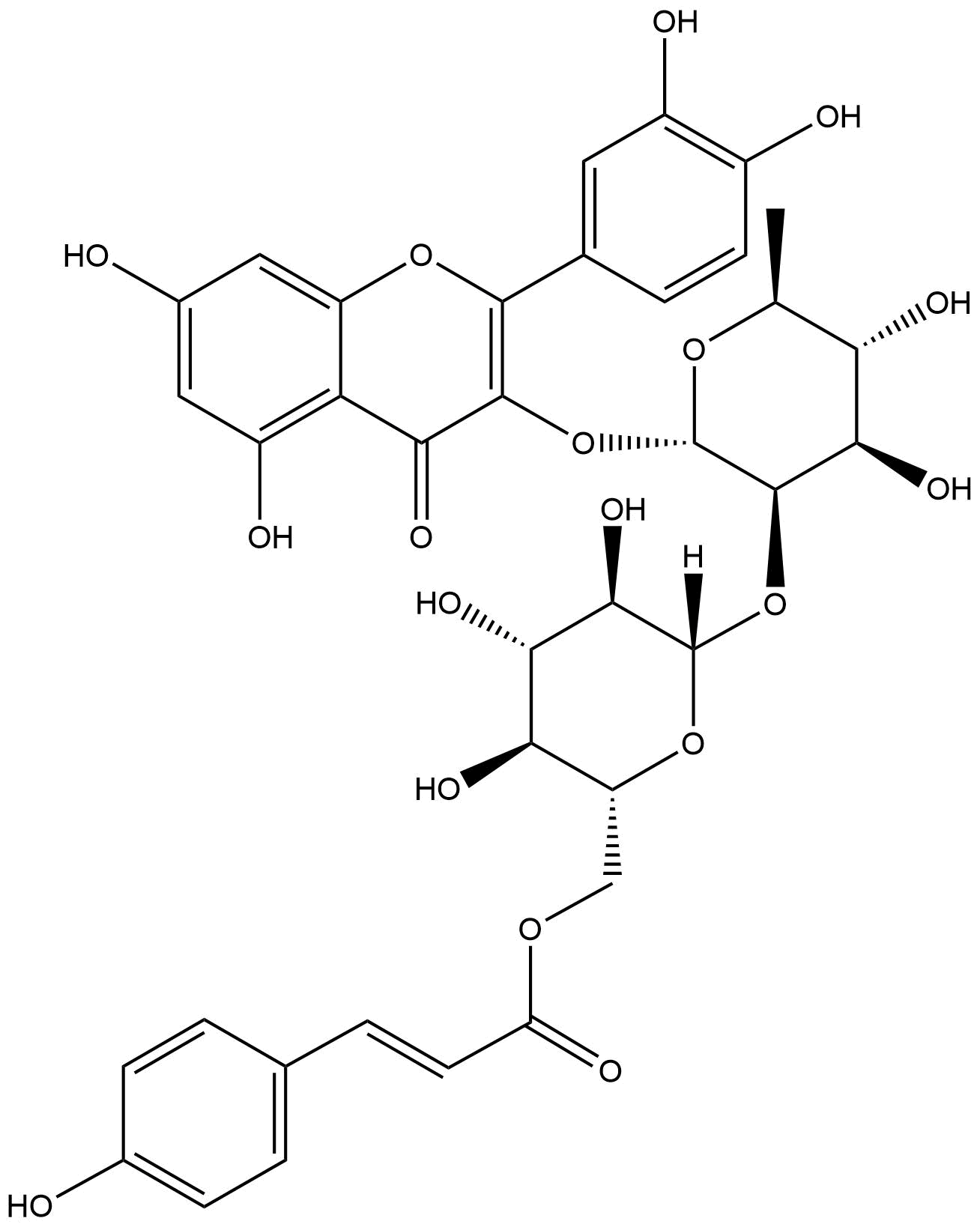
Quercetin-3-O-p-coumaroyl rhamnoside glucoside (Quercetin 3-O - β - D - (6 '' - p-coumaryl) glucopyranosyl (1-2) - α - L-rhamnopyranoside, hereinafter referred to as "Quercetin-3-O-p-coumaroyl glucoside") is an important natural flavonoid compound and belongs to the O-glycoside derivative of quercetin. This compound has become a hot topic in natural product pharmacology research due to its unique structural characteristics and significant biological activity, especially its potential for antioxidant and metabolic regulation functions. Quercetin-3-O-p-coumaroyl glucoside is mainly isolated from Ginkgo biloba leaves. Ginkgo biloba, as a traditional Chinese medicinal herb, has a long history of application in the prevention and treatment of cardiovascular and cerebrovascular diseases. In recent years, with the in-depth study of its active ingredients, this compound has shown potential therapeutic value for metabolic diseases such as atherosclerosis.
This article aims to systematically review the chemical structure and physicochemical properties, plant sources and extraction methods, pharmacological activity and mechanism of action, pharmacological evaluation and pharmacokinetic characteristics of Quercetin-3-O-p-coumaroyl glucoside, and explore its clinical application prospects, providing reference for basic research and new drug development in related fields.
Chemical structure and physicochemical properties
The molecular formula of Quercetin-3-O-p-coumaroyl glucoside is C37H32O18, with a molecular weight of 756.6660 Da. Its structure is based on the quercetin flavonoid nucleus, with a disaccharide chain consisting of α - L-rhamnose and β - D-glucose replacing the hydroxyl group at position 3. The hydroxyl group at position 6 '' of glucose is further esterified to p-coumaroyl. This type of structure endows the molecule with high polarity and complex spatial configuration.
In terms of physical and chemical properties, the LogP value of this compound is 1.1113, indicating that it has moderate lipophilicity, which is beneficial for cell membrane penetration but not prone to excessive lipophilicity. The extremely high topological polar surface area (TPSA) is 295.73 Å ², indicating its strong polarity and hydrogen bond donor acceptor ability, which affects its bioavailability and blood-brain barrier permeability. The water solubility is 0.6477, indicating that it has a certain solubility in the aqueous phase, which is beneficial for oral absorption. The blood-brain barrier has a lower ability to penetrate, reducing the risk of central nervous system toxicity. The hERG channel inhibition experiment showed a negative result, indicating a low risk of cardiac toxicity. The Ames test was 0, indicating no mutagenicity.
The structural characteristics of this compound combine the polyphenol skeleton of quercetin, the lipophilic modification of cinnamic acid esters, and the hydrophilic modification of disaccharides, forming unique molecular properties that affect its pharmacological activity and metabolic stability.
Plant sources and extraction methods
Quercetin-3-O-p-coumaroyl glucoside is mainly isolated from Ginkgo biloba L. leaves. Ginkgo biloba leaves are rich in flavonoids and terpenoids, and are important raw materials for traditional Chinese medicine and health products.
Plant-based
The flavonoids in Ginkgo biloba leaves are complex, and quercetin and its glycoside derivatives are one of its main active ingredients. Quercetin-3-O-p-coumaroyl glucoside, as a specific glycoside, contains p-coumaroyl ester groups, enhancing its antioxidant and biological activity. Although its content is not the highest in Ginkgo biloba leaves, it has important pharmacological significance.
extraction method
The extraction of quercetin 3-O-coumarin glucoside usually involves the following steps:
- Raw material pretreatment Collect fresh or dried ginkgo leaves and grind them into fine powder to increase surface area.
- Solvent extraction Ethanol water mixed solvent (such as 70% ethanol) is used for reflux or ultrasound assisted extraction, and the extraction time is generally 1-3 hours.
- Crude extract concentration After filtration, the extract is concentrated under reduced pressure to a semi dry state.
- Separation and purification Separation is carried out using multi-stage column chromatography techniques such as silica gel column, C18 reverse phase column, and Sephadex LH-20 column, combined with thin-layer chromatography (TLC) and high performance liquid chromatography (HPLC) for purity detection.
- Structural Identification Confirm the structure of the compound using techniques such as mass spectrometry (MS) and nuclear magnetic resonance (NMR).
In recent years, supercritical CO2 extraction and membrane separation technologies have also been attempted to improve extraction efficiency and purity.
Pharmacological activity research
Quercetin-3-O-p-coumaroyl glucoside, as an important flavonoid component in Ginkgo biloba leaves, exhibits various pharmacological activities, especially in antioxidant, anti-inflammatory, cardiovascular and cerebrovascular protection, and metabolic regulation.
antioxidant activity
This compound, through its polyphenolic hydroxyl structure, can effectively scavenge free radicals, inhibit lipid peroxidation, and protect cells from oxidative stress damage. In vitro DPPH and ABTS free radical scavenging experiments have shown its excellent antioxidant capacity. Its ability to reduce intracellular ROS levels further confirms its antioxidant potential.
anti-inflammatory effect
Quercetin-3-O-p-coumaroyl glucoside can inhibit the production of inflammatory mediators, such as tumor necrosis factor - α (TNF - α), interleukin-6 (IL-6), etc., and alleviate inflammatory reactions. It exerts anti-inflammatory effects by regulating the NF - κ B signaling pathway, inhibiting the expression of inflammatory genes.
Cardiovascular and cerebrovascular protection
Studies on atherosclerosis have shown that this compound can regulate lipid metabolism, inhibit vascular endothelial cell injury induced by oxidized low density lipoprotein (ox LDL), and slow down the process of atherosclerosis. It activates the AMPK signaling pathway, promotes cholesterol efflux, enhances ABCA1 expression, and reduces lipid deposition.
metabolic regulation
Quercetin-3-O - has a regulatory effect on energy metabolism of coumaroyl glucoside, which can activate AMPK, promote fatty acid oxidation, improve insulin sensitivity, and contribute to the intervention of metabolic syndrome.
Other activities
Some studies have also found that it has potential activities such as anti-tumor and neuroprotective effects, but the relevant mechanisms still need further clarification.
Mechanism of action and molecular targets
The pharmacological effects of Quercetin-3-O - on coumarin glucoside are mainly achieved through multi-target and multi pathway synergistic regulation, involving key biological processes such as oxidative stress, inflammatory response, lipid metabolism, and cell apoptosis.
Main molecular targets
-
LOX-1(Lectin-like oxidized LDL receptor-1)As a receptor for oxidized low density lipoprotein, LOX-1 mediates vascular endothelial damage in atherosclerosis. Quercetin-3-O - can downregulate LOX-1 expression and reduce ox LDL mediated cytotoxicity towards coumaroyl glucoside.
-
AMPK(5' AMP-activated protein kinase)Key energy sensing enzymes that regulate lipid and glucose metabolism. This compound activates AMPK, promotes fatty acid oxidation and cholesterol efflux, and improves metabolic function.
-
EHMT2(Euchromatic histone-lysine N-methyltransferase 2)Histone methyltransferase, which participates in gene expression regulation, regulates the expression of genes related to inflammation and metabolism.
-
MCL1 (Myoid cell leukoma-1) and BCL2 (B-cell lymphoma 2)Anti apoptotic proteins regulate cell survival. Quercetin-3-O-coumaroyl glucoside protects vascular cells from apoptosis by regulating its expression.
-
RECQ1(RecQ helicase-like 1)Proteins related to DNA repair maintain genomic stability.
-
ABCA1(ATP-binding cassette transporter A1)To promote cholesterol efflux and prevent lipid accumulation, the key is to prevent atherosclerosis.
mechanism of action
Quercetin-3-O - exerts comprehensive antioxidant, anti-inflammatory, anti apoptotic, and metabolic regulatory effects on coumaroyl glucoside through multi-target regulation. Its antioxidant effect is mainly achieved by clearing free radicals and inhibiting LOX-1 mediated oxidative stress; The anti-inflammatory effect is achieved by inhibiting the NF - κ B signaling pathway and regulating the expression of inflammatory genes through EHMT2; Metabolic regulation depends on AMPK activation, promotes lipid metabolism and cholesterol efflux, and reduces atherosclerotic plaque formation. In addition, by regulating the expression of MCL1 and BCL2, it protects vascular endothelial cells from apoptotic damage.
Evaluation of drug properties and pharmacokinetics
The pharmacological parameters of Quercetin-3-O-p-coumaroyl glucoside show that it has certain potential for drug development.
Drugability assessment
- Molecular weight (756.6660 Da)Larger, may affect oral bioavailability, but glycoside structure contributes to water solubility and stability.
- LogP(1.1113)Moderate, conducive to cell membrane penetration.
- TPSA(295.73 Ų)High, indicating strong polarity, may limit oral absorption and blood-brain barrier penetration.
- Water solubility (0.6477)Good, beneficial for formulation development.
- Blood-brain barrier permeability Low, reducing the risk of central nervous system side effects.
- HERG inhibition None, low risk of cardiac toxicity.
- Ames test No mutagenicity, high safety.
Pharmacokinetic characteristics
At present, there are relatively few systematic pharmacokinetic studies on quercetin 3-O-coumarin glucoside. Based on its structure, it is speculated that the compound may undergo intestinal enzymatic hydrolysis of glycosidic bonds after oral administration, releasing quercetin and its derivatives, which are then further metabolized by liver metabolic enzymes. Its high polarity may lead to lower oral bioavailability, but the glycoside structure helps with stability and sustained release. Kidney and bile excretion may be the main clearance pathways.
In the future, it is necessary to conduct systematic pharmacokinetic studies in vivo, including absorption, distribution, metabolism, excretion (ADME), and analysis of biotransformation products, to guide clinical applications and dosage form design.
Clinical application prospects and prospects
Quercetin -3-O - has significant antioxidant and cardiovascular and cerebrovascular protective effects on coumaryl glucoside, especially in the prevention and treatment of atherosclerosis. Its multi-target regulatory mechanism provides a theoretical basis for multidimensional treatment of complex diseases.
Clinical application prospects
-
Atherosclerosis and cardiovascular disease By regulating lipid metabolism, inhibiting inflammation and oxidative stress, quercetin-3-O-p-coumaroylglucoside is expected to become a natural drug or auxiliary means to prevent atherosclerosis and related cardiovascular diseases.
-
Metabolic syndrome Activation of AMPK pathway and improvement of lipid and glucose metabolism may have an auxiliary therapeutic effect on metabolic diseases such as obesity and diabetes.
-
Neurodegenerative diseases Although the blood-brain barrier has a low permeability, it may indirectly protect the nervous system through peripheral anti-inflammatory and antioxidant effects.
-
Anti inflammatory and anti-tumor effects In the future, its potential in the treatment of chronic inflammation and tumors can be explored.
Research and Development Prospects
- Formulation innovation Development of new formulations such as nanocarriers and liposomes to improve oral bioavailability.
- Pharmacokinetic optimization Systematically study metabolic pathways in the body to reduce first pass effects.
- safety evaluation Long term toxicology and preclinical safety studies.
- Clinical trial design Based on existing pharmacological evidence, conduct early clinical trials to validate efficacy and safety.
- Structural modification Optimize pharmacokinetics and targeting through chemical modification.
Conclusion
Quercetin-3-O-p-coumaroyl glucoside, as an important flavonoid compound in Ginkgo biloba leaves, exhibits broad medicinal value due to its unique chemical structure and multiple pharmacological activities. Its mechanism of action in antioxidation, anti-inflammatory, regulation of lipid metabolism and protection of cardiovascular system has become increasingly clear, and it has become a potential candidate drug for the treatment of atherosclerosis and metabolic diseases. Although there are still challenges in pharmacokinetics and clinical applications, with the development of extraction and purification technologies and drug delivery systems, Quercetin-3-O-p-coumaroyl glucoside is expected to become an important breakthrough in the development of natural product drugs. In the future, in-depth mechanism research, systematic pharmacokinetic analysis, and clinical validation will lay a solid foundation for its translational application and promote its widespread use in modern medicine.