


Product name: Salvianolic acid C
Synonym name:
Catalogue No.: BP1249
Cas No.: 115841-09-3
Formula: C26H20O10
Mol Weight: 492.436
Botanical Source: Salviae Miltiorrhizae Radix et Rhizoma
Physical Description:
Type of Compound: Stibene glucosides
Purity: 95%~99%
Analysis Method: HPLC-DAD or/and HPLC-ELSD
Identification Method: Mass, NMR
Packing: Brown vial or HDPE plastic bottle
Storage: Store in a well closed container, protected from air and light. Put into refrigerate or freeze for long term storage.
Whenever possible, you should prepare and use solutions on the same day. However, if you need to make up stock solutions in advance, we recommend that you store the solution as aliquots in tightly sealed vials at -20℃. Generally, these will be useable for up to two weeks.
The product could be supplied from milligrams to grams
Inquire for bulk scale.
Description:
Salvianolic acid C has antioxidant effect, it exhibits potent XOD inhibitory activity with an IC(50) of 9.07 μM. Salvianolic acid C enhances the inhibitory effects on sEH might be efficient ways to improve its cardiovascular protective and anti-inflammatory effects.
References:
Phytomedicine. 2015 Apr 15;22(4):444-51.In vitro inhibitory effects of ethanol extract of Danshen (Salvia miltiorrhiza) and its components on the catalytic activity of soluble epoxide hydrolase.
Soluble epoxide hydrolase (sEH) has been demonstrated to be a key enzyme involved in the pathologic development of several cardiovascular diseases and inflammation, and inhibition of sEH is therefore very helpful or crucial for the treatment of ischemia-reperfusion injury, cardiac hypertrophy, hypertension and inflammation. Danshen, the dried root of Salvia miltiorrhiza (Fam. Labiatae), has been used for the treatment of cardiovascular and cerebrovascular diseases in China and other countries for hundreds of years. Recent studies indicated that Danshen and its preparations also have potential for the management of inflammation. However, little information is available about the possibility of Danshen and its components on sEH inhibition.
METHODS AND RESULTS:
Danshen extracts and its constituents were tested for sEH inhibition using its physiological substrate, 8,9-EET, based on a LC-MS/MS assay in this study. Among the tested 15 compounds, tanshinone IIA and cryptotanshinone were found to be the potent (Ki = 0.87 μM) and medium (Ki = 6.7 μM) mixed-type inhibitors of sEH, respectively. Salvianolic acid C (Ki = 8.6 μM) was proved to be a moderate noncompetitive sEH inhibitor. In consistent with the inhibition results of the pure compounds, the 75% ethanol extract of Danshen (EE, IC50 = 86.5 μg/ml) which contained more tanshinone IIA and cryptotanshinone exhibited more potent inhibition on sEH than the water extract (WE, IC50 > 200 μg/ml) or 1 M NaHCO3 (BE, IC50 > 200 μg/ml) extract.
CONCLUSIONS:
These data indicated that using the ethanol fraction of Danshen and increasing the amounts of tanshinone IIA, cryptotanshinone and Salvianolic acid C, especially the contents of tanshinone IIA in Danshen extract or preparations to enhance the inhibitory effects on sEH might be efficient ways to improve its cardiovascular protective and anti-inflammatory effects, and that herbal medicines could be an untapped reservoir for sEH-inhibition agents and developing sEH inhibitors from the cardiovascular protective and anti-inflammatory herbs is a promising approach.
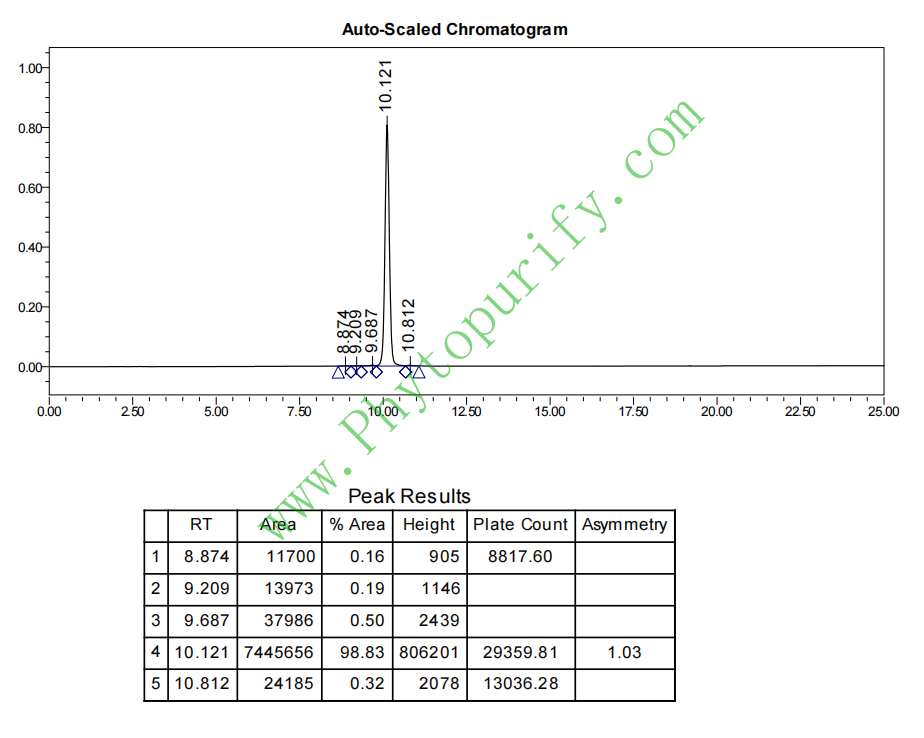
HPLC of Salvianolic acid C
Storage conditions:Short-term storage at 2~8℃, long-term storage at -20 ~ -80℃
177.8900
3.3747
.6420
.0519
1.5003
.5700
Low
93.7569
3.3603
No
No
No
No
Yes
No
0.6
Yes
Yes
Yes
Yes
Salvianolic acid C (Sal C) is a traditional Chinese medicine called Danshen(Salvia miltiorrhiza An important water-soluble phenolic acid compound isolated from Bunge, with a CAS number of 115841-09-3. As one of the key active ingredients in Danshen, which plays a role in promoting blood circulation, removing blood stasis, and relieving pain, salvianolic acid C has long been a focus of pharmacological researchers. Early research focused on its antioxidant, anti-inflammatory, and protective effects on the cardiovascular system. In recent years, with the increase of the incidence rate of neurodegenerative diseases, the potential of salvianolic acid C in the field of neuroprotection has been gradually revealed, and it has become a hotspot of natural product research. Its unique pharmacological activity, especially its multi-target intervention ability in pathological processes related to diseases such as Alzheimer's disease (AD) and Parkinson's disease (PD), has shown broad development prospects. In addition, salvianolic acid C, as a non competitive inhibitor of CYP2C8 and a mixed inhibitor of CYP2J2 in the cytochrome P450 enzyme (CYP) family, suggests that it needs attention in drug drug interactions. This article aims to systematically review the chemical structure, plant origin, pharmacological activity, molecular mechanism of action, pharmacological characteristics, and clinical application prospects of salvianolic acid C, in order to provide comprehensive scientific references for the in-depth research and development of this compound.
Danshensu acid C is a polyphenolic compound composed of three molecules of caffeic acid connected by ester and carbon carbon bonds. Its chemical name is [R - (E, E)] -3- [2- [1- [1- [(3,4-dihydroxyphenyl) -1-oxo-2-propenyl] oxy] -3- (3,4-dihydroxyphenyl) -1-oxo-2-propenyl] oxy] -4-hydroxyphenyl] -2-propenoic acid. Its molecular formula is C26H20O10 and its molecular weight is 492.4360.
From the analysis of physical and chemical properties, the lipid water partition coefficient (LogP) of salvianolic acid C is 3.3747, indicating that it has a certain lipophilicity, but not highly lipophilic. Its topological polar surface area (TPSA) is as high as 177.89 Å ², mainly attributed to the presence of multiple polar groups such as hydroxyl and carboxyl groups in the molecule. A higher TPSA is usually unfavorable for transmembrane passive diffusion. Consistent with this, its water solubility data is 0.0519 mg/mL, belonging to the category of slight solubility. These physicochemical parameters collectively determine the absorption and distribution characteristics of salvianolic acid C in living organisms. Its relatively large molecular weight and high polar surface area are the main factors leading to the prediction of "low" blood-brain barrier (BBB) permeability, which poses a challenge to its development strategy for treating central nervous system diseases. In the preliminary safety screening, salvianolic acid C did not show significant hERG potassium channel inhibitory activity (hERG inhibition: No), indicating a low risk of inducing QT interval prolongation in the heart. The Ames test result is 0.6, indicating that under the conditions of this experiment, its mutagenicity is negative and has a good genetic toxicity safety window.
Danshensu acid C mainly comes from Salvia miltiorrhiza, a plant of the Salvia genus in the Lamiaceae family(Salvia miltiorrhiza)Dry roots and rhizomes. Danshen, as a traditional Chinese medicine, has a history of application for thousands of years. Danshen phenolic acid C, along with Danshen phenolic acids A, B, and others, together constitute the water-soluble phenolic acid composition group in Danshen. It is one of the important material bases for modern Chinese medicine preparations such as Danshen injection and Danshen polyphenolic acid salts.
The extraction of salvianolic acid C from Danshen usually follows the general extraction process for phenolic acid components. Traditional methods include water extraction or ethanol reflux extraction with different concentrations (such as 30% -70%) or percolation extraction. In order to improve extraction efficiency and selectivity, modern technology has been widely applied in its preparation process:
1. Ultrasound assisted extraction Using the cavitation effect of ultrasound to destroy plant cell walls, accelerate solvent penetration and component dissolution, can shorten extraction time and improve the yield of salvianolic acid C.
2. Microwave assisted extraction Microwave heating can rapidly heat up the interior of plants, causing cell rupture and rapid release of active ingredients, with the advantages of high efficiency and energy conservation.
3. Supercritical fluid extraction Supercritical CO ₂ is mainly used, but due to its limited ability to dissolve polar salvianolic acid C, it is often necessary to add entrainers (such as ethanol) to improve extraction efficiency. This method has mild conditions and minimal solvent residue.
4. Enzymatic assisted extraction Using cellulases, pectinases, and other enzymes to disrupt the structure of plant cell walls can help release intracellular components and improve extraction efficiency.
After concentration, the extract needs to be further separated and purified to obtain high-purity salvianolic acid C. Conventional purification methods include column chromatography with macroporous adsorption resins (such as AB-8, D101, HPD series), which utilize their adsorption desorption characteristics to enrich phenolic acid components. Then, fine separation was carried out by combining silica gel column chromatography, Sephadex LH-20 column chromatography and high-performance preparative liquid chromatography (HPLC). In recent years, high-speed countercurrent chromatography (HSCCC) has shown great potential in the preparation and separation of salvianolic acid C as a solid-liquid distribution chromatography technique without solid carriers, due to its high recovery rate and large preparation capacity.
Danshensu acid C has a wide range of pharmacological activities, especially in neuroprotection, cardiovascular protection, anti-inflammatory and antioxidant research.
1. Neuroprotective effect
This is currently the most concerned pharmacological activity field of salvianolic acid C. Numerous in vitro and in vivo studies have shown that salvianolic acid C has significant protective effects on various neural injury models.
* Combat oxidative stress Danshensu acid C can directly scavenge oxygen free radicals (ROS) and upregulate the endogenous antioxidant system of cells, such as activating the nuclear factor E2 related factor 2 (NRF2) pathway, enhancing the expression of antioxidant enzymes such as heme oxygenase-1 (HO-1), and alleviating oxidative stress damage to neurons.
* Inhibit neuroinflammation By inhibiting the excessive activation of microglia and downregulating the production of pro-inflammatory factors such as tumor necrosis factor - α (TNF - α), interleukin-1 β (IL-1 β), and inducible nitric oxide synthase (iNOS), neuroinflammation can be alleviated.
* antiapoptosis Danshensu acid C can regulate the balance of B-cell lymphoma 2 (BCL2) family proteins, inhibit the activation of caspase-3 (CASP3), and block the neuronal apoptosis pathway.
* Improving synaptic plasticity and memory function In AD model animals, salvianolic acid C has been shown to improve learning and memory impairment, and its mechanism may be related to protecting synaptic structure and increasing the expression of neurotrophic factors.
2. Cardiovascular protective effect
* Protect vascular endothelium Reduce the damage of oxidized low-density lipoprotein (ox LDL) or high glucose to endothelial cells, promote the release of nitric oxide (NO), and improve endothelial dependent diastolic function.
* Anti atherosclerosis Inhibit abnormal proliferation of vascular smooth muscle cells, reduce inflammatory cell infiltration and lipid deposition.
* Anti myocardial ischemia/reperfusion injury Reduce myocardial infarction area and improve heart function through antioxidant, anti apoptotic, and anti-inflammatory mechanisms.
3. Other activities
Danshensu acid C also exhibits activities such as anti liver fibrosis, anti-tumor (such as inducing tumor cell apoptosis, inhibiting invasion and metastasis), and improving insulin resistance, demonstrating its multifaceted pharmacological value.
The neuroprotective effect of salvianolic acid C is not achieved through a single target, but based on its polyphenol structural characteristics, it regulates multiple key targets and signaling pathways closely related to neurodegenerative diseases in a network manner.
1. Core targets and pathways
* APP/A β and BACE1 pathway Danshensu acid C can downregulate the expression and activity of β - site amyloid precursor protein lyase 1 (BACE1), thereby reducing the breakdown of amyloid precursor protein (APP) through the β - secretase pathway and ultimately reducing the production of β - amyloid protein (A β). This is one of the core steps in intervening in AD pathology.
* MAPT (Tau protein) phosphorylation regulation By regulating the activity of kinases such as glycogen synthase kinase-3 β (GSK-3 β) and extracellular signal regulated kinase (MAPK1/ERK), salvianolic acid C can inhibit the excessive phosphorylation of microtubule associated protein Tau and reduce the formation of neurofibrillary tangles.
* NRF2/ARE antioxidant pathway Danshensu acid C is an effective activator of NRF2. It can promote the translocation of NRF2 to the nucleus, bind to antioxidant response elements (ARE), initiate the transcription of phase II detoxifying enzymes such as HO-1 and quinone oxidoreductase 1 (NQO1), and antioxidant proteins, constructing a powerful cellular defense system.
* SIRT1 deacetylase activation Danshensu acid C can upregulate the expression and activity of silencing information regulatory factor 1 (SIRT1). SIRT1 regulates downstream factors such as PGC-1 α, FOXO, and p53 through deacetylation, playing a central role in mitochondrial biosynthesis, antioxidant stress, and anti apoptosis.
* Regulation of apoptotic pathway By upregulating the expression of anti apoptotic protein BCL2, inhibiting the activation of pro apoptotic protein BAX, and blocking the cascade reaction of CASP3, salvianolic acid C can effectively inhibit neuronal apoptosis.
* Cholinergic system and SNCA Danshensu acid C has a certain inhibitory effect on acetylcholinesterase (ACHE), which may help improve cholinergic neurotransmission defects in AD. In addition, it can also inhibit abnormal aggregation of alpha synuclein (SNCA), which is closely related to the pathology of PD.
2. CYP enzyme inhibition characteristics
Pharmacological studies have also revealed the effect of salvianolic acid C on drug metabolizing enzymes. It is a non competitive inhibitor of human cytochrome P450 2C8 (CYP2C8) (Ki=4.82 μ M) and a moderate strength mixed inhibitor of CYP2J2 (Ki=5.75 μ M). CYP2C8 is involved in the metabolism of various drugs such as paclitaxel, repaglinide, and amodiaquine, while CYP2J2 mainly metabolizes arachidonic acid and plays a role in endothelial function. This characteristic suggests that when salvianolic acid C is used in combination with drugs metabolized by CYP2C8 or CYP2J2, there may be a risk of drug drug interactions that need to be monitored in clinical applications.
Although salvianolic acid C has significant pharmacological activity, there are some challenges in its drug likeness, which directly affects its in vivo efficacy and future formulation development.
1. Absorption, distribution, metabolism, and excretion (ADME) characteristics
* absorb The high molecular weight and strong polarity of salvianolic acid C result in generally low oral bioavailability. May be unstable in the gastrointestinal tract and have limited transmembrane absorption capacity.
* distribution As mentioned earlier, its blood-brain barrier permeability is predicted to be "low", which severely limits its effectiveness as a neuroprotective drug directly targeting the central nervous system. How to improve its brain delivery efficiency is a key bottleneck in research and development.
* Metabolism Danshensu acid C itself is an inhibitor of CYP2C8 and CYP2J2, but its metabolic pathway in the body is not fully understood. Phenolic acid compounds are often prone to glucuronidation and sulfation binding reactions, and may also be metabolized by gut microbiota. Its metabolites and their activities require further research.
* excretion It is speculated that it is mainly excreted through the kidneys or bile in the form of prototypes or conjugates.
2. Pharmacokinetic studies
Existing animal pharmacokinetic studies (mostly conducted in rats) have shown that after intravenous administration of salvianolic acid C, its distribution in the body is rapid, but its elimination is also fast and its half-life is short. After oral administration, the blood drug concentration is low, the peak time is late, and the absolute bioavailability is not ideal. These data are related to their poor membrane permeability and possible first pass effects.
3. Optimization strategy for drug properties
To overcome the above shortcomings, researchers are exploring various strategies:
* Structural modification By preparing prodrugs (such as esterification modification to improve lipid solubility and membrane permeability, hydrolyzed into raw materials in vivo), or carrying out reasonable structural modifications, the ADME properties can be improved while retaining activity.
* New drug delivery system The utilization of nanotechnology is a highly promising direction. For example, preparing salvianolic acid C into liposomes, polymer nanoparticles, solid lipid nanoparticles, or nanoemulsions can significantly improve its stability, prolong circulation time, and enhance target site accumulation, especially through surface modification (such as connecting brain targeting ligands T7, Angiopep-2, etc.), which can actively promote its crossing of the blood-brain barrier.
* combination therapy Combining with blood-brain barrier opening agents (such as mannitol) or forming a compound with drugs that complement other mechanisms of action may produce synergistic effects.
The clinical application prospects of salvianolic acid C mainly revolve around its core pharmacological activity - neuroprotection, and extend to other related fields.
1. Main application directions
* Prevention and treatment of neurodegenerative diseases As a potential treatment or adjuvant therapy drug for diseases such as AD, PD, and vascular dementia. Its multi-target mechanism of action meets the therapeutic needs of such complex diseases. It can be developed as an oral formulation (to address bioavailability issues) or an injection (for acute or severe conditions).
* Cardiovascular and cerebrovascular diseases: It is used to treat ischemic stroke (cerebral infarction), myocardial ischemia, atherosclerosis, etc. Its comprehensive effects of antioxidant, anti-inflammatory, and endothelial protection have advantages. The existing Danshen injection already contains Danshensu acid C, but the precise therapeutic value of its monomer components needs to be explored.
* Other fields It also has potential application value in chronic diseases such as diabetes complications (such as diabetes nephropathy, neuropathy), liver fibrosis, etc.
2. Challenges faced
* Drug bottleneck Low oral bioavailability and low blood-brain barrier permeability are the biggest obstacles to translating its activity into clinical efficacy.
* Depth of mechanism of action Although multiple targets are known, the precise molecular interaction patterns of which ones are directly acting targets still need to be further elucidated at the level of chemical biology.
* Lack of clinical evidence At present, the vast majority of research is still in the preclinical stage, lacking rigorously designed human clinical trial data to verify its safety and effectiveness.
* Drug interaction risk The CYP enzyme inhibitory properties require a systematic evaluation of its potential for interaction with other co administered drugs in clinical development.
3. Future prospects
Future research should focus on:
1. Targeted precision drug design Combining computational chemistry and structural biology, targeted structural optimization of salvianolic acid C is carried out to enhance its activity and improve its pharmacokinetic properties.
2. Application of advanced delivery technology Vigorously developing brain targeted nano delivery systems is a breakthrough in realizing the central therapeutic value of salvianolic acid C.
3. In depth study of system mechanisms Using proteomics, metabolomics, and other technologies to comprehensively reveal its functional network and search for its original targets or receptors that exert neuroprotective effects.
4. Promote clinical translation After completing the preclinical safety evaluation (GLP toxicology) of the system, initiate clinical trials for specific indications (such as mild cognitive impairment, early AD) as soon as possible to obtain human data.
5. Explore combination therapy strategies Research on the combined use of salvianolic acid C and existing standard therapeutic drugs (such as donepezil, memantine, etc.) may result in synergistic effects, reducing their respective dosages and side effects.
Danshensu acid C, as a representative active phenolic acid in Danshen, has shown great potential in the treatment of neurodegenerative diseases and other fields due to its powerful antioxidant, anti-inflammatory, and multi-target neuroprotective activities. Its chemical structure is clear, its pharmacological effects are extensive, and its mechanism of action involves regulating A β production, Tau phosphorylation NRF2、SIRT1、 The apoptosis pathway and other key nodes reflect the characteristics of natural products with multi-component, multi-target, and multi pathway synergistic effects. However, its poor drug properties, especially low bioavailability and blood-brain barrier penetration ability, are the core challenges that constrain its translation into clinical drugs. Future research should focus on overcoming these bottlenecks through modern pharmaceutical and medicinal chemistry methods such as structural modification and novel drug delivery systems, and conduct in-depth preclinical and clinical studies to fully unleash the therapeutic value of this natural molecule. The research process of salvianolic acid C also provides insightful examples for the exploration and modern development of active monomer components from traditional Chinese medicine.
