


Product name: Cryptotanshinone
Synonym name:
Catalogue No.: BP0412
Cas No.: 35825-57-1
Formula: C19H20O3
Mol Weight: 296.366
Botanical Source: root of Salvia miltiorrhiza and from Rosmarinus officinalis (rosemary) and Meriandra benghalensis
Physical Description: Red powder
Type of Compound: Diterpenoids
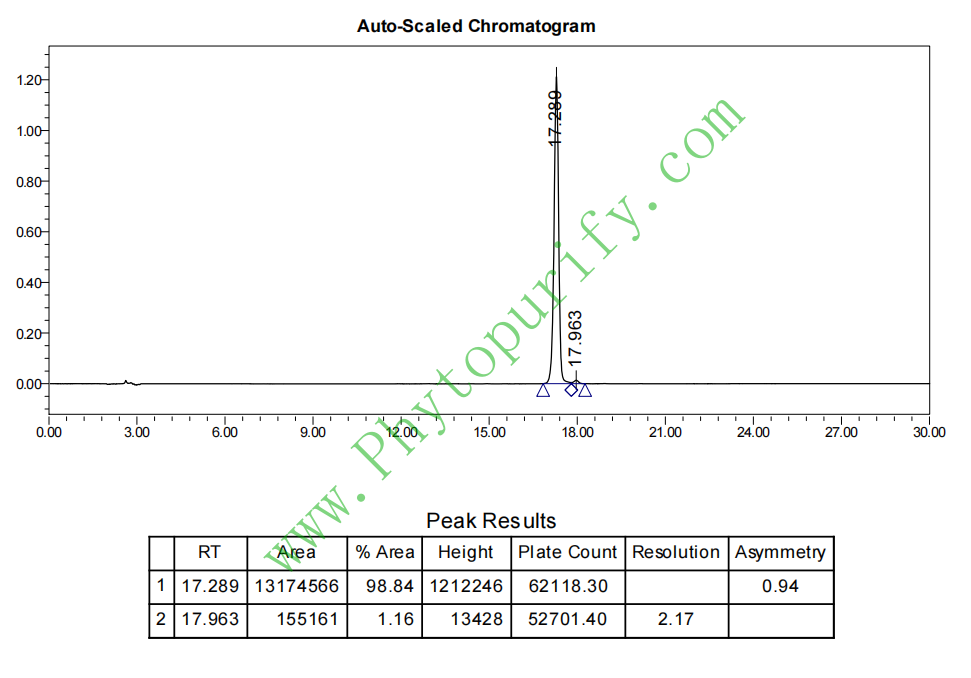
Purity: 95%~99%
Analysis Method: HPLC-DAD or/and HPLC-ELSD
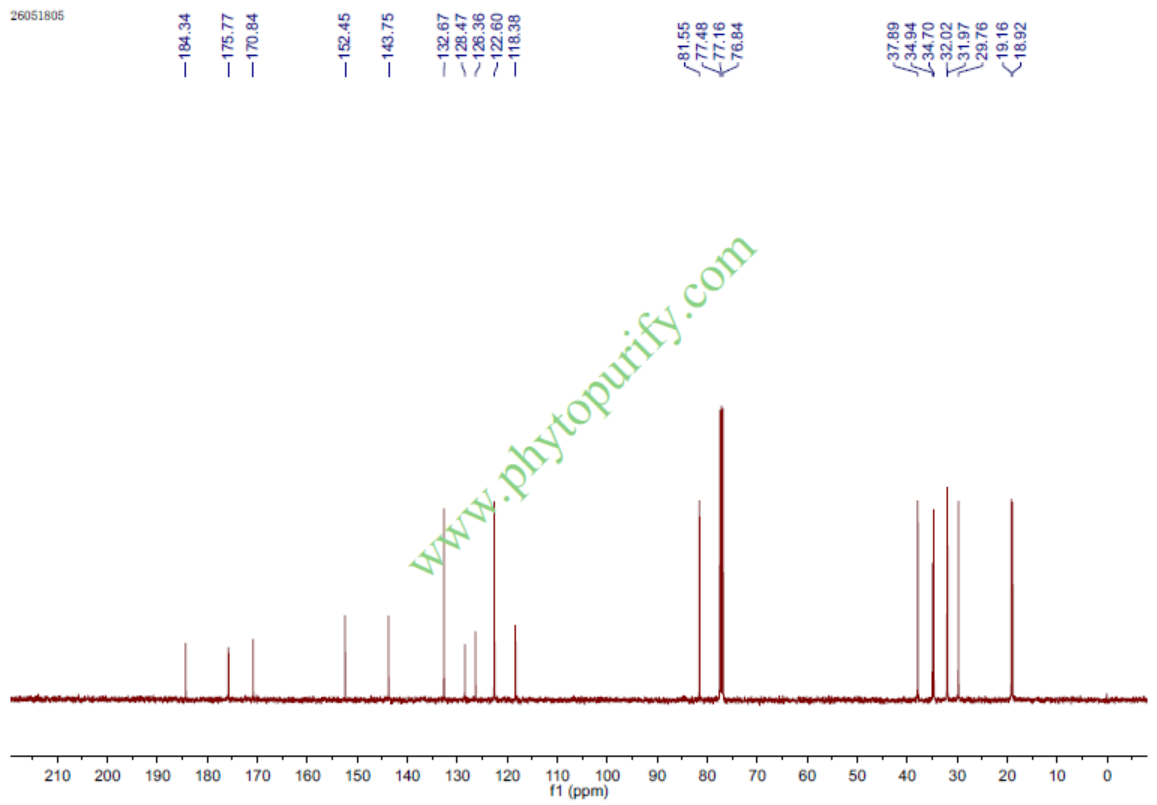
Identification Method: Mass, NMR
Packing: Brown vial or HDPE plastic bottle
Storage: Store in a well closed container, protected from air and light. Put into refrigerate or freeze for long term storage.
Whenever possible, you should prepare and use solutions on the same day. However, if you need to make up stock solutions in advance, we recommend that you store the solution as aliquots in tightly sealed vials at -20℃. Generally, these will be useable for up to two weeks.
The product could be supplied from milligrams to grams, up to kilograms
Inquire for bulk scale.
Descriptions:
Cryptotanshinone9(CT), the major tanshinone isolated from Salvia miltiorrhiza Bunge, can suppress Bcl-2 expression and augment Fas sensitivity in DU145 cells, and JNK and p38 MAPK act upstream of Bcl-2 expression in Fas-treated DU145 cells; CT significantly blocks activation of these kinases and sensitizes several tumor cells to a broad range of anti-cancer agents; suggests that CT has therapeutic potential in the treatment of human prostate cancer.[1]
Cryptotanshinone has an inhibitory effect on MMP-9 production and migration of human aortic smooth muscle cells treated with TNF-alpha in a dose-dependent manner, suggests that CT has anti-atherosclerosis and anti-neointimal formation activity.[2]
Cryptotanshinone enhances TNF-α-induced apoptosis in chronic myeloid leukemia KBM-5 cells, in comparison with the treatment with either drug alone, the treatment with cryptotanshinone further suppressed TNF-α-mediated expression of c-FLIP.[3]
Cryptotanshinone as an AR inhibitor to suppress androgen/AR-mediated cell growth and PSA expression by blocking AR dimerization and the AR-coregulator complex formation; and CT effectively inhibits CWR22Rv1 cell growth and expressions of AR target genes in the xenograft animal model; the previously un-described mechanisms of CT may explain how CT inhibits the growth of prostate cancer (PCa)cells and help us to establish new therapeutic concepts for the treatment of PCa.[4]
Cryptotanshinone induces ER stress-mediated apoptosis in HepG2 and MCF7 cells , also evidences sensitizing effects to a broad range of anti-cancer agents including Fas/Apo-1, TNF-α, cisplatin, etoposide or 5-FU through inducing ER stress, highlighting the therapeutic potential in the treatment of human hepatoma and breast cancer.[5]
Cryptotanshinone protects primary cortical neurons from -induced neurotoxicity through the activation of /pathway, such neuroprotective effects may be of interest in AD and other .[6]
Cryptotanshinone can inhibits cyclooxygenase-2 enzyme activity.[7]
References:
[1] Park I J, Kim M J, Park O J, et al. Cancer Lett, 2010, 298(1):88-98.
[2] Suh S J, Jin U H, Choi H J, et al. Biochem Pharmacol 2007, 72(12):1680-9.
[3] Kim J H, Jeong S J, Kwon T R, et al. Apoptosis, 2011, 16(7):696-707.
[4] Xu D, Lin T H, Li S, et al. Cancer Lett, 2012, 316(1):11-22.
[5] Park I J, Kim M J, Park O J, et al. Apoptosis An Int J on Programmed Cell Death, 2012, 17(3):248-57.
[6] Zhang F, Zheng W, Pi R, et al. Exp Brain Res, 2008, 193(1):109-18.
[7] Jin D Z, Yin L L, Ji X Q, et al. Eur J Pharmacol, 2006, 549(1–3):166-72.
[8] Xiao-Li L I, Xiao-Rong L I, Wang L J, et al. Chinese Trad Patent Med, 2008, 30(1):77-80.
HPLC of Cryptotanshinone
NMR of Cryptotanshinone
Storage conditions:Short-term storage at 2~8℃, long-term storage at -20 ~ -80℃
43.3700
4.3500
4.3500
.0025
5.4974
24.6905
High
90.3714
3.5630
No
No
No
No
Yes
Yes
0.0
No
No
No
Yes
Cryptotanshinone (CTS), CAS number 35825-57-1, is derived from the traditional Chinese medicine Danshen(Salvia miltiorrhiza Bunge is a lipid soluble diterpenoid quinone compound isolated from the roots. Danshen, also known as "red root" or "blood ginseng", is widely used in the clinical treatment of cardiovascular diseases, inflammation, and tumors in traditional Chinese medicine. It is known as the saying "one taste of Danshen has the same function as the four substances". With the development of modern separation and identification techniques, the active ingredients in Danshen, especially tanshinone compounds, have become a hot topic in pharmacological research. As one of the important active ingredients, salvianolic acid has attracted much attention due to its significant anti-tumor activity. Research has shown that salvianolic acid can exert a wide range of pharmacological effects by regulating multiple signaling pathways, particularly by inhibiting signal transduction and transcription activator 3 (STAT3) as the core (IC50 of 4.6 μ M). This article aims to systematically review the chemical structure, plant origin, pharmacological activity, mechanism of action, pharmacological evaluation, and clinical application prospects of salvianolic acid, in order to provide comprehensive scientific references for the in-depth research and drug development of this natural product.
The chemical formula of salvianolic acid is C19H20O3, with a molecular weight of 296.3660. Its basic structure belongs to the rosin type diterpenoid quinone, with a phenanthrene quinone mother nucleus and furan rings formed at positions C-15 and C-16. This unique conjugated quinone structure is the chemical basis for its dark red crystalline appearance and specific biological activity.
The key physicochemical property parameters are as follows:
- Lipid water partition coefficient (LogP)4.35 indicates that salvianolic acid has high lipophilicity and is easy to penetrate cell membranes, but this also leads to extremely low water solubility.
- Water solubility Only 0.0025 mg/mL, which is a poorly soluble compound, poses a challenge to its formulation development.
- Topological Polarity Surface Area (TPSA)43.37 Å ², relatively small, meets the requirements for membrane permeability in the drug class rules.
- Blood-brain barrier permeability Predicted as' high ', indicating its potential for treating central nervous system related diseases.
- Preliminary evaluation of safety The hERG inhibition test is negative, indicating a low risk of cardiac toxicity; The Ames test result is 0.0, indicating no mutagenicity.
These properties collectively determine the absorption, distribution, metabolism, and excretion (ADME) characteristics of salvianolic acid in organisms, which are important criteria for its pharmacological evaluation.
Hidden tanshinone mainly comes from the dried roots and rhizomes of Salvia miltiorrhiza, a plant in the family Lamiaceae. In addition to cryptotanshinone, Danshen also contains various tanshinones such as tanshinone IIA, tanshinone I, dihydrotanshinone I, and tanshinone, as well as water-soluble salvianolic acid components.
The extraction and separation methods are mainly based on their lipid solubility characteristics:
1. Traditional extraction Organic solvents such as ethanol, methanol, and ethyl acetate are commonly used for reflux extraction or ultrasound assisted extraction. After concentration, the crude extract is preliminarily separated based on its polarity difference with other components.
2. Modern Separation and Purification Often combined with multiple chromatographic techniques. Firstly, silica gel column chromatography is used for crude separation, followed by gradient elution using petroleum ether ethyl acetate or chloroform methanol systems. Subsequently, high-purity salvianolic acid monomers were refined using techniques such as preparative high-performance liquid chromatography (HPLC) and high-speed countercurrent chromatography (HSCCC). In recent years, green technologies such as supercritical CO2 extraction have also been applied in the extraction process due to their advantages of high efficiency, low temperature, and no solvent residue.
3. Biological synthesis and synthetic biology With the gradual analysis of the biosynthetic pathway of tanshinone, the use of synthetic biology strategies for heterologous production of tanshinone in microorganisms (such as yeast) has become a research frontier, providing a new pathway for sustainable and large-scale acquisition of this compound.
Hidden tanshinone exhibits a wide range of pharmacological activities, among which its anti-tumor effect is the most prominent and profound.
Antitumor activity Hidden tanshinone has significant inhibitory effects on proliferation, induction of apoptosis, cell cycle arrest, invasion and metastasis of various malignant tumor cells. It has shown good results in prostate cancer, breast cancer, lung cancer, liver cancer, colorectal cancer, gastric cancer, leukemia and other models. Its anti-tumor effect has the characteristics of multi-target and multi pathway.
Anti inflammatory and immune regulatory activity Cryptotanshinone can inhibit the excessive production of inflammatory factors (such as TNF - α, IL-6, IL-1 β) in macrophages induced by lipopolysaccharides (LPS), and its mechanism is related to the inhibition of key inflammatory signaling pathways such as NF - κ B and STAT3.
Cardiovascular protective activity Adhering to the traditional efficacy of Danshen, salvianolic acid also has a protective effect on the cardiovascular system, including antiplatelet aggregation, inhibition of abnormal proliferation of vascular smooth muscle cells, and improvement of myocardial ischemia-reperfusion injury.
Other activities The study also reported the potential value of salvianolic acid in antibacterial, anti fibrotic (such as liver fibrosis, pulmonary fibrosis), neuroprotective, and improving insulin resistance.
The anti-tumor mechanism of cryptotanshinone is complex, involving the regulation of multiple key targets and signaling pathways. Taking prostate cancer as an example, describe its network of action:
Core target: STAT3 signaling pathway STAT3 is the most famous molecular target of salvianolic acid. In various cancer cells, STAT3 is continuously phosphorylated (p-STAT3) and dimerized into the nucleus, activating downstream transcription of genes related to proliferation (such as Cyclin D1), survival (such as Bcl-2, Survivor), and angiogenesis (such as VEGF). Cryptotanshinone can directly bind to the SH2 domain of STAT3, effectively inhibiting its phosphorylation (IC50=4.6 μ M), thereby blocking its transcriptional activity. This is one of the core mechanisms by which it induces tumor cell apoptosis and inhibits growth.
Apoptosis related targets:
Kinase and phosphatase system:
Stress and drug resistance related targets:
Nuclear receptors and DNA metabolism:
In summary, salvianolic acid directly inhibits the core hub of STAT3 and synergistically acts on multiple key nodes such as BCL2, PTPN1, ABCB1, forming a multi-target intervention network, collectively leading to tumor cell cycle arrest, apoptosis, autophagy, and decreased invasion and metastasis ability.
Despite the significant pharmacological activity of salvianolic acid, its pharmacological development still faces challenges, mainly due to its poor solubility and complex metabolic characteristics.
Absorption and distribution The oral absorption of salvianolic acid is rapid but incomplete, and its high LogP value is beneficial for intestinal absorption. However, its low water solubility limits its dissolution rate and degree in gastrointestinal fluids, resulting in low absolute bioavailability. Due to its high lipophilicity, it can be widely distributed to various tissues after absorption, including predicting efficient penetration through the blood-brain barrier.
Metabolism and excretion Hidden tanshinone is mainly metabolized in the body through the liver cytochrome P450 enzyme system (especially CYP3A4 and CYP2C19), undergoing reactions such as hydroxylation, demethylation, and quinone reduction, producing various metabolites. It is mainly excreted through bile and feces, with less excretion by the kidneys. This extensive hepatic metabolism is the main reason for its relatively short half-life and limited systemic exposure.
Formulation strategy To improve its water solubility and bioavailability, researchers have developed various novel drug delivery systems, including:
safety Preclinical studies have shown that salvianolic acid has lower toxicity at effective doses. The negative inhibition of hERG indicates a low risk of QT interval prolongation in the heart, while the negative Ames test indicates a low risk of genetic toxicity, providing preliminary safety evidence for its further development. But comprehensive preclinical toxicology evaluation is still needed.
The transition of salvianolic acid from laboratory research to clinical application has broad prospects, but the road is tortuous.
Antitumor therapy As a novel inhibitor of key oncogenic pathways such as STAT3, salvianolic acid has the potential to be developed as a monotherapy or adjuvant therapy, especially for malignant tumors that are resistant to existing targeted drugs or have abnormal activation of STAT3. When used in combination with conventional chemotherapy drugs or radiotherapy, it may produce synergistic effects, reduce toxicity, and counteract resistance.
Other disease areas Its activity in anti-inflammatory, anti fibrotic, neuroprotective, and metabolic diseases also provides the possibility for expanding its indications, such as treating non-alcoholic steatohepatitis (NASH), Alzheimer's disease, pulmonary fibrosis, etc.
challenges faced:
Future direction:
As an important active diterpenoid quinone component in Salvia miltiorrhiza, salvianolic acid has become a star player in the field of natural product drug development due to its unique chemical structure and multi-target pharmacological mechanism, especially its strong anti-tumor potential in inhibiting the STAT3 signaling pathway. Despite the challenges in drug formulation, particularly in terms of solubility and metabolic stability, the rapid development of modern pharmaceutical, medicinal chemistry, and synthetic biology technologies provides powerful tools to overcome these obstacles. The hidden tanshinone discovered from the wisdom of traditional Chinese medicine is gradually revealing its deep therapeutic value through modern scientific research and reconstruction. In the future, through continuous interdisciplinary efforts, tanshinone is expected to be successfully transformed from a promising lead compound into a novel drug for clinical treatment, contributing to the cause of human health. The research process also fully reflects the inheritance, innovation, and integration from traditional medicine to modern precision medicine.
