


Synonym name: 10-Hydroxy-7-ethylcamptothecin; 7-Ethyl-10-hydroxy-20(S)-camptothecin
Catalogue No.: BP0099
Cas No.: 86639-52-3
Formula: C22H20N2O5
Mol Weight: 392.411
Botanical Source:
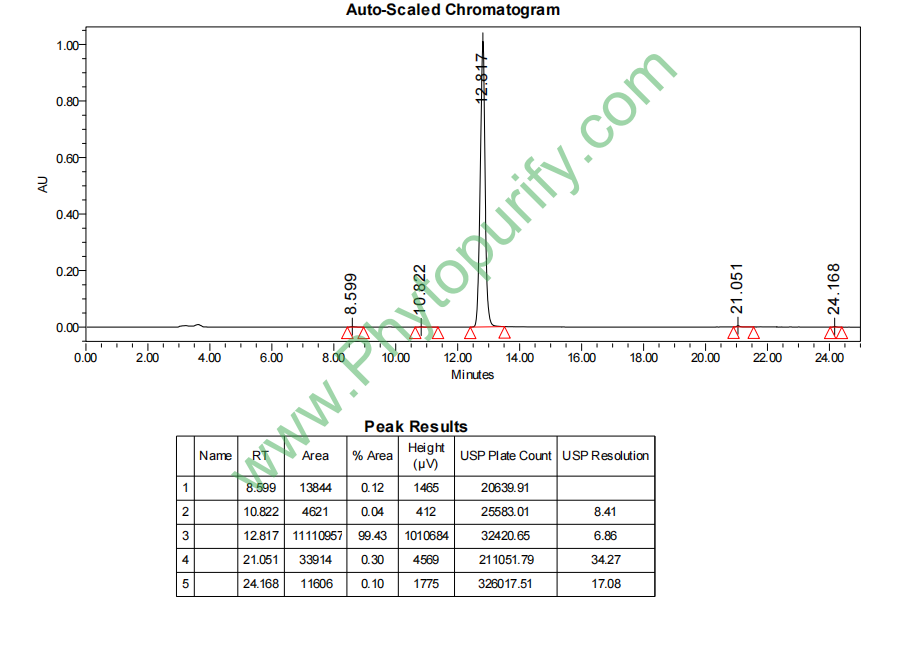
Purity: 95%~99%
Analysis Method: HPLC-DAD or/and HPLC-ELSD
Identification Method: Mass, NMR
Packing: Brown vial or HDPE plastic bottle
Can be supplied from milligrams to grams.
For Reference Standard and R&D, Not for Human Use Directly.
Inquire for bulk scale.
HPLC of 7-Ethyl-10-Hydroxycamptothecin
Storage conditions:Short-term storage at 2~8℃, long-term storage at -20 ~ -80℃
101.6500
2.0585
2.0534
.0627
1.3653
5.6358
Low
87.0258
3.4034
No
No
No
No
Yes
Yes
0.9
Yes
No
No
Yes
Malignant tumors and autoimmune diseases, such as rheumatoid arthritis, are major disease lineages that seriously threaten human health. Traditional chemotherapy drugs often come with serious toxic side effects while exerting therapeutic effects, prompting researchers to continuously explore more targeted and safe treatment strategies. Natural products and their derivatives have always been an important source of new drug discovery due to their structural diversity and rich biological activity. Camptothecin, a pyran indole quinoline alkaloid isolated from the unique Chinese plant Camptotheca acuminata, has opened up a new path for the development of anticancer drugs due to its unique topoisomerase I inhibition mechanism. However, the poor water solubility and high toxicity of camptothecin itself limit its direct application. Through structural modification, a series of semi synthetic derivatives have emerged, among which irinotecan has become the first-line drug for clinical treatment of solid tumors such as colorectal cancer. But 7-Ethyl-10-Hydroxycamptothecin As the active metabolite of irinotecan in vivo, its anti-tumor activity is about 1000 times higher than the parent drug irinotecan, which has attracted great attention in the pharmacology community. In recent years, further research has revealed that SN-38 not only has excellent anti-cancer activity, but its mechanism of action and regulatory molecular network also have significant intersections with the pathological processes of inflammatory diseases such as rheumatoid arthritis, suggesting its potential multi-target therapeutic value. This article aims to systematically review the chemical properties, pharmacological activities, molecular mechanisms of action, drug properties, and application prospects of SN-38 in the fields of cancer and autoimmune diseases.
7-Ethyl-10-Hydroxycamptothecin, with the chemical system name (4S) -4,11-diethyl-4-hydroxy-9- [(1S) -1-hydroxyethyl] - pyrano [3 ', 4': 6,7] indolo [1,2-b] quinoline-3,14-dione, CAS number 86639-52-3. Its molecular formula is C22H20N2O5 and its molecular weight is 392.4110.
This compound belongs to the derivatives of camptothecin, with a core skeleton of pentacyclic pyrano indole quinoline structure. Compared with natural camptothecin, the key structural modification of SN-38 is the introduction of an ethyl group at position 7 of the A ring and a hydroxyl group at position 10 of the B ring. These two substituents have a decisive impact on its biological activity. The hydroxyl group at position 10 enables it to exist more stably in the form of active lactones, while the ethyl group at position 7 enhances its binding affinity and stability with topoisomerase I-DNA complex, which is the structural basis for its activity far exceeding that of irinotecan.
From the perspective of physical and chemical properties, the lipid water partition coefficient (LogP) of SN-38 is 2.0585, indicating that it has a certain degree of lipophilicity. Its topological polar surface area (TPSA) is 101.65 Å ², relatively high, which is related to its multiple hydrogen bond acceptors and donors in the molecule, such as hydroxyl and carbonyl groups. The water-soluble data (approximately 0.0627 mg/mL) shows that it still belongs to the category of insoluble compounds, which poses a challenge for its formulation development. SN-38 exhibits a dynamic equilibrium under physiological pH conditions: its active form is a closed E-lactone ring, while in neutral or alkaline environments, the lactone ring is easily hydrolyzed to form an inactive carboxylate form. This characteristic directly affects its in vivo efficacy and stability.
SN-38 is not a natural product obtained directly from plants in large quantities, but a metabolic product of the semi synthetic derivative irinotecan in vivo. The most fundamental natural precursor is camptothecin, which is mainly extracted from the bark, seeds, and leaves of the Chinese parasol tree plant Camptotheca acuminata.
The extraction of camptothecin has traditionally been carried out using organic solvent methods. The typical process includes crushing the dried camptothecin raw materials, leaching or reflux extraction with methanol, ethanol or methanol chloroform mixed solvents. After vacuum concentration, the extract was separated and purified using techniques such as silica gel column chromatography and preparative high-performance liquid chromatography to obtain pure camptothecin. Due to the low content of camptothecin in plants (about 0.01% -0.05%) and limited plant resources, it is currently mainly met through plant cell culture or fully synthetic/semi synthetic routes.
After obtaining camptothecin, specific modifications were made at positions 7 and 10 through chemical synthesis to synthesize irinotecan (CPT-11). Irinotecan itself is a prodrug, and its 10th hydroxyl group is protected by a large diphenylpiperazine carbonyl side chain. The prodrug design aims to improve water solubility and enter cells through passive diffusion. In the body, irinotecan is mainly catalyzed by carboxylesterases in the liver and tumor tissues, hydrolyzing and removing the side chain, thereby releasing the active metabolite SN-38. Therefore, industrial production of SN-38 mainly occurs through two pathways: one is the direct synthesis of SN-38 by chemical methods; The second method is to first synthesize irinotecan, and then obtain SN-38 through in vitro enzymatic or chemical hydrolysis, which is commonly used for standard preparation and in vitro research.
The most core and extensively studied pharmacological activity of SN-38 is its powerful anti-tumor cytotoxicity. Its inhibitory concentration on a variety of human tumor cell lines, especially colorectal cancer, lung cancer, gastric cancer, ovarian cancer, breast cancer, showed a nanomolar or even picomolar level. In vivo experiments have confirmed that SN-38 can effectively inhibit tumor growth in mouse colon and lung cancer models, and its efficacy is significantly better than its prodrug irinotecan.
In addition to its direct cytotoxic effects, SN-38 has also demonstrated noteworthy activities in anti-inflammatory and immune regulation, providing a theoretical basis for its application in diseases such as rheumatoid arthritis. Research has shown that SN-38 can:
1. Inhibit the production of inflammatory mediators By affecting relevant signaling pathways, the expression of key pro-inflammatory cytokines such as tumor necrosis factor - α, interleukin-1 β, and interleukin-6 is downregulated.
2. Regulating immune cell function: Affects the proliferation, differentiation, and activation status of immune cells such as T cells, B cells, and macrophages.
3. Inducing downregulation of enzyme activity related to the immunosuppressive microenvironment For example, its potential inhibitory effect on indoleamine 2,3-dioxygenase 1 may reverse immune suppression in tumor or chronic inflammatory sites.
In addition, SN-38, as a topoisomerase I inhibitor, can induce DNA damage, ultimately leading to cell cycle arrest (mainly in the S phase) and apoptosis. This pro apoptotic effect not only targets tumor cells, but may also act on overactivated synovial fibroblasts and immune cells, thereby alleviating the joint destruction process of rheumatoid arthritis.
The mechanism of action of SN-38 is centered on inhibiting topoisomerase I, which triggers a series of complex downstream molecular events. It also directly or indirectly regulates multiple key targets related to cancer and inflammation.
1. Core mechanism: Topoisomerase I inhibition
The target of SN-38 is ribozyme topoisomerase I. Its active lactone form reversibly binds to the Topo I-DNA covalent complex (cleavage complex), forming a stable "drug enzyme DNA" ternary complex that prevents the reconnection of DNA single strand breaks. When the DNA replication fork advances to the complex, collision causes irreversible double stranded DNA breakage, triggering a DNA damage response. If the damage cannot be repaired, the cell apoptosis program will eventually be initiated. This is the main mechanism of SN-38's anti-tumor activity.
2. Molecular target network related to rheumatoid arthritis
For rheumatoid arthritis, SN-38 may exert therapeutic potential by regulating the following key targets:
* STAT3 SN-38 can inhibit the phosphorylation and activation of STAT3. STAT3 is an important inflammatory and survival signaling hub, and its sustained activation is closely related to the proliferation, anti apoptosis, and pro-inflammatory cytokine production of RA synovial cells. Inhibition of STAT3 can induce apoptosis of synovial cells and alleviate inflammation.
* BCL2 SN-38 can downregulate the expression or function of anti apoptotic protein BCL2, thereby lowering the apoptosis threshold and promoting apoptosis of pathological synovial cells and inflammatory cells.
* NOTCH1 The Notch signaling pathway is involved in the formation of synovial vascular opacities and bone destruction in RA. SN-38 may interfere with Notch1 signaling, inhibit abnormal proliferation and invasiveness of synovial cells.
* TLR4 Toll like receptor 4 is a key molecule that recognizes endogenous danger signals and initiates innate immune inflammatory responses. SN-38 may reduce the activation of downstream NF - κ B and MAPK pathways by inhibiting the TLR4 signaling pathway, thereby lowering levels of pro-inflammatory cytokines.
* IDO1 IDO1 inhibits T cell function by catalyzing tryptophan metabolism in chronic inflammation and tumor microenvironment. SN-38 may inhibit IDO1 activity and help restore local immune balance.
* AMPK (PRKAA1)AMPK is a cellular energy metabolism sensor, and its activation has anti-inflammatory and inhibitory effects on cell growth. SN-38 may activate AMPK, thereby inhibiting growth promoting pathways such as mTOR and regulating inflammatory responses.
* ALOX5 5-Lipoxygenase is a key enzyme in the synthesis of leukotrienes, which are potent pro-inflammatory mediators. Inhibition of ALOX5 can alleviate inflammation and tissue damage.
* Protein kinase C family (PRKCA, PRKCD)PKC isoenzymes are involved in various inflammatory and cell survival signals. SN-38 may affect immune cell function and synovial cell biological behavior by regulating PKC activity.
* ABCG2 As a drug efflux pump, high expression of ABCG2 can lead to SN-38 resistance. In RA, synovial cells may also develop drug resistance through high expression of ABCG2. Studying its interaction with ABCG2 is crucial for overcoming drug resistance.
These targets form a complex regulatory network, and SN-38 may synergistically regulate these signaling pathways through its core DNA damage induction ability, jointly exerting a comprehensive effect of anti proliferation, pro apoptosis, and anti-inflammatory.
Although SN-38 has extremely high activity, its pharmacological properties face significant challenges, mainly due to its physicochemical properties and pharmacokinetic characteristics.
Analysis of drug properties parameters:
* Solubility and permeability Low water solubility and moderate LogP value make it a class II or IV drug in the biopharmaceutical classification system, with poor oral absorption.
* Blood-brain barrier penetrability It is predicted to have low penetrability, which limits its treatment for brain tumors, but may also reduce the risk of central neurotoxicity.
* Preliminary safety warning The Ames test result (0.9) suggests a low risk of mutagenicity; The negative inhibition of hERG indicates a lower risk of causing QT interval prolongation in the heart, which is an important reason for many drugs to be withdrawn from the market, and this characteristic is relatively advantageous.
Pharmacokinetic characteristics:
As a metabolite of irinotecan, the PK characteristics of SN-38 are deeply influenced by the metabolic process of the prodrug.
* Metabolism and activation Irinotecan is mainly converted to SN-38 by carboxylesterase in the liver. The process varies greatly among individuals and is influenced by genetic polymorphism and liver function.
* distribution SN-38 is highly bound (>95%) to plasma proteins (mainly albumin) in vivo, and only the free form drug has activity. Its distribution volume is limited, mainly concentrated in liver and tumor tissues.
* eliminate SN-38 is mainly metabolized by the liver, mainly through the metabolism of inactive glucuronic acid conjugates (SN-38G) by uridine diphosphate glucuronosyltransferase 1A1, and then excreted into the intestine through bile. In the intestine, SN-38G can be re hydrolyzed by bacterial β - glucuronidase to SN-38, which is the key cause of dose limiting toxicity of irinotecan - delayed diarrhea. The proportion of renal excretion is relatively small.
Main challenges and strategies:
1. instability Under physiological pH, the lactone ring is prone to hydrolysis and deactivation.
2. Low systemic exposure and significant individual differences The conversion rate varies depending on the prodrug conversion.
3. Severe intestinal toxicity Intestinal hepatic circulation leads to local high concentrations of SN-38 in the intestine.
To overcome these obstacles, current strategies include developing novel delivery systems for SN-38 (such as liposomes, nanoparticles, polymer micelles) to enhance its solubility, stability, and tumor targeting; Design SN-38 prodrugs for direct intravenous administration (such as marketed liposome formulations); And combined use of UGT1A1 inhibitors or intestinal β - glucuronidase inhibitors to alleviate diarrhea toxicity.
At present, SN-38 itself has not been directly applied as an independent drug in clinical practice, but as the active core of irinotecan, its clinical application relies entirely on the efficacy of irinotecan. Irinotecan has been widely used in the treatment of metastatic colorectal cancer, small cell lung cancer, pancreatic cancer, gastric cancer and other solid tumors, and is often used in combination with 5-fluorouracil, calcium folinate or targeted drugs.
The future application prospects and research directions mainly focus on the following aspects:
1. Development of new tumor targeting agents Directly encapsulating SN-38 onto targeted nanocarriers (such as antibody drug conjugates ADC, active targeted nanoparticles) is a research hotspot. This type of preparation aims to increase the local drug concentration in tumors, reduce systemic toxicity, and potentially overcome drug resistance caused by ABCG2 overexpression. Several SN-38 based ADCs and nanomedicines have entered preclinical or early clinical research stages.
2. Expand indications to autoimmune diseases Based on its regulatory effects on multiple targets such as STAT3, BCL2, and inflammatory pathways, SN-38 or its analogues have potential value in the treatment of chronic inflammatory diseases such as rheumatoid arthritis and psoriasis. It is necessary to conduct in-depth research on its effectiveness and safety in inflammation models, and explore the possibility of local administration (such as intra-articular injection) to avoid systemic toxicity.
3. Combination therapy strategy The combination of SN-38 with drugs with other mechanisms of action, such as PARP inhibitors, immune checkpoint inhibitors, and anti angiogenic drugs, may produce synergistic anti-tumor effects. In the treatment of RA, the combination with existing anti rheumatic drugs is also worth exploring.
4. Individualized medication and biomarkers The correlation between UGT1A1 gene polymorphism and SN-38 toxicity (especially diarrhea and bone marrow suppression) has been studied and used to guide the clinical dose adjustment of irinotecan. In the future, more biomarkers that predict the efficacy and toxicity of SN-38 need to be discovered to achieve truly personalized treatment.
5. Structural optimization and design of new analogues Continuing structural modification of SN-38 aims to obtain a new generation of topoisomerase I inhibitors with higher activity, better stability, lower toxicity, or the ability to overcome drug resistance.
7-Ethyl-10-Hydroxycamptothecin, as an outstanding representative of natural product camptothecin optimized through rational drug design, has achieved great success in tumor treatment with its excellent topoisomerase I inhibitory activity through the prodrug irinotecan. With the deepening of research, its mechanism of action has extended beyond simple DNA damage to the regulatory network of multiple key targets such as STAT3, BCL2, and inflammatory pathways, providing a convincing scientific basis for its expansion from the field of anti-cancer to the treatment of autoimmune diseases such as rheumatoid arthritis. However, its inherent pharmaceutical defects, such as poor solubility, chemical instability, and significant intestinal toxicity, remain the main obstacles to its direct development as a safe and effective drug. In the future, through advanced drug delivery technology, innovative combination therapy, and precise personalized medication strategies, it is expected to fully unleash the therapeutic potential of SN-38, not only providing better treatment options for cancer patients, but also opening up new treatment pathways for patients with autoimmune diseases. The continuous research on SN-38 perfectly interprets the translational medicine pathway from natural products to modern innovative drugs, and will continue to promote the development of related life science fields.
