Introduction/Overview
Natural products, as an important source of drug discovery, play an irreplaceable role in the long history of human struggle against diseases. Danshen, a treasure trove of traditional Chinese medicine(Salvia miltiorrhiza Bunge is undoubtedly a shining pearl. Danshen, also known as Red Ginseng or Purple Danshen, has a long history of medicinal use in its roots. It was first recorded in the "Shennong Bencao Jing" and is classified as a top-grade product. It has the effects of promoting blood circulation, removing blood stasis, unblocking meridians, relieving pain, clearing the heart and eliminating annoyance, and cooling the blood and reducing carbuncles. Modern pharmacological research has confirmed that the main active ingredients of Danshen are lipophilic tanshinones and water-soluble salvianolic acids. Among them, salvianolic acid compounds have attracted much attention due to their significant antioxidant, anti-inflammatory, anti fibrotic, and cardiovascular protective effects.
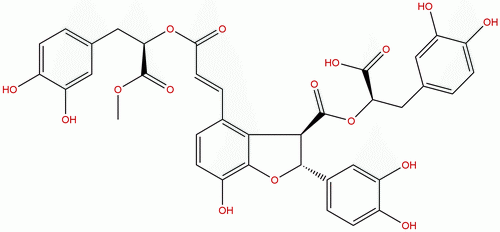
Salvianolic acid B (Sal B) is one of the most abundant and active water-soluble components in Danshen. It is composed of three molecules of Danshensu and one molecule of caffeic acid connected by ester bonds, and has a polyphenolic structure. However, the metabolic stability of salvianolic acid B in vivo is poor, and its oral bioavailability is low, which to some extent limits its clinical application. In order to improve its pharmacokinetic properties and explore the structure-activity relationship, researchers have made various structural modifications to salvianolic acid B. 9 '' - Methyl salvianolic acid B (hereinafter referred to as 9 '' - MSB) is an important derivative synthesized or isolated under this background. This compound aims to improve its lipid solubility and membrane permeability by methylating specific carboxyl groups in the molecule of salvianolic acid B, while retaining or enhancing its original biological activity. This article will provide a systematic review of the chemical structure, physicochemical properties, plant origin, pharmacological activity, mechanism of action, medicinal properties, and clinical application prospects of 9 '' - Danshensu B monomethyl ester, in order to provide reference for the in-depth research and development of this natural product derivative.
Chemical structure and physicochemical properties
The molecular formula of 9 '' - salvianolic acid B monomethyl ester (CAS number: 1167424-31-8) is C ∝₇ H ∝₂ O ₁₆, with a molecular weight of 732.6470 g/mol. From a chemical structure perspective, it belongs to the phenylpropanoid class of compounds and is a derivative of salvianolic acid B. Danshensu B itself is a complex phenolic acid, consisting of three danshensu (3,4-dihydroxyphenyllactic acid) units and one caffeic acid (3,4-dihydroxycinnamic acid) unit connected by ester bonds, forming a multi ring skeleton with multiple phenolic hydroxyl and carboxyl groups. The structural modification point of 9 '' - MSB is to convert the carboxyl group (- COOH) located at the 9 '' position in the molecule of salvianolic acid B into a methyl ester group (- COOCH ∝). This minor chemical modification, namely methylation, significantly alters the physicochemical properties of the molecule.
In terms of physicochemical properties, 9 '' - MSB exhibits significant differences from the parent compound salvianolic acid B. Its lipid water partition coefficient (LogP) is 3.0456. Compared with salvianolic acid B (whose LogP value is usually negative, indicating its strong hydrophilicity), the LogP value of 9 '' - MSB is positive, indicating a significant increase in its lipophilicity. This change is due to the methyl ester group replacing the polar carboxyl group, reducing the ability of the molecule to form hydrogen bonds with water molecules, thereby increasing its solubility in non-polar solvents such as cell membrane lipid bilayers. Correspondingly, its water solubility is 0.1212 mg/mL, much lower than that of salvianolic acid B, which further confirms its improved lipophilicity. The molecular polar surface area (TPSA) is 267.04 Å ². TPSA is an important parameter for predicting drug oral absorption and blood-brain barrier penetration ability. Generally, molecules with TPSA greater than 140 Å ² have poor oral absorption and are difficult to penetrate the blood-brain barrier. The TPSA value of 9 '' - MSB is as high as 267.04 Å ², indicating that its oral absorption may still be challenging. However, compared to salvianolic acid B (which has a higher TPSA), methylation may reduce polarity to some extent, which is beneficial for passive diffusion. In addition, its blood-brain barrier penetration ability was evaluated as' low ', which is consistent with high TPSA values, indicating that the compound mainly acts on peripheral tissues rather than the central nervous system.
Plant sources and extraction methods
9 '' - Danshensu B Monomethyl Ester was initially discovered and isolated from Salvia miltiorrhiza, a plant in the Lamiaceae family(Salvia miltiorrhiza Bunge's roots and rhizomes. As a natural methylated derivative of salvianolic acid B, its content in Danshen is usually much lower than that of salvianolic acid B, and it belongs to trace components. The biosynthetic pathway may be related to the late modification of salvianolic acid B, where a specific methyltransferase catalyzes the methylation of a carboxyl group of salvianolic acid B.
The method of extracting 9 '' - MSB from Danshen usually follows the classic natural product chemical process of 'extraction separation purification'. Firstly, solvent extraction method is used, commonly used solvents include methanol, ethanol, or ethanol water mixtures in different proportions. Due to the lower polarity of 9 '' - MSB compared to salvianolic acid B, higher concentrations of alcohol (such as 70% -95% ethanol) may be more favorable for its dissolution during the extraction process. After filtration and concentration, the crude extract of total salvianolic acid was obtained. Subsequently, various chromatographic techniques were used for separation and purification. Common methods include:
1. Liquid-liquid extraction By using different polar solvents (such as petroleum ether, ethyl acetate, n-butanol) for fractional extraction of crude extracts, 9 '' - MSB can be enriched in the moderately polar ethyl acetate layer or n-butanol layer.
2. Column chromatography method This is the core step of separation and purification. Common stationary phases include silica gel, reverse phase silica gel (such as C18), polyamide, macroporous adsorption resin (such as D101, AB-8), etc. Silica gel column chromatography is suitable for normal phase separation, separating compounds based on their polarity differences; Reverse phase silica gel column chromatography (such as ODS) utilizes hydrophobic interactions and is particularly effective for separating compounds with similar structures but different polarities, such as 9 '' - MSB and salvianolic acid B. Macroporous adsorption resin can be used for preliminary enrichment and impurity removal.
3. Preparation type high-performance liquid chromatography For homologues or isomers with highly similar structures, preparative HPLC is a key means of obtaining high-purity 9 '' - MSB. Usually, a C18 reverse phase column is used, with methanol water or acetonitrile water system (often with a small amount of formic acid or acetic acid added) as the mobile phase, to achieve baseline separation through gradient elution.
Due to the extremely low content of 9 '' - MSB in Danshen, directly extracting and purifying a large amount from plants is costly and inefficient. Therefore, in recent years, chemical synthesis or semi synthesis methods have become more feasible ways to obtain this compound. Usually, starting from salvianolic acid B, selective methylation reaction is carried out under specific conditions (such as using methanol and acidic catalyst), and then the target product is purified by chromatographic technology. This method can more efficiently and controllably prepare 9 '' - MSB, providing a material basis for its in-depth pharmacological research and drug development.
Pharmacological activity research
The pharmacological activity research of 9 '' - Danshensu B monomethyl ester mainly focuses on its characteristics as a derivative of Danshensu B, especially showing potential in antioxidant, anti-inflammatory, anti fibrotic, and cardiovascular protection.
1. Antioxidant activity
Antioxidant activity is one of the core biological activities of salvianolic acid compounds. 9 '' - MSB inherits the polyphenolic structure of salvianolic acid B and possesses multiple phenolic hydroxyl groups, which can effectively scavenge free radicals such as hydroxyl radicals (· OH), superoxide anion radicals (O ₂⁻·), peroxynitrite (ONOO ⁻), etc. Research has shown that 9 '' - MSB exhibits strong free radical scavenging ability in in vitro chemical systems, and its activity is comparable to or even stronger than the parent compound salvianolic acid B. This antioxidant activity is the basis for its other pharmacological effects, such as anti-inflammatory and anti apoptotic effects. By clearing excess reactive oxygen species (ROS), 9 '' - MSB can protect cells from oxidative stress damage and maintain intracellular redox balance.
2. Anti inflammatory activity
Chronic inflammation is a common pathological basis for various diseases, such as cardiovascular disease, liver fibrosis, and neurodegenerative diseases. 9 '' - MSB has been proven to have significant anti-inflammatory effects. In the lipopolysaccharide (LPS) - induced macrophage inflammation model, 9 '' - MSB can dose dependently inhibit the production of pro-inflammatory cytokines such as tumor necrosis factor - α (TNF - α), interleukin-1 β (IL-1 β), and interleukin-6 (IL-6). Meanwhile, it can also inhibit the expression of inducible nitric oxide synthase (iNOS) and cyclooxygenase-2 (COX-2), thereby reducing the release of inflammatory mediators such as nitric oxide (NO) and prostaglandin E2 (PGE2). Its anti-inflammatory mechanism is closely related to the inhibition of the activation of the nuclear factor kappa B (NF - κ B) signaling pathway.
3. Anti fibrotic activity
Fibrosis is a pathological process characterized by excessive deposition of extracellular matrix (ECM) resulting from dysfunction of tissue repair after injury. Danshensu acid B is a recognized active ingredient for anti liver fibrosis. 9 '' - MSB showed the ability to inhibit cell proliferation and activation in the hepatic stellate cell (HSC) activation model. It can downregulate the expression of α - smooth muscle actin (α - SMA) and type I collagen, which are markers of HSC activation and ECM deposition. In addition, in myocardial fibrosis models, 9 '' - MSB may also exert anti fibrotic effects by inhibiting the transforming growth factor - β 1 (TGF - β 1)/Smad signaling pathway. Its anti fibrotic effect is partially attributed to its antioxidant and anti-inflammatory activities, as oxidative stress and inflammation are key factors driving the fibrotic process.
4. Cardiovascular protective effect
Based on its antioxidant, anti-inflammatory, and anti fibrotic activities, 9 '' - MSB exhibits great potential in cardiovascular system protection. In the myocardial ischemia/reperfusion injury model, 9 '' - MSB can significantly reduce myocardial infarction area and improve cardiac function. Its protective mechanism includes clearing the explosive ROS generated during reperfusion, inhibiting myocardial cell apoptosis, reducing inflammatory response, and protecting mitochondrial function. In addition, it may play a role in the prevention and treatment of atherosclerosis by inhibiting the proliferation and migration of vascular smooth muscle cells and inhibiting platelet aggregation.
Mechanism of action and molecular targets
The pharmacological action of 9 '' - Danshensu B monomethyl ester is the result of multi-target and multi pathway synergistic effects. Its core mechanism revolves around regulating oxidative stress and inflammatory response, mainly involving the following key molecular targets and signaling pathways:
1. Nuclear factor E2 related factor 2 (NRF2)/antioxidant response element (ARE) pathway
NRF2 is the core transcription factor that cells use to respond to oxidative stress. Under normal physiological conditions, NRF2 binds to its inhibitory protein Kelch like ECH associated protein 1 (KEAP1) and is in an inactive state. When subjected to oxidative stress or electrophilic reagent stimulation, NRF2 dissociates from KEAP1, translocates into the nucleus, binds to ARE, and initiates the transcription of a series of downstream antioxidant and detoxifying enzyme genes. 9 '' - MSB has been confirmed to be an effective activator of NRF2. It can promote nuclear translocation of NRF2, thereby upregulating the expression of its target genes, including:
* SOD1 (Cu/Zn SOD) and SOD2 (Mn SOD)Superoxide dismutase is responsible for converting superoxide anions into hydrogen peroxide.
* CAT(Catalase)Catalase breaks down hydrogen peroxide into water and oxygen.
* GPX1(Glutathione Peroxidase 1)Glutathione peroxidase uses glutathione to reduce hydrogen peroxide and organic peroxides.
* HMOX1(Heme Oxygenase 1)Heme oxygenase-1 catalyzes the degradation of heme into biliverdin, carbon monoxide, and iron ions, and its products have antioxidant and anti-inflammatory effects.
By activating the NRF2/ARE pathway, 9 '' - MSB can significantly enhance the antioxidant defense ability of cells, which is one of its core mechanisms for exerting cellular protective effects.
2. Matrix metalloproteinases (MMPs) regulation
Matrix metalloproteinases (MMPs) are a class of zinc dependent endopeptidases responsible for degrading extracellular matrix. MMP1 (interstitial collagenase) and MMP3 (matrix metalloproteinase) play important roles in tissue remodeling, inflammation, and fibrosis. 9 '' - MSB can regulate the expression and activity of MMPs. Under oxidative stress or inflammatory stimulation, the expression of MMPs is usually upregulated, leading to excessive degradation or abnormal remodeling of ECM. 9 '' - MSB inhibits the activity of transcription factors such as NF - κ B or activator protein-1 (AP-1), downregulates the expression of MMP1 and MMP3, thereby maintaining the homeostasis of ECM, exerting anti fibrotic and protective effects on tissue structural integrity.
3. Tyrosinase (TYR) inhibition
Tyrosinase (TYR) is a key rate limiting enzyme in the synthesis of melanin. 9 '' - MSB has been reported to have inhibitory effects on TYR activity. This is closely related to its antioxidant activity, as the process of TYR catalyzing tyrosine hydroxylation to generate dopaquinone involves oxidation reactions. 9 '' - MSB may inhibit the activity of TYR by chelating copper ions from its active center or scavenging free radicals generated during the reaction process. This discovery suggests that 9 '' - MSB has potential application value in the treatment of skin whitening and pigmentation diseases.
4. Interaction with other signaling pathways
In addition to the aforementioned targets, the mechanism of action of 9 '' - MSB also involves interactions with other important signaling pathways. For example, it can inhibit the activation of the NF - κ B signaling pathway and reduce the transcription of pro-inflammatory cytokines. It may also affect cell proliferation, differentiation, and apoptosis by regulating the phosphorylation levels of mitogen activated protein kinase (MAPK) pathways such as p38 MAPK, ERK, JNK. In addition, inhibition of the TGF - β 1/Smad pathway is key to its anti fibrotic effect.
Evaluation of drug properties and pharmacokinetics
The development of natural products or their derivatives into clinical drugs requires a systematic evaluation of their drug like and pharmacokinetic (ADME) properties. The pharmacokinetic parameters of 9 '' - MSB provide us with important clues.
1. Analysis of pharmacological parameters
According to Lipinski's "Rule of Five", an orally active drug should typically meet the following criteria: molecular weight<500, LogP<5, The number of hydrogen bond donors is less than 5, and the number of hydrogen bond acceptors is less than 10. The molecular weight of 9 '' - MSB is 732.65, much greater than 500; The number of hydrogen bond donors (phenolic hydroxyl and alcohol hydroxyl) and acceptors (carbonyl and ether oxygen) also far exceed the upper limit of the rule. Therefore, from the perspective of the "five rules", the drug properties of 9 '' - MSB are relatively poor, especially for oral absorption, which may face significant challenges. Its high TPSA value (267.04 Å ²) also confirms this, indicating that it is difficult to cross the intestinal epithelial cell membrane through passive diffusion. However, the LogP value is 3.0456, which conforms to the rules and indicates moderate lipophilicity. The Ames test result is 0.0, indicating no significant genetic toxicity, which is a positive signal. The hERG inhibition assessment is' no ', indicating a low risk of cardiac toxicity.
2. Pharmacokinetic characteristics
Although detailed research data on the pharmacokinetics of 9 '' - MSB in vivo is currently limited, we can make reasonable inferences based on its physicochemical properties and the pharmacokinetic characteristics of the parent compound salvianolic acid B.
* absorb Due to its high molecular weight and polarity, the oral absorption of 9 '' - MSB is expected to be poor, and its bioavailability may be extremely low. Although methylation modification improves lipid solubility, it does not fundamentally solve the absorption barriers caused by large molecules and polyphenol structures. It may be mainly absorbed through transporters in the intestine, such as monocarboxylic acid transporters (MCTs), but the efficiency is not high.
* distribution Due to its increased lipophilicity, the distribution volume of 9 '' - MSB in the body may be larger than that of salvianolic acid B. It may be more easily bound to plasma proteins (such as albumin) and distributed to vascular rich tissues such as the liver, heart, and kidneys. The blood-brain barrier has low penetration ability, making it mainly act on the periphery.
* Metabolism: 9 '' - MSB may undergo extensive metabolism in the body. Firstly, its methyl ester group may be hydrolyzed by esterases in plasma or liver, and then converted back into salvianolic acid B, which may be an important pathway for its in vivo activity (prodrug strategy). Secondly, its abundant phenolic hydroxyl groups are substrates for phase II metabolic enzymes such as glucuronosyltransferases UGTs and sulfotransferases SULTs, which are prone to glucuronidation and sulfation binding reactions, generating more water-soluble metabolites that are quickly excreted from the body. In addition, I-phase metabolism, such as oxidation and reduction reactions, may also occur.
* excretion Due to increased water solubility after metabolism, 9 '' - MSB and its metabolites are mainly excreted through bile and urine. Its half-life may be short and requires frequent administration or development of sustained-release formulations.
3. Optimization strategy for drug properties
Given the shortcomings of 9 '' - MSB in oral absorption and metabolic stability, future drug efficacy optimization can be considered from the following aspects:
* Prodrug design: 9 '' - MSB itself can be considered as a prodrug of salvianolic acid B. Further design of more stable and better absorbing prodrugs can be achieved, such as protecting multiple phenolic hydroxyl groups (such as acetylation) and releasing active ingredients through enzymatic or chemical hydrolysis in vivo.
* Optimization of administration route Given the poor oral absorption, it may be considered to develop non oral routes of administration, such as injections (intravenous or intramuscular), transdermal patches, nasal administration, etc., to bypass the first pass effect and intestinal absorption barrier.
* Nanoformulation technology Using nano delivery systems such as liposomes, nanoparticles, and micelles to encapsulate 9 '' - MSB can improve its water solubility, stability, prolong in vivo circulation time, and enhance its enrichment at the lesion site through passive targeting (EPR effect) or active targeting (ligand modification).
* Simplified structure Finding the key pharmacophores in 9 '' - MSB, simplifying the structure, and designing analogs with smaller molecular weight, lower polarity, and in accordance with the "five rules" is the fundamental way to improve drug efficacy.
Clinical application prospects and prospects
9 '' - Danshensu B Monomethyl ester, as a natural methylated derivative of Danshensu B, has shown promising clinical application prospects in multiple disease treatment fields due to its enhanced lipid solubility and retained potent biological activity.
1. Cardiovascular diseases
Cardiovascular disease is the most direct application area of 9 '' - MSB. Its powerful antioxidant, anti-inflammatory, anti apoptosis and anti fibrosis effects make it have great potential in preventing and treating myocardial ischemia/reperfusion injury, myocardial infarction, heart failure, atherosclerosis and hypertensive heart disease. In particular, its potential cellular protective effect through activation of the NRF2 pathway provides new insights for the development of novel cardiovascular protective agents. In the future, more large animal models and clinical trials are needed to verify its efficacy and safety.
2. Liver diseases
Based on the good reputation of salvianolic acid B in the treatment of liver disease, 9 '' - MSB has broad prospects in anti liver fibrosis, prevention and treatment of non-alcoholic steatohepatitis (NASH) and alcoholic liver disease. Its ability to inhibit HSC activation and ECM deposition, as well as its dual regulation of oxidative stress and inflammation, makes it an attractive candidate drug for anti liver fibrosis.
3. Metabolic disorders
Oxidative stress and chronic inflammation are common characteristics of metabolic diseases such as type 2 diabetes and obesity. 9 '' - MSB may play a role in the treatment of metabolic diseases by improving insulin resistance, protecting pancreatic beta cell function, regulating lipid metabolism, and other pathways. Its inhibition of TYR activity also suggests that it may be used in the treatment of diabetes related skin complications (such as pigmentation).
4. Other fields
* kidney disease In diabetes, nephropathy, renal fibrosis and other diseases, the antioxidant and anti fibrosis effects of 9 '' - MSB may delay the progress of the disease.
* lung disease For pulmonary fibrosis, chronic obstructive pulmonary disease (COPD), etc., their anti-inflammatory and anti fibrotic properties may bring therapeutic benefits.
* skin diseases Its antioxidant and TYR inhibitory effects make it have potential cosmetic and medicinal value in skin whitening, anti-aging, treatment of melasma and UV damage.
Outlook and Challenges
Despite the bright prospects, the clinical translation of 9 '' - MSB still faces many challenges. The primary challenge is its extremely low bioavailability. How to effectively increase its in vivo exposure through pharmaceutical methods (such as nanotechnology) or prodrug strategies is the key to determining whether it can be developed into a drug. Secondly, a comprehensive assessment of its long-term toxicity, reproductive toxicity, and other factors is required. In addition, although its mechanism of action involves multiple targets, the specific molecular target proteins still need to be further clarified, which will help to more accurately evaluate its efficacy and potential side effects. In the future, combining multidisciplinary methods such as systems pharmacology, network pharmacology, and chemical biology, to deeply reveal the molecular mechanism of 9 '' - MSB and develop efficient and low toxicity delivery systems will be the core direction to promote its clinical application.
Conclusion
As a natural derivative derived from the traditional Chinese medicine Danshen, 9 '' - Danshensu B monomethyl ester has successfully optimized its physicochemical properties by methylating the parent compound Danshensu B. While retaining its strong antioxidant, anti-inflammatory, and anti fibrotic core pharmacological activities as a polyphenolic compound, it significantly improves its lipophilicity. Its mechanism of action involves activation of the NRF2/ARE antioxidant pathway, regulation of MMPs, and inhibition of key signaling pathways such as NF - κ B and TGF - β 1, exhibiting a synergistic effect of multiple targets and pathways. The evaluation of drug properties revealed the core bottleneck of low oral bioavailability, but also pointed out the advantages of low toxicity and low risk of cardiac toxicity. In the future, through innovative formulation technologies such as nano delivery systems and rational prodrug design, it is expected to overcome its pharmacokinetic deficiencies and develop it into a new candidate drug for the treatment of oxidative stress and inflammation related diseases such as cardiovascular disease and liver fibrosis. The study of 9 '' - Danshensu B monomethyl ester not only deepens our understanding of the pharmacological substance basis of Danshen, but also provides a successful example for the structural modification of natural products and the development of innovative drugs. Excavating and optimizing lead compounds from the ancient treasure trove of traditional Chinese medicine remains a promising and important avenue for modern drug discovery.