


Product name: 15,16-Dihydrotanshinone I
Synonym name:
Catalogue No.: BP0027
Cas No.: 87205-99-0
Formula: C18H14O3
Mol Weight: 278.307
Botanical Source: Salvia miltiorrhiza
Physical Description: Red powder
Type of Compound: Diterpenoids
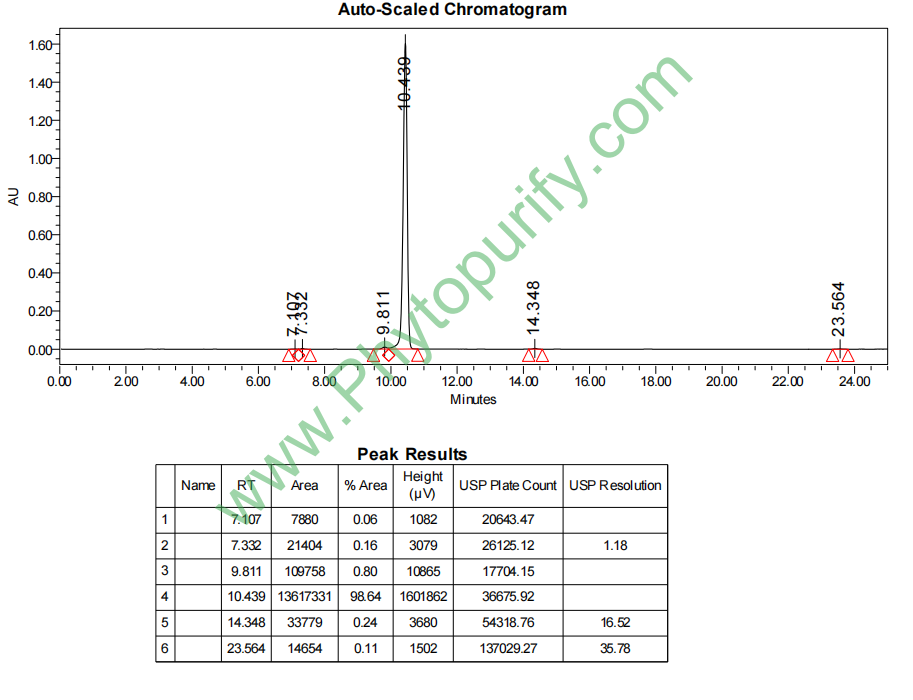
Purity: 95%~99%
Analysis Method: HPLC-DAD or/and HPLC-ELSD
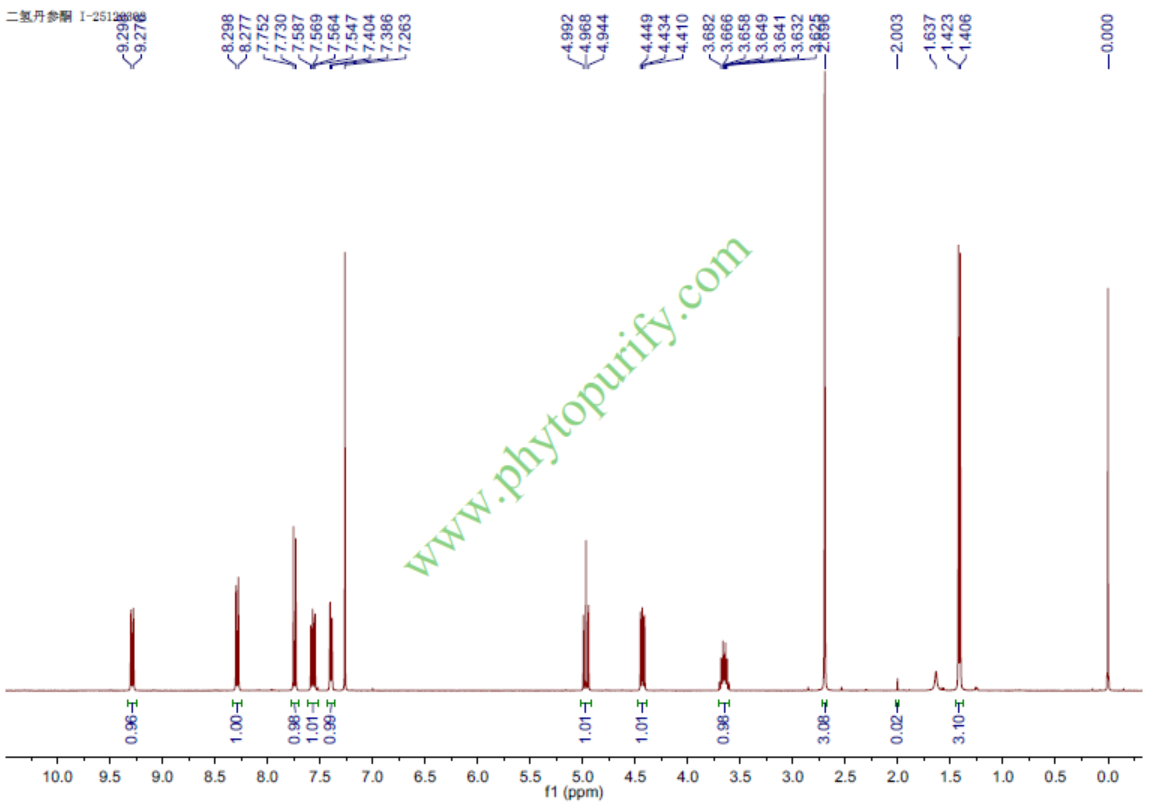
Identification Method: Mass, NMR
Packing: Brown vial or HDPE plastic bottle
Storage: Store in a well closed container, protected from air and light. Put into refrigerate or freeze for long term storage.
Whenever possible, you should prepare and use solutions on the same day. However, if you need to make up stock solutions in advance, we recommend that you store the solution as aliquots in tightly sealed vials at -20℃. Generally, these will be useable for up to two weeks.
The product could be supplied from milligrams to grams, up to kilograms
Inquire for bulk scale.
Descriptions:
Dihydrotanshinone I(DI) and cryptotanshinone, constituents of a medicinal plant, Salvia miltiorrhiza Bunge, have antibacterial activity against a broad range of Gram positive bacteria, they generates superoxide radicals in Bacillus subtilis lysates, the superoxide radicals are important in the antibacterial actions of the agents.[1]
Dihydrotanshinone I induces topoisomerase I-mediated DNA cleavage as strongly as camptothecin, but topoisomerase II-mediated DNA cleavage was not affected, dihydrotanshinone I inhibits the catalytic activity of topoisomerase I by the formation of a cleavable complex and at least in part through the intercalation into DNA.[2]
Dihydrotanshinone I has cytotoxicity to a variety of tumor cells, it induces a potent cytotoxicity to human umbilical vein endothelial cells with an IC 50 value of approximately 1.28 ug/ml; it could inhibit angio-genesis through suppressing endothelial cell proliferation, migration, invasion and tube formation, indicating that DI has a potential to be developed as a novel anti-angiogenic agent.[3]
Dihydrotanshinone I significantly impaires activation of extracellular signal-regulated kinase 1/2 (ERK1/2), p38 and stress-activated protein kinase/c-Jun NH2-terminal kinase (JNK/SAPK), it suppresses the growth of HeLa cells in a xenograft tumor model, which could be correlated with its modulation of TNF-α production, suggests that dihydrotanshinone I could be a valuable candidate for the intervention of NF-κB-dependent pathological conditions such as inflammation and cancer.[4]
Dihydrotanshinone I induces cell growth arrest during the S phase and subsequently, apoptosis, following its application to K562/ADR cells, exhibits cytotoxicity against various tumor cell lines. [5]
Dihydrotanshinone I combines irradiation, which can enhance apoptotic effects in human cervical cancer by HPV E6 down-regulation and caspases activation.[6]
Dihydrotanshinone I and cryptotanshinone exhibit strong inhibition towards human liver microsome (HLM)-catalyzed propofol glucuronidation, and dihydrotanshinone I exhibits strong inhibition towards UDP-glucuronosyltransferase (UGT) 1A7.[7,8]
Dihydrotanshinone-I interferes with the RNA-binding activity of HuR affecting its post-transcriptional function.[9]
Dihydrotanshinone I induces caspase and ROS dependent apoptosis and autophagy, mediated by mitochondria in colon cancer; it could be a promising leading compound for the development of anti-tumor agent or be developed as an adjuvant drug for colon cancer therapy.[10]
Dihydrotanshinone I has inhibitory effects on CYP4A11 and CYP4F3A mediated ω-hydroxylation of arachidonic acid.[11]
References:
[1] Lee D S, Lee S H, Noh J G, et al. Biosci Biotech Biochem, 2014, 63(12):2236-9.
[2] Lee D S, Lee S H, Kwon G S, et al. Biosci Biotech Biochem, 1999, 63(8):1370-3.
[3] Weipeng, Bian, Chen, et al. Acta Bioch Bioph Sin, 2008, 40(1):1–6.
[4] Wang F, Ma J, Wang KS, et al. Int Immunopharmacol, 2015, 28(1):764-72.
[5] Lee D S, Lee S H. J Biosci Bioeng, 2000, 89(3):292-3.
[6] Ye Y, Xu W, Zhong W, et al.Mol Cell Biochem, 2012, 363(1-2):191-202.
[7] Cong M, Hu C M, Cao Y F, et al. Fitoterapia, 2013, 85(1):109-13.
[8] Gong G, Zhang S Y, Lin J J, et al. Latin Am J Pharm, 2012, 31(7):1060-3.
[9] D’Agostino V G, Lal P, Mantelli B, et al. Sci Rep, 2015, 5(3):1392-1215.
[10] Lin W, Tao H, Jing S, et al.Phytomed Int J Phytother Phytopharmacol, 2015, 22(12):1079-87.
[11] Meijuan Xu, Lifeng Jiang, Wenzheng Ju, et al. Eur J Integr Med, 2014, 6(6):735.
[12] Zhu D, Tan S. China Pharmacist, 2008, 11(03):301-3.
HPLC of 15,16-Dihydrotanshinone I
HNMR of 15,16-Dihydrotanshinone I
Storage conditions:Short-term storage at 2~8℃, long-term storage at -20 ~ -80℃
43.3700
3.8325
3.8325
.0020
5.1693
24.1781
High
90.9578
3.1860
Yes
No
Yes
No
Yes
Yes
1.8
Yes
No
Yes
Yes
Natural products have long been an important source of innovative drug discovery, among which terpenoids have attracted much attention due to their structural diversity and wide range of biological activities. Dihydrotanshinone I (15,16-Dihydrotanshinone I, CAS number: 87205-99-0), as a diterpenoid compound of rosin, is mainly derived from the traditional Chinese medicine Danshen(Salvia miltiorrhiza Bunge)。 Danshen is widely used in the treatment of cardiovascular diseases in traditional Chinese medicine clinical practice, and its lipophilic active ingredients - tanshinones - are one of the key substances that exert pharmacological effects. Dihydrotanshinone I, as an important member of the tanshinone family, has been extensively studied for its cardiovascular protective effects in early research. However, with the deepening of research, its pharmacological activity spectrum continues to expand, especially in the fields of anti-tumor, anti-inflammatory, and antiviral, showing significant potential. In recent years, it has been reported to have anti coronavirus activity, injecting new impetus into its research. In addition, it exhibits multi pathway anti-tumor properties by acting on multiple key targets such as BLM, MCL1, STAT3, etc. in hematological malignancies such as Hodgkin's lymphoma. This article aims to systematically review the chemical properties, plant sources, pharmacological activities, mechanisms of action, medicinal properties, and clinical application prospects of dihydrotanshinone I, in order to provide comprehensive scientific references for the in-depth research and development of this compound.
The chemical name of dihydrotanshinone I is (6R, 7R) -6,7,8,9-tetrahydro-1,6,7-trimethyl-pheno [1,2-b] furan-10,11-dione, with a molecular formula of C18H14O3 and a molecular weight of 278.3070. Its structure belongs to the rosin alkane diterpene, and the core skeleton is phenanthrofurandione. Compared with tanshinone I, dihydrotanshinone I is reduced at positions C-15 and C-16 (according to the rosin core numbering), losing the double bond at these positions and forming a dihydro structure. This subtle structural difference significantly affects its physicochemical properties and biological activity.
In terms of physicochemical properties, the lipid water partition coefficient (LogP) of dihydrotanshinone I is 3.8325, indicating its good lipophilicity. Its topological polar surface area (TPSA) is 43.3700 Å ², which is relatively small. The water solubility is extremely low, about 0.0020 mg/mL, which is consistent with its high LogP value, indicating that its dissolution and absorption in organisms may face challenges. These parameters collectively determine its pharmacological basis: high lipophilicity facilitates its penetration through cell membranes, but low water solubility may affect its formulation development and oral bioavailability. It is worth noting that its blood-brain barrier permeability is predicted to be "high", indicating its potential therapeutic value for central nervous system diseases. In the preliminary safety screening, its hERG inhibitory activity was "no", reducing the risk of causing QT interval prolongation in the heart; The Ames test value is 1.8, indicating a low risk of mutagenicity and providing preliminary safety evidence for its further development.
Dihydrotanshinone I mainly comes from Salvia miltiorrhiza, a plant of the Salvia genus in the Lamiaceae family(Salvia miltiorrhiza Bunge's dried roots and rhizomes. Danshen is rich in fat soluble tanshinones and water-soluble salvianolic acids, with dihydrotanshinone I belonging to the former. Its content in Danshen is usually lower than that of major tanshinones such as tanshinone IIA and cryptotanshinone, and it belongs to trace active ingredients.
The extraction method mainly targets the lipid soluble components of salvianolic acid. Traditional methods include organic solvent extraction, commonly using solvents such as ethanol, methanol, ethyl acetate, etc. For example, by using ethanol reflux extraction and then segmenting extraction with solvents such as petroleum ether and ethyl acetate, the tanshinone components can be preliminarily enriched. Subsequently, modern chromatographic techniques are required for separation and purification. Conventional column chromatography techniques, such as silica gel column chromatography and alumina column chromatography, often use gradient elution systems such as petroleum ether ethyl acetate or chloroform methanol for preliminary separation. High performance liquid chromatography (HPLC), especially preparative HPLC, is a key step in obtaining high-purity dihydrotanshinone I. It usually uses a reverse phase C18 column with methanol water or acetonitrile water as the mobile phase for fine separation. In recent years, some new extraction and separation technologies such as high-speed countercurrent chromatography (HSCCC) have also been applied to the efficient preparation of Danshenketone components due to their advantages of no solid adsorbent, high sample recovery rate, and large preparation volume. In addition, in order to overcome the limitations of plant sources, research on chemical synthesis and biosynthesis is also underway, but natural extraction remains its main source at present.
Dihydrotanshinone I exhibits diverse pharmacological activities, and its research has expanded from traditional cardiovascular fields to include anti-tumor, antiviral, anti-inflammatory, and neuroprotective effects.
Antitumor activity This is currently the most concentrated area of research. Dihydrotanshinone I exhibits inhibitory effects on proliferation and induces apoptosis in various tumor cell lines, especially in hematological and solid tumors. In studies related to Hodgkin's lymphoma, it has shown significant anti proliferative effects. In addition, research also shows that it has inhibitory effects on liver cancer, breast cancer, lung cancer, colon cancer, prostate cancer and leukemia cells, and its effects are broad-spectrum.
Antiviral activity One of the research hotspots in recent years is its anti coronavirus activity. Research has shown that dihydrotanshinone I can inhibit the replication of coronaviruses such as SARS-CoV-2, and its mechanism may involve interfering with virus entry into cells, inhibiting viral protease activity, or regulating host immune responses. This provides a new research direction for its use as an antiviral lead compound, especially in response to coronavirus infection.
Cardiovascular protective activity As a member of tanshinone compounds, dihydrotanshinone I inherits its protective effect on the cardiovascular system. Studies have shown that it has antioxidant, anti-inflammatory, inhibiting the proliferation of vascular smooth muscle cells, protecting myocardial cells from ischemia-reperfusion injury and other effects, which are closely related to the prevention and treatment of atherosclerosis, myocardial hypertrophy and other cardiovascular diseases.
Anti inflammatory and antioxidant activity Dihydrotanshinone I can inhibit the overexpression of inflammatory factors (such as TNF - α, IL-6, IL-1 β) induced by lipopolysaccharides, and enhance the antioxidant defense ability of cells by regulating signaling pathways such as Nrf2/HO-1, thereby reducing oxidative stress damage.
Neuroprotective activity Its high predictive blood-brain barrier permeability provides the basis for its neuroprotective effect. Research has shown that dihydrotanshinone I can alleviate beta amyloid toxicity, inhibit neuroinflammation, improve mitochondrial function, and demonstrate neuroprotective potential in cellular and animal models of neurodegenerative diseases such as Alzheimer's disease and Parkinson's disease.
The anti-tumor mechanism of dihydrotanshinone I is complex, involving multiple targets and pathways, especially in the research of Hodgkin lymphoma, and its action network has been preliminarily revealed. According to the provided target information, its mechanism of action is mainly reflected in the following aspects:
Inducing cell apoptosis and regulating Bcl-2 family proteins Dihydrotanshinone I can downregulate the expression of anti apoptotic proteins Bcl-2 and Mcl-1, and may also affect pro apoptotic proteins, disrupt mitochondrial membrane potential, promote cytochrome C release, activate caspase cascade reaction, and ultimately induce tumor cell apoptosis. MCL1 is a key protein that many tumor cells rely on for survival, and its downregulation is an important link in the efficacy of dihydrotanshinone I.
Inhibit cell cycle progression By targeting the regulatory factors CDC25A and CDC25B phosphatases of cyclin dependent kinases (CDKs), dihydrotanshinone I can interfere with the normal checkpoint regulation of the cell cycle, leading to cell cycle arrest (usually in G1/S or G2/M phase) and inhibiting cell proliferation. Inhibition of the CDC25 family is a classic anti-tumor strategy.
Interference with DNA repair and genomic stability Targeting BLM (Bloom syndrome protein) is a distinctive mechanism. BLM is a RecQ helicase that plays a critical role in DNA replication, repair, and homologous recombination. Inhibition of BLM may lead to DNA damage repair defects, increase genomic instability, and selectively kill rapidly proliferating tumor cells that rely on efficient DNA repair.
Inhibition of STAT3 signaling pathway STAT3 is an important oncogenic transcription factor that is continuously activated in various tumors such as Hodgkin's lymphoma. Dihydrotanshinone I can inhibit the phosphorylation (activation) of STAT3 and the expression of downstream target genes (such as cyclin D1, survivor, etc.), thereby suppressing tumor cell proliferation, survival, and angiogenesis.
Affects other signals and metabolic pathways:
In addition, its anti coronavirus mechanism may involve inhibiting 3CL protease (main protease) or PL protease, or interfering with the binding of the virus to host cell receptors. The anti-inflammatory mechanism is closely related to the inhibition of NF - κ B and MAPK signaling pathway activation.
Based on its physicochemical parameters and existing research, a preliminary evaluation of the pharmacological properties of dihydrotanshinone I is conducted
Advantage:
1. The molecular weight is moderate (<500) and the structure meets the basic requirements of the five principles of generic drugs.
2. High lipid solubility (LogP~3.83) is beneficial for cell membrane penetration, and the predicted high blood-brain barrier permeability expands its potential for treating central nervous system diseases.
3. Preliminary safety warning is good: no hERG inhibition warning, Ames test negative, reducing the main risks of early development.
challenge:
1. Extremely low water solubility(0.002 mg/mL): This is the biggest obstacle to its oral administration, which may result in limited dissolution rate and low bioavailability.
2. Potential metabolic and stability issues As a quinone structure (phenanthrone), it may undergo complex reduction metabolism in vivo, and its chemical and metabolic stability needs to be further studied.
3. Lack of pharmacokinetic data Currently, there are few reports on the pharmacokinetic studies of dihydrotanshinone I system. Referring to similar tanshinone compounds (such as tanshinone IIA), their oral absorption may be poor, widely distributed in the body, but their metabolism is fast and their half-life is short.
improvement strategy:
1. Formulation technology To solve the problem of water solubility, advanced drug delivery systems such as nanocrystals, solid dispersions, liposomes, micelles, cyclodextrin inclusion complexes, etc. can be used to increase their solubility and dissolution rate, thereby improving oral bioavailability.
2. Structural modification Through chemical synthesis, the parent nucleus is structurally modified by introducing hydrophilic groups or improving metabolic sites while retaining activity, in order to obtain derivatives with better physicochemical properties and pharmacokinetic characteristics.
3. In depth research on PK/PD In the future, it is necessary to conduct systematic animal and human pharmacokinetic studies to clarify their absorption, distribution, metabolism, excretion (ADME) characteristics, as well as pharmacokinetic/pharmacodynamic (PK/PD) relationships, in order to provide a basis for dosage form design and optimization of dosing regimens.
Dihydrotanshinone I, as a natural active compound with multi-target effects, has broad clinical application development prospects, but also faces many challenges.
prospect:
1. Development of anti-tumor drugs, especially targeting Hodgkin lymphoma Its multi-target mechanism of action (BLM, MCL1, STAT3, etc.) may bring synergistic therapeutic effects and reduce the risk of single target resistance. Dihydrotanshinone I or its optimized derivatives are expected to become a new treatment option for recurrent/refractory Hodgkin's lymphoma, or in combination with existing chemotherapy and targeted drugs.
2. Anti coronavirus infection Under the background of continuous variation of novel coronavirus, it is very important to develop new antiviral drugs with diverse mechanisms of action. Dihydrotanshinone I, as a naturally derived antiviral lead compound, deserves further in-depth in vitro and in vivo antiviral efficacy evaluation and mechanism research.
3. Neurological disorders Its predicted high BBB permeability and observed neuroprotective activity provide new ideas for the development of drugs for the treatment of neurodegenerative diseases such as Alzheimer's disease and Parkinson's disease.
4. cardiovascular disease As an extension of the active ingredient of Salvia miltiorrhiza, its application value in atherosclerosis, myocardial fibrosis and other diseases still has room for exploration.
Challenges and Prospects:
1. Optimization of activity and selectivity It is necessary to conduct structure-activity relationship research to clarify its pharmacophore, enhance anti-tumor/antiviral activity while minimizing toxicity to normal cells and improving treatment index.
2. Breakthrough in the bottleneck of drug development As mentioned earlier, low water solubility and potential pharmacokinetic defects are the core issues that constrain its development. It must be effectively addressed through modern pharmaceutical and medicinal chemistry methods.
3. Deep analysis of the mechanism of action Although multiple potential targets have been identified, the specific details of their network regulation, which are direct acting targets and which are downstream effects, still need to be precisely elucidated using chemical biology methods such as affinity fishing and proteomics.
4. Preclinical and clinical research It is necessary to complete preclinical pharmacological and toxicological evaluations of the system, and ultimately advance it to clinical trials to verify its safety and effectiveness. Given its multi-target nature, the selection of indications and the development of biomarkers need to be fully considered in clinical trial design.
In the future, research on dihydrotanshinone I should focus on both "deep exploration of mechanisms" and "efficient improvement into medicinal properties". Using it as a lead compound to develop innovative drugs with independent intellectual property rights, precise therapeutic effects, and excellent properties will be an important direction in the field of natural product pharmacy.
Dihydrotanshinone I is an important active component of diterpenoids in Salvia miltiorrhiza, and its pharmacological activity has expanded from traditional cardiovascular protection to multiple cutting-edge fields such as anti-tumor, antiviral, and neuroprotective effects. Especially in the field of anti-tumor, it has shown great potential in inhibiting the growth of tumors such as Hodgkin's lymphoma through multiple pathways by acting on key targets such as BLM, MCL1, STAT3, CDC25, etc. Meanwhile, the discovery of its anti coronavirus activity has given it a new era significance. However, extremely low water solubility and unclear pharmacokinetic properties are the main bottlenecks for its drug conversion. Future research needs to focus on using modern science and technology to elucidate its precise molecular action network, and overcome its physical and chemical deficiencies through structural optimization and novel delivery system strategies. With the continuous deepening of research, dihydrotanshinone I is expected to successfully transform from a potential natural active molecule into a clinical candidate drug for the treatment of major diseases such as tumors and viral infections, demonstrating the sustained vitality of natural products in innovative drug development.
