| Catalog No | Package | Original Price | Price | Inventory | Quantity | Operating |
|---|---|---|---|---|---|---|
| BP3291-5mg | 5mg | $490.00 | Sign in |
|


Storage conditions:Short-term storage at 2~8℃, long-term storage at -20 ~ -80℃
102.2900
2.2922
.8069
.1497
5.6300
9.9423
Low
91.2377
3.3947
Yes
No
Yes
No
Yes
No
0.6
Yes
No
No
No
Neurodegenerative diseases such as Alzheimer's disease (AD) and Parkinson's disease (PD) have become major global public health challenges. This type of disease is characterized by progressive loss and functional decline of neurons, and its pathogenesis is complex, involving various pathological processes such as oxidative stress, mitochondrial dysfunction, neuroinflammation, protein misfolding and aggregation, and cell apoptosis. At present, clinical treatment drugs mainly focus on symptom relief, making it difficult to effectively delay or reverse the disease progression, and often accompanied by side effects. Therefore, searching for neuroprotective active ingredients with multi-target, high efficiency and low toxicity characteristics from natural products has become an important strategy for new drug development.
Ophiopogon japonicus(Ophiopogon japonicus)As a traditional Chinese medicine for nourishing yin, it has the effects of nourishing yin, generating fluids, moistening the lungs, and clearing the heart. Its tubers are rich in various steroidal saponins, high isoflavones, and flavonoids. In recent years, its non saponin components, especially structurally unique homologous isoflavone compounds, have attracted much attention due to their significant biological activity. Ophiopogonone C (CAS: 477336-75-7) is a representative isoflavonoid isolated from it. Preliminary studies have shown that the compound exhibits regulatory potential for key pathological processes in neurodegenerative diseases in various in vitro and in vivo models, involving energy metabolism regulation, apoptosis inhibition, cholesterol reverse transport, amyloid protein production, neuroinflammation, and tau protein phosphorylation. This article aims to systematically review the chemical properties, pharmacological activities, mechanisms of action, and pharmacological properties of Ophiopogon flavanone C, in order to provide comprehensive scientific basis for the in-depth research and development of this compound as a leading agent for the treatment of neurodegenerative diseases.
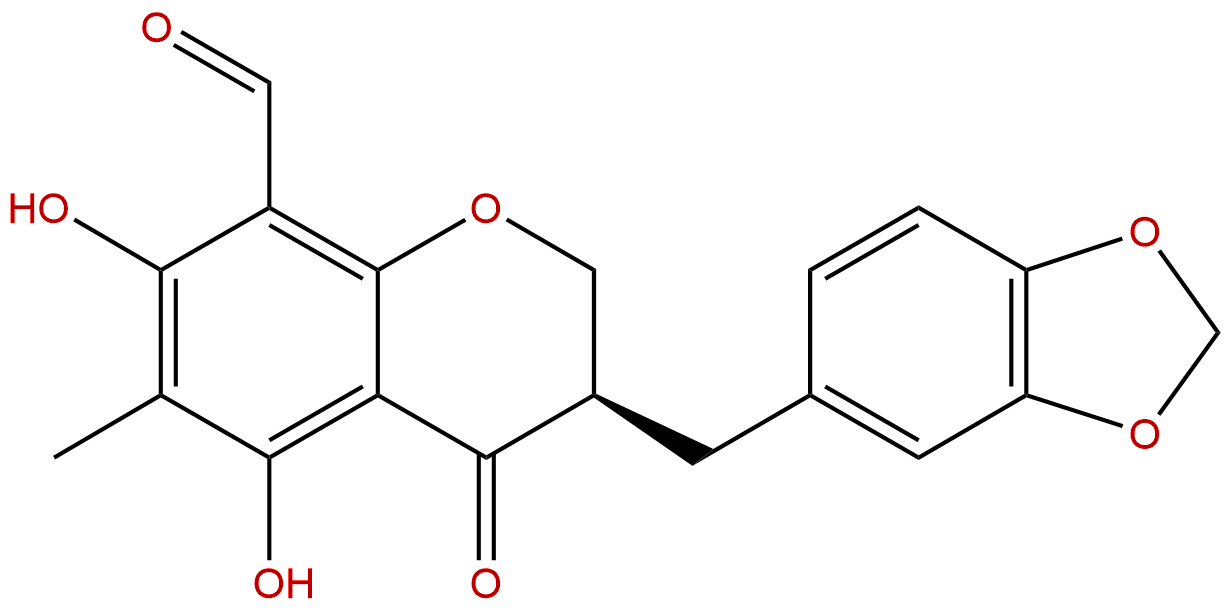
Ophiopogon flavanone C belongs to the same type of isoflavone compounds. Unlike classical isoflavones such as daidzein, which have a basic skeleton of C6-C3-C6, isoflavones have an additional methylene group (- CH2-) between the B and C rings, forming a unique structure of C6-C4-C6. The molecular formula of Ophiopogon flavanone C is C20H20O6, with a molecular weight of 356.3300.
Its specific chemical structure is: on the dihydroflavonoid skeleton, the A ring usually has typical benzene ring characteristics, the B ring is connected to the C2 position of the C ring through a methylene group (this is the key to the "homomorphic" structure), and the B ring is often substituted with methoxy groups. This structure endows it with stereochemical properties and biological activity that are different from ordinary flavonoids or isoflavones.
The key physicochemical parameters calculated based on its chemical structure are as follows:
* Lipid water partition coefficient (LogP)2.2922. This value indicates that Ophiopogon flavanone C has moderate lipophilicity, which is beneficial for its penetration of cell membranes, but excessive lipid solubility may also affect its water solubility and in vivo distribution.
* Topological Polarity Surface Area (TPSA)102.2900 Å ². The relatively high TPSA value is mainly attributed to multiple oxygen atoms (carbonyl, hydroxyl, methoxy) in the molecule, indicating its strong ability to form hydrogen bonds, but may pose certain challenges to passive transmembrane diffusion (such as crossing the blood-brain barrier).
* Water solubility The predicted value is 0.1497 mg/mL, which belongs to the range of slightly soluble to poorly soluble. This is consistent with its LogP value and is a property that needs to be considered and optimized in formulation development.
* Blood-brain barrier permeability Predicted as' low '. This is related to its high TPSA and molecular weight, which are key bottlenecks that need to be overcome in the development of central nervous system drugs. It may be necessary to improve its brain entry ability through structural modification or delivery systems, such as nanoformulations.
* HERG inhibition Predicted as' no '. This is a positive signal that suggests that at therapeutic concentrations, Ophiopogon flavanone C may not inhibit the hERG potassium channel in the heart, reducing the risk of cardiac toxicity in inducing acquired long QT syndrome and apical torsion ventricular tachycardia.
* Mutagenicity (Ames test)The predicted value is 0.6, which is generally considered to indicate a low risk of mutagenicity if it is less than 1.0, but further confirmation through experiments is needed.
The preliminary analysis of these parameters related to drug properties provides an important theoretical basis for subsequent pharmacological optimization and pharmacokinetic research.
Ophiopogon flavanone C is mainly derived from Ophiopogon, a plant of the Liliaceae family and the Ranunculaceae genus(Ophiopogon japonicus Dried tubers of (L. f.) Ker Gawl. Ophiopogon japonicus is mainly distributed in China, Japan, and South Korea, and is widely cultivated in Zhejiang, Sichuan, and other places in China. It is one of the famous "Zhejiang Eight Flavors".
The extraction and separation of flavanone compounds such as Ophiopogon flavanone C from Ophiopogon japonicus usually follow the following process:
1. Extract After crushing the dried Ophiopogon japonicus tubers, alcohol solvents (such as methanol, ethanol) or alcohol water mixed solvents are commonly used for reflux extraction or ultrasound assisted extraction to fully extract various polar and medium polar components, including flavanones.
2. Rough classification The extract obtained by vacuum concentration of the extract is often segmented by liquid-liquid extraction using solvents of different polarities such as petroleum ether, ethyl acetate, n-butanol, etc. Ophiopogon flavanone C is mainly enriched in the ethyl acetate extraction site.
3. Separation and purification The ethyl acetate fraction was further separated and purified using various chromatographic techniques. Silica gel column chromatography is commonly used for preliminary separation, with different ratios of chloroform methanol or petroleum ether ethyl acetate gradient elution. Then, fine purification was carried out in combination with reversed-phase silica gel column chromatography (such as ODS, methanol water or acetonitrile water as mobile phase), dextran gel column chromatography (such as Sephadex LH-20), high performance liquid chromatography (HPLC) or preparative thin layer chromatography (PTLC), and finally high-purity flavanone C monomer was obtained. Structural identification is accomplished through the comprehensive use of techniques such as ultraviolet spectroscopy (UV), infrared spectroscopy (IR), mass spectrometry (MS), and nuclear magnetic resonance spectroscopy (NMR, including 1H-NMR and 13C-NMR).
Numerous in vitro and in vivo studies have revealed the multiple pharmacological activities of Ophiopogon flavanone C in neuroprotection.
1. Antioxidant and anti apoptotic activity In various neuronal cell injury models induced by hydrogen peroxide (H2O2), glutamate, or β - amyloid protein (A β), such as PC12 cells, SH-SY5Y cells, and primary cortical neurons, Ophiopogon flavanone C can significantly increase cell survival rate and reduce lactate dehydrogenase (LDH) leakage rate. The mechanism is related to reducing the generation of reactive oxygen species (ROS), enhancing the activity of endogenous antioxidant enzymes such as superoxide dismutase (SOD) and glutathione peroxidase (GSH Px), and stabilizing mitochondrial membrane potential. By regulating the expression of Bcl-2 family proteins (upregulating anti apoptotic protein Bcl-2 and downregulating pro apoptotic protein Bax), the activation of caspase-3 is inhibited, thereby blocking the cell apoptosis pathway.
2. Improve energy metabolism In metabolic stress models, Ophiopogon flavanone C can activate AMP dependent protein kinase (AMPK). AMPK is a core regulatory factor of cellular energy metabolism, and its activation can promote glucose uptake, fatty acid oxidation, and inhibit synthetic metabolism, thereby improving the energy supply deficiency of neurons under stress, which is crucial for the survival of neurons with extremely high energy demands.
3. Anti amyloid toxicity In Alzheimer's disease related models, Ophiopogon flavanone C has shown potential to intervene in A β pathology. It may reduce the production of A β by inhibiting the activity of β - site amyloid precursor protein lyase 1 (BACE1). Meanwhile, it can alleviate the synaptic toxicity induced by A β oligomers and protect neuronal function. There may also be a regulatory effect on the metabolism of amyloid precursor protein (APP).
4. Regulating cholesterol homeostasis and neuroinflammation Ophiopogon flavanone C has been reported to upregulate the expression of ATP binding cassette transporter A1 (ABCA1). ABCA1 is a key protein involved in cholesterol reverse transport, promoting the efflux of cholesterol from cells (including microglia and neurons). This has positive implications for maintaining cholesterol balance in the brain, reducing A β production, and inhibiting neuroinflammation driven by excessive activation of microglia. In addition, it can inhibit the inflammatory signaling pathway mediated by Toll like receptor 4 (TLR4) and reduce the release of pro-inflammatory factors such as tumor necrosis factor - α (TNF - α) and interleukin-1 β (IL-1 β).
5. Inhibit excessive phosphorylation of tau protein In some studies, Ophiopogon flavanone C can reduce the excessive phosphorylation levels of microtubule associated protein tau at multiple sites (such as Ser396, Ser404). Overphosphorylation of tau protein is the basis for the formation of neurofibrillary tangles (NFTs) and is the core pathology of tau protein diseases such as AD. The mechanism may involve regulation of protein kinases (such as glycogen synthase kinase-3 β, GSK-3 β) or protein phosphatase activity.
6. Other potential activities There are studies suggesting that Ophiopogon flavanone C may have a regulatory effect on protein kinase C (PKC), which is involved in various processes such as learning and memory, neuronal plasticity, etc. In addition, its inhibitory activity against tyrosinase (TYR) also suggests its potential application in pigment related diseases or oxidative stress.
The neuroprotective effect of Ophiopogon flavanone C exhibits multi-target and multi pathway synergistic characteristics, and its core mechanism network can be summarized as follows:
Energy metabolism and survival signaling hub: AMPK (PRKAA1)Activation of AMPK by Ophiopogon flavanone C is one of its key starting points of action. Activated AMPK not only directly improves the energy status of cells, but also affects the mTOR pathway (inhibition), autophagy (promotion), mitochondrial biosynthesis (via PGC-1 α), and other downstream signals, comprehensively enhancing the stress resistance and survival ability of neurons.
Apoptosis regulation core: BCL2 (BCL2)By upregulating the expression of Bcl-2, Ophiopogon flavanone C enhances mitochondrial stability and prevents the release of cytochrome c, thereby inhibiting the cascade of apoptosis in the mitochondrial pathway. This is the core mechanism by which it directly protects neurons from various toxic injuries.
Brain cholesterol metabolism and key protein A β clearance: ABCA1 (ABCA1)Upregulation of ABCA1 expression promotes the transport of cholesterol from cells to apolipoprotein (such as ApoE) in the brain. This process helps to reduce the activity of gamma secretase and BACE1 in membrane lipid rafts, and decrease the production of A β; At the same time, it promotes the clearance of A β and inhibits the transformation of microglia into pro-inflammatory phenotype, reducing A β - related pathology and neuroinflammation from multiple aspects.
Key enzymes involved in the generation of A β: BACE1 and APP Ophiopogon flavanone C may inhibit the activity of BACE1 directly or indirectly, which is the rate limiting step in reducing A β production. The regulation of APP metabolic pathways may also affect its processing direction, tilting it towards non amyloid generation pathways.
Neuroinflammatory promoter: TLR4 (TLR4)By inhibiting the TLR4 signaling pathway, Ophiopogon flavanone C blocks the activation of transcription factors such as nuclear factor kappa B (NF - κ B), effectively downregulating the expression of a series of pro-inflammatory mediators and reducing neuronal damage caused by neuroinflammation.
Pathological regulatory point of tau: MAPT (MAPT)The effect of Ophiopogon flavanone C on reducing tau protein hyperphosphorylation may be related to its regulation of the activity of tau kinases such as GSK-3 β and CDK5, or tau phosphatases such as PP2A. However, its specific targets still need further clarification.
Potential signal node: PRKCA (PRKCA)The potential regulatory role of PKC may affect neurotransmitter release, ion channel function, gene expression, and synaptic plasticity, but its exact role in the neuroprotection of Ophiopogon flavanone C remains to be studied.
These targets do not exist in isolation, but form an interconnected network. For example, AMPK activation may indirectly affect ABCA1 expression and inflammatory response; The cholesterol efflux mediated by ABCA1 may affect the signal transduction of membrane receptors such as TLR4. Ophiopogon flavanone C exerts a synergistic neuroprotective effect by simultaneously acting on multiple nodes in the network, which is in line with the multi-target therapeutic strategy for addressing the complex pathological mechanisms of neurodegenerative diseases.
Based on computational predictions and preliminary experimental data, a comprehensive evaluation of the pharmacological properties of Ophiopogon flavanone C is conducted
Advantage:
1. Clear in vitro multi-target activity At the cellular and molecular levels, it exhibits regulatory effects on multiple key pathological processes in neurodegenerative diseases.
2. Good security prediction Predict no hERG inhibition risk, Ames test predicts low risk, suggesting that it may have a good window of cardiac safety and genotoxicity safety.
3. Moderate molecular weight and LogP Molecular weight less than 500, LogP within the ideal range (1-3), meeting the basic requirements of the Rule of Five, and possessing the structural basis for development as an oral drug.
Challenges and research questions:
1. Water solubility and bioavailability Low water solubility (0.1497 mg/mL) is its main drawback, which may seriously affect its oral absorption and in vivo bioavailability. It is necessary to study its solubility at different physiological pH levels and consider improving it through formulation techniques such as salt, solid dispersion, cyclodextrin inclusion complexes, or nanocrystals.
2. Blood-brain barrier permeability The predicted 'low' BBB permeability is a core obstacle in the development of central nervous system drugs. It is necessary to verify its actual brain entry ability through in vivo pharmacokinetic experiments (such as brain plasma ratio determination). If the permeability is insufficient, it is necessary to explore prodrug strategies (such as esterification to increase lipid solubility), utilize carrier mediated transport, or develop non oral routes of nasal administration.
3. Lack of pharmacokinetic data in vivo Currently, there are few reports on the systematic in vivo pharmacokinetic studies (including absorption, distribution, metabolism, and excretion, i.e. ADME) of Ophiopogon flavanone C. Urgent research is needed to clarify the degree and rate of oral absorption, distribution characteristics in the body (especially in brain tissue), plasma protein binding rate, major metabolic organs and pathways (involving CYP450 enzymes), elimination half-life, and excretion pathways. These pieces of information serve as the basis for evaluating its potential for drug development and designing dosing regimens.
4. Potential metabolic stability As a flavanone compound, attention should be paid to its first pass metabolism in the liver and intestines, especially the combination reaction of glucuronidation and sulfation, which may cause rapid inactivation and clearance.
Ophiopogon flavanone C, as a natural product with multi-target neuroprotective activity, has shown unique application prospects in the prevention and treatment of neurodegenerative diseases.
Potential application directions:
1. Prevention and Adjuvant Treatment of Alzheimer's Disease Its ability to simultaneously intervene in A β production, tau phosphorylation, neuroinflammation, and oxidative stress makes it promising for development as a disease modifying therapeutic drug for AD, or in combination with existing symptomatic treatment drugs to enhance efficacy.
2. Parkinson's disease and other neurodegenerative diseases Its powerful antioxidant and anti apoptotic activities also have protective potential against Parkinson's disease characterized by loss of dopaminergic neurons. The improvement effect on energy metabolism may also be applicable to diseases such as Huntington's disease and amyotrophic lateral sclerosis.
3. Vascular cognitive impairment Improving energy metabolism (AMPK) and cholesterol transport (ABCA1) may be beneficial for cognitive decline caused by cerebrovascular diseases.
4. Structural optimization of lead compounds Using it as the parent nucleus, systematic drug chemical modification is carried out with the aim of improving water solubility, BBB permeability, metabolic stability, and target selectivity, in order to obtain candidate drugs with better activity and drug properties.
Future research focus and prospects:
1. In depth mechanism research Using techniques such as gene knockout/knockdown, reporter genes, co precipitation, and surface plasmon resonance, accurately verify the direct interaction sites and modes with the predicted targets (such as AMPK, ABCA1, BACE1).
2. Systematic pharmacokinetic study Carry out comprehensive in vivo ADME research as soon as possible, clarify its pharmacokinetic characteristics, and provide a basis for dosage form design and administration plan.
3. Effective validation of in vivo disease models In animal models closer to human diseases such as transgenic AD mice (such as APP/PS1), tau protein disease models, and PD models (such as MPTP induction), the long-term behavioral improvement effects (such as cognition and motor function) and the effects on key pathological markers (A β plaques, NFTs, alpha synuclein aggregation, neuroinflammation) were systematically evaluated.
4. Pharmaceutical research To address the bottleneck of poor water solubility and BBB permeability, active research is being conducted on new drug delivery systems, such as liposomes, polymer nanoparticles, and brain targeted peptide modified carriers, to improve their bioavailability and drug concentration in the brain.
5. Security system evaluation On the basis of obtaining effective doses, conduct a systematic preclinical safety evaluation, including acute toxicity, long-term toxicity, reproductive toxicity, etc., to comprehensively evaluate its treatment window.
Ophiopogon flavanone C is an important flavonoid compound with significant research value discovered from the traditional Chinese medicine Ophiopogon japonicus. It exhibits a wide range of pharmacological activities in antioxidant stress, anti apoptosis, energy metabolism regulation, inhibition of A β production and tau protein hyperphosphorylation, and alleviation of neuroinflammation by acting on multiple molecular targets closely related to neurodegenerative diseases such as AMPK, Bcl-2, ABCA1, BACE1, TLR4, etc., reflecting the unique advantages of natural products in multi-target and multi pathway synergistic treatment of complex diseases. Although it faces challenges such as poor water solubility and unsatisfactory prediction of blood-brain barrier permeability in drug development, its clear biological activity, good preliminary safety prediction, and potential for optimization as a lead compound make it have broad potential in the field of new drug research and development for neurodegenerative diseases. Future research should focus on further elucidating its molecular mechanism of action, overcoming its pharmacokinetic deficiencies, and validating its efficacy in higher-level disease animal models, in order to promote the translation of this natural active molecule into clinical therapeutic drugs and provide new candidate strategies for addressing the increasingly severe challenges of neurodegenerative diseases.
Batch can search by a CAS number,one per line
