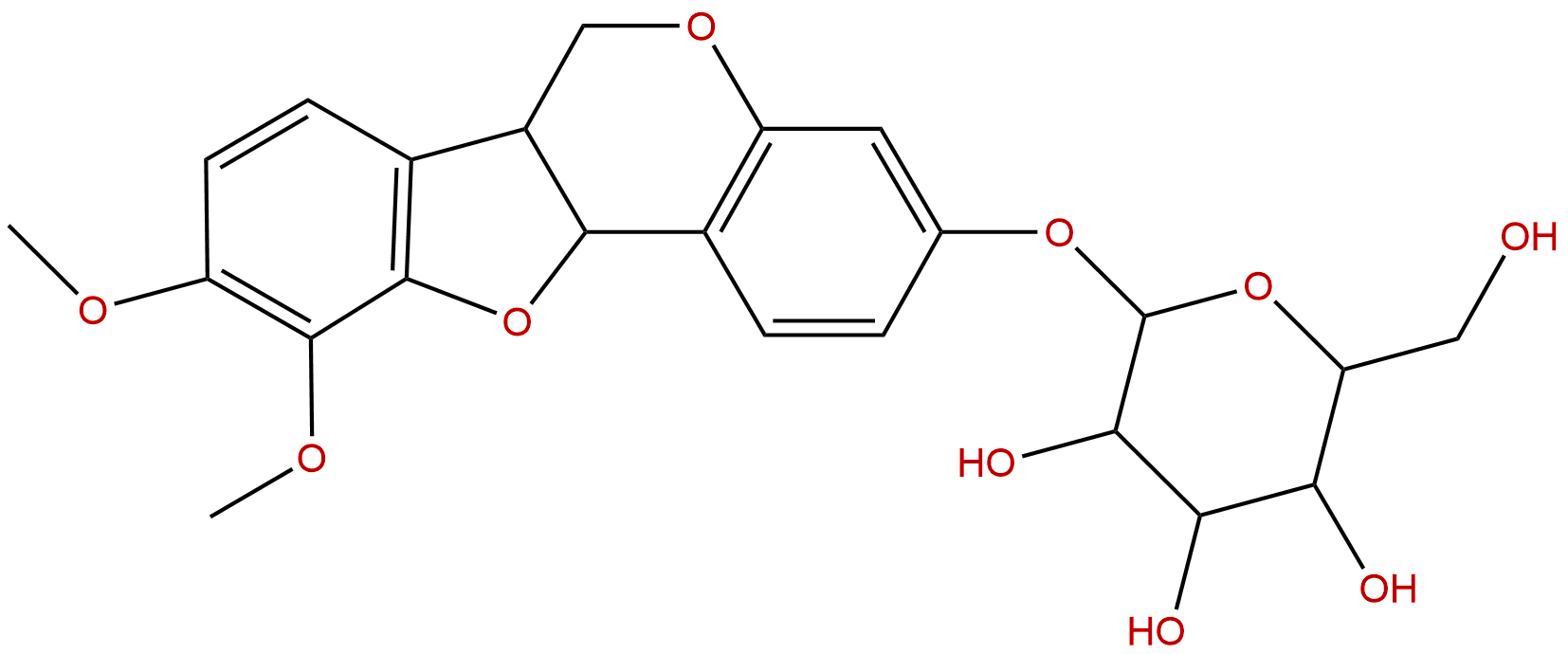


Product name: Methylnissolin-3-O-glucoside
Synonym name:
Catalogue No.: BP1712
Cas No.: 94367-42-7
Formula: C23H26O10
Mol Weight: 462.451
Botanical Source: Astragalus Root
Physical Description:
Type of Compound:
Purity: 95%~99%
Analysis Method: HPLC-DAD or/and HPLC-ELSD
Identification Method: Mass, NMR
Packing: Brown vial or HDPE plastic bottle
The product could be supplied from milligrams to grams. Inquire for bulk scale.
We provide solution to improve the water-solubility of compounds, thereby facilitating the variety of activity tests and clinic uses.
For Reference Standard and R&D, Not for Human Use Directly.
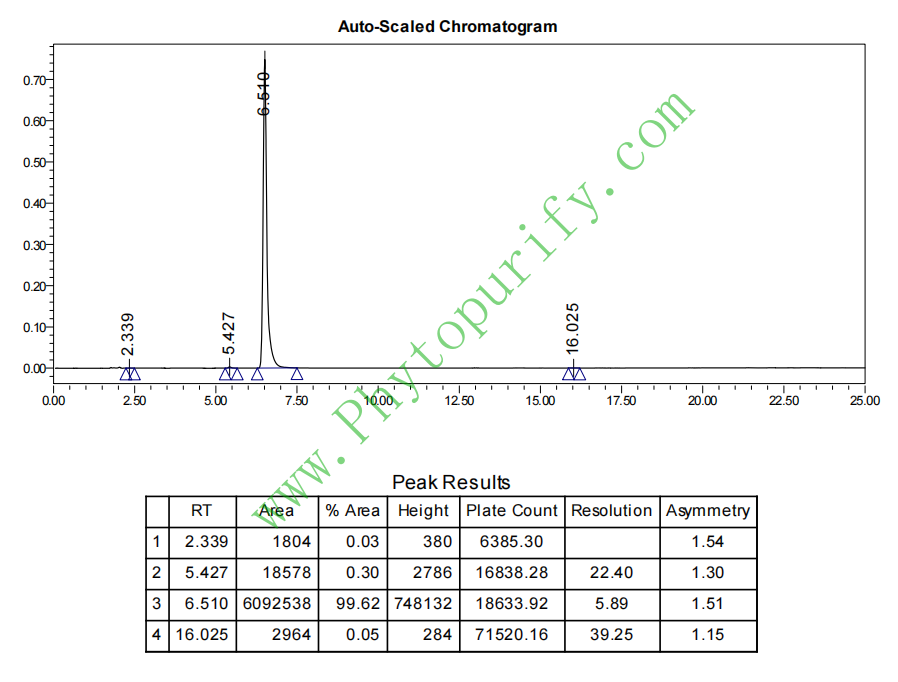
HPLC of Methylnissolin-3-O-glucoside
Storage conditions:Short-term storage at 2~8℃, long-term storage at -20 ~ -80℃
136.3000
.5775
.5775
1.0127
.7531
.7734
Low
71.1665
4.2361
Yes
No
No
No
No
No
0.0
Yes
Yes
No
Yes
Natural products have always been an important source of innovative drug discovery, and their unique chemical structures and diverse biological activities provide valuable molecular templates for tackling complex diseases. Isoflavones, as a class of secondary metabolites widely present in leguminous plants, have attracted much attention due to their significant estrogenic activity, antioxidant, anti-inflammatory, and anti-tumor pharmacological effects. Methylnisolin-3-O-glucoside (CAS number: 94367-42-7) is a structurally novel O-glycosylated isoflavone derivative, and its potential anti prostate cancer activity has gradually become a research hotspot in recent years. Prostate cancer is the second most common malignant tumor among men in the world with the second highest incidence rate. Its occurrence and development are closely related to many mechanisms, such as the abnormality of androgen receptor signaling pathway, apoptosis escape, the formation of inflammatory microenvironment, and the production of multidrug resistance. The current treatment methods, especially for castration resistant prostate cancer, still face severe challenges such as limited efficacy and drug resistance. Therefore, the search for novel, efficient, and low toxicity lead compounds for anti prostate cancer has important scientific significance and clinical value. This article aims to systematically review the chemical properties, plant sources, extraction methods, pharmacological activities of Meidi rosewood glycoside, and focus on its multi-target mechanism of action, pharmacological evaluation, and future clinical application prospects in the field of anti prostate cancer. The goal is to provide comprehensive academic references for the in-depth research and development of this compound.
The chemical name of Meidi rosewood glycoside is 3 '- hydroxy-4' - methoxy-7- (β - D-glucopyranosyl) isoflavone, with a molecular formula of C23H24O10 and a molecular weight of 462.4510. Structurally, the compound is centered around isoflavones, with a β - D-glucosyl group connected to the 7th position of its A ring via an oxygen glycosidic bond, which is a key structural feature for improving its water solubility; The B ring has a substitution pattern of 3 '- hydroxyl and 4' - methoxy groups, and this adjacent hydroxyl methoxy structure is usually associated with strong antioxidant and free radical scavenging activity. The introduction of glycosylation not only changes its hydrophilicity and hydrophobicity, but may also affect its interaction mode with target proteins and metabolic fate in vivo.
Based on its calculated physicochemical parameters, Meidi rosewood glycoside exhibits typical polar molecular properties. Its lipid water partition coefficient (LogP) is 0.5775, indicating that the compound has moderate lipophilicity but overall leans towards hydrophilicity. The topologically polar surface area (TPSA) is as high as 136.30 Å ², mainly attributed to the numerous oxygen atoms (sugar and phenolic hydroxyl groups) in the molecule, indicating good water solubility and poor membrane permeability. The calculated water solubility value is 1.0127, further confirming its good water solubility, which is beneficial for its development in water-based formulations. These physicochemical properties collectively determine its initial pharmacokinetic behavior: lower LogP and higher TPSA typically indicate weaker ability to cross the blood-brain barrier, which is consistent with the evaluation of "blood-brain barrier: low", but for drugs that primarily act on peripheral organs such as the prostate, this may actually reduce the potential risk of central nervous system side effects. In addition, preliminary toxicity predictions indicate that the hERG inhibition risk is "no", and the Ames test result is 0.0, suggesting that it may have a lower risk of cardiac toxicity and mutagenicity, providing preliminary positive signals for its safety evaluation.
Meidi rosewood glycoside is mainly isolated from medicinal plants such as Pterocarpus and Astragalus in the Leguminosae family. These plants are often used in traditional medicine to replenish qi, promote blood circulation, reduce inflammation, and enhance immunity. For example, in the study of the chemical composition of various Astragalus membranaceus medicinal herbs, the presence of Meidi rosewood glycoside and its aglycone can often be found.
Extracting Meidi rosewood glycoside from plant materials usually follows the conventional process of natural product chemistry. Firstly, crush the dried plant roots, stems, or leaves and extract them using solvents suitable for polar components. Due to the strong polarity brought by its glycoside structure, methanol, ethanol, or ethanol water mixed solvents are commonly used extraction media. Extraction methods include traditional hot reflux extraction, ultrasound assisted extraction, and microwave-assisted extraction, the latter of which can effectively improve extraction efficiency and shorten time.
After filtration and concentration, the crude extract needs to be separated and purified through a series of chromatographic techniques. Usually, macroporous adsorption resin column chromatography is used first, utilizing its adsorption properties and molecular sieve action, gradient elution is carried out with water and different concentrations of ethanol to preliminarily enrich flavonoid glycosides. Subsequently, further fine separation was performed using silica gel column chromatography, reverse phase silica gel column chromatography (such as ODS-C18), and high performance liquid chromatography (HPLC). The final structural identification relies on modern spectroscopic techniques, including mass spectrometry (MS) for determining molecular weight, and nuclear magnetic resonance hydrogen spectroscopy (1H NMR) and carbon spectroscopy (13C NMR) for analyzing its planar and stereochemical structure, particularly the connection positions and configurations of sugar groups. At present, the standard product of this compound has been supplied, laying the foundation for subsequent pharmacological activity screening and quality control research.
The pharmacological activity research of Meidi rosewood glycoside mainly focuses on its anti-tumor effects, especially in the treatment of prostate cancer, while also involving other biological activities.
1. Anti prostate cancer activity
This is the pharmacological effect of Meidi rosewood glycoside that has received the most attention. Multiple in vitro studies have shown that Meidi rosewood glycoside can significantly inhibit the proliferation of various prostate cancer cell lines (such as LNCaP, PC-3, DU145) in a dose-dependent and time-dependent manner. Its function is not limited to inducing cell cycle arrest (such as blocking cells in the G0/G1 phase), but more importantly, it can effectively induce tumor cell apoptosis. In animal models, Meidi rosewood glycoside has also shown the potential to inhibit the growth of prostate tumors, and its toxicity to normal cells is relatively low, indicating its certain selectivity.
2. Antioxidant and anti-inflammatory activities
Thanks to its flavonoid core and phenolic hydroxyl structure, Meidi rosewood glycoside exhibits strong free radical scavenging ability, such as scavenging DPPH and ABTS free radicals. The antioxidant and anti-inflammatory effects are closely linked. Research has shown that it can inhibit the excessive production of inflammatory mediators (such as nitric oxide and prostaglandin E2) induced by stimuli such as lipopolysaccharides (LPS), as well as the expression of pro-inflammatory cytokines (such as TNF - α and IL-6). Chronic inflammation is one of the important driving factors for the occurrence and development of prostate cancer, therefore this activity complements its anti-tumor effect.
3. Other potential activities
As a derivative of isoflavones, Meidi rosewood glycoside may have certain estrogen receptor regulatory effects, especially its potential selective effect on estrogen receptor beta (ESR2), which plays an important role in maintaining prostate tissue health. In addition, preliminary studies suggest that it may have antibacterial and neuroprotective activities, but more evidence is needed to support it.
The anti prostate cancer effect of Meidi rosewood glycoside is not through a single pathway, but exhibits the characteristics of multi-target and multi pathway synergy, which provides the possibility for it to overcome tumor heterogeneity and drug resistance. Existing research has revealed its interactions with multiple key target proteins:
Inducing apoptosis and regulating BCL2 family Meidi rosewood glycoside can upregulate pro apoptotic proteins (such as Bax) and downregulate the expression of anti apoptotic protein BCL2, thereby reducing the BCL2/Bax ratio and inducing cell apoptosis through the mitochondrial pathway. This is one of its core mechanisms for directly killing cancer cells.
Inhibition of STAT3 signaling pathway STAT3 is an important oncogenic transcription factor, and sustained activation of STAT3 promotes cell proliferation, survival, and suppresses immune surveillance. Meidi rosewood glycoside can inhibit the phosphorylation (activation) of STAT3, block its nuclear translocation and the transcription of downstream target genes (such as Cyclin D1, BCL2), thereby inhibiting tumor growth.
Regulating kinase and phosphatase activity Research suggests that Meidi rosewood glycoside may affect the activity of protein kinase C α (PRKCA), which is involved in regulating cell proliferation and migration. Meanwhile, it is also predicted to potentially act on protein tyrosine phosphatase 1B (PTPN1), which plays a role in insulin and leptin signaling, and its relationship with cancer metabolism is an emerging research field.
Regulating nuclear transcription factors Meidi rosewood glycoside may inhibit inflammation related pro cancer signals by affecting the activity of nuclear factor kappa B (NF - κ B, whose key subunit is RELA). On the other hand, it may activate the key factor NFE2L2 (Nrf2) for antioxidant stress, enhancing the cell's antioxidant defense ability. This, in conjunction with its direct antioxidant effect, protects normal cells and may make cancer cells more sensitive to oxidative stress-induced apoptosis.
Affects drug transport and DNA metabolism Meidi rosewood glycoside is predicted to interact with multidrug resistance protein ABCB1 (P-gp), which may indicate that it may be influenced by efflux pumps or have the potential to regulate drug resistance. In addition, the potential interaction with topoisomerase I (TOP1) suggests that it may interfere with DNA replication and repair.
Hormone receptor regulation The potential role of estrogen receptor beta (ESR2) deserves attention. ESR2 is generally considered to have protective effects against proliferation and differentiation in the prostate. If Meidi rosewood glycoside can selectively activate ESR2, it may provide a treatment strategy different from traditional anti androgen therapy.
Inhibit inflammasome The association with caspase-1 (CASP1) suggests that Meidi rosewood glycoside may inhibit the NLRP3 inflammasome mediated cell pyroptosis pathway, thereby alleviating chronic inflammation in the tumor microenvironment.
In summary, Meidi rosewood glycoside exerts its anti prostate cancer effect through an interwoven molecular network, and its multi-target properties are an important advantage.
Based on calculations and preliminary experimental data, the pharmacological characteristics of Meidi rosewood glycoside have both advantages and challenges.
Advantage aspects Good water solubility (~1.0 mg/mL) is beneficial for the formulation and dissolution after oral administration. The prediction of no hERG inhibition and Ames mutagenicity provides preliminary optimistic expectations for its safety. The molecular weight is moderate (462.45), meeting most of the requirements in the five rules for generic drugs.
Challenges and Unknown Fields:
1. Absorption and bioavailability As a highly polar glycoside compound, its oral absorption may be limited. Glycoside components are easily hydrolyzed by microbiota or glycosidases on the intestinal mucosa in the intestine, producing aglycones (such as metformin), which have increased lipid solubility but may alter activity. Therefore, the oral bioavailability and whether the prototype drug or metabolite plays a major role are the core issues in pharmacokinetic research.
2. distribution The predicted blood-brain barrier permeability is low, which is unfavorable for treating central nervous system diseases, but may reduce central side effects for peripheral diseases such as prostate cancer. Experimental research is needed to investigate its distribution and concentration in the target organ prostate.
3. Metabolism and excretion The hydrolysis of glycosidic bonds is its main phase I metabolic pathway. The generated aglycones may undergo further phase II metabolism, such as glucuronidation and sulfation. The detailed metabolic product spectrum, enzyme systems involved in metabolism (such as CYP450 enzymes), and excretion pathways (kidney/gallbladder) all need to be clarified through in vitro and in vivo experiments.
4. Formulation strategy To improve its bioavailability, advanced formulation technologies such as nanocrystals, liposomes, phospholipid complexes, or prodrug modifications (such as protecting phenolic hydroxyl groups) may be required to enhance its membrane permeability and metabolic stability.
At present, there are few reports on the pharmacokinetic studies of the Meidi rosewood glycoside system, which is a key gap that must be filled in its progress towards drug development.
As a natural product with multi-target anti prostate cancer activity, Meidi rosewood glycoside has broad clinical application prospects, but the road ahead is long and requires in-depth exploration from the following directions:
As a novel lead compound for anti prostate cancer Its multi-target mechanism of action, particularly its simultaneous impact on apoptosis (BCL2), inflammation (STAT3, RELA), and oxidative stress (NFE2L2) pathways, makes it promising for the treatment of castration resistant prostate cancer, especially those with high heterogeneity and drug resistance. It is possible to explore the efficacy of its monotherapy or in combination with existing chemotherapy drugs (such as docetaxel) and anti androgen drugs, in order to generate synergistic effects, reduce drug dosage and toxic side effects.
Prostate cancer targeting specific molecular subtypes In depth research on its exact relationship with targets such as ESR2 and PTPN1 may reveal that it has better therapeutic effects on certain subtypes of prostate cancer that rely on specific signaling pathways, thereby achieving a certain degree of precision medicine.
Chemical structure optimization and derivative development Using it as the parent nucleus for structural modification is a key strategy to enhance drug efficacy. For example, modifying sugar groups to improve metabolic stability; Derive phenolic hydroxyl groups to regulate lipid solubility and target affinity; Or synthesize derivatives of its glycoside (Meidi rosewood) to explore compounds with better activity and pharmacokinetic properties.
In depth study of pharmacokinetics and formulation Comprehensive preclinical pharmacokinetic studies must be conducted to clarify its ADME (absorption, distribution, metabolism, excretion) characteristics. Based on this, developing a suitable oral or injectable new drug delivery system is the technical guarantee to promote its entry into the subsequent development stage.
Expand other indications Based on its antioxidant, anti-inflammatory, and potential neuroprotective activities, its potential applications in chronic inflammatory diseases, metabolic diseases (through PTPN1 targets), or neurodegenerative diseases can be explored.
Security system evaluation Before advancing the development, it is necessary to complete a systematic preclinical toxicology study, including acute toxicity, long-term toxicity, reproductive toxicity, etc., to comprehensively evaluate their safety.
Meidi rosewood glycoside is an active isoflavone glycoside discovered from traditional medicinal plants. Its unique chemical structure endows it with good water solubility and potential for multi-target pharmacological effects. The current research has preliminarily revealed its significant activity in anti prostate cancer and its network of action involving multiple signaling pathways such as apoptosis, inflammation, and oxidative stress, demonstrating its enormous value as a novel anti-tumor lead compound. However, there are still many scientific issues that need to be addressed from lead compounds to candidate drugs, especially the pharmacokinetic behavior of their systems, the validation of their precise targets in vivo, and the improvement of their drug properties based on structural optimization and formulation technology. In the future, through interdisciplinary collaboration and combining modern research methods in medicinal chemistry, pharmacology, pharmacy, and clinical medicine, the therapeutic potential of Meidi rosewood glycoside will be deeply explored, which is expected to provide new strategies and weapons for the treatment of major diseases such as prostate cancer, and continue the glorious chapter of natural products in the history of drug discovery.
