Introduction/Overview
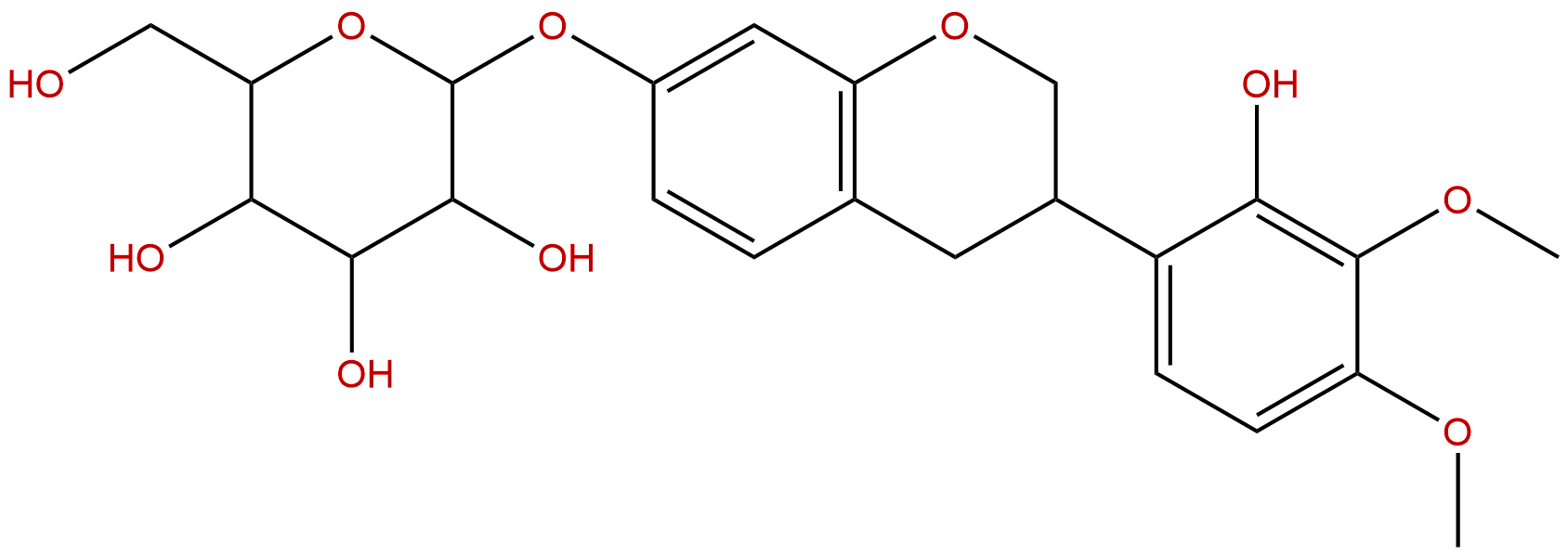
In the field of natural product chemistry and pharmacology research, isoflavones have attracted much attention due to their unique chemical structures and extensive biological activities. Astragalus membranaceus isoflavone-7-O - β - D-glucoside (CAS number: 136087-29-1), as a single glycosylated isoflavone derivative isolated from the traditional Chinese medicinal herb Astragalus membranaceus, has gradually become a research hotspot in recent years. Its chemical structure is (3R) -7,2 '- dihydroxy-3', 4 '- dimethoxyisohuangan-7-O - β - D-glucopyranoside, which belongs to the hydride derivatives of (R) - isohuangane and has typical characteristics of plant metabolites. Traditional Chinese medicine theory holds that Astragalus membranaceus has the effects of "tonifying qi and strengthening the surface, supporting toxins and promoting muscle growth". It is commonly used to treat diseases such as body weakness, chronic diarrhea and prolapse, surface deficiency and sweating, and difficult or prolonged ulceration of carbuncles. These effects are highly consistent with the modern medical concepts of immune regulation, anti-inflammatory and tissue repair promotion. With the deepening of modern pharmacological research, the activities of Huangqi isoflavones in regulating immunity, anti-inflammatory, antioxidant and other aspects have gradually been revealed, especially in promoting the recovery of the body after infection, showing potential application value. This article aims to systematically review the chemical structure, plant origin, pharmacological activity, mechanism of action, medicinal properties, and clinical application prospects of Huangqi isoflavones, in order to provide comprehensive scientific references for the in-depth research and development of this compound.
Chemical structure and physicochemical properties
The molecular formula of Huangqi isoflavones is C23H28O10, with a molecular weight of 464.4670. Its core skeleton is (3R) - isoflavones, which belong to a subclass of flavonoids - isoflavones. Specifically, the compound is substituted with a hydroxyl group at position 2 'and methoxy groups at positions 3' and 4 'of the isoflavane nucleus, forming its unique 7,2' - dihydroxy-3 ', 4' - dimethoxyisoflavane aglycone. Its 7th hydroxyl group is linked to a molecule of β - D-glucopyranose through a glycosidic bond, forming an O-glycoside. This glycosylation modification typically significantly improves the water solubility and bioavailability of the parent aglycone, and may affect its biological activity and targeting.
From the analysis of physical and chemical properties, the lipid water partition coefficient (LogP) of the compound is 0.6887, indicating its good hydrophilicity, which is related to the introduction of polar sugar groups and multiple hydroxyl and methoxy groups in the molecule. Its topological polar surface area (TPSA) is as high as 147.3000 Å ², further confirming its high molecular polarity. The calculated water solubility value is 1.2062, which belongs to the solubility range, providing favorable conditions for its absorption and distribution in organisms. However, higher polarity and TPSA also mean that its ability to penetrate lipid bilayer membranes may be limited, and its blood-brain barrier permeability is predicted to be "low", suggesting that it may have difficulty entering the central nervous system to exert its effects. In terms of preliminary safety prediction, the compound showed no inhibitory activity on hERG potassium channels (predicted as' no '), indicating a low potential risk of arrhythmia; The Ames test predicted a result of 0.0, indicating that it may not be mutagenic. These preliminary pharmacological parameters have laid a certain foundation for its subsequent development.
Plant sources and extraction methods
Huangqi isoflavones mainly come from the dried roots of leguminous plants such as Astragalus membranaceus (Fisch.) Bge. var. mongholicus (Bge.) Hsiao or Astragalus membranaceus (Fisch.) Bge., namely the traditional Chinese medicine Huangqi. Huangqi, as a famous Qi tonifying medicine, has a complex chemical composition, mainly including polysaccharides, saponins, flavonoids, and isoflavones. Huangqi isoflavones are one of the representative isoflavones.
Its extraction and separation usually follow the conventional process of natural product chemistry. Firstly, the Huangqi medicinal herb is crushed and subjected to reflux extraction or ultrasound assisted extraction using polar solvents such as methanol, ethanol, or aqueous ethanol to fully extract polar and moderately polar components, including Huangqi isoflavones. The extract is concentrated under reduced pressure to obtain a paste. Subsequently, preliminary enrichment was carried out using macroporous adsorption resin column chromatography, often using gradient elution with different concentrations of ethanol water system. Huangqi isoflavones were mostly found in the elution sites of medium and high concentrations of ethanol. Further purification requires the combination of silica gel column chromatography, reverse phase silica gel column chromatography (such as ODS), dextran gel column chromatography (such as Sephadex LH-20), and high performance liquid chromatography (HPLC). The chemical structure can be ultimately identified through techniques such as nuclear magnetic resonance (NMR, including 1H-NMR and 13C-NMR), mass spectrometry (MS), and optical rotation determination. At present, there are also studies exploring the use of modern separation technologies such as high-speed countercurrent chromatography to improve its separation efficiency. Optimizing the extraction process, such as using response surface methodology to determine the optimal extraction temperature, time, and solvent ratio, is of great significance for achieving large-scale preparation of the compound.
Pharmacological activity research
A large number of in vitro and in vivo pharmacological studies have shown that Astragalus membranaceus isoflavones have various biological activities, among which the most prominent are their immunomodulatory and anti-inflammatory effects, which are closely related to the traditional efficacy of Astragalus membranaceus in "supporting toxins and promoting muscle growth" and promoting infection recovery.
-
Immune regulatory effect Research has shown that Huangqi isoflavones can regulate the functions of various immune cells. In immunosuppression or immune dysfunction models (such as cyclophosphamide induced immunosuppression mice), this compound can promote splenic lymphocyte proliferation, increase natural killer (NK) cell activity, and enhance macrophage phagocytic function. It can promote the activation and proliferation of T lymphocyte subsets (such as CD4+T cells), thereby improving the cellular immune status of the body. This positive regulatory effect on adaptive immunity is the basis for helping the body eliminate pathogens and restore immune balance.
-
anti-inflammatory effect In the lipopolysaccharide (LPS) - induced macrophage (such as RAW264.7) inflammation model, astragaloside can significantly inhibit the excessive production of nitric oxide (NO), prostaglandin E2 (PGE2), and key pro-inflammatory cytokines such as tumor necrosis factor - α (TNF - α), interleukin-6 (IL-6), and interleukin-1 β (IL-1 β). In animal inflammation models such as mouse ear swelling models and colitis models, it also exhibits good anti-inflammatory effects, reducing tissue edema and inflammatory cell infiltration.
-
Antioxidant and anti apoptotic effects This compound has the ability to scavenge free radicals such as DPPH and ABTS, and can increase the activity of antioxidant enzymes such as superoxide dismutase (SOD) and glutathione peroxidase (GSH Px) in cells, reduce the level of malondialdehyde (MDA), and alleviate oxidative stress damage. In cell damage models induced by inflammation or chemical drugs, it can also exert anti apoptotic effects and protect tissue cells by regulating the expression ratio of Bcl-2/Bax proteins and inhibiting caspase-3 activation.
-
Promote infection recovery Taking into account its immune enhancement, anti-inflammatory, and antioxidant effects, Huangqi isoflavones have shown potential in promoting the recovery of the body after bacterial or viral infections. It can not only accelerate pathogen clearance by regulating immunity, but also alleviate secondary damage to body tissues (such as lungs, liver, and intestines) caused by infection by inhibiting excessive inflammatory reactions and oxidative damage, creating a favorable microenvironment for tissue repair.
Mechanism of action and molecular targets
The pharmacological effects of Huangqi isoflavones on promoting infection recovery are closely related to their regulation of multiple key signaling pathways and molecular targets. Existing research suggests that its mechanism of action network may revolve around the following core targets:
-
Toll like receptor 4 (TLR4)TLR4 is a key pattern recognition receptor for recognizing Gram negative bacterial lipopolysaccharides (LPS), and its overactivation is the core initiating factor in severe infectious inflammatory responses such as sepsis. Research has shown that Huangqi isoflavones may inhibit the overactivation of nuclear factor kappa B (NF - κ B) and mitogen activated protein kinases (MAPKs) pathways by intervening in the activation or downstream signaling of TLR4, thereby reducing the explosive release of pro-inflammatory mediators such as TNF - α and IL-6 from the source. This may be an important molecular basis for their anti-inflammatory effects.
-
Interleukin-2 (IL-2) and CD4 molecule IL-2 is mainly produced by activated CD4+T cells and is a key cytokine for T cell proliferation, differentiation, and survival. It is crucial for maintaining adaptive immune responses. Huangqi isoflavones can promote the production of IL-2 by immune cells (such as splenic lymphocytes) and may promote the activation and proliferation of CD4+T cells directly or indirectly. Upregulation of the IL-2/CD4 pathway helps to rebuild and enhance the body's specific cellular immunity in the later stages of infection, promoting the restoration of immune balance.
-
Interferon - γ (IFN - γ) and Signal Transduction and Transcription Activation Factor 1 (STAT1)IFN - γ is mainly produced by activated T cells and NK cells, and is a core cytokine that activates macrophages, enhances their phagocytic and bactericidal functions. IFN - γ induces the expression of a series of immune related genes by activating the JAK-STAT signaling pathway, particularly phosphorylating STAT1. Huangqi isoflavones have been shown to upregulate the expression of IFN - γ and promote the phosphorylation activation of STAT1. On the one hand, this enhances the antibacterial ability of innate immune cells such as macrophages, and on the other hand, forms a positive feedback loop with adaptive immunity (T cells), synergistically promoting pathogen clearance.
In summary, the mechanism of action of Huangqi isoflavones exhibits multi-target and multi pathway characteristics. It may alleviate immunopathological damage by inhibiting TLR4/NF - κ B mediated excessive inflammatory response; At the same time, by positively regulating the IL-2/CD4 T cell axis and the IFN - γ/STAT1 pathway, the specific and non-specific immune responses of the body against pathogens are enhanced. This bidirectional regulatory effect of "anti-inflammatory" and "strong immune" corresponds precisely to the two key links of "controlling damage" and "promoting repair" required in the process of infection recovery, forming the core mechanism network of its pharmacological activity.
Evaluation of drug properties and pharmacokinetics
Based on computational chemistry and preliminary experimental data, Huangqi isoflavones have shown certain potential for drug development, but their comprehensive pharmacokinetic characteristics still need further exploration.
Preliminary evaluation of drug properties As mentioned earlier, its molecular weight is moderate (464.47), and its LogP value (0.69) meets the requirements for LogP (<5) in the "Five Rules" for generic drugs. The TPSA (147.3 Å ²) is slightly higher but still within an acceptable range. Good water solubility is beneficial for the development of formulations. In terms of safety warning, the absence of hERG inhibition and mutagenic (Ames) risk is a significant advantage. However, its low blood-brain barrier permeability suggests that it may not be suitable for the treatment of central nervous system related diseases. However, for its main immune regulation and anti-inflammatory indications (mostly peripheral effects), this may not be a disadvantage, but rather may reduce central side effects.
Prospects of Pharmacokinetic Research At present, there are insufficient reports on the pharmacokinetic studies of the Huangqi isoflavones system, but speculation can be made based on its structural characteristics and similar compounds. As a glycoside compound, it may undergo the following processes after oral administration: ① absorb In the upper part of the intestine, it may be partially absorbed as a prototype; More importantly, under the action of β - glucosidase secreted by gut microbiota, hydrolysis occurs, removing the glucose group and generating aglycones (7,2 '- dihydroxy-3', 4 '- dimethoxyisohuangane). Glycosides have enhanced lipid solubility and are more easily absorbed by the intestine. Therefore, its bioavailability may be greatly influenced by the status of gut microbiota and individual differences. ② distribution The absorbed prototype drugs and metabolites (aglycones and their II complexes) are mainly distributed in blood rich tissues and organs, such as the liver, spleen, lungs, etc., which are consistent with their immune regulatory target organs. Due to its high polarity, it is predicted that its tissue permeability is moderate, and the plasma protein binding rate needs to be experimentally determined. ③ Metabolism The liver is the main site of its metabolism. Glycosides may undergo extensive phase I metabolism (such as hydroxylation, demethylation) and phase II binding reactions (such as glucuronidation, sulfation). The prototype drug itself is a glucoside, and it may also directly undergo II phase binding. ④ excretion Metabolites are mainly excreted in urine through the kidneys, and some may also enter the intestine through bile and be excreted in feces.
In the future, it is necessary to establish sensitive and exclusive analytical methods (such as LC-MS/MS) to systematically study key pharmacokinetic parameters such as absolute bioavailability, half-life, distribution volume, clearance rate, etc. in animal models (rats, mice) and humans, and clarify their main metabolites and metabolic pathways. This is the necessary path for their clinical development.
Clinical application prospects and prospects
Huangqi isoflavones, as monomers with clear biological activity in Huangqi, have clinical application prospects mainly focused on the two core areas of "immune regulation" and "anti-inflammatory", especially in the field of adjuvant therapy and rehabilitation of infection related diseases.
-
Potential clinical application directions:
- Recovery of immune function after infection Suitable for patients who have experienced severe bacterial or viral infections (such as severe pneumonia, sepsis recovery period, chronic viral infections), have low immune function, fatigue, and recurrent infections. Can be used as an adjuvant medication to promote the recovery of lymphocyte count and function, and shorten the rehabilitation period.
- Chronic inflammatory diseases Its anti-inflammatory mechanism suggests that it may be beneficial for certain chronic low-grade inflammation related diseases, such as ulcerative colitis and stable phase treatment of chronic obstructive pulmonary disease (COPD), for controlling inflammation and reducing acute exacerbations.
- Adjuvant therapy of tumor radiotherapy and chemotherapy Chemotherapy often leads to bone marrow suppression and immune damage in patients. The immune enhancing effect of Huangqi isoflavones may be used to alleviate leukopenia caused by radiotherapy and chemotherapy and improve patients' quality of life, but its interaction with anti-tumor drugs needs to be carefully evaluated.
- Wound healing promoter: In combination with its anti-inflammatory, antioxidant and potential growth promoting factor expression, it can be used to explore the development of topical agents to promote the healing of chronic wounds such as diabetes foot ulcers and postoperative refractory wounds.
-
Challenges and Prospects Faced:
- Deepening basic research Currently, most research is focused on cell and animal models, and more high-quality preclinical studies are needed, especially to validate its efficacy and safety in large animal infection models. The study of the mechanism of action needs to go from phenomenon correlation to direct molecular interaction verification (such as target binding experiments, gene knockout/knockdown model verification).
- Drug development pathway The system needs to complete pharmacological, pharmacokinetic, and toxicological studies that comply with new drug development standards. Given its acceptable water solubility but moderate membrane permeability, it may be necessary to improve its oral bioavailability or develop new routes of administration through formulation technologies such as nanocarrier systems, phospholipid complexes, and prodrug modifications.
- Quality Control and Standardization As a natural product, it is necessary to establish quality control standards for the entire process from raw materials (Astragalus membranaceus) to finished products (pharmaceutical preparations) to ensure stable and controllable content of active ingredients.
- Positioning of Integrated Traditional Chinese and Western Medicine Explore its synergistic effect with traditional Huangqi formula (such as Buzhong Yiqi Tang, Yupingfeng San), clarify its position in the formula, or as a new monomeric drug, find precise indication positioning in the modern medical framework.
Conclusion
Huangqi isoflavones are a class of isoflavones with a clear chemical structure and multiple pharmacological activities discovered from the traditional Chinese medicine Huangqi. It inherits the core pharmacological substance basis of Huangqi's "strengthening the body and consolidating the foundation", and exhibits significant activity in regulating immunity, inhibiting excessive inflammation, antioxidant and other aspects through multi-target and multi pathway mechanisms, especially in promoting the recovery of body function after infection. It has unique application potential. Although it has shown certain advantages in the initial prediction of drug properties, successfully developing it from a potential natural compound into a clinical drug still faces a series of scientific and technological challenges, including in-depth elucidation of the mechanism of action, systematic pharmacokinetic research, and breakthroughs in formulation processes. In the future, through interdisciplinary cooperation, in-depth research based on modern pharmacology and drug development norms is expected to transform this ancient wisdom crystal into a modern drug that benefits patients, providing new options for the prevention and treatment of infectious diseases and immune related diseases, and also providing valuable examples for the modernization of traditional Chinese medicine and innovative drug research and development of natural products.