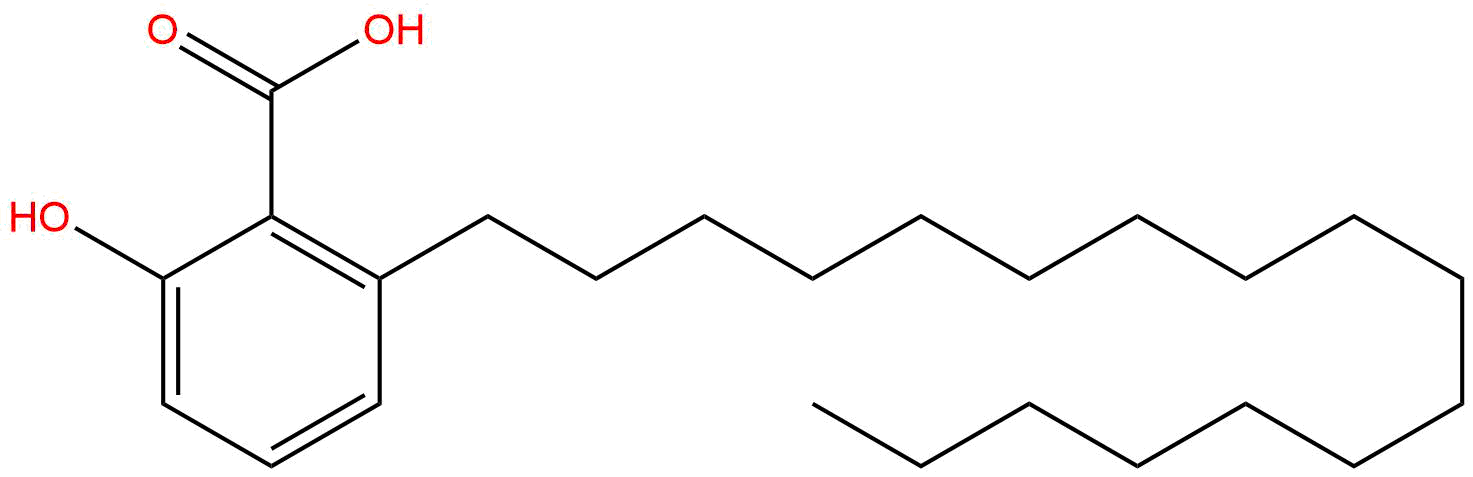


Product name: Ginkgolic acid C17:0
Synonym name: 2-Heptadecyl-6-hydroxybenzoic acid
Catalogue No.: BP2429
Cas No.: 20261-39-6
Formula: C24H40O3
Mol Weight: 376.581
Botanical Source:
Type of Compound: Phenols
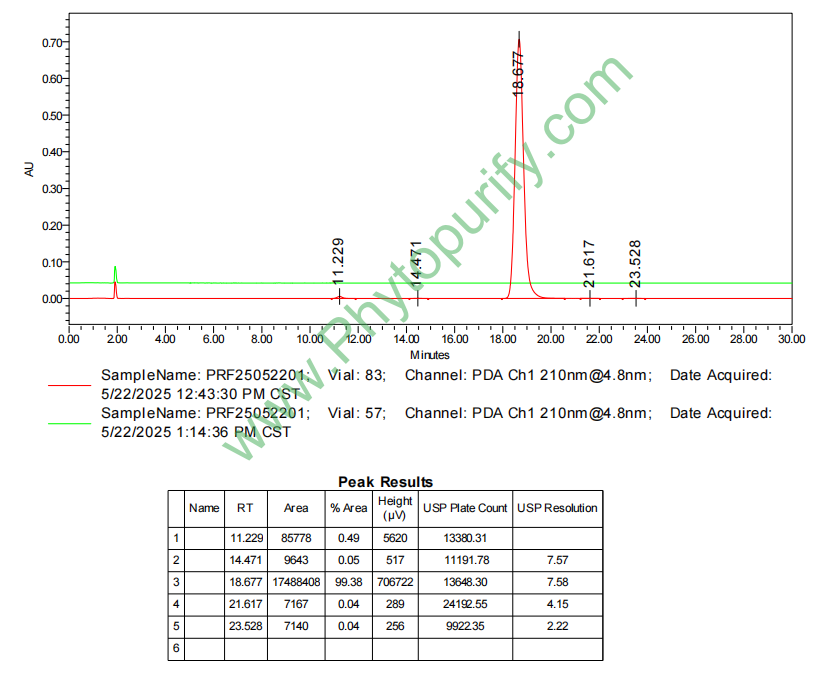
Purity: 95%~99%
Analysis Method: HPLC-DAD or/and HPLC-ELSD
Identification Method: Mass, NMR
Packing: Brown vial or HDPE plastic bottle
Storage: Store in a well closed container, protected from air and light. Put into refrigerate or freeze for long term storage.
Whenever possible, you should prepare and use solutions on the same day. However, if you need to make up stock solutions in advance, we recommend that you store the solution as aliquots in tightly sealed vials at -20℃. Generally, these will be useable for up to two weeks.
The product could be supplied from milligrams to grams
Inquire for bulk scale.
For Reference Standard and R&D, Not for Human Use Directly.
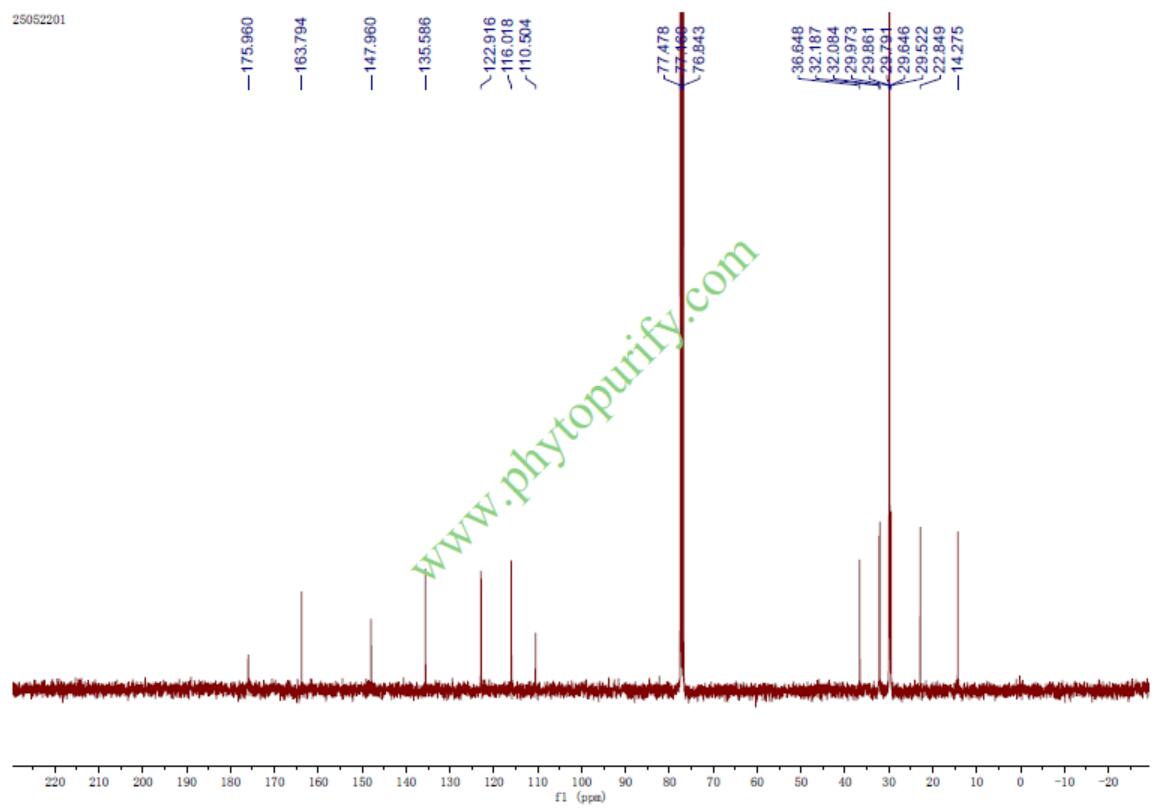
NMR of Ginkgolic acid C17:0
HPLC of Ginkgolic acid C17:0
Storage conditions:Short-term storage at 2~8℃, long-term storage at -20 ~ -80℃
55.1800
7.5000
7.5000
No
Yes
Unknown
Unknown
Unknown
Unknown
Unknown
Unknown
Natural products, as an important source of drug discovery, play an irreplaceable role in the long-term struggle between humans and diseases. Ginkgo biloba(Ginkgo biloba L. As a "living fossil" plant, its extracts play an important role in both traditional medicine and modern drug development. For a long time, Ginkgo biloba extract (EGb 761) has been widely known for its effects on improving cognitive function and promoting blood circulation. Its main active ingredients are believed to be flavonoids and terpenoids. However, there is also a class of bioactive components in Ginkgo biloba - ginkgolic acids, which are a unique class of alkylphenolic acid compounds.
Ginkgolic acid C17:0 (CAS number: 20261-39-6) is an important member of the ginkgolic acid family, and its chemical name is 6- (8-pentadecenyl) salicylic acid or 6- (pentadecyl) salicylic acid. It belongs to the saturated side chain of ginkgolic acid. Compared with other members of the ginkgolic acid family (such as C13:0, C15:1, C17:1, etc.), C17:0 has a fully saturated 17 carbon alkyl side chain, which endows it with unique physicochemical properties and biological activity. For a long time, ginkgolic acid has been regarded as a "toxic component" or "sensitizing component" that needs to be controlled in Ginkgo biloba extracts. However, in-depth research in recent years has revealed that these compounds have shown remarkable pharmacological activities in multiple fields such as anti-tumor, anti-inflammatory, antibacterial, and neuroprotective effects, and their potential medicinal value is gradually being re recognized and evaluated.
This article aims to systematically review the research status of ginkgolic acid C17:0, and conduct in-depth analysis from multiple dimensions such as chemical structure, plant origin, pharmacological activity, mechanism of action, and medicinal evaluation, in order to provide scientific reference for the further development and utilization of this natural product.
The chemical structure of ginkgolic acid C17:0 exhibits typical alkylphenolic acid characteristics. Its parent nucleus is salicylic acid (2-hydroxybenzoic acid), with a saturated heptadecanyl side chain (- C17H35) attached to the 6th position of the benzene ring. The molecular formula is C24H40O3 and the molecular weight is 392.57 g/mol. The key functional groups in this structure include: one carboxyl group (- COOH), one phenolic hydroxyl group (- OH), and one long-chain alkyl group. Phenolic hydroxyl and carboxyl groups are located adjacent to each other, forming intramolecular hydrogen bonds. This structural feature has a significant impact on their physicochemical properties and biological activity.
From the perspective of physicochemical properties, ginkgolic acid C17:0 exhibits significant lipophilicity. The calculated LogP value is as high as 7.50, indicating that the compound has extremely strong lipid solubility, is easily able to penetrate biological membranes, and is enriched in lipid environments. The topologically polar surface area (TPSA) is 55.18 Å ², slightly higher than the classical oral medication rule (which typically requires TPSA<140 Å ²), but still within an acceptable range. The number of hydrogen bond acceptors is 3 (two oxygen atoms from carboxyl and one from phenolic hydroxyl), and the number of hydrogen bond donors is 2 (one carboxyl and one phenolic hydroxyl). These parameters indicate that ginkgolic acid C17:0 may be mainly transported across membranes through passive diffusion in vivo, but its high lipophilicity may also lead to widespread tissue distribution and potential accumulation effects.
It is worth noting that the saturated side chain of ginkgolic acid C17:0 results in differences in physicochemical properties compared to its unsaturated counterparts (such as C17:1, C15:1). Saturated alkyl chains have higher flexibility, but lack the conformational limitation caused by double bonds, which may affect their interaction mode with biological targets. In addition, the compound is relatively stable under acidic conditions, but may undergo hydrolysis or oxidative degradation in alkaline environments. Its UV absorption characteristics mainly come from the salicylic acid nucleus, with characteristic absorption peaks at around 210 nm and 245 nm.
Ginkgolic acid C17:0 mainly comes from the Ginkgo biloba plant in the Ginkgo family(Ginkgo biloba L. The various organizational parts of the plant, including leaves, outer seed coat, root bark, and bark. Among them, Ginkgo biloba leaves are the most widely studied source, but it is worth noting that the content of ginkgolic acid in Ginkgo biloba leaves is usually low (about 0.1% -1% of dry weight), while the content is relatively high in the outer seed coat of Ginkgo biloba (i.e. the fleshy outer skin of the white fruit). There are significant differences in the composition and content of ginkgolic acids among ginkgo plants from different origins, harvest seasons, and tree ages.
The biosynthesis pathway of ginkgolic acid in plants belongs to the polyketide pathway, which is catalyzed by fatty acid synthase and polyketide synthase, and gradually synthesized from fatty acids and benzoic acid derivatives as precursors. In plant tissues, ginkgolic acid usually exists in the form of free acid and may also form conjugates with sugars or other small molecules. As a representative of saturated side chains, the content of ginkgolic acid C17:0 is usually lower than that of its unsaturated counterparts (such as C17:1), which may be due to the activity of desaturase in plants, resulting in most alkyl side chains existing in unsaturated form.
In terms of extraction methods, traditional solvent extraction is still the most commonly used approach. Due to its lipophilicity, ginkgolic acid is usually extracted using organic solvents such as ethanol, methanol, acetone, or their mixed solvents. Specifically, the dried and crushed ginkgo raw materials are soaked or percolated in 70% -95% ethanol at room temperature or heating conditions, and the extract is concentrated to obtain a crude extract. Subsequently, using liquid-liquid extraction method, the crude extract was dispersed in a water organic solvent system, and the pH value was adjusted to allow ginkgolic acid to enter the organic phase in the form of free acid, thus achieving preliminary enrichment.
Modern separation and purification techniques have significantly improved the efficiency of obtaining ginkgolic acid C17:0. Silica gel column chromatography is a classic separation method that uses n-hexane ethyl acetate or chloroform methanol systems as mobile phases to separate different ginkgolic acid homologues based on differences in alkyl chain length. High performance liquid chromatography (HPLC), especially preparative HPLC, can achieve the preparation of high-purity ginkgolic acid C17:0. It usually uses a C18 reverse phase column with acetonitrile water (containing a small amount of formic acid or acetic acid) as the mobile phase, and obtains the target compound through gradient elution. In addition, new separation methods such as high-speed countercurrent chromatography (HSCCC) and molecular imprinting technology have also been explored for the separation and purification of ginkgolic acid.
It should be noted that due to the allergenicity and potential cytotoxicity of ginkgolic acid, appropriate safety precautions should be taken during the extraction and purification process to avoid skin contact and inhalation.
In recent years, significant progress has been made in the pharmacological activity research of ginkgolic acid C17:0, which covers multiple fields such as anti-tumor, anti-inflammatory, antibacterial, and neuroprotective effects.
Antitumor activity It is one of the most in-depth research directions on ginkgolic acid C17:0. In vitro experiments showed that the compound had a proliferation inhibitory effect on a variety of tumor cell lines, including human breast cancer cells (MCF-7, MDA-MB-231), human lung cancer cells (A549), human liver cancer cells (HepG2), human colon cancer cells (HT-29) and human melanoma cells. Its half maximal inhibitory concentration (IC50) is usually in the range of 10-50 μ M, and its toxicity to normal cells is relatively low, showing a certain degree of selectivity. It is worth noting that ginkgolic acid C17:0 also exhibits inhibitory activity against drug-resistant tumor cells, suggesting its potential to overcome tumor drug resistance. In terms of in vivo research, in the nude mouse xenograft tumor model, ginkgolic acid C17:0 can significantly inhibit tumor growth, and no significant systemic toxicity was observed.
anti-inflammatory activity It is another important pharmacological characteristic of ginkgolic acid C17:0. Research has shown that this compound can inhibit the inflammatory response of macrophages induced by lipopolysaccharide (LPS), significantly reducing the release of pro-inflammatory cytokines such as tumor necrosis factor - α (TNF - α), interleukin-6 (IL-6), and interleukin-1 β (IL-1 β). In addition, ginkgolic acid C17:0 can inhibit the expression of cyclooxygenase-2 (COX-2) and inducible nitric oxide synthase (iNOS), reduce the production of prostaglandin E2 (PGE2) and nitric oxide (NO). This compound exhibits significant anti-inflammatory effects in both acute inflammation models (such as carrageenan induced foot swelling) and chronic inflammation models (such as collagen induced arthritis).
Antibacterial activity On the one hand, ginkgolic acid C17:0 has inhibitory effects on various pathogenic microorganisms. Research has shown that its inhibitory activity against Gram positive bacteria such as Staphylococcus aureus, Staphylococcus epidermidis, and Bacillus subtilis is superior to Gram negative bacteria such as Escherichia coli and Pseudomonas aeruginosa, with a minimum inhibitory concentration (MIC) typically in the range of 10-50 μ g/mL. In addition, the compound also exhibits inhibitory activity against certain fungi such as Candida albicans and Cryptococcus neoformans. Its antibacterial mechanism may be related to the destruction of bacterial cell membrane integrity, inhibition of bacterial biofilm formation, and interference with bacterial energy metabolism.
Neuroprotective activity It has been a hot research topic in recent years. Ginkgolic acid C17:0 can protect neurons from oxidative stress and glutamate excitotoxicity damage, and reduce neuronal apoptosis. In the Alzheimer's disease model, this compound can inhibit the aggregation and fiber formation of β - amyloid protein (A β), and reduce A β - induced neurotoxicity. In addition, ginkgolic acid C17:0 can inhibit acetylcholinesterase activity, increase synaptic acetylcholine levels, and thus improve cognitive function. In Parkinson's disease models, this compound has a protective effect on dopaminergic neurons and can alleviate 6-hydroxydopamine (6-OHDA) - induced nerve damage.
Other activities It also includes antioxidant activity (clearing free radicals, increasing antioxidant enzyme activity), antiviral activity (inhibiting herpes simplex virus, influenza virus, etc.), antiparasitic activity (killing Leishmania parasites, malaria parasites, etc.), and hypoglycemic activity (improving insulin resistance, promoting glucose uptake).
The pharmacological activity of ginkgolic acid C17:0 originates from its interaction with multiple molecular targets, and its mechanism of action exhibits the characteristics of multiple targets and pathways.
Signal pathway regulation Ginkgolic acid C17:0 can regulate multiple signaling pathways related to cell proliferation, apoptosis, and inflammation. In terms of anti-tumor effects, this compound can inhibit the PI3K/Akt/mTOR signaling pathway, leading to cell cycle arrest and apoptosis induction. At the same time, it can activate the p38 MAPK and JNK stress signaling pathways, promoting tumor cell apoptosis. In addition, the inhibition of the NF - κ B pathway is an important mechanism for its anti-inflammatory activity. Ginkgolic acid C17:0 can prevent the phosphorylation and degradation of I κ B α, thereby inhibiting the nuclear translocation of NF - κ B and the transcription of downstream inflammatory genes.
Epigenetic regulation In recent years, studies have found that ginkgolic acid C17:0 can inhibit the activity of histone deacetylase (HDAC), especially on HDAC1, HDAC2, and HDAC6. This epigenetic regulation may lead to changes in chromatin structure, which in turn can affect gene expression profiles. In addition, the compound can also regulate the activity of DNA methyltransferase (DNMT), suggesting that it may exert anti-tumor and neuroprotective effects through epigenetic mechanisms.
Mitochondrial function regulation Ginkgolic acid C17:0 can directly act on mitochondria, affecting mitochondrial membrane potential and the opening of permeability transition pores (mPTP). In tumor cells, this compound can induce a decrease in mitochondrial membrane potential, release cytochrome c, activate the caspase cascade reaction, and ultimately lead to cell apoptosis. In normal cells, low concentrations of ginkgolic acid C17:0 may exert a protective effect by reducing the production of reactive oxygen species (ROS) through mild uncoupling.
Protein-protein interaction Molecular docking and surface plasmon resonance (SPR) experiments have shown that ginkgolic acid C17:0 can directly bind to various proteins. For example, the compound can bind to the ATP binding pocket of heat shock protein 90 (Hsp90), inhibiting its chaperone function and leading to degradation of the client protein. In addition, ginkgolic acid C17:0 can also interact with fatty acid binding proteins (FABP), affecting the transport and metabolism of fatty acids.
Membrane activity Due to its long-chain alkyl group, ginkgolic acid C17:0 can insert into the lipid bilayer of cell membranes, altering membrane fluidity and permeability. This membrane activity may be closely related to its antibacterial effect, leading to content leakage by disrupting the integrity of bacterial cell membranes. In eukaryotic cells, the influence of membrane activity is more complex, possibly involving the regulation of membrane receptor function and changes in signal transduction.
The pharmacological evaluation of ginkgolic acid C17:0 is a key step in determining whether it can enter clinical development. From the perspective of medicinal chemistry, this compound has some favorable pharmacological characteristics, but also faces several challenges.
Physical and chemical properties and drug like properties The molecular weight of ginkgolic acid C17:0 (392.57 Da) falls within the typical range of small molecule drugs (<500 Da). Its LogP value is as high as 7.50, far higher than the recommended value of LogP<5 in Lipinski's five rules, indicating that its water solubility is extremely poor and may affect oral absorption. The TPSA is 55.18 Å ², which is within an acceptable range. The number of hydrogen bond donors and acceptors meets the regulatory requirements. Overall, the high lipophilicity of this compound is the main factor limiting its pharmacological properties.
Absorption, Distribution, Metabolism, and Excretion (ADME)At present, there is limited data on the pharmacokinetics of ginkgolic acid C17:0, but reasonable inferences can be made based on its physicochemical properties. After oral administration, the compound may not be fully absorbed due to poor water solubility, but its high lipophilicity facilitates its passive diffusion through intestinal epithelial cells. In the body, ginkgolic acid C17:0 may be widely distributed in lipid rich tissues such as adipose tissue, brain, and liver. Its metabolism may mainly occur in the liver, involving phase I metabolism (such as hydroxylation, oxidation) and phase II metabolism (such as glucuronic acid binding, sulfuric acid binding). The main excretion pathway may be bile excretion, with some excretion through the kidneys.
Toxicity evaluation The toxicity issue of ginkgolic acid C17:0 is a key concern in its development process. It is known that ginkgolic acid has allergenicity and can cause contact dermatitis, which is related to the common characteristics of long-chain alkylphenol compounds. In terms of cytotoxicity, this compound has relatively low toxicity to normal cells, but it may still cause cell damage at high concentrations. At present, its liver toxicity, cardiac toxicity, hERG inhibitory activity, and Ames test results are all labeled as "Unknown", indicating the need for systematic toxicological evaluation. It is worth noting that ginkgolic acid C17:0 cannot cross the blood-brain barrier (BBB), which limits its application in central nervous system diseases but also reduces the risk of central neurotoxicity.
Formulation strategy To overcome the problems of poor water solubility and low oral bioavailability, various formulation technologies can be used. Liposome, nanoemulsion, solid lipid nanoparticles and other lipid delivery systems can improve the dispersibility and bioavailability of ginkgolic acid C17:0. Cyclodextrin inclusion technology can increase its apparent solubility. In addition, prodrug design strategies such as carboxyl esterification or phenolic hydroxyl phosphorylation may improve their water solubility and oral absorption.
Ginkgolic acid C17:0, as a natural product with multiple pharmacological activities, has shown potential clinical application prospects in multiple therapeutic fields.
Antitumor therapy Given its multi-target mechanism of action and relatively low systemic toxicity, ginkgolic acid C17:0 is expected to be used as a chemotherapy sensitizer or adjuvant therapy for tumor treatment. Especially its activity against drug-resistant tumor cells makes it uniquely valuable in overcoming tumor resistance. In the future, the combination therapy with conventional chemotherapy drugs such as paclitaxel and cisplatin can be explored to reduce chemotherapy dosage and alleviate toxic side effects.
Anti inflammatory and immune regulation The anti-inflammatory activity of ginkgolic acid C17:0 suggests its potential in the treatment of inflammatory diseases such as rheumatoid arthritis, inflammatory bowel disease, and psoriasis. Its mechanism of action by inhibiting the NF - κ B pathway and regulating the cytokine network is similar to many existing anti-inflammatory drugs, but may provide different safety features.
Neurodegenerative diseases Although ginkgolic acid C17:0 cannot cross the blood-brain barrier, it can be distributed in the brain through nasal administration or delivery strategies via the nasal brain pathway. Its protective effects in Alzheimer's and Parkinson's disease models provide candidate molecules for the development of novel neuroprotective drugs.
Antibacterial applications The activity of ginkgolic acid C17:0 against drug-resistant strains makes it valuable for development in the field of anti infection, especially as a local antibacterial agent for the treatment of skin or oral infections.
Challenges and Countermeasures The main challenges facing the clinical translation of ginkgolic acid C17:0 include pharmacokinetic issues caused by high lipophilicity, potential allergenicity, and lack of systematic toxicological data. Future research directions should include: 1) developing novel drug delivery systems to improve bioavailability; 2) Conduct comprehensive pharmacokinetic and toxicological evaluations; 3) Optimizing drug properties through structural modifications such as shortening alkyl chains and introducing polar groups; 4) Explore its synergistic mechanism with existing drugs.
As a representative member of the ginkgolic acid family, the research process of ginkgolic acid C17:0 reflects the shift in understanding of natural products from "toxic components" to "active leads". This compound exhibits various pharmacological activities such as anti-tumor, anti-inflammatory, antibacterial, and neuroprotective effects due to its unique alkylphenolic acid structure. Its mechanism of action involves multiple aspects such as signal pathway regulation, epigenetic modification, and mitochondrial function regulation. Despite facing challenges such as high lipophilicity and potential toxicity in drug development, these issues are expected to be resolved through the intervention of modern medicinal chemistry methods and formulation technologies.
In the future, with a deeper understanding of the mechanism of action of ginkgolic acid C17:0 and a systematic elucidation of its pharmacokinetic characteristics and toxicity spectrum, this natural product is expected to achieve clinical translation in fields such as anti-tumor, anti-inflammatory, and neuroprotection. At the same time, the study of ginkgolic acid C17:0 also provides important references for the development of other natural products of alkylphenolic acids, demonstrating the broad prospects of discovering new lead compounds from traditional medicinal plants. In today's world where natural product drug development is increasingly valued, ginkgolic acid C17:0 is undoubtedly a candidate molecule worthy of continuous attention and in-depth research.
