


Synonym name: Aloenin; Aloearbonaside
Catalogue No.: BP0148
Cas No.: 38412-46-3
Formula: C19H22O10
Mol Weight: 410.375
Botanical Source: Aloe arborescens var. natalensis and other Aloe spp.
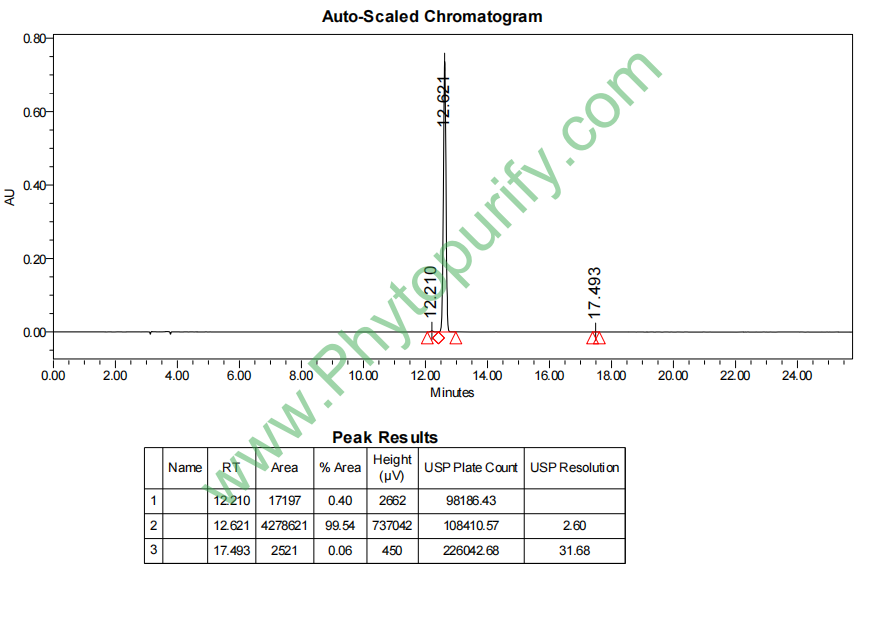
Purity: 95%~99%
Analysis Method: HPLC-DAD or/and HPLC-ELSD
Identification Method: Mass, NMR
Packing: Brown vial or HDPE plastic bottle
Can be supplied from milligrams to grams.
For Reference Standard and R&D, Not for Human Use Directly.
Inquire for bulk scale.
HPLC of Aloenin A
Storage conditions:Short-term storage at 2~8℃, long-term storage at -20 ~ -80℃
159.0500
-.1502
-.1534
4.3267
.4750
.2309
Low
73.3887
4.0270
Yes
No
No
No
No
No
0.6
Yes
Yes
Yes
No
Natural products, as an important source of drug discovery, play an irreplaceable role in the history of human disease prevention and treatment. They have diverse structures and broad biological activities, providing a rich library of lead compounds for the development of new drugs. Aloe vera(Aloe As a traditional medicinal plant, spp.) has a long history of application of its gel and exudate in skin care, wound healing, diarrhea and anti-inflammatory. Modern pharmacological research reveals that the various biological activities of aloe vera are attributed to its rich chemical components such as anthraquinones, polysaccharides, glycosides, etc. Aloenin A, as a characteristic glycoside compound isolated from plants of the Aloe genus, has gradually attracted the attention of researchers in recent years due to its unique pharmacological activity.
The CAS number of Aloe Vera Ning A is 38412-46-3, and its research value lies not only in its status as one of the chemical markers of Aloe plants, but also in its multi-target and multi pathway biological activity. Early research found that it is an active ingredient that inhibits chicken liver alcohol dehydrogenase (c-ADH) and aldehyde dehydrogenase (c-ALDH) in vitro, suggesting that it may affect ethanol metabolism. Further research has expanded its activity spectrum, including effective peroxide radical scavenging ability, moderate inhibitory activity against β - secretase (BACE), and inhibition of histamine release from mast cells. Of particular note is that, based on its potential biological activity, some studies have linked it to a series of key targets involved in major diseases such as heart failure (HF) through computational predictions or preliminary experiments, such as AMPK, EHMT2, APP, etc. This opens up a new perspective for exploring the application potential of aloe vera extract A in complex diseases such as cardiovascular and neurodegenerative diseases.
This article aims to provide a systematic review of the chemical structure, plant sources, extraction methods, pharmacological activities, potential mechanisms of action and molecular targets, pharmacological characteristics, and clinical application prospects of Aloe Vera Ning A, in order to provide comprehensive scientific references for the in-depth research and development of this natural product.
Aloe Vera Ning A is a C-glycosidic compound, whose chemical structure consists of a glycoside moiety connected to a sugar group through a carbon carbon bond. This is different from common O-glycosides, making it relatively stable to acids and enzymes. Its molecular formula is C19H22O10 and its molecular weight is 410.3750 g/mol.
Structurally, the glycoside part of Aloe Vera Ning A is a derivative of dihydroisocoumarin (also known as chromone), specifically 2-acetyl-1,8-dihydroxy-3-methyl-6- (β - D-glucopyranosyl) -7-hydro-isobenzofuran-7-one. Its sugar group is β - D-glucopyranose, directly connected to the C-6 position of the aglycone. This C-glucosylation structure is a characteristic of aloe vera extract A and its analogues. The functional groups such as phenolic hydroxyl, acetyl, and carbonyl contained in the structure are the structural basis for its pharmacological activities such as antioxidant activity and interaction with enzyme active centers.
The physical and chemical parameters calculated based on its chemical structure are crucial for evaluating its drug properties
* Lipid water partition coefficient (LogP)Approximately -0.1502, indicating that Aloe Vera Ning A has hydrophilicity and tends to distribute in the aqueous phase. This is consistent with the presence of multiple polar functional groups and a hydrophilic glucose group in the molecule.
* Topological Polarity Surface Area (TPSA)Up to 159.050 Å ², further confirming its high polarity characteristics. High TPSA typically affects the ability of compounds to permeate across membranes.
* Water solubility The value is 4.3267 (usually referring to logS or related solubility indicators), combined with its LogP and TPSA, it can be inferred that Aloe Vera Ning A should have good solubility in water, which is beneficial for its development in aqueous formulations.
* Blood-brain barrier (BBB) permeability Predicted as' low '. This is mainly attributed to its high polarity (low LogP, high TPSA) and molecular weight exceeding 400, which are not conducive to passive diffusion through the blood-brain barrier. This poses a challenge for its application targeting central nervous system targets such as BACE and APP.
* HERG inhibition A prediction of 'no' indicates a low risk of potential cardiac toxicity (causing QT interval prolongation), which is a favorable pharmacological feature.
* Ames test The predicted value is 0.6 (usually simulated results, values below a certain threshold such as 1.0 may indicate a low risk of mutagenicity), but it needs to be confirmed through real in vitro experiments.
These physical and chemical properties collectively outline the basic profile of Aloe Vera Ning A as a natural product molecule with high polarity, good water solubility, but limited membrane permeability (especially for BBB).
Aloe Ning A is mainly found in the Aloe genus(Aloe)Leaves exudate or dry matter from various plants. It is one of the chemical taxonomic markers used to distinguish different aloe species. Aloe vera in Cape of Good Hope(Aloe ferox)Aloe Vera and Curacao(Aloe vera, also known as Aloe barbadensis Miller and other species have been detected, but their levels vary significantly depending on the species, place of origin, harvest season, and plant part. Usually, it is more enriched in the yellow exudate near the leaf epidermis, which is also rich in other anthraquinone glycosides.
The extraction and separation of aloe vera extract A from plant materials usually follow the conventional process of natural product chemistry, but have been optimized for its polarity characteristics:
1. Raw material pretreatment: Collect fresh aloe leaves, separate the epidermis and gel after washing, take the epidermis and nearby tissues, or directly use dry aloe whole leaves/exudates.
2. Extract Commonly used polar solvents for extraction. Due to the high polarity of Aloe Vera Ning A, methanol, ethanol, or ethanol water mixed solvents are effective extraction solvents. Immersion method, reflux extraction method, or ultrasound assisted extraction method can be used to improve efficiency.
3. Rough classification The extract is concentrated under reduced pressure to obtain a paste. The extract can be suspended in water and then subjected to gradient extraction using organic solvents such as petroleum ether, ethyl acetate, and n-butanol in sequence. Aloe Vera Ning A is mainly distributed in the n-butanol extraction site or aqueous layer due to its glycoside structure and high polarity.
4. Separation and purification The n-butanol fraction or water-soluble fraction is further separated by column chromatography technology. Reverse silica gel (such as C18), dextran gel (such as Sephadex LH-20) and other fillers are often used. Due to the presence of glucose groups, Aloe Vera Ning A has strong hydrophilicity and relatively short retention time in reverse phase chromatography. High performance liquid chromatography (HPLC), especially preparative HPLC, is the key final step in obtaining high-purity aloe vera tannin A monomer, often using methanol water or acetonitrile water as the mobile phase.
5. appraisal The purified compound was structurally confirmed by nuclear magnetic resonance (NMR, including 1H-NMR, 13C-NMR, 2D-NMR), mass spectrometry (MS), infrared spectroscopy (IR), and comparison with literature data or reference standards.
In recent years, some green extraction techniques such as microwave-assisted extraction and supercritical fluid extraction have also been explored for application, aiming to improve extraction efficiency and reduce the amount of organic solvents used.
Although the pharmacological activity research of Aloe Vera Ning A is still in its early stages, it has shown multiple biological effects, providing preliminary evidence for its potential applications.
antioxidant activity Aloe Vera Ning A has been proven to have effective ability to scavenge peroxyl radicals (ROO ·). Peroxide free radicals are key initiators of lipid peroxidation chain reaction in vivo, and are related to many pathological processes such as inflammation, aging, atherosclerosis, etc. Its antioxidant capacity may stem from the phenolic hydroxyl groups in its structure, which can neutralize free radicals by providing hydrogen atoms. This activity suggests that Aloe Vera Ning A may play a role in alleviating oxidative stress-related diseases.
Neuroprotective related activities Research has shown that Aloe Vera Ning A has moderate inhibitory activity against β - secretase 1 (BACE1), with an IC50 value of 14.95 μ g/mL (approximately 36.4 μ M). BACE1 is a key rate limiting enzyme that catalyzes the generation of β - amyloid protein (A β) from amyloid precursor protein (APP), and the aggregation and deposition of A β is one of the core pathological features of Alzheimer's disease (AD). Although the inhibitory activity is moderate and its BBB permeability prediction is low, this finding provides a starting point for structural modification using aloerin A as a lead compound to enhance activity and improve brain delivery.
Antiallergic and anti-inflammatory activity Aloe Vera Ning A can inhibit the release of histamine in rat peritoneal mast cells. The degranulation of mast cells and the release of histamine are key events in type I hypersensitivity reactions (allergic reactions) and inflammatory reactions. This effect indicates that Aloe Vera Ning A may have anti allergic and anti-inflammatory potential, providing experimental evidence for the development of drugs or functional ingredients for diseases such as allergic rhinitis, asthma, and skin allergies.
The impact on ethanol metabolizing enzymes Early studies have found that Aloe Vera Ning A is an active ingredient that inhibits chicken liver alcohol dehydrogenase (c-ADH) and aldehyde dehydrogenase (c-ALDH) in vitro. ADH and ALDH are the core enzyme systems involved in ethanol metabolism in the body. Inhibiting ADH may slow down the conversion of ethanol to acetaldehyde, while inhibiting ALDH may lead to acetaldehyde accumulation and cause discomfort reactions (similar to the disulfiram effect). The physiological significance of this activity is not yet clear and may be related to certain effects in the traditional use of aloe vera, but it also suggests that attention should be paid to its interaction with ethanol when applied.
Other potential activities Based on computational predictions and preliminary association studies, the potential activity of Aloe Vera Ning A has been extended to a wider range of fields, especially the target network related to heart failure, which requires rigorous experimental verification in the future.
The specific mechanism of action of Aloe Vera Ning A has not been fully elucidated, and existing research suggests that it may exert the aforementioned pharmacological activity by acting on multiple molecular targets and regulating different signaling pathways.
Direct enzyme inhibition and interaction:
Mechanisms related to the stability of mast cells The mechanism of inhibiting histamine release from mast cells may involve stabilizing the mast cell membrane or interfering with intracellular calcium ion mobilization, protein kinase C (PKC) activation, and other signaling events leading to degranulation. The specific target needs to be confirmed.
Potential association with target networks related to heart failure This is a new direction proposed based on bioinformatics analysis and preliminary experimental correlation. The listed targets form a complex network that may involve:
It should be emphasized that The direct interaction and functional regulation between Aloe Vera Ning A and these targets (such as AMPK, EHMT2, etc.) have not yet been rigorously validated through biochemical or cellular experiments (such as enzyme activity experiments, surface plasmon resonance SPR, co crystallization, reporter gene experiments, etc.). At present, it is more of a prediction based on computational simulation or phenotype association, which is an important clue and direction for future mechanism research, rather than an established fact.
Based on its physicochemical properties, preliminary ADMET (absorption, distribution, metabolism, excretion, toxicity) predictions, and limited existing research, a preliminary evaluation of the pharmacological properties of Aloe Vera Ning A can be conducted.
Overall Aloe Vera Ning A exhibits some favorable pharmacological characteristics, such as good water solubility and no hERG inhibition warning, but also faces significant challenges, especially in terms of oral absorption and BBB permeability, which may be poor. These defects can be improved through pharmaceutical methods (such as using absorption enhancers, prodrugs, nano formulations, etc.) or drug chemical modifications (increasing lipid solubility and reducing polarity while retaining pharmacophores). Comprehensive in vitro and in vivo pharmacokinetic studies are necessary steps to advance its development.
The multi-target activity characteristics of Aloe Vera Ning A provide imaginative space for its application in various disease fields, but its clinical translation still faces many challenges and directions that need to be further explored.
Potential application directions:
1. External skin products: Based on its antioxidant activity, inhibition of mast cell histamine release (anti allergy, anti inflammation), and the history of traditional safe use of aloe extract in skin care, Aloining A, as an active ingredient, is added to topical creams, gel or essence for relieving sensitive skin and mild skin inflammation (such as post sun erythema, contact dermatitis), which is a relatively easy transformation path.
2. Assisted intervention for metabolic related diseases If future research can confirm its effective regulatory effect on AMPK, PTPN1 and other targets, it may be used as a lead compound to develop dietary supplements or drugs to improve insulin resistance and regulate energy metabolism, and potentially be used in the auxiliary management of type 2 diabetes, obesity and related cardiomyopathy.
3. Lead compounds for neurodegenerative disease drugs Although BBB permeability is a significant barrier, its BACE1 inhibitory activity provides a new chemical framework for the development of anti AD drugs. Through rational drug design and structural modifications such as simplifying sugar groups, introducing lipophilic groups, and preparing prodrugs, it is expected to improve brain delivery efficiency while enhancing enzyme inhibitory activity.
4. Exploration of complementary and alternative therapies for heart failure The association with the heart failure target network is highly attractive but also the most uncertain. It is necessary to systematically verify whether Aloe Vera Ning A can indeed regulate these targets at the molecular, cellular, and animal model levels, and ultimately produce benefits in improving heart function and reversing myocardial remodeling. This may be a long-term fundamental research process.
Challenges and future research directions:
1. Deepening and Verification of Mechanism Research Currently, many target associations are still in the prediction stage. It is urgent to conduct experiments including molecular docking, enzyme activity testing, cellular level gene knockdown/overexpression, co precipitation (Co IP), or fluorescence resonance energy transfer (FRET) to confirm the direct interaction between Aloe Vera Ning A and key targets such as AMPK and EHMT2, as well as the regulation of downstream signaling pathways.
2. Comprehensive pharmacokinetic studies Systematic pharmacokinetic experiments in animals (rats, mice) must be conducted to clarify key parameters such as absolute bioavailability, tissue distribution characteristics, major metabolites and pathways, elimination half-life, etc., providing a basis for formulation design and administration plan.
3. Research on Structural Optimization and Structure Activity Relationship (SAR)Taking Aloe Vera Ning A as the lead, systematically study the contributions of various parts in its chemical structure (such as sugar group, acetyl group, phenolic hydroxyl group, mother nucleus) to specific activities (such as BACE1 inhibition, AMPK activation) and drug properties (such as LogP, BBB permeability), guiding the synthesis of derivatives with stronger activity and better properties.
4. Pharmacodynamics and safety evaluation in vivo On the basis of clarifying the mechanism and PK characteristics, it is necessary to evaluate its therapeutic effect in relevant disease animal models (such as AD transgenic mice and heart failure models). At the same time, conduct systematic preclinical safety evaluations (GLP toxicology experiments).
5. Source and Sustainable Supply If the development is successful, it is necessary to consider the sources of its large-scale production. In addition to extracting from plants, the production of aloin A or its key intermediates through synthetic biology methods such as microbial fermentation or total chemical synthesis is an important direction to ensure supply stability and cost controllability.
Aloe Ning A, as a characteristic C-glycosidic compound derived from the traditional medicinal plant aloe vera, has become a natural product molecule worthy of further exploration due to its multiple pharmacological activities such as antioxidant, BACE1 inhibition, mast cell stabilization, and impact on ethanol metabolism enzymes, as well as its potential association with complex disease target networks such as heart failure revealed through computational biology. It reflects the complexity of the "multi-component multi-target" mode of action of natural products, and also provides new chemical entities and ideas for the development of new drugs for multifactorial diseases.
However, the road from active compounds to candidate drugs and even marketed drugs is long and challenging. At present, research on Aloe Vera Ning A is still mostly in the stage of activity discovery and preliminary mechanism speculation. Its pharmacological shortcomings in absorption, distribution (especially in the brain), and key targets have not been experimentally confirmed, which are the main bottlenecks restricting its development. Future research should focus on utilizing modern pharmacology, medicinal chemistry, and pharmacy methods to thoroughly elucidate its molecular mechanisms, optimize its physicochemical properties, and evaluate its in vivo efficacy and safety. Only through such systematic and rigorous scientific research can we accurately determine the true transformation value of Aloe Vera Ning A, deciding whether it will stop at an interesting natural product molecule or ultimately transform into an innovative drug or functional product that benefits human health.
