| Catalog No | Package | Original Price | Price | Inventory | Quantity | Operating |
|---|---|---|---|---|---|---|
| BP5181-5mg | 5mg | $350.00 | Sign in |
|


Storage conditions:Short-term storage at 2~8℃, long-term storage at -20 ~ -80℃
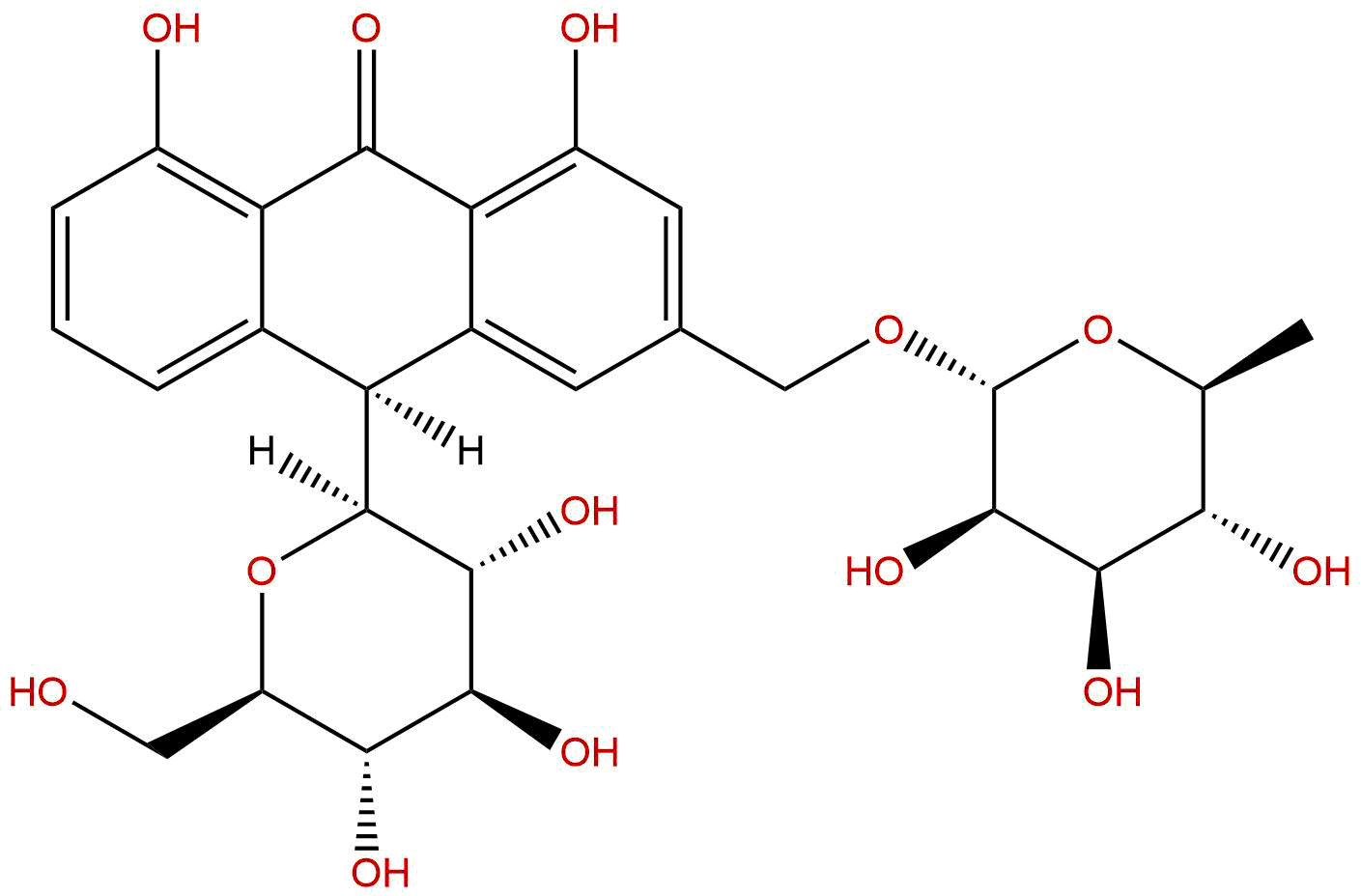
Aloe glycoside A (CAS number: 56645-88-6), as a natural product, has gradually received attention in the field of pharmacology research in recent years. Its unique chemical structure and diverse biological activities make it an important candidate molecule in skin repair and metabolic research. Aloe glycoside A belongs to the aloin class compounds and was initially isolated from Astragalus spp. It forms an enantiomer with its homolog Aloinoside B, which can be converted into aloin, isoaloin, and hydroxy metabolites under the action of gut microbiota, indicating its complex metabolic pathway and potential biotransformation activity in vivo.
With the deepening development of natural product pharmacology, aloe glycoside A has become a research hotspot due to its regulatory effect on skin repair related targets. This article aims to systematically review the chemical structure, sources, pharmacological activities, mechanisms of action, pharmacological properties, and clinical application prospects of aloe glycoside A, with the hope of providing a theoretical basis and research direction for its subsequent development and clinical translation.
The molecular formula of aloe glycoside A is C28H44O12, with a molecular weight of 564.54, belonging to the aloin glycoside class. Its structural feature is that a core of aloe vera extract is connected to the sugar group through glycosidic bonds, forming a complex molecule with multiple hydroxyl groups. Compared with its enantiomer Aloinoside B, aloe glycoside A exhibits differences in spatial configuration, and this stereoisomerism has a significant impact on its biological activity and metabolic pathways.
In terms of physical and chemical properties, the LogP value of aloe glycoside A is about -0.2651, indicating its strong hydrophilicity and water solubility of 4.6478 (unit unknown, usually mg/mL or mol/L), demonstrating good water solubility. Its topological polar surface area (TPSA) is 226.83 Å ², indicating that the molecule contains more polar functional groups, which facilitate binding with polar biomolecules. The low permeability of the blood-brain barrier suggests that it mainly acts on peripheral tissues and rarely enters the central nervous system. The hERG channel inhibition experiment results were negative, indicating a low risk of cardiac toxicity. The Ames test result is 0.6, indicating a low risk of genotoxicity and good safety.
Aloe glycoside A is mainly isolated from plants of the Astragalus genus. Huangqi, as a traditional Chinese medicinal herb, is rich in various flavonoids, saponins, and glycosides in its roots. Aloe glycoside A, as one of the characteristic aloin glycosides, although not high in content, can be prepared with high purity by optimizing the extraction and separation process.
The extraction method usually uses polar organic solvents such as ethanol or methanol to reflux extract dried Huangqi roots, followed by liquid-liquid distribution, column chromatography (such as silica gel column, reverse phase C18 column), and high performance liquid chromatography (HPLC) purification and separation. Modern technologies such as ultrasound assisted extraction and microwave-assisted extraction have been applied to improve extraction efficiency and yield. During the purification process, utilizing its strong polarity, effective separation can be achieved through gradient elution. The final product was structurally confirmed by mass spectrometry (MS), nuclear magnetic resonance (NMR) and other methods.
The pharmacological activity research of aloe glycoside A mainly focuses on its skin repair and metabolic regulation functions. In vitro cell experiments have shown that aloe glycoside A can significantly promote fibroblast proliferation and migration, enhance collagen synthesis, inhibit matrix metalloproteinases (MMPs) activity, thereby promoting skin tissue repair and reconstruction.
In animal models, aloe vera glycoside A exhibits a promoting effect on the healing process of skin wounds, accelerating wound closure, reducing inflammatory reactions, promoting angiogenesis (VEGFA related), and regulating the expression of growth factors such as EGFR, FGF2, TGFB1, improving skin structure and function. In addition, aloe glycoside A, as a biomarker for metabolic research, has potential impact on host metabolic homeostasis through its transformation products in gut microbiota metabolism, indicating its application value in metabolic diseases.
The mechanism of action of aloe glycoside A in skin repair involves multiple signaling pathways and molecular targets. Its main targets include:
Matrix metalloproteinases (MMP1, MMP2, MMP9)Aloe glycoside A inhibits the overexpression of MMPs, reduces collagen degradation, maintains extracellular matrix (ECM) stability, and contributes to wound healing and skin structural integrity.
Epidermal growth factor receptor (EGFR)Activate the EGFR signaling pathway, promote cell proliferation and migration, and enhance skin regeneration ability.
Fibroblast Growth Factor 2 (FGF2)and Transforming Growth Factor Beta 1 (TGFB1)Regulating cell proliferation, differentiation, and collagen synthesis to promote tissue repair.
Collagen genes (COL3A1, COL4A1)Promote collagen synthesis, enhance skin elasticity and structural stability.
Vascular endothelial growth factor A (VEGFA)Promote neovascularization, improve local blood supply, and support tissue repair.
Integrin β 1 (ITGB1)Regulating cell adhesion and signal transduction, promoting cell migration and tissue remodeling.
Through the synergistic regulation of the above targets, aloe glycoside A effectively promotes the repair process of skin damage, demonstrating its multi-target and multi mechanism advantages as a natural medicine.
From the perspective of medicinal properties, aloe glycoside A exhibits good safety and drug compatibility. Although its molecular weight of 564.54 is slightly higher than the recommended upper limit of 500 Da by Lipinski's rule, its high water solubility and low LogP value are beneficial for in vivo absorption and distribution. A high TPSA value indicates strong polarity, which may limit oral bioavailability, but is suitable for local application.
Low blood-brain barrier permeability reduces the risk of central nervous system side effects. Negative hERG channel inhibition indicates a low risk of cardiac toxicity. The Ames test results showed no significant genotoxicity and high safety.
In terms of pharmacokinetics, aloe glycoside A, as a glycoside compound, is mainly metabolized and converted into aloin, isoaloin, and hydroxyl metabolites in the gut microbiota, indicating that its metabolic pathway depends on the gut microbiota environment, and the metabolites may have different biological activities and pharmacokinetic characteristics. Further systematic research is needed on its half-life, absorption rate, and tissue distribution in vivo.
Aloe glycoside A has shown broad clinical application potential in the field of skin repair. Its multiple mechanisms of promoting wound healing, anti-inflammatory, and angiogenesis make it an ideal candidate drug for treating chronic injuries, burns, and skin aging. Combining its good safety and multi-target regulatory ability, aloe vera glycoside A is expected to be developed as a local topical preparation, such as wound dressings, repair creams, etc.
In addition, as a biomarker for metabolic research, the role of aloe glycoside A and its metabolites in the regulation of intestinal flora and host metabolism provides a new research direction for metabolic diseases (such as diabetes and obesity). In the future, through structural modification and formulation optimization, it is expected to enhance its oral bioavailability and targeting, and expand its systemic therapeutic applications.
However, the clinical research on aloe glycoside A is still in its infancy, and there is a need to strengthen pharmacokinetics, safety evaluation, and clinical trials to clarify its effective dosage and administration regimen. At the same time, in-depth analysis of its metabolic network and interaction with gut microbiota will contribute to the precise development of personalized treatment strategies.
In summary, aloe glycoside A, as a natural aloin glycoside derived from Astragalus membranaceus, has a unique chemical structure and good physicochemical properties, exhibiting significant skin repair pharmacological activity and multi-target mechanism of action. It has shown good potential in promoting wound healing, regulating extracellular matrix and growth factor expression, and drug efficacy evaluation shows high safety, making it suitable for further development as a skin repair related drug.
Future research should focus on its in vivo metabolic pathways, pharmacokinetic characteristics, and clinical efficacy verification, combined with modern drug design and biotechnology methods, to promote the clinical application of aloe glycoside A from the laboratory. The development of aloe glycoside A not only enriches the research content of natural product pharmacology, but also provides new ideas and drug candidate molecules for the treatment of skin diseases.
