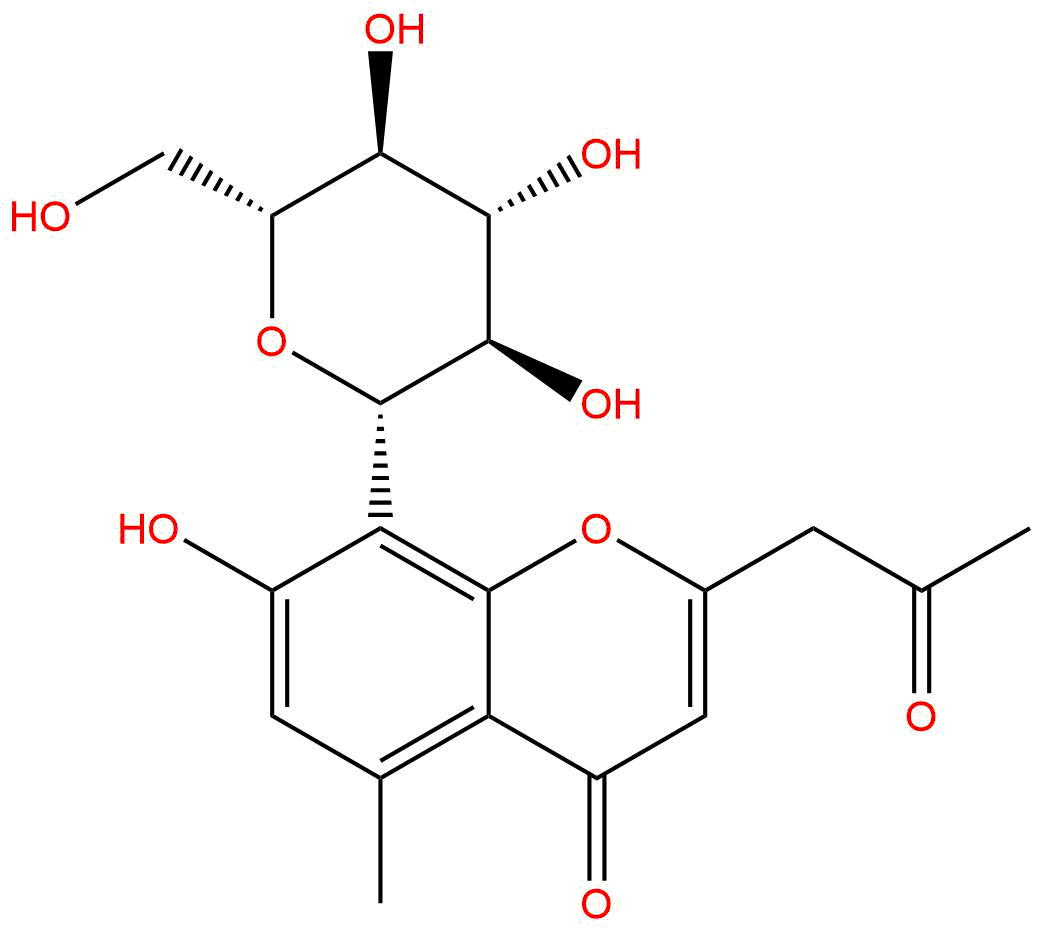


Product name: Aloesin
Synonym name: Aloe resin B; Aloeresin
Catalogue No.: BP4356
Cas No.: 30861-27-9
Formula: C19H22O9
Mol Weight: 394.376
Botanical Source:
Type of Compound:
Purity: 95%~99%
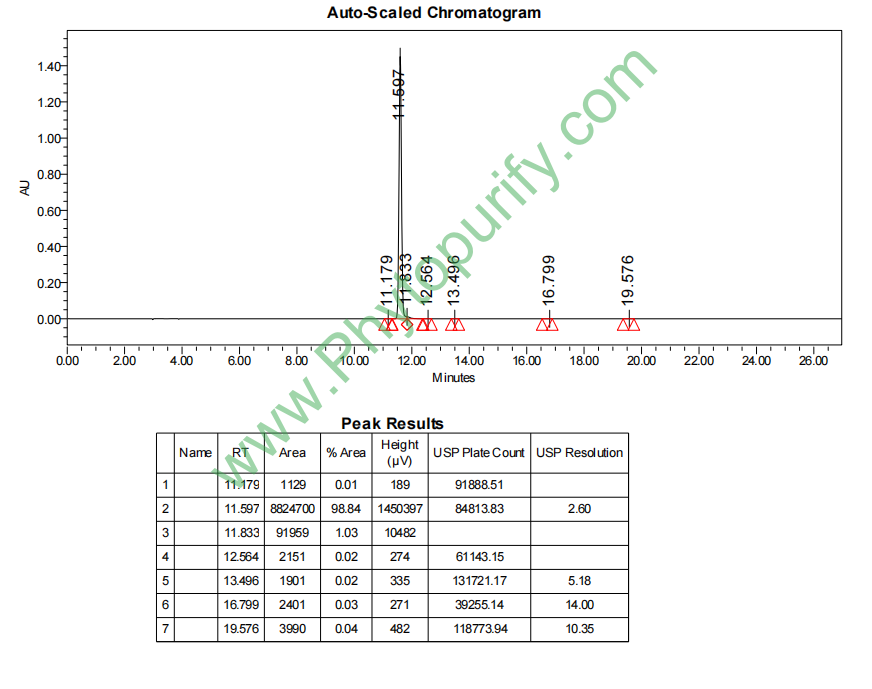
Analysis Method: HPLC-DAD or/and HPLC-ELSD
Identification Method: Mass, NMR
Packing: Brown vial or HDPE plastic bottle
The product could be supplied from milligrams to grams
Inquire for bulk scale.
Aloesin is isolated from freshAloe veraleaves, as well as from other species ofAloe. It is a moderately high molecular weight hydroxy C-glycosylated chromone derivative.
It is a natural compound that has demonstrated appreciable depigmenting activity due to its ability to inhibittyrosinase activity. It is among the top choices for cosmetic and therapeutic applications to lighten skin.
The reputable Aloe vera or Aloe barbadensis has been scientifically proven for all forms of burn, be it radiation, thermal, or solar. It has also been demonstrated that it has a prophylactic effect if used before, during, and after these skin-damaging events. Aloe vera is a uniquely effective moisturizer and healing agent for the skin.
References
1.Modulation of melanogenesis by aloesin: a competitive inhibitor of tyrosinase
Pigment Cell Res 2002 Oct;15(5):335-40.
Abstract
Aloesin, [2-acetonyl-8-beta-d-glucopyranosyl-7-hydroxy-5-methylchromone], a compound isolated from the Aloe plant, is shown in these studies to modulate melanogenesis via competitive inhibition of tyrosinase. Aloesin inhibits purified tyrosinase enzyme and specifically inhibits melanin production in vitro. Enzyme kinetics studies using normal human melanocyte cell lysates and cell-based melanin production demonstrated that aloesin is a competitive inhibitor of tyrosinase from mushroom, human and murine sources. Tyrosine hydroxylase and 3,4-dihydroxyphenylalanine (DOPA) oxidase activities of tyrosinase from normal human melanocyte cell lysates were inhibited by aloesin in a dose dependent manner. In a percutaneous absorption study a finite dose of aloesin penetrated the skin slowly and was recovered primarily in the surface wash. Aloesin shows promise as a pigmentation-altering agent for cosmetic or therapeutic applications.
2. Effects of aloesin on melanogenesis in pigmented skin equivalents.
Int J Cosmet Sci. 2008 Apr;30(2):121-30
3. The effects of aloesin and arbutin on cultured melanocytes in a synergetic method
Zhonghua Zheng Xing Wai Ke Za Zhi. 2004 Sep;20(5):369-71
4.Aloesin and arbutin inhibit tyrosinase activity in a synergistic manner via a different action mechanism.
Arch Pharm Res. 1999 Jun;22(3):232-6.
5. Anti-inflammatory constituents, aloesin and aloemannan in Aloe species and effects of tanshinon VI in Salvia miltiorrhiza on heart
Yakugaku Zasshi. 2003 Jul;123(7):517-32.
HPLC of Aloesin
Storage conditions:Short-term storage at 2~8℃, long-term storage at -20 ~ -80℃
157.6600
.0333
-.0009
4.2132
.6739
1.0158
Low
58.2288
4.1240
Yes
No
No
No
Yes
Yes
1.2
Yes
No
Yes
No
Aloe vera, as an ancient medicinal plant, has a history of application spanning thousands of years and is found in multiple civilizations around the world. Traditionally, aloe gel has been widely used to treat skin burns, wounds and inflammation. With the development of modern separation and identification techniques, numerous bioactive components in aloe vera have been revealed, and one important class of chromogenic ketone derivatives, Aloesin (also known as Aloeresin), has gradually become a research hotspot. Aloe vera extract (CAS number: 30861-27-9) is a natural tyrosinase inhibitor known for its excellent skin whitening properties in the cosmetics industry. However, in recent years, in-depth research has continuously expanded the boundaries of its biological significance, revealing its potential pharmacological value in multiple aspects such as anti-inflammatory, UV protection, antibacterial, promoting skin repair, and even anti-tumor. Especially in the field of skin repair, it exhibits multi-target and multi pathway effects by regulating the expression of matrix metalloproteinases (MMPs), growth factors (such as EGF, FGF, VEGF), and extracellular matrix (ECM) components (such as collagen), providing new candidate molecules for the development of novel skin repair therapies. This article aims to systematically review the chemical properties, plant sources, pharmacological activities, molecular mechanisms of action, pharmacological evaluation, and clinical application prospects of aloe vera extract, in order to provide comprehensive scientific references for the deep development and transformation research of this natural product.
Aloe vera extract is a C-glycosylated chromone derivative. Its core structure is a chromogen ketone parent nucleus (benzo - γ - pyranone), which is connected to a glucose group through a carbon carbon bond at the C-8 position of the parent nucleus. Compared to common O-glycosidic bonds, this C-glycosidic bond has stronger chemical stability and resistance to enzymatic hydrolysis, which to some extent explains its stability exhibited in in vitro and in vivo experiments.
Its molecular formula is C19H22O9 and its molecular weight is 394.3760 g/mol. From the perspective of drug formation, its topological polar surface area (TPSA) is 157.66 Å ², which is relatively high, indicating strong molecular polarity and good interaction ability with water molecules. The calculated lipid water partition coefficient (LogP) is approximately 0.0333, belonging to the category of hydrophilic compounds. The theoretically predicted water solubility value is 4.2132 (usually measured in mg/mL or log mol/L, indicating moderate to high solubility), and these physicochemical parameters collectively indicate that aloin has good water solubility, which is beneficial for its application in water-based formulations and oral dissolution and absorption.
However, higher polarity and TPSA also mean that its ability to penetrate biofilms may be limited. The prediction shows that its blood-brain barrier (BBB) permeability is low, suggesting that its main pharmacological effects may be concentrated in the peripheral system, especially in local application scenarios such as the skin, while also reducing the potential risk of central nervous system toxicity. In terms of early safety indicators, its Ames test value is 1.2 (usually considered negative if less than 2), indicating no significant mutagenicity; If there is no inhibitory activity on hERG potassium channels, the serious risk of inducing QT interval prolongation and apical torsion type ventricular tachycardia has been preliminarily ruled out, providing preliminary positive signals for its safety.
Aloe vera extract mainly comes from the genus Aloe in the lily family(Aloe)Plants, especially aloe vera in Curacao(Aloe barbadensis Miller, Also known as Aloe vera)The leaf skin (i.e. green outer skin) and the yellow latex layer at the junction of leaf flesh and outer skin are relatively abundant in content. Different varieties of aloe vera, planting conditions, harvesting sites, and growth years can all affect the content of aloin.
Extracting aloe vera extract from plant materials usually follows the conventional process of natural product chemistry. First, the fresh aloe leaves need to be pretreated, washed and separated from the skin and gel. The target compound is mainly extracted from dried powder of the outer skin or whole leaves.
1. Solvent extraction method The most commonly used method is to use polar solvents for extraction. Methanol, ethanol, water, or alcohol water mixed solvents in different proportions are effective extraction media. For example, using a 70% -80% ethanol aqueous solution for extraction under heating or ultrasound assistance can efficiently dissolve aloe vera extract.
2. Purification and Separation After filtering and concentrating the crude extract, a paste rich in aloe vera extract is obtained. Further purification requires the use of column chromatography technology, often using silica gel, reverse phase silica gel (such as C18), or macroporous adsorption resin as the stationary phase, and using gradient elution systems such as chloroform methanol, water methanol, or water ethanol for separation. High performance liquid chromatography (HPLC) and preparative thin layer chromatography (PTLC) are key steps in obtaining high-purity monomers.
3. appraisal The isolated compounds were structurally confirmed by nuclear magnetic resonance (NMR, including 1H-NMR and 13C-NMR), mass spectrometry (MS), infrared spectroscopy (IR), and chromatographic behavior (such as HPLC retention time) compared to standard samples.
In recent years, some green extraction techniques such as supercritical CO2 extraction, microwave-assisted extraction, and pressurized liquid extraction have also been explored to improve extraction efficiency and selectivity, but large-scale production still relies mainly on low-cost solvent extraction combined with column chromatography.
Aloe vera extract exhibits a wide range of pharmacological activities, and its potential for application far exceeds the initial scope of skin whitening.
The multiple pharmacological activities of aloe vera extract stem from its multi-target regulation of cellular signaling networks. In the core application scenario of skin repair, its mechanism of action involves fine regulation of multiple links such as extracellular matrix metabolism, cell proliferation and migration, angiogenesis, and inflammatory response, with clear molecular targets:
In summary, aloe vera extract exerts a dual regulatory effect of "inhibiting MMP degradation of ECM" and "promoting growth factor mediated ECM synthesis and remodeling", synergistic with its anti-inflammatory, antioxidant, and pro angiogenic effects, forming a multi-target and multi-level skin repair network.
Based on its physical and chemical properties, aloe vera extract has shown certain potential for medicinal use, but there are also challenges.
Aloe vera extract is gradually moving from a traditional plant component to a modern drug candidate with clear molecular targets, and its clinical application prospects are broad
Future research priorities should include:
* In depth mechanism research Using techniques such as gene knockout, CRISPR-Cas9, proteomics, etc., to more accurately elucidate its direct interactions with key targets such as EGFR and TGFB1 receptors.
* Preclinical and clinical research Conduct standardized animal pharmacology, pharmacokinetics, and toxicology studies, and ultimately advance them to human clinical trials to verify their effectiveness and safety in different indications.
* Development of new formulations Vigorously developing targeted delivery systems based on nanotechnology to improve the efficiency of local or systemic drug delivery.
* Structural Optimization and Synthetic Biology Through chemical synthesis or synthetic biology methods (such as microbial heterologous synthesis), efficient and sustainable production of aloe vera extract can be achieved, providing a material basis for obtaining more active derivatives.
Aloe vera extract, as a natural active molecule discovered from the ancient medicinal plant aloe vera, has evolved from traditional experience to a model of modern scientific interpretation in its research process. From the initial tyrosinase inhibitor to the pharmacological value revealed in multiple dimensions such as skin repair, anti-inflammatory, antioxidant, antibacterial, and even anti-tumor, its biological connotation has been continuously enriched. Of particular importance is that its mechanism of action in skin repair has been extensively studied at the level of key molecular targets such as MMPs, growth factors and their receptors, and extracellular matrix components, outlining a clear multi-target action network. Although there are still challenges in terms of drug development, such as bioavailability and delivery efficiency, its good water solubility, preliminary safety, and clear mechanism of action have laid a solid foundation for its further development. With the deep integration of modern pharmacy, medicinal chemistry, and molecular biology technologies, aloe vera extract is expected to successfully transform from a cosmetic efficacy ingredient into an innovative drug for treating skin damage, chronic ulcers, and related diseases, fully reflecting the sustained vitality and enormous potential of natural products in contemporary new drug research and development.
