| Catalog No | Package | Original Price | Price | Inventory | Quantity | Operating |
|---|---|---|---|---|---|---|
| BPF2110-20mg | 20mg | $80.00 | Sign in |
|
||
| BPF2110-50mg | 50mg | Inquiry |
Inquiry |
|


Storage conditions:Short-term storage at 2~8℃, long-term storage at -20 ~ -80℃
54.3700
1.9790
1.9790
.0155
4.7684
16.5068
High
87.3857
1.8408
Yes
No
No
No
Yes
Yes
1.5
Yes
Yes
Yes
Yes
Natural products, as an important source of drug discovery, play an indispensable role in the long history of human struggle against diseases. Anthraquinone compounds are a class of quinone derivatives widely present in nature, especially in the plant kingdom. Their basic parent nucleus is anthraquinone (9,10-anthraquinone ketone). These compounds have long been a hot topic in medicinal chemistry and pharmacology research due to their structural diversity and significant biological activity. From classic antibiotics such as emodin and rhein to anti-tumor antibiotics like doxorubicin, anthraquinone skeleton has shown great potential in treating constipation, inflammation, infections, and even cancer. However, compared to these members who have conducted more in-depth research, the pharmacological activity and potential application value of some anthraquinone derivatives with relatively simple structures and possibly more concealed sources still need to be further explored.
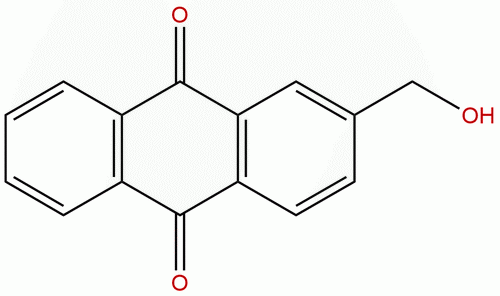
2-Hydroxymethyl anthraquinone (CAS number: 17241-59-7) is a type of compound that deserves attention. Structurally, it is a simple derivative with a hydroxymethyl group (- CH ₂ OH) attached to the 2nd position of the anthraquinone nucleus. Despite its seemingly simple structure, this modification endows it with unique chemical properties and potential biological activity. Existing research indicates that 2-hydroxymethylanthraquinone is not widely present in nature, and its sources are relatively specific, mainly isolated from secondary metabolites of certain fungi or lichens. Therefore, it is described as a natural product with a "metabolite" effect. This characteristic suggests that it may play ecological roles such as signaling molecules or defense factors in the organisms that produce it.
In recent years, with the in-depth exploration of natural product libraries and the development of modern pharmacological evaluation techniques, the biological functions of 2-hydroxymethylanthraquinone have gradually emerged. Preliminary studies have shown that the compound exhibits remarkable anti-tumor activity. Its mechanism of action is not singular, but may exert its effects through multiple targets and pathways, involving multiple levels such as regulating cell apoptosis, inhibiting cell proliferation, and interfering with the tumor microenvironment. Specifically, research has linked its activity to a series of key proteins and signaling pathways closely related to tumor occurrence, development, metastasis, and drug resistance, such as MCL1, BCL2, STAT3, MMP2, TOP1, HIF1A, TOP2A, MAPK1, ESR1, CYP19A1, etc. This multi-target mode of action provides new ideas for the development of novel, low toxicity, and highly effective anti-tumor drugs.
This article aims to provide a systematic professional review of 2-hydroxymethylanthraquinone. We will start from its chemical structure and physicochemical properties, trace its plant and microbial sources and extraction methods, focus on its anti-tumor pharmacological activities and underlying molecular mechanisms, and objectively evaluate its pharmacokinetic characteristics and development potential based on drug parameters. Finally, we will look forward to its future clinical application prospects. By integrating existing research results, this article aims to outline the full picture of this natural anthraquinone derivative, providing valuable references for subsequent basic research and drug development.
The chemical structure of 2-hydroxymethylanthraquinone is clear and distinct. Its core skeleton is anthraquinone, which is composed of three benzene rings fused together, with two carbonyl groups (C=O) located at positions 9 and 10, respectively, forming a typical quinone structure. There is a hydroxymethyl (- CH ₂ OH) substituent attached to the second carbon atom of the anthraquinone nucleus. This functional group is a key structural feature that distinguishes 2-hydroxymethylanthraquinone from other common anthraquinones, such as emodin containing methyl and hydroxyl groups and rhein containing carboxyl groups. The molecular formula of this compound is C ₁₅ H ₁₀ O3, with a molecular weight of 238.2420 g/mol. Structurally, its molecules have a high degree of planarity and conjugated systems, which have a decisive impact on its physicochemical properties and biological activity.
In terms of physical and chemical properties, 2-hydroxymethylanthraquinone exhibits typical characteristics of anthraquinone compounds. Its oil-water partition coefficient (LogP) is 1.9790, indicating that the compound has a certain degree of lipophilicity, but not extreme hydrophobicity. This moderate lipophilicity allows it to penetrate biofilms well while maintaining a certain solubility in the aqueous phase. Its topological polar surface area (TPSA) is 54.3700 Å ², which is lower than the commonly considered good oral absorption threshold (about 140 Å ²), indicating its good cell membrane permeability and oral absorption potential. However, its low water solubility (0.0155 mg/mL) may limit its bioavailability in aqueous media, which is a concern in formulation development.
The spectral characteristics of this compound are also closely related to its structure. In the UV visible spectrum, due to the large π - conjugated system of anthraquinone parent nucleus, 2-hydroxymethylanthraquinone usually has characteristic absorption peaks in the 230-260 nm and 320-450 nm regions, corresponding to the E2 band of the benzene ring and the n →π * transition of the quinone ring, respectively. In the infrared spectrum, a carbonyl (C=O) stretching vibration peak located at approximately 1670-1680 cm ⁻¹ and a hydroxyl (- OH) stretching vibration peak located at approximately 3200-3500 cm ⁻¹ can be observed. In nuclear magnetic resonance hydrogen spectroscopy (¹ H NMR), the methylene (- CH ₂ -) proton on the hydroxymethyl group usually appears around δ 4.5-5.0 ppm, while the aromatic proton on the anthraquinone ring is distributed in the δ 7.5-8.5 ppm region. These spectral data are important basis for identifying the structure of the compound.
It is worth noting that the Ames test result for 2-hydroxymethylanthraquinone is 1.5, which is usually interpreted as a weak positive or suspected positive, indicating a possible genetic toxicity risk. This characteristic is an important warning signal in drug development and requires further research in subsequent toxicological evaluations. In addition, hERG inhibition was predicted as' no ', indicating a lower risk of causing cardiac QT interval prolongation and arrhythmia, which is a favorable pharmacological feature. Overall, 2-hydroxymethylanthraquinone has the basic physicochemical properties to be optimized as a lead compound, but its low water solubility and potential genetic toxicity are the main obstacles that need to be overcome.
Unlike many anthraquinone compounds widely present in higher plants such as emodin and madder, the distribution of 2-hydroxymethylanthraquinone in nature is relatively limited. The main sources reported in current literature are fungi and lichens, especially secondary metabolites of certain endophytic or plant pathogenic fungi. For example, it has been derived from certain species of Penicillium(Penicillium Spp. and Aspergillus genus(Aspergillus Obtained from the culture of spp. fungi. In addition, some lichens, such as certain tea stains(Lecanora)Or the Yellow Shirt genus(Xanthoria)The type of compound has also been reported to produce this compound. This source characteristic determines that its acquisition mainly relies on microbial fermentation and chemical synthesis, rather than large-scale plant harvesting.
Extracting 2-hydroxymethylanthraquinone from fungi or lichens usually follows the classic process of natural product chemistry. Firstly, it is necessary to preprocess the biological materials. For fungi, liquid or solid culture media are usually used for large-scale fermentation cultivation. When the mycelium grows vigorously or secondary metabolites accumulate to their peak, the fermentation broth or mycelium is collected. For lichens, they need to be collected, dried, and crushed. The core of the extraction process is to use organic solvents to leach the target compound. Given that 2-hydroxymethylanthraquinone has moderate lipophilicity (LogP ≈ 2), commonly used extraction solvents include methanol, ethanol, ethyl acetate, or their mixed solvents. Usually, dried and crushed mycelium or lichen powder is repeatedly soaked in methanol or ethanol at room temperature or under heating conditions, or extracted with ultrasound assistance, to obtain the total extract.
After obtaining the crude extract, systematic separation and purification are required. Due to the complex composition of crude extracts, a strategy of combining multiple chromatographic techniques is usually adopted. Liquid liquid extraction is the first step, which commonly uses solvents of different polarities such as petroleum ether, chloroform, ethyl acetate, and n-butanol to extract the total extract in sequence and divide it into different polar parts. 2-Hydroxymethylanthraquinone is usually enriched in the moderately polar ethyl acetate extraction site. Subsequently, this part will undergo repeated column chromatographic separation, such as silica gel column chromatography, ODS (octadecyl silane) reverse phase column chromatography, Sephadex LH-20 gel column chromatography, etc. In silica gel column chromatography, mixed solvent systems such as petroleum ether ethyl acetate or chloroform methanol are commonly used for gradient elution. Sephadex LH-20 gel column chromatography can separate according to the molecular size, which is very effective for removing pigments and separating anthraquinones with similar structures. Finally, high-purity 2-hydroxymethylanthraquinone monomer can be obtained through preparative high-performance liquid chromatography (Pre HPLC).
The detection and tracking of compounds are crucial throughout the entire extraction and separation process. Due to the characteristic absorption of anthraquinone compounds under ultraviolet light, thin layer chromatography (TLC) combined with ultraviolet lamps (254 nm and 365 nm) is the simplest monitoring method. In addition, spraying with 10% sulfuric acid ethanol solution and heating for color development is also commonly used for TLC detection. In the later stage of separation, HPLC-DAD (diode array detector) can be used to more accurately determine the purity and retention time of the target peak. Finally, the purified compound was structurally identified as 2-hydroxymethylanthraquinone using spectroscopic techniques such as nuclear magnetic resonance (NMR) and mass spectrometry (MS).
In addition to natural extraction, chemical synthesis is also an important pathway for obtaining 2-hydroxymethylanthraquinone. By using classic anthraquinone synthesis methods such as Friedel Crafts acylation reaction or Diels Alder reaction to construct the anthraquinone core, and then introducing a hydroxymethyl group at position 2, directional synthesis of the compound can be achieved. The synthetic route is usually more controllable, with higher yields, and can avoid possible contamination of homologous compounds in natural products, which is the main way to meet the needs of subsequent pharmacological research and drug development.
At present, research on the pharmacological activity of 2-hydroxymethylanthraquinone mainly focuses on the field of anti-tumor, while there are also a few reports on its anti-inflammatory, antibacterial and other activities. Its anti-tumor activity is currently the core and highlight of research.
Antitumor activity
Multiple in vitro cell experiments have shown that 2-hydroxymethylanthraquinone has significant inhibitory effects on the proliferation of various human tumor cell lines. The research involves a wide range of cancer cell types, including but not limited to breast cancer (such as MCF-7, MDA MB-231), lung cancer (such as A549), liver cancer (such as HepG2), colorectal cancer (such as HCT-116, SW480), prostate cancer (such as PC-3), leukemia (such as HL-60, K562), etc. Its half maximal inhibitory concentration (IC ₅₀) value is usually in the micromolar range (e.g. 1-20 μ M), indicating strong cytotoxicity. It is worth noting that some studies have also found that 2-hydroxymethylanthraquinone has relatively low toxicity to certain normal cells (such as human normal liver cell L02), suggesting that it may have a certain selective anti-tumor effect, which is a highly valuable characteristic for development.
Further mechanistic studies have revealed the multifaceted nature of its anti-tumor activity. Firstly, 2-hydroxymethylanthraquinone can effectively induce apoptosis of tumor cells. By activating the Caspase cascade reaction (such as Caspase-3, Caspase-9), upregulating the pro apoptotic protein Bax, downregulating the anti apoptotic proteins Bcl-2 and Mcl-1, disrupting the mitochondrial membrane potential, and thus initiating the endogenous apoptotic pathway. Secondly, the compound can also arrest the tumor cell cycle in the G0/G1 or G2/M phase, inhibiting cell division and proliferation. This cycle arrest effect may be related to regulating the expression of cyclins and cyclin dependent kinases (CDKs) in cells. In addition, 2-hydroxymethylanthraquinone has been found to inhibit the migration and invasion ability of tumor cells, which is closely related to its downregulation of the expression and activity of matrix metalloproteinases (such as MMP-2, MMP-9), suggesting its potential for anti-tumor metastasis.
Other pharmacological activities
In addition to its anti-tumor effect, 2-hydroxymethylanthraquinone also exhibits other noteworthy biological activities. Some studies have reported its anti-inflammatory activity, such as in a macrophage model stimulated by lipopolysaccharide (LPS), where the compound can inhibit the production of pro-inflammatory factors such as nitric oxide (NO), tumor necrosis factor alpha (TNF - α), and interleukin-6 (IL-6). The mechanism may be related to the inhibition of the activation of the NF - κ B signaling pathway. In addition, some studies have found that 2-hydroxymethylanthraquinone has certain inhibitory effects on certain Gram positive bacteria (such as Staphylococcus aureus) and fungi (such as Candida albicans), but its antibacterial activity is usually weaker than its anti-tumor activity. These preliminary findings provide clues for expanding the application scope of the compound, but related research is not yet in-depth and needs further verification.
The pharmacological activity of 2-hydroxymethylanthraquinone, especially its anti-tumor effect, is not derived from the regulation of a single target, but is achieved through a complex, multi-target, and multi pathway network. Its mechanism of action can be summarized into the following aspects, which are highly consistent with the target information you provided.
1. Regulating apoptosis and survival signaling pathways: targeting the Bcl-2 family and STAT3
The imbalance of cell apoptosis is the key to the occurrence and development of tumors. 2-Hydroxymethylanthraquinone can directly act on the core of apoptosis regulation - Bcl-2 family proteins. Research has shown that this compound can significantly downregulate the expression of anti apoptotic proteins MCL1 (MCL1) and BCL2 (BCL2), while upregulating the expression of pro apoptotic protein Bax. MCL1 and BCL2 are key gatekeepers on the outer membrane of mitochondria, and their high expression is closely related to tumor drug resistance and poor prognosis. By inhibiting these proteins, 2-hydroxymethylanthraquinone promotes mitochondrial outer membrane permeabilization, releases cytochrome c, activates the Caspase cascade reaction, and ultimately induces tumor cell apoptosis.
In addition, the STAT3 (STAT3) signaling pathway is another important target. STAT3 is a transcription factor that is continuously activated in various tumors, driving the transcription of genes related to proliferation, survival, angiogenesis, and immune escape. 2-Hydroxymethylanthraquinone has been found to inhibit the phosphorylation of STAT3 (Tyr705 site), thereby blocking its nuclear translocation and transcriptional activation functions. The inhibition of STAT3 activity not only directly downregulates the expression of downstream target genes such as MCL1, BCL2, Cyclin D1, VEGF, but also weakens the survival ability and malignant phenotype of tumor cells. Therefore, by simultaneously acting on the Bcl-2 family and STAT3 pathway, 2-hydroxymethylanthraquinone breaks down the anti apoptotic defense line of tumor cells at multiple levels.
2. Inhibiting tumor invasion and metastasis: targeting MMP2 and HIF1A
Tumor metastasis is the main cause of death in cancer patients. Matrix metalloproteinases (MMPs) play a crucial role in degrading extracellular matrix, promoting tumor cell invasion and metastasis. MMP2 (MMP2) is one of the most important members. 2-Hydroxymethylanthraquinone can effectively inhibit the enzymatic activity and protein expression of MMP2, thereby reducing the migration and invasion ability of tumor cells. This effect is directly related to the aforementioned anti-tumor metastasis phenotype.
The low oxygen state in the tumor microenvironment is an important factor driving the malignant progression of tumors. HIF1A (HIF1A) is the core transcription factor that cells use to respond to hypoxia. Under low oxygen conditions, HIF1A is stably expressed and activates a series of genes that promote angiogenesis, glycolysis, and metastasis. Research has found that 2-hydroxymethylanthraquinone can inhibit the protein expression or transcriptional activity of HIF1A. By inhibiting HIF1A, this compound can reduce the secretion of vascular endothelial growth factor (VEGF), thereby inhibiting the formation of tumor neovascularization and cutting off the nutritional supply to the tumor. Meanwhile, the inhibition of HIF1A further weakens the invasion and metastasis ability of tumor cells. Therefore, targeting MMP2 and HIF1A, 2-hydroxymethylanthraquinone plays a role in inhibiting both the "seed" (tumor cells) and "soil" (tumor microenvironment) of tumor metastasis.
3. Interference with DNA topology and replication: targeting TOP1 and TOP2A
DNA topoisomerases are essential enzymes in the processes of DNA replication, transcription, and repair. TOP1 and TOP2A are two main types of topoisomerases that alleviate DNA supercoiled tension by cutting and reconnecting DNA strands. Many highly effective anti-tumor drugs, such as camptothecin and etoposide, exert their cytotoxic effects by inhibiting topoisomerases. 2-Hydroxymethylanthraquinone, as an anthraquinone compound, has a planar aromatic ring structure that allows it to be embedded between DNA double helices, forming a drug-DNA complex. This embedding effect can stabilize topoisomerase DNA cleavable complexes, prevent DNA strand reconnection, lead to DNA damage and replication fork arrest, and ultimately trigger cell apoptosis. Research has shown that 2-hydroxymethylanthraquinone has inhibitory effects on both TOP1 and TOP2A, making it a dual topoisomerase inhibitor. This dual inhibition mechanism may enhance its anti-tumor efficacy and reduce the risk of drug resistance caused by single target inhibition.
4. Impact on signal transduction and hormone regulation: targeting MAPK1, ESR1, and CYP19A1
MAPK1(MAPK1), Also known as ERK2, it is a key member of the RAS-RAF-MEK-ERK signaling pathway. This pathway plays a central role in regulating cell proliferation, differentiation, and survival. In various tumors, this pathway is often abnormally activated due to upstream gene mutations. 2-Hydroxymethylanthraquinone has been found to inhibit the phosphorylation level of MAPK1, thereby blocking the signaling pathway and inhibiting the proliferation of tumor cells. In addition, estrogen signaling pathway is crucial for hormone dependent tumors such as breast cancer. ESR1 (ESR1) encodes estrogen receptor alpha (ER alpha), while CYP19A1 (CYP19A1) encodes aromatase, which is responsible for converting androgens into estrogen. 2-Hydroxymethylanthraquinone has been reported to downregulate the expression of ER α and inhibit the activity of aromatase. This means that the compound may intervene in estrogen signaling through a dual mechanism: on the one hand, it directly reduces ER α - mediated transcriptional activity, and on the other hand, it reduces endogenous estrogen synthesis by inhibiting aromatase. This mode of action makes it potentially valuable in the treatment of ER positive breast cancer, especially for patients resistant to aromatase inhibitors or tamoxifen.
In summary, 2-hydroxymethylanthraquinone exerts its anti-tumor effect through a multi-target network. It simultaneously acts on apoptosis pathways (MCL1, BCL2, STAT3), metastasis related pathways (MMP2, HIF1A), DNA replication mechanisms (TOP1, TOP2A), as well as proliferation and hormone signaling pathways (MAPK1, ESR1, CYP19A1). This multi-target characteristic is the basis of its strong anti-tumor activity, and also indicates that it may have a lower tendency towards drug resistance and a wider potential for indications.
To promote the clinical application of 2-hydroxymethylanthraquinone from laboratory research, it is necessary to objectively evaluate its drug like and pharmacokinetic (ADME) properties. Based on its physical and chemical parameters and preliminary research, we can conduct the following analysis.
Drugability assessment
According to the Lipinski Five Rules (molecular weight<500, LogP<5, hydrogen bond donor<5, hydrogen bond acceptor<10), 2-hydroxymethylanthraquinone fully meets the requirements. Its molecular weight (238.24) is much lower than 500, LogP (1.98) is also much lower than 5, and TPSA (54.37) is moderate, indicating its good potential as an oral drug. However, its water solubility (0.0155 mg/mL) is extremely poor, making it a low solubility compound. According to the Biopharmaceutical Classification System (BCS), it is likely to belong to Class II (low solubility, high permeability) or Class IV (low solubility, low permeability) drugs. Low water solubility is one of the main challenges in oral drug development, which can lead to incomplete absorption and high variability, resulting in low bioavailability. Therefore, it is necessary to use pharmaceutical methods to improve its solubility and dissolution rate, such as preparing solid dispersions, lipid nanoparticles, cyclodextrin inclusion complexes, or prodrugs.
Another key issue regarding its potential genetic toxicity is its medicinal properties. The Ames test result is 1.5 (weakly positive), indicating that the compound or its metabolites may have mutagenicity. For an anti-tumor drug candidate, although not absolutely contraindicated (many chemotherapy drugs themselves have genetic toxicity), it is undoubtedly a huge obstacle. In the early stages of drug development, a more comprehensive genetic toxicity assessment (such as in vivo micronucleus test, chromosome aberration test) must be conducted, and the mechanism of its mutagenicity must be explored in depth. If genetic toxicity does exist and cannot be separated from anti-tumor activity, its treatment window may be very narrow, only applicable to life-threatening advanced cancers, and close monitoring of secondary tumor risks from long-term use is required. The key direction for future pharmaceutical chemistry optimization is to eliminate or reduce genetic toxicity while retaining anti-tumor activity through structural modification.
Pharmacokinetic properties
At present, there is very limited publicly available research data on the pharmacokinetics of 2-hydroxymethylanthraquinone in vivo. Therefore, we mainly infer its ADME characteristics based on its physicochemical properties and computational predictions.
Absorption As mentioned earlier, its low water solubility is the main limiting step for oral absorption. But its LogP and TPSA values indicate that once dissolved, it should be able to penetrate the intestinal epithelial cell membrane well. It is predicted that its oral bioavailability may be low and needs to be improved through formulation methods. Its blood-brain barrier permeability is predicted to be "high", which is a noteworthy feature. For the treatment of brain tumors or central nervous system diseases, high brain permeability is advantageous; But for the treatment of non central system tumors, it may increase the risk of central neurotoxicity.
Distribution Due to its lipophilicity, 2-hydroxymethylanthraquinone may be widely distributed in the body and has a high binding rate with plasma proteins, especially albumin. Its apparent distribution volume (Vd) may be relatively large.
Metabolism As anthraquinone compounds, their metabolism is likely to mainly occur in the liver, mediated by the cytochrome P450 enzyme system (such as CYP3A4, CYP2C9). The hydroxymethyl (- CH ₂ OH) group may be oxidized to aldehydes (- CHO) or carboxylic acids (- COOH), or combined with glucuronic acid or sulfuric acid for phase II metabolism. The anthraquinone nucleus may also undergo hydroxylation or reduction reactions. The activity and toxicity of metabolites need further research.
Excretion Metabolites and small amounts of prototype drugs may be mainly excreted through bile and urine. Its half-life (t ₁/₂) depends on metabolic rate and excretion pathway, and currently cannot be accurately predicted.
Drug interactions Given its potential metabolism through the CYP450 enzyme system, there is a risk of interaction between 2-hydroxymethylanthraquinone and other drugs. For example, when used in combination with CYP3A4 inhibitors (such as ketoconazole) or inducers (such as rifampicin), it may alter their blood drug concentration and efficacy/toxicity.
In summary, 2-hydroxymethylanthraquinone has a certain pharmacological basis, but its low water solubility and potential genetic toxicity are the core issues that urgently need to be addressed. Future research should focus on: 1) improving its bioavailability through formulation technology; 2) By drug chemical modification, such as prodrug design or skeleton optimization, solubility can be improved and toxicity reduced while maintaining activity; 3) Conduct systematic in vivo pharmacokinetic and toxicological studies to comprehensively evaluate its potential for development.
Although research on 2-hydroxymethylanthraquinone is still in its early stages, its unique chemical structure and multi-target pharmacological activity, especially its potential in the field of anti-tumor, paint a hopeful but also challenging prospect for its future clinical applications.
Potential application areas
Antitumor therapy This is the core application direction of 2-hydroxymethylanthraquinone. Its multi-target mechanism of action, particularly targeting apoptosis, metastasis, DNA replication, and hormone signaling pathways simultaneously, endows it with broad-spectrum anti-tumor potential. It may be particularly suitable for tumor types that develop resistance to traditional single target drugs. For example, for refractory leukemia or lymphoma with high expression of MCL1 or BCL2, 2-hydroxymethylanthraquinone may be an effective treatment option. For ER positive and endocrine resistant breast cancer, it is also attractive to inhibit both ESR1 and CYP19A1. In addition, its high brain permeability suggests that it may be developed for the treatment of malignant brain tumors such as glioblastoma.
Combination therapy strategy Given its multi-target nature, 2-hydroxymethylanthraquinone is an ideal candidate for combination therapy. It can be used in combination with conventional chemotherapy drugs such as cisplatin and paclitaxel to synergistically kill tumor cells through different mechanisms, and may reduce the dose and toxicity of chemotherapy drugs. It can also be used in combination with targeted drugs (such as tyrosine kinase inhibitors) or immune checkpoint inhibitors (such as PD-1/PD-L1 inhibitors) to improve treatment efficacy by reshaping the tumor microenvironment and enhancing immune response. For example, by inhibiting STAT3 and HIF1A, it may reverse the immunosuppressive state of tumors, thereby enhancing the effectiveness of immunotherapy.
Other disease areas Based on its preliminary anti-inflammatory and antibacterial activities, 2-hydroxymethylanthraquinone may also find applications in the treatment of chronic inflammatory diseases (such as rheumatoid arthritis, inflammatory bowel disease) or local infections. However, research in these directions is still in a very early stage, and their effectiveness and safety are far from being confirmed.
Challenges faced and future research directions
Toxicological assessment The weak positive result of Ames test is a warning that must be taken seriously. The future research focus must include: conducting comprehensive in vitro and in vivo genetic toxicity assessments (such as chromosome aberration and micronucleus tests); Conduct acute, subchronic, and chronic toxicity experiments to clarify their target organ toxicity and maximum tolerated dose; Assess the carcinogenic risk of long-term use. Only by fully elucidating its toxicity spectrum can we determine whether its treatment window is wide enough.
Pharmacokinetic optimization Low water solubility is another major bottleneck restricting its development. Future research needs to develop efficient formulation technologies, such as nanocrystals, liposomes, polymer micelles, etc., to improve their oral bioavailability; Explore prodrug strategies, such as esterification of hydroxymethyl groups to enhance lipophilicity or water solubility, and release the original drug through enzymatic interpretation in vivo; Study the feasibility of intravenous administration.
In depth analysis of the mechanism of action Although multiple targets have been identified, their interrelationships and primary/secondary status are still unclear. It is necessary to use systems biology methods such as omics techniques and CRISPR screening to comprehensively depict its functional network and identify key targets and signaling pathways that exert anti-tumor activity. This is crucial for guiding subsequent structural optimization and indication selection.
Research on Structural Optimization and Structure Performance Relationship Systematic structural modification using 2-hydroxymethylanthraquinone as the lead compound is the key to enhancing its pharmacological properties. For example, introducing substituents with different properties at different positions of the anthraquinone nucleus to investigate their effects on activity, selectivity, solubility, and toxicity, and establishing a structure-activity relationship model. The goal is to design derivatives with stronger activity, lower toxicity, and better pharmacokinetic properties.
2-Hydroxymethylanthraquinone, a seemingly simple anthraquinone derivative, is gradually demonstrating its complexity and enormous potential as a potential lead compound for anti-tumor drugs. It demonstrates the unique value of natural products in drug discovery by intervening in key tumor biological processes such as cell apoptosis, metastasis, DNA replication, and hormone signaling through a sophisticated multi-target network. Its clear chemical structure, moderate physicochemical properties, and preliminarily validated pharmacological activity have laid a solid foundation for its subsequent research.
However, the road from 'potential' to 'reality' is not a smooth one. Low water solubility and potential genetic toxicity are the two major obstacles on its path to becoming a drug. Future research must face challenges head-on, placing toxicological evaluation and pharmacokinetic optimization at the core. At the same time, a thorough elucidation of its molecular mechanism and rational structural optimization based on it is the only way to transform it into clinically available drugs.
In summary, 2-hydroxymethylanthraquinone is a natural product treasure worth exploring in depth. It represents a new direction in the research of anthraquinone compounds and provides new ideas for the design of multi-target anti-tumor drugs. Despite the numerous challenges ahead, through interdisciplinary collaboration and relentless efforts, we have reason to hope that this compound or its derivatives can bring new therapeutic hope to cancer patients in the future. The study of it is not only an exploration of a single compound, but also a beneficial practice for how natural products can be revitalized in the era of precision medicine.
Batch can search by a CAS number,one per line
